 When an unknown plant appears in my garden, I’ll watch it grow for a season before deciding if it’s a weed.
What is a weed, anyway? My favorite definition is “a plant growing where it isn’t wanted”.
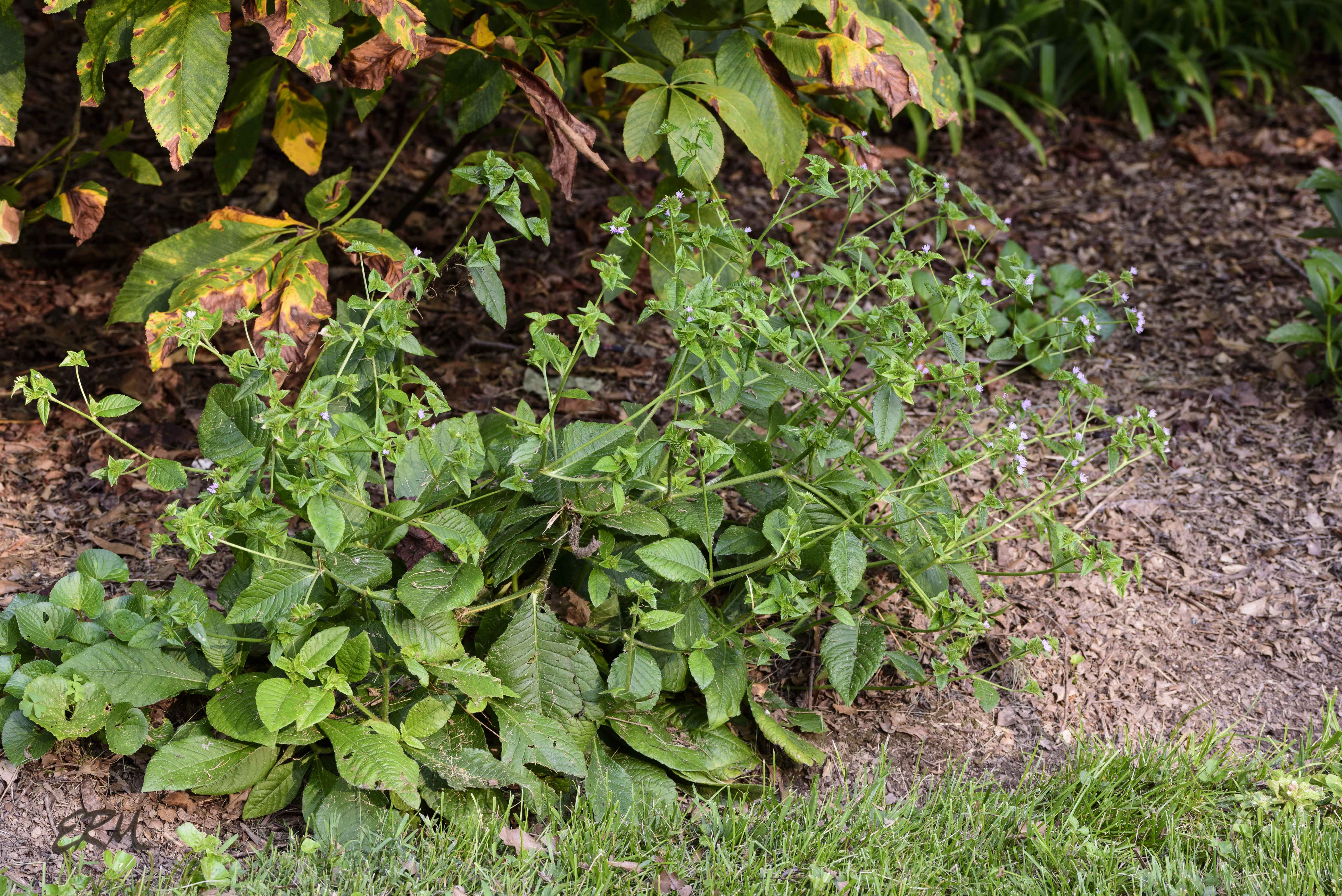 Despite this practical concept, I’ve had a hard time deciding if the Elephantopus carolinianus that appeared as a volunteer in my garden deserves weed status. It’s an interesting plant that stands about a foot and a half tall, with thick but sparse leaves that result in an open, somewhat coarse texture, and it has appealingly unusual flowers. However, it’s deep-rooted and seeds itself freely, which means high weed potential.
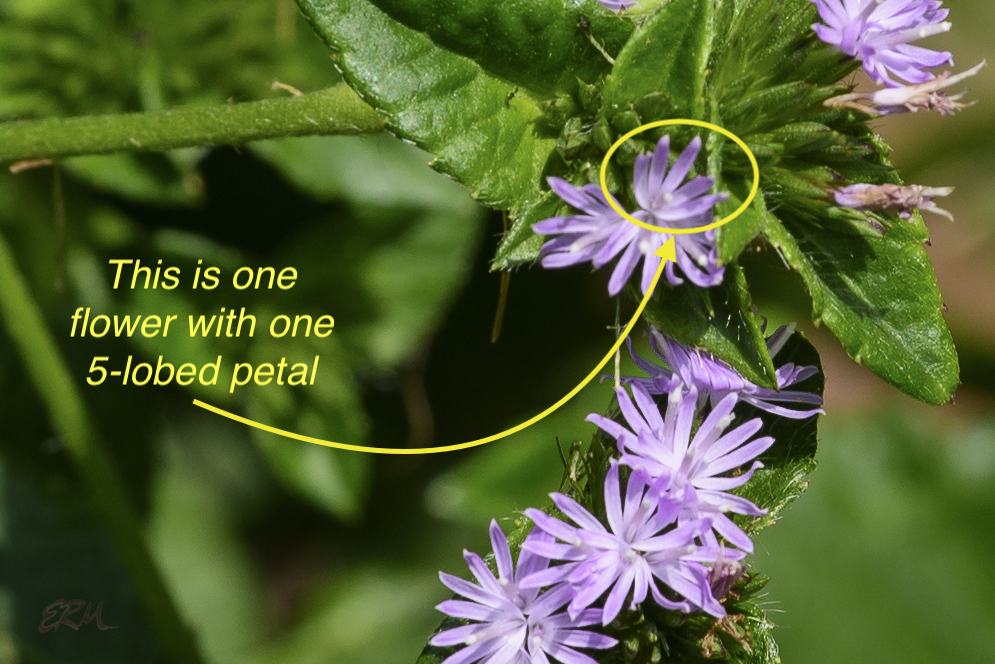 Unlike the other species in this series of posts, whose flower heads contain only disk florets, Carolina elephant’s-foot consists only of ray florets. You have to look very closely to see it, but each flower head contains from one to five individual flowers (usually four); each one of those flowers has a single petal that’s so deeply lobed, it appears to be five separate petals.
Look for E. carolinianus in dry soils in sunny or partly sunny areas, for example near rock outcroppings in a woodland, or in disturbed, open areas. It ranges from southern Pennsylvania (where it’s endangered) to eastern Texas. Three other species of Elephantopus are native to the US, all with smaller ranges centered on the southern states. 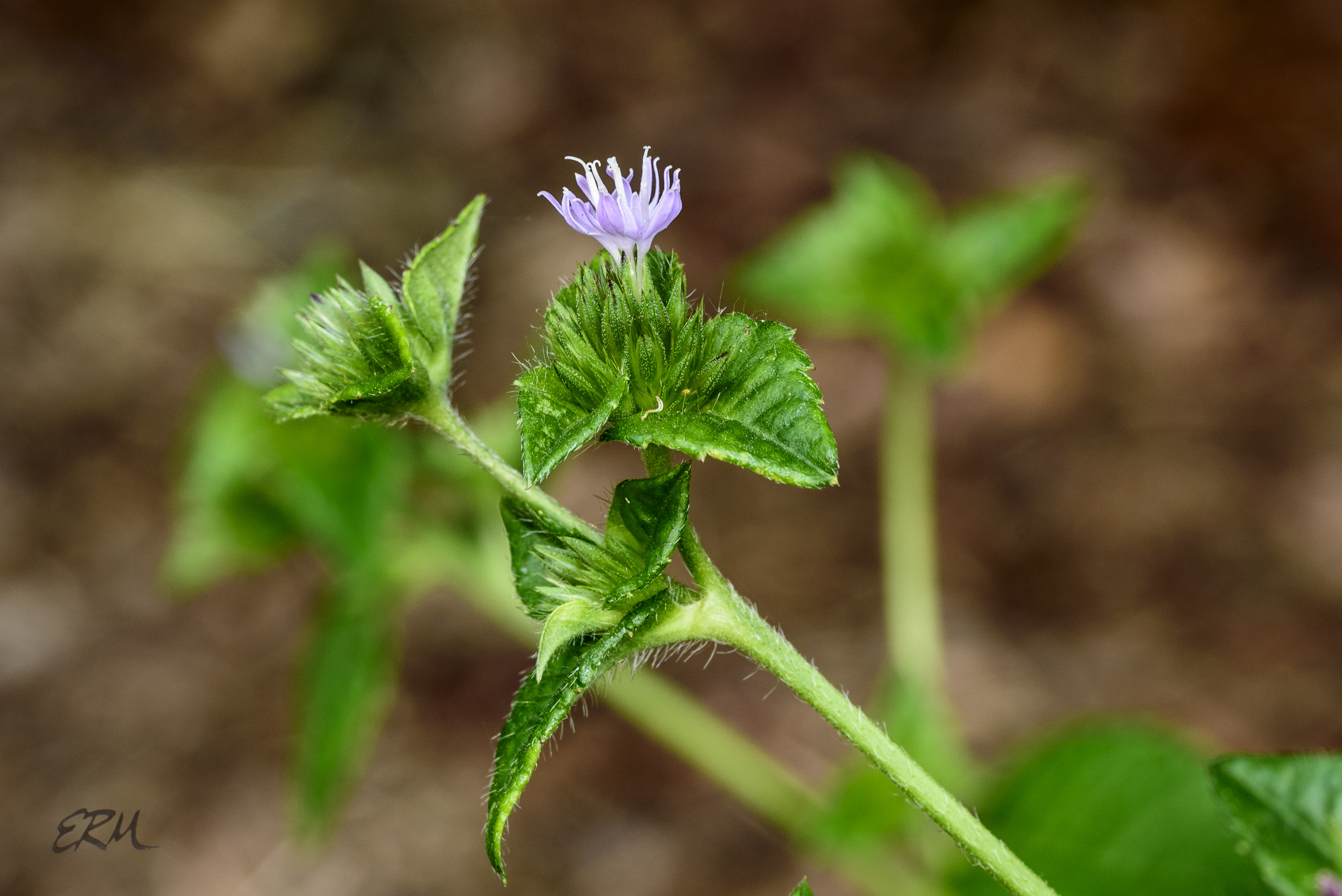
 Elizabeth's Wildflower Blog
What weird blooms. I can see that they are composite flowers, but would not have looked closely enough to see how odd they are.
Yeah, I was really surprised when I first learned that.
hm…. not sure I agree on the weed status. Depends on what you’re looking for. Sometimes it is nice to have colonizer. We have it in a local streamside park in Baltimore and it is competing well with many non-native invasives and aparently the deer are not destroying it so I am glad it is there.