Flower of the Day: Clustered Snakeroot

Sanicula gregaria;  Apiaceae (carrot family)

Today I’m taking a break from blue and purple flowers to look at a greenish-yellow flower.  Like spring beauty, this plant is ubiquitous in season.  And as with spring beauty, that doesn’t diminish its appeal for me at all.  It stands about 2-3 feet tall, with umbels surmounting palmately compound leaves.

clustered snakeroot closeup

20140520-DSC_0058

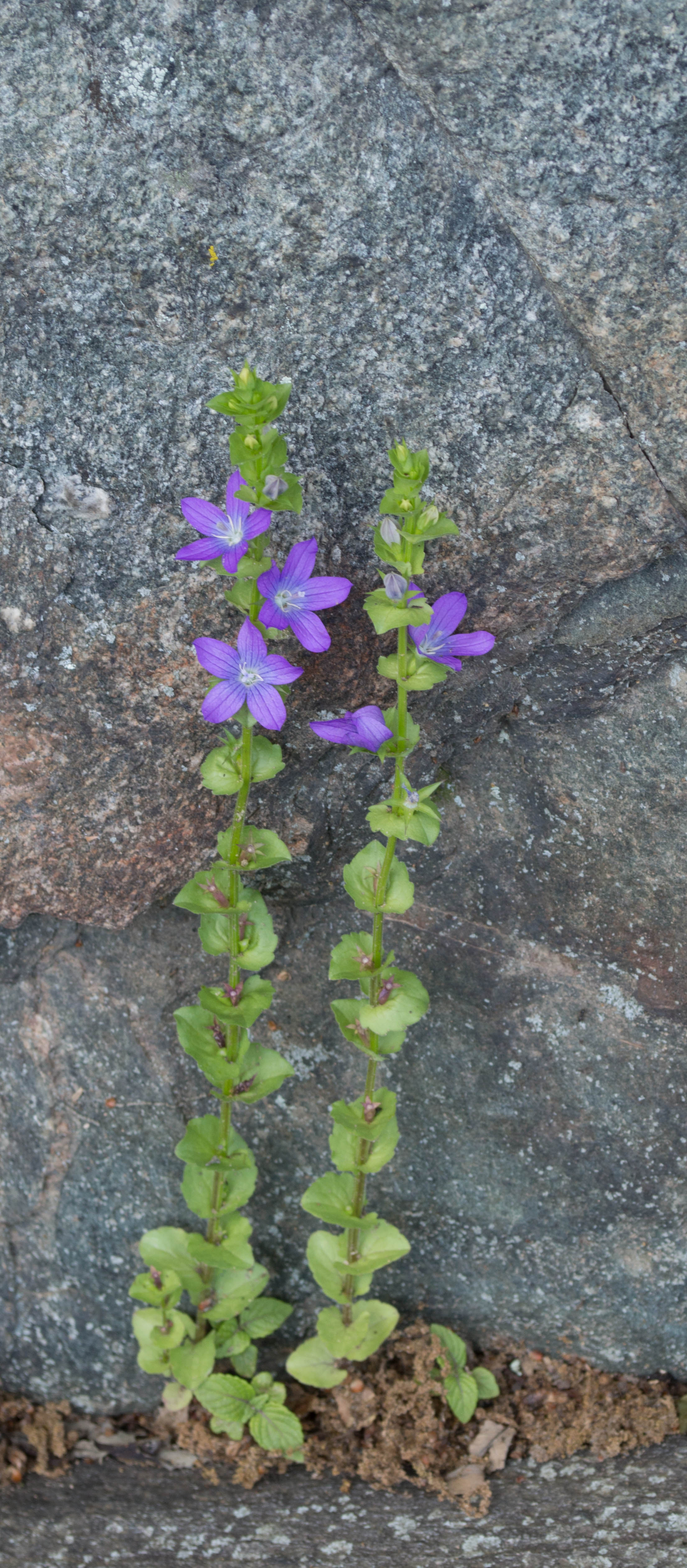
Flower of the Day: Venus’ Looking Glass

Triodanis perfoliata; Campanulaceae (bellflower family) [formerly Specularia perfoliata in the lobelia family]

20140522-DSC_0049

It’s the time of year when blue and purple take over, or so it seems.  Look at what I’ve posted recently.

This is a pretty plant, standing about one foot tall (sometimes taller), always single-stemmed, and with flowers appearing singly in the leaf axils.  It prefers dry, nutrient-poor soils; in this area look for it along rocky bluffs along the edge of the river.  It’s found in every state in the US except Nevada, and in most of Canada.

mug shot:

20140522-DSC_0043

Flower of the Day: Blue-Eyed Grass

Sisyrinchium angustifolium; Iridaceae (iris family)

20140519-DSC_0016

Not really a grass, of course, though it is a monocot.  It makes a nice garden plant, too, with compact foliage and a fairly long bloom time.  It spreads, but not too fast.

You can find it in fairly dry soils in full sun along the C&O canal for the next several weeks.

20140519-DSC_0116

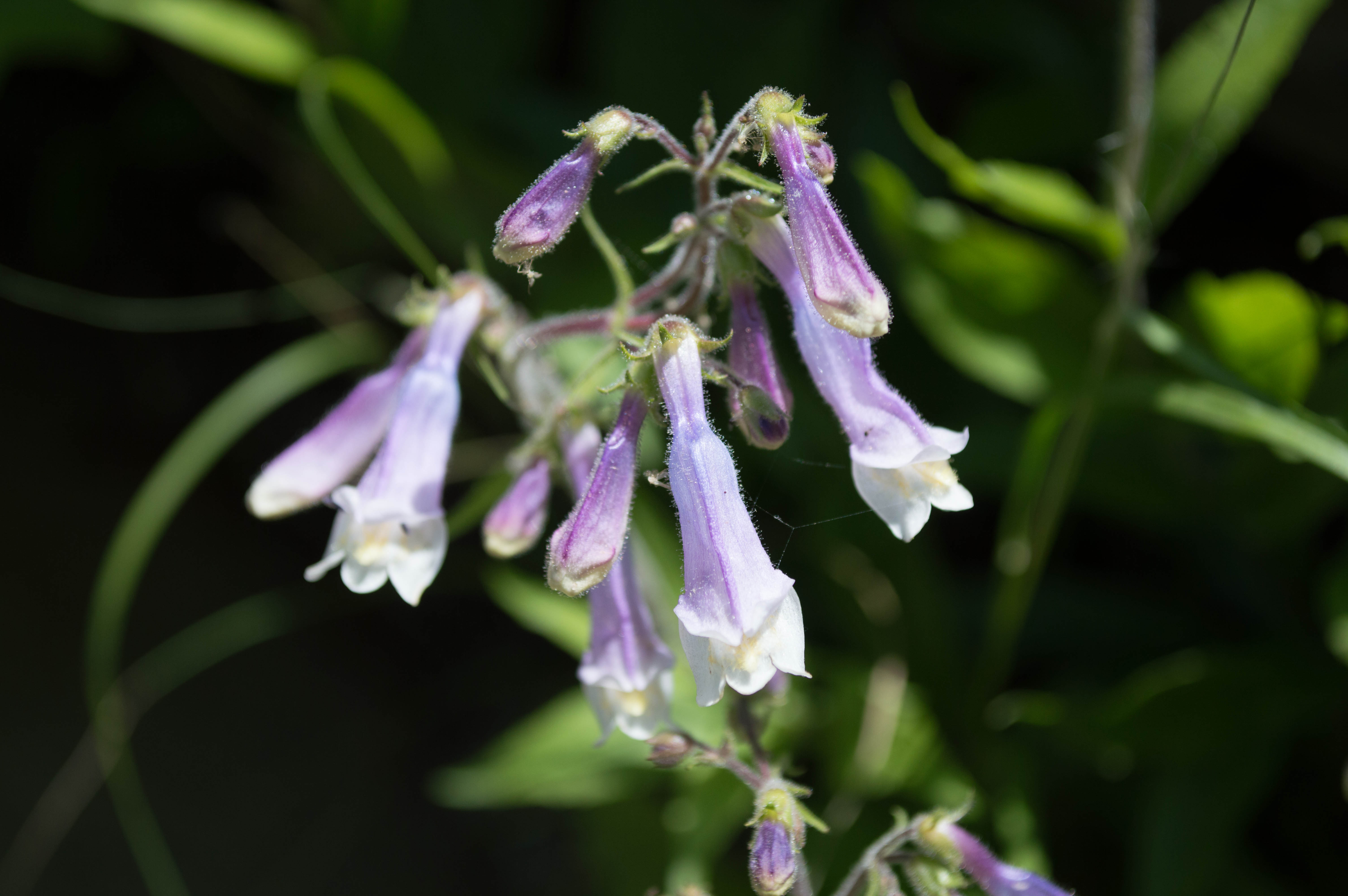
Flower of the Day: Hairy Beardtongue

No, really, that’s what it’s called!

Penstemon hirsutus; Scropulariaceae (snapdragon family)

20140519-DSC_0061

The plants stand about 2 feet tall, with the flowers (about an inch long) in a long terminal cluster.  They seem to like a dryish, rocky habitat; the only place I’ve found them consistently is in little soil pockets alongside large rock formations.
20140519-DSC_0058

When I saw lyre-leaved sage blooming, I knew it was time to look for hairy beardtongue.  Unfortunately, flooding along the river cut off access to the area I wanted to look in.  But after the water subsided it was just a matter of dealing with a lot of mud and doing some rock-hopping.

Looks a bit like the sage, doesn’t it?  Both sages (mint family, Lamiceae) and beardtongues are two-lipped flowers; the upper lip has two lobes, and the lower lip has three, so they look quite similar.  It gets a bit technical from there.  My next rainy day project might be reading up on the two families… or maybe I need to find a botany class somewhere.
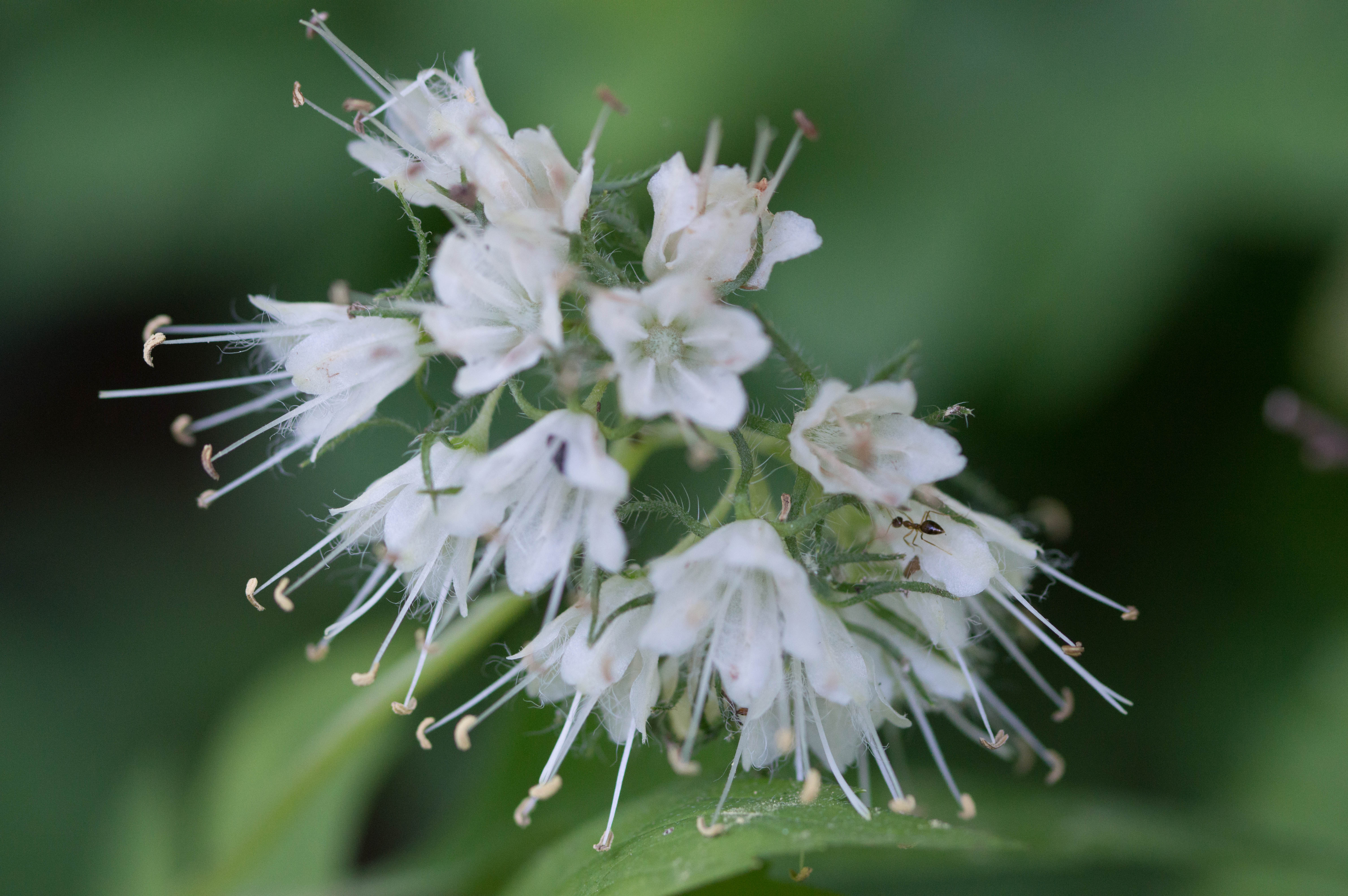
Flowers of the Day: the Waterleafs

Hydrophyllaceae (waterleaf family)

There are two species of waterleaf found in the greater Carderock area, Virginia waterleaf and broad-leaved waterleaf.  There are vast stands of both around, but like may-apple and trout lily, you can see hundreds and hundreds of plants before seeing a single flower.  I saw buds on the broad-leaf and later saw seedpods, but entirely missed the flowers this year.

Waterleaf gets its name from the speckled appearance of the leaves when they’re emerging, though this coloration fades as the plants grow.  I’ve seen Virginia waterleaf as tall as 3 feet, with leaves about 8″ long.  Broad-leaved waterleaf is somewhat shorter and has smaller leaves.

Virginia Waterleaf  Hydrophyllum virginianum

20140518-DSC_0036  20140518-DSC_0072

Broad-leaved waterleaf, aka maple-leaved waterleaf  (Hydrophyllum canadense) (crappy iphone photo from last year)

IMG_3269

emergent foliage showing the speckles:

waterleaf