Flower of the Day: Common Fleabane

Erigeron philadelphicus; Asteraceae (aster family)

Isn’t this just too perky for words?

20140518-DSC_0092

There are several hundred species of Erigeron worldwide.  Three or four* of them can be found in this area, and should be blooming within the coming month.  I’ve found what I believe to be robin-plantain (Erigeron pulchellus) in bud already.  The plant pictured above stands about 2 1/2 feet tall; the flowers occur in loose terminal clusters, mostly.

*depending which authority you consult; there’s a lot of mix-up with common and botanical names

In Situ

As much as possible I take pictures of flowers in their natural circumstances.   Sometimes I’ll gently move aside an intruding plant (cleavers are everywhere) to get a clear shot of the subject.

First, I end up practicing photographer’s yoga a lot, perching and stretching into some very awkward positions in order to get close to the plant.  Sometimes I have to use a hand to steady myself when it should be steadying the macro lens.  It’s tricky (usually impossible) to set up a tripod.  If a plant is low enough or if there’s a convenient rock I can use a sandbag.

Then, there’s wind.  Early in the morning there’s little breeze, which makes taking extreme closeups a lot easier.  But then the ambient light is lower.  Except sometimes there’s a bright isolated shaft of light -usually illuminating only part of the subject.  And some flowers close overnight and don’t open until late in the morning…

Even at midday light is a challenge.  Most of these plants are growing and flowering under the forest canopy, in shade or deep shade or dappled shade.  Even if I bump up the ISO and/or use flash, the whole picture tends to be washed in green, which is lovely in its own way but not really good for showing details.

And then there’s the issue of contrast.  Early in the year, most of the plants show nicely against a backdrop of leaf litter.  By May, the background is green, green, and more green, with a confusion of shapes.  It’s so much easier when a plant is up against a rock.

I don’t collect specimens; whether or not it’s against the law, I think it immoral in most situations.  If a plant is there for me to enjoy, I want it to stay there for others to enjoy.  And for me to enjoy again next year.
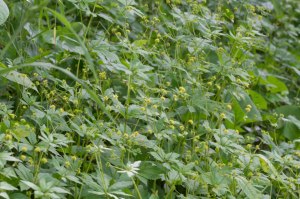
20140520-DSC_0058

a huge stand of clustered snakerootSanicula gregaria; Apiaceae (carrot family)
Flower of the Day: Puttyroot

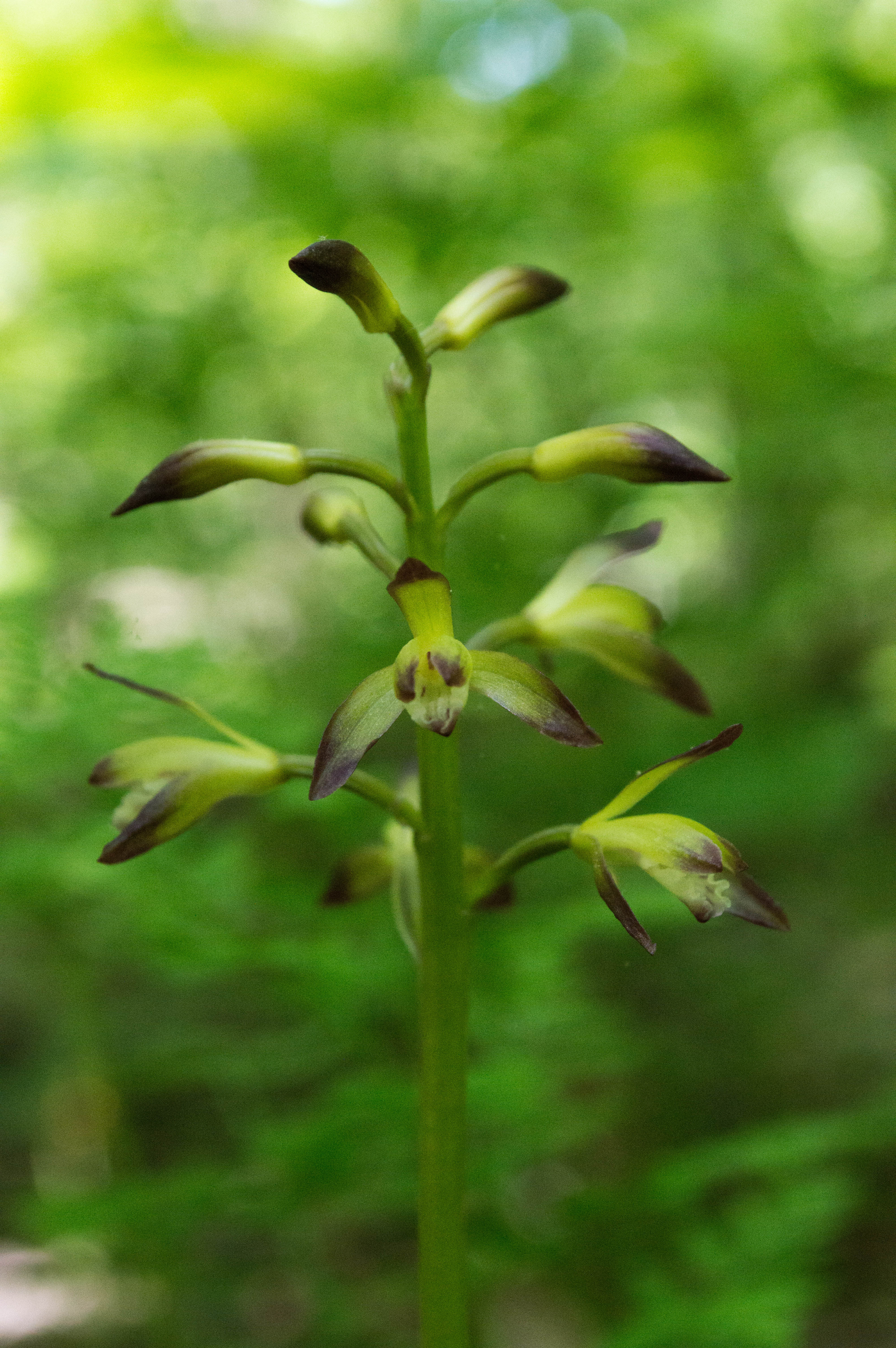
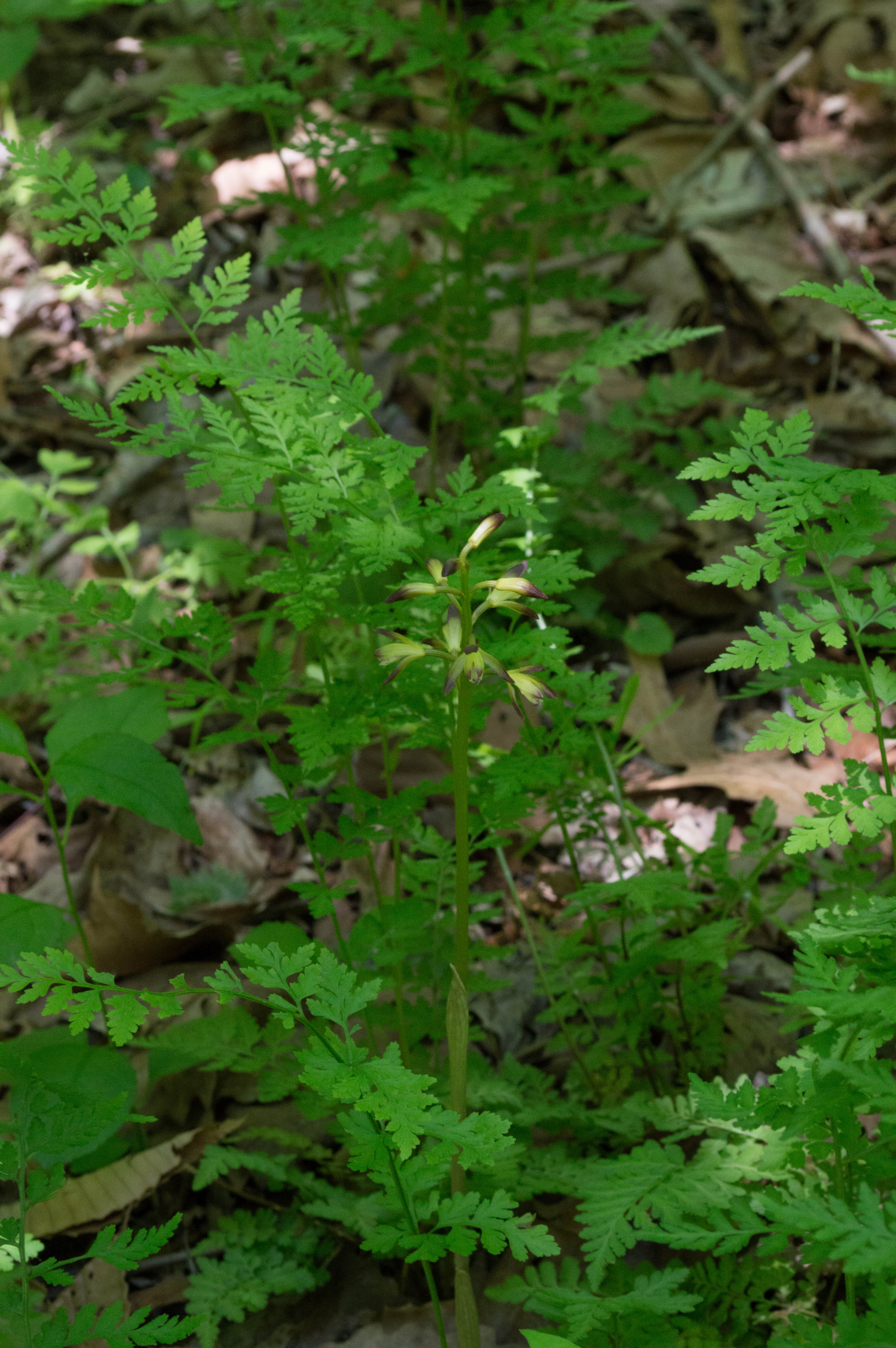
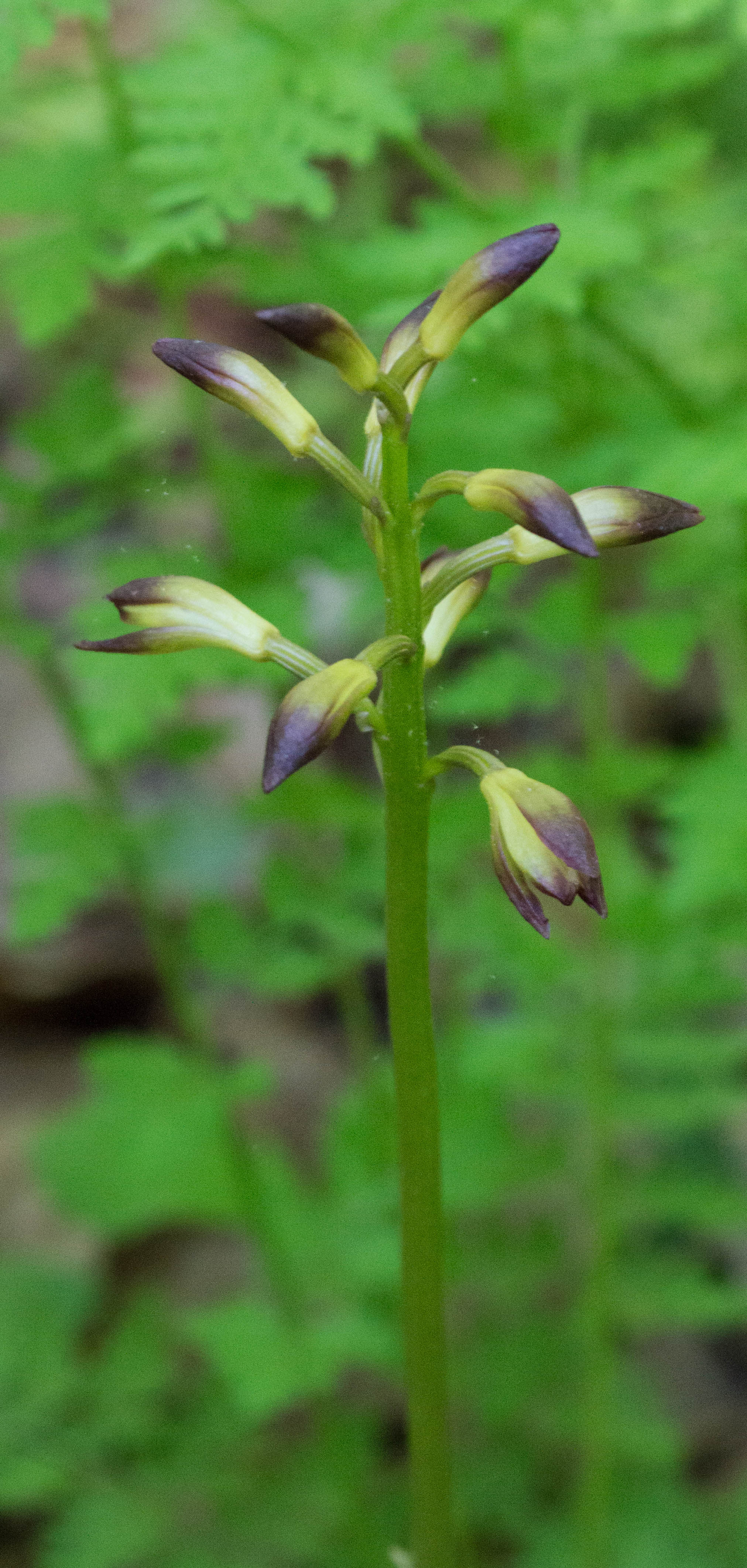
Aplectrum hyemale; Orchidaceae (orchid family)

At last, at last, I have seen a native orchid in the wild.

20140519-DSC_0008

Puttyroot grows a single leaf at ground level in the autumn.  The leaf persists through the winter and spring, and is mostly or entirely dead and gone by the time the flowers open.  The flower spike stands about 12″; each flower is about 1/2″ wide.

Here it is from about 3 feet away, hiding in a bunch of ferns:

20140519-DSC_0014

Oh, the Things You Can Do…

…with Adobe Lightroom.  Almost every picture I’ve published has been untouched by Lightroom, except for cropping.  But have a look at these two:

20140518-DSC_0023-2 20140518-DSC_0023

The original picture (on the right) was taken with the 35mm lens, at ISO 800, f/8.0, 1/50 sec.  I adjusted a few factors (though not color).  Is this cheating?  I don’t think so.  My intent is to show a clear picture of the plant in bud.

I like Lightroom.

The plant, by the way, is puttyroot.  It will be FOTD when (if) I catch it in bloom – maybe later today?

Flower of the Day: Lyre-Leaved Sage

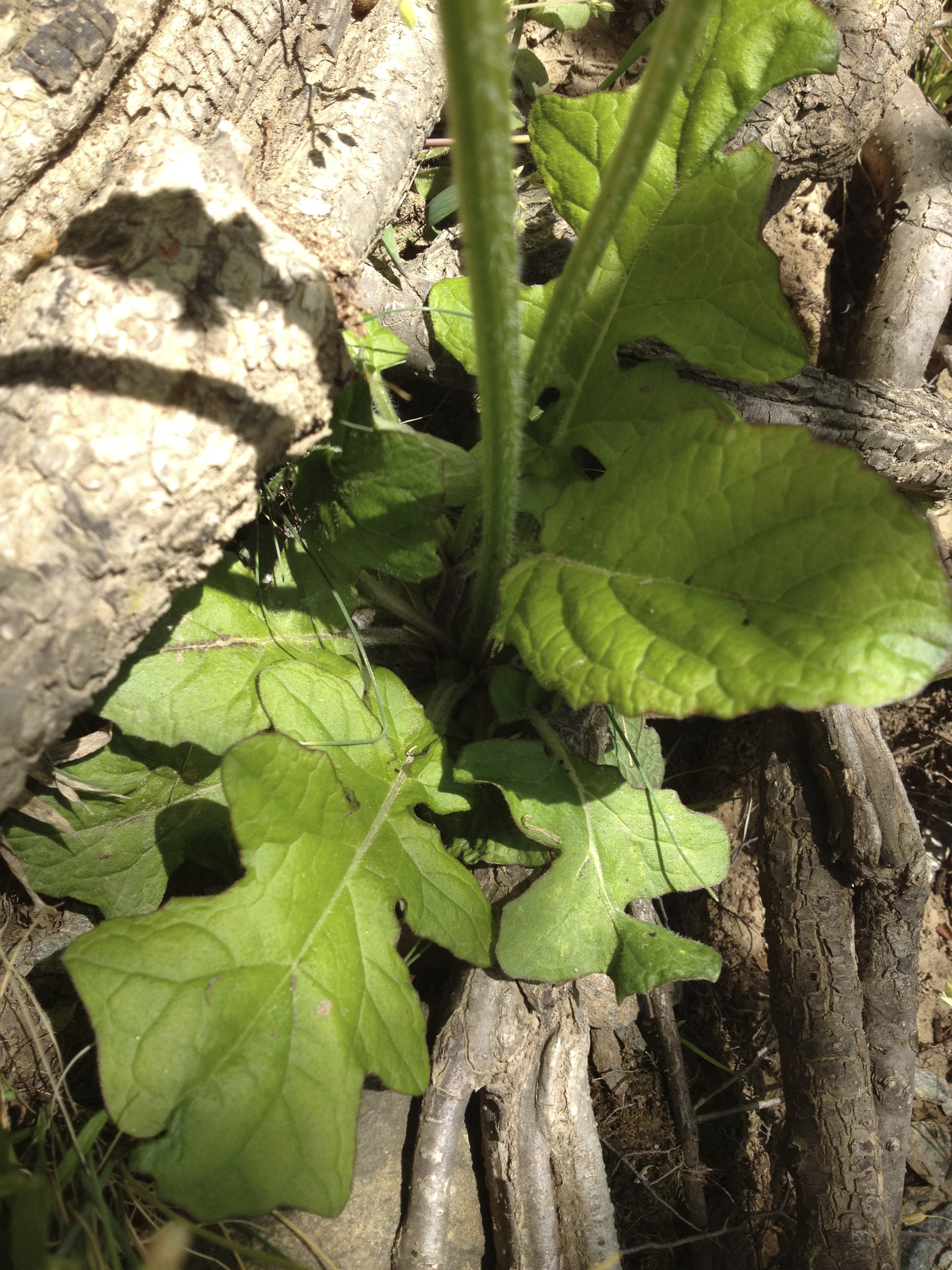
Salvia lyrata; Lamiaceae (mint family)

It’s that time of year – the time when the mint family plants start blooming.  They’re one of the dominant families in this area.  (Last year I saw more in this family than any other except the pea and aster families.)

The second picture is from last year, taken with the iphone; it’s the only half-decent one showing the basal leaves for which the plant is named.

lyre-leaved salvia closeup IMG_2642