Cryptotaenia canadensis; Apiaceae (carrot family)
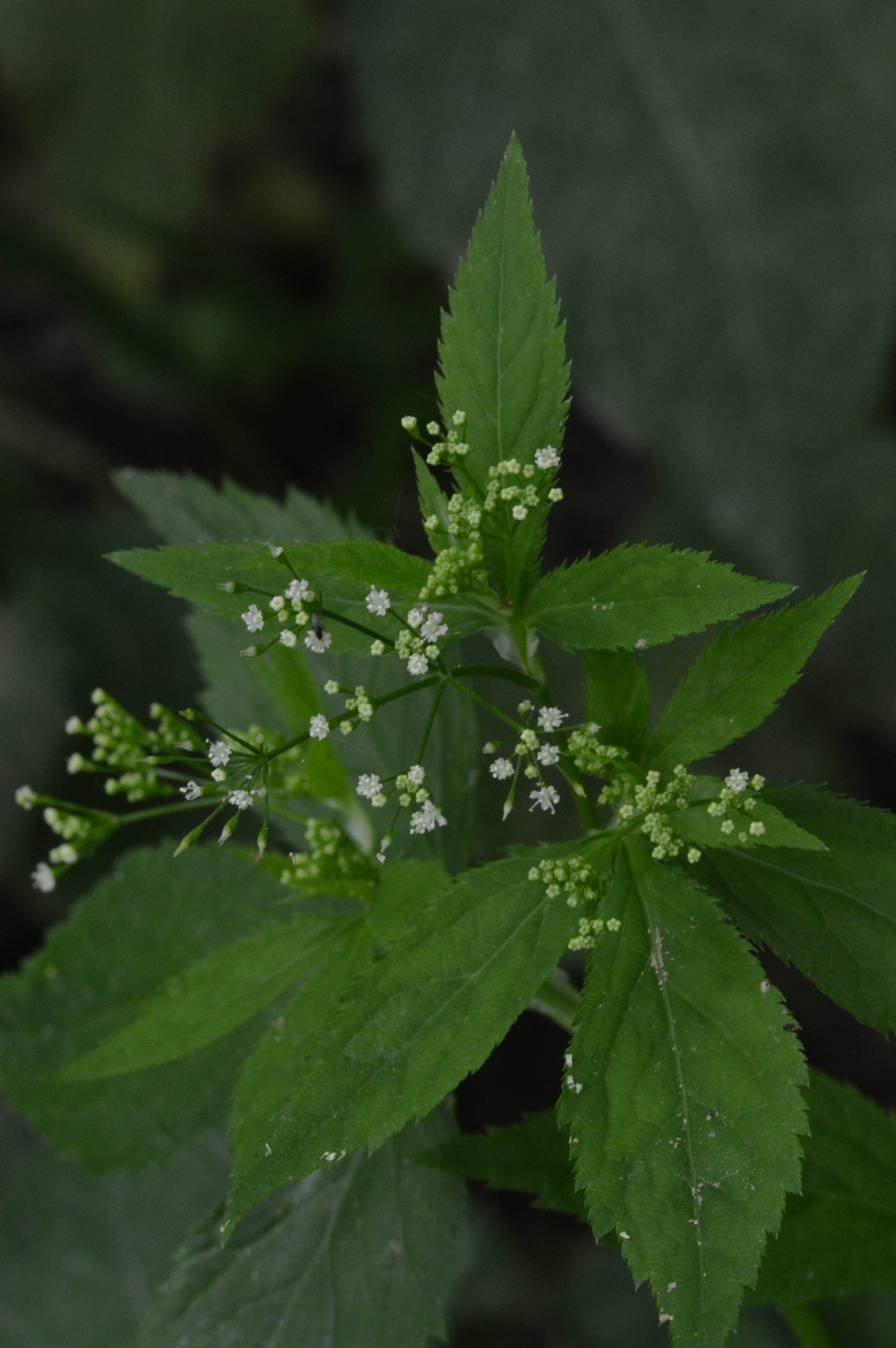
This unassuming plant grows to 1-3′; the flowers are less than 1/8″ across. Honewort is a wispy, delicate plant of deep shade. Not as wispy and delicate as tomorrow’s FOTD, though.

Cryptotaenia canadensis; Apiaceae (carrot family)
This unassuming plant grows to 1-3′; the flowers are less than 1/8″ across. Honewort is a wispy, delicate plant of deep shade. Not as wispy and delicate as tomorrow’s FOTD, though.
Conopholis americana; Orobanchaceae (broom-rape family)
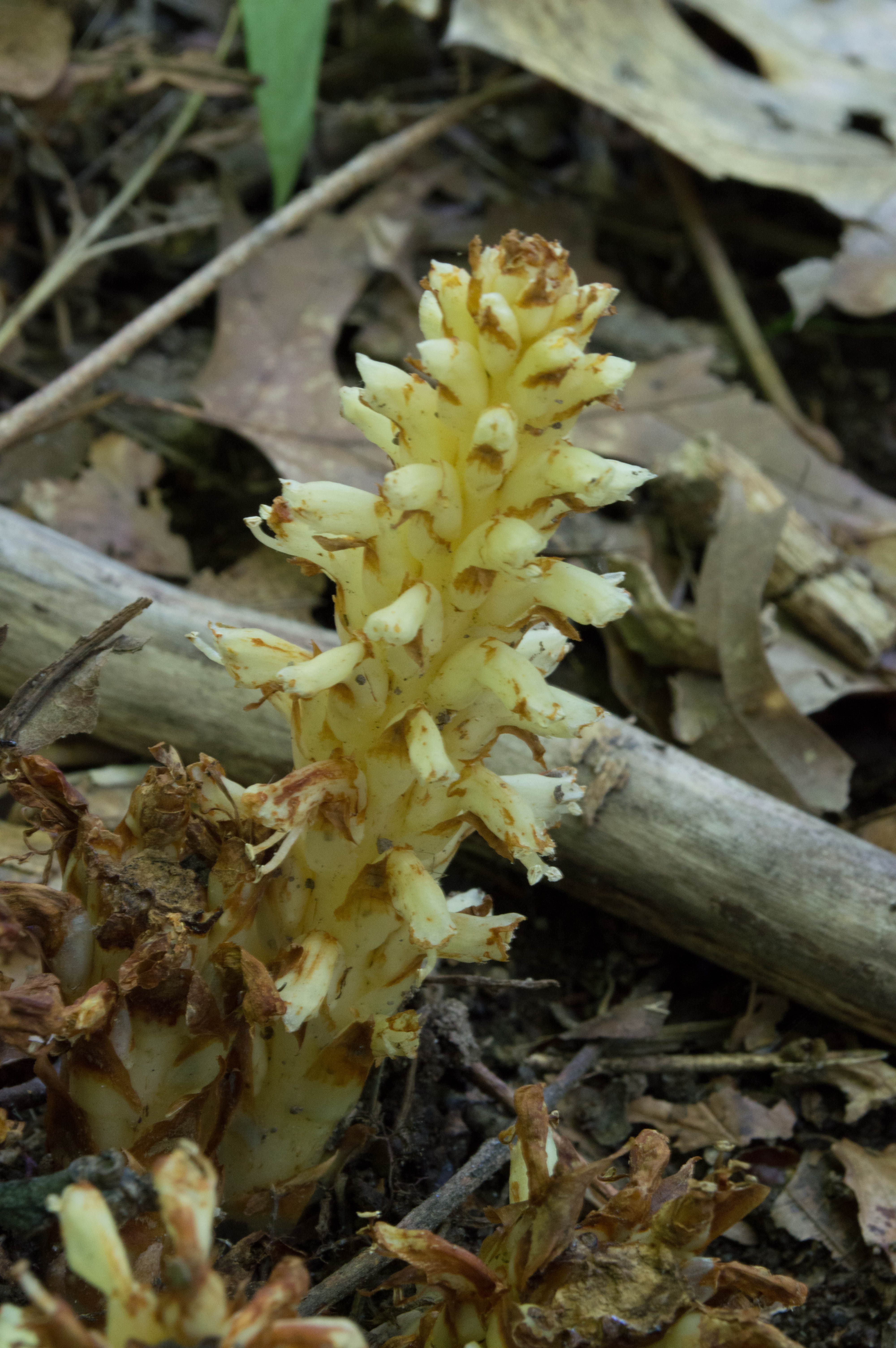
This weird looking thing is the inflorescence of a parasitic plant that otherwise lives underground, gathering nutrients from the roots of the oak trees to which it’s attached. Lacking chlorophyll, the plant does not engage in photosynthesis.
There are several saprophytic plants found in this area. I’ve yet to see beechdrops, but I’ll be on the hunt for Indianpipe over the next two weeks.
Toxicodendron radicans; Anacardiaceae (sumac family)

It may be reviled by humans, but poison ivy is an important plant in our ecosystem: many birds eat the fruit, and some animals will eat stem and leaves, as well. The flowers aren’t particularly remarkable, but poison ivy is one of the earliest plants to turn color in the autumn. Watch for blazes of red going up into trees. If it’s on your property in an out-of-the-way location, leave it be. Spend your efforts rooting out invasive aliens instead.
Other plants in the sumac family: cashew, mango, and pistachio. Yup.
Wikipedia has a decent article about urushiol.
Although I haven’t conducted a rigorous scientific experiment on myself (nor am I likely to), in my experience Tecnu is effective should you come in contact with poison ivy. I always have a bottle on hand. Use exactly according to instructions.
Flowers seen May 14 – May 31:
…bringing the year’s total to 153 species in 54 families, with Ranunculaceae in the lead, Brassicaceae a close second, and Violaceae, Rosaceae and Asteraceae in a 3-way tie for third. Thirty two (about 21%) are aliens.
*alien
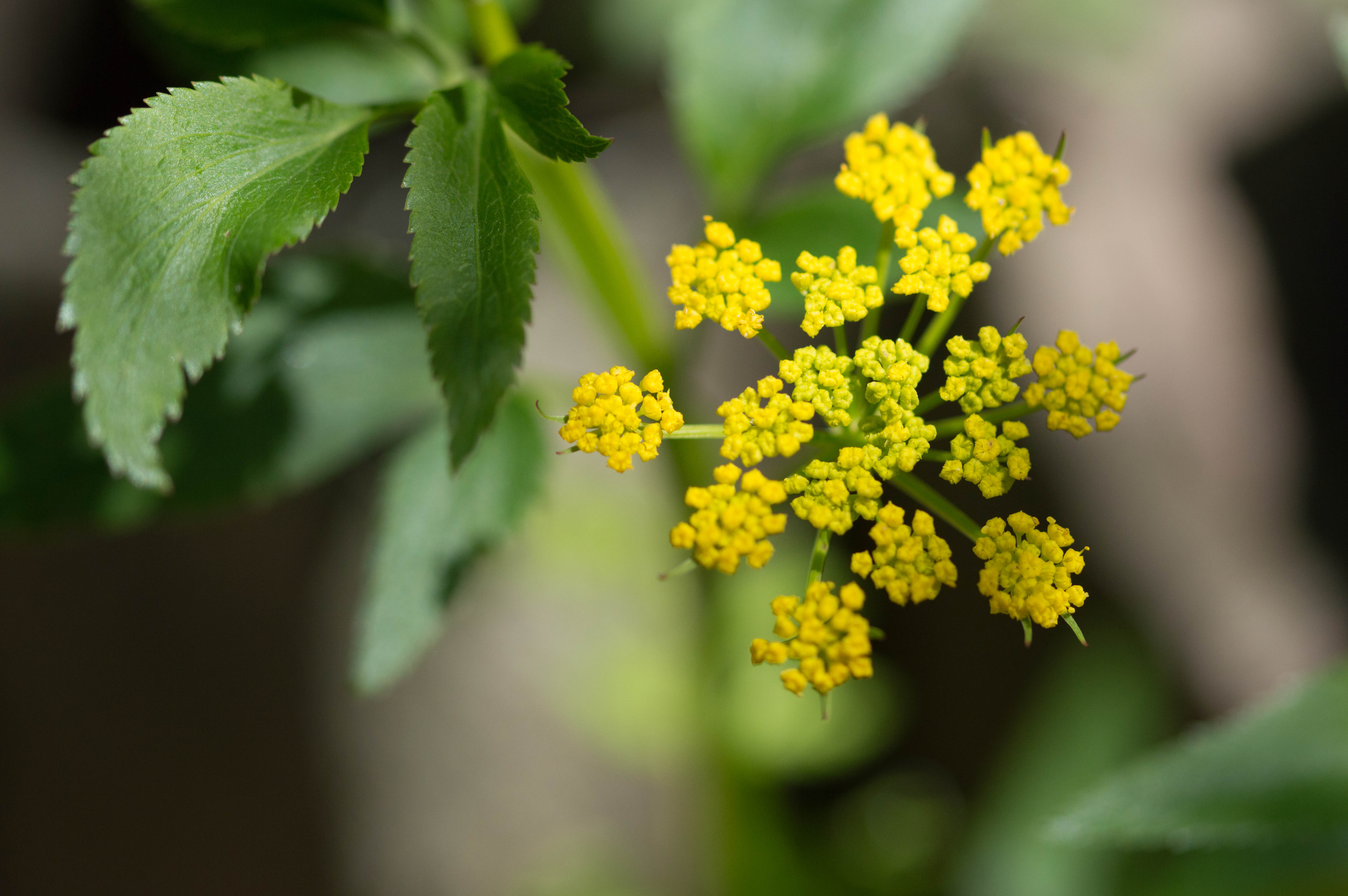
Later this year I’ll be scrambling for FOTD candidates, but for now I’m going through the spring backlog. Here are two more golden flowers. Alexanders are just about done but there should be cinquefoils around for awhile.
Zizia aurea; Apiaceae (carrot family):

Potentilla canadensis; Rosaceae (rose family):

 Elizabeth's Wildflower Blog