Theme and Variations: Virginia Bluebells

 20150416-20150416-_DSC0172

Mertensia virginica; Boraginaceae

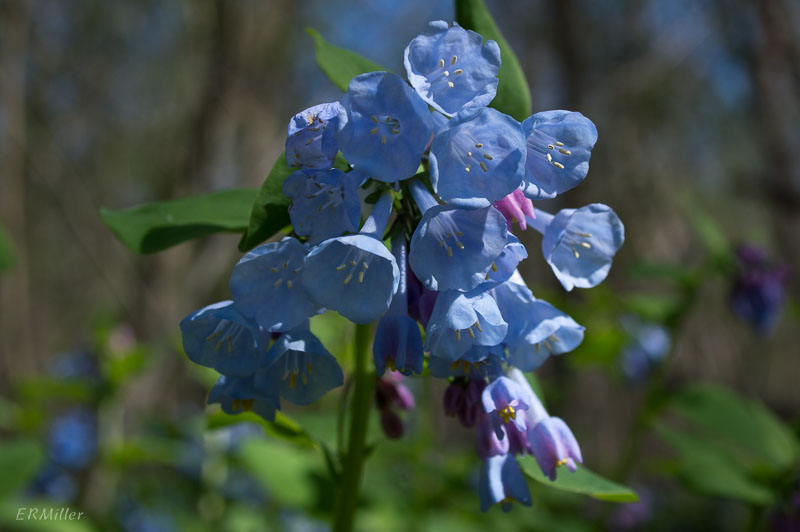
Nothing proclaims spring’s arrival in such a gloriously gaudy way as the blossoming of Virginia bluebells.  When the foliage first emerges from the ground, it’s purplish brown in color.  As the plant grows and the inflorescence unfolds, dark pink buds turn paler pink and then finally open in bright borage blue, which fades as the flower ages.  The fully opened leaf is a pale green, with a bluish cast.

20150416-20150416-_DSC0198

I love the color show.  Every year I visit one particular clump of pure white Virginia bluebells.  But this year I found something new.  Apparently not unique, but fairly rare:
20150416-20150416-_DSC0397

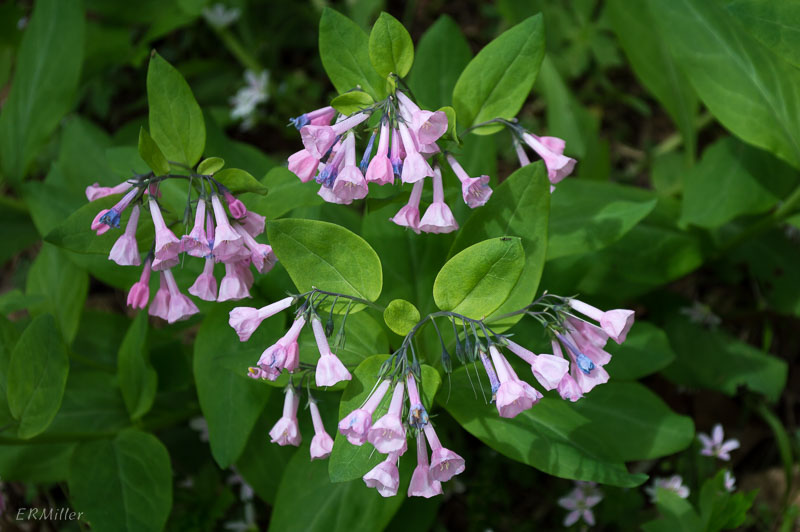
That’s right – pink Virginia bluebells.  I swear to you I did not adjust the color in Lightroom.

The internet is so full of information that I can’t sift through it all to find answers to my questions.  I’ve assumed that the white-flowering plants are genetic variations, but what accounts for the pink?  Genetics, soil pH, growing conditions?  This lone clump of pink bluebells was near other (blue) bluebells, but not right in the midst of them – it was a little off by itself, further from the river.

So help me I’m tempted to pull out the old soil pH meter and go back and do some testing.

One internet site states that the pink in the buds is due to the presence of anthocyanin, but that the plant increases the flowers’ alkalinity in order to change the color to blue in order to attract pollinators.  That certainly sounds authoritative, but I’d love to know what his sources were.  Is it reasonable to assume this mechanism failed in the case of the pink flowers?

And then there’s this:
20150416-20150416-_DSC0237

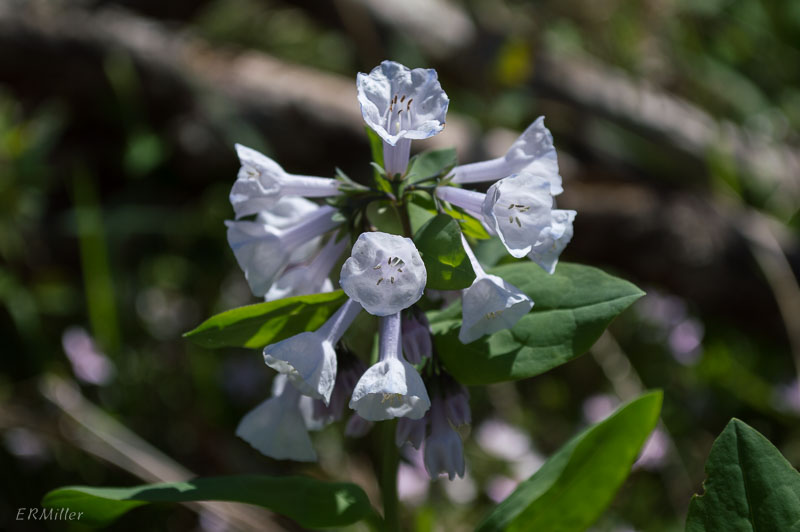
Again, no messing with color during processing.  It’s a little hard to tell, but this clump had a distinct violet tinge to it, different from the faded blue of pollinated flowers.

If there’s such a thing as “normal” in this remarkable plant, it looks something like this:

20150416-20150416-_DSC0172-3

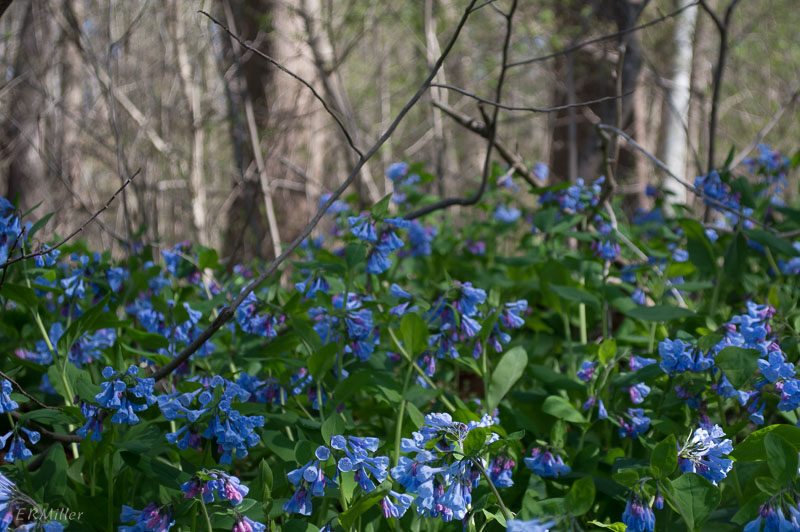
Virginia bluebells like wet soils – they’re found near streams, in bottomlands and floodplains where they get both sun and shade from deciduous trees.  By the time the leaf canopy is established, they’re done blooming and the foliage is dying back to the ground, leaving no trace of this woodland wonder.
20150416-20150416-_DSC0117

Where Virginia bluebells are found, they tend to be ubiquitous.  They range over most of the eastern US and Canada, but are missing from a few New England states.  They are threatened in Michigan and exploitably vulnerable in New York.
Unbelievable.

20150416-20150416-_DSC0117

Virginia bluebells (Mertensia virginica)

Today I spent more than six hours in the greater Carderock area, took more than… well, never mind how many photographs, and at the end, when I was dog tired and ready to go home, I found a plant I haven’t seen in five years. More on that later.

I did miss the full bloom of twinleaf, and bloodroot is done, too; nonetheless, this has been one of the best hunting days ever.

Carderock; Billy Goat B; the Basin; Billy Goat C central section
49 F, calm and sunny at 8:25 am
73 F with building overcast and breezy at 2:40 pm

20150416-20150416-_DSC0341

Native Plants Emerging (since last outing):
bellwort
rattlesnake weed
early meadow rue
wild geranium
Coville’s phacelia
racemose goldenrod
rattlesnake weed
bastard toadflax

20150416-20150416-_DSC0346

bellwort (Uvularia sessilifolia)

Native Plants in Flower:
spring beauty
Virginia bluebells – in blue, white, and pink!
Dutchman’s breeches and squirrel corn
cut-leaved and slender toothwort
early saxifrage
smooth and lyre-leaved rock cress
rue anemone
wild ginger
wild pink
wild blue phlox and moss phlox
field chickweed and star chickweed
golden alexanders
golden ragwort
short-spurred corydalis
toadshade, including yellow-form
bluets
southern chervil
redbud
downy serviceberry
kidney-leaved buttercup and swamp buttercup
common blue violet, including white form
smooth yellow violet
white violet, not sure which species
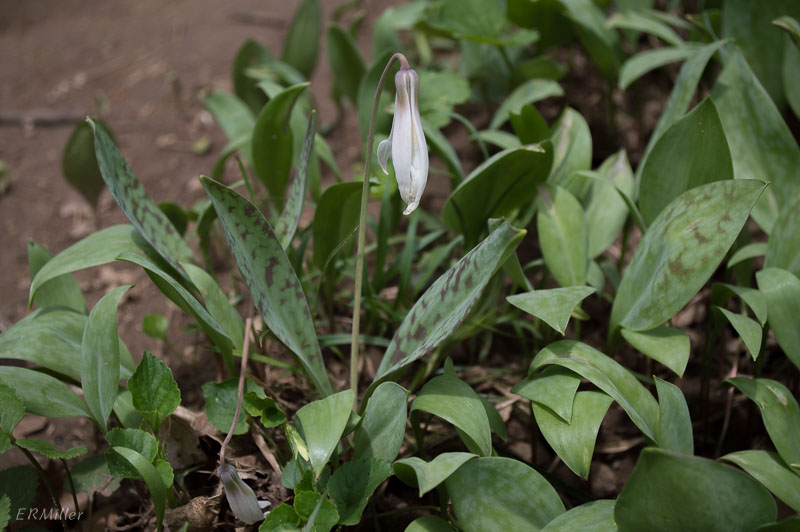
trout lily
and, at last…white trout lily!

20150416-20150416-_DSC0406

Erythronium albidum, threatened in Maryland

…for a total of 31 species in one day.

Journal Entries

20150413-20150413-_DSC0030

Monday, April 13
Belmont Manor and Historic Park; Patapsco Valley State Park
mostly sunny, breezy, 70 F

The woods surrounding Belmont are impoverished – deer browse and heavy human use, poorly maintained trails.  Compared to the Potomac Gorge, it’s empty.

Natives seen flowering:
spring beauty (Claytonia virginicai)
slender toothwort (Cardamine angustata)
common blue violet (Viola papilionacea)
spicebush (Lindera benzoin)

And aliens:
lesser celandine (Ranunculus ficaria)
ivy-leaved speedwell (Veronica hederifolia)
periwinkle (Vinca minor)
hairy bittercress (Cardamine hirsuta)
…all invasive, of course.
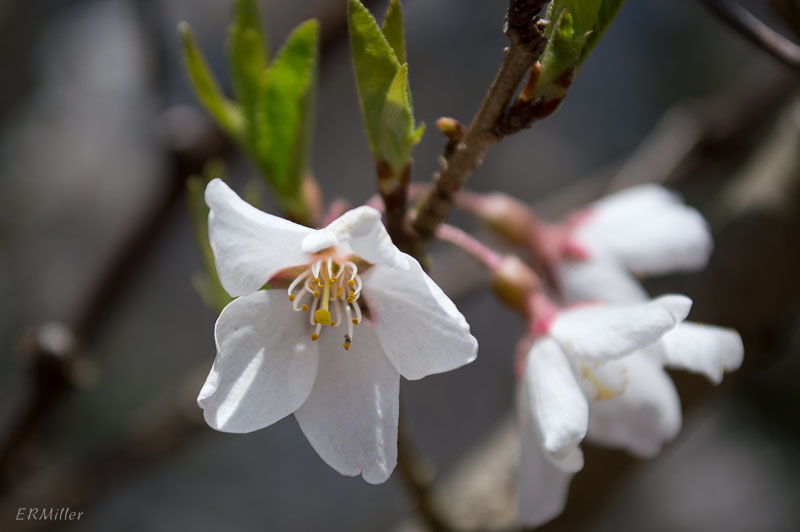
and a truly lovely large cherry (probably Prunus avium), pictured above

Wednesday, April 15
Belmont Manor and Historic Park
overcast, 62 F

Birding walk with master naturalist class.  Sadly, I don’t have a good lens for long distance work, but we did spot the following:
starling (only one, how odd)
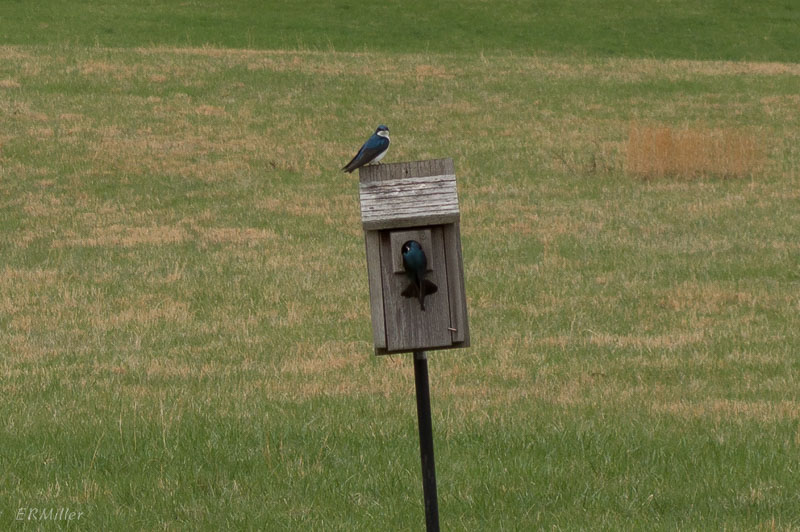
tree swallows

20150415-20150415-_DSC0026
eastern bluebirds
red wing blackbirds
a mockingbird
a red-bellied woodpecker
a bluejay
an American kestrel!
both black and turkey vultures
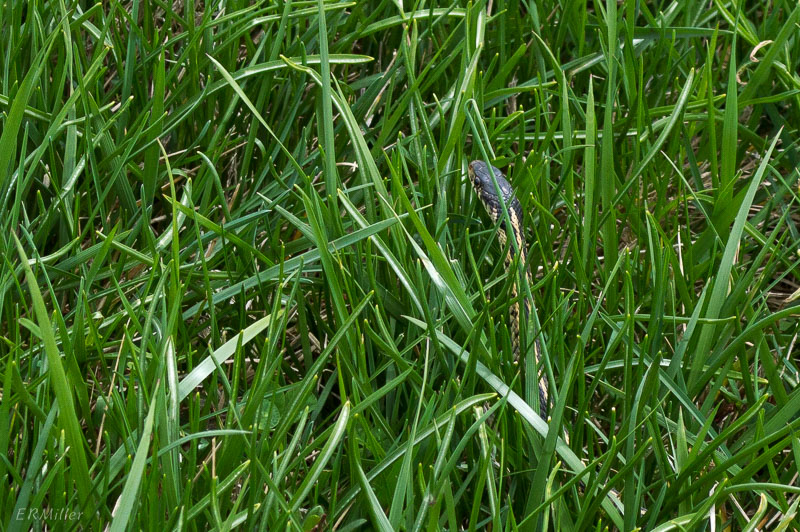
and, a young eastern garter snake

20150415-20150415-_DSC0022
no new wildflowers except for some common chickweed (Stellaria media)

20150415-20150415-_DSC0049I’m committed to surveying this area for a comprehensive wildflower guide.  I sure hope something interesting pops up soon.

Journal Entries

April 7

Cabin John Trail
8:30 am 58 F; overcast, breezy

20150407-20150407-_DSC0007

hillsides covered in Dutchman’s breeches (Dicentra cucullaria)
lots of trout lily foliage (Erythronium americanum) but no blossoms
shockingly small amount of spring beauty (Claytonia virginica) foliage; only a few blossoms
some cut-leaved toothwort (Cardamine concatenata), in bud
many stands of bloodroot (Sanguinaria canadensis), glorious
skunk cabbage (Symplocarpus foetidus) in the gullies
more foliage: one toadshade (Trillium sessile), one alumroot (Heuchera americana), lots of mayapple (Podophyllum peltatum)


Belmont Manor and Historic Park; Patapsco State Park
1:00 pm  68 F; overcast, still, unpleasantly humid

20150407-20150407-_DSC0071

Still so little even poking up through the leaf litter!  But there was something special…
lots of skunk cabbage in the wet areas
scattered spring beauties
clumps of slender toothwort (Cardamine angustata) in bud, no blossoms

20150407-20150407-_DSC0060
a stand of puttyroot orchid (Aplectrum hyemale)
several stands of cranefly orchid (Tipularia discolor)
a single bloodroot
spicebush (Lindera benzoin) blossoming like crazy
Christmas fern (Polystichem acrostichoides)
foliage: something that might be Virginia waterleaf (Hydrophyllum virginianum); something that be be an avens species; cleavers (Gallium aparine)
seedpods from last year’s Carolina elephant’s foot (Elephantopus carolinianus)
aliens: vinca, lesser celandine, garlic mustard, Indian strawberry, hispid buttercup