Flower of the Day: Leatherwood

20150406-20150406-_DSC0005Dirca palustris (Thymelaeaceae)

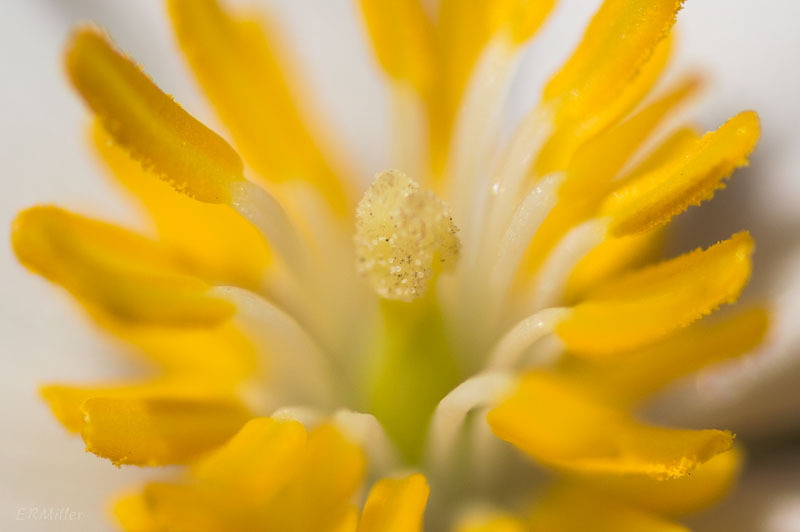
This was an exciting find, because it is new to me, and also because it’s threatened in Maryland.  Leatherwood, also known as ropebark, moosewood, and wicopy (this last word derived from the Powhatan language) is a short understory shrub of rich, moist woods and streambanks.  The bark is characteristically tough and pliable.  Clusters of yellow flowers typically appear in early spring; according to one source, they are short-lived, while another states that they last “a long time”.  Since this is the first time I’ve seen it, I can’t say from experience.  Each time I go to Carderock I’ll be checking on this plant, to see how it progresses.

Although leatherwood ranges from just west of the Mississippi all the way to the Atlantic, and from Quebec to Florida (where it’s endangered), it is somewhat rare throughout its range.

Journal Entries

April 4, 2015
Maryland Native Plant Society walk at Carderock
55 F at 9:00 am; mostly clear; very windy

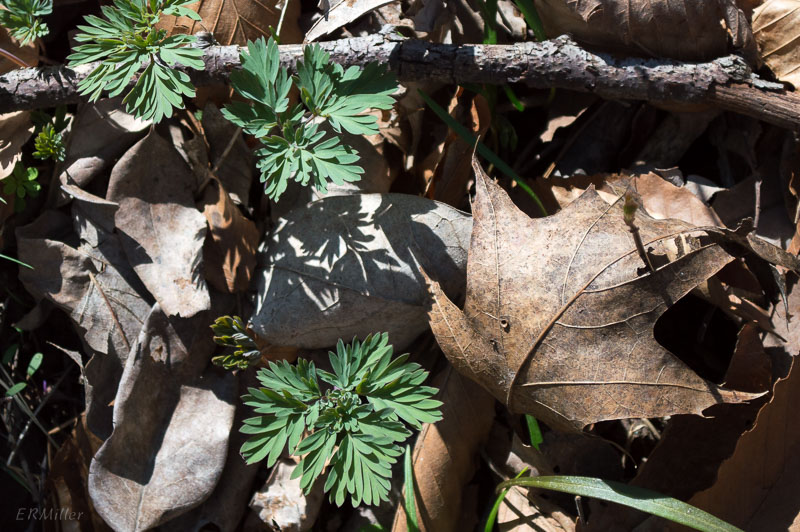
Emerging foliage:

20150404-20150404-_DSC0018

long-tube valerian (Valeriana pauciflora)

wild pink (Silene caroliniana)
smooth rockcress (Arabis lyrata) – in bud
Solomon’s seal (Polygonatum biflorum)
twinleaf (Jeffersonia diphylla) – a single clump, one bud
early saxifrage (Saxifraga virginiensis) – in bud
early meadow rue (Thalictrum dioicum)
toadshade (Trillium sessile)
Coville’s phacelia (Phacelia covillei)
moss phlox (Phlox subulata)
big stands of ramps (Allium tricoccum)

Flowers:
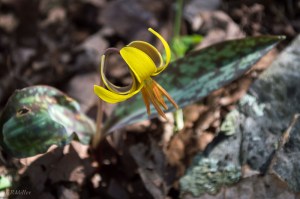
20150406-20150406-_DSC0047

a single trout lily (Erythronium americanum)

harbinger-of-spring (Erigenia bulbosa) – full bloom
spring beauty (Claytonia virginica)
cutleaf toothwort (Cardamine concatenata)
leatherwood (Dirca palustris)
spicebush (Lindera benzoin) – full bllom
Dutchman’s breeches (Dicentra cucullaria)


April 6, 2015
Carderock, the Basin, and Billy Goat B
60 F at 10:00 am; 72 F at 1:00; sunny; light winds

Lots of large turtles sunning themselves; still can’t identify species, they’re too far away for clear photos

No new emerging foliage, but a lot more twinleaf
Fragile fern (Cystopteris species) and ebony spleenwort (Asplenium platyneuron)
Big fat buds on many trees, including leaf buds on beech (Fagus grandifolia):

20150406-20150406-_DSC0075

and flower buds on paw paw (Asimina triloba)

Flowers are beginning to go crazy:

20150406-20150406-_DSC0057round-lobed hepatica (Hepatica nobilis var. obtusa)…

…two more , for a grand total of four plants – whoo-hoo!
spicebush now in full bloom
about a dozen trout lilies
harbinger-of-spring
spring beauties everywhere
a lot more leatherwood (several different plants)
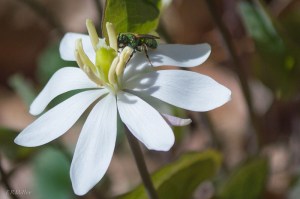
20150406-20150406-_DSC0026twinleaf – a few buds, a few flowers

slender toothwort (Cardamine angustata)
early saxifrage – just a few
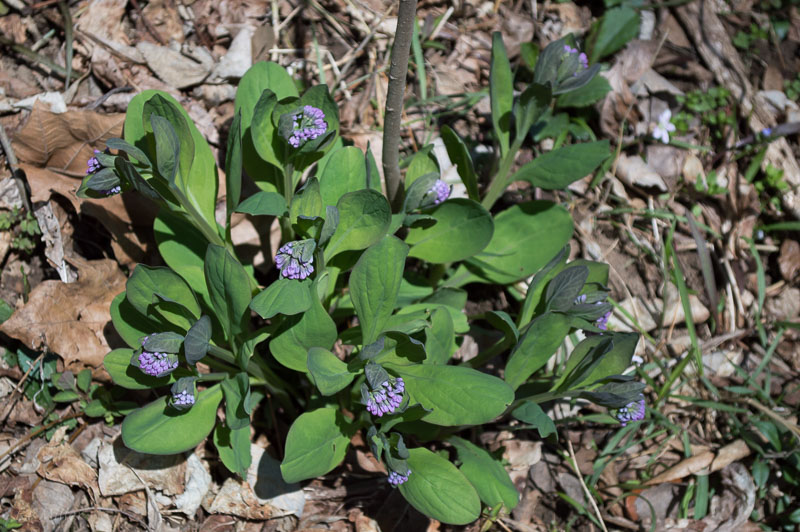
Virginia bluebells (Mertensia virginica)- just a few buds have opened
violets (Viola species)- only 2 blue ones, probably common blue
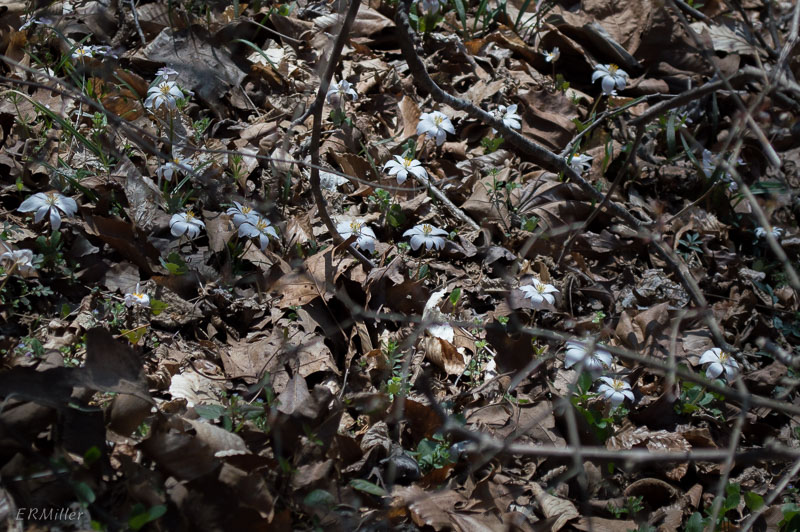
a dozen rich patches of bloodroot (Sanguinaria canadensis)


20150406-20150406-_DSC0013

Elms

20150401-20150401-_DSC0250

Ulmus species; Ulmaceae (elm family)

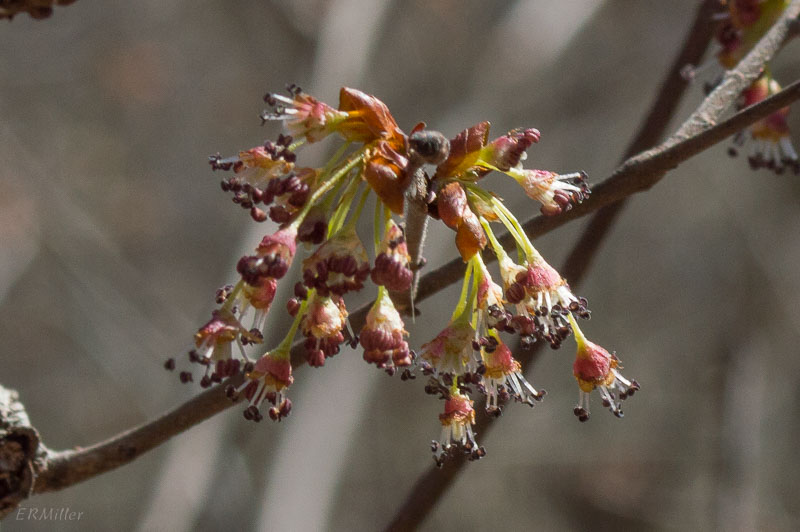
Shame on me.  As a budding naturalist, I should have taken my tree identification book along and keyed out the species.  But I didn’t.  Quite sure it’s an elm, not sure which one.

In general, elms are medium to tall (a few species get close to 100 feet), vase-shaped in silhouette.  They were a favorite street tree in the US in the early 20th century. Which is a shame, because diseases take hold easily in monoculture plantings (consider the Irish potato famine).  Dutch elm disease killed an estimated 75% of the elms in North America by 1989.  Fortunately, there are disease-resistant cultivars being developed, and the future doesn’t look quite as bleak for the American elm as it does for the American chestnut.

Most elms flower before leafing out.  The flowers themselves are inconspicuous; what you can easily see are the sepals and stamens, but there are no petals. On an otherwise naked tree the effect is lovely, like there’s a faint reddish cloud hovering over.

Four native and four alien species can be found in Maryland.  I’m heading back to the same area in a few days; this time I’ll take the book and figure out which one this is.

Die, You Monster

I am an ecology-minded woman.  I appreciate the diversity of life and the way we are all interconnected in one vast biosphere and all that, but there are limits.

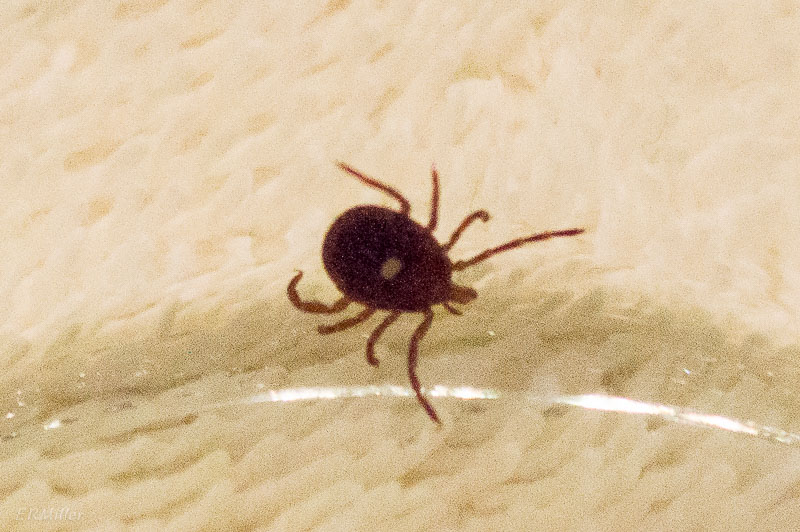
I found this horrid creature behind my ear last night:

20150403-20150403-_DSC0003-2

She’s in a jar, awaiting certain death, and I have no qualms about that.

The range of the lone star tick (Amblyomma americanum) is spreading northwards; from what I’ve heard it was fairly uncommon in Maryland as recently as ten years ago.  But they’ve been found as far north as Maine, and I can tell you from (painful) experience that they’re quite common here now.

The good news is that they don’t carry Lyme disease.  The bad news is that they can carry other diseases, such as Rocky Mountain spotted fever and the dreaded meat allergy. If I ever go vegetarian, I want me to make the decision, not some arachnid.

They’re described as aggressive biters of humans, at all stages in their life cycles.  And the bites hurt.  A lot.

Protect yourselves.  Wear long-sleeved clothing and use bug repellent, and do a thorough check when you’re done outside for the day.

Information from the CDC here; identification and other info from tickencounter.org here.

Journal Entry for April 1

Billy Goat B trail
clear and 47 F at Carderock, 10:30 am
61 F at 2:20

Things Found:
bluejay feathers (see yesterday’s post)
a dozen turkey vultures eating something
a few turtles sunning themselves on logs – northern red-bellied cooters, perhaps
20150401-20150401-_DSC0049


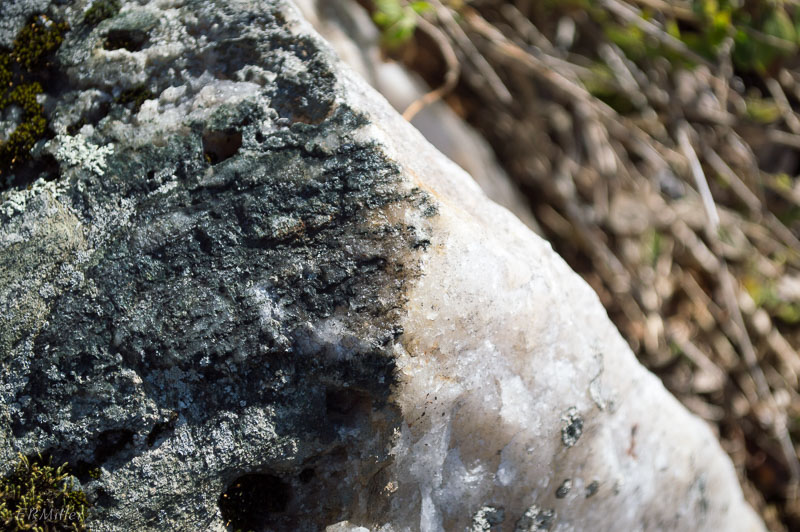
a particularly lovely rock, gneiss or schist on one half, quartz on the other


Emerging Foliage:
Virginia waterleaf (Hydrophyllum virginianum)
southern chervil (Chaerophyllum tainturieri)
20150401-20150401-_DSC0013


squirrel corn or Dutchman’s breeches, too soon to say (Dicentra species)


In Bud:
slender toothwort (Cardamine angustata)
early saxifrage (Saxifraga virginiensis)
spicebush (Lindera benzoin)
20150401-20150401-_DSC0036


Virginia bluebells (Mertensia virginica)


In Bloom:
20150401-20150401-_DSC0087

spring beauties (Claytonia virginica)


harbinger of spring; a favorite patch is now covered by a downed tree that took some vines with it.  The flowers are visible but inaccessible for close inspection (Erigenia bulbosa)
maples, both Acer negundo and Acer rubrum (probably)
elm, species unknown (Ulmus)
just a few cutleaf toothwort, on sunny, south-facing slopes (Cardamine concatenata)
round-lobe hepatica, one in flower, one in bud (Hepatica nobilis var obtusa)
20150401-20150401-_DSC0187

a single bloodroot, though a friend reports there are more (Sanguinaria canadensis)


And sadly, some aliens: common chickweed, purple dead nettle, hairy bittercress…20150401-20150401-_DSC0062


…and ivy-leaved speedwell