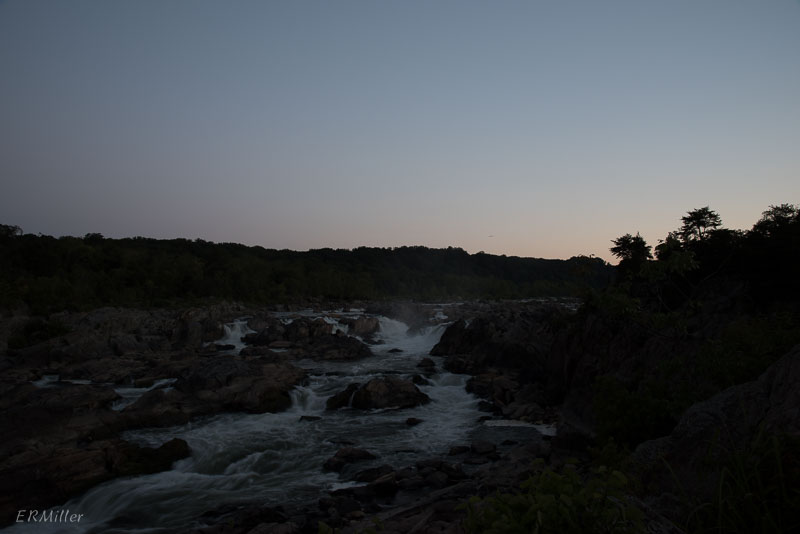
Sunrise on Olmsted Island (A Walk Down Memory Lane)

20150813-20150813-_DSC0035
Great Falls from the Olmsted Island overlook, 13 minutes before dawn

I rarely go over to Olmsted Island – the Great Falls overlook in the middle of the Potomac river, accessible from the Maryland side – because, well, because there are too many people.  And I’ve been there a lot over the years.
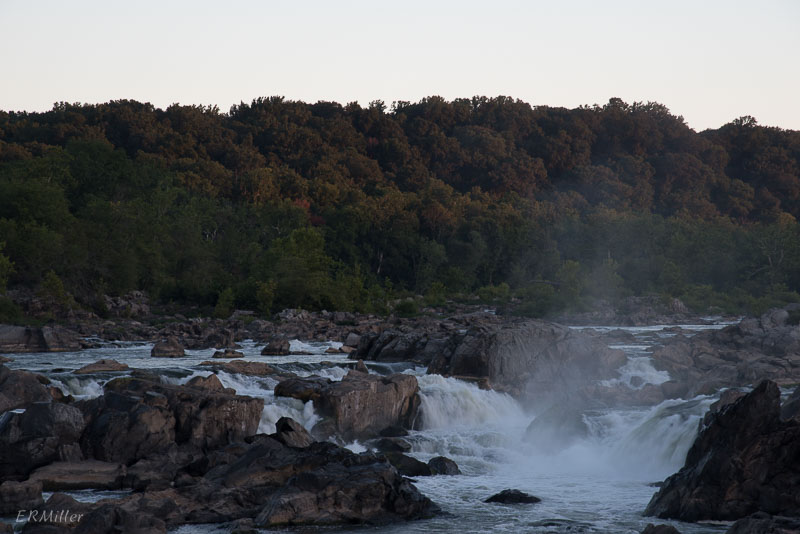
20150813-20150813-_DSC0064

30 minutes later; note the mist rising

It’s fair to say that Olmsted Island is where I fell in love with nature.  I remember going there with my father when I was quite young, some time after 1969 when the steel bridges were installed but before they were destroyed by Hurricane Agnes in 1972.  I remember being devastated by the news, and wondering when, if ever, they would be rebuilt.  It would be 20 years before I was able to go there again.  I remember that while waiting, I explored all over Bear Island (where the Billy Goat A Trail is), climbing canal embankments down to the river, wading across to explore the Rocky Islands when the water was low.  Much of this while playing hooky from high school.

20150813-20150813-_DSC0109

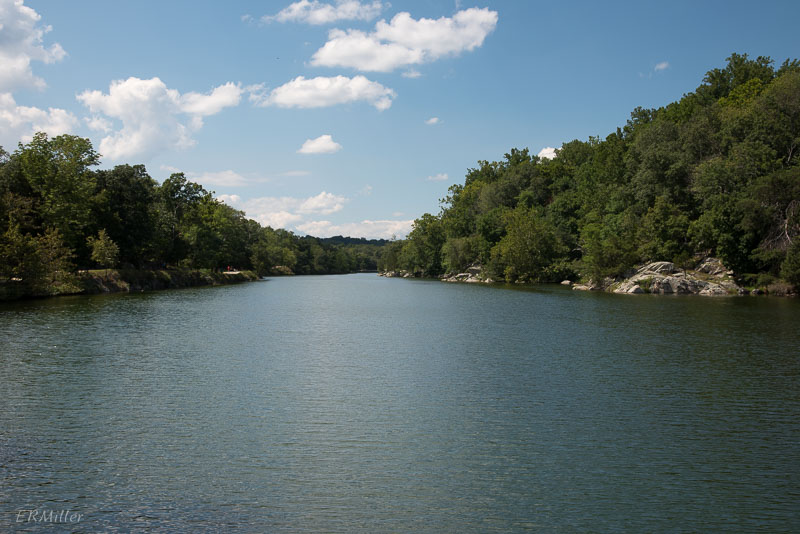
one of many side-channels

I remember one day in the mid-1990s, two days after a big snowstorm which was followed by temperatures in the 50s and steady downpours.  I found my raingear, hopped in the car, and drove to Great Falls, where to my delight I found one other car – ONLY one other car – which belonged to the volunteer at the tavern, who told me that I had about an hour to get to the overlook and back before the bridges were closed against the floodwaters, which were already no more than 5 feet below that first span…  I had the place utterly to myself, in mist and fog and rain and flood.  It was spooky, it was mystical.  It was glorious.

I had Great Falls to myself.

20150813-20150813-_DSC0166

another side channel

The other day, when I took these pictures, it almost happened again.  Three women were there for only a moment; one man walked quickly there and back. For ninety minutes I had the place almost to myself.

20150813-20150813-_DSC0104

and another

Totally worth getting up early.

It’s still one of my favorite places on Earth.
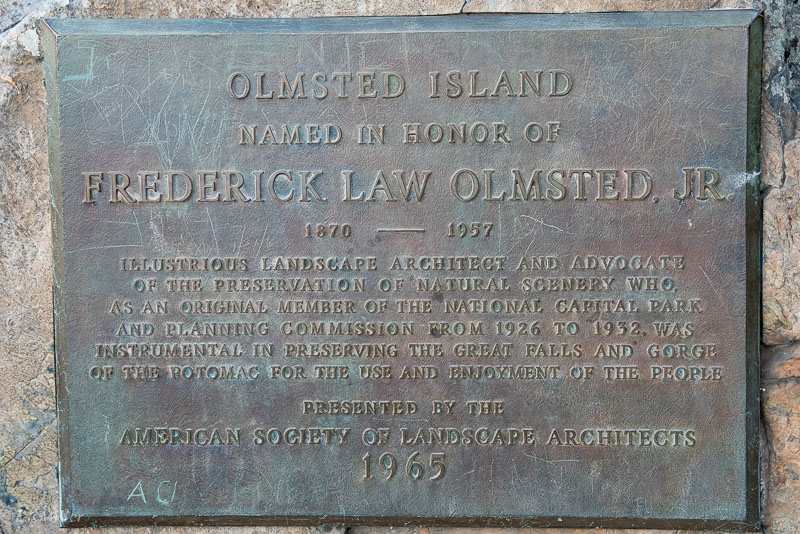
20150814-20150814-_DSC0036

OLMSTED ISLAND
NAMED IN HONOR OF
FREDERICK LAW OLMSTED
1870 – 1957
ILLUSTRIOUS LANDSCAPE ARCHITECT AND ADVOCATE
OF THE PRESERVATION OF NATURAL SCENERY WHO,
AS AN ORIGINAL MEMBER OF THE NATIONAL CAPITAL PARK
AND PLANNING COMMISSION FROM 1926 TO 1932, WAS
INSTRUMENTAL IN PRESERVING THE GREAT FALLS AND GORGE
OF THE POTOMAC FOR THE USE AND ENJOYMENT OF THE PEOPLE
PRESENTED BY THE
AMERICAN SOCIETY OF LANDSCAPE ARCHITECTS
1965

Flower of the Day: Creeping Bush-Clover

20150813-20150813-_DSC0158-2

Lespedeza repens
Fabaceae


Another new-to-me species from recent forays upstream of my usual hunting grounds.  As the name suggests, this is a plant that lies along the ground, though it isn’t a vine; it simply has a reclining habit, as they say.  It can grow to 3 feet long.

Creeping bush-clover is one of 26 Lespedezas (alien, native, and hybrids) found in the continental US; it ranges from Texas to Wisconsin and eastwards, but not all the way north into New England.  It’s a plant of special concern in Connecticut and rare in New York.

Strangely, it’s listed on invasives.org, but with no particular notes about why.

I found a few of these plants near the boardwalk on Olmsted Island; as a result, I couldn’t get very close to study them (it’s prohibited to leave the boardwalk there).  Thank goodness for the zoom-in feature in Lightroom.  It’s possible that this is a different species, L. procumbens.  I posted the pictures to several internet groups asking for confirmation; there was agreement about the genus, but only a few people stated outright the species.


New (to Me)

Though by no means an expert, I have a pretty good handle on what’s to be found in the area of the Billy Goat B and C trails. So I haven’t been out there as often this year, which means I haven’t found much that’s new and exciting.

20150812-20150812-_DSC0022

So the other day I walked upstream from Old Angler’s Inn, past Widewater, and went just a little ways up one of the Billy Goat A access trails, and partway along Billy Goat A itself.

Billy Goat A is “the” Billy Goat Trail, as popular ’round here as Old Rag Mountain is in Shenandoah National Park. On a Wednesday afternoon in August, there was no escaping the sound of people talking.  Or the sight of people (and their dogs, prohibited on BGA) walking.

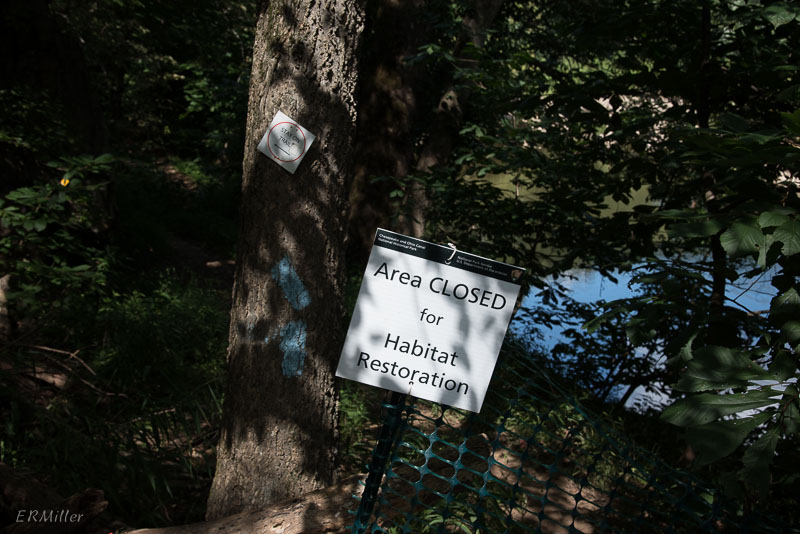
The problem (other than I hike for solitude in nature, not for listening to other people prattling on) is that the Billy Goat Trail and Bear Island are being loved to death.  Have been loved to death, really, over many years. So believe it or not, I was actually pleased to see this sign

20150812-20150812-_DSC0025

along with many signs telling people not to leave the trail. Which is a bit of a bummer for me, but if that’s what it takes, I’ll comply.

Wish everyone else would, too.  Wish people would treat the area with a little respect while using it as their playground.

20150812-20150812-_DSC0014

At any rate, in one of the side pools along the canal at Widewater something caught my eye.

small water plantain
Alisma subcordatum
Alismataceae


Conditions were sub-optimal for close-up photography.  It was shady, breezy, and I didn’t have the tripod along, which meant in order to get a reasonably not-blurry picture I had to increase the shutter speed, which meant I had to bump the ISO way up (the above picture was shot at ISO 1600), which means noise and not-too-clear pictures…

20150812-20150812-_DSC0019

…and no good close-ups of the flowers, which are itty-bitty. No more than 1/8″ across. Perhaps I’ll go back soon and try again.

Small water plantain is an emergent aquatic plant that can be found across most the the US and Canada, except for a few western and northwestern states and provinces.  And there’s really not much else to say about it, except that I found something new (to me).

20150812-20150812-_DSC0017stay still, darn it!

Grassleaf Mudplantain

20150728-20150728-DSC_0195

Heteranthera dubia
aka water stargrass
Pontederiaceae


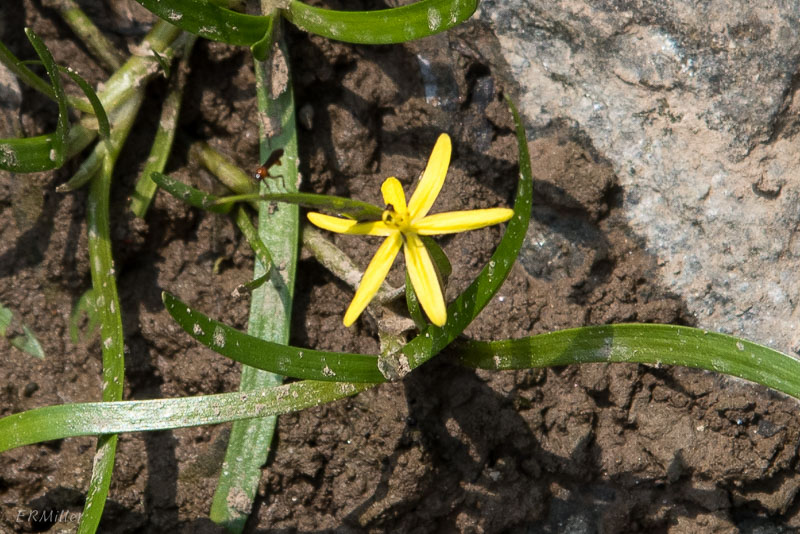
Granted, this is not the most compelling photo I’ve ever posted, nor is it the most interesting plant.  But I love it, perhaps because it’s unexpected, a bright yellow star in the muck. The common names describe it well.  This low-growing plant of wet places has long, narrow leaves that look like blades of grass.

Here’s a closer look:

 20150728-20150728-DSC_0195-2

It grows through most of the US except for some desert states. Technically it is an aquatic plant, but is known to survive for a time out of the water, so long as the soil is wet.  One source refers to a ‘terrestrial form’ but doesn’t go into any detail.

You’ll find this plant along the banks of the river in mid to late summer, as the water levels drop and the shoreline becomes more exposed.  What’s really neat is that in the Potomac Gorge, you can find it as much as 15 feet above above river level!  Like in the pothole that’s deliberately overexposed in the photo below, left of and slightly below the center.  I’ve been keeping an eye on it for several years now; as far as I can tell, it’s deep enough that it never dries out. Presumably it’s replenished by precipitation and the occasional flood.

20150731-20150731-_DSC0425-2


The rock formation is one of the bedrock terraces the Gorge is known for.  And subject of a future post.

Fertile Fronds (More About Ferns)

20150711-20150711-_DSC0066

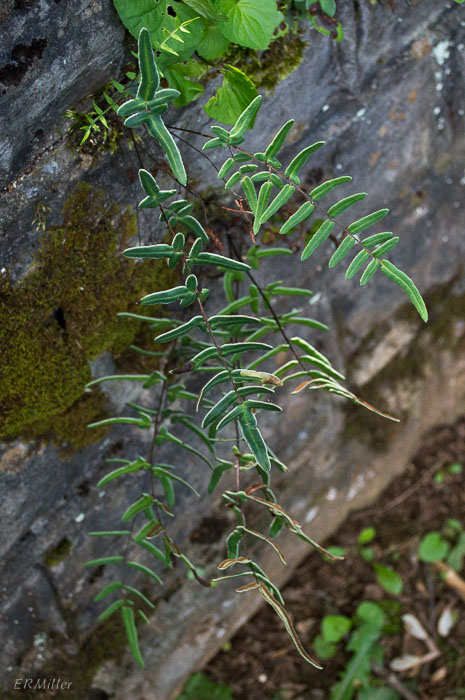
fertile fronds of purple cliffbrake (Pellaea atropurpurea)


So if ferns aren’t flowering plants, how do they reproduce?  The answer is fairly technical, and detailed descriptions are only a search away.  Here’s a good one.  A short answer is: they produce spores rather than seeds.  (Although, as with seed plants, there are vegetative means of reproduction as well.)

Spores generally, but not always, form on the underside of a frond.  Not all fronds are fertile (that is, spore-bearing).  If you look on the back of a fern frond and see lots of little dots, you’re looking at a fertile frond.

The spores are contained within structures called sporangia.  The sporangia, in turn, are often (but not always) clustered together in structures called sori (singluar sorus), which are the small dots that you can see with the naked eye. Sometimes the sorus will be covered by a flap of tissue called an indusium (plural indusia).

Noting the characteristics of the sori – how they’re shaped, how they’re placed on the pinnae – can be an important step in identifying the species of fern.

And now, the meat of this post, which I’ve written in part because this stuff is fascinating, but mostly because I’ve been having fun taking “studio” pictures.

20150805-20150711-20150711-_DSC0071


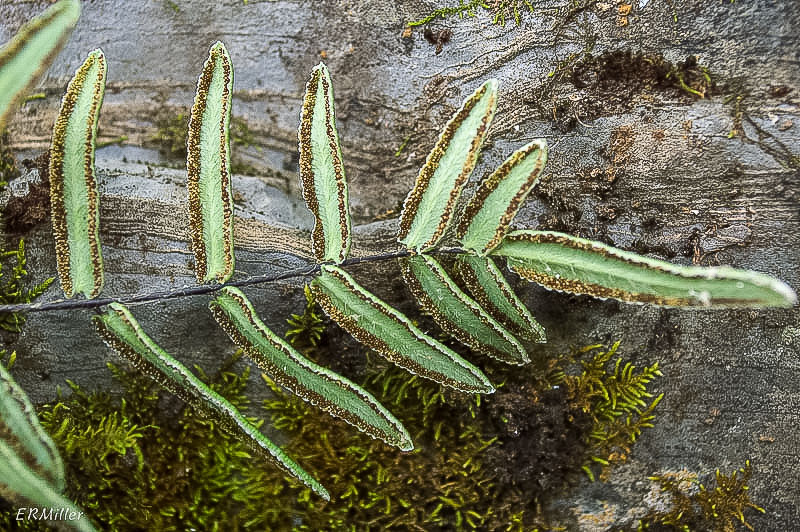
the reverse side of purple-stem cliffbrake; in the lead-in photo, the white margins on the pinnae are a clue that the fronds are fertile (an unusual characteristic)

20150802-20150802-_DSC0531


linear sori along the midveins of the pinnae on ebony spleenwort (Asplenium platyneuron); some indusia are also visible near the rachis


20150802-20150802-_DSC0529-2


orbicular sori along the margins of the pinnae of common polypody (Polypodium virginianum)


20150802-20150802-_DSC0522


marginal woodfern (Dryopteris marginalis)


20150802-20150802-_DSC0523


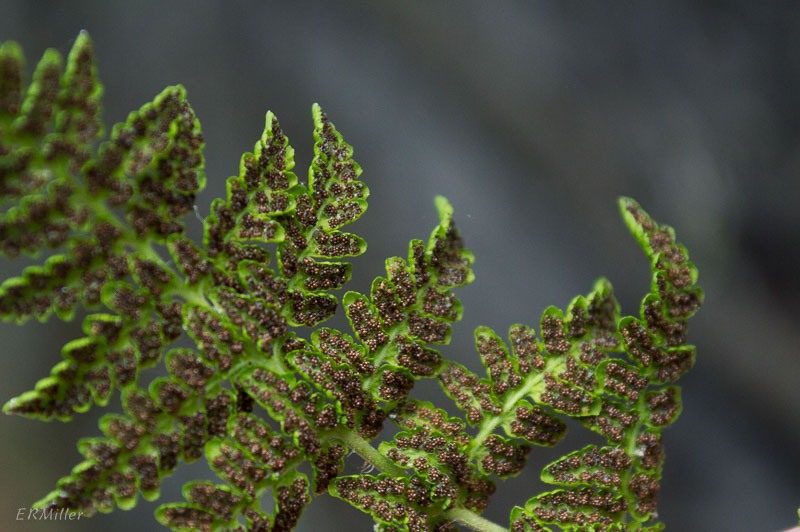
closeup of marginal woodfern

20150527-20150527-_DSC0004


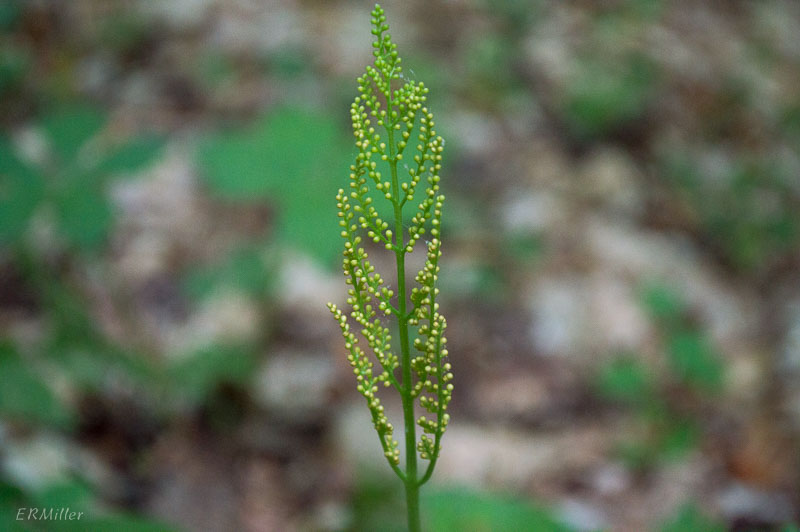
the unusual fertile frond of rattlesnake fern (Botrypus virginianus)


20150730-20150730-_DSC0353


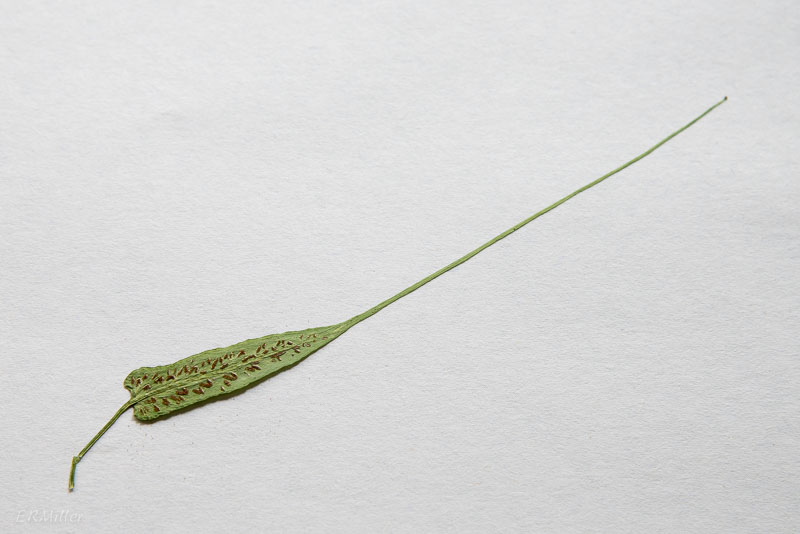
linear sori scattered along the frond of walking fern (Asplenium rhizophyllum)

20150711-20150711-_DSC0079


blunt-lobed cliff fern (Woodsia obtusa)

20150709-20150709-_DSC0062


masses of sori on christmas fern (Polystichum acrostichoides)