Another Visitor to Joe-Pye

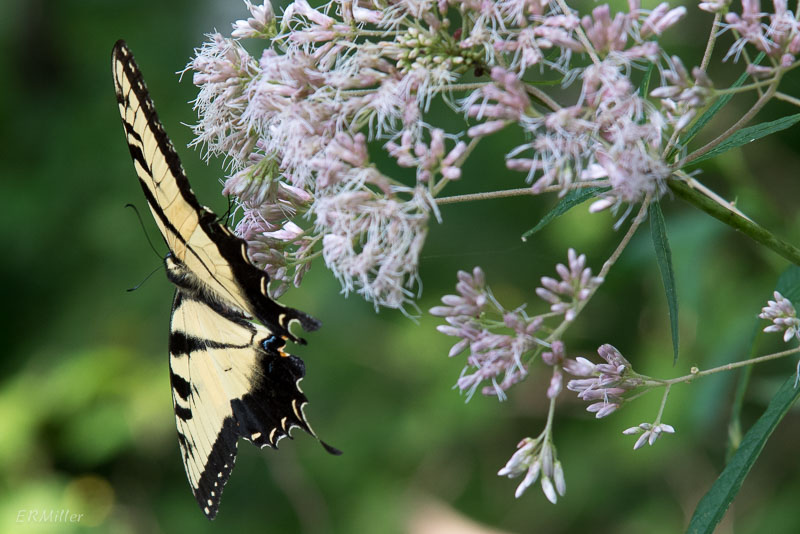
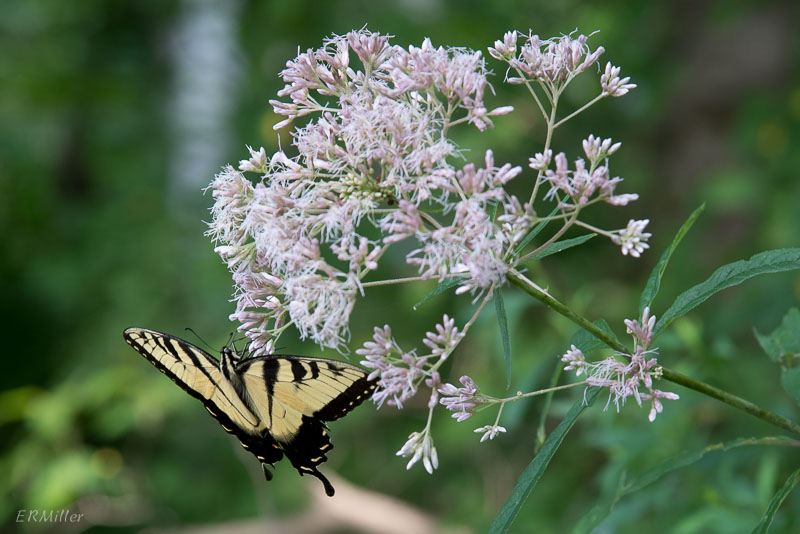
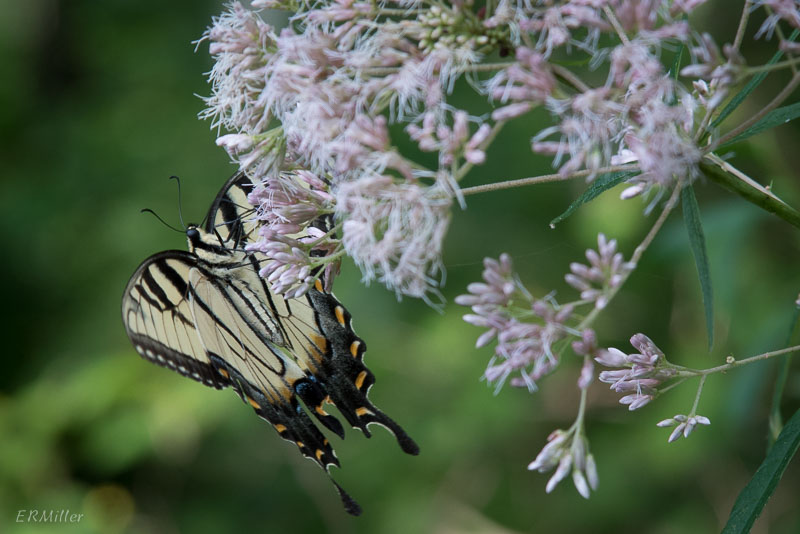
An hour or less after shooting the skipper and swallowtail (see previous post), I saw a third species of butterfly on another joe-pye weed.

20150728-20150728-DSC_0171


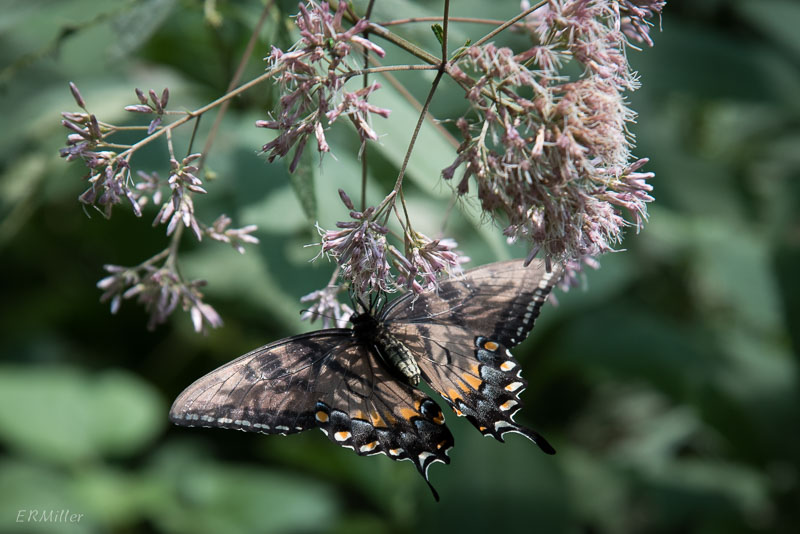
This one is spicebush swallowtail (Papilio troilus). Note the eastern tiger swallowtail in the background.

20150728-20150728-DSC_0180


dorsal view


20150728-20150728-DSC_0187


ventral view


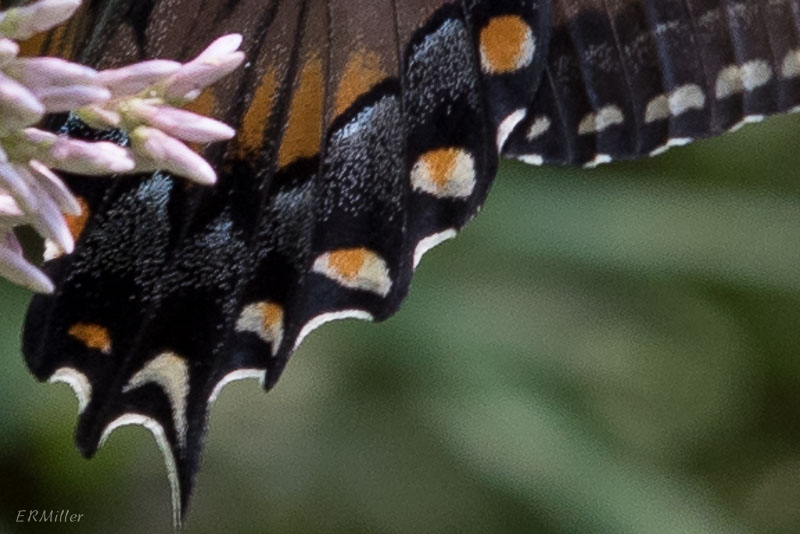
extreme closeup
20150728-20150728-DSC_0181

And now, a confession: I was so focused on shooting the butterflies, I forget to take a close look at the plants.  The plants shown here and in the previous post are likely sweet joe-pye weed, Eupatorium purpureum (Asteraceae), but I don’t have a single picture showing the critical details for a definitive ID.

I think I just gave myself an assignment for later this week.

Who Loves Joe-Pye Weed?

I do, that’s who. And so do the butterflies.  Bent over examining some plant or other at ground level, I stood up to see something moving out of the corner of my eye.

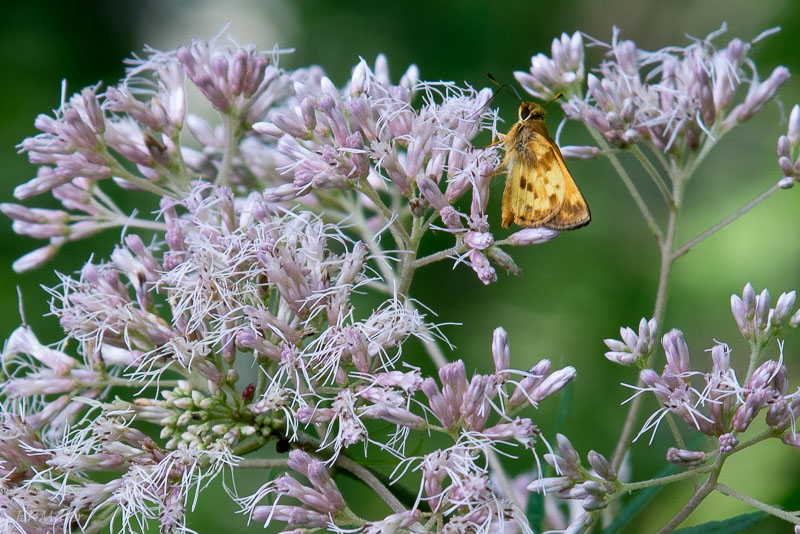
20150728-20150728-DSC_0104


Isn’t that adorable?  Pretty sure it’s a zabulon skipper (Poanes zabulon).


I was putting the camera away when another movement caught my eye.

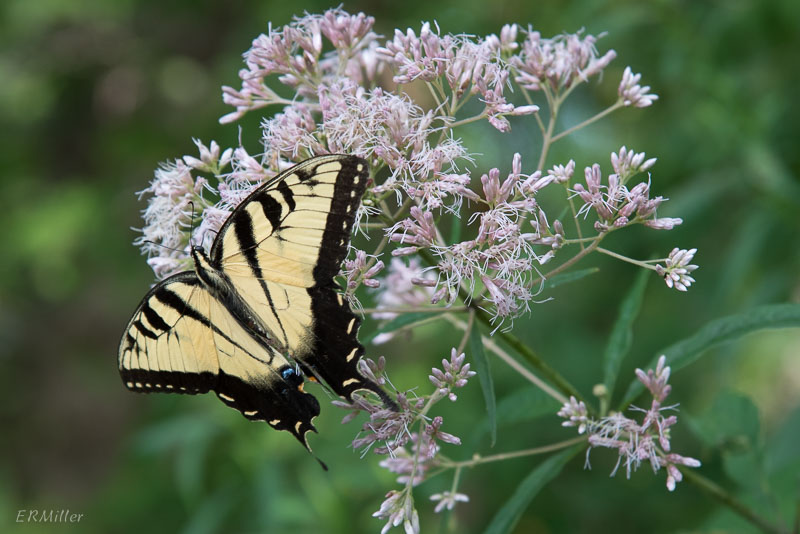
20150728-20150728-DSC_0117


That’s an eastern tiger swallowtail (Papilio glaucus).


This time I kept the camera out and kept shooting.  There was little time to fine-tune the settings (I shoot manual most of the time), but autofocus was my friend that morning.
20150728-20150728-DSC_0112 20150728-20150728-DSC_0113 20150728-20150728-DSC_0110 20150728-20150728-DSC_0108


I was even able to get a ventral view!
<————


Tomorrow, another butterfly visits joe-pye.

20150728-20150728-DSC_0118

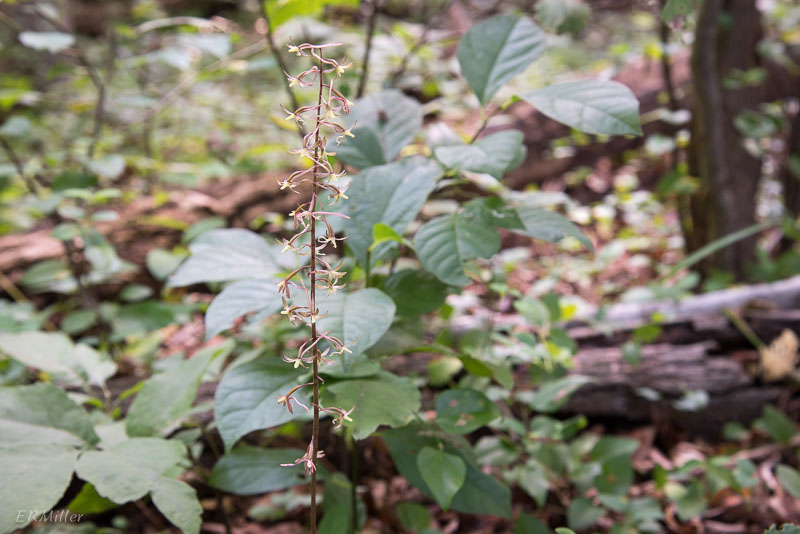
Cranefly Orchid


20150728-20150728-DSC_0096
aka elfin spur
Tipularia discolor
Orchidaceae


You may recall that I’m a little over the moon about orchids, and especially about cranefly orchid.  I know of three distinct patches near each other in one of my usual hunting areas, and I keep an eye on those areas year ’round.

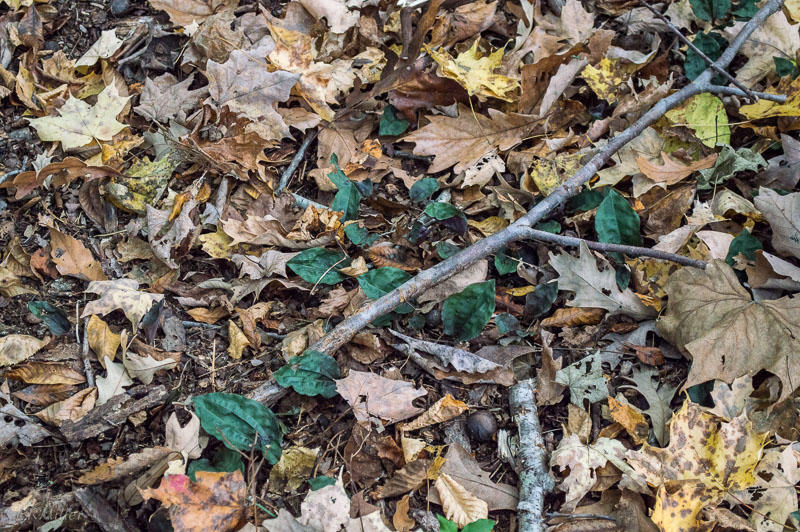
Some time late this spring, I noticed that all the leaves had gone.  It seemed a little early for their annual disappearing act, but I’m not an expert so I shrugged it off and kept watching.

By the last week in July I was getting concerned.  The flower stalks should have been up, and at least in bud if not in bloom.  What was going on?  Did I miss the flowering altogether?  Were they poached?!

This happened with the puttyroot orchid, too.  I know exactly where to find two plants.  All I saw of them this spring was last year’s stalk with seed pods still on it.

I was feeling mighty bad about this.  Not at the thought that I might have missed them, but at the thought that something happened to them and they were gone forever.

20150728-20150728-DSC_0084

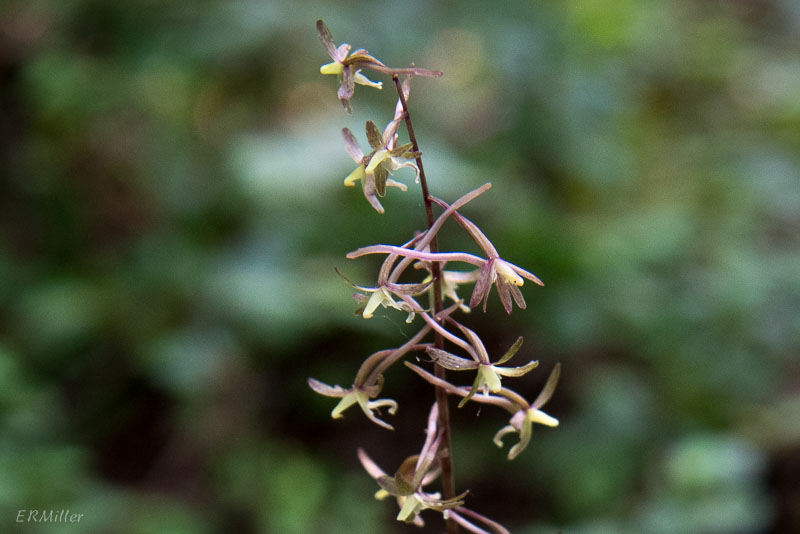
Then, one morning a few days later, in a completely unexpected place, something caught my eye: a single stem of this delicate, easy-to-miss wonder.


I admit, I literally fell to my knees with a sigh.

20141021-_DSC0059

Cranefly orchids grow a single hibernal leaf that dies before the plant flowers in mid summer.  It can be common in parts of its range, which extends from the the upper mid-Atlantic south through Florida and Texas, but is rare in Pennsylvania, threatened in Florida and Michigan, and endangered in Massachusetts and New York.

20150728-20150728-DSC_0092

Variations on a Theme: Rosemallows

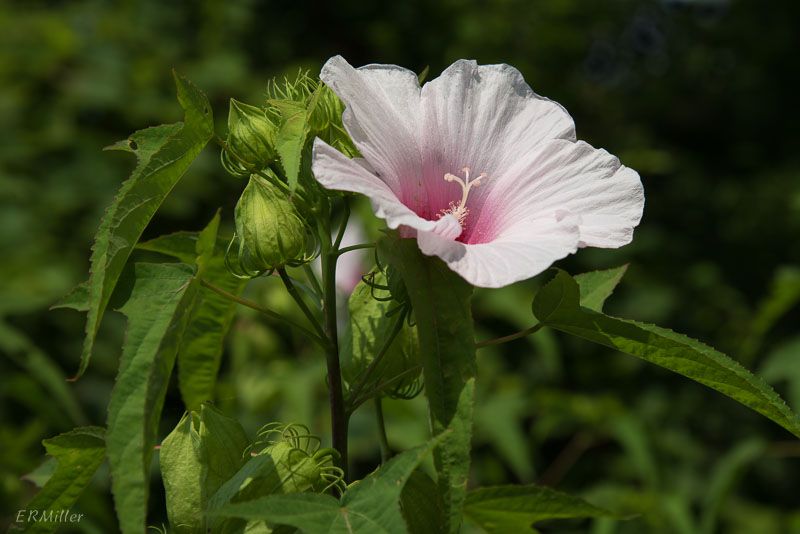
20150728-20150728-DSC_0155

halberd-leaved rosemallow
Hibiscus laevis


and
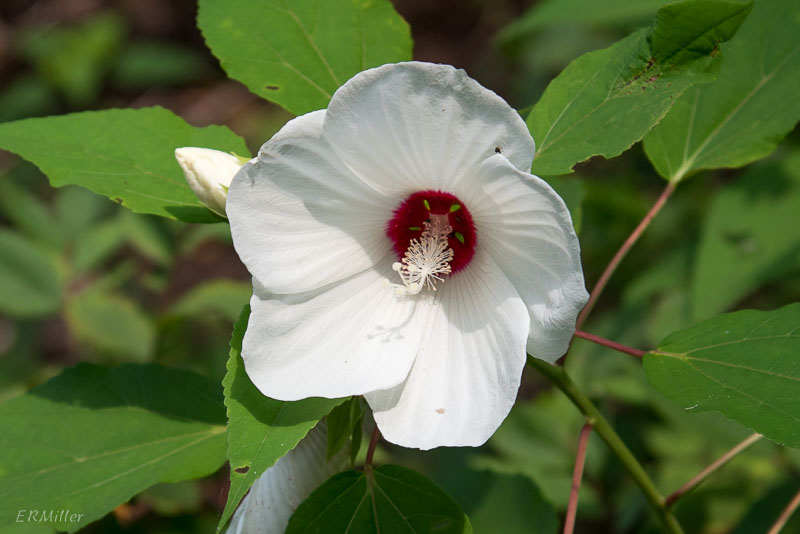
20150730-20150730-_DSC0339


swamp rosemallow
Hibiscus moscheutos

Malvaceae


Like the vervains I wrote about yesterday, these two species are very similar – except for the color of the blossom and the shape of the leaf.

20150728-20150728-DSC_0101

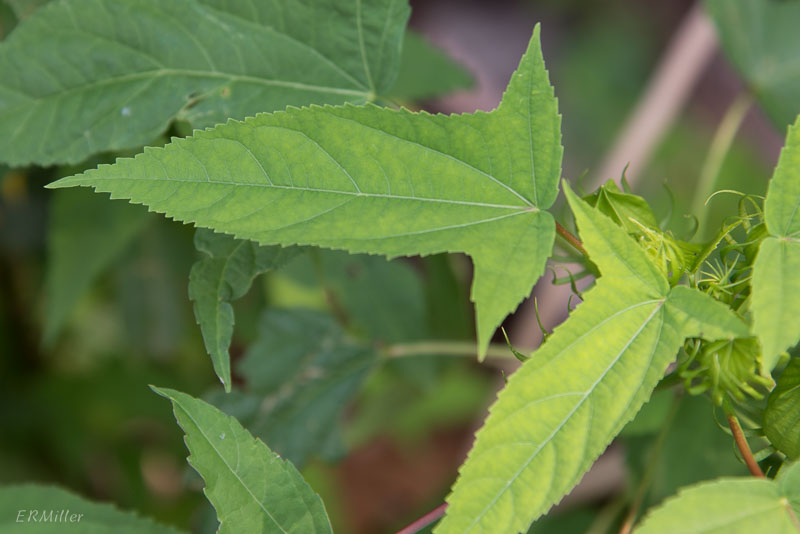
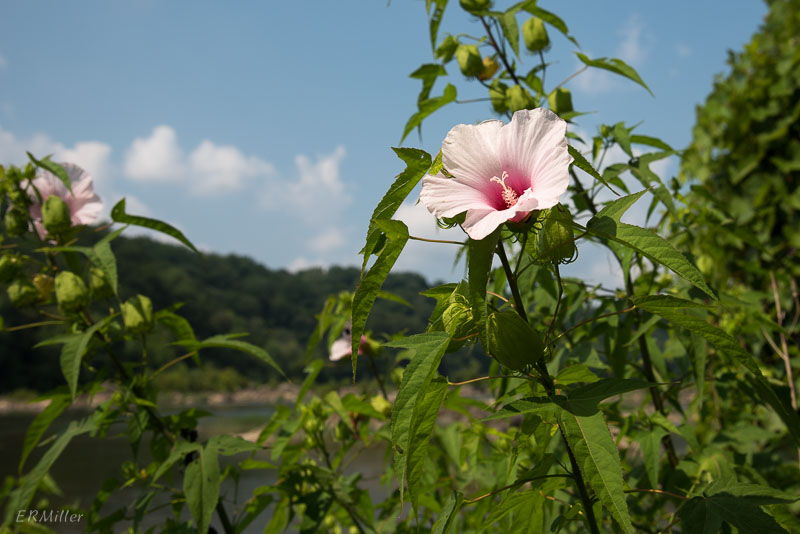
Halberd-leaved rosemallow is usually pink, and has a leaf shaped like, well, a halberd. Or at least someone once thought so.  It certainly is distinctive.


20150730-20150730-_DSC0348-2


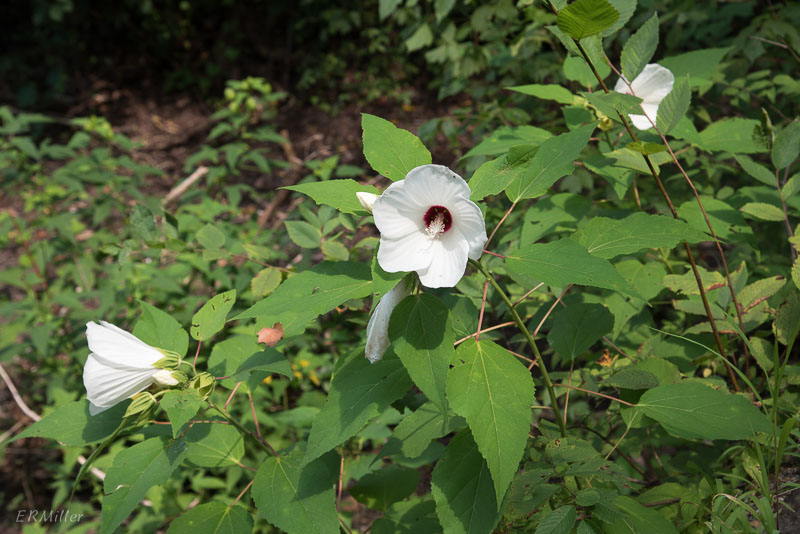
Swamp rosemallow is usually white with a red throat.  The leaf is rounded at the base, pointed at the tip, wider overall, and unlobed.

20150728-20150728-DSC_0151


Both species can get tall – 6 feet or more – and are shrub-like in appearance.

20150730-20150730-_DSC0284


Both like it wet and sunny.  You’ll find the halberd-leaved rosemallow lining the banks of the Potomac river, vast stands of them.

(this is a tiny stand)

20150730-20150730-_DSC0341


I have never seen swamp rosemallow along the river, but there are three easy-to-get-to spots to view it: C&O Canal locks 7, 8, and 10.


By the way, don’t be misled by colors.  Both can vary quite a bit, especially in different parts of the country.

Of the 15 or so native species of Hibiscus in the continental US, these are the only two to be found in the mid-Atlantic Piedmont.

20150728-20150728-DSC_0216

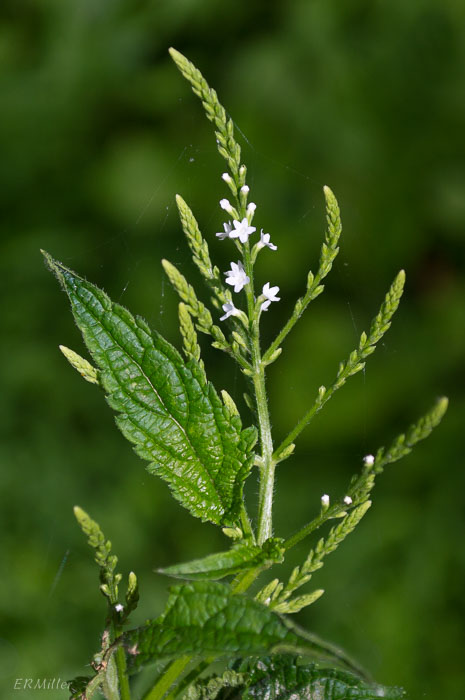
Variations on a Theme: Vervains

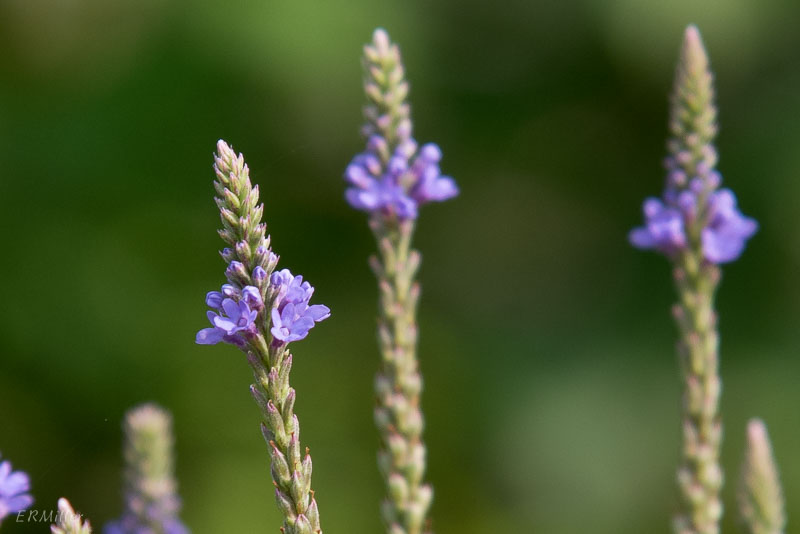
20150728-20150728-DSC_0202

blue vervain
Verbena hastata
20150623-20150623-_DSC0046


and


white vervain
Verbena urticifolia

Verbenaceae

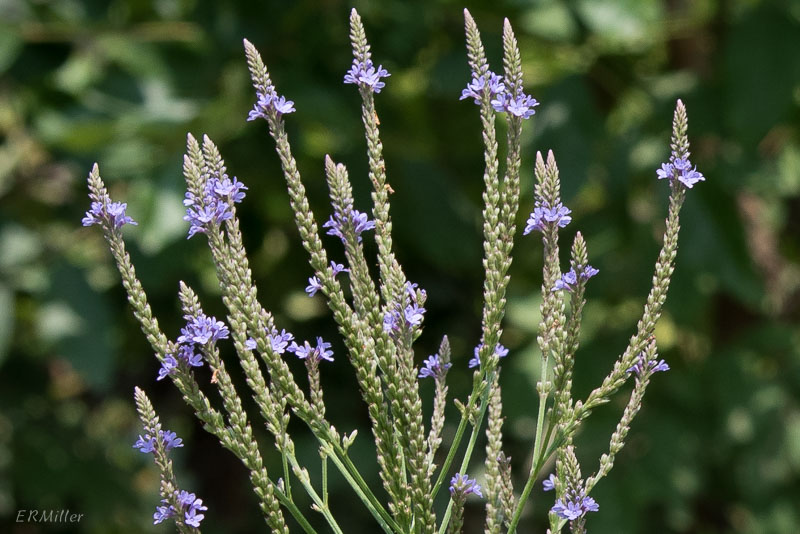
As you can see from the pictures, these two closely related plants have similar inflorescences.  Both species can grow as much as 5 or 6 feet tall.  Authorities vary on this; I’ve seen white vervain at 5 feet and blue vervain at 4 feet.

20150728-20150728-DSC_0211Blue vervain is a plant of wet places (another common name for it is swamp vervain), and is found in every state of the US except Alaska and Hawaii, and almost every province of Canada.  It’s considered weedy by some authorities.


20150730-20150730-_DSC0261

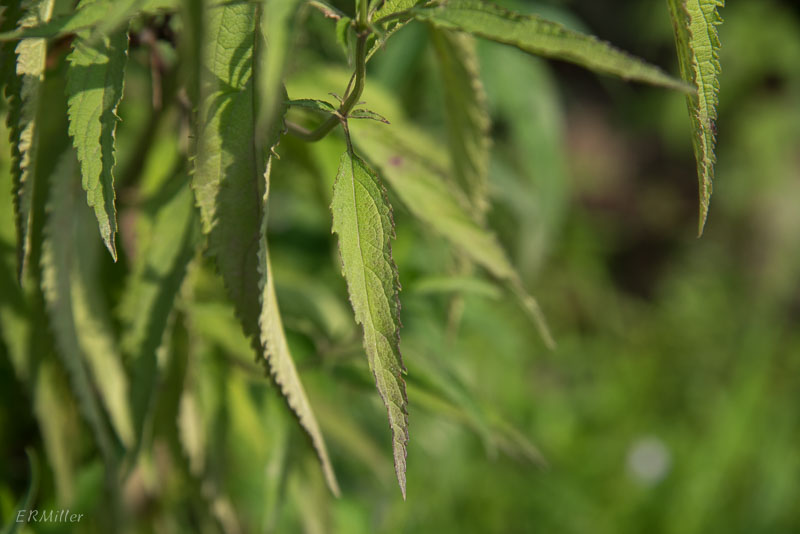
Its leaves are long and narrow…


20150730-20150730-_DSC0249

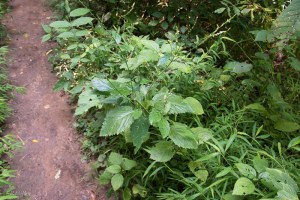
…while the leaves of white vervain are more oval.
 

20150730-20150730-_DSC0248


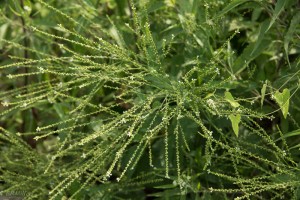
You’ll find white vervain in drier situations, usually in more shade; this small specimen was right along the Billy Goat C trail.  It was almost done blooming, so you can’t quite see the diminutive flowers*.

White vervain isn’t as widespread as blue; it can be found from the Great Plains eastward, but not in the West.  Kentucky considers it possibly weedy, while Maine considers it possibly extirpated.
20150730-20150730-_DSC0305

There are almost 40 native species of Verbena in the US, with widely varying distribution, and about 8 alien species.  Of the native species, 7 occur in the mid-Atlantic Piedmont.  One of these, Verbena x engelmannii, appears to be a naturally-occurring cross between V. hastata and V. urticifolia.  It’s described as having bluish-purple flowers with egg-shaped leaves**.

20150730-20150730-_DSC0263(sorry, this is not V. x engelmannii, it’s V. hastata again)

*or as the Illinois Wildflowers site says, “The lanky branches of the inflorescence are rather long, however, and they sprawl in different directions. This makes the inflorescence difficult to photograph in its entirety.”

**Morton Arboretum via swbiodiversity.org