Three Views

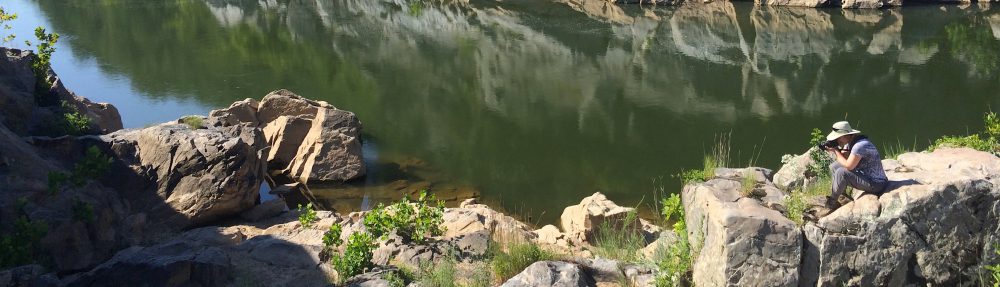
Nine photos of each are on the Three Views page.  Compare this month’s to last and see how low the river has gotten.

September 2, 2015 
77 F at 9:14 am; overcast

20150902-_DSC0004

8:39 am EDT  28mm  f/7.1  1/125 sec  ISO 320

Billy Goat B trail, east end, looking southeast across a narrow channel toward Vaso Island


20150902-_DSC0010

9:51 am EDT  31mm  f/9.0  1/200 sec  ISO 320

Billy Goat B, mid-way between trailheads, looking upstream (more or less northwest) with Hermit Island on the left.


20150902-_DSC0043

10:48 am EDT  40mm  f/9.0  1/250 sec  ISO 160

boat launch ramp near Old Angers Inn, looking downstream and more or less south

Variations on a Theme: Wild Senna

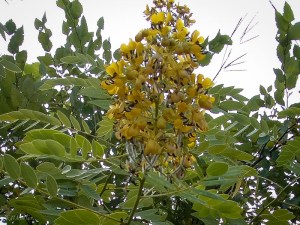
20030101-20030101-IMGP0241-2

American senna, wild senna
Senna hebecarpa


and

20150821-20150821-_DSC0117

Senna marilandica
Maryland senna, southern senna

Fabaceae; in some taxonomic systems it’s placed in Caesalpiniaceae
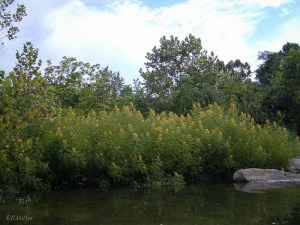
 

20030101-20030101-IMGP0285

While kayaking in the lower Potomac Gorge I saw large stands of senna lining the shore, the plants so tall they could be mistaken for shrubs. But they’re not.  They are herbaceous perennials that can grow as tall as six feet by the time they bloom in late summer.

The two species are quite similar in appearance.  A leaf of S. hebecarpa generally has 5 to 10 pair of leaflets, which tend to be a grayish green.  S. marilandica has 6-12 leaflets per leaf, and sometimes these have a bluish cast.  Neither of these characteristics is a good way to distinguish one species from the other, though.  You need to take a close look at the flowers.

20150821-20150821-_DSC0080

S. hebecarpa flowers have very long pistils with spreading white hairs.  S. marilandica pistils are much less obvious.  And that’s about it.

Both species are native to the eastern US, with S. hebecarpa going (like the Appalachian Trail) from Maine to Georgia, then west as far as Wisconsin.  It’s listed as special concern in Connecticut, endangered in Massachusetts and New Hampshire, threatened in Vermont, and historical in Rhode Island.

S. marilandica only grows as far north as New York, but can be found further south, into Florida, and west to Texas and Nebraska.  There are no conservation issues with this species.

The USDA Plants database does not have county records for the state of Maryland, but shows S. marilandica there.  The Maryland Biodiversity Project has no records of it in the state.  The one shown at top is growing in my garden. It’s a tough plant: sennas are usually found near riverbanks, where they get plenty of water and sun.  Mine is shaded by redbuds and at the top of a slope; the soil could be described as mesic at best.  But the plant is thriving.

20150821-20150821-_DSC0050

this is not the one in my garden!

Various websites describe it as “coarse” and “stunning”.  Beauty is in the eye of the beholder.  If you fancy native plants in your garden, give this one a place near the back, with plenty of room to grow up and out.  And be prepared to stake it if it’s in any shade, else the stems will flop right over under the weight of flowers and seedpods.

Taxonomic note: the specific epithet “hebecarpa” is from the Latin and could be translated as “downy seed”; “marilandica” of course means “of Maryland”.
Who’s Eating My Dill Weed?

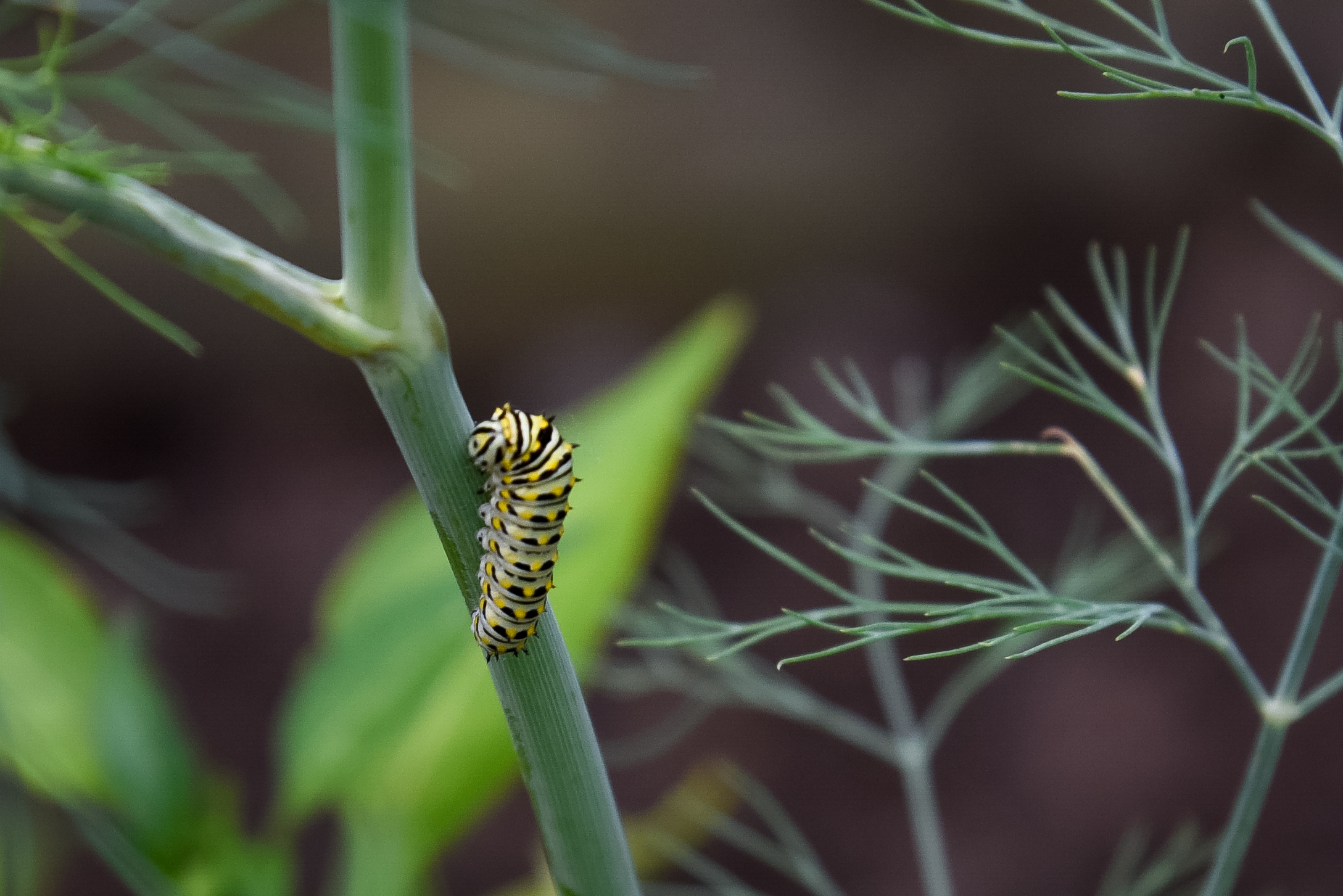
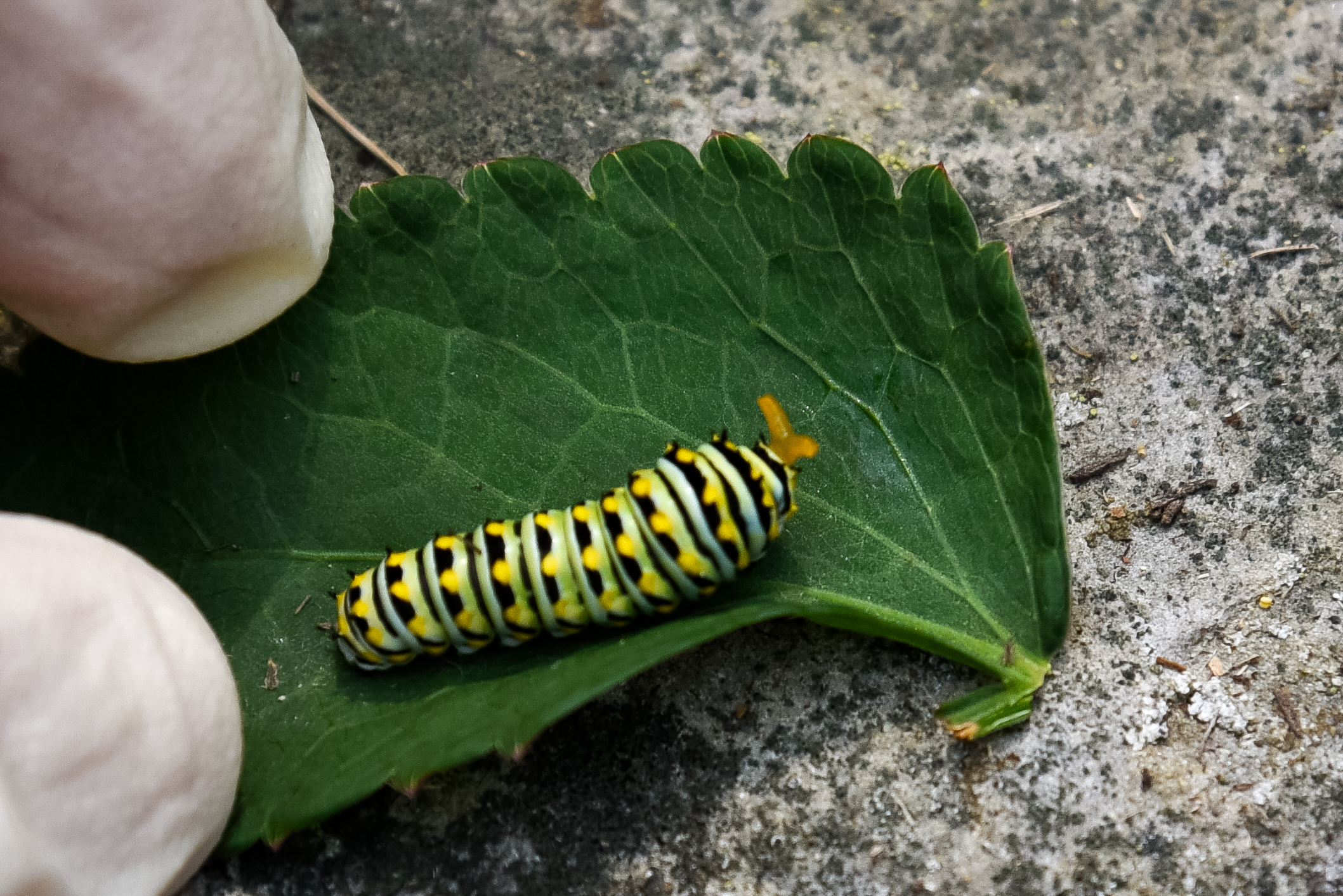
I’m out hunting for wildflowers so often my poor garden is neglected.  This year I let about a dozen or more volunteer dill plants grow wherever they came up. They’re a mess now, some still flowering, most gone to seed and looking weedy. I was pulling them out and cutting them back and generally tidying up when I saw this caterpillar…

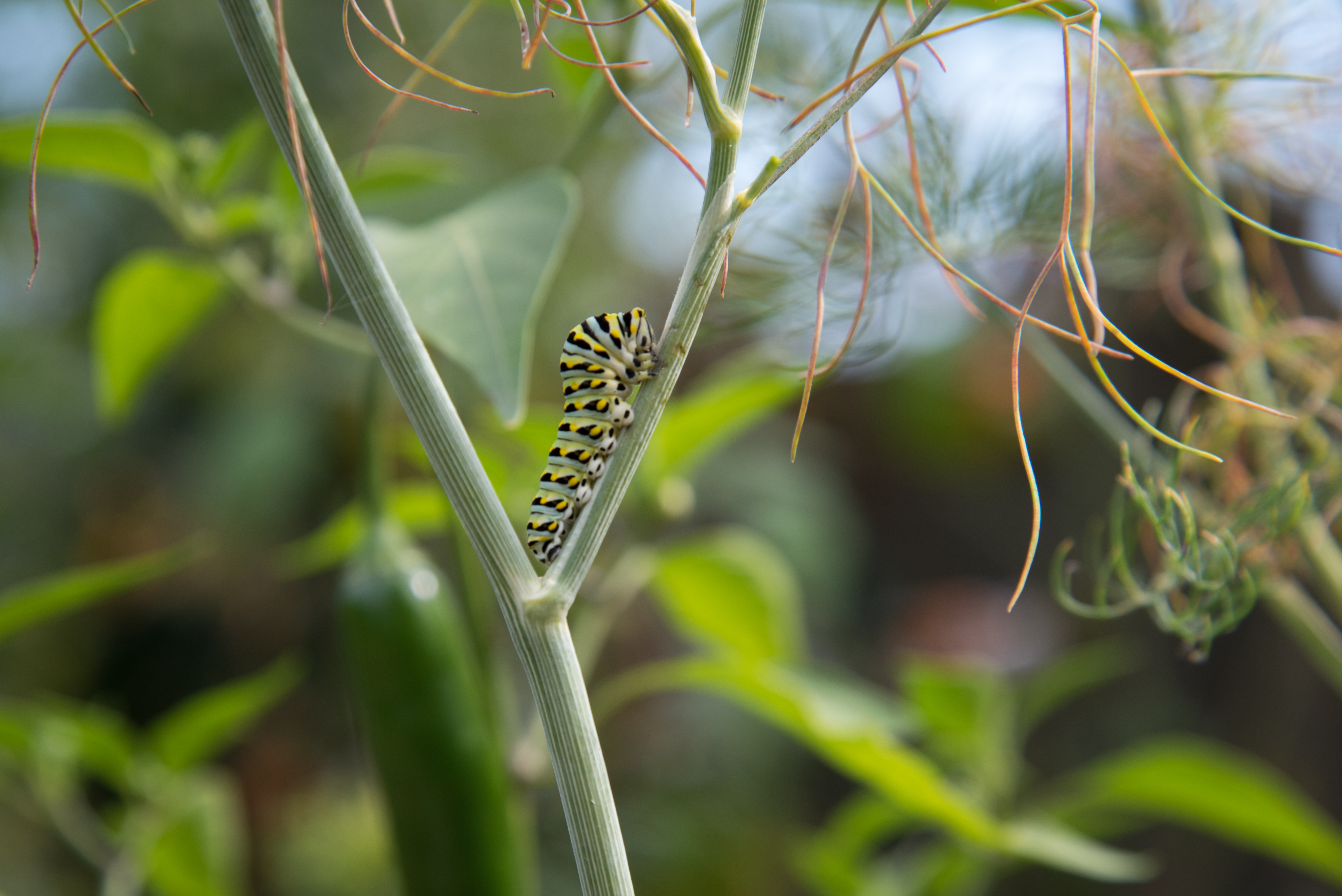
20150831-_DSC0022

…and immediately put down the pruners and went inside to fetch the camera. (That’s a serrano pepper behind the dill, by the way.)

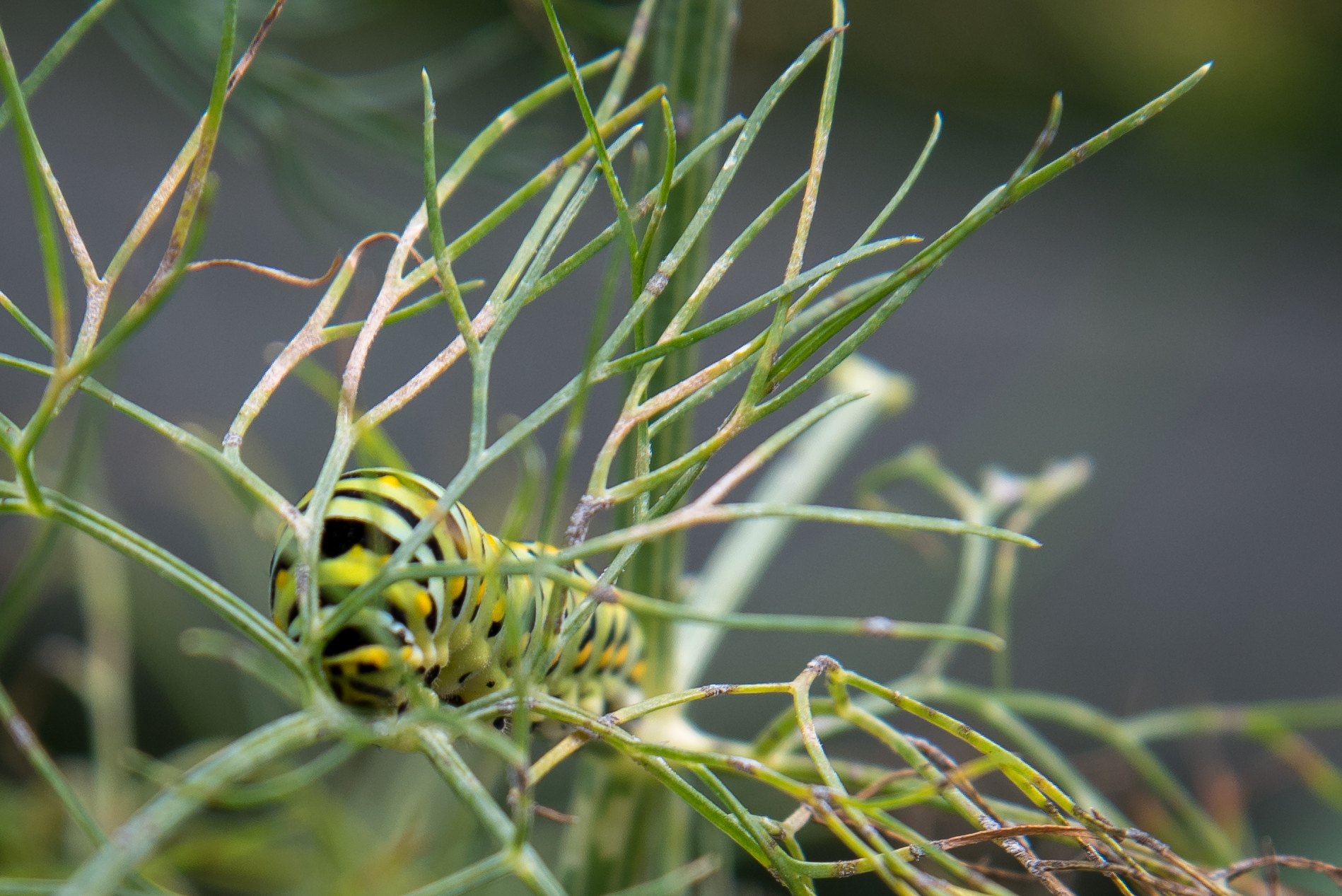
There were several, actually, so I stopped pulling the plants and left the insects where they were – there’s plenty of dill to spare, and these caterpillars will soon pupate to later emerge as black swallowtail butterflies.

Black swallowtail (Papilio polyxenes) caterpillars feed on plants in the Apiaceae, mostly on garden plants brought by European colonists: dill, parsley, wild carrots, and fennel.

20150831-_DSC0024


a late flowering dill plant in my garden, August 31


Learning that, I immediately wondered what they ate before the invasion.  I wasn’t the only one asking that question, for the answers were right there on the internet.  Among other things they love golden Alexanders (Zizia aurea).

20150429-20150429-_DSC0020


golden Alexanders on Billy Goat B trail, April 29


I love golden Alexanders, too, and bought one from a native plant nursery last spring. Darned expensive little thing. It’s coming along quite nicely, but there isn’t enough green to spare to feed a voracious late instar caterpillar.  I don’t know what I’ll do if I find one on the plant. Probably pick it off and move it over to the dill.  Hopefully that wouldn’t cause the osmeterium to come out.

Bon appetite, mes beautés!

20150831-_DSC0017