Tree of the Day: Bigleaf Magnolia

20150527-20150527-_DSC0032

aka large-leaved cucumber tree
Magnolia macrophylla
Magnoliaceae

edit: I later learned that this species is not considered native to Maryland; it is mostly found from Kentucky south to the Gulf of Mexico coast.

A few weeks ago I was hiking in the woods around Belmont Manor and Historic Park* in central Maryland, near the Patapsco River, when I stumbled on a stand of trees with enormous leaves. Given the size of the leaves – they looked almost tropical – and given how many invasive species I’ve found in that area, I assumed it was alien.  So I took a few quick pictures, and researched it later.

Never assume.  This crazy tree (you almost have to see it to believe it) is indeed native to the area.  It grows mostly in the southern Appalachians, with scattered populations elsewhere (like the Maryland Piedmont) but is uncommon within its range. It’s an understory tree (a tall one) that suffers from competition from other trees.  It doesn’t reproduce very quickly, either.  So to stumble across one stand consisting of a few dozen individuals was quite remarkable.

20150527-20150527-_DSC0028

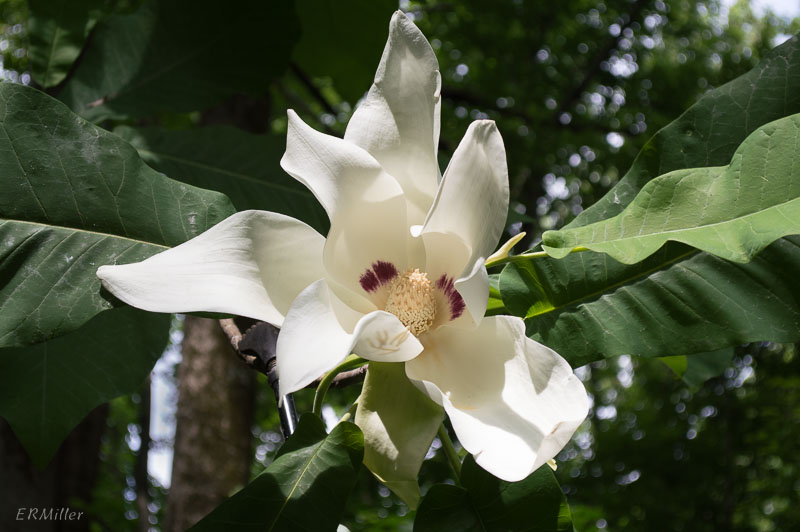
Just a few days ago, I was back in that area hiking with a friend, and to our joy we saw a few of the trees in bloom.

20150506-20150506-_DSC0061

The leaves can grow to two feet long – the longest leaf of any native North American tree.  And the flowers can grow to one foot wide – the largest flower of any native North American plant.

By the way, you’ll never see them as shown in the first photo, unless your friend holds a branch down with a trekking pole, like mine did so I could get that picture.

*If you ever visit Belmont, stop in the nature center and borrow a copy of the wildflower guide – my graduation project for the Maryland Master Naturalist program. Once it’s finished, that is.  In another month or two…

Tree of the Day: Tulip Poplar

20150514-20150514-_DSC0200


aka tuliptree, yellow poplar
Liriodendron tulipifera
Magnoliaceae


This species is one of only two in the genus Liriodendron; the other one is from the other side of the world.  Its native range is from southern New England and Ontario to Florida and west to Louisiana.

Tulip poplar grows fast up to 170 feet tall, and can live up to 300 years.  The wood is valuable in construction.

If you’re familiar with magnolias from landscaping, you can see why this tree is in the magnolia family.  The flower is a few inches wide and hard to miss, unless hidden by leaves.  Speaking of magnolias, I found a very interesting one recently.  That will be the next post on this blog.

20150514-20150514-_DSC0199

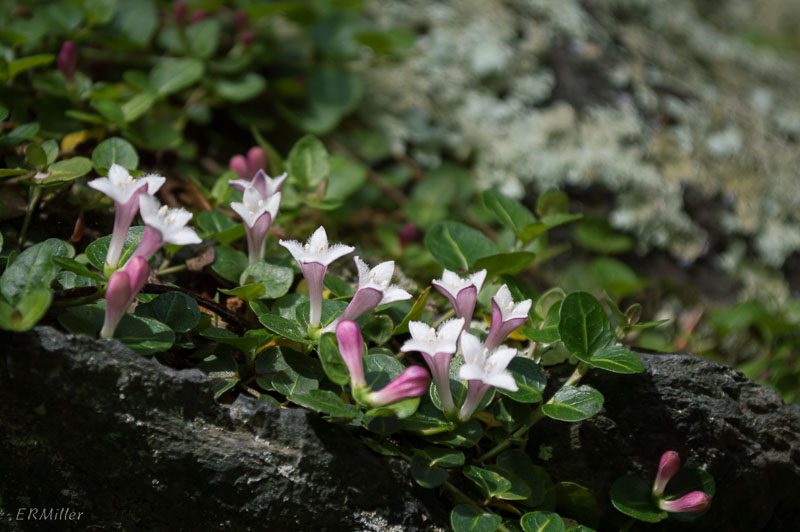
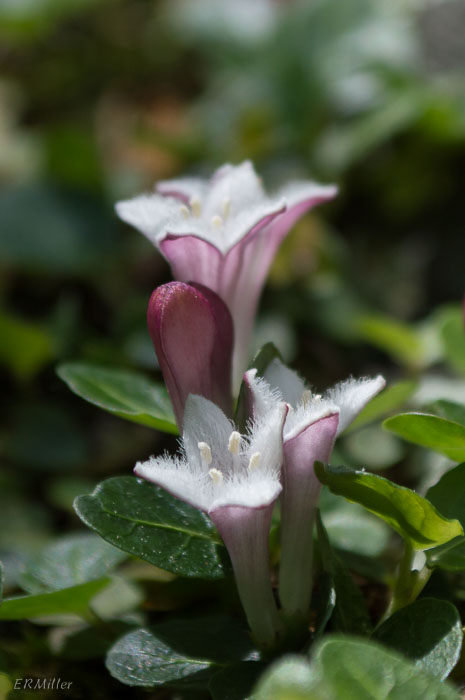
Flower of the Day: Partridgeberry. Again.

20150520-20150520-_DSC0051

Mitchella repens
Rubiaceae

I’ve written about partridgeberry before, I know. But it’s such a neat little plant, I can’t resist posting about it. And it’s in full bloom now.
20150520-20150520-_DSC0052


It’s a trailing vine that can grow many feet long but rarely more than an inch tall.

(<—pinkie finger shot to give sense of scale)

20150520-20150520-_DSC0045


Amusing fact: you’ll find it in the Peterson Field Guide “Trees and Shrubs”, I suppose because it’s woody (barely) and evergreen.

Partridgeberry ranges from Quebec to Florida and west to Texas, and is threatened in Iowa.  No other species of Mitchella grow in North America. It likes moist, acidic soils and can often be found trailing along rocks.

20150520-20150520-_DSC0053

The plants produce pairs of blossoms; if both are pollinated, the ovaries will fuse to produce a single oval, red berry with two dimples.


20150520-20150520-_DSC0047

Other common names include squawberry, running box, twinberry, and pigeon plum.

(You know how people squeal over puppies and kittens?  I could almost squeal over partridgeberry.  I mean really, isn’t it just precious?)