Flower of the Day: Sevenangle Pipewort

aka common pipewort; Eriocaulon aquaticum; Eriocaulaceae (pipewort family)

20140913-DSC_0151-2

I’m cheating again.  Found these plants at the edge of a pond in Nova Scotia. According to the USDA, sevenangle pipewort can be found in Maryland – in Anne Arundel county – and in the District of Columbia, and Fairfax County, Virginia. The Maryland Biodiversity Project lists it in several Eastern Shore and northeastern counties.  So it could be in the Potomac gorge.  Next year I’m hunting for it.

Sevenangle pipewort is endangered in Indiana and Ohio as well as in Maryland. It ranges as far south as North Carolina, west to Minnesota, north into Manitoba, and all the way east to the Atlantic Ocean.

It’s aquatic: all the leaves grow underwater, and a single hollow (hence pipewort), multi-ribbed (hence sevenangle) stem emerges from the water to support the flower head.

There are other pipeworts, including tenangle and flattened, in the eastern US, about a dozen across North America, and more than 400 species worldwide.


Signs

Running low on subject matter – there is nothing left blooming now.  But I want to keep the blog going… Canadians put a lot of signs in their parks.  Here are a few.

20140914-DSC_0087


Bear, moose, coyote – cool! Let’s go look at some wildlife. From a distance.

20140914-DSC_0158-2


“Hike with friends and a solid walking stick.”  I had no idea coyotes were so aggressive.  Note the solid walking sticks parked by the sign for your use.  We saw a lot of that.  We borrowed them, but never used them to fend off coyotes.  When we found a sporting goods store in Ingonish we bought trekking poles.


20140915-DSC_0001


Wait, what?  Aggressive hawk? Are you kidding me?  I would love to know what incident prompted this sign.

20140915-DSC_0072


Hmm.  Dangerous cliff.  No kidding.  But I like the graphics.


20140915-DSC_0116


Okay, this I can see how this might not be obvious.


20140919-DSC_0026


This was from Hopewell Cape on the Bay of Fundy in New Brunswick.  The tidal bore is pretty damn impressive.  “Find a comfortable rock…”  And DO NOT PANIC is always good advice.


20140919-DSC_0027

They’re really not kidding about it.

_DSC0001


And here’s a classic from Dolly Sods, West Virginia.  Now this is something worth posting a sign about.  “If you did not drop it do not pick it up.”  Remind me to tell you about the live grenade my next door neighbor had as a World War II souvenir.

Flower of the Day: Bunchberry

DSC_0163-3

Cornus canadensis; Cornaceae (dogwood family)

Now I’m cheating.  According to the USDA, bunchberry can be found in Maryland.  But it’s a northern plant that doesn’t like the heat and humidity of mid-Atlantic piedmont summers (I should know, I’ve tried growing it often enough), so you won’t find it in the Potomac gorge.  You might be able to find it in the westernmost part of the state (Garrett County), at the higher elevations. Or maybe not; it’s endangered there, as well as in Indiana and Illinois.  And it’s threatened in Iowa and Ohio.

This one I found on Cape Breton Island, Nova Scotia, in September (very unusual for it to be blooming so late in the year), in the boreal forest region.

Really looks like our common flowering dogwood (Cornus florida), doesn’t it? But it isn’t a tree or shrub; it’s a groundcover, standing less than a foot high.

20140914-DSC_0160

20140914-DSC_0154-2

More Seeds

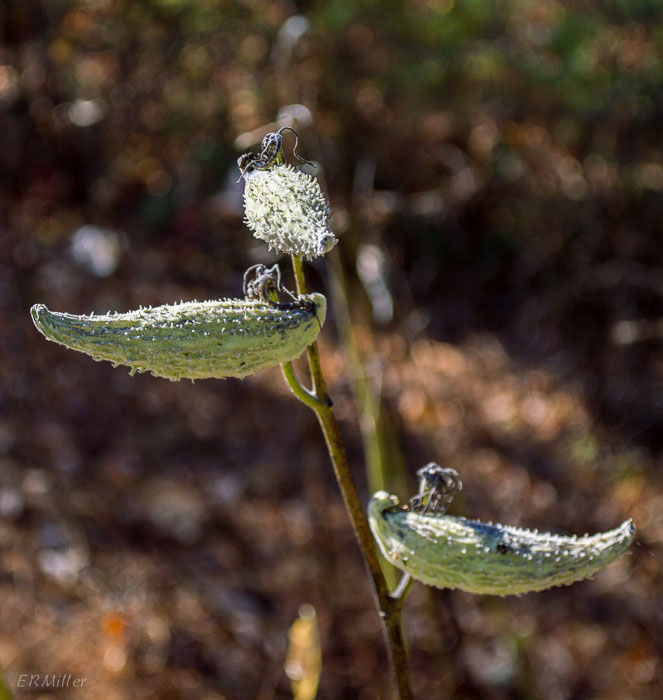
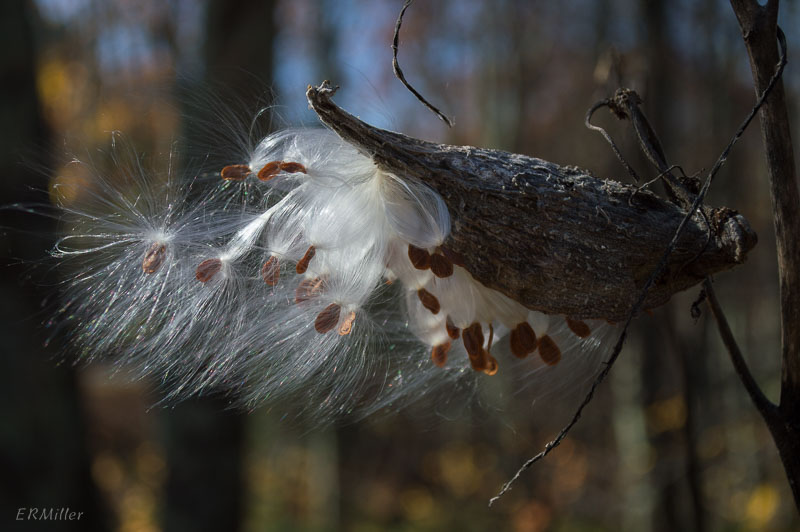
Milkweed (Asclepias).  Didn’t see the plant in flower, so I can’t say which species.  October 28, Shenandoah National Park, parking lot at Riprap Hollow trailhead.

 _DSC0072

closeup of seeds


_DSC0087

unripe pods not quite ready

_DSC0075

fly!  be free!


_DSC0082


I just love how they form little balloons as they’re getting ready to go…


_DSC0070

…and embrace the sky