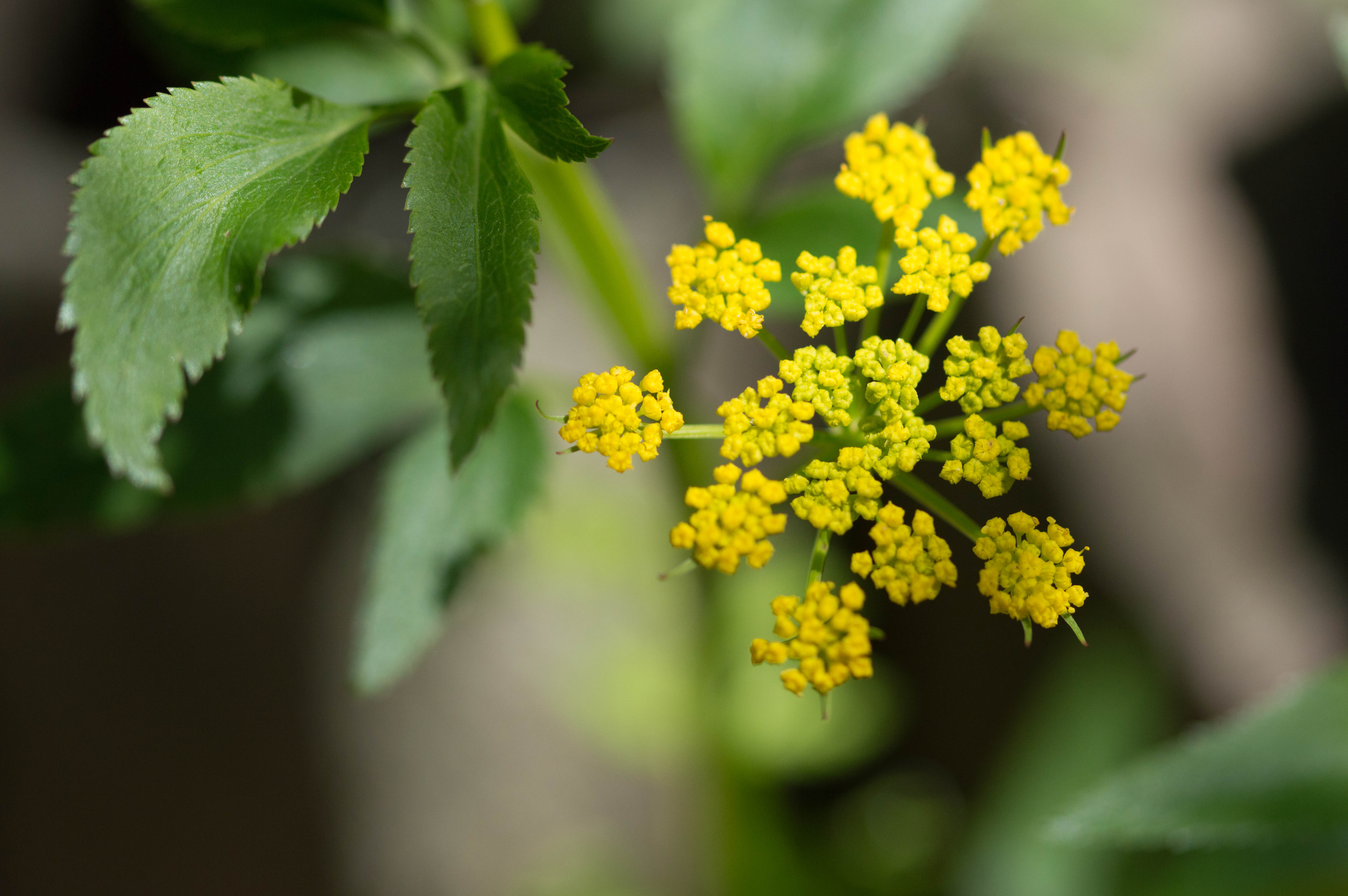
Flower of the Day: Poison Ivy

Toxicodendron radicans; Anacardiaceae (sumac family)

20140519-DSC_0020

It may be reviled by humans, but poison ivy is an important plant in our ecosystem: many birds eat the fruit, and some animals will eat stem and leaves, as well.  The flowers aren’t particularly remarkable, but poison ivy is one of the earliest plants to turn color in the autumn.  Watch for blazes of red going up into trees.  If it’s on your property in an out-of-the-way location, leave it be.  Spend your efforts rooting out invasive aliens instead.

Other plants in the sumac family: cashew, mango, and pistachio.  Yup.

Wikipedia has a decent article about urushiol.

Although I haven’t conducted a rigorous scientific experiment on myself (nor am I likely to), in my experience Tecnu is effective should you come in contact with poison ivy.  I always have a bottle on hand.  Use exactly according to instructions.

The List for the Second Half of May

Flowers seen May 14 – May 31:

  • blue-eyed grass
  • bulbous buttercup*
  • northern catalpa
  • dwarf dandelion
  • field hawkweed*
  • daisy fleabane
  • robin plantain
  • hairy beardtongue
  • honewort
  • tall meadow rue
  • mossy stonecrop*
  • partridgeberry
  • poison hemlock*
  • poison ivy
  • princess tree*
  • puttyroot
  • veiny skullcap
  • squaw root
  • stinging nettle
  • strawberry bush
  • tulip poplar
  • Venus’ looking glass
  • Virginia waterleaf
  • broad-leaved waterleaf
  • wild licorice

…bringing the year’s total to 153 species in 54 families, with Ranunculaceae in the lead, Brassicaceae a close second, and Violaceae, Rosaceae and Asteraceae in a 3-way tie for third.  Thirty two (about 21%) are aliens.

*alien

Flowers of the Day: Rattlesnake Weed and Golden Ragwort

Hieracium venosum and Senecio aureus; Asteraceae (aster family)

rattlesnake weed closeupIn late March or early April the distinctively veined basal leaves of rattlesnake weed start emerging on rocky bluffs and drier soils along the Potomac:

rattlesnake weed foliage A month or so later the long stems start bearing the flowers:

20140527-DSC_0001  You’ll find rattlesnake weed growing alongside azure bluets and plantain-leaved pussytoes.

At about the same time, maybe a week earlier, golden ragwort will be in bud:

golden ragwort in bud Note how the basal leaves and stem leaves are entirely different from each other.  Its peak flowering will be well before rattlesnake weed’s.

golden ragwortGolden ragwort likes the wetter soils closer to the river.  You can find it on the eastern half of Billy Goat C.  Rattlesnake weed will be on the western half, near Carderock.


Viburnums and Dogwoods


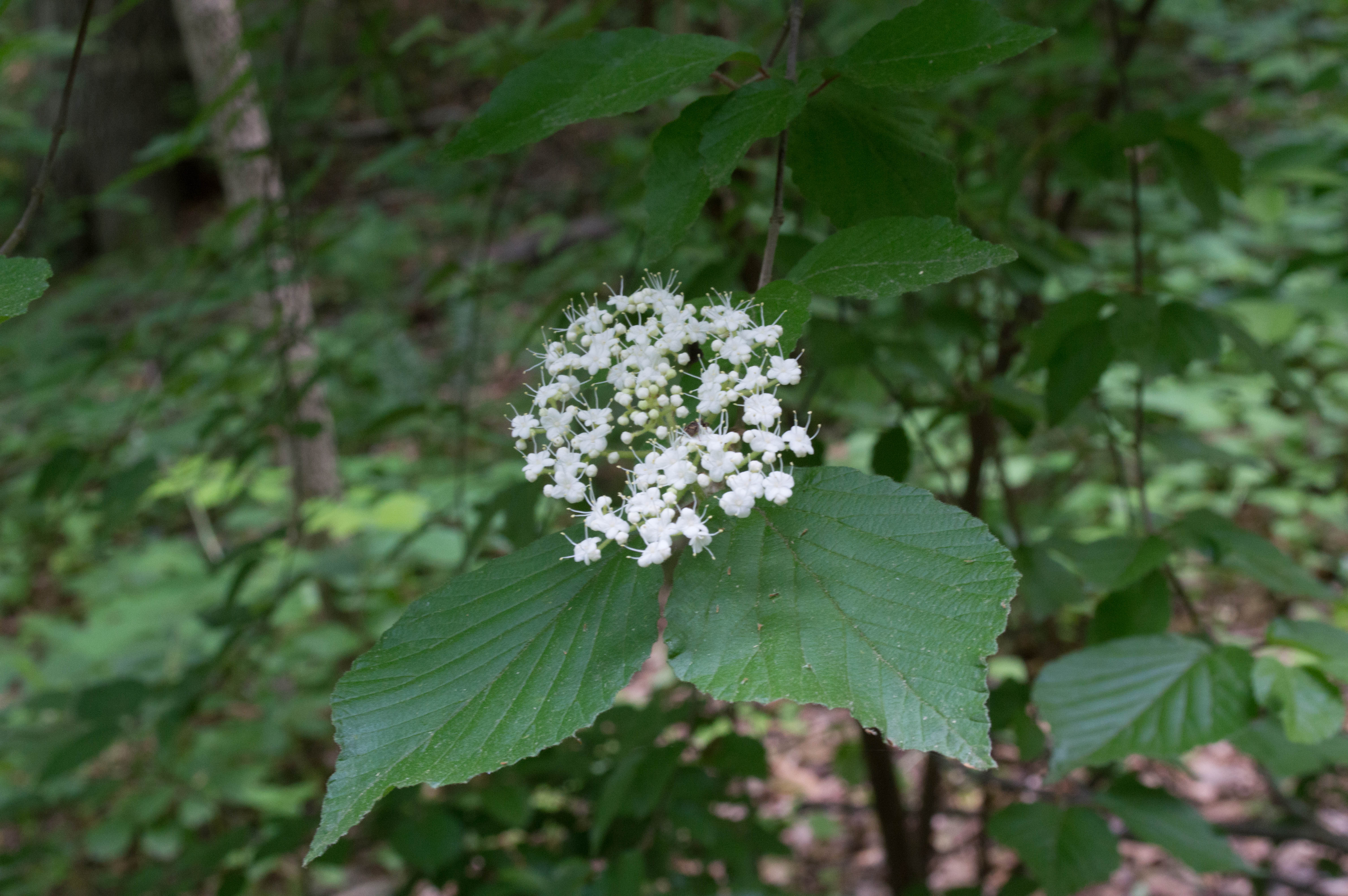
According to the USDA PLANTS database (plants.usda.gov), there are eight species of dogwood and ten of viburnum to be found in this area.  All have opposite, simple leaves (except the pagoda dogwood, which has alternate leaves).  All are small to medium sized understory trees or shrubs.  Some species have distinctive leaves,

maple-leaed viburnum 

Viburnum acerfolium (maple-leaved viburnum)

but most have very similar leaf shapes.  The dogwood leaves have different venation from the viburnums.

At first glance viburnum and dogwood flower clusters look alike, but the flowers themselves are quite different.

southern arrowood 

Viburnum dentatum (southern arrowood)

smooth blackhaw

Viburnum prunifolium (blackhaw)

By the way, the blossom of the ubiquitous flowering dogwood (Cornus florida) is not actually a flower; those four showy petals are bracts, surrounding the tiny flowers in the center.  (A bract is a modified leaf that looks like a flower.)

pagoda dogwood

 Cornus alternifolia (pagoda dogwood)

Viburnums are in the Caprifoliaceae (honeysuckle family), while dogwoods are in the Cornaceae (dogwood family).  Despite the apparent similarities, you have to go a few steps up the taxonomic ladder to find the common relation (which is the class Magnoliopsida, dicotyledons).