Flower of the Day: Blue-Eyed Grass

Sisyrinchium angustifolium; Iridaceae (iris family)

20140519-DSC_0016

Not really a grass, of course, though it is a monocot.  It makes a nice garden plant, too, with compact foliage and a fairly long bloom time.  It spreads, but not too fast.

You can find it in fairly dry soils in full sun along the C&O canal for the next several weeks.

20140519-DSC_0116

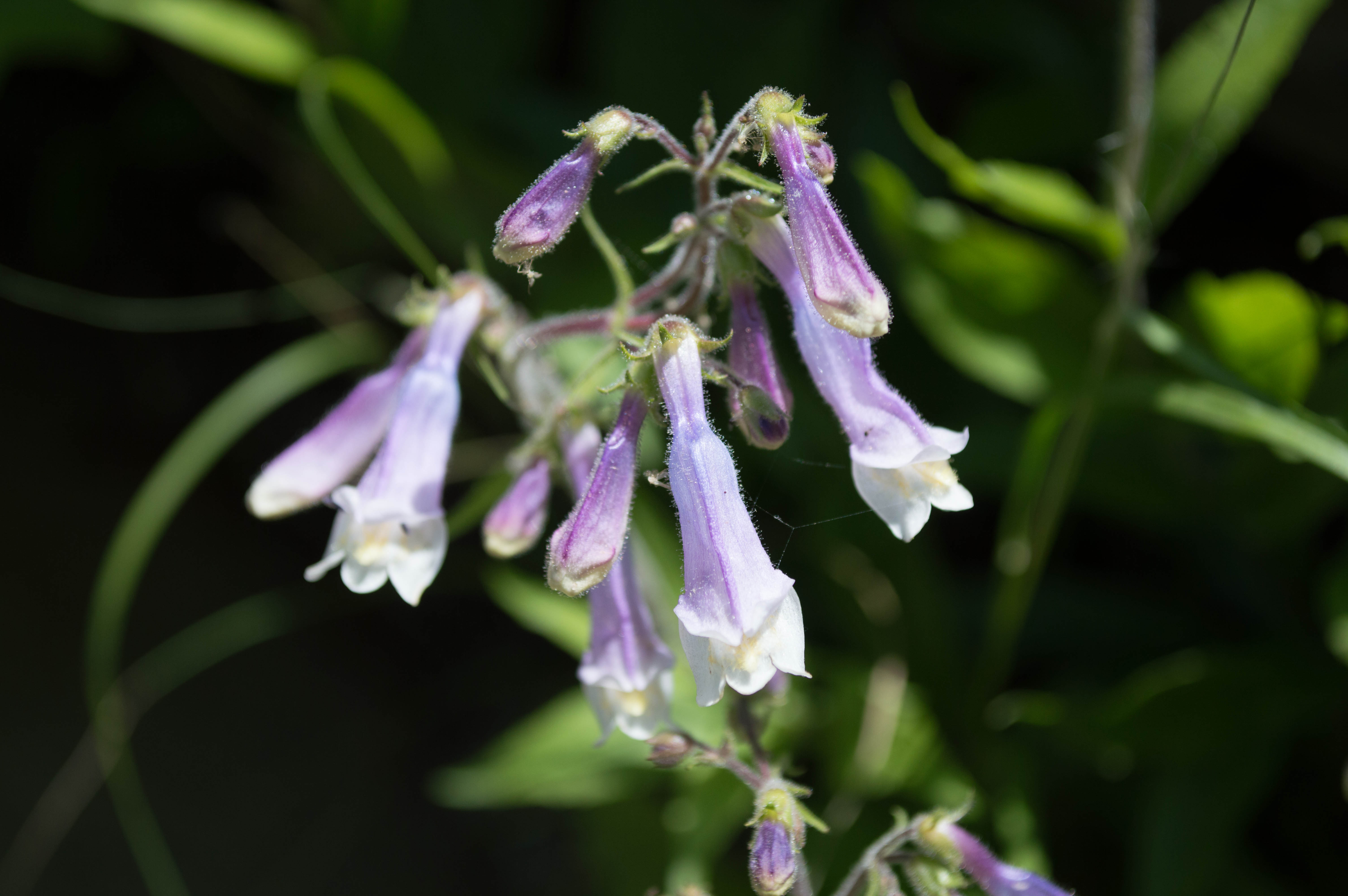
Flower of the Day: Hairy Beardtongue

No, really, that’s what it’s called!

Penstemon hirsutus; Scropulariaceae (snapdragon family)

20140519-DSC_0061

The plants stand about 2 feet tall, with the flowers (about an inch long) in a long terminal cluster.  They seem to like a dryish, rocky habitat; the only place I’ve found them consistently is in little soil pockets alongside large rock formations.

20140519-DSC_0058

When I saw lyre-leaved sage blooming, I knew it was time to look for hairy beardtongue.  Unfortunately, flooding along the river cut off access to the area I wanted to look in.  But after the water subsided it was just a matter of dealing with a lot of mud and doing some rock-hopping.

Looks a bit like the sage, doesn’t it?  Both sages (mint family, Lamiceae) and beardtongues are two-lipped flowers; the upper lip has two lobes, and the lower lip has three, so they look quite similar.  It gets a bit technical from there.  My next rainy day project might be reading up on the two families… or maybe I need to find a botany class somewhere.

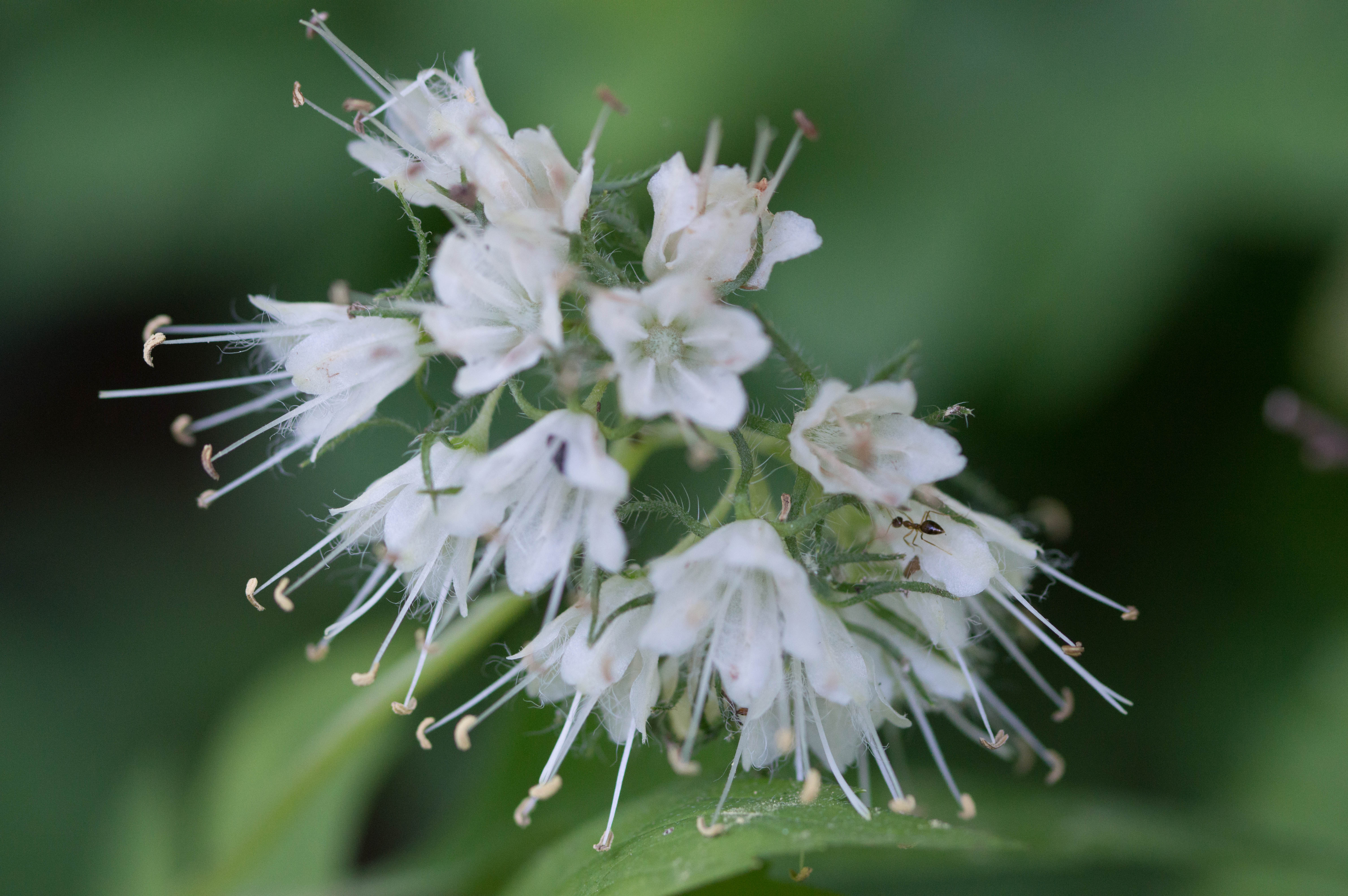
Flowers of the Day: the Waterleafs

Hydrophyllaceae (waterleaf family)

There are two species of waterleaf found in the greater Carderock area, Virginia waterleaf and broad-leaved waterleaf.  There are vast stands of both around, but like may-apple and trout lily, you can see hundreds and hundreds of plants before seeing a single flower.  I saw buds on the broad-leaf and later saw seedpods, but entirely missed the flowers this year.

Waterleaf gets its name from the speckled appearance of the leaves when they’re emerging, though this coloration fades as the plants grow.  I’ve seen Virginia waterleaf as tall as 3 feet, with leaves about 8″ long.  Broad-leaved waterleaf is somewhat shorter and has smaller leaves.

Virginia Waterleaf  Hydrophyllum virginianum

20140518-DSC_0036  20140518-DSC_0072

Broad-leaved waterleaf, aka maple-leaved waterleaf  (Hydrophyllum canadense) (crappy iphone photo from last year)

IMG_3269

emergent foliage showing the speckles:

waterleaf

Flower of the Day: Common Fleabane

Erigeron philadelphicus; Asteraceae (aster family)

Isn’t this just too perky for words?

20140518-DSC_0092

There are several hundred species of Erigeron worldwide.  Three or four* of them can be found in this area, and should be blooming within the coming month.  I’ve found what I believe to be robin-plantain (Erigeron pulchellus) in bud already.  The plant pictured above stands about 2 1/2 feet tall; the flowers occur in loose terminal clusters, mostly.

*depending which authority you consult; there’s a lot of mix-up with common and botanical names

In Situ

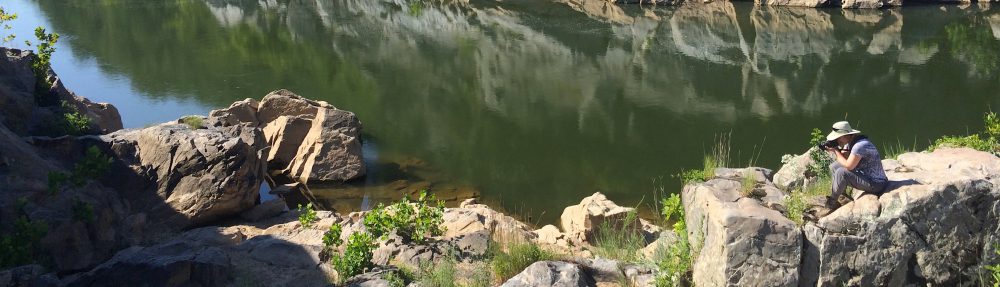
As much as possible I take pictures of flowers in their natural circumstances.   Sometimes I’ll gently move aside an intruding plant (cleavers are everywhere) to get a clear shot of the subject.

First, I end up practicing photographer’s yoga a lot, perching and stretching into some very awkward positions in order to get close to the plant.  Sometimes I have to use a hand to steady myself when it should be steadying the macro lens.  It’s tricky (usually impossible) to set up a tripod.  If a plant is low enough or if there’s a convenient rock I can use a sandbag.

Then, there’s wind.  Early in the morning there’s little breeze, which makes taking extreme closeups a lot easier.  But then the ambient light is lower.  Except sometimes there’s a bright isolated shaft of light -usually illuminating only part of the subject.  And some flowers close overnight and don’t open until late in the morning…

Even at midday light is a challenge.  Most of these plants are growing and flowering under the forest canopy, in shade or deep shade or dappled shade.  Even if I bump up the ISO and/or use flash, the whole picture tends to be washed in green, which is lovely in its own way but not really good for showing details.

And then there’s the issue of contrast.  Early in the year, most of the plants show nicely against a backdrop of leaf litter.  By May, the background is green, green, and more green, with a confusion of shapes.  It’s so much easier when a plant is up against a rock.

I don’t collect specimens; whether or not it’s against the law, I think it immoral in most situations.  If a plant is there for me to enjoy, I want it to stay there for others to enjoy.  And for me to enjoy again next year.
20140520-DSC_0058

a huge stand of clustered snakerootSanicula gregaria; Apiaceae (carrot family)