Tiny Plant, Tiny Flower

On Monday, after hiking most of the length of the Billy Goat A trail, I arrived at the place where my friend and I had found this plant a few days before.

20160815-_DSC0132

orangegrass
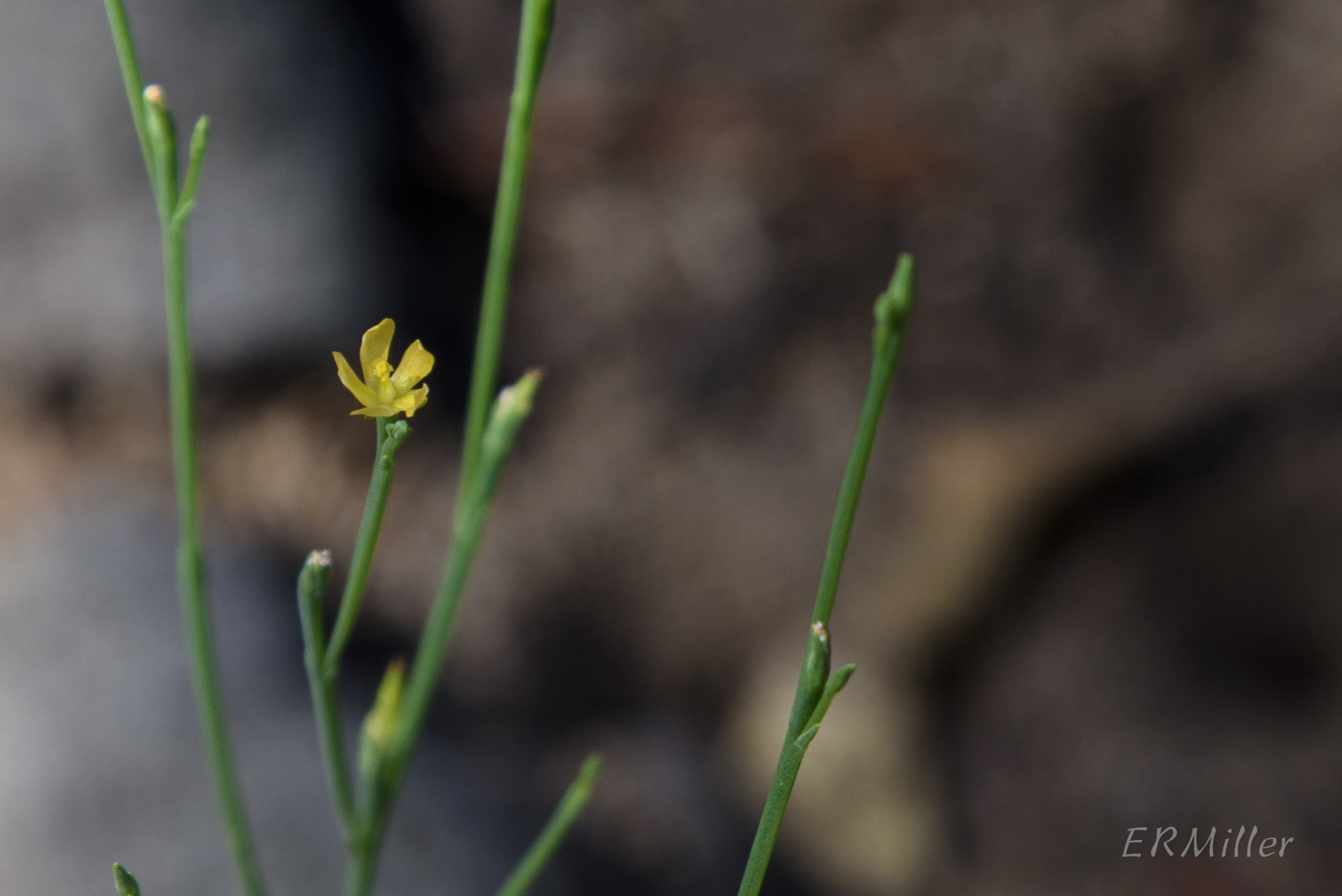
Hypericum gentianoides
Hypericaceae


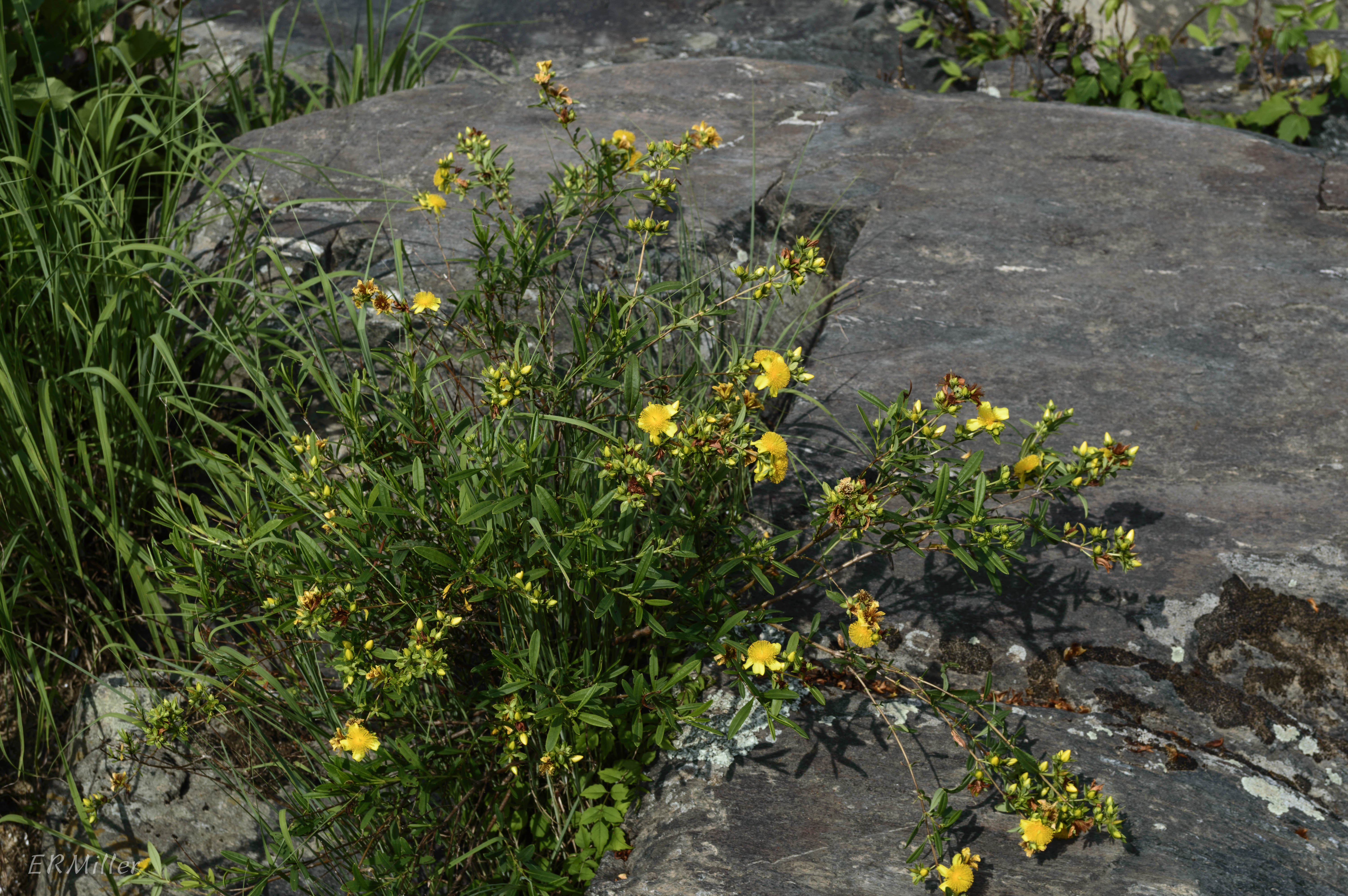
About eleven species (ten native, one alien) of Hypericum (St. Johnswort) can be found in the Maryland Piedmont. In many of the bedrock terraces in the Potomac Gorge I’ve seen good-sized stands of H. prolificum, aka shrubby St. Johnswort, like this:

DSC_0169


20140708-DSC_0165

The flowers of shrubby St. Johnswort are showy, up to an inch across, with numerous stamens.


20160815-_DSC0135

The flowers or orangegrass, not so much.
<—

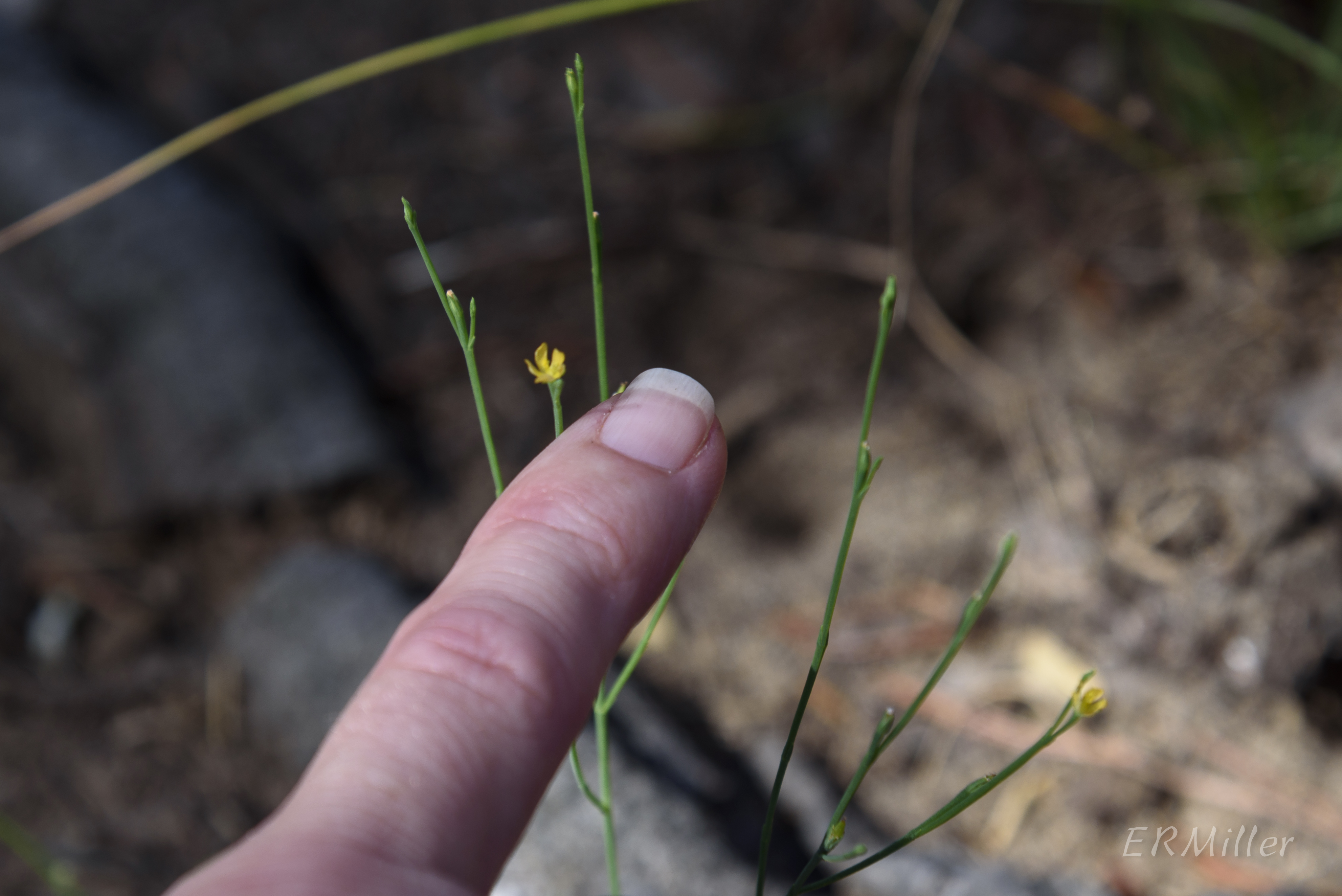
Here’s most of a plant:20160815-_DSC0123-2

Orangegrass, also known as pineweed, is an annual that can stand up to a foot and a half tall, but the stems are so slender and the leaves so minute that it’s likely to be overlooked as “just another tuft of grass” when not in flower. Orangegrass is an eastern North American native, endangered in Iowa.

Granted this is not a spectacular flower, but I’m always happy to find something I’ve never seen before.

Back for a Second Look

Somewhere around the midpoint of the Billy Goat A trail, at about the highest elevation, is an area called Pothole Alley. This exposed bedrock was riverbed back before the Potomac cut the Gorge, and the water-smoothed rocks are full of potholes.

20160815-_DSC0111

It’s neat to see something like this at the top of cliffs fifty feet above the river, but what’s even neater to a botanerd like me is that the potholes, filled only by rainwater (flooding at this elevation happens every few decades, on average), hold enough water to support obligate wetland plants, like this one.
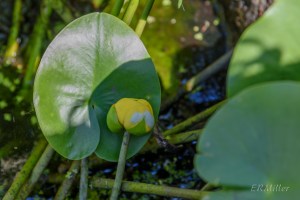
20160812-_DSC0041


spatterdock
Nuphar advena
Nymphaeaceae


Also known as cow lily, yellow pond lily, and immigrant pond lily, spatterdock is native to the eastern half of the US, ranging from Maine to Florida, partway into the Great Plains, and north into Ontario. It grows from a rhizome rooted in shallow, quiet water (one to five feet deep), with most of its leaves floating on the water. It can be aggressive in ideal growing conditions.

20160812-_DSC0043

Although the flower doesn’t fully open, it opens a bit more than this. When I went back to Pothole Alley three days after taking this photo, I found two more potholes with spatterdock in them, but none of the plants were flowering.

If you look closely at this photo, you’ll see what look like three outer petals (with a bit of green on them) overlapping three inner petals. All six of these are actually sepals; the numerous petals are hidden inside. The flattish part in the center is the pistil, which is surrounded by several rings of stamens.

I think I need to go back to Pothole Alley and try to find a more-open flower to photograph.

A note about the terminology

“Emergent aquatic” is a phrase used to describe a plant’s growth habit. Freshwater aquatic plants are often described as

  • emergent: rooted under water, with most of stem, leaf, and flower above or on the surface of the water
  • submergent: rooted and with most of the plant under the water
  • free-floating: non-rooted, growing in and on the water

“Obligate aquatic” is one of the Wetland Indicator Status terms. These phrases describe a species’ likelihood of being found in wetlands:

  • obligate wetland: almost always occur in wetlands (greater than 99% probability)
  • facultative wetland: usually occur in wetlands (67% to 99% probability), but may occur in non-wetlands (1% to 33% probability)
  • facultative: occur in wetlands and non-wetlands (probability 33% to 67% of occurring in both wetlands and uplands)
  • facultative upland: usually occur in non-wetlands (67% to 99% probability), but may occur in wetlands (1% to 33% probability)
  • obligate upland: almost never occur in wetlands (less than 1% probability)

(sources: Hydrophytic Plant Classifications; USDA PLANTS Database as linked above)

Finally Hiked the Billy Goat Trail, Section A

20160812-_DSC0009

Clitoria mariana (butterfly pea, Atlantic pigeonwings); Fabaceae

I’ve written before that I stay away from the Billy Goat A trail – haven’t been there in years, actually – mostly because it’s overused, and I like solitude in the wilderness, but also because wildflowers generally don’t grow well where there’s lots of foot traffic. So what’s the point?

Nonetheless a friend convinced me to give it a go. By 9 o’clock last Friday morning when we parked near Old Anglers Inn, the temperature was already near 90º F, and the humidity was in the 90s as well. It was brutal but hey, at least it wasn’t crowded.

Anyway I schlepped the camera along, just in case, but not the tripod (didn’t want to bore my friend to tears). We saw some expected flowers – two species of Eupatorium, some wingstem (Verbesina alternifolia) just starting to open. And we saw some unexpected: a good amount of bushy St. Johnswort (Hypericum prolificum), a few Atlantic pigeonwings (Clitoria mariana), a magnificent specimen of flowering spurge (Euphorbia corollata), some seedbox (Ludwigia alternifolia), and a single clump of purple-headed sneezeweed (Helenium flexuosum).

20160812-_DSC0037

Helenium flexuosum (purple-headed sneezeweed); Asteraceae

And then we found two species that I’d never seen before. But of course I was just taking snapshots, and a breeze was blowing (excuses, excuses), so my pictures suck.

By the time this piece autoposts Monday morning I expect to be back on Billy Goat A, with full camera kit on my back, trying to get good photos for new blog entries in the next few days.


Radiant Trumpets

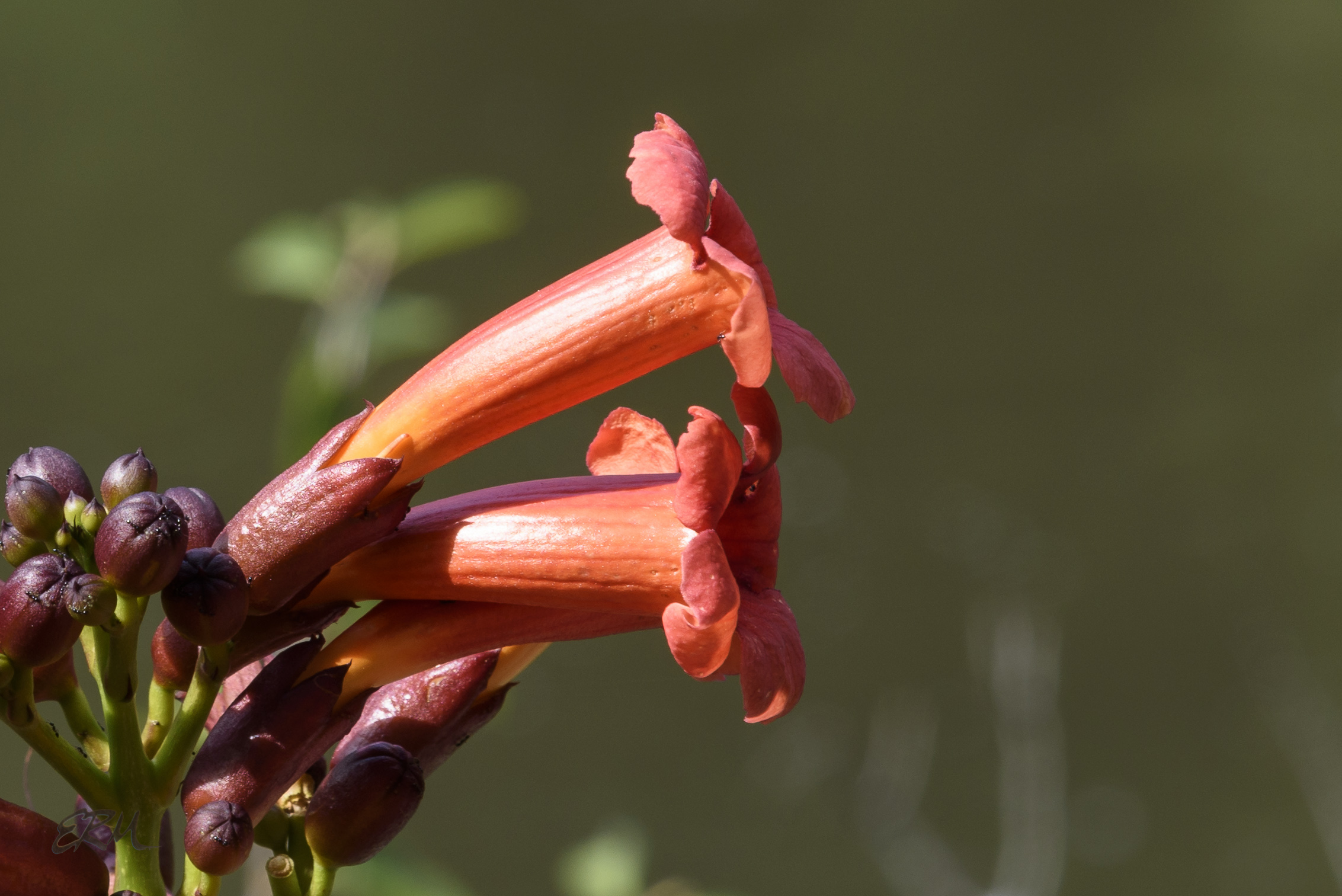
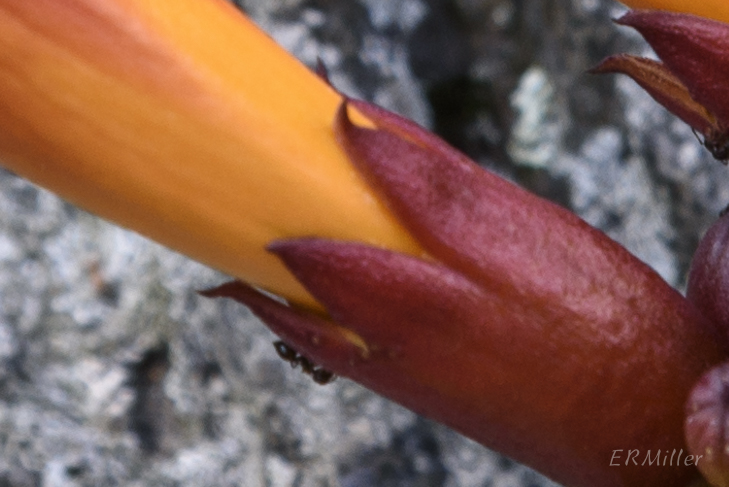
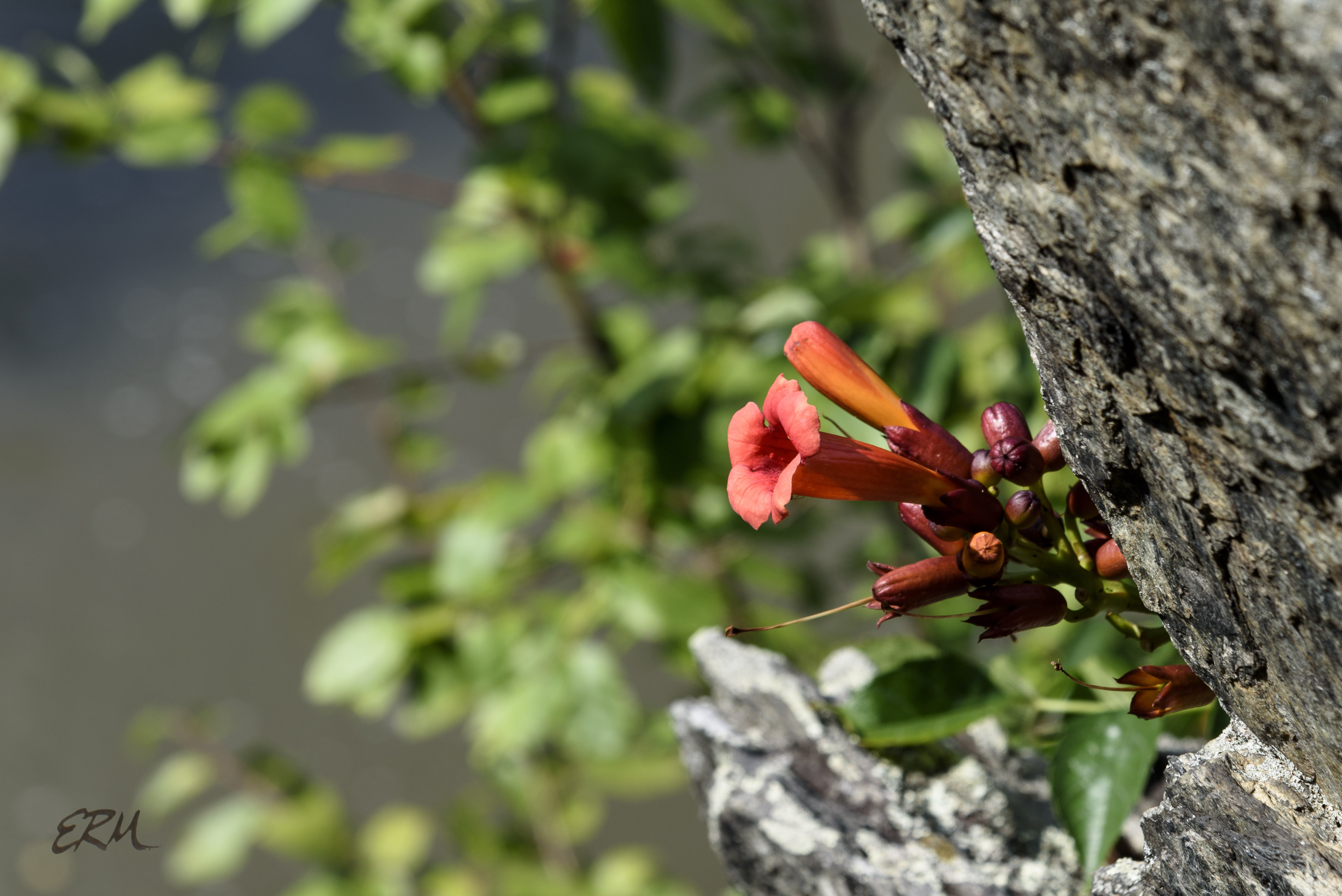
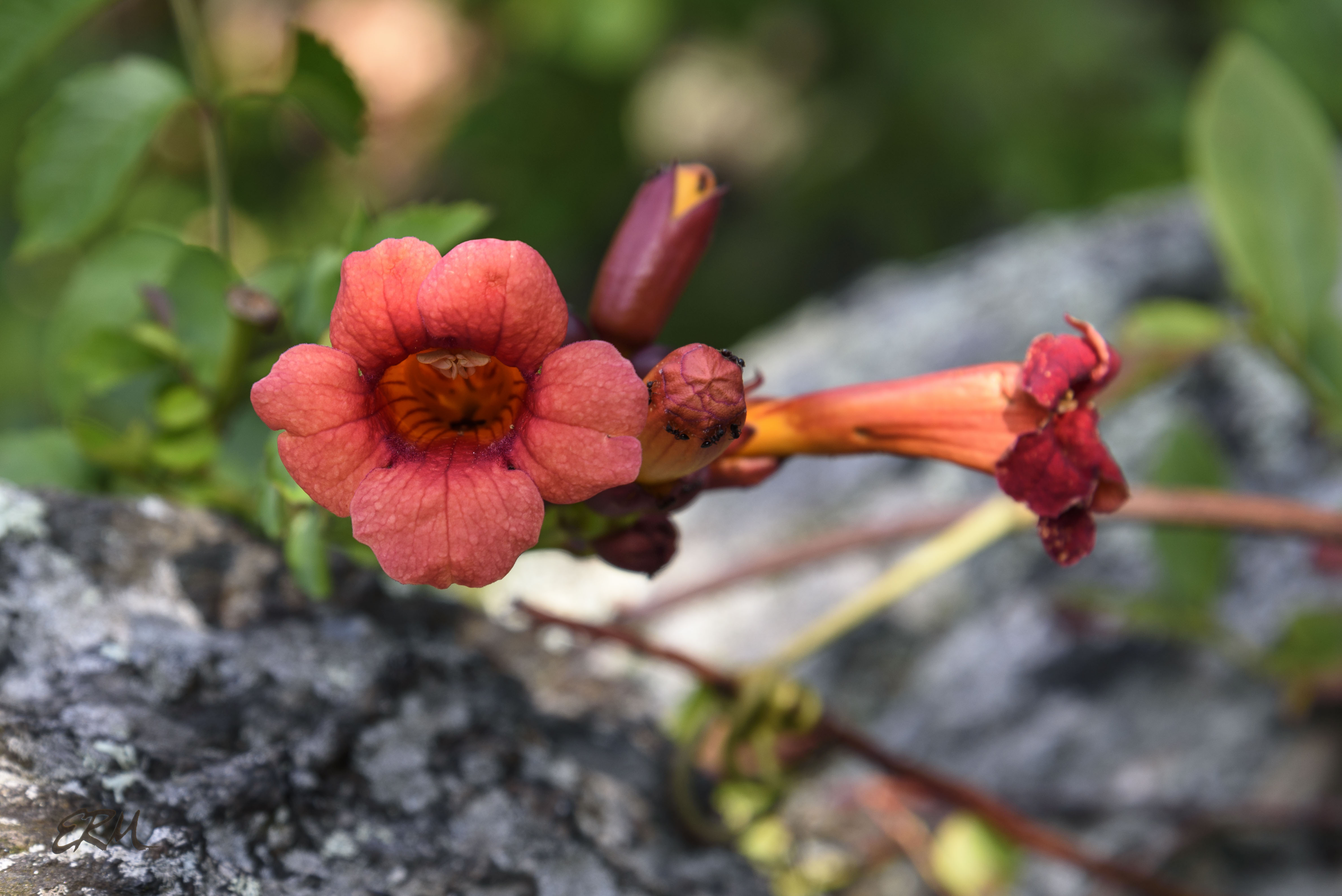
Nothing says summer quite like the hot orange-red blossoms of trumpet creeper (Campsis radicans). Although the shape is similar to flowers in the Convolvulaceae (see yesterday’s post), this plant is in a different family, the Bignoniaceae.

20160802-_DSC0033

It’s a vigorous grower, reaching thirty feet long or more, and will grow up or along anything that its aerial rootlets can attach to: trees, boulders, cliff faces. It’s all over the rock walls along the Clara Barton Parkway in DC.

Trumpet creeper can be found in most of the eastern US except for northern New England, and in a few scattered locations in the West. It’s considered weedy by some authorities.

There’s only one other species in this genus, C. grandiflora, which is native to east Asia.

I spent some time looking on the internet for any interesting trivia. The only thing I could find is that another common name is cow-itch, a name that is applied to other species as well. Why cow-itch? No idea. Apparently some people have a mild reaction when it touches their skin, but cow-itch? Beats me.

Like a Worm, Fiddle-Shaped


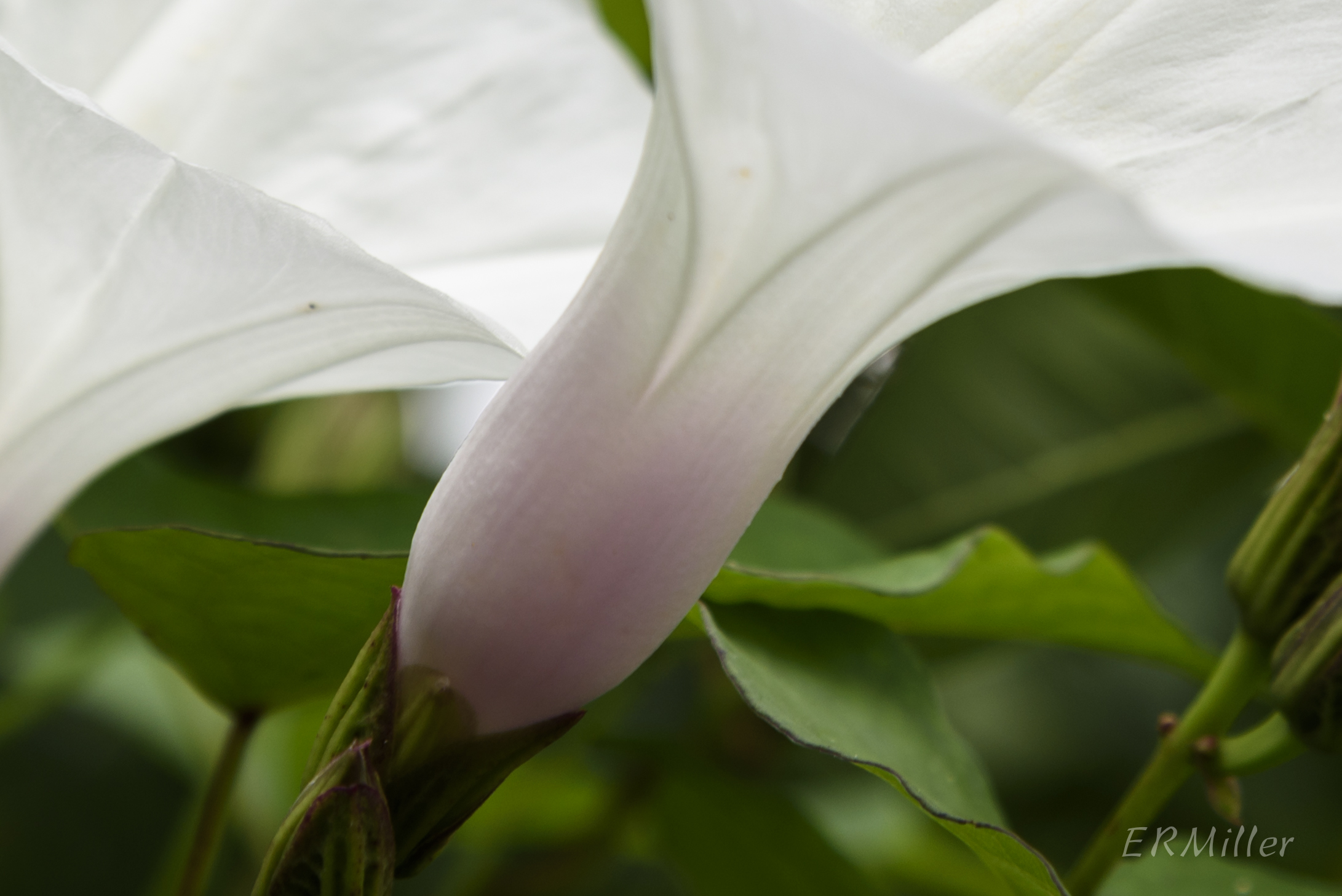
That’s the literal translation of Ipomoea pandurata, a vining plant in the Convolvulaceae (from the Latin for “twining around”), the morning-glory family.

I love finding the meanings behind the botanical names of plants, so was happy to stumble on the California Plant Names site, which said:

Ipomoe’a: from the Greek ips, “a worm,” and homoios, “like,” thus “like a worm,” referring to the twining habit of the plant’s growth (ref. genus Ipomoea)

And pandurata is from an ancient Greek musical instrument, the pandura, which was somewhat fiddle-shaped. In this case it supposedly refers to the leaf, which looks heart-shaped to me.

20160715-_DSC0007

Common names include wild potato-vine, wild sweet potato, man of the earth, and big root morning glory.

Honestly this plant is kind of weedy looking, but the blossoms are beautiful and it isn’t aggressive like the alien bindweeds (Convolvulus species) that plague so many gardens. At least, it isn’t aggressive in most of its native range (which includes the mid-Atlantic, the South, and the lower mid-west and Great Plains states), except for Arkansas, where all species of Ipomoea are considered noxious weeds. In Arizona (not part of its native range) it’s a prohibited noxious weed. Pity no one can teleport them to Michigan, where the species is threatened, or New York, where it’s endangered.

The vines can grow to 20 feet long, and usually climb up other plants. In the Potomac Gorge I’ve seen them spilling over rocks, as well. They like dry, gravelly soils according to one source I checked, which is interesting because I most often see them near the river. Maybe that’s because they want a bit of sun.

20160715-_DSC0005