One More Belly Flower

20160309-_DSC0611

purplemat
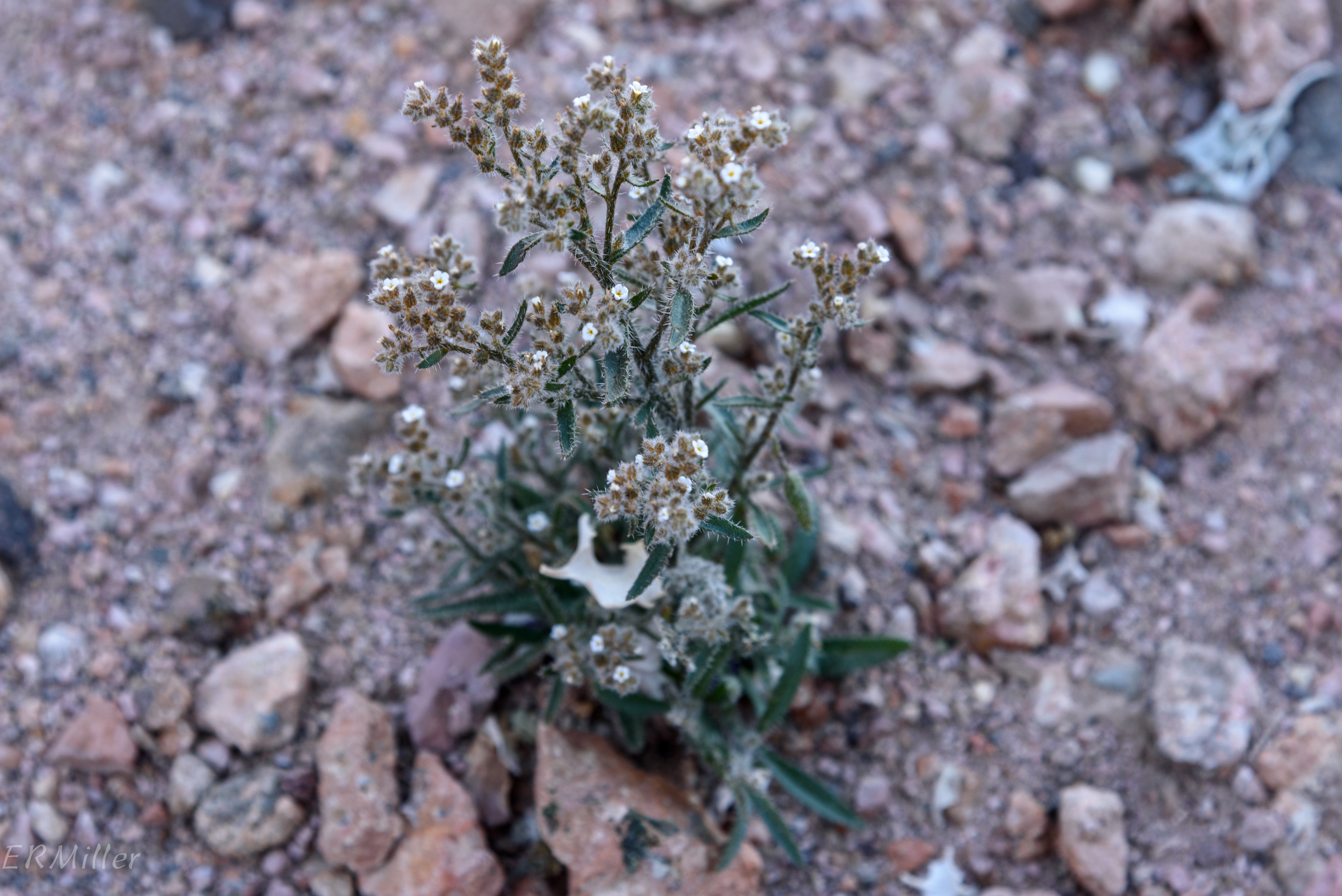
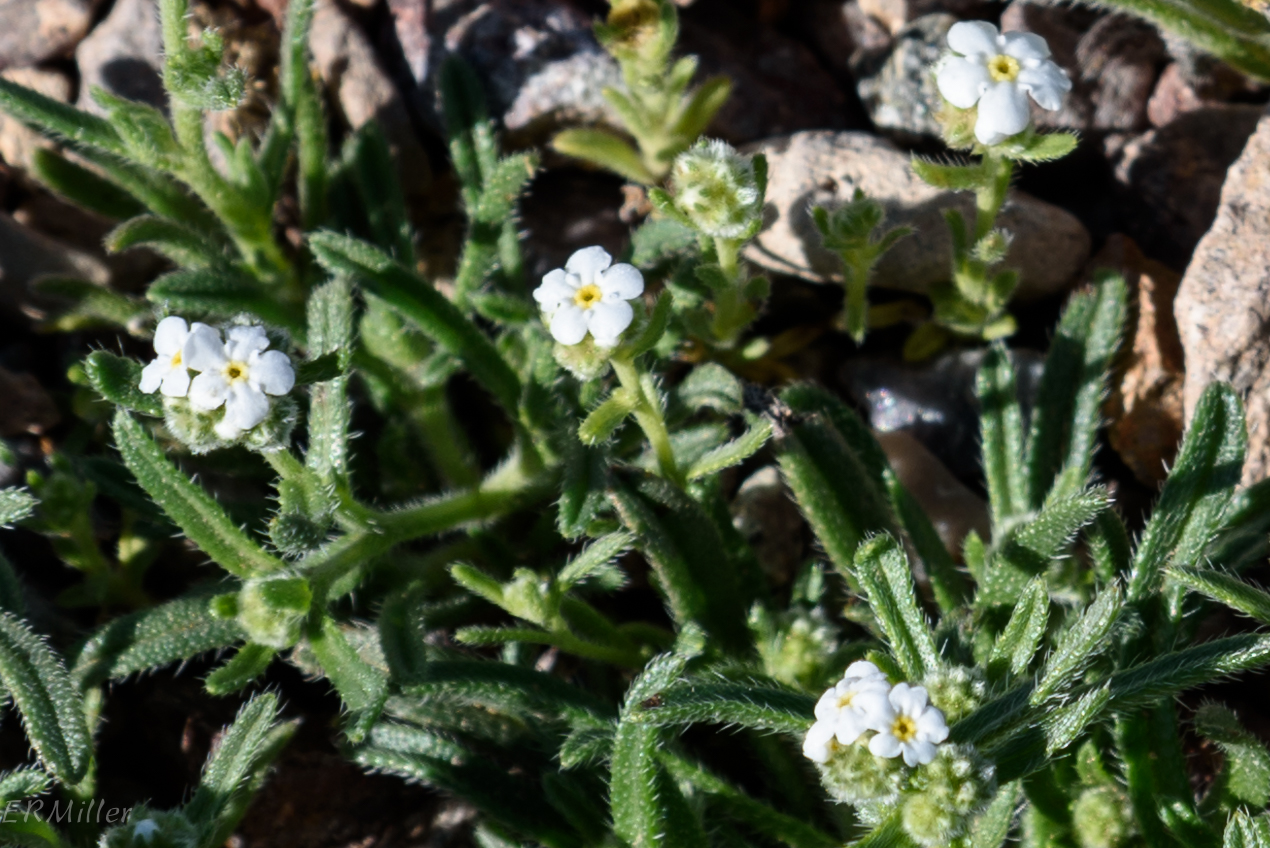
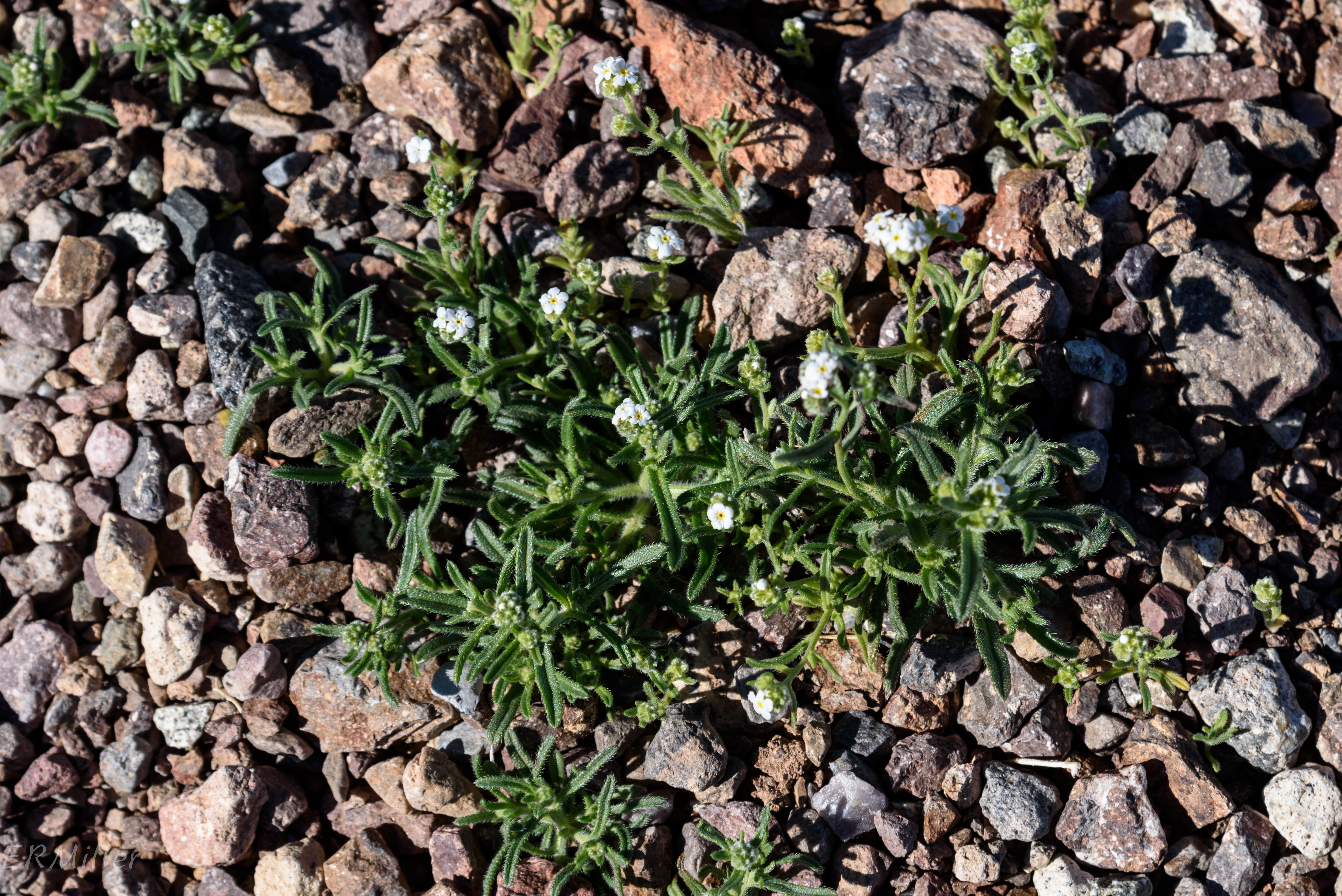
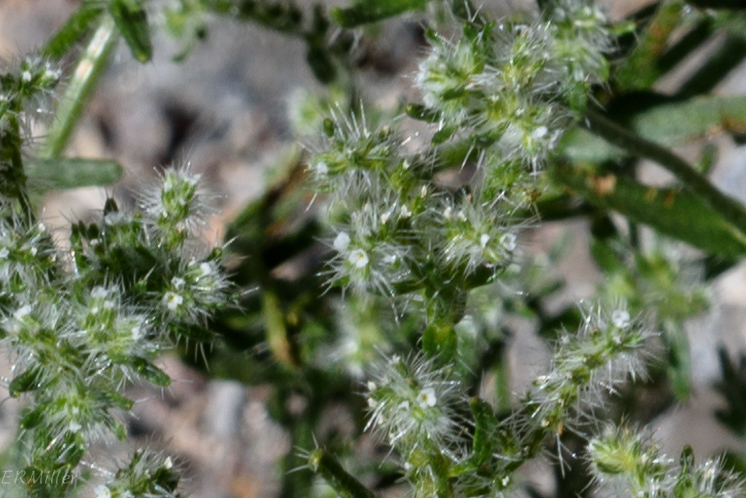
Nama demissa
Boraginaceae


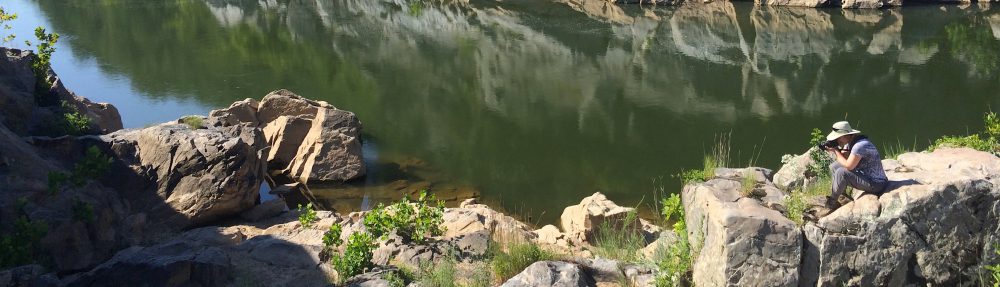
Sorry that I keep going back and forth between Death Valley and the Potomac Gorge. I still have lots to post about that trip, but things are happening fast at home, so the blog posts are going to bounce around for awhile yet.

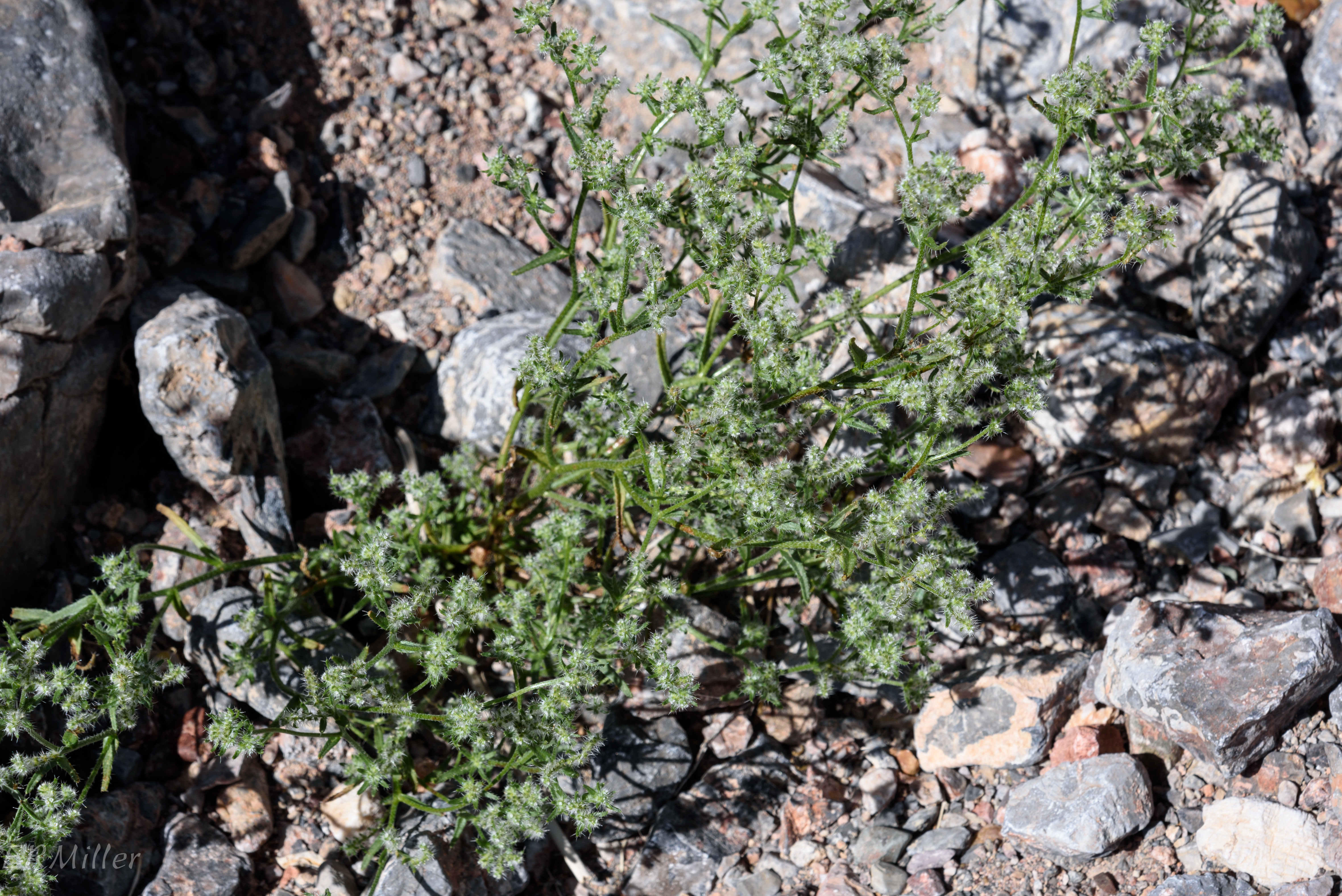
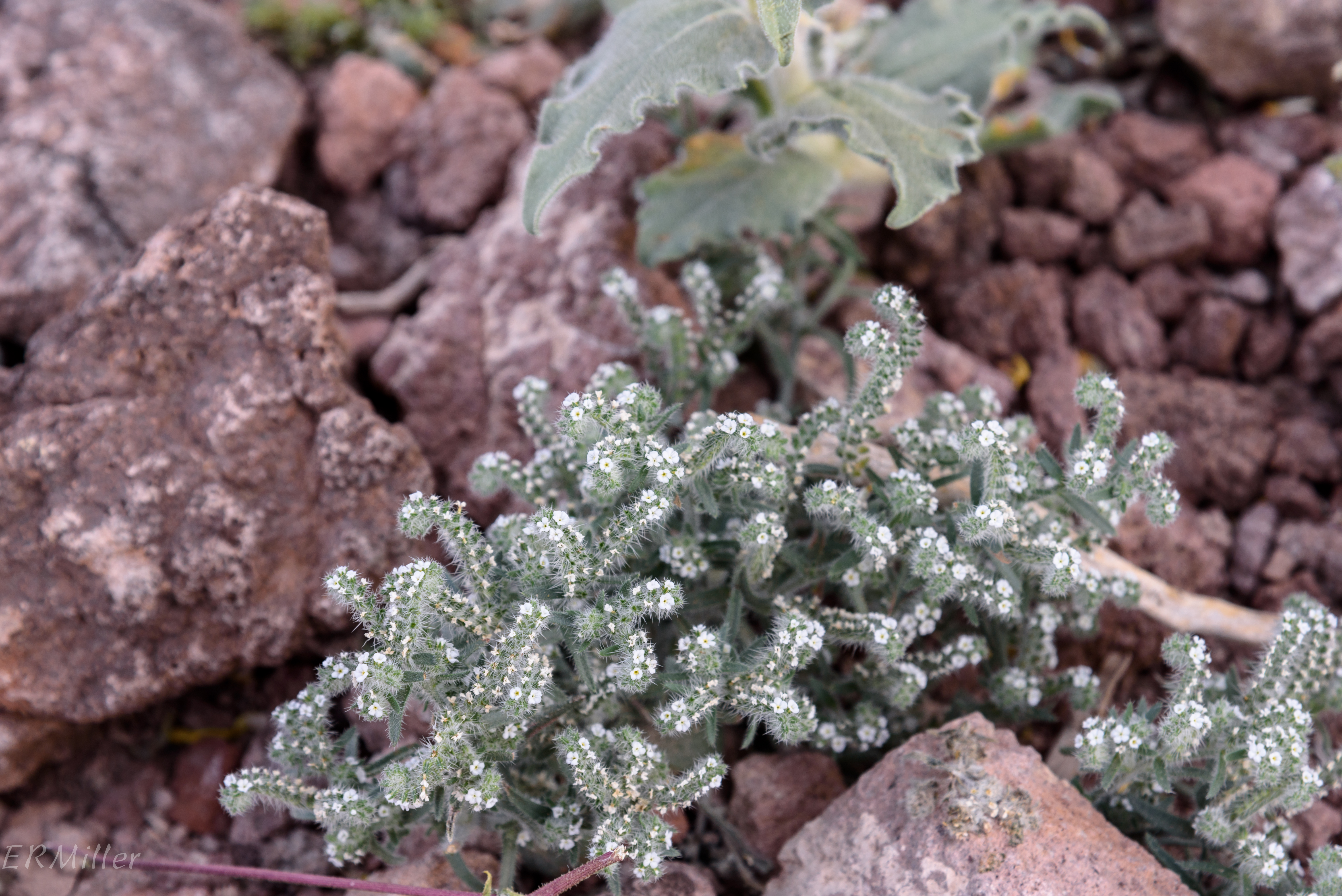
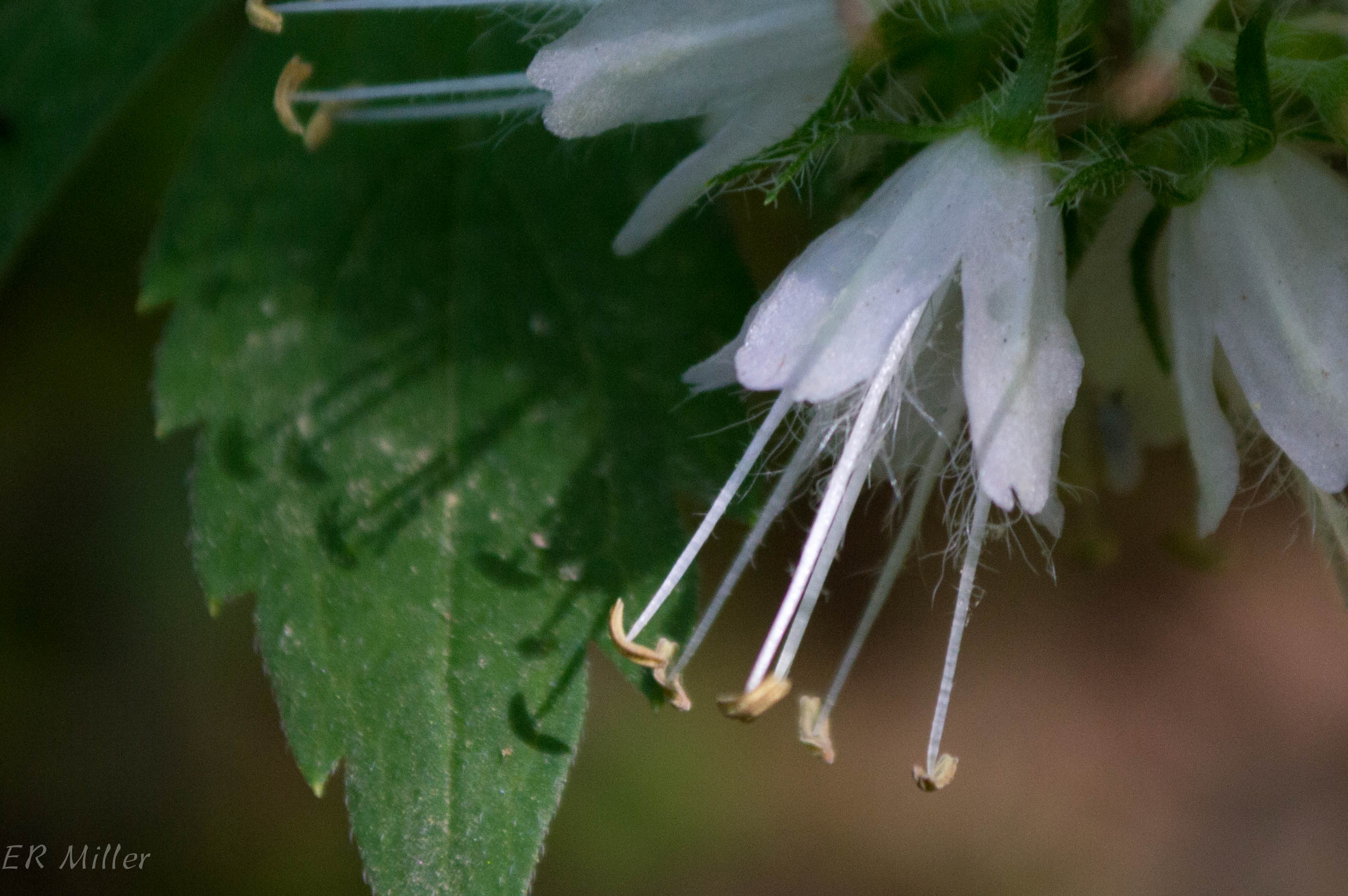
So, back to Death Valley… Purplemat is not particularly showy, given that it stands no more than three inches above the ground, but it is pretty up close. There are two varieties, demissa and covillei; without more detailed pictures I can’t be sure, but I believe the plant shown here is the former.

20160310-_DSC0858


penny for scale


About the botanic name: ITIS accepts the specific epithet demissa, and demissum as an unaccepted orthographic variant.  Nonetheless, you’ll see demissum often on the internet. Also, other sources place this plant in the Hydrophyllaceae.

20160309-_DSC0713
view from above

Hidden Flowers

20160310-_DSC0875

Cryptantha (and maybe other) species
aka cat’s eyes; popcorn flowers
Boraginaceae


According to extensive research done at the San Diego State University, there are 130 species of cryptantha in North America. And by “cryptantha” I mean all the species formerly placed in the genus Cryptantha, which has been split into five genera (the other four are Emerocarya, Greeneocharis, Johnstonella, and Oreocarya). All of these are native to the western US.

Within those 130 species are 31 varieties. For the most part, the species are differentiated by details of the nutlets, which typically range in size from half a millimeter to as much as several millimeters. Even the large ones require a damn good hand lens, or better yet a dissecting microscope.

My interest in identifying and classifying wildflowers does not go this far, so uncharacteristically I will be content saying that I found several different species of cryptanthas (not necessarily Cryptanthas) during my recent Death Valley trip.

To give a sense of scale, the above close-up view was taken from this specimen (note the penny):
20160310-_DSC0876-2

which might – might – be Cryptantha muricata (pointed cryptantha).

These are belly flowers for sure!  Here’s a different species:
20160309-_DSC0518


And a third:
20160309-_DSC0557


20160309-_DSC0556


And winning the “wait, are those even flowers?!” prize:
20160308-_DSC0341-2
20160308-_DSC0341


The flowers in these two pictures (above and right) are less than one millimeter across.


20160307-_DSC0025

Not a Cryptantha

20160309-_DSC0564

Amsinckia tessellata
checker (or western or bristly) fiddleneck
aka devil’s lettuce
Boraginaceae


After looking at so many cryptanthas, I was sure that’s what this had to be. There are two yellow-flowering cryptanthas, this must be one of them, right?

Nope. It is in the borage family, though, so it’s not too distantly related. It’s an annual, with a range north and west from New Mexico into British Columbia, and, strangely, Missouri.

I thought I was done with this, then stumbled across references to other Amsinckia species. There are eleven species, about eight of which are in Death Valley. Not nearly as tricky to identify as the cryptanthas, but not so straightforward, either. It’s possible that the species pictured here is actually A. menziesii var. intermedia. I’m guessing it isn’t, though, based on my principle “when in doubt, choose the common one over the rare one.”  To confuse matters a little more (because that’s what taxonomy does), I think this is A. tessellata var. tessellata, rather than the less common variety gloriosa.

20160309-_DSC0579

Variations on a Theme: Virginia Waterleaf and Broad-Leaved Waterleaf

20150514-20150514-_DSC0003

aka eastern waterleaf; Hydrophyllum virginianum
and aka maple-leaved waterleaf; Hydrophyllum canadense
Hydrophyllaceae
(some authorities place in Boraginaceae)

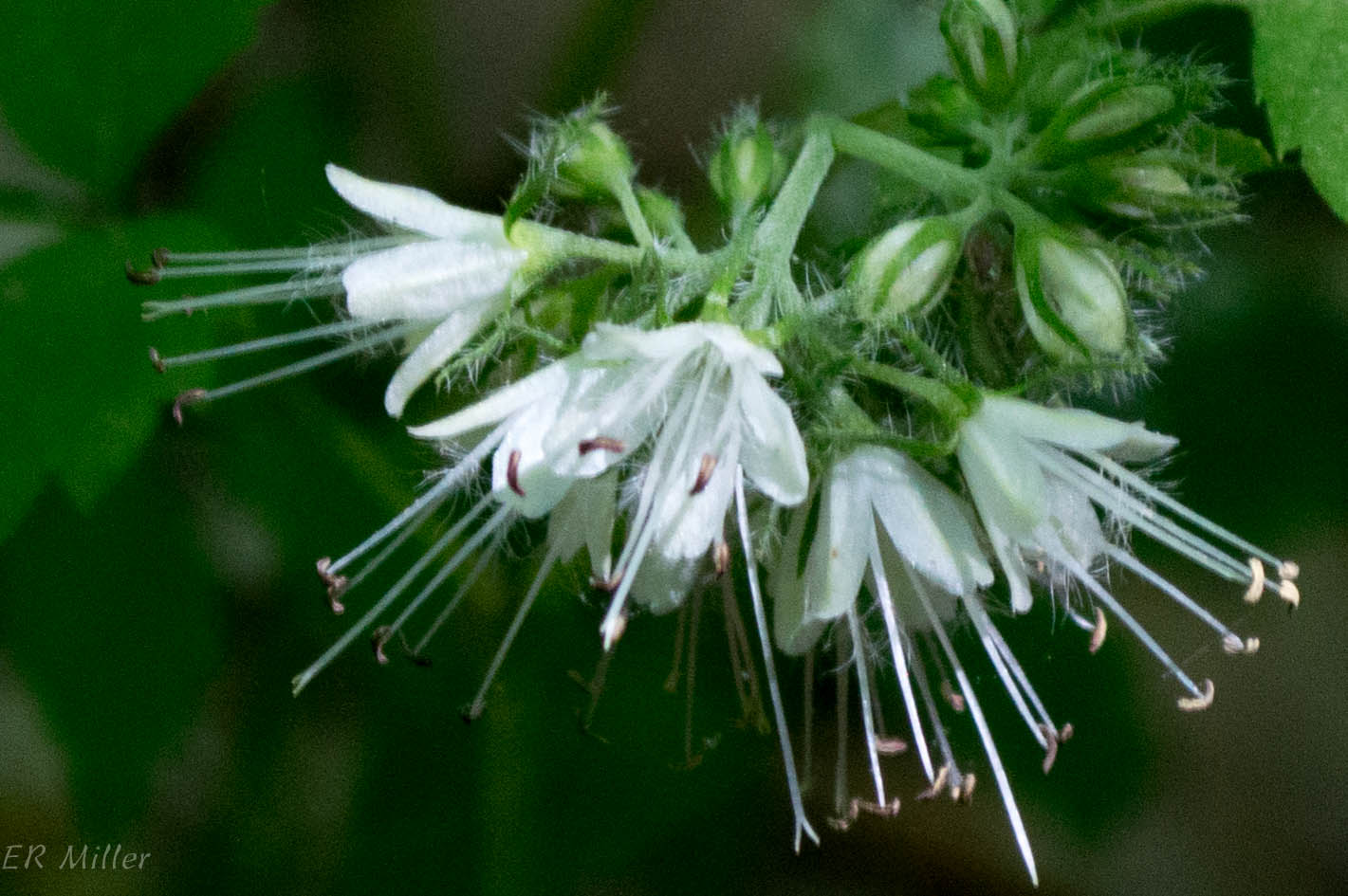
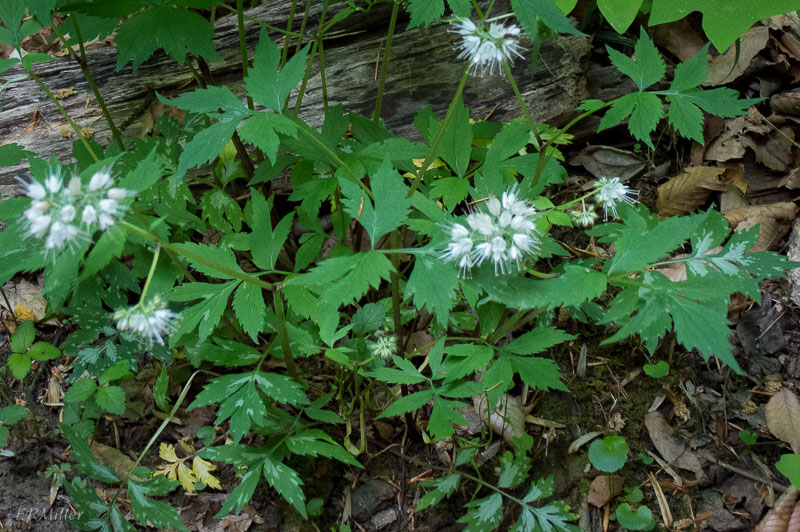
So you might be wondering, which species is pictured above?  I know the answer, but only because I took the picture.  The flowers of both species are almost identical.  The big difference is in the leaves.

20150514-20150514-_DSC0004


Virginia waterleaf typically has three to seven deeply cut lobes…

20150526-20150526-_DSC0024


…while the other resembles a maple leaf, with much shallower lobes.


Virginia waterleaf starts blooming in the Potomac Gorge around mid-May; broad-leaved starts about two weeks later.

Of the nine species of Hydrophyllum found across most of the US and Canada, these are the only two in the Maryland Piedmont.

20150514-20150514-20150514-_DSC0008
Look closely at the leaves at the bottom of the picture – see the bluish splotches? That’s why they’re called “waterleaf”.  Only the young leaves display this characteristic.


Virginia waterleaf ranges from the Great Plains east to the coast, except the extreme south and the Maritime Provinces.  It’s a plant of special concern in Connecticut and Kentucky, and is threatened in New Hampshire and Tennessee.

Maple-leaved waterleaf has a similar range, but doesn’t extend as far west. It’s endangered in Massachusetts and New Jersey, and threatened in Vermont.

Both species are plants of deep woods, liking lots of shade and moist-to-dry, high organic content soils.  And both species’ flower color ranges from white to pink to lavender.  At bloom time, they are about the same height (around a foot), though I’ve noticed that Virginia waterleaf grows much taller than that once it’s done flowering.

20150514-20150514-_DSC0183


20150514-20150514-_DSC0191

Flower of the Day: Coville’s Phacelia

20150429-20150429-_DSC0091-2

aka buttercup scorpionweed
Phacelia covillei
formerly in the Hydrophyllaceae
currently in the Boraginaceae (per the Angiosperm Phylogeny Group)


20150429-20150429-_DSC0095

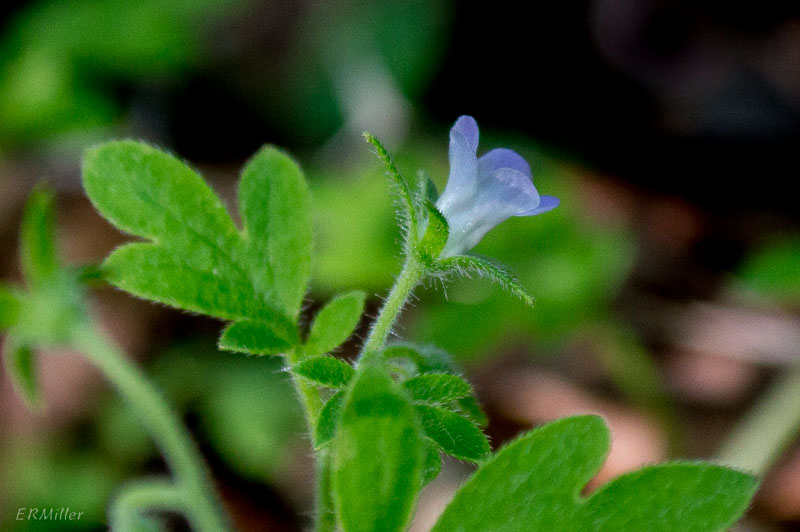
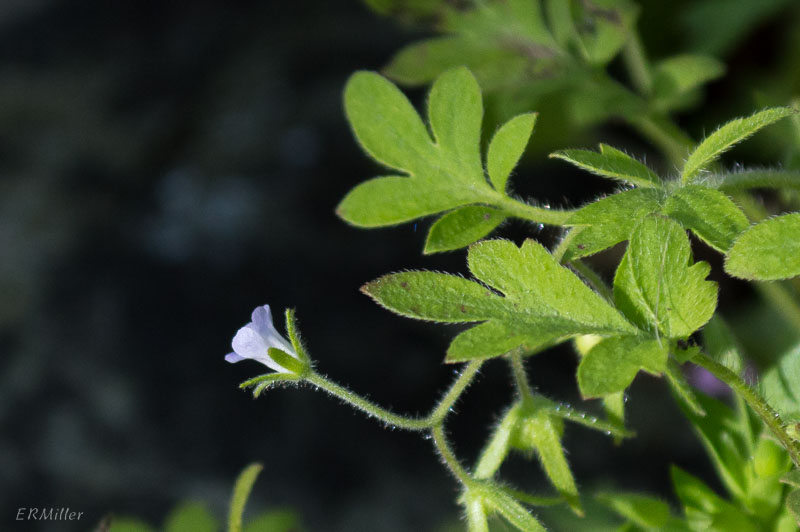
Coville’s phacelia is a somewhat weedy-looking, low-growing, hairy annual forb, easily overlooked.  Per the USDA Plants database, it is found only in Illinois, North Carolina, Virginia, and Maryland (where it is endangered).


Some authorities consider it the same species as P. ranunculacea, which is found in a handful of Midwestern states (and is endangered or of special concern in four of those).

There isn’t much information about it on the internet, but I did find this 112 year old reference to it:

20150429-20150429-_DSC0089

“In view of the apparent rarity of the species, a note upon it may be of interest.  The original station for this plant was an island in the Potomac River, where it was fist collected by F.V. Coville.”  -H. A. Gleason, A Second Illinois Station for Phacelia Covillei Watson” in Torreya, vol. 3, No. 6 (June, 1903).

I wonder which island that would be?  Perhaps Plummers Island, “the most studied island in North America”.