Palmata, Pedata

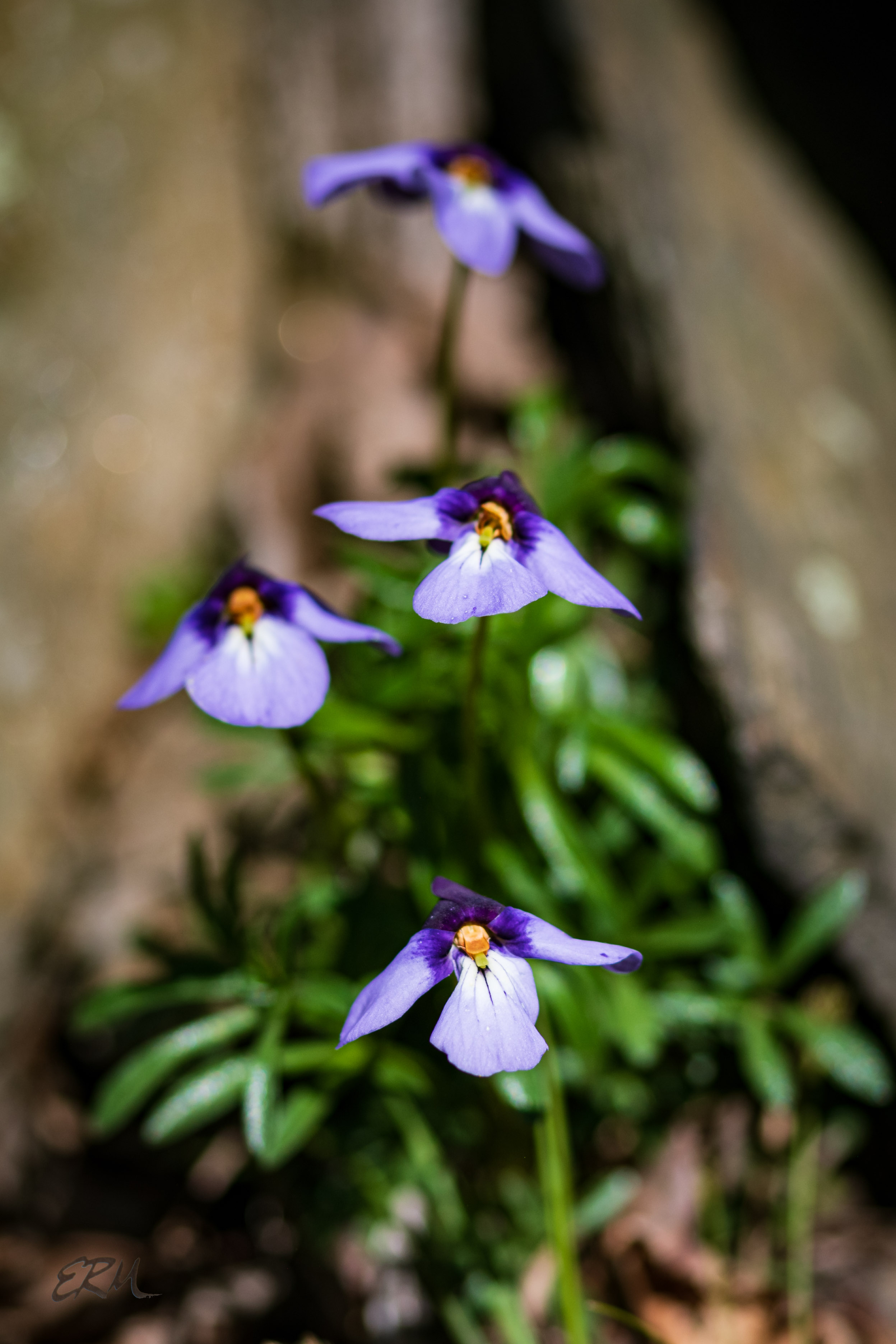
Viola pedata

Last spring my friend B discovered a small population of bird’s foot violet (Viola pedata) near Great Falls.  This was exciting because it was the first reported sighting of the species in Montgomery County since the mid-20th century*.

Viola palmata

I went to the location a few days later and took some pictures. A few days after that, in a nearby but different location, I found a patch of similar-looking plants, but they had finished blooming. I had to wait a year to follow up…

…which I did last week. That second patch was good news/bad news: it was in full bloom, but it wasn’t bird’s foot violet. It was Viola palmata, aka early blue violet or wood violet.

Violet identification can be tricky, but V. palmata and V. pedata are pretty easy to tell apart. Here’s a quick primer.
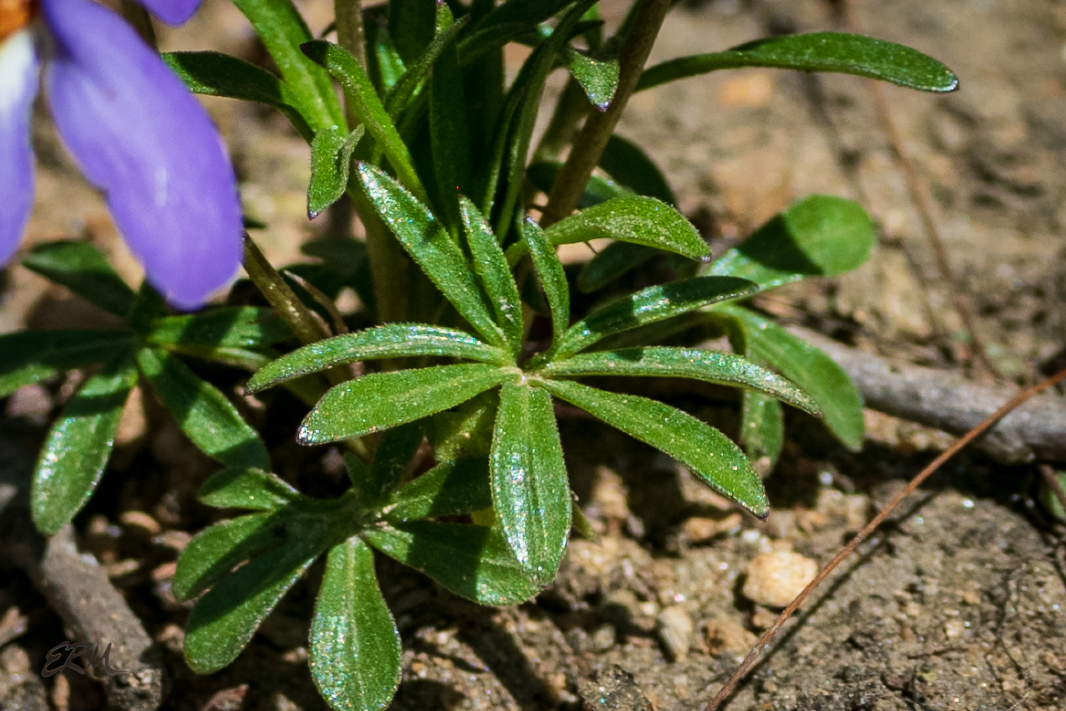
Viola pedata

Have a look at the leaves: in both species they are dissected. V. pedata leaves will have anywhere from 5 to 11 narrow lobes.
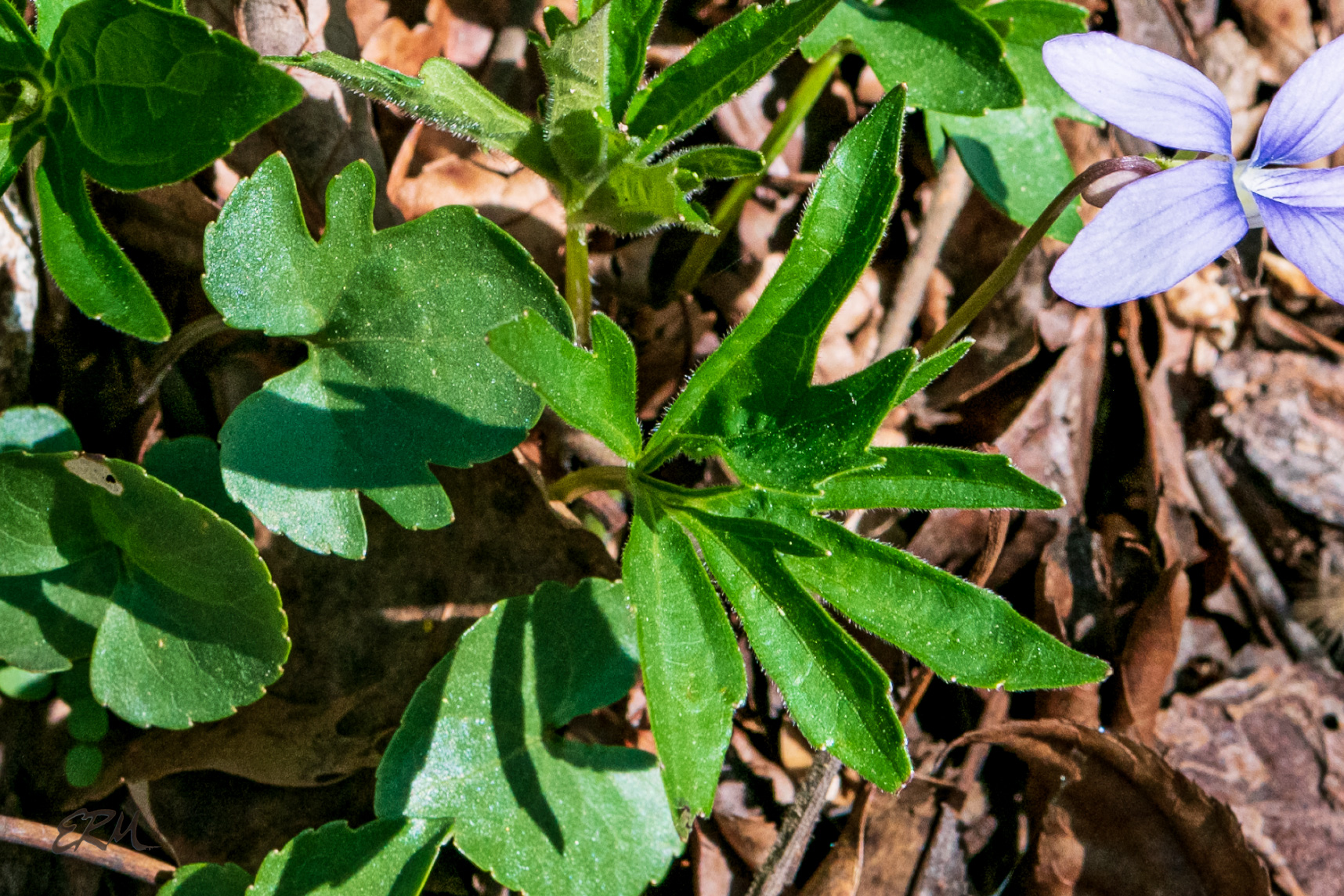
Viola palmata

The leaves of Viola palmata are more variable. Two leaf types are shown here, one with lobes somewhat wider than V. pedata‘s, and the other with fewer, broader lobes.

Viola palmata

Viola palmata
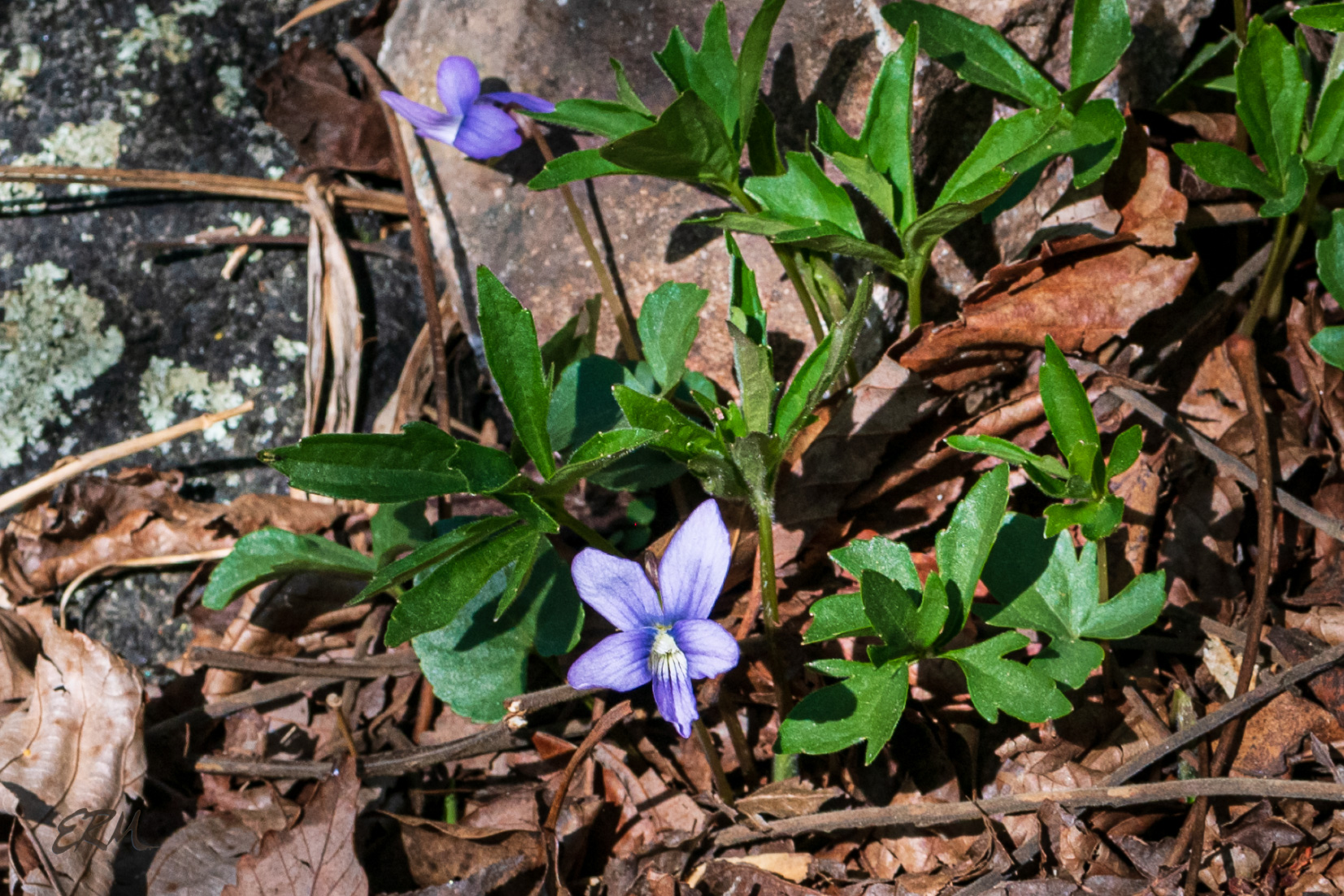
a small colony of V. palmata in bloom.

Typically it’s better to ID species from flowers rather than leaves, so let’s look at those:
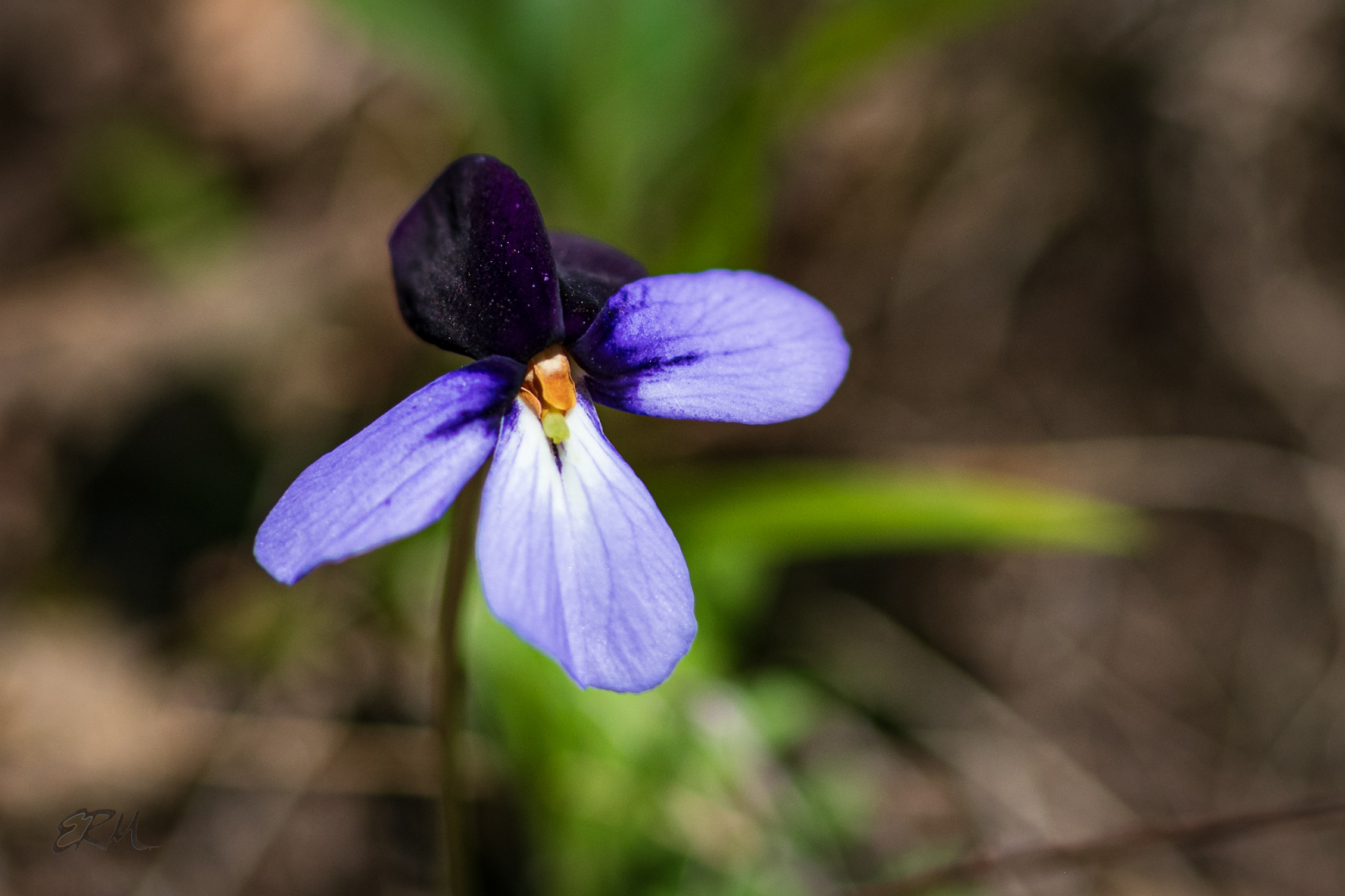
Viola pedata is on the left.  Note that it has an orange center, while Viola palmata, on the right, has hairs in the center (click on the pictures to zoom in).  V. pedata typically has two darker upper petals, but not always.

Viola pedata

In my (rather limited) experience, V. palmata is much more common than V. pedata in the Maryland piedmont.  Both species are found in dry, rocky woodlands, but V. palmata likes moister soils, too.  The stand that B found is on a sandy rock outcropping in the Gold Mine Tract.  If you find bird’s foot violet anywhere in the Maryland Piedmont, please leave a comment here!

*per Maryland Biodiversity Project

Scavenger Hunt Denied (For Now)

Circaea lutetiana (enchanter’s nightshade)

This past Tuesday I had a great idea: go botanizing on Olmstead Island and submit photos to the Maryland Biodiversity Project and the Maryland Plant Atlas. But a bunch of signs along the last stretch of road before the visitors’ center parking lot proclaimed that the walkway to the Great Falls overlook was closed.

It won’t open until some time in July. Apparently repairs are needed. No problem, I can go back another day.

But a little more about the MBP… according to their website:

Maryland Biodiversity Project (MBP) is a 501(c)3 non-profit organization focused on cataloging all the living things of Maryland.

To do this, they accept recorded sightings (preferably photographic) off animals and plants (and fungi, etc.), with specific locations: not just by county, but by USGS quad. There are 261 quads covering the state!

Click on any quad on the Maryland Plant Atlas quad map and you can see what’s already been recorded, and what the top 100 needs are. Because of the way the quads are arrayed over the state, some of them have very few or even no records.

One of those quads is Vienna, which has only a sliver of Maryland in it: part of Olmstead Island, where the Great Falls overlook is. There are only seven records for that area; I can assure you there are a lot more than seven plant species there!

So, sometime in July, when the walkway re-opens, I’m going to lead a mini bio-blitz and see if I can’t submit more photos to help fill in that quad. I’ll be posting about it on the MBP facebook page and the Maryland Native Plant Society Discussion Group, so if you want to join me, check those spaces for announcements. Or leave a message in the comments of this post.

bee on Pycnanthemum tenuifolium (narrow-leaved mountain mint)

For more information about how to get involved with MBP, visit the FAQs page.

It really is a lot of fun – like a scavenger hunt.