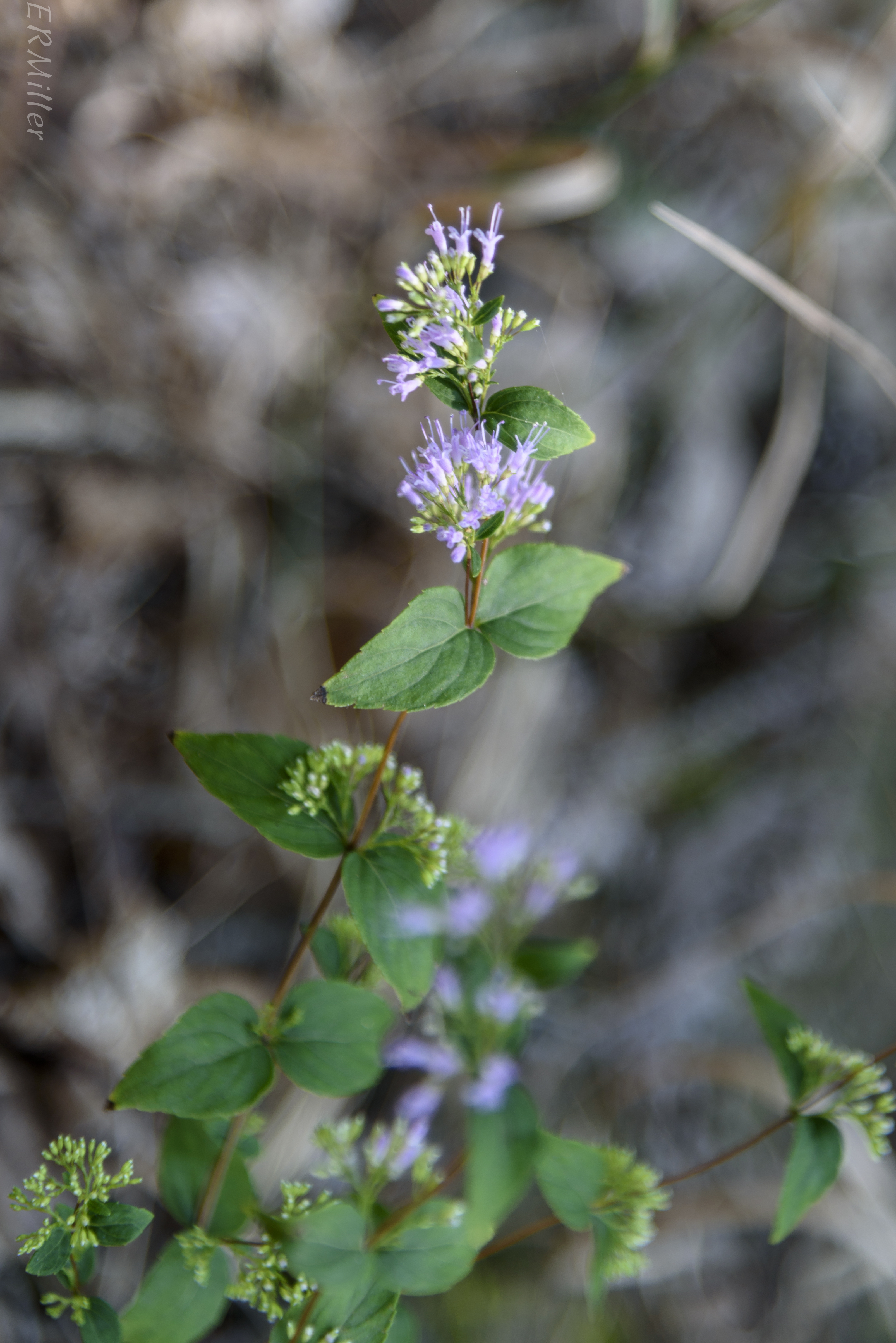
Lamiaceous Weeds

As I wrote in the previous post, about half of the mint family species found in the Maryland piedmont are alien. Some of those are seriously weedy. I regret not having pictures of all of them; perhaps this year I’ll make a point of getting good photos of aliens. Native or not, they are wildflowers…

Ajuga reptans
bugle, bugleweed, carpet bugle, carpetweed
This common ornamental groundcover is grown primarily for its ability to thrive in dry shade. It’s a handsome plant, with purple- or bronze-tinted or variegated evergreen or semi-evergreen leaves, and forms dense mats via above-ground stolons that run and form new plantlets. It’s established in much of the eastern US as well as the Pacific northwest. Whorls of blue-purple flowers appear on short spikes in late spring.
images at invasive.org

Perilla frutescens
beefsteak plant, shiso
A popular herb in Asian cuisines, shiso is an escaped kitchen garden plant. There are vast swaths along the C&O canal from Great Falls to Carderock and elsewhere. Once I spotted a few women there harvesting the leaves. I had mixed feelings about that: on the one hand, destroy the invasives! On the other, foraging in national parks is illegal, and for good reason. Anyway, this plant can get to three feet tall, and features large, wrinkled, purple-bronze leaves that are heart-shaped and coarsely toothed. The small white flowers appear on racemes in summer.
images at invasive.org

20140728-DSC_0017-2

Prunella vulgaris
common self-heal, heal-all, all-heal
There seems to be some confusion about whether this plant is native to the US. ITIS recognizes three subspecies: P. vulgaris ssp. aleutica, ssp. lanceolata, and ssp. vulgaris20140821-dsc_0109BONAP shows two species in the US, P. vulgaris (native) and P. laciniata (alien). Presumably P. laciniata and P. lanceolata are the same. But then, according to the Weakley Flora there are both P. laciniata and P. vulgaris ssp. lanceolata. Whether alien or native, self-heal is recognized by several authorities as weedy. I see it blooming along the C&O Canal towpath, leading me to believe it likes sunny areas in dry, disturbed soils. It’s common there, but not exactly weedy. The blue or sometimes white flowers are borne in short spikes in mid to late summer.

There are three commonly confused, purple-flowering weeds that seem to be everywhere: ground ivy, henbit, and deadnettle. For more information, check out the post on identifythatplant.com.

gill-over-the-ground

Glechoma hederacea
ground ivy, gill-over-the-ground, creeping charlie
This very low-growing plant has stolons up to seven feet long, forming new plants at the nodes, and thus covers large areas in mat-like growth. The small, round leaves have rather long petioles, are indented at the bases and have scalloped margins. The flowers are borne in pairs of cymes in the leaf axils, each cyme having only a few flowers. Ground ivy is established in most of the US and Canada (except the desert southwest), and is listed “potentially invasive, banned” in Connecticut. In the Potomac gorge there are areas many square feet in size covered in nothing but ground ivy.

Lamium amplexicaule
henbit, henbit deadnettle
Native to Europe, Asia, and north Africa, this low growing annual is established in almost all of the US and Canada except the Arctic regions. It’s a sprawling plant, but maybe not as mat-forming as ground-ivy, from which it’s distinguished by the leaves, which are about the same shape, but on the upper part of the stem they’re sessile so that they appear to entirely surround it. The stem is often red. The flowers are borne in sessile whorls in the leaf axils, and in terminal whorls.
images at invasive.org

red dead nettle

Lamium purpureum
purple deadnettle, red deadnettle
Purple deadnettle is not quite as widespread across North America as henbit is. The green stems stand upright (instead of sprawling), and the uppermost leaves are somewhat purple or reddish. The leaves have a somewhat more pointed shape, short petioles, and occur only on the upper half of the stem.
images at invasive.org

next time: lamiaceous wildflowers (the not-weedy kind)
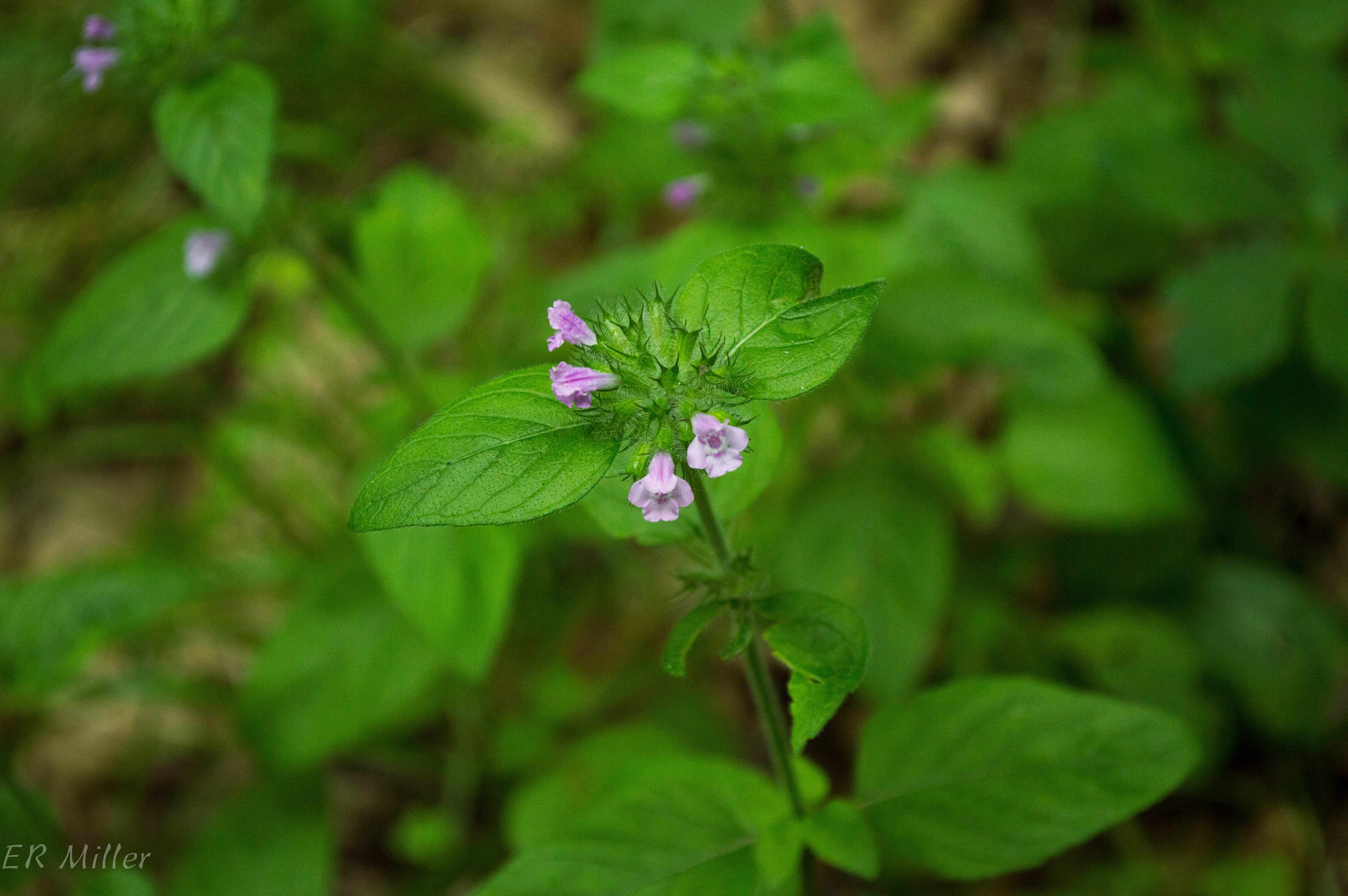
The Lamiaceae

20150717-20150717-_DSC0030As familiar as weeds, as fragrant as mint, the Lamiaceae has a cosmopolitan distribution: about 7,850 species in 250 genera can be found almost worldwide (not Antarctica, and not north of the Arctic circle). Also known as the Labiatae, this family ranks 10th in size among native flowering plant families in North America, with about 408 species. In Maryland there are almost 100 species (more if you count sub-species and varieties), about half of which are in the piedmont. Sadly, only a little more than half of the species are natives, and of those, twenty-two are on the current Rare, Threatened and Endangered list. Two of those are extirpated.

Mint family plants are well known as garden ornamentals and herbs (culinary and otherwise). In the former category are agastache, bee balm (Monarda species), bugleweed (Ajuga species), catmints (Nepeta species), coleus, germander, hyssop, several sages (Salvia species), and stachys. Familiar kitchen species include basil, horehound, lavender, marjoram, the various mints, oregano, perilla, rosemary, savory, sage, and thyme.

The mint family shows up in another way in many of our homes: as furniture. The three species of teak trees (genus Tectona) are in the Lamiaceae.

The mint family species are generally herbs, shrubs, or subshrubs, frequently with hairy stems that are more often than not square in cross-section. The leaves are usually arranged in opposing pairs or in whorls on the stem, and are generally simple, though they may be lobed or pinnately or palmately compound, and they lack stipules. They often have oil glands (many species are fragrant).

20150813-20150813-_DSC0136

The flowers are often found in whorls in the leaf axils, and are often scented. They generally have five fused sepals and five petals that are often fused or partly fused, giving the appearance of a two-lobed petal above and a three-lobed petal below.

In some Lamiaceae species flowers are borne in cymes, a type of inflorescence that has several branching pedicels originating from the same point on the peduncle, along with a terminal flower that is always the first to open. In the mint family these cymose flowers are often small and densely packed, with two opposing clusters; the effect is that of a whorl of individual flowers. Flowers can also be borne in racemes or panicles. 20150823-_dsc0007


terminal panicle of horse balm (Collinsonia canadensis) —>


next time: lamiaceous weeds

Common Dittany

20160830-_dsc0257

aka American dittany, Maryland dittany,
frost mint, stone mint, sweet horsemint,
fairy skirts
Cunila origanoides
Lamiaceae

Like the blue curls in my last post, common dittany is in the mint family. It has the characteristic square stems and paired leaves, not to mention a marked fragrance like oregano or thyme, but the flowers are a little atypical. They lack “lips”, and have two stamens rather than four. The flowers are found in terminal clusters and in axillary clusters on the upper portions of the stems.

This species is a perennial subshrub that grows to about one foot tall, with branches often sprawling or flopped over. I came across a single specimen in the Serpentine Barrens Conservation Park, growing in textbook common dittany habitat: dry soil, shade from trees overhead, and little to no competition from other plants on the forest floor.

20160830-_dsc0262

There are about a dozen species of Cunila. All except this one are native to South America and southern North America (as far north as Mexico). C. origanoides‘ range includes an area somewhat to the east and west of the Appalachians, from southern New York through South Carolina, and the Ozarks, with a few scattered occurrences elsewhere.

The plant probably got its common moniker “dittany” from a similar looking old-world herb, dittany of Crete (Origanum dictamnus). The specific epithet origanoides means “like oregano”. Native Americans made a tea of common dittany for a variety of medicinal purposes, but please note that it does not have FDA “generally recognized as safe” status (according to The Herb Society of America).

20160830-_dsc0258

Blue Curls

20160830-_dsc0128

aka forked bluecurls,
bastard pennyroyal
Trichostema dichotomum
Lamiaceae

This mint family member will get your attention. The flower has five petals, two up and three down. But the speckled middle lower petal extends far out from the others, and the four stamens protrude and curl dramatically. The plant itself shows the usual mint family characteristics of paired leaves on a square stem.

Trichostema is from the Greek and means “hair-like stamens”, while dichotomum refers to the way the plant grows (forking in pairs, typical of the Lamiaceae).

Blue curls is a short (to 18 inches) annual plant of dry, sunny places, such as the power line clear-cut in Serpentine Barrens Conservation Park where I found dozens of specimens. They were growing in a swath of orangegrass plants, another species I only just learned about.

20160830-_dsc0134

According to various sources, blue curls blooms from August through October. I don’t know if that’s the case in the Maryland Piedmont, but I’ll keep an eye open for them when I go back to that area.

This is one of twelve species of Trichostema native to North America; only two others can be found in this area, and both are on the Maryland DNR’s RTE (rare/threatened/endangered) list. T. dichotomum ranges from Quebec and Ontario south to Florida, Texas to the southwest, and Iowa to the northwest. It’s rare in Indiana and threatened in Michigan. In Maryland look for it in the Piedmont as well as parts of the coastal plain, the Blue Ridge, and the ridge and valley provinces.

20160830-_dsc0140

Beautiful Little Things

These three plants have nothing in common other than I found them to be delightful.

20160620-_DSC0599

Veronica fruticans
rock speedwell
Icelandic: steindepla
Plantaginaceae

Despite being common and distributed through much of Iceland, I only saw these two flowers, on a mountainside south of Akureyri. The species is also found in Greenland and Fennoscandia. The flower is small (about half an inch across), but the blue is so intense that it really stands out.

20160620-_DSC0585


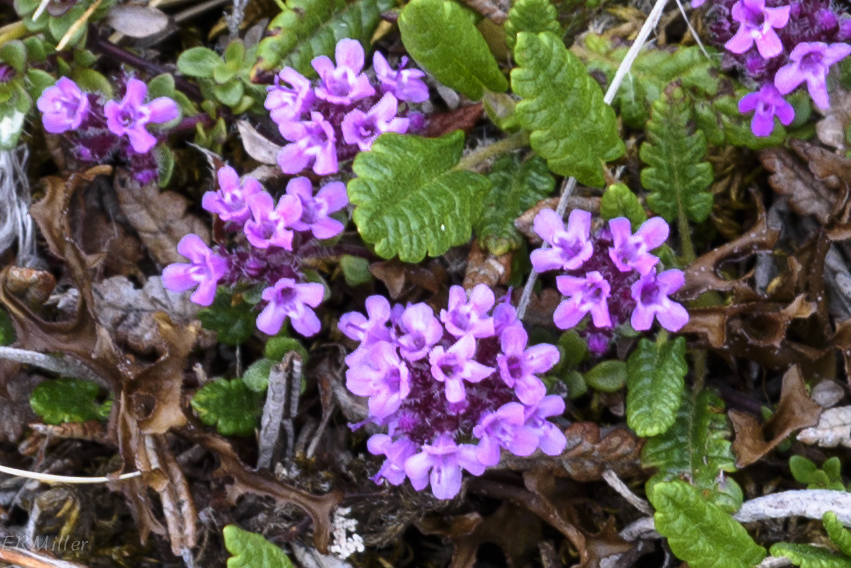
Thymus praecox ssp. arcticus
creeping thyme
Icelandic: blóðberg
Lamiaceae

This ground-hugging plant was almost everywhere, as delightful to smell as it is to see. It’s another Fennoscandia native, but its introduced ranged includes Greenland, much of Canada, various parts of the US as far south as Mississippi, and even Venezuela.

belly flower!
–>

20160618-_DSC0442-2


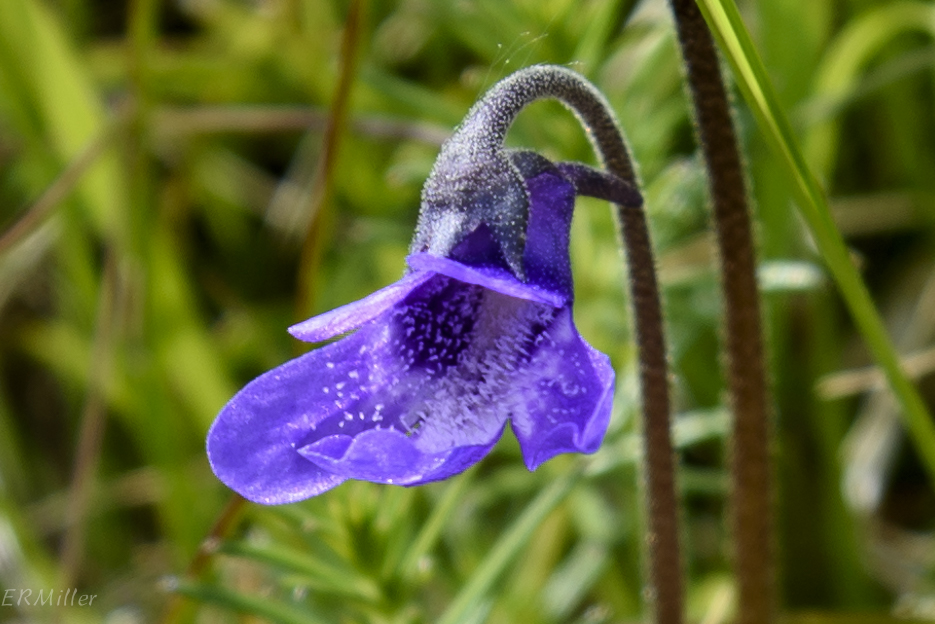
Pinguicula vulgaris
common butterwort
Icelandic: lyfjagras
Lentibulariaceae

Another very common plant, growing almost everywhere in Iceland, and indeed almost everywhere in the higher latitudes of the northern hemisphere. In the US it’s found in the upper Great Lakes areas and New England. Butterworts are insectivorous: sticky hairs on the leaves trap insects, which are then digested by enzymes the leaves excrete. There’s more information at Luonto Portti (Nature Gate) website, a resource I’ve been using quite a bit, since so many Icelandic plants are also found in Finland. None of the 80 or so Pinguicula species are found in Maryland, but there are a dozen of their close relatives, Utriculariaaka bladderworts, here.