Endemic

Endemic – restricted to one area. A species that is endemic to a place (Death Valley, for example) will be found nowhere else.

20160310-_DSC0825

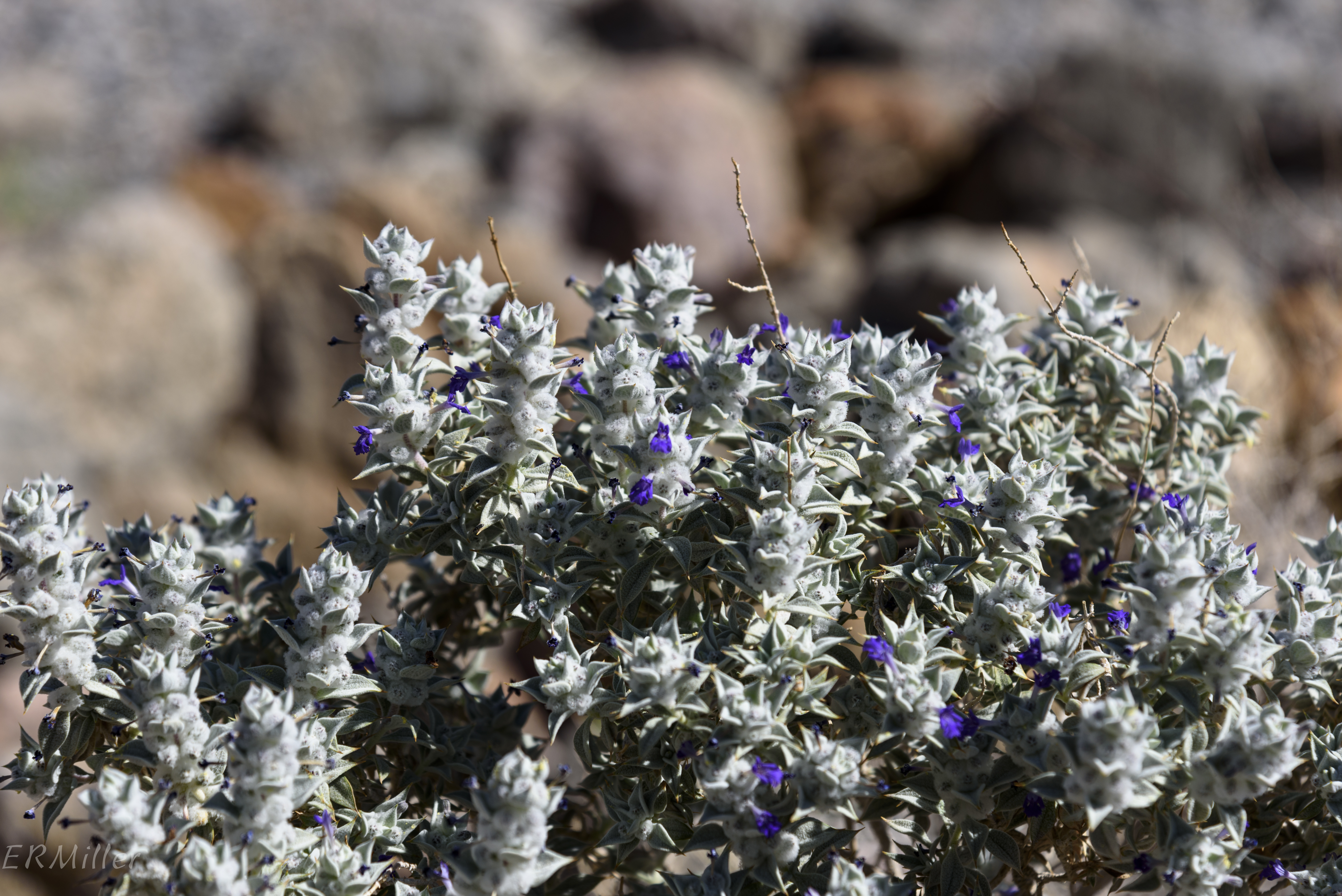
On my last morning in Death Valley I decided to re-visit a few highlights. I went to see the globemallow again, and to see if the nearby beavertail cactus buds had opened yet. Nope. But before that, I visited a particular trail that had a good number of gulches with a good variety of flowering plant species. I was on my way back to the car when I caught sight of this.

20160310-_DSC0824


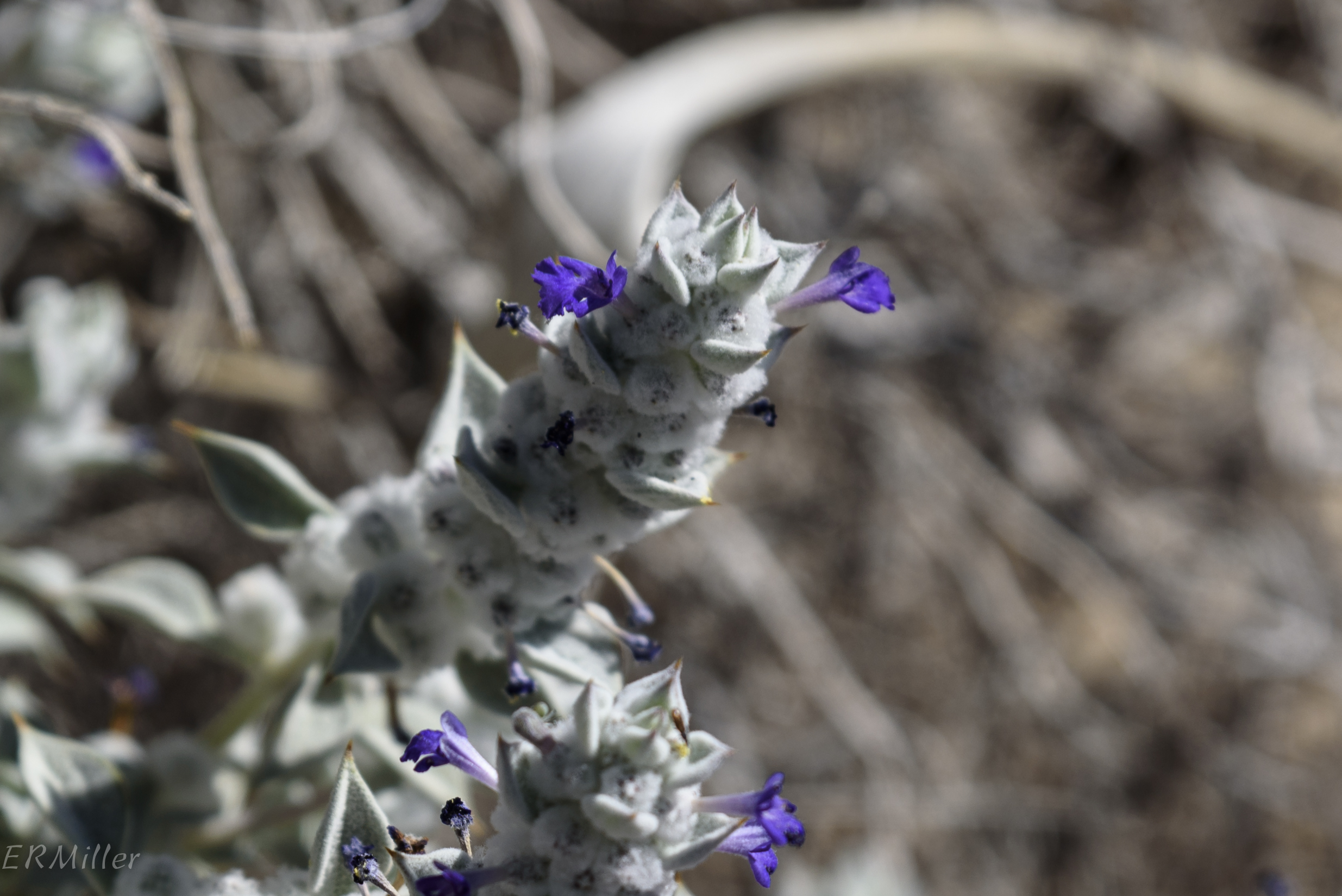
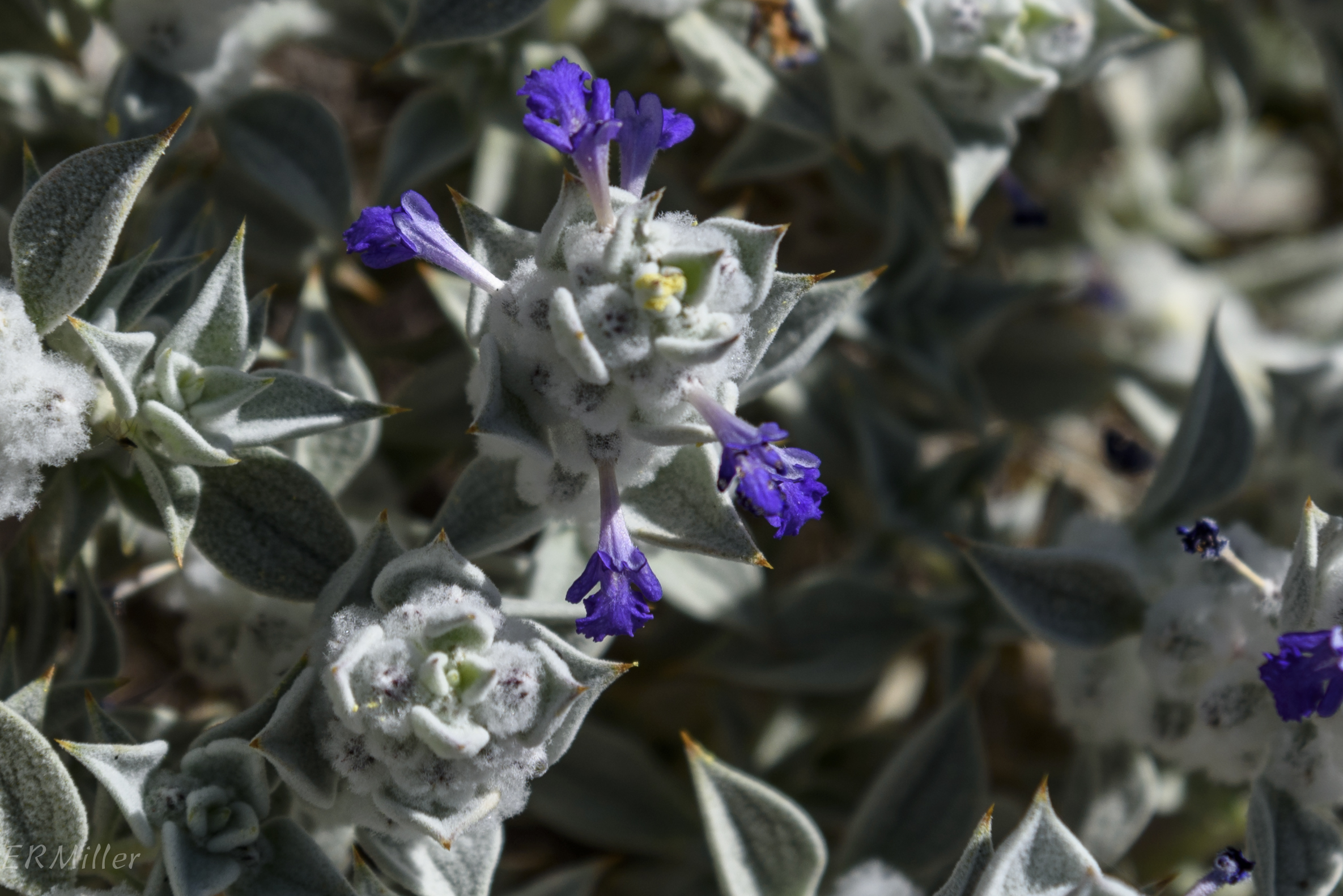
Death Valley sage, Salvia funerea, Lamiaceae


Death Valley sage is of course endemic to Death Valley.  It’s a shrub that can grow to about 4 feet tall, but usually is shorter. This specimen was a little more than knee-high. The pale-green foliage looks silvery from the short white hairs all over it (hence another common name, woolly sage).

I’d seen a few of these over several days, but this was the only one flowering. Those purple flowers are slightly smaller than a pinky-nail.

20160310-_DSC0827


Extirpated

20150902-_DSC0028-2

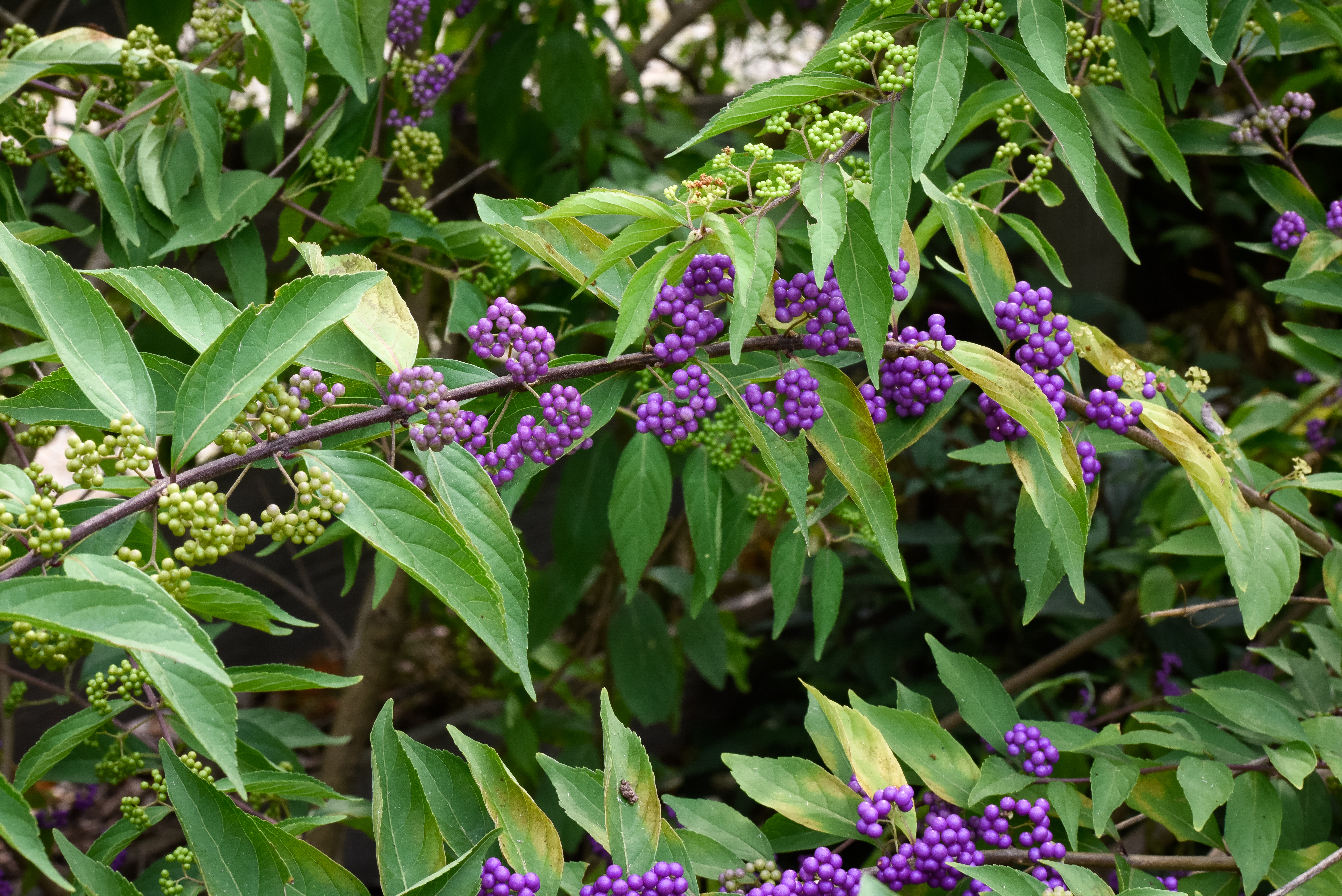
Extirpate – to remove or destroy completely.  In ecological usage, refers to species no longer occurring in a defined area.  Example: Callicarpa americana (American beautyberry; Lamiaceae) is extirpated in the state of Maryland.

20150902-_DSC0043-2

There is, however, a specimen in my garden, where it does quite well in full sun, despite being a plant of open woodlands.  American beautyberry can grow to eight feet tall by eight feet wide, generally with a more open habit (this one has been pruned a lot).  The flowers are pretty in their own way, but the fruit are the main attraction -not just for gardeners, but for songbirds (more than 40 species feed on them) and some small mammals.  And the leaves contain mosquito-repelling compounds.

20150902-_DSC0042-2

American beautyberry ranges from Texas eastward among the southern states, and northward along the Atlantic coast into Virginia (and, historically, Maryland).

The USDA’s plant fact sheet for this species is full of interesting information.

_DSC0069

Meanwhile, Back in Cabin John…

20150824-_DSC0196

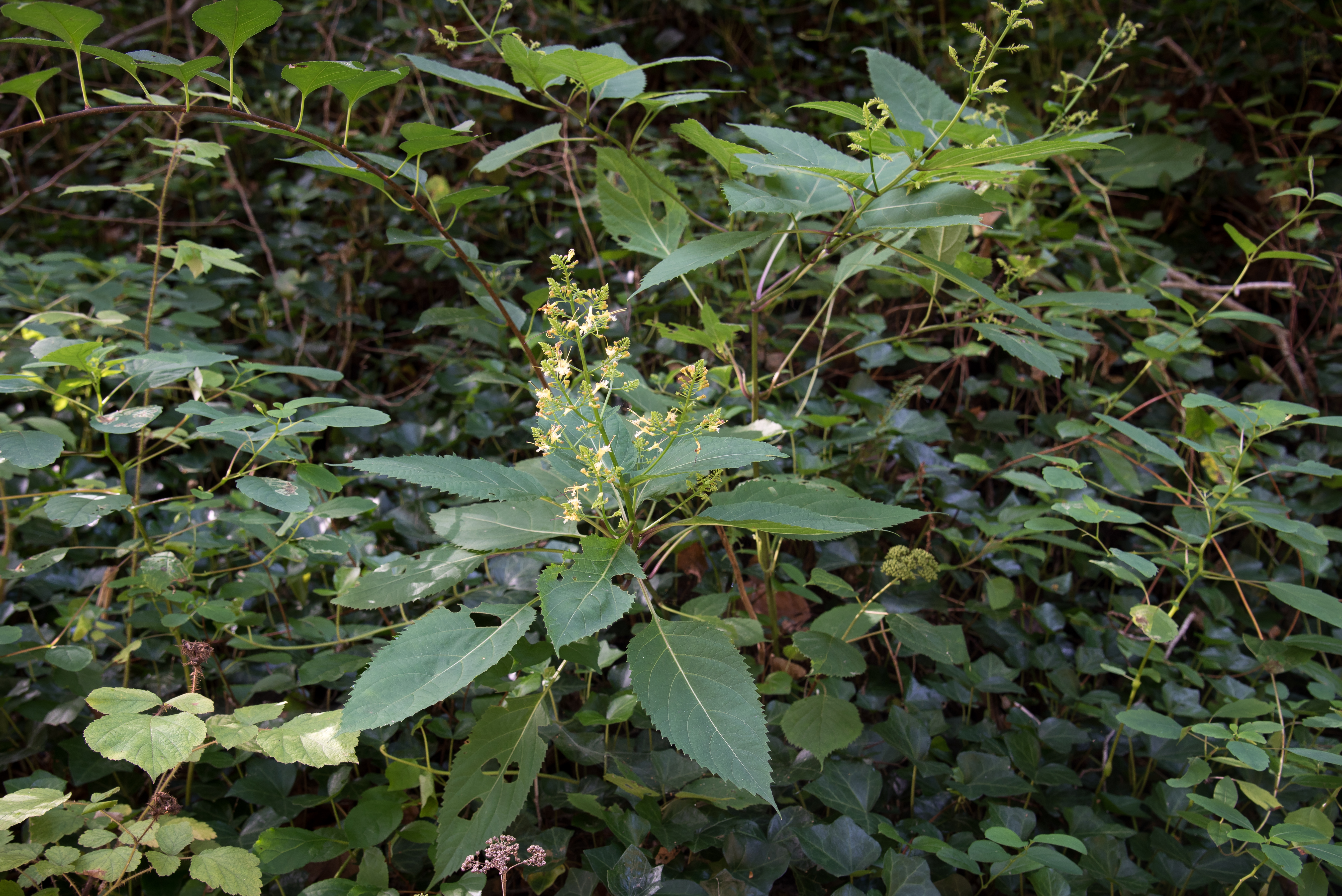
horsebalm, aka richweed, horseweed, stone root
Collinsonia canadensis
Lamiaceae

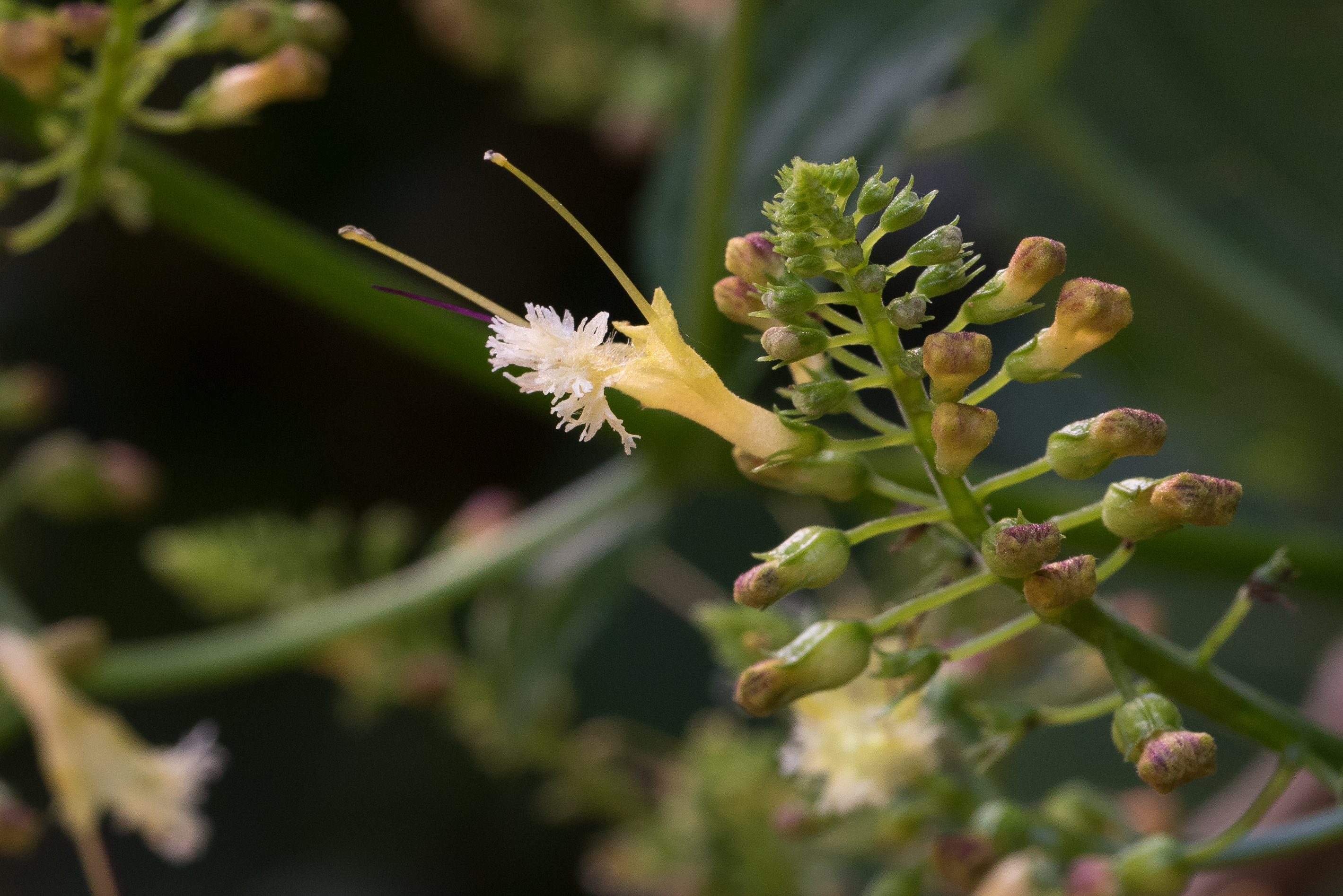
I’m not sure that there’s anything particularly special or interesting about this plant.  It has some medicinal uses.  It’s found throughout most of the eastern US and Canada.  It’s endangered in Wisconsin.  There are three other species of Collinsonia in the US, none of which are found in Maryland.  I’m not sure what else to say about it.

20150823-_DSC0007

Except this: even if it’s supposedly a fairly common plant, I have only ever found one stand of it, which makes it special.  There are perhaps three or four plants in this stand, growing atop a boulder alongside Cabin John Creek, almost but not quite above my head.

20150824-_DSC0150

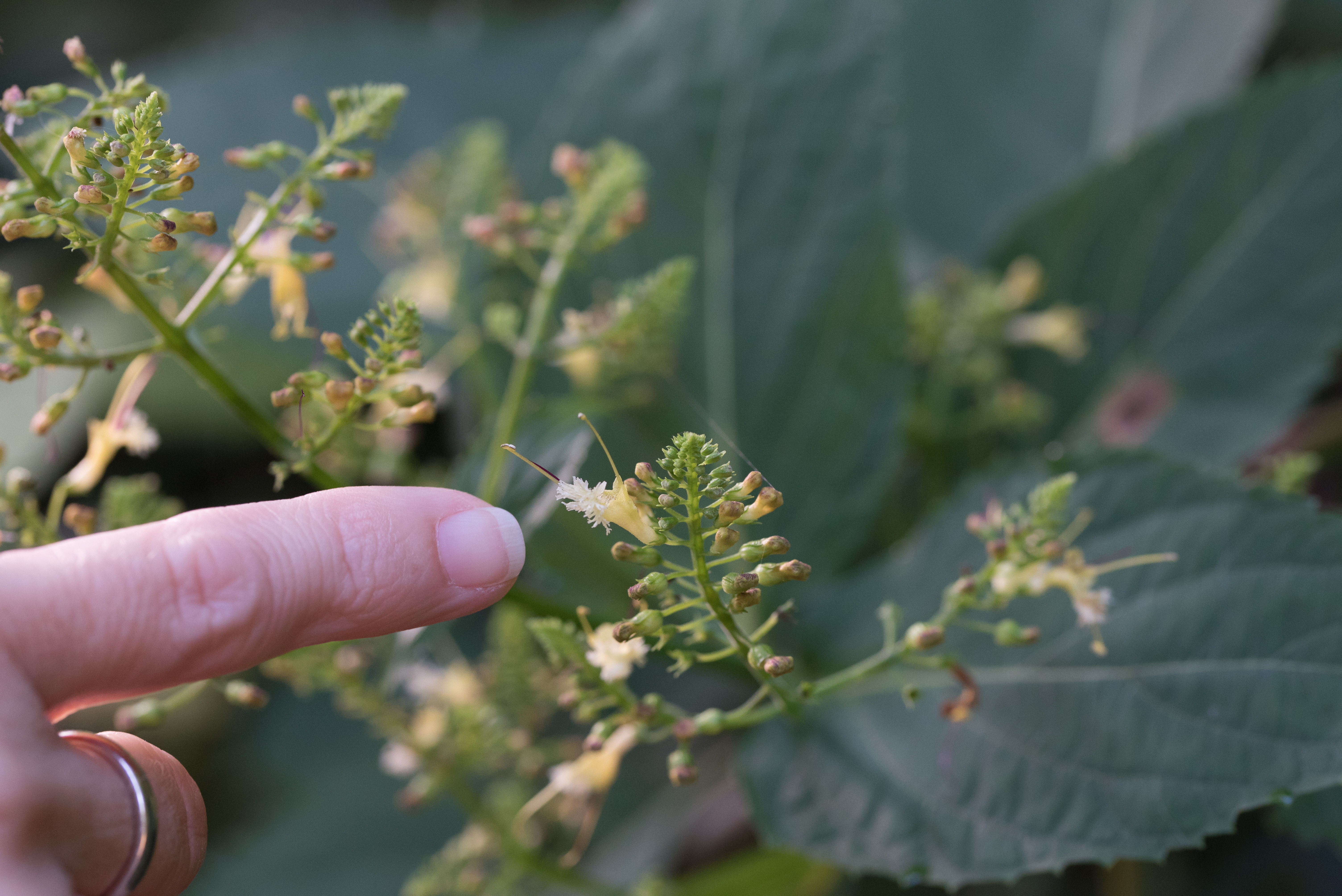
This makes them tricky to photograph.  Because of nearby large vegetation, the plants are always in shade. Since they’re so close to the creek, they’re always being blown around a little.  It’s easy to deal with motion or with lack of light, but not both at the same time, especially if you want to zoom in close to see the fascinating little details.

20150824-_DSC0195

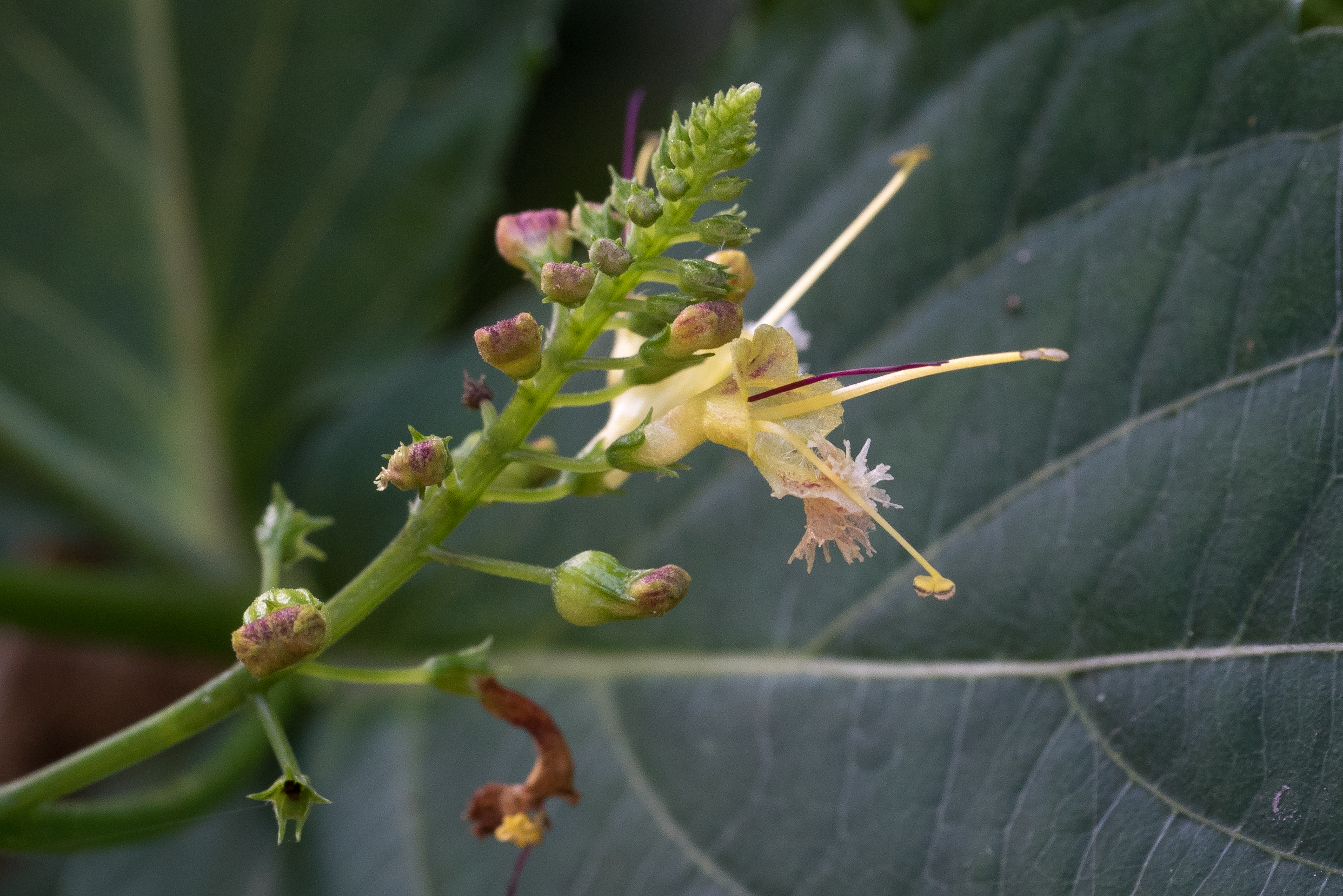
The flowers are quite small.

And intriguing.

Wolf Foot

20150822-20150822-_DSC0121

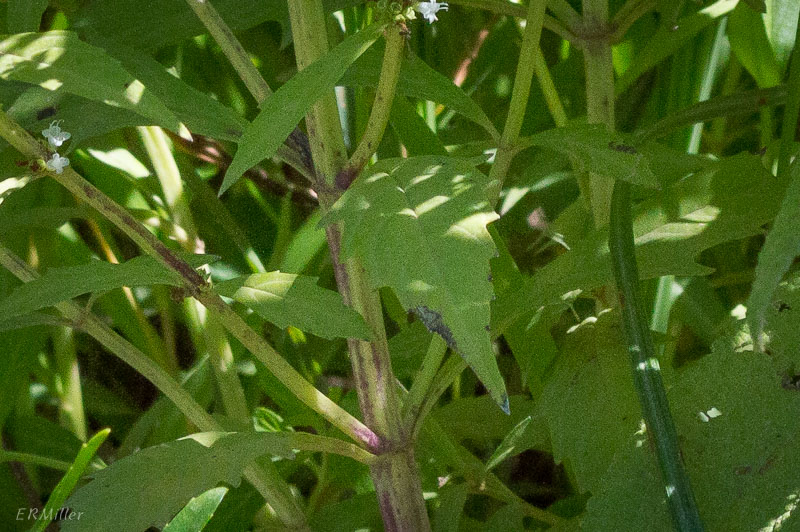
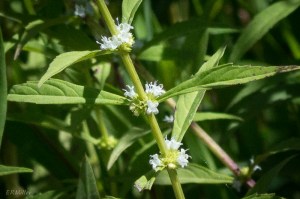
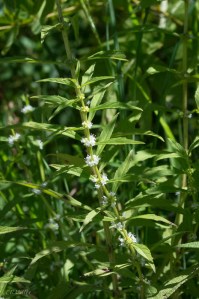
Virginia bugleweed, aka Virignia water-horehound (and a host of other common names)
Lycopus virginicus
Lamiaceae

The last photo in yesterday’s post showed most of a single boneset, with a few other plants to its left – plants with small white flowers.  They didn’t really register the day I took that photo. It was my first time out in a kayak with a camera (an ancient point-and-shoot with very low resolution), and I wasn’t able to maneuver close to the plants, and anyway I was totally focused on the boneset leaves.

So much for excuses.  I was looking at the picture on the computer and thought “what in the world…?”  So I went back with a better camera (cleverly though cumbersomely packed to keep it dry) and got better pictures.
20150822-20150822-_DSC0119

But not great pictures.  I was still unable to maneuver close to the plants, and the water was choppy, making it exceptionally difficult to keep the camera still.

It was quick work to get to the genus Lycopus, but I’m still not sure the species is correct.  With help from the Maryland Biodiversity website I narrowed it down to three.  Cross-checking with the excellent, detailed dichotomous key at gobotany.com didn’t help much, because I didn’t have enough or the right details in the pictures.   And the Illinois Wildflowers site, one of my go-to resources, offered some contradictory information.

One thing I did learn: this is considered a tricky genus.

At any rate, the bugleweeds/water horehounds are wet soil lovers (as is everything I’ve found growing in the lower Potomac Gorge).  This one ranges from the Atlantic coast as far west as Texas and Minnesota. It’s threatened in Michigan.

Why “Lycopus“?  Beats me.  The lower leaves of some of the species are sharply lobed (more so than this one).  Perhaps someone thought they looked like a wolf’s foot.  Common names tell us more about the name-givers than about the plants.

20150822-20150822-_DSC0123

UPDATE 12/30/16: I am virtually certain, after much study, that I got it wrong. This one is northern bugleweed, Lycopus uniflorus.
Flower of the Day: Wild Mint

20150813-20150813-_DSC0136

aka field mint, corn mint
Mentha arvensis
Lamiaceae

Pretty little thing, isn’t it?  Not a very remarkable plant.  It looks like mint, it smells like mint.  It grows to two feet tall in moist soils in the sun; in the shade it can be somewhat sprawling.  But it has those wonderful whorls of flowers in the leaf axils.

Wild mint can be found through most of the US and Canada except for parts of the South.  There are no conservation issues, but Nebraska considers it weedy/invasive.

20150813-20150813-_DSC0140