Icelandic or Arctic?

Papaver radicatum
arctic poppy, rooted poppy
Icelandic: melasól
Papaveraceae

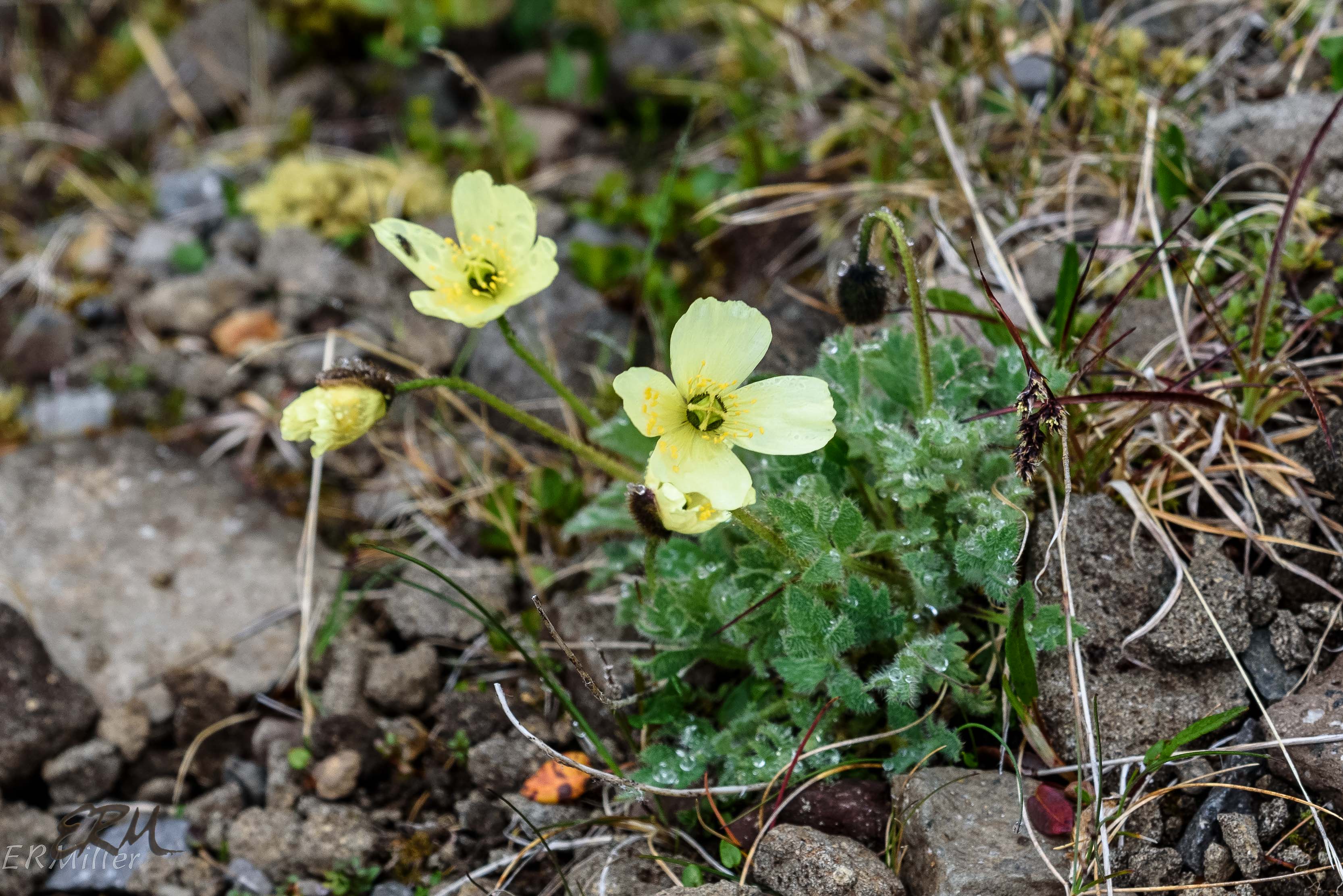
If you’re a gardener or flower enthusiast of any sort, you’re probably familiar with Icelandic poppies, popular in the florist trade. These are not Icelandic poppies. They’re arctic poppies.

Because the two common names seem to be tossed around with abandon, I’m going to stick with the Latin here. P. radicatum has four subspecies (according to the Integrated Taxonomic Information System), which may explain why I found conflicting data from various sources. Some claim the species is endemic to Iceland. Others claim it’s endemic to Norway and Sweden. And still others say its native range includes Iceland, Jan Mayen, and North America (Greenland, Canada and the US). Probably what’s going on here is each of the subspecies is endemic or native to a particular area.

I can’t say which subspecies this is, but for sure it’s P. radicatum: the hairy leaves and stem are the signs. This species is found in the western and eastern regions of Iceland, with a few scattered occurrences elsewhere. I saw it in the Westfjords near the waterfall Dynjandi, and in the Snæfellsnes penninsula. In the US it can be found in a few counties in the Rocky Mountain states (and in Alaska).

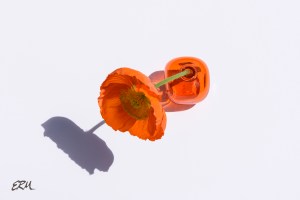
As for the so-called Icelandic poppy of the florist trade, that’s P. nudicaule (or P. croceum in some older sources). It’s hairless – nudicaule means “naked stem”. This species is not native to Iceland, but rather to North America. Sources disagree on its range, though. BONAP shows it as a native in part of eastern Canada only, while USDA shows it as a native in Alaska, Utah, Colorado, and Virginia, and introduced in parts of western Canada.

We did see Icelandic poppies in Iceland:
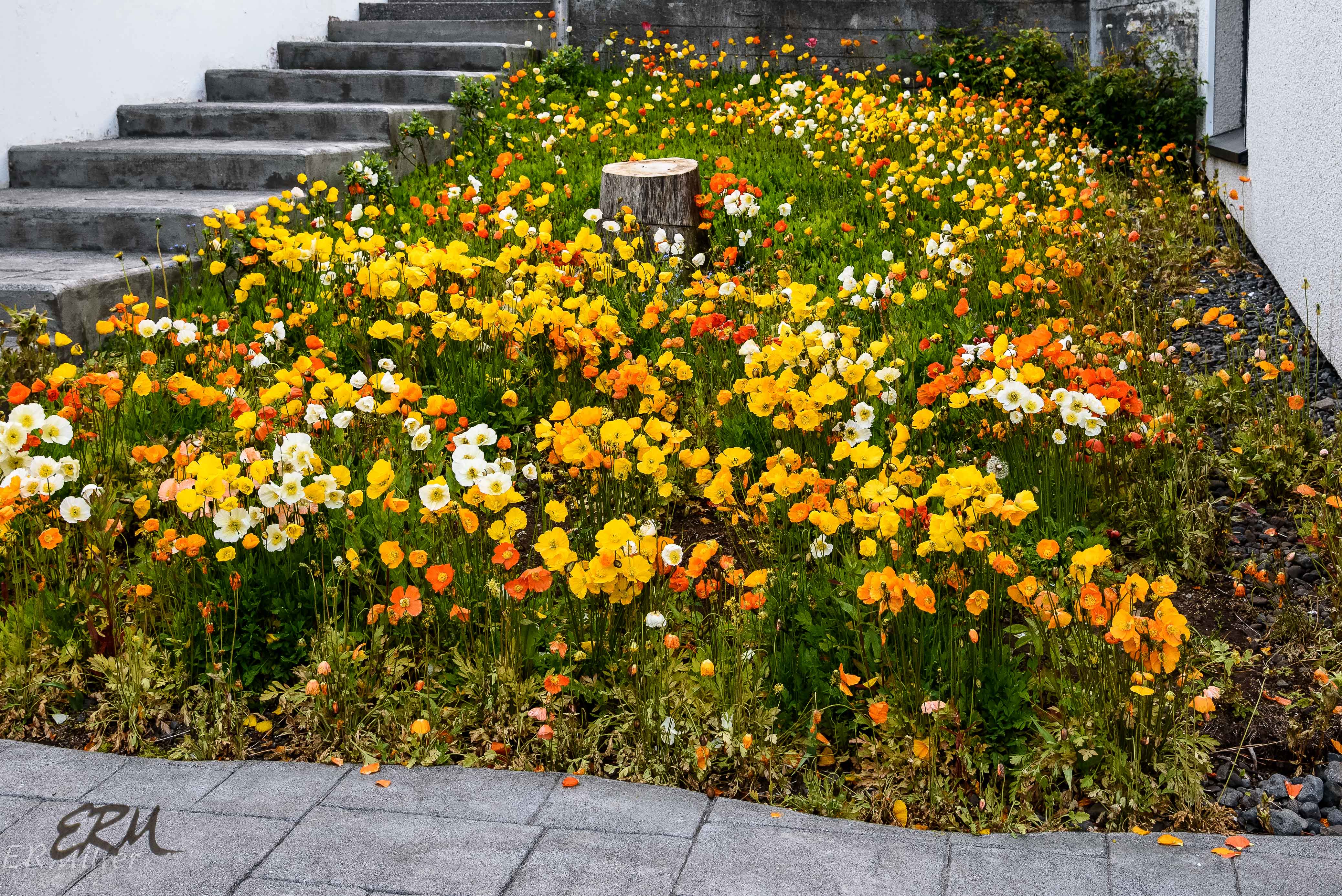
 

They grow there in gardens.


20160412-_DSC0002

still life with poppy

Craters and Poppies

20160308-_DSC0438

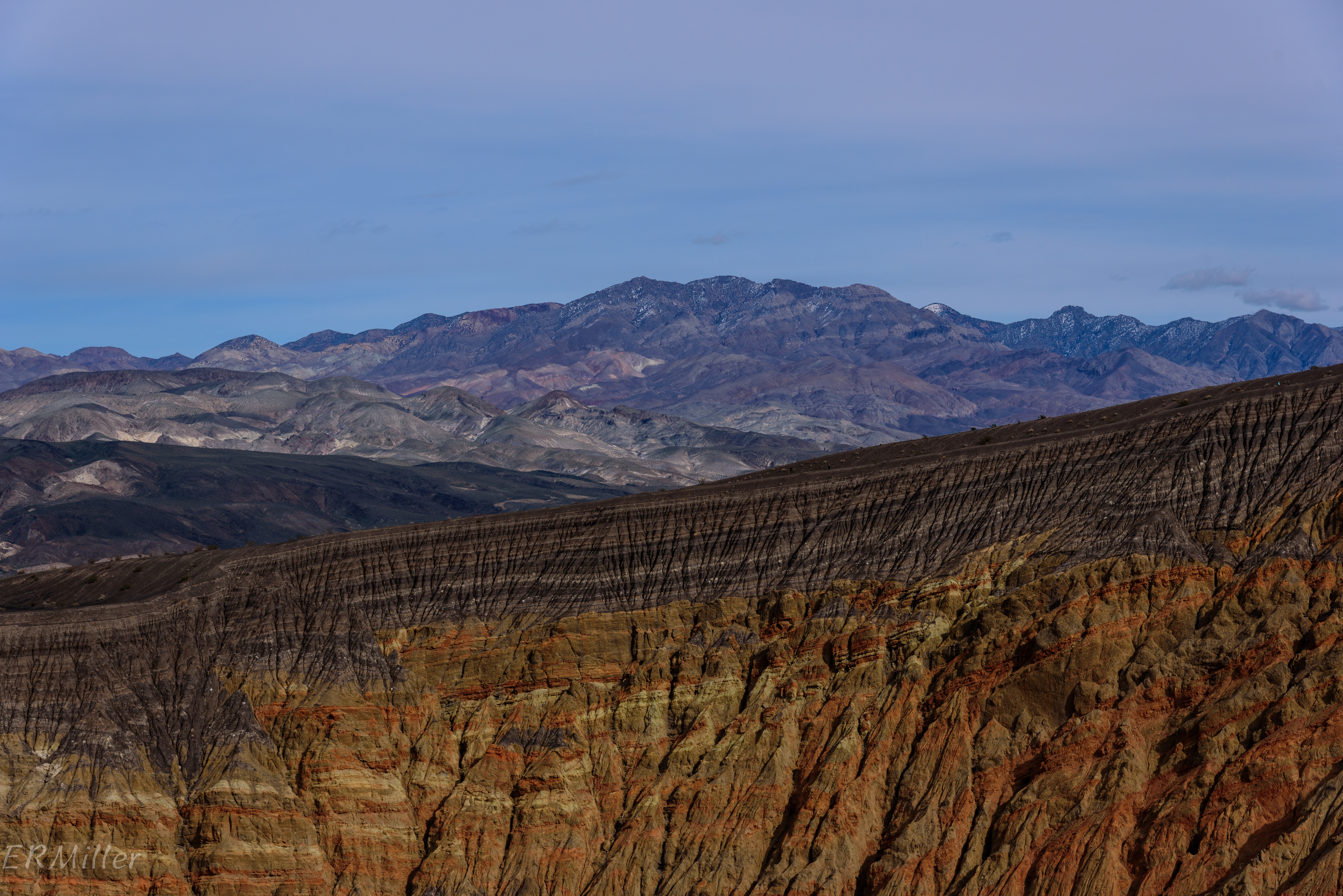
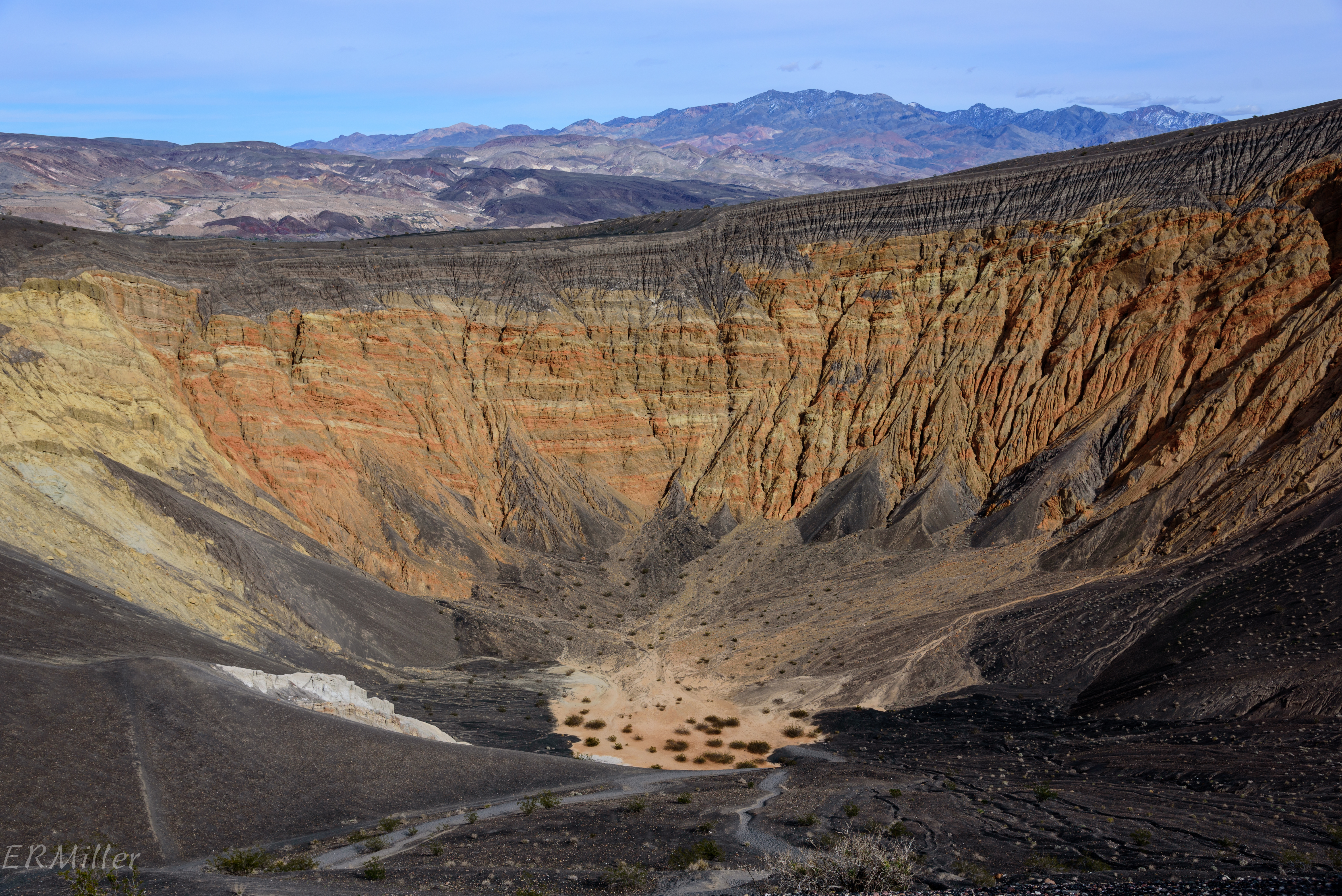
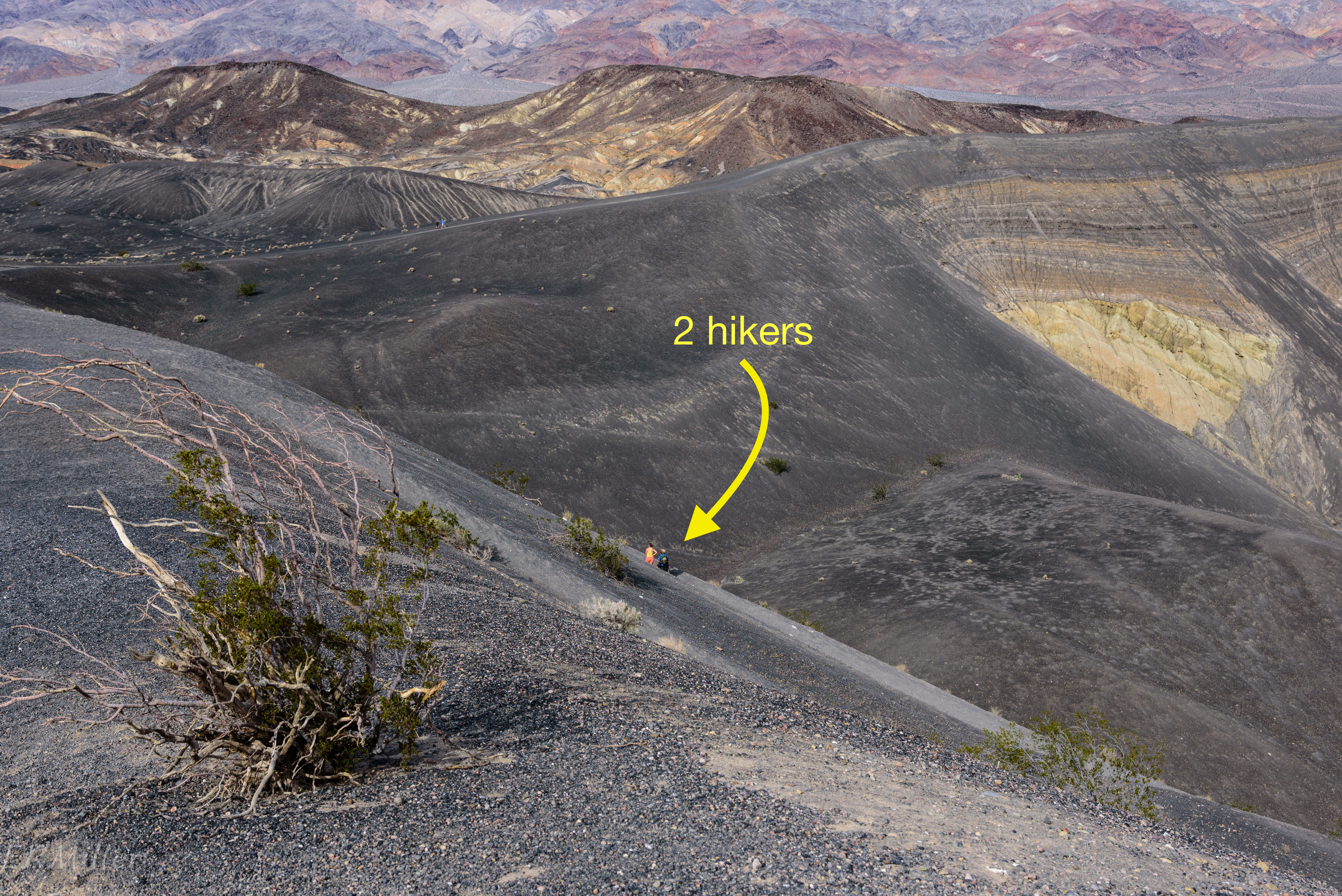
Ubehebe Crater, in the northeastern part of Death Valley National Park, is a beautiful and fascinating geological feature, the remains of a volcanic explosion that happened only 300 to 800 years ago (estimates vary).  The crater is about half a mile wide and 600 feet deep, and there’s a trail that circumnavigates the top.

20160308-_DSC0436

20160308-_DSC0434

The area is covered in cinders and colorful gravel and only very few plants. Actually it was a great place to get specimen photos, since the plants grew so sparsely, and almost always well apart from each other.

20160308-_DSC0454


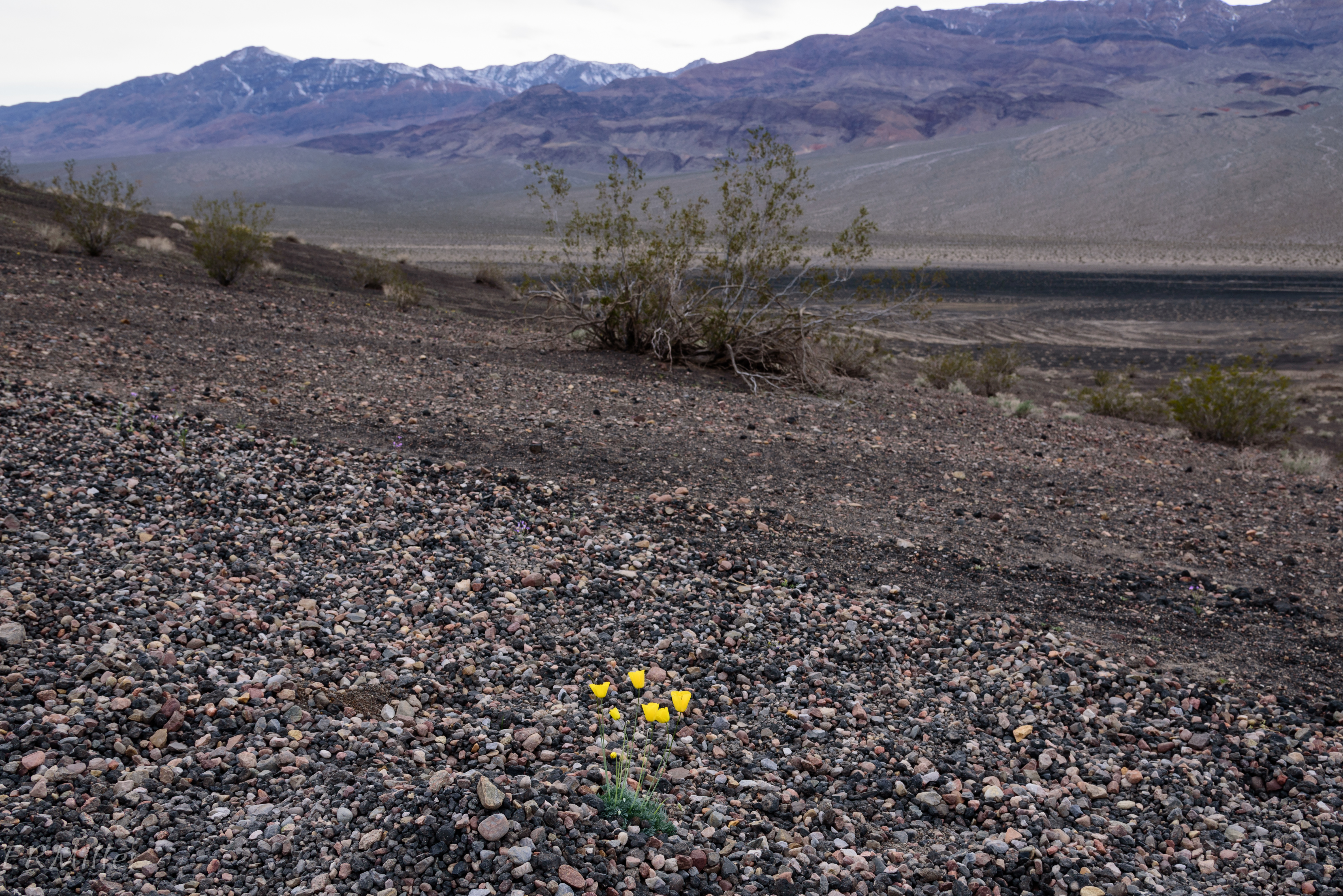
I was poking about, alternately admiring the flowers and gaping at the geology, when (yet another) yellow flower caught my eye.
<——-


20160308-_DSC0453

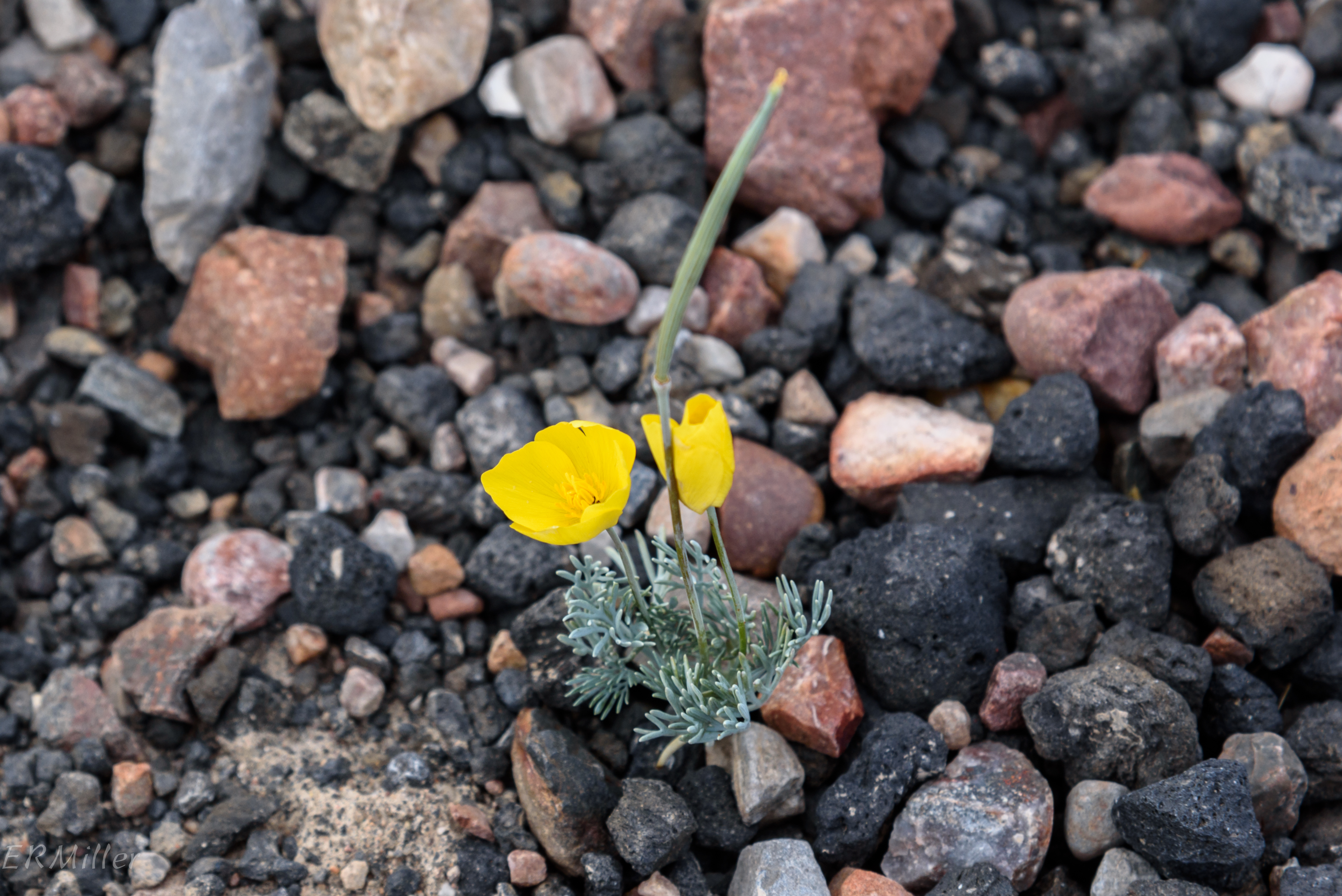
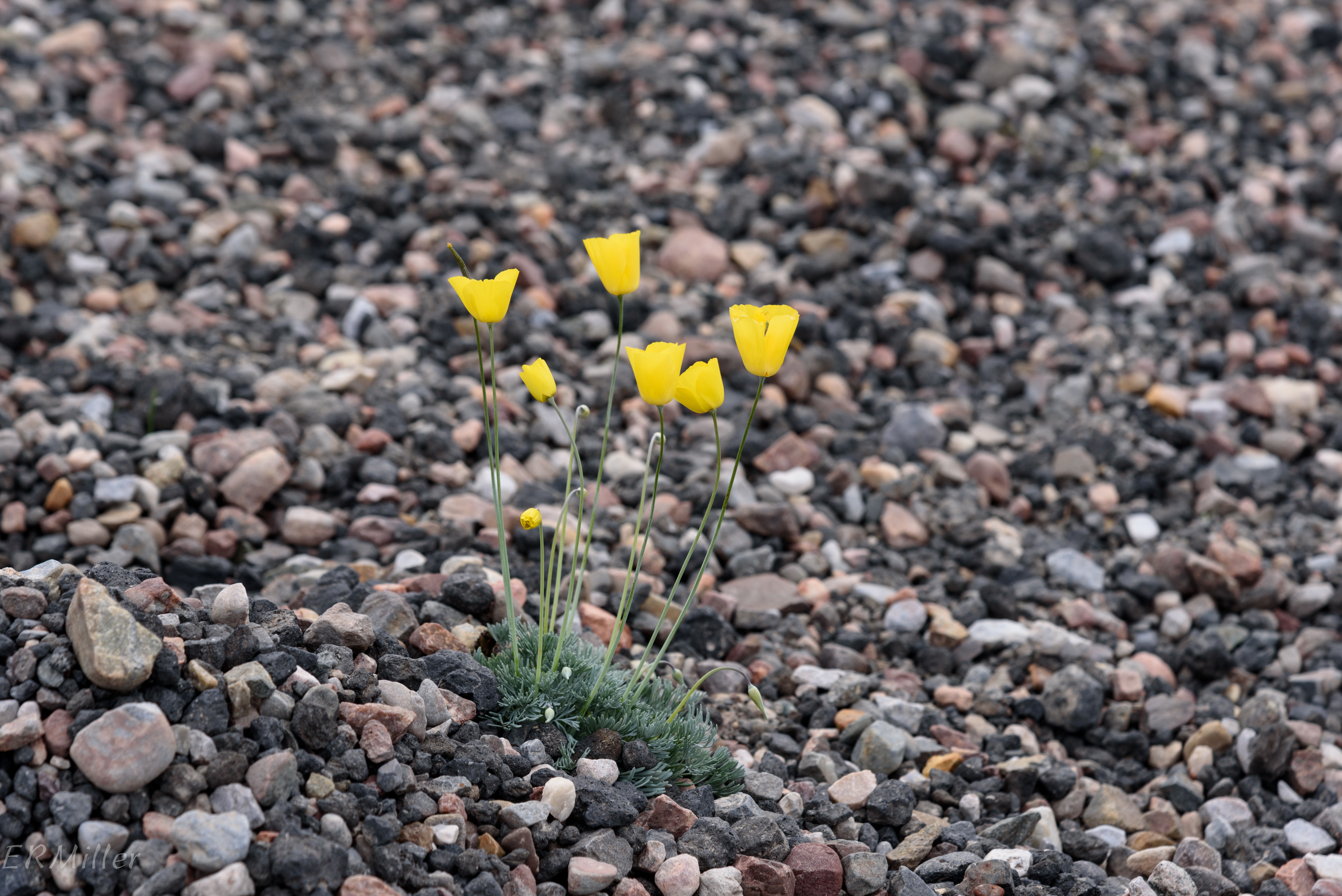
This is Mojave gold poppy, aka desert poppy, Eschscholzia glyptosperma (Papaveraceae).  I saw maybe half a dozen of them in a small area between the parking lot and the viewing area at the top of the crater. Note the elongated seedpod above the flowers in the photo to the right.

Apparently this poppy is common across the Mojave desert, but I didn’t see them anywhere else during my trip.

20160308-_DSC0455

Variations on a Theme: Dicentras

20150407-20150407-_DSC0008

Dicentra cucullaria
Dutchman’s breeches or britches


20150417-20150417-_DSC0056


Dicentra canadensis
squirrel-corn


Both of these low-growing spring ephemerals can be found in rich, moist woodlands. Both have finely cut blue-green foliage, but as you can see from the pictures the leaflet lobes of Dutchman’s breeches are a little rounder and closer together, while those of squirrel-corn are more linear and open. The flower shapes are also slightly different, the former having two pointed lobes at the top, the latter having two rounded lobes.

These two plants are placed in the Fumariaceae (fumewort family) by some authorities.  Other authorities consider this group a sub-family (Fumarioideae) of the Papaveraceae (poppy family).

There are seven native species of Dicentra; three can be found on west coast and three on the east coast, while Dutchman’s breeches can be found on both (but not in the mountain states or desert southwest). Squirrel-corn is threatened in Connecticut, Maine, and New Hampshire and endangered in New Jersey.

Of the three east coast species, the third, called wild bleeding heart or turkey-corn, is threatened in Maryland.  I’ve never had the pleasure of seeing it in the wild.