Four Similar-Looking Plants and How to Tell Them Apart

hmmm…

Since the topic keeps coming up on various internet forums, I thought I’d write a little guide about these plants, all of which are flowering or about to flower now in the Maryland piedmont.

sessile bellwort, Uvularia sessilifolia; Liliaceae or Colchicaceae
perfoliate bellwort, Uvularia perfoliata; Liliaceae or Colchicaceae
Solomon’s seal, Polygonatum biflorum; Ruscaceae or Asparagaceae or Liliaceae
Solomon’s plume aka false Solomon’s seal, Maianthemum racemosum; Ruscaceae or Asparagaceae or Liliaceae
(apologies for the family name confusion, but authorities differ)

In flower, these four species are easy to distinguish. Before they flower, they can be tricky – indeed, the old common name of M. racemosum comes from the fact that it looks a lot like P. biflorum.

So, how to tell them apart when they’re young?

I prepared this chart based on my own observations cross-referenced by information in the Flora of North America via efloras.org, the New England Wild Flower Society’s gobotany site, and Illinois Wildflowers.

Uvularia species Maianthemum racemosum Polygonatum biflorum
stem form stems simple or with 1 branch stems erect or arching, sometimes zigzag stems erect to arching
stem texture glabrous, glaucous slightly hairy glabrous, glaucous
leaf arrangement alternate alternate alternate
leaf attachment sessile or perfoliate (per species) sessile, clasping or perfoliate sessile to clasping
leaf shape oblong-linear to oblong-ovate elliptic to ovate narrowly lanceolate to elliptic or nearly ovate
leaf base rounded to cuneate rounded to cuneate cuneate to rounded
leaf tip acute to acuminate acute or caudate acute
leaf texture glabrous glabrous glabrous, sometimes with a bit of a sheen
inflorescence 1 per branch, terminal but appearing axillary terminal axillary (in several axils)
#flowers/inflorescence one 70-250 typically 2, as many as 5

The descriptions are much alike, and frankly not that useful when the specimens are still young. I don’t have all the pictures I want to illustrate this post, but study the ones below;  I think with experience you can develop an eye for identifying these species by considering the whole plant as well as the individual details.

The bellworts are overall much smaller than the other two species, with shorter stems and smaller leaves.

Start with the easy one: perfoliate bellwort. The way the stem appears to pierce the leaf is unique, so it’s hard to confuse this with the others even when a specimen is very young.
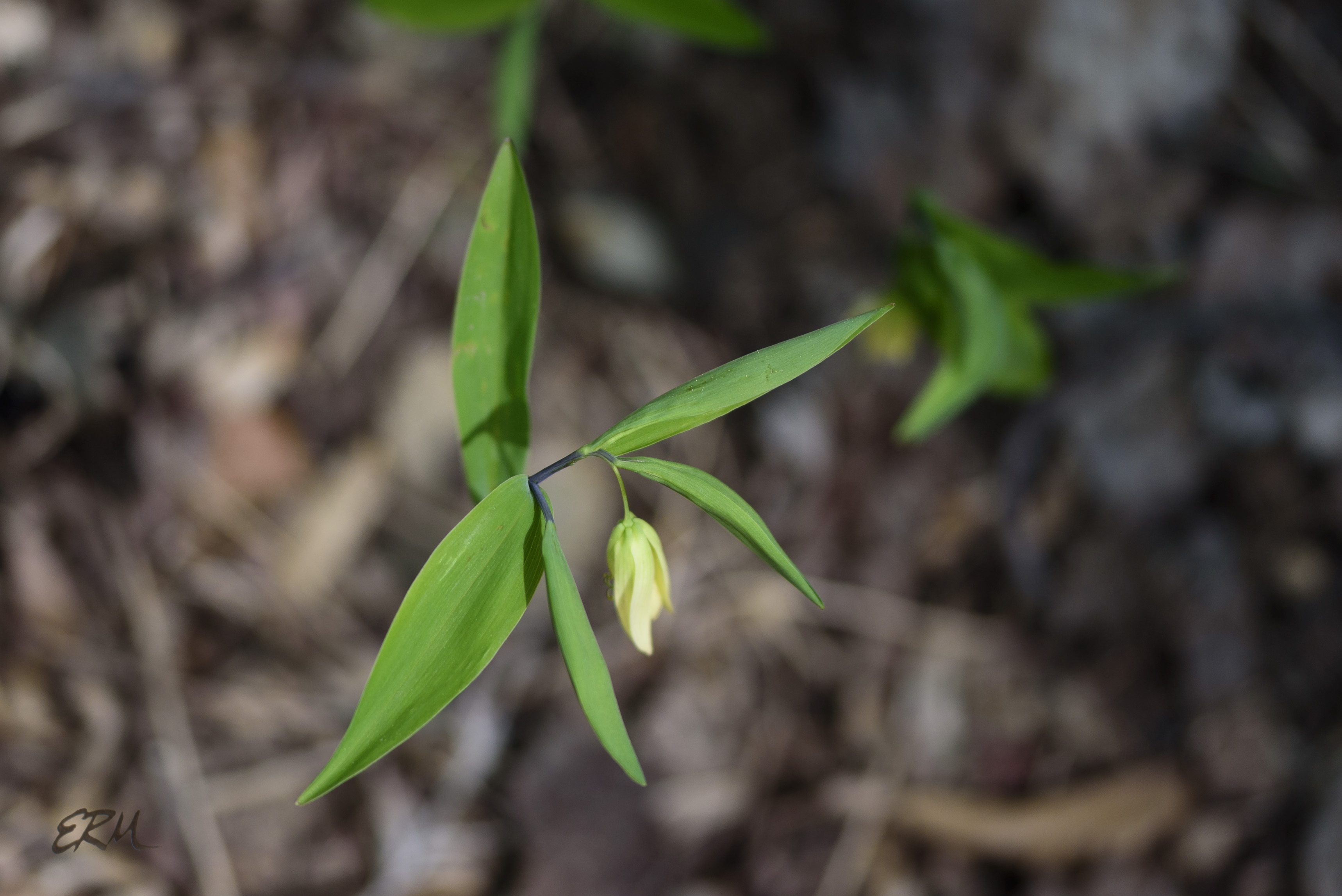


Sessile bellwort is much smaller than M. racemosum and P. biflorum. Its terminal bud develops very early, when the plant is still tiny. Especially if the other two species are nearby, it’s pretty clear from the size and general appearance if a young plant is a bellwort.

perfoliate bellwort and Solomon’s plume next to each other; note how different the stems look (click to enlarge)

Perhaps the best way to distinguish M. racemosum from P. biflorum when the plants are very young is to look at the leaf tips. When the plants are a little older, they’re very easy to tell apart by looking for buds: M. racemosum has a cluster of buds at the very end of the stem, while P. biflorum will have a few buds at many (but not all) of the leaf axils.
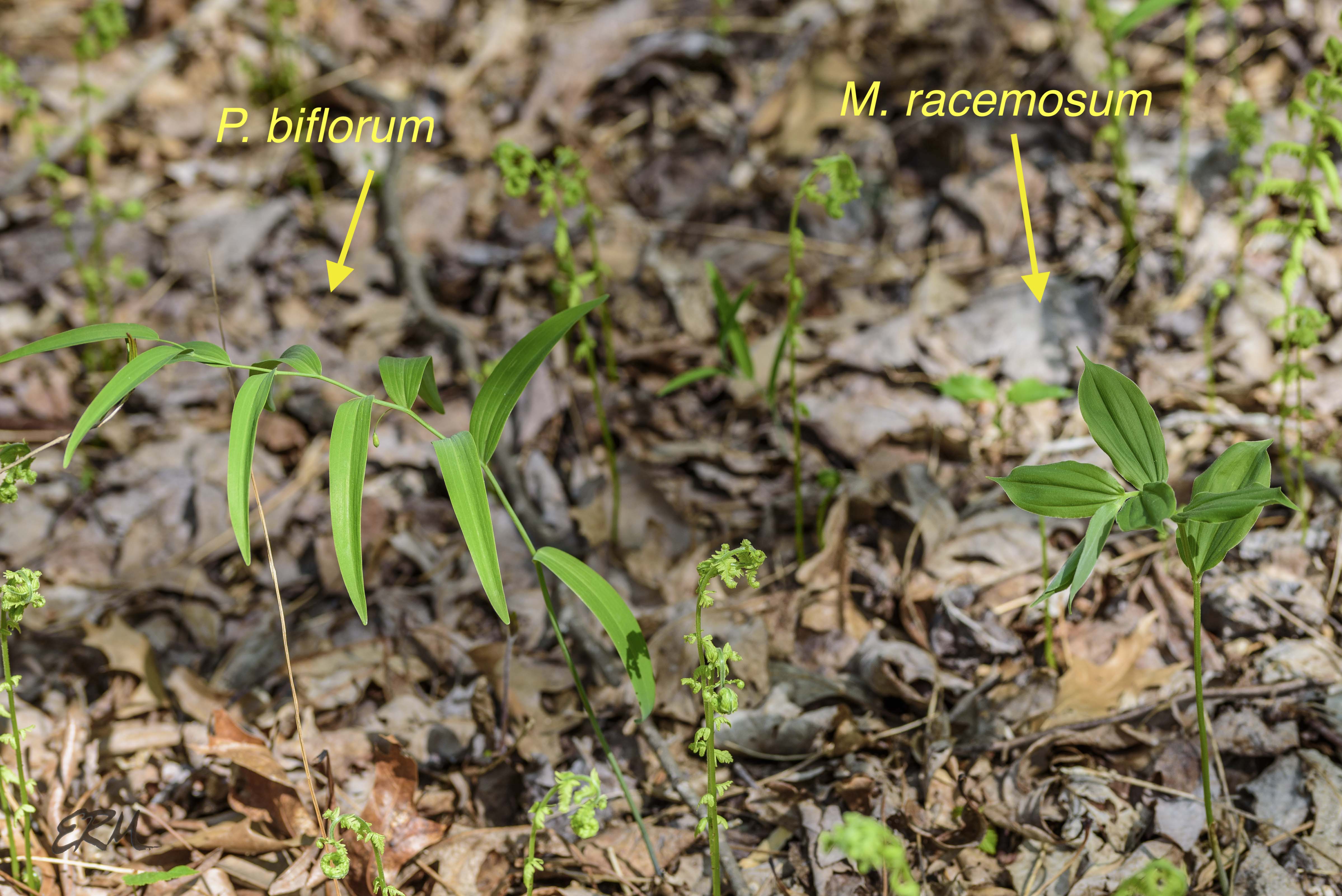
I love that I found these two growing right by each other, but be warned, this P. biflorum is atypical: the leaves are exceptionally narrow. Note that there’s one flower bud dangling from a leaf axil. Also, check out the leaf tips (click on the picture to zoom in), because they’re textbook examples. P. biflorum’s is acute, and M. racemosum‘s is caudate.
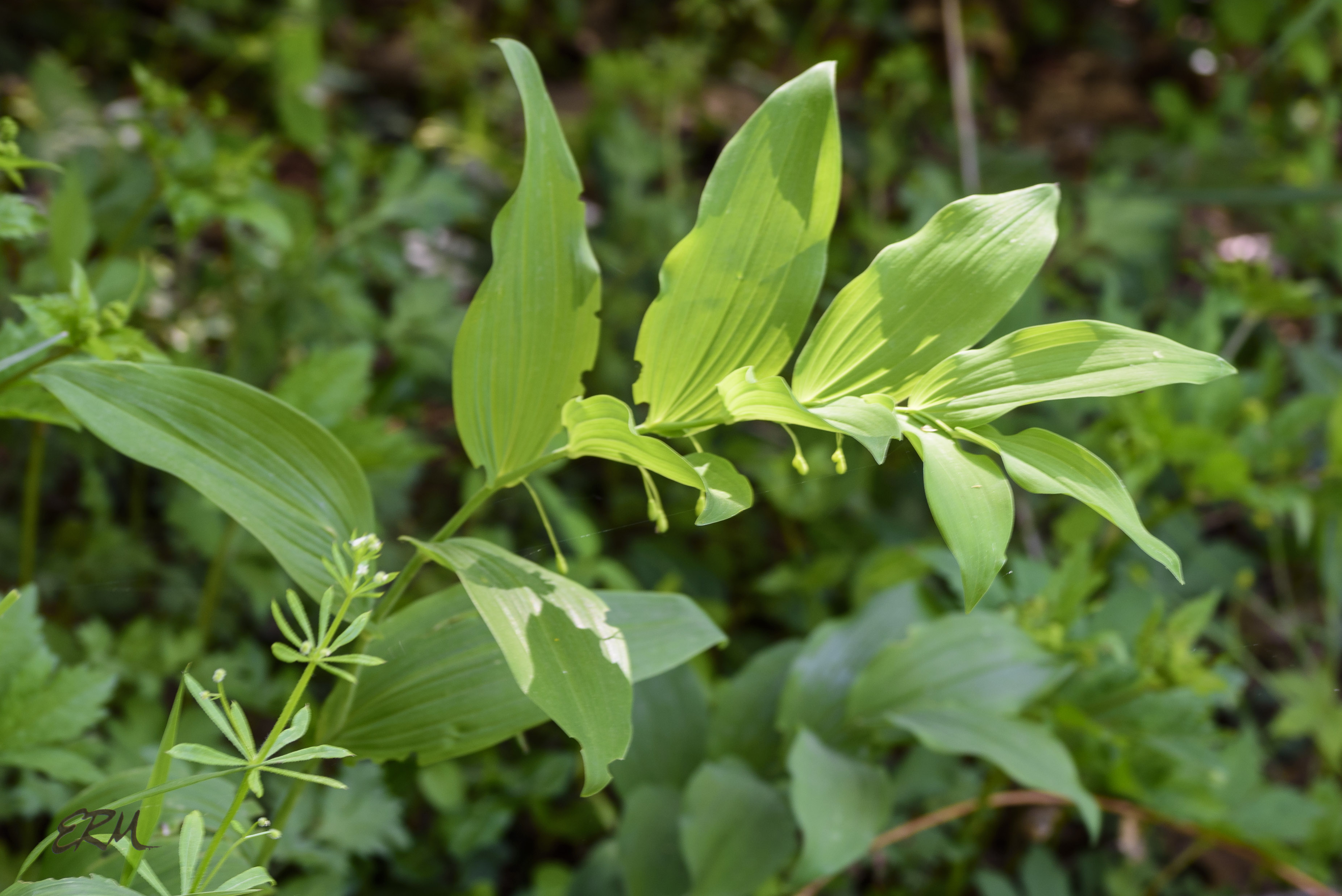
 

P. biflorum with flower buds
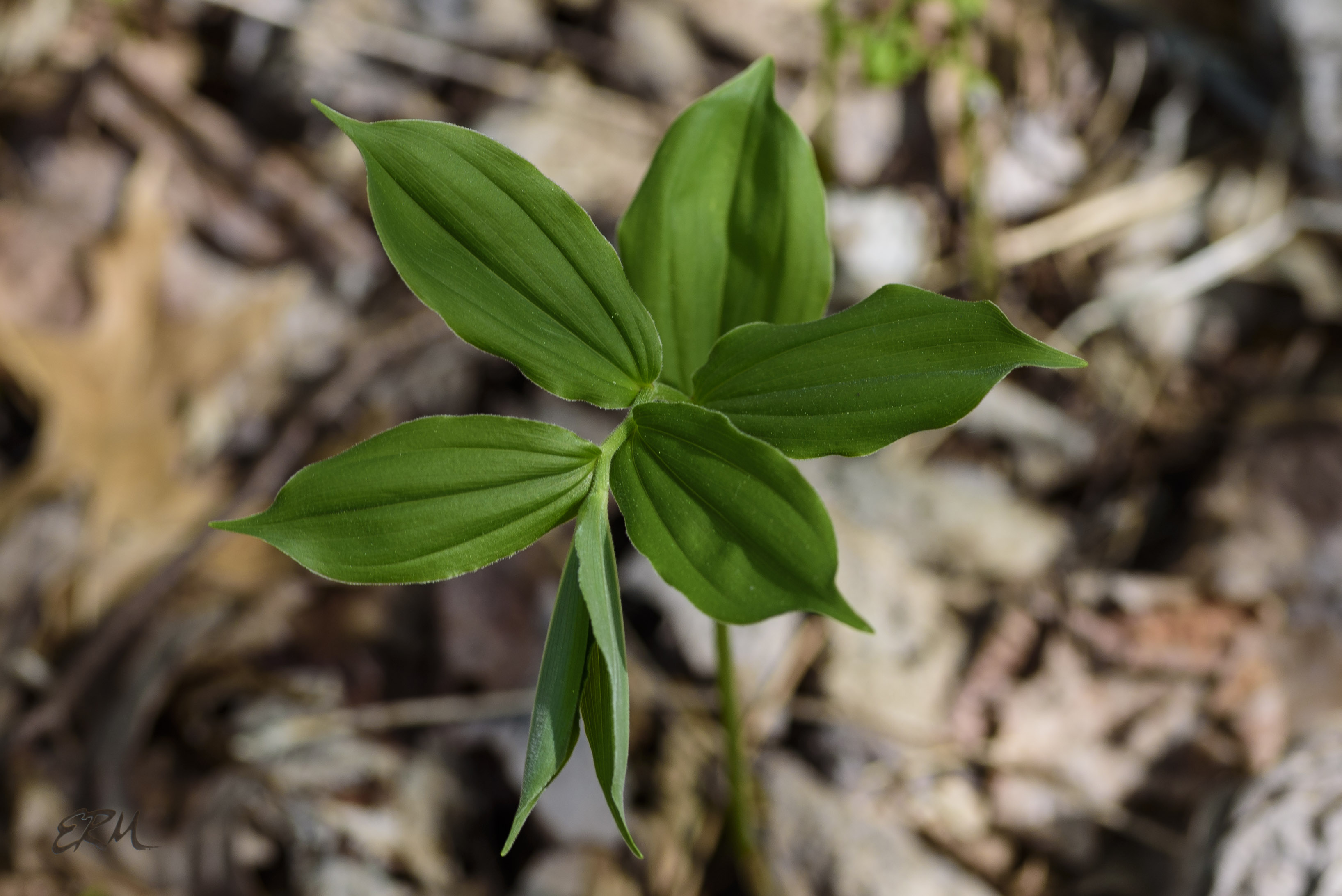


young M. racemosum, no buds yet


zigzag stem, caudate leaf tips, and terminal inflorescence = M. racemosum


straighter stem, narrower leaves, and axillary flowers = P. biflorum


Toothworts

Forest floors in the Maryland piedmont are carpeted now in spring ephemerals. Spring beauties are everywhere, Virginia bluebells and Dutchman’s breeches seem to be confined to wetter areas, and in drier areas, you’ll see toothworts.

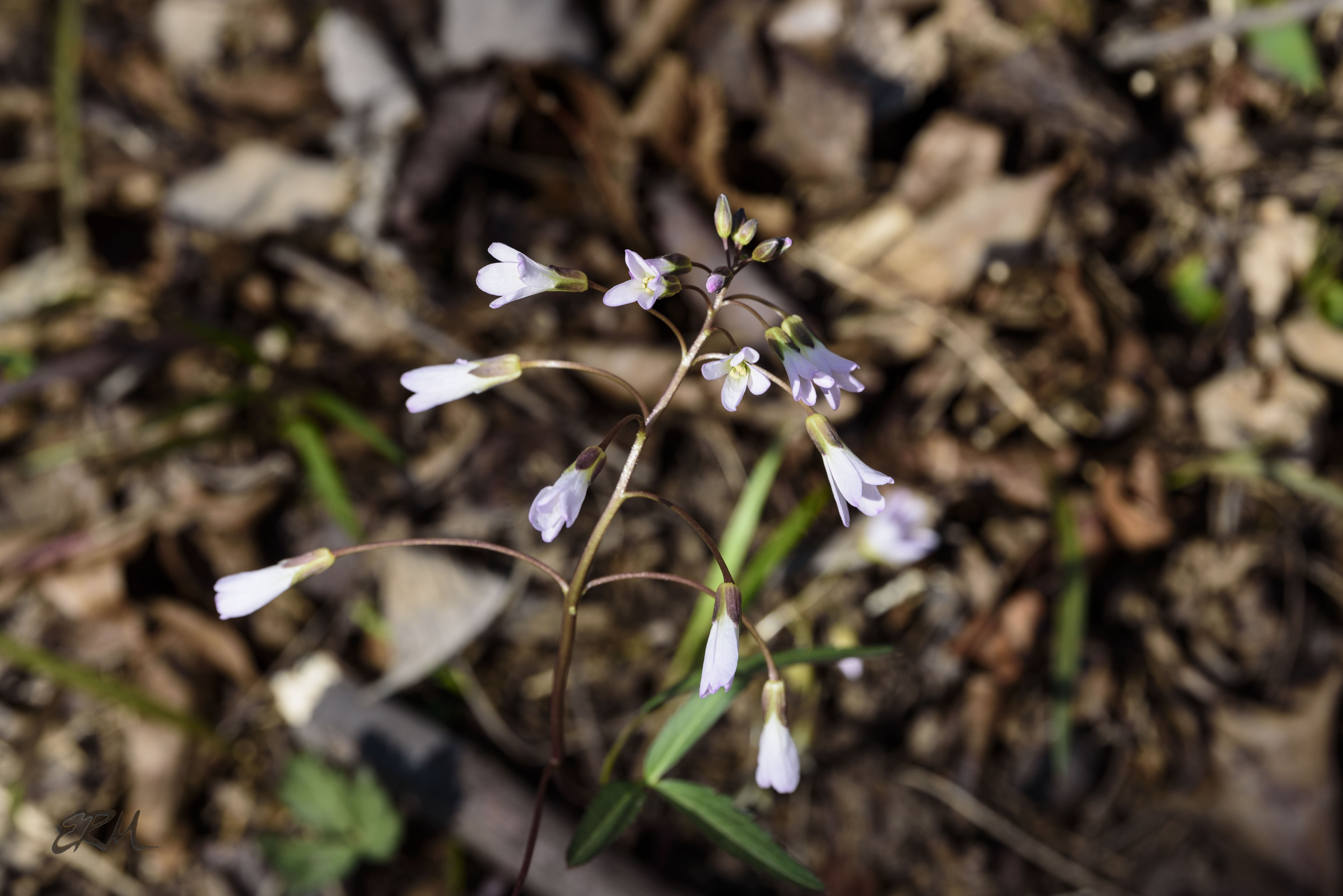
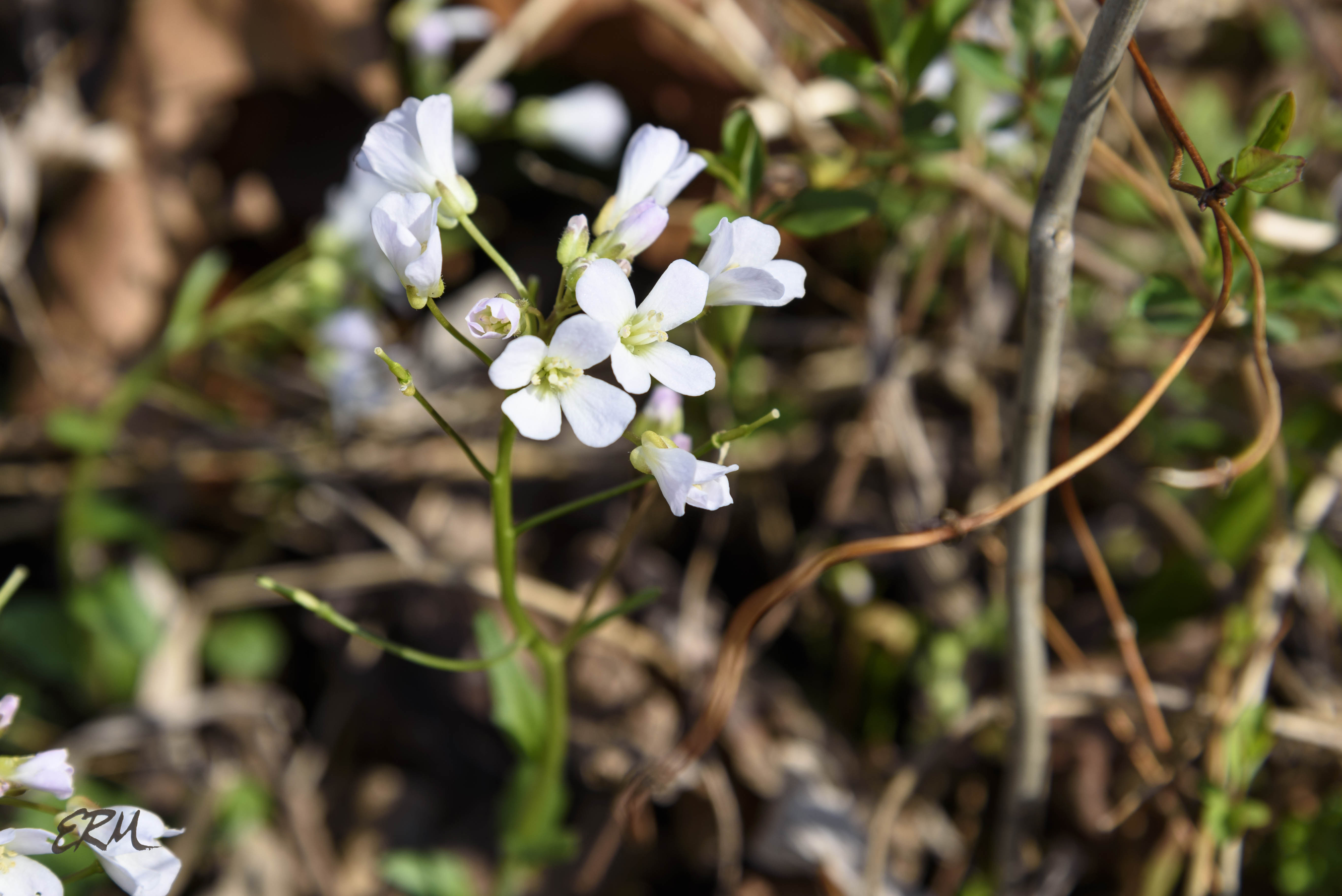
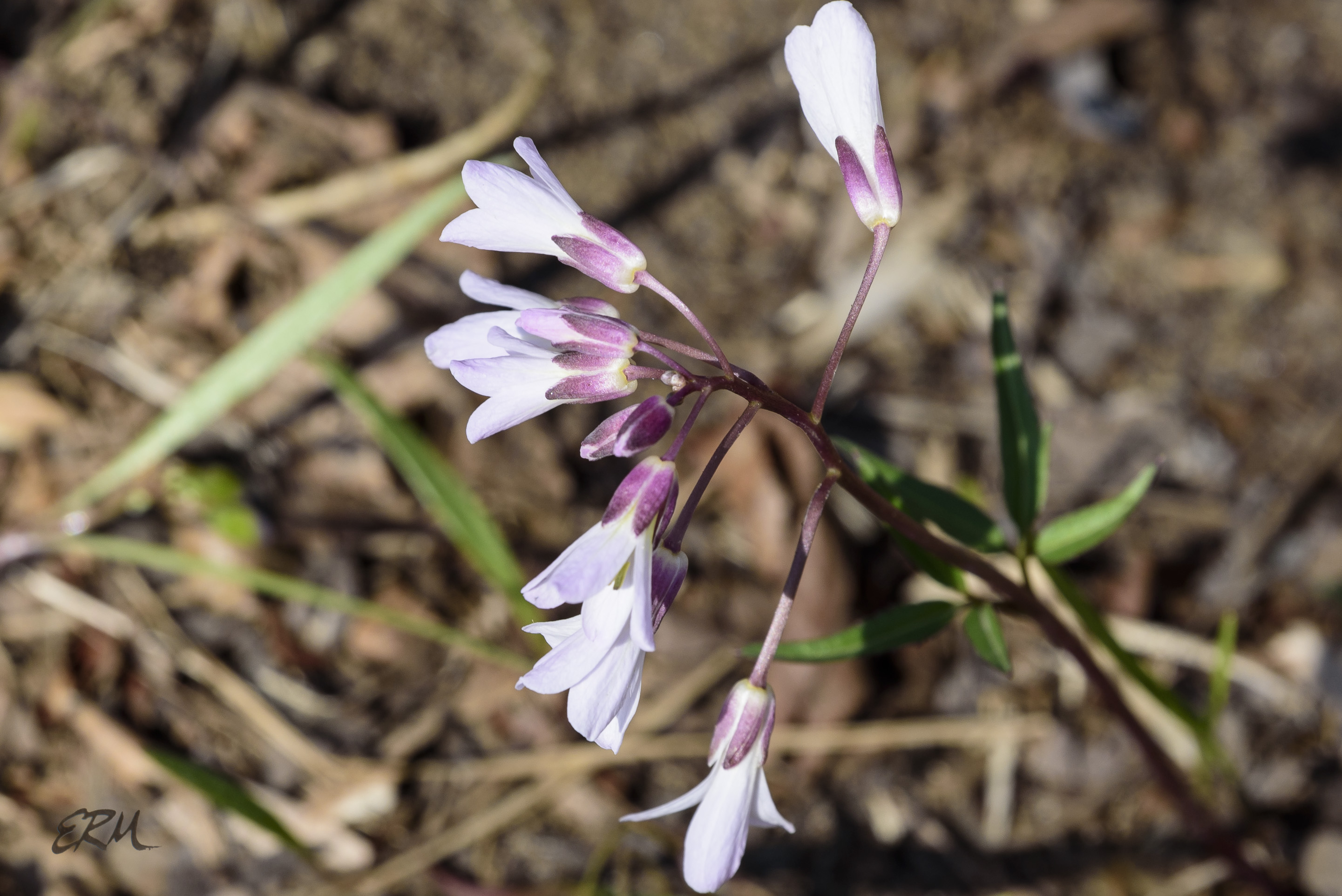
Formerly placed in the genus Dentaria, toothworts are now lumped with the bittercresses in the genus Cardamine. The flowers are similar on close inspection but the overall difference in appearance between toothwort and bittercress plants is pretty obvious.

Older guidebooks frequently list two to five species of toothworts in the eastern US. Here’s a quick look at the names (it’s not my intent to provide a complete synonymy):

current name older name(s) common name(s)
Cardamine angustata Dentaria heterophylla slender toothwort

Cardamine concatenata

Dentaria laciniata
Dentaria concatenata
cut-leaf toothwort

Cardamine diphylla

Dentaria diphylla toothwort
broad-leaved toothwort crinkleroot

Cardamine dissecta

Dentaria dissecta
Dentaria multifida
fine-leaved toothwort
dissected toothwort
Cardamine maxima Dentaria maxima large toothwort

C. dissecta has a limited range, from Alabama northeast into West Virginia, and is endangered in Indiana. C. maxima seems to have disjunct populations in Kentucky, Wisconsin, Michigan, Pennsylvania, and a few parts of New England; it’s threatened in Michigan, endangered in New Jersey, and possibly extirpated in Maine. Neither of these species has been reported in Maryland.

C. diphylla is found in the Appalachian South, the mid-Atlantic, New England, and upper midwest, possibly with a few occurrences farther west, from Arkansas to Minnesota. MBP has only a few records in the piedmont, and a few more in the Appalachian Plateau. One of the records is of a sample in the Norton-Brown Herbarium; it was collected in 1974 “[o]ff beltway exit to Great Falls near Seno [sic] Canal”, which is right along the Potomac gorge and my usual hunting grounds. Maybe I have a new quarry to track?

C. angustata is a southeastern species, ranging from south-central Alabama north to central Indiana and northeast into Pennsylvania. In Maryland it seems to be found mostly in the piedmont.

C. concatenata is found mostly in the mid-Atlantic and mid-west and New England, though it does range into the South and the eastern Great Plains. It’s endangered in Maine and New Hampshire. It seems to be in most of Maryland except the far west and southern Eastern Shore.

The flowers of all of these toothworts are very similar in size, shape, and color, and can’t easily be used to distinguish between the species. It’s best to look at the leaves.

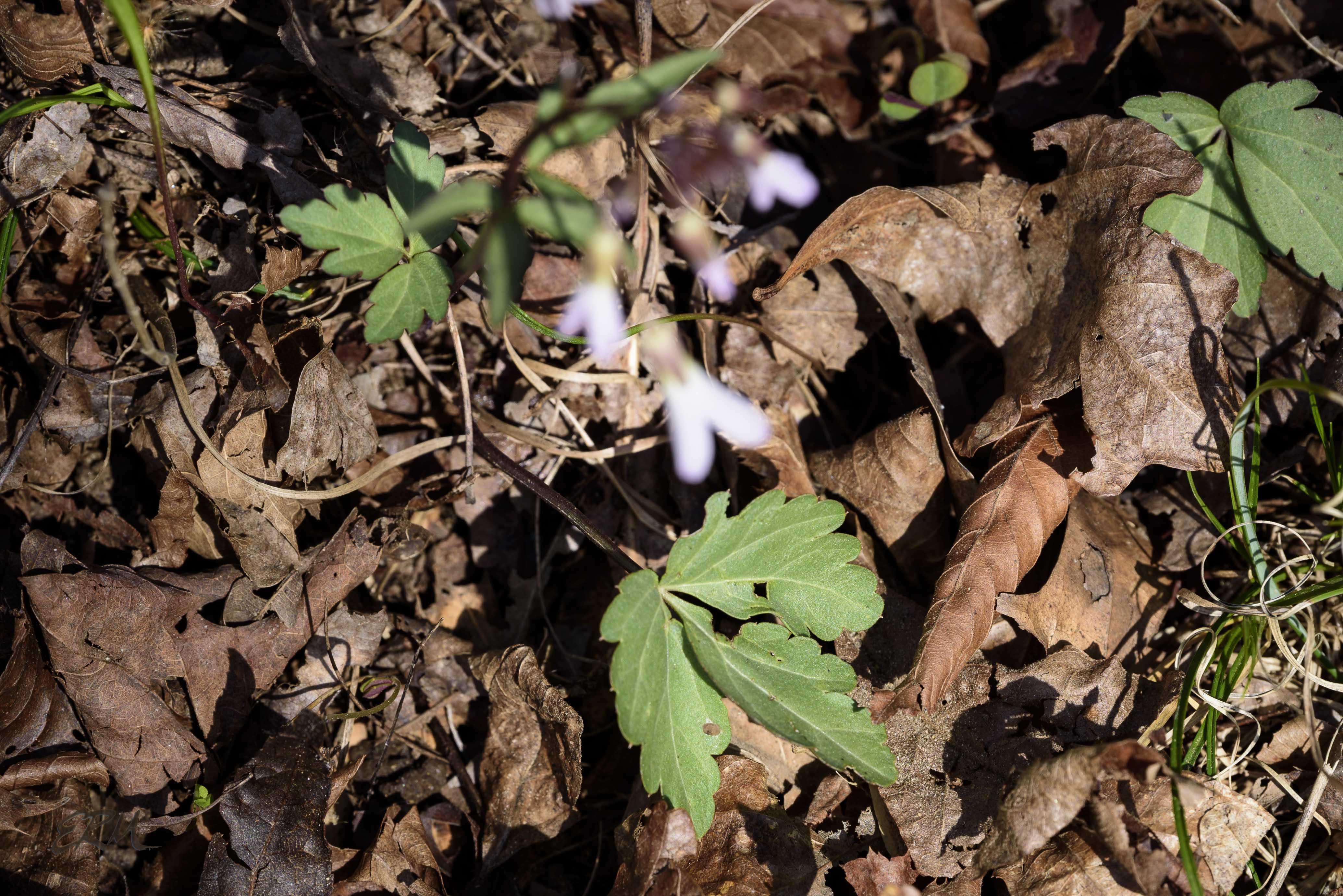
C. concatenata has no basal leaves present at blooming; on the stem is a single whorl of three leaves, each leaf palmately divided, with serrated leaflets. It’s worth noting that there seems to be a wide range of morphological variation: on some plants the leaflets are quite narrow, while on others they’re rather broad; on some plants there are three leaves in a whorl, but on other plants they might be sub-opposite, or there might be only two leaves.

Be that as it may, C. angustata is pretty easy to distinguish from C. concatenata. It has two alternate or sub-opposite stem leaves, each with three leaflets (usually) that are quite narrow and serrated to some degree. The basal leaf (sometimes leaves) is large, with very broad leaflets, on a very long petiole.

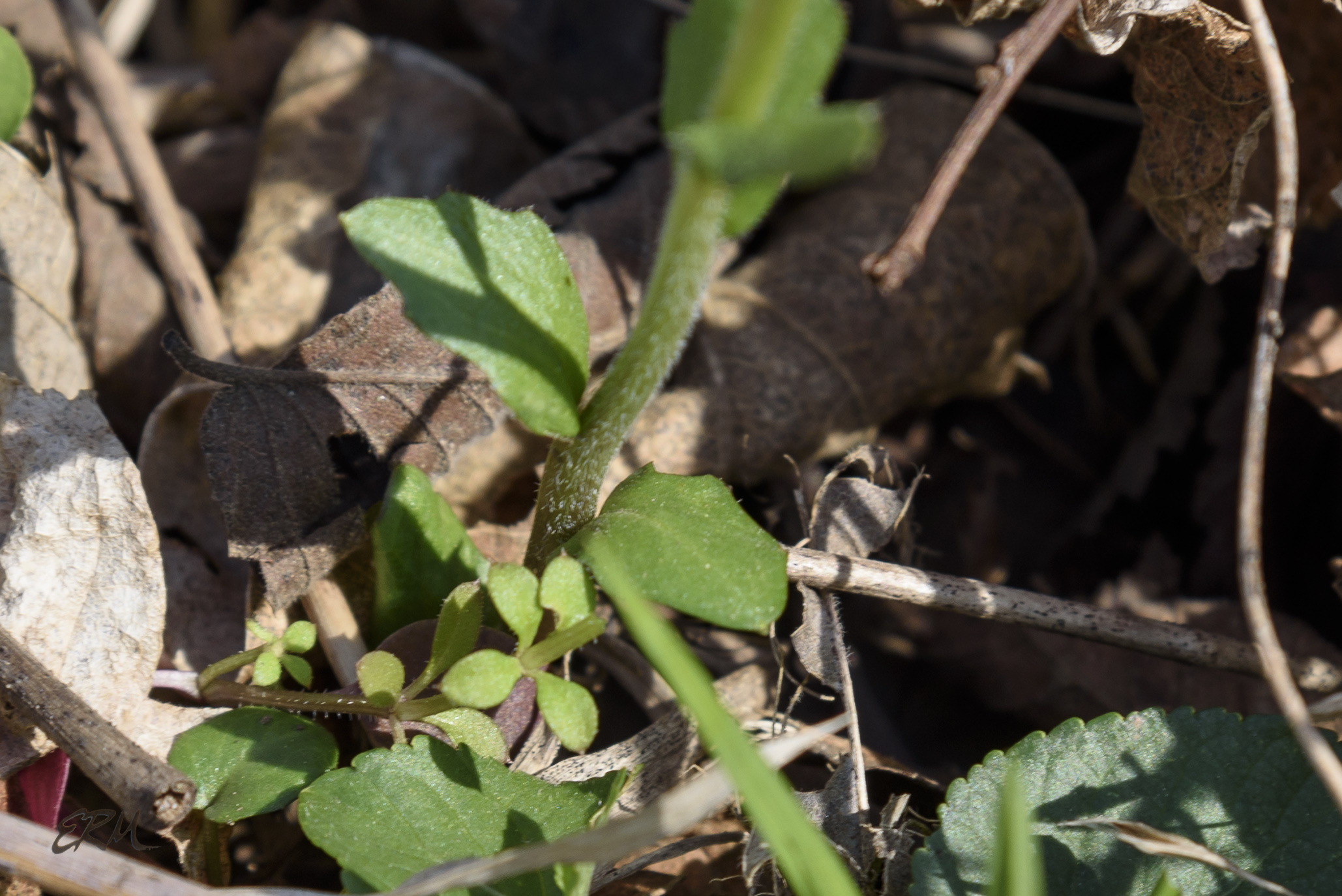
Another species worth mentioning is Cardamine bulbosa, commonly called spring cress or bulbous toothwort. Although it was never a Dentaria and is more often referred to as a bittercress than a toothwort, the flowers look toothwort-y. The species is found in most of the eastern US (and most of Maryland), but not in Maine, and it’s endangered in New Hampshire.

Heart-Shaped Basal Leaves

At this time of year many plants are putting out – or have already have put out – heart-shaped leaves that stay close to the ground. Like the violets in my last post, for example. Or like these, which belong to wild ginger (Asarum canadense).  —>

I was thinking recently about two other species with similar cordate basal leaves. When young, they are easily confused with each other, at least at first glance. Luckily, I was able to find both growing right next to each other!

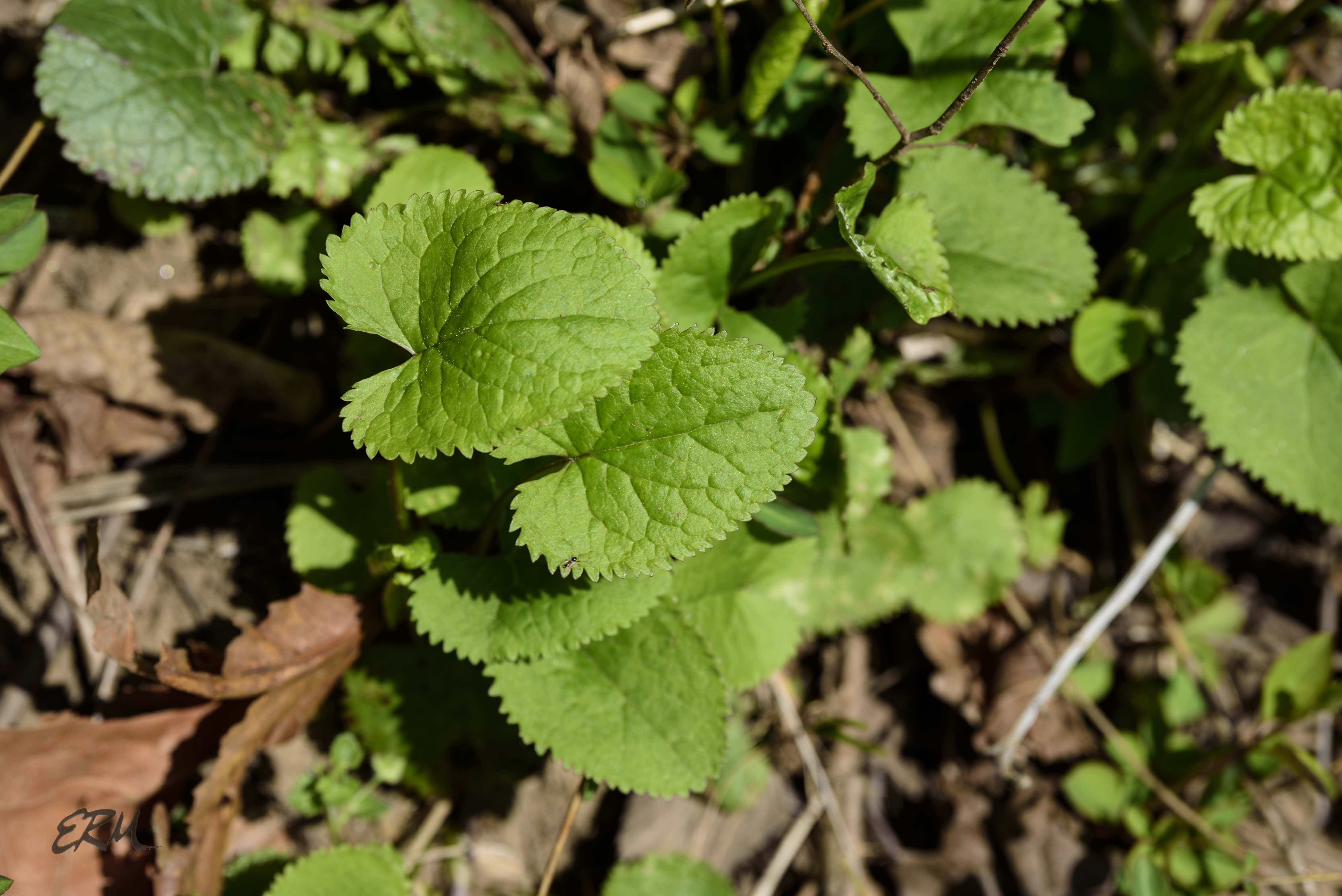
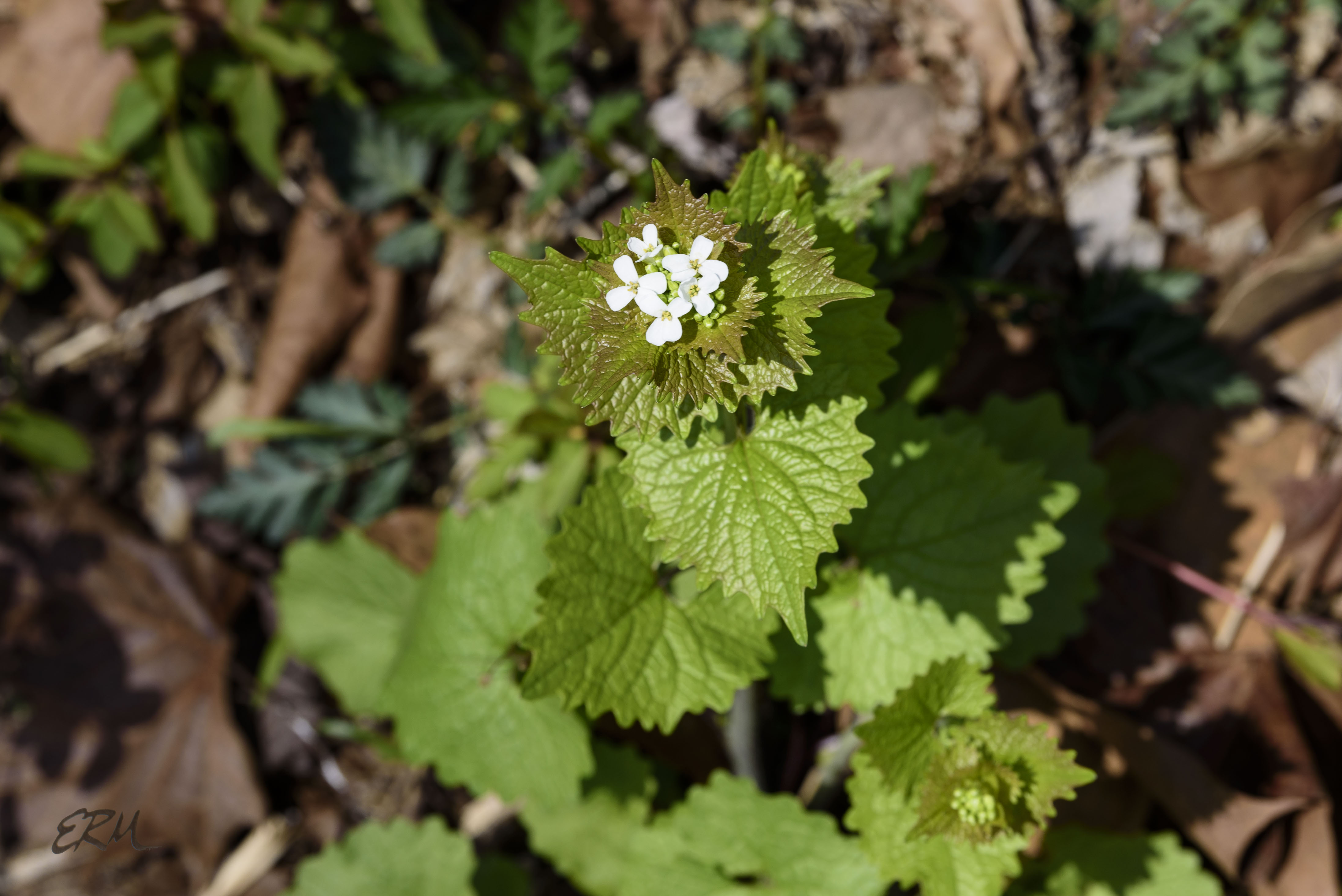
<—At bottom center in this photo is a particularly despised alien invasive called garlic mustard (Alliaria petiolata). Surrounding it is a much-loved native called golden ragwort (Packera aurea, formerly Senecio aureus). Here’s a little primer on how to tell them apart.


These are leaves of golden ragwort. ->

Note that the leaf edges are somewhat crenate (scalloped), almost serrate, and that the leaf vein pattern is pinnate. The underside of the leaf has a purplish blush. 


This one belongs to garlic mustard. –>

The leaf edges are clearly scalloped rather than toothed. The leaf venation is also pinnate, but also netted, giving the leaf a bit of a crinkled appearance.


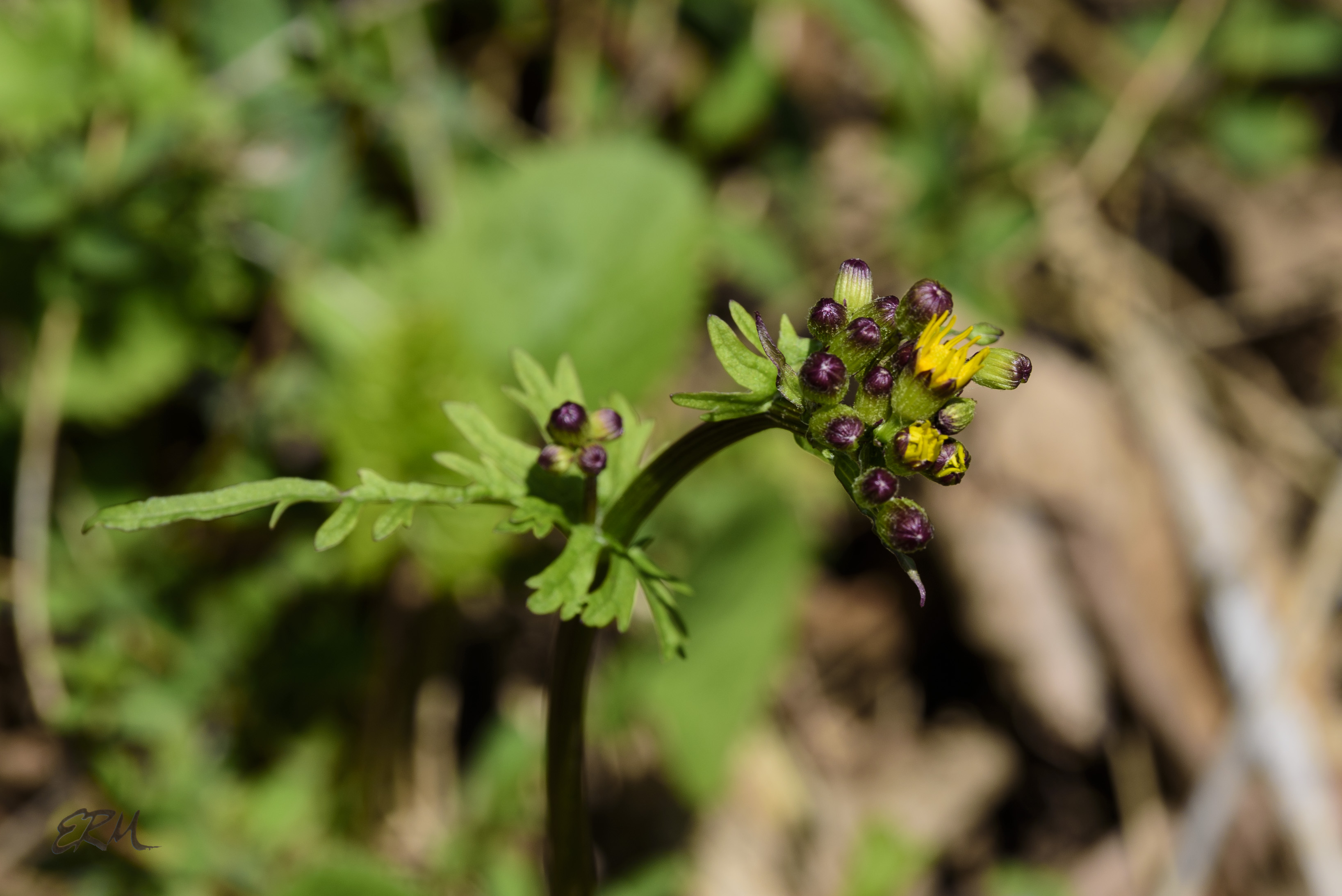
<— This is a stem leaf of golden ragwort. Look at how different it is from the stem leaves of garlic mustard [below], which look similar to the basal leaves. Also in this photo you can see the flower buds at top.


Here are buds of golden ragwort. By the time the plants reach this stage, they are easy to tell apart.


And here they are in bloom.


Garlic mustard is in the Brassicaceae, a family which also includes several of our native spring ephemerals, like the toothworts and rockcresses. Golden ragwort is in the Asteraceae, and is by far the earliest blooming native of that family (in this region, anyway).

Two Yellow Violets

Since violets (Viola species) hybridize so readily, they can be tricky to identify. Individual plants sometimes show characteristics intermediate between two species. Take a look at the USDA PLANTS Database page for Viola and you’ll see what I mean: of the 129 species shown there, 43 are hybrids. (Presumably these are naturally occurring hybrids, not cultivated varieties.)

Yellow violets are easier, because there are only a few species, and only three of those are found in Maryland. Right now, one of them is blooming in the Potomac gorge area: smooth yellow violet (Viola pubescens var. scabriuscula, formerly known as Viola pensylvanica). There’s a second variety of the same species that’s commonly called downy yellow violet (V. pubescens var. pubescens).

I started writing this post almost a year ago, then realized I didn’t have any good photos for it, so set it aside until now. Over the last few days I’ve examined a few dozen yellow violets, and they’ve all been the smooth variety. I hoped to have photos of both for this post, but if I wait too long I’ll have to set it aside again, so here goes.

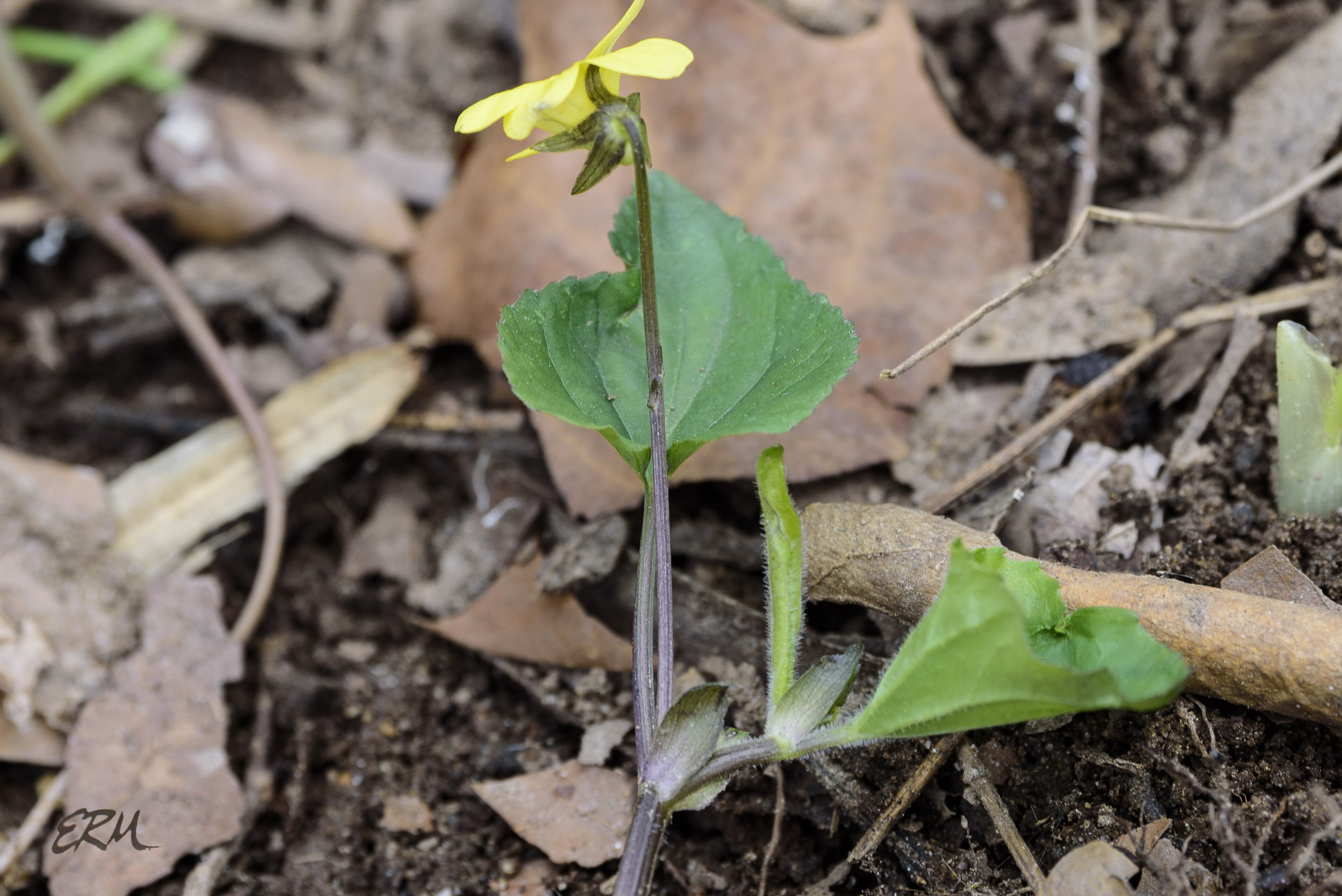
The two varieties bloom at about the same time (April) and grow in the same habitat (moist deciduous woodlands). The main difference between the two is hinted at in the name: in botany, pubescent means covered in short hair, while scabriuscula means slightly rough.

Although this one is smooth yellow violet, you can see some pubescence on the leaf base and adjoining stem on the lower right leaf. Smooth yellow violet can have a slight pubescence but is mostly glabrous (smooth), which you can see on the rest of this plant.


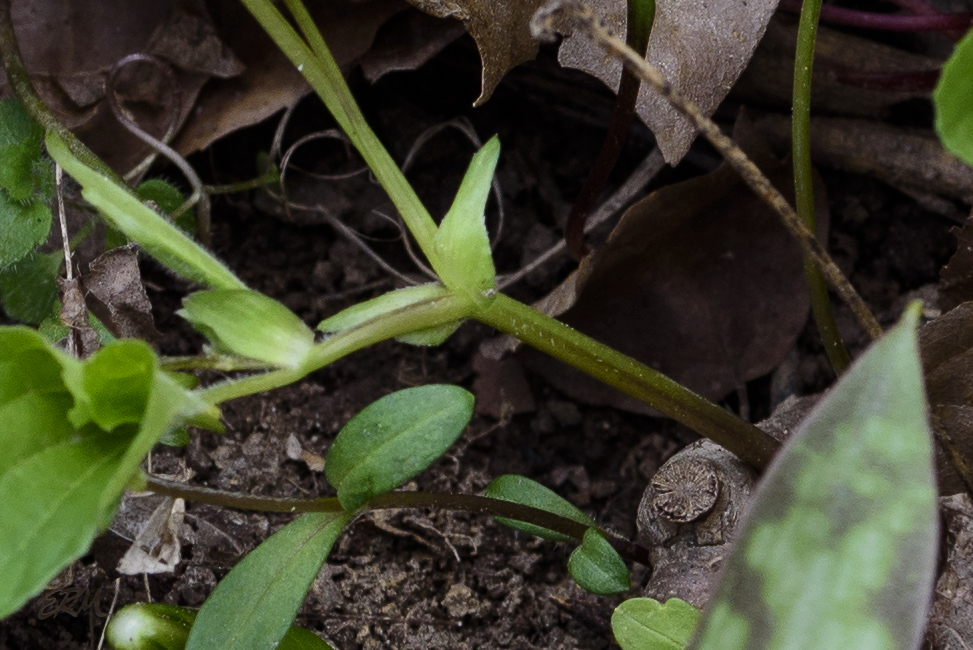
Another identifying characteristic is the shape of the stipules. Those of downy yellow violet are broadly oval, with a blunt tip, while those of smooth yellow violet are narrowly oval, with a pointed tip, as shown here. (A stipule is a small, leaf-like bit of tissue found where the petiole meets the main stem; there’s one in the very center of this photo.)

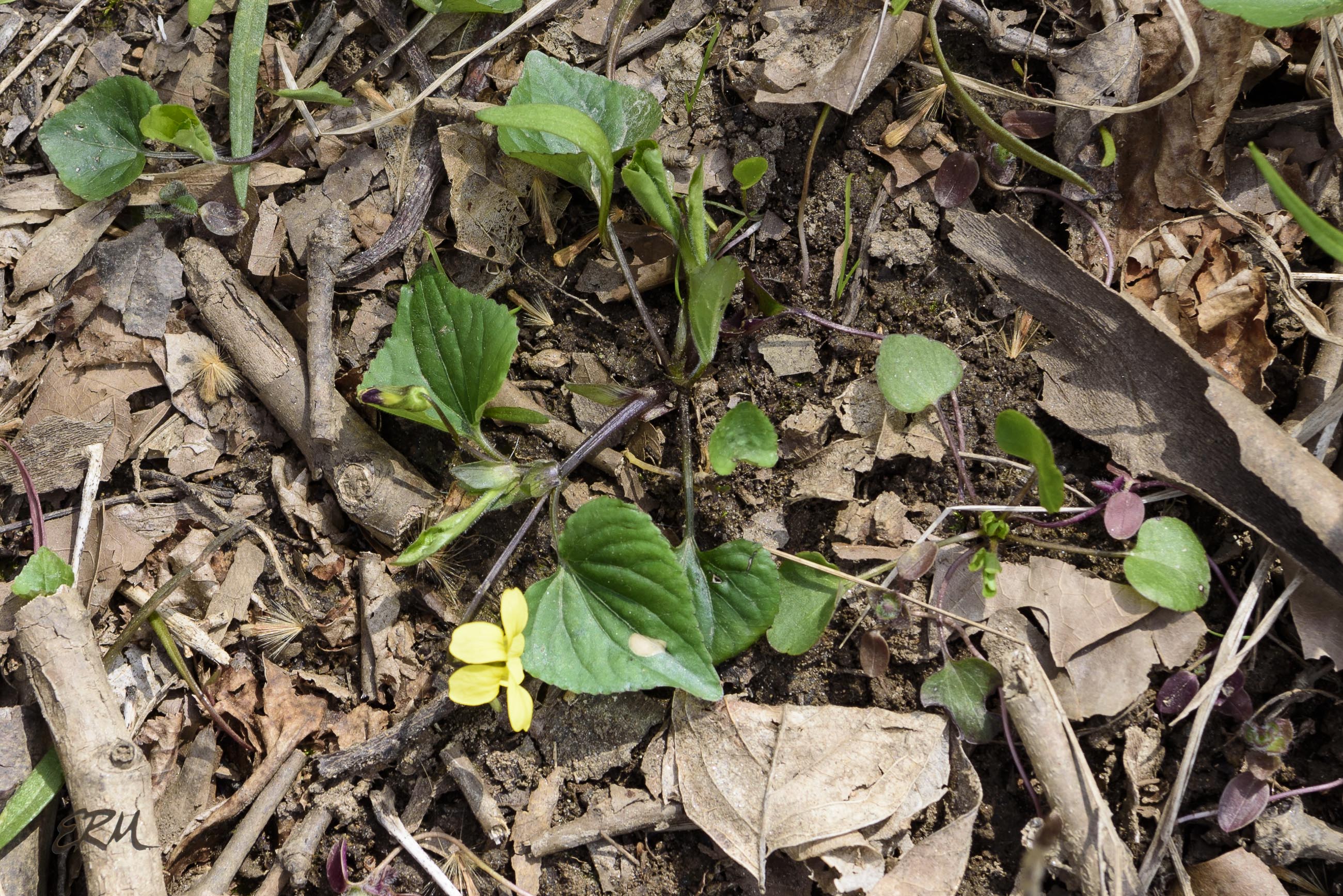
Finally, look at the whole plant: downy yellow has a single flowering stem, with one basal leaf or none, while smooth yellow has two or more flowering stems and one to three basal leaves.* The plant pictured here appears to have three basal leaves (at one o’clock, six o’clock, and eleven o’clock), one flowering stem with a blossom and a bud (seven o’clock), and a second flowering stem still developing (twelve o-clock).

I’ll keep looking at yellow violets this spring, and if I find any of the the downy variety I’ll write a follow-up post.


*descriptions from the Flora Novae Angliae by way of the New England Wildflower Society’s gobotany website (which every botanerd should bookmark):

1a.  Stems solitary, with 0 or 1 basal leaves; leaf blades densely pubescent; stipules broad-ovate, with an obtuse apex … 21a. V. pubescens var. pubescens

1b.  Stems 2 or more from the apex of the rhizome, with 1–3 basal leaves; leaf blades glabrous or sparsely pubescent; stipules lanceolate to narrow-ovate, with an acute apex [Fig. 935] 
 … 21b. V. pubescens var. scabriuscula Torr. & Gray