Thalictrum dioicum; Ranunculaceae
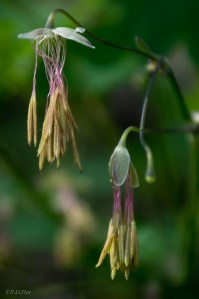
This year I finally got out at the right time to spot this delicate plant in flower. And then I was confused, because nearby was what appeared to be the same plant, only a little taller, with a distinctly different flower. Looked somewhat like tall meadow rue, but that plant blooms much later in the season.
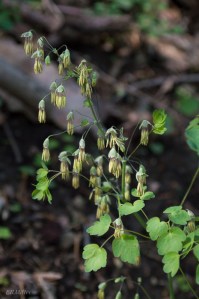
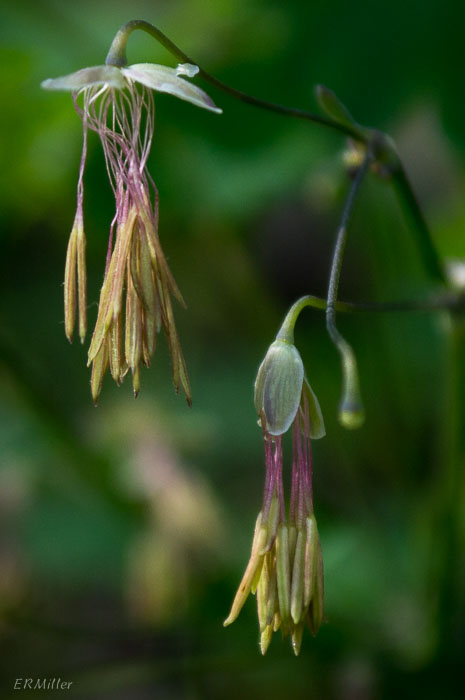
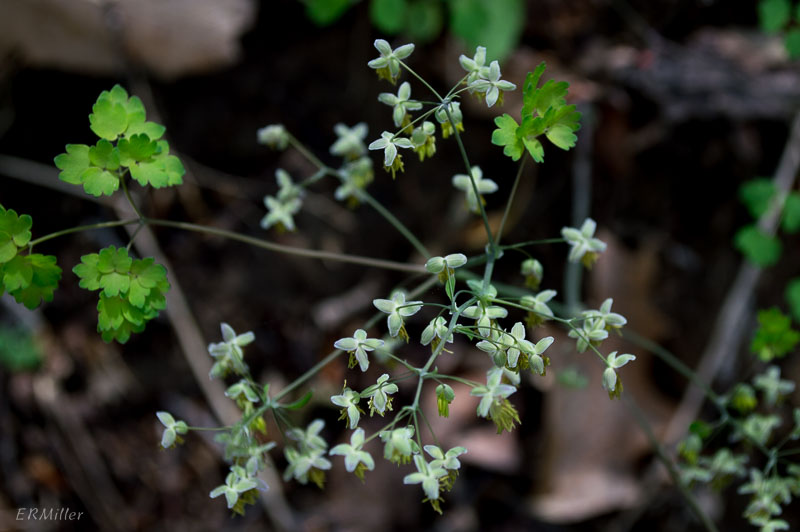
The guidebooks weren’t much help at first, but then I read in Clemants and Gracie that in this species, male and female flowers are on separate plants. So off to the internets to fact-check. Sure enough, the other plant was sporting the female flowers.
above right, closeup of male flowers
below, plant with female flowers

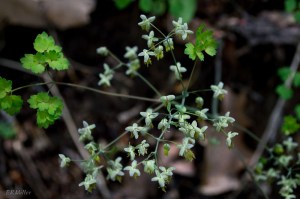
right, an overhead view of male flowers, showing the sepals; there are no petals
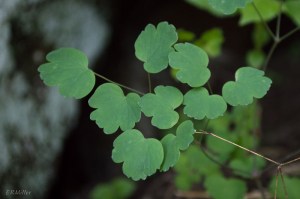
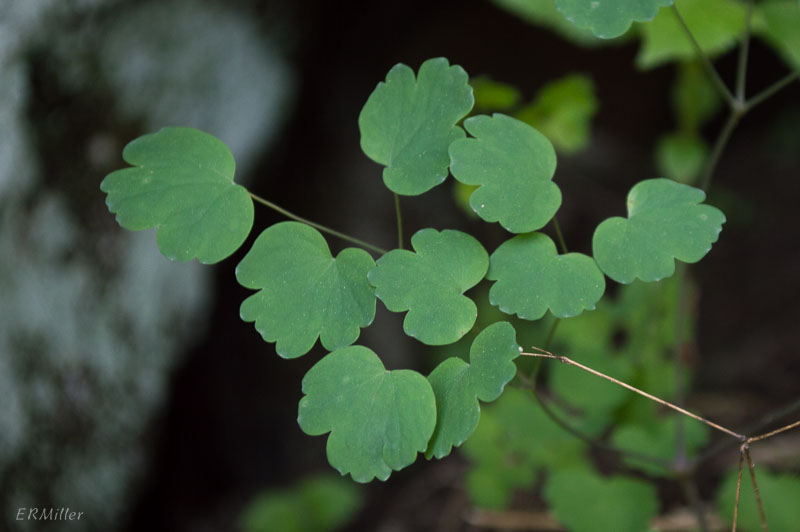
below, one small part of a very complicated leaf, showing leaflets
Early meadow rue is wind pollinated, and for that reason it’s hard to get a good photo of it: the slightest breeze will set the whole plant moving about. Using a tripod helped, but the autofocus feature was no good at all – all the plant parts are so insubstantial (and prone to moving) that the camera couldn’t find a way to focus. I had to go full manual. And it was shady, so even with a wide open aperture, I had to keep the shutter speed fairly slow. These pictures were the best I could do, on two different days. The next day there’s dead calm, the plant will likely be done blooming.
Anyway, more about the plant: it’s yet another one that likes moist, rich woodlands, growing on rocky slopes and cliffs. It is one of six Thalictrum species that can be found in Maryland, ranging from Quebec to Georgia and west into the Great Plains.





 Elizabeth's Wildflower Blog