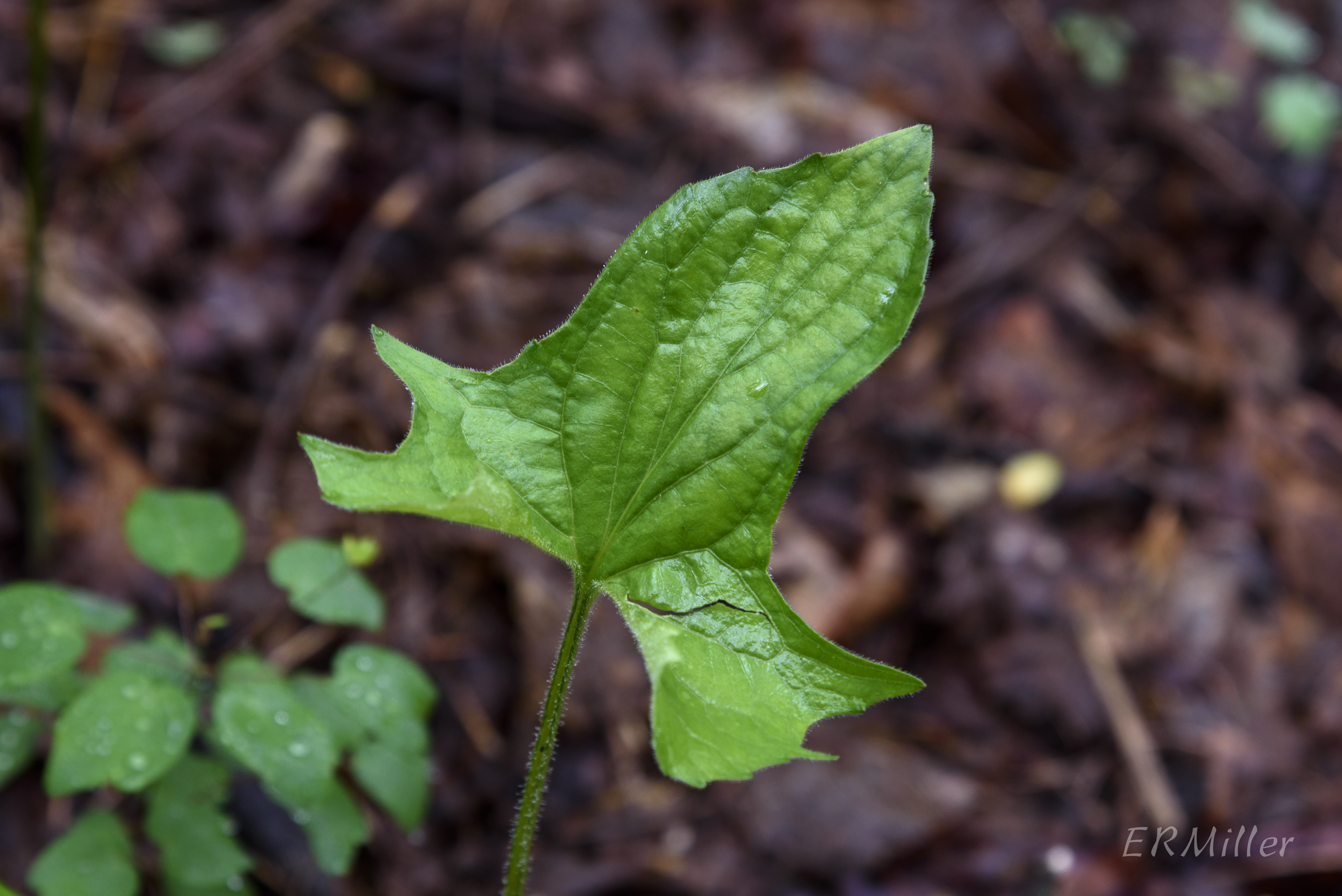
I Never Learn

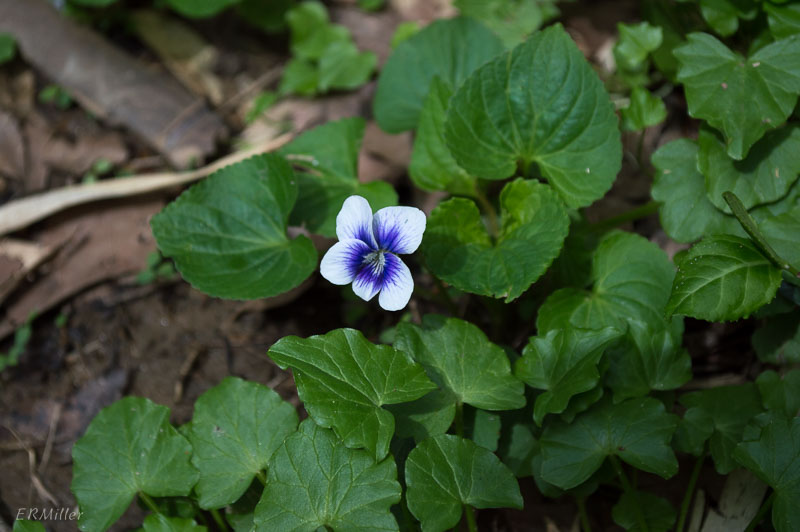
I was getting into my car at Lock 10 a few weeks ago when I decided to take a quick picture of the weedy lawn area nearby. I was in a hurry, you see. I figured I’d come back a few days later if I saw anything interesting in the picture. And then I didn’t get around to looking at the photo for a few days. And there was something interesting – two things, really: the pansies weren’t the ones I thought they were, and hiding among them were lots of tiny bright blue flowers.

Of course when I did get back there, eight days later, all the pansies were gone: done blooming. But the other blue flowers were still there.

Rule number one: take the time to get the shot. Will I ever learn?

Anyway, this is not a very clear picture, but the two flowering plants in it are Viola bicolor (field pansy, Violaceae), and Myosotis stricta (strict or small flowered forget-me-not, Boraginaceae). The former is a native, but the latter is an alien.

Field pansy is a low-growing annual forb that prefers drier soils in open and disturbed areas, like parking-lot lawns. Viola species can be tricky to key out, as there can be a lot of morphological variation within species, and cross-species hybridizing is common. The plants that we now call Viola bicolor were once considered a European species, and you’ll still find references to them as Viola kitaibeliana and Viola rafinesquii. It’s widespread in North America, though not in a few northern and western states. It’s also widespread in Maryland, missing only from Garret, Harford, and Somerset counties.
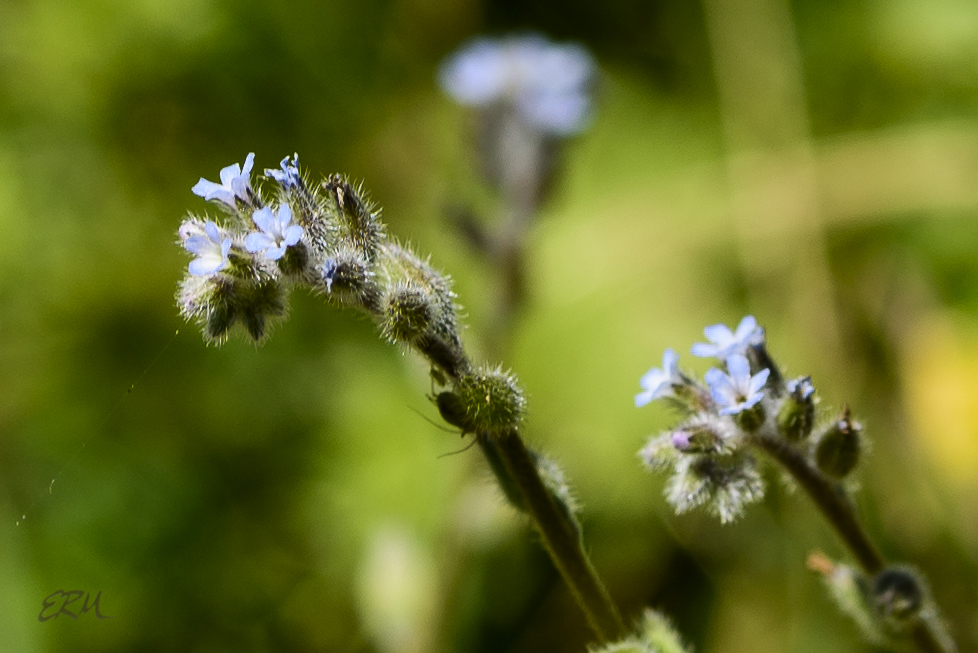
Strict forget-me-not is one of four alien Myosotis species found in Maryland (there are three natives, too). The plants stand only a few inches tall, and the flowers are minute; I didn’t even see them there when I took the picture of the pansies. The species can be found in much of the US, minus a few northern and southern states.

It’s been a boraginaceous year.

Another Blue Violet

20160512-_DSC0061

three-lobe violet, wood violet,
early blue violet
Viola palmata, formerly V. triloba
Violaceae

As I’ve written before, violet ID can be tricky, because they hybridize freely and because the taxonomists are always changing the names.

20160512-_DSC0068

With leaves like this, though, it seems a safe bet to say this is three-lobe violet. The older guidebooks name it Viola triloba, and you’ll still find references to that on-line, but per ITIS it’s now considered V. palmata.

20160512-_DSC0065

USDA lists both V. triloba and a hybrid, V. x palmata, with different ranges, so it’s no use reporting on that, other than to say that this violet, whatever species it is, is found primarily in the eastern part of the country.

I found these about halfway up Sugarloaf Mountain, on the west side, growing by the ones or twos in patches of rue anemone.


Three Blue Violets

20160507-_DSC0014

Violets are notoriously tricky to identify, especially the blue ones. First, some of the characteristics are rather subjective (eg “leaves somewhat rounder than other species”). Second, they are known to hybridize freely. And third, taxonomists frequently re-name them.

Nonetheless, I am reasonably confident that I have these three correct. As always, please leave a comment if you feel differently.

20150417-20150417-_DSC0035

common blue violet
Viola sororia
(formerly V. papillonacea)

This violet is found from Quebec to Florida and east into the Great Plains, in many different habitats, including peoples’ lawns, where it’s considered a weed. I’m more likely to think of turfgrass as weeds.

20160505-_DSC0041

marsh blue violet
Viola cucullata

The primary way to distinguish marsh blue from common blue is to consider the habitat. This group of plants was growing on a mossy mound in the middle of a stream. I’ve seen others growing right in the water. Note also that the flowers rise well above the leaves (mostly), while in common blue flowers and leaves are about the same height (mostly). Marsh blue has a range similar to common blue, though it isn’t found quite as far west or south.

20160505-_DSC0127

ovate-leaved violet
Viola sagittata var. ovata
(formerly V. fimbriatula)

You can see that this one has a somewhat longer leaf from the previous two. Also, the habitat was drier: it was growing on a slope in an area dominated by mountain laurel, with other ericaceous species (namely Vacciniums) and two different pine species nearby. This species doesn’t range as far south as the other two, and goes west only into some of the Midwest states.

One characteristic you should not rely on for identification of blue violets: color. It can vary wildly. Have a look at this:

20150420-20150420-_DSC0016

This is common blue violet… white form.

Two White Violets

20160405-_DSC0131

creamy violet
Viola striata
Violaceae

20160421-_DSC0059


sweet white violet
Viola blanda
Violaceae


It is with some trepidation that I venture into violet territory, as there are 117 species across the US, and violets are known to hybridize freely, so that identification often comes down to tiny little details.

According to the blog Mid-Atlantic Nature, nine white violets can be found in this area. A cross check with the Maryland Biodiversity Project shows that only six of these are present in the Maryland piedmont. And, the two shown in this post have some unique characteristics, so I’m fairly confident that they’ve been correctly identified.

As you can see in the pictures (if you zoom in), creamy white violet has two bearded petals, while sweet white violet has a reddish-brown stem .

Creamy violet is all over the place on Billy Goat C downstream of Carderock, with some occurrences upstream along Billy Goat B as well. I’m honestly not sure If I’ve seen sweet white violet in that area; You have to be pretty close to see the details. I saw this one plant (only this one plant) in Rachel Carson Conservation Park.

The two species have similar ranges, in most parts of the country east of the Great Plains, with V. blanda found further north and V. striata further west.


Update 5/10/16

It’s possible that the sweet white violet pictured above is actually primrose-leaved violet, V. primulifolia, a naturally occuring hybrid of V. lanceolata and V. macloskeyi. I can’t really say without better pictures.