Flower of the Day: Early Saxifrage (an LWF)

Saxifraga virginiensis; Saxifragaceae (saxifrage family)
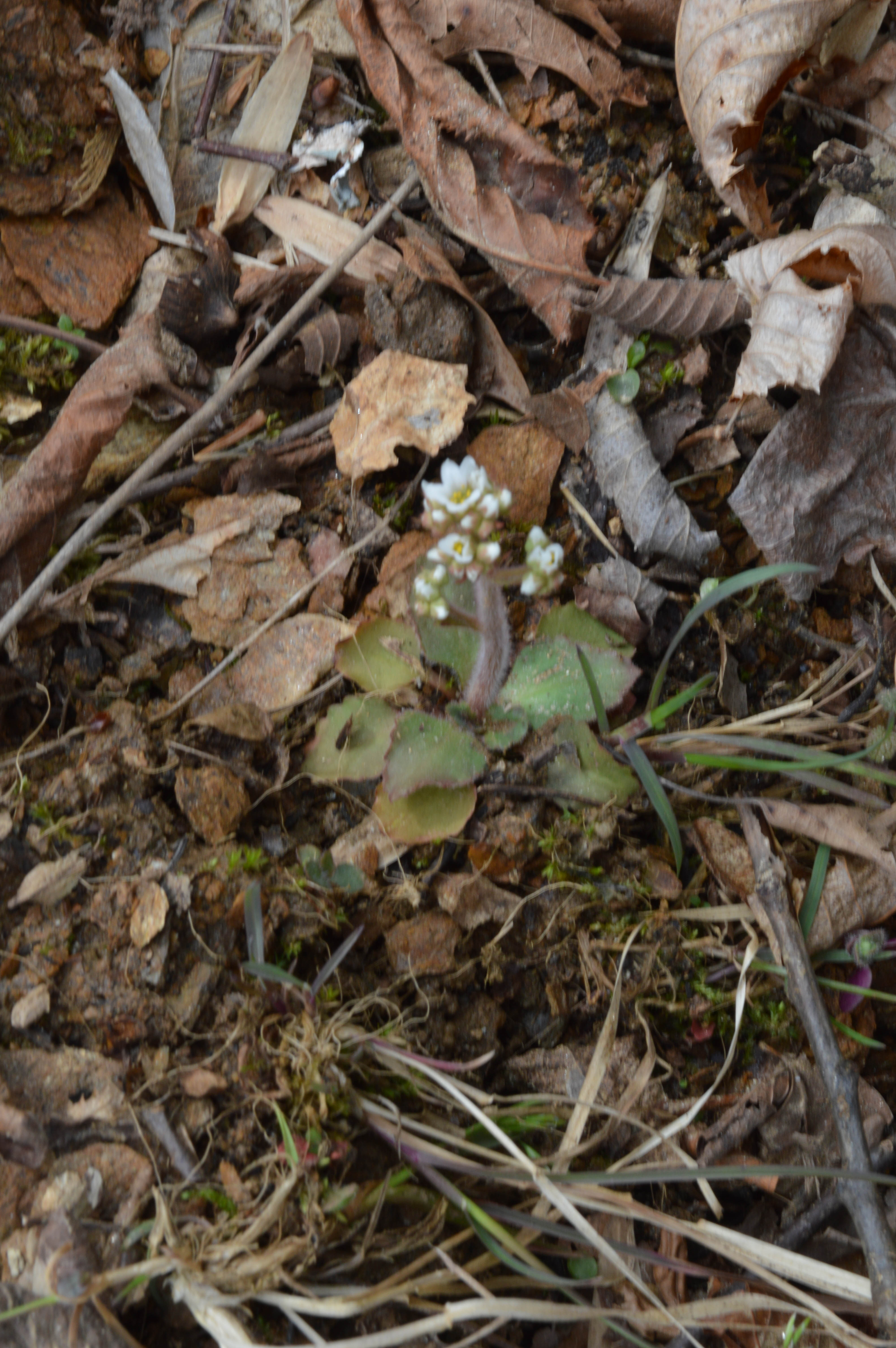
early saxifrage

Birders have a phrase they use to summarize small, hard-to-identify birds: Little Brown Jobs.  Sometimes it’s used dismissively: “Did you see anything interesting?”  “Nah, just a bunch of LBJs”.

Likewise I have a tendency to overlook Little White Flowers.  I’m not really being dismissive – I just see them from 5 feet off the ground while hiking and think “yay, another cress or chickweed, big deal”.  I learned my lesson with harbinger-of-spring; now I hike more slowly and pause often to bend down and have a look.

The picture illustrates why I really need a macro lens to continue this hobby.  It’s not very good, but it’s the cleanest shot I could get of this little plant.

The List So Far

(This is a pinned post; scroll down to see the most current entry)

4/27

  • swamp buttercup
  • may-apple
  • plantain-leaved pussytoes

4/25:

  • creeping buttercup*
  • Persian speedwell*
  • marsh blue violet
  • northern white violet
  • smooth yellow violet
  • several trees to be identified, including possible Prunus and Rhododendron species

4/24:

  • several species of violets yet to be identified, including maybe LeConte’s, broad-leaved wood, and southern wood

4/21:

  • American bladdernut
  • American elm
  • winter cress*
  • jack-in-the-pulpit
  • chinkapin oak
  • oceanblue phacelia
  • dwarf cinquefoil
  • rough bedstraw
  • sweet cicely
  • mouse-ear chickweed*

4/17:

  • corn gromwell*
  • azur bluets
  • sassafrass
  • creamy violet
  • wild ginger
  • kidney-leaved buttercup
  • bulbous buttercup*
  • paw paw
  • flowering dogwood
  • 2 different unknown oak species
  • field pansy
  • smooth Solomon’s seal
  • unknown small tree, suspect Prunus species

4/14

  • downy yellow violet
  • golden alexanders
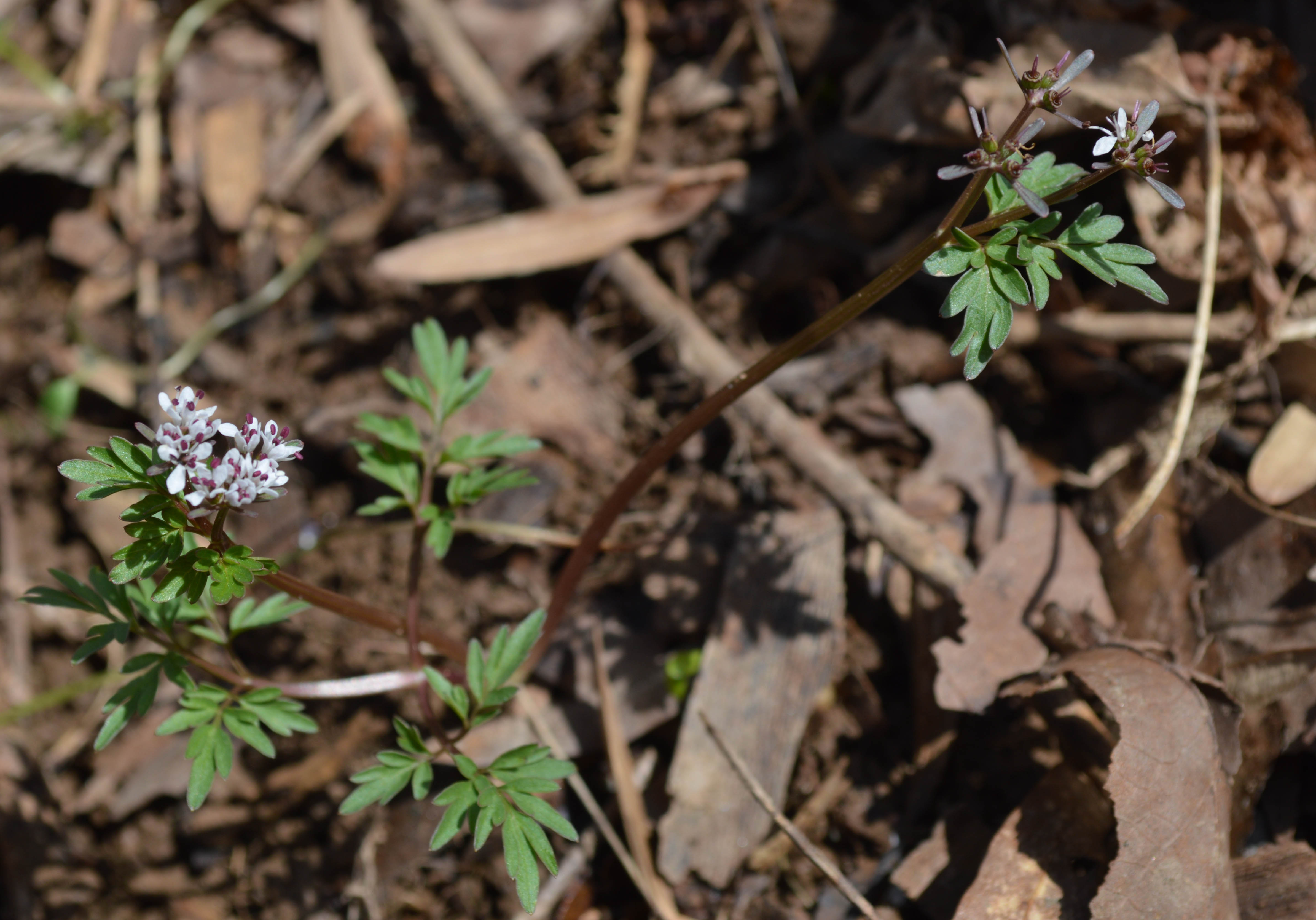
  • southern chervil
  • smooth rock cress
  • lyre-leaved rock cress
  • redbud
  • field chickweed
  • star chickweed
  • golden ragwort
  • nodding star-of-Bethlehem*
  • white form Virginia bluebell
  • white form common blue violet

4/10

  • round-leaved violet

4/8

  • common blue violet
  • short-spurred corydalis
  • spring avens
  • wild blue phlox
  • gill-over-the-ground*
  • toadshade

4/6

  • rue anemone (Thalictrum thalictroides)
  • round-lobed hepatica (Hepatica nobilis var. obtusa)
  • fine-leaved toothwort?!

4/3

  • twinleaf (Jeffersonia diphylla)
  • bloodroot (Sanguinaria canadensis)
  • slender toothwort (Cardamine angustata)
  • Virginia bluebell (Mertensia virginica)

4/2

  • harbinger-of-spring (Erigenia bulbosa)
  • trout lily (Erythronium americanum)
  • Dutchman’s breeches (Dicenta cucullaria)

3/31

  • common chickweed* (Stellaria media)
  • large toothwort (Cardamine maxima)
  • squirrel corn (Dicentra canadensis)
  • cut-leaved toothwort (Cardamine concatenata)
  • spicebush (Lindera benzoin)
  • lesser celandine* (Ranunculus ficaria)

3/21

  • early saxifrage (Saxifraga virginiensis)
  • red dead nettle* (Lamium purpureum)

3/15

  • hoary bittercress* (Cardamine hirsuta)
  • ivy-leaved speedwell* (Veronica hederifolia)

3/12

  • spring beauty (Claytonia virginica)


*alien

Flower of the Day: Bloodroot

Sanguinaria canadensis; Papaveraceae (poppy family)

bloodroot

In another day or two, the basal leaf should be fully open.  The leaf can be quite large and the look is unique.  There’s no mistaking bloodroot once you’ve seen it, even though the flowers can vary in appearance:

bloodroot 2

One plant can send up several stalks, but each stalk bears only a single blossom and leaf.  Apparently bloodroot can form large colonies, though I’ve never found one.  Yesterday I saw seven individual flowers in a 50 square foot area: not quite a colony, but a large concentration.


Flower of the Day: Harbinger-of-Spring

Erigenia bulbosa; Apiaceae (carrot family)

harbinger-of-spring edited

I looked for this little flower last spring and never saw it.  Probably never would have if I hadn’t gotten a tip from the Natural Capital via the Maryland Native Plant Society.  Once I knew what it looks like from eye level I was able to find a second stand.

Harbinger-of-spring is a spring ephemeral in the Apiaceae.  It is listed as threatened in Pennsylvania and endangered in New York and Wisconsin.

The Apiaceae contains both edible species (carrot and many culinary herbs) and poisonous species (poison hemlock).  Most are herbaceous plants that range from tiny (like harbinger) to gigantic (hogweed, up to 14 feet tall).  Last year about six of over 200 species I found in the Carderock-Great Falls area were in this family.

ps for photography nerds: this photo was taken at ISO 100; f 8.0; 1/200 sec and is unedited except for cropping

The List So Far

in chronological order

March:

  • spring beauty (Claytonia virginica)
  • ivy-leaved speedwell* (Veronica hederifolia)
  • hoary bittercress* (Cardamine hirsuta)
  • red dead nettle* (Lamium purpureum)
  • early saxifrage (Saxifraga virginiensis)
  • common chickweed* (Stellaria media)
  • lesser celandine* (Ranunculus ficaria)
  • spicebush (Lindera benzoin)
  • squirrel-corn (Dicentra canadensis)
  • cut-leaved toothwort (Cardamine laciniata)
  • large toothwort (Cardamine concatenata)

April:

  • trout lily (Erythronium americanum)
  • dutchman’s breeches (Dicentra cucullaria)
  • harbinger-of-spring (Erigenia bulbosa)


*alien