Cimicifuga racemosa; Ranunculaceae (buttercup family), aka Actaea racemosa

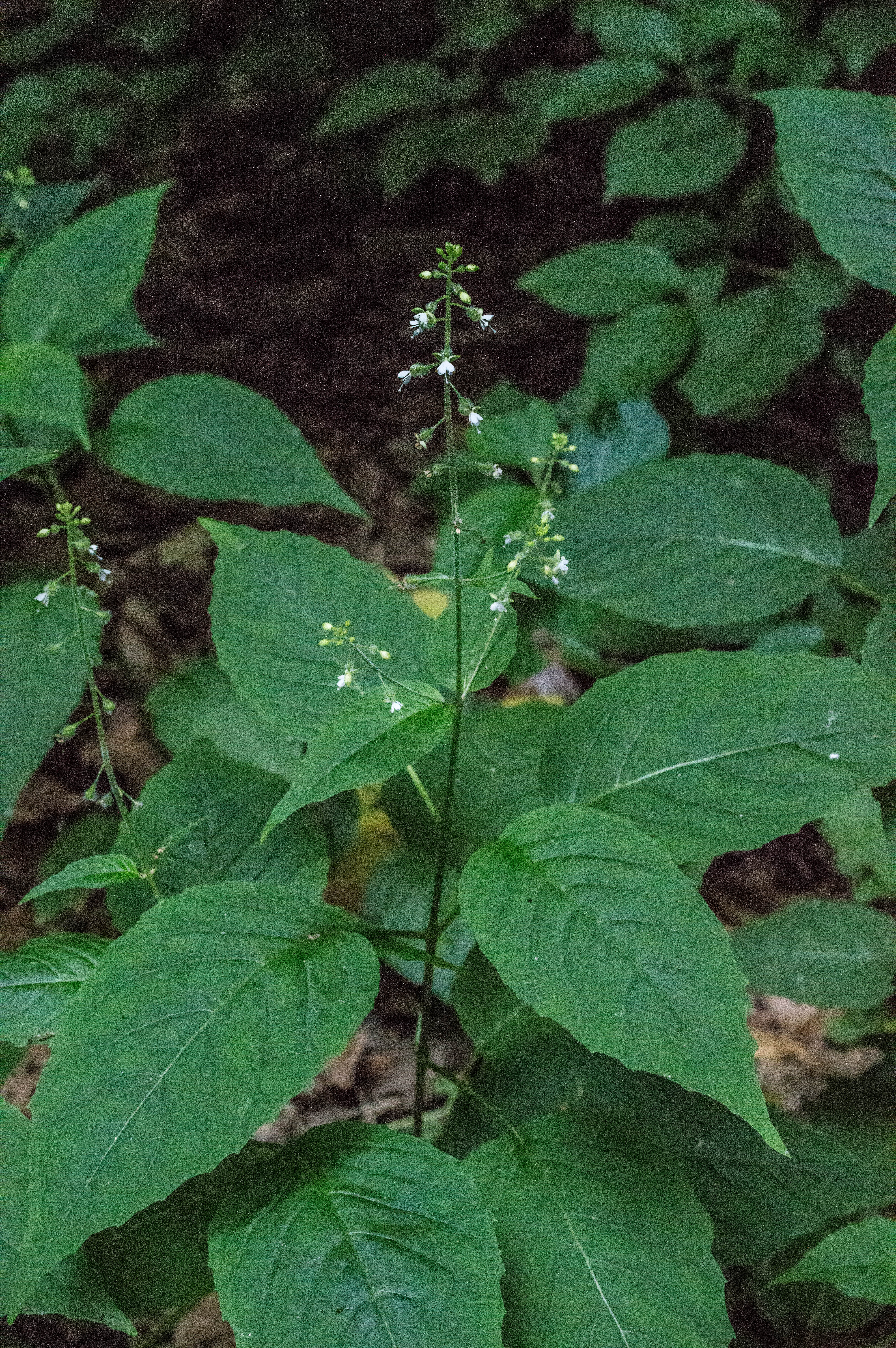
Earlier this year I saw an interesting plant growing along the trail. I had no idea what it was, but thought it nice looking, with dark green, pinnately compound leaves giving it a fern-like appearance:  I’ve gone back every few days to check on it, watching the spikes develop and the buds swell. Finally yesterday I saw it in bloom:
 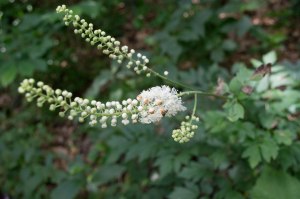 The picture isn’t sideways; the inflorescence was growing diagonally out across the trail. It blooms from the bottom of the spike up, so I’ll be going back in another day or two to see how it progresses.
Black cohosh can be found in woodlands across the eastern US and Canada, though it’s listed as endangered in Illinois and Massachusetts. It gets large, several feet tall and several feet across, and the flower spikes add another few feet.
You may have heard of black cohosh as a dietary supplement or herbal remedy; read what the National Institutes of Health, the University of Maryland Medical Center, and the Mayo Clinic have to say.
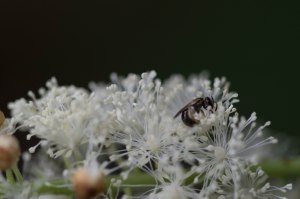
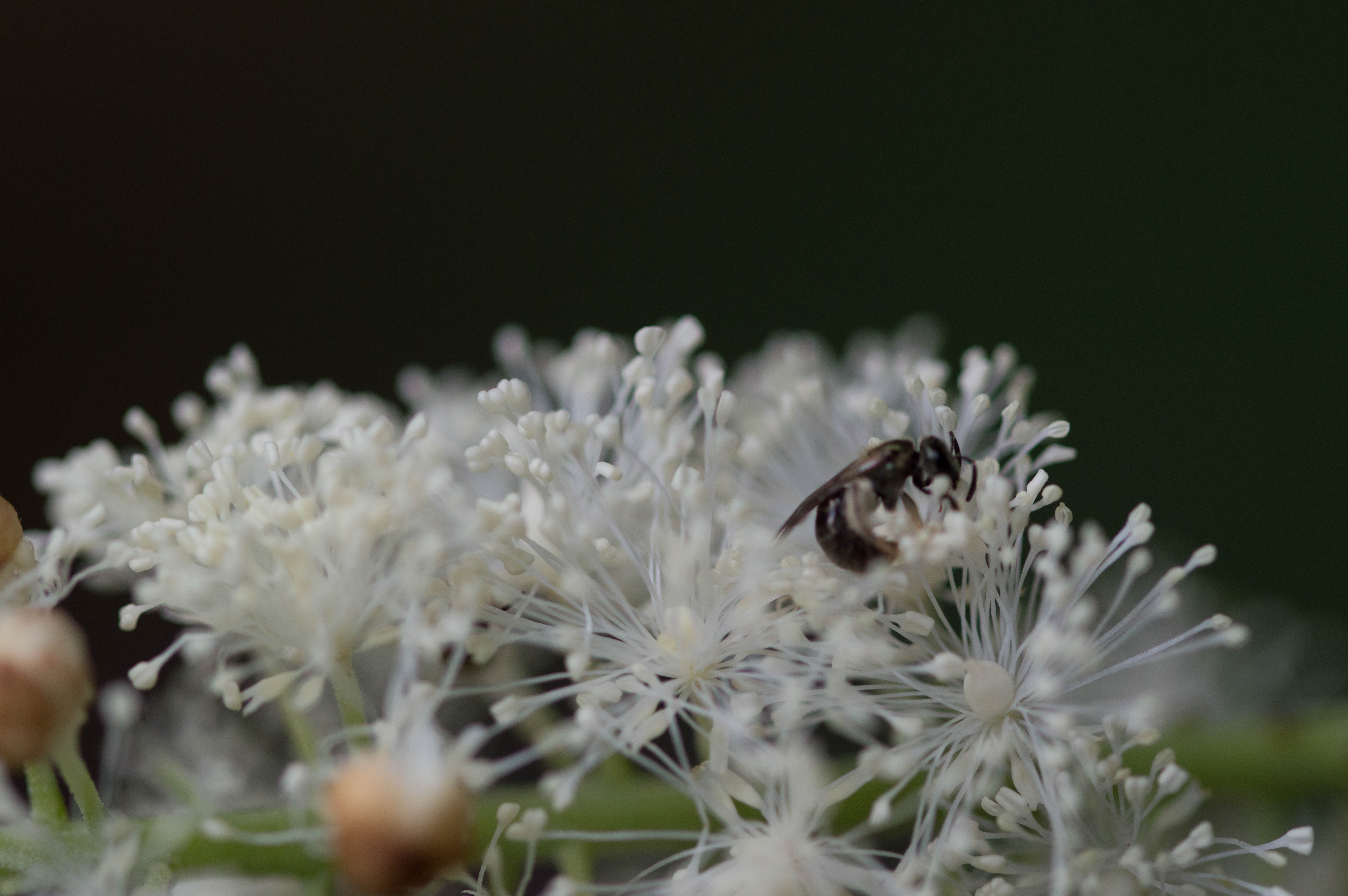
This plant made a great if tricky subject to photograph. It was in dappled sunlight, on a breezy day with clouds moving across the sun, and insects kept landing on it, so it was never still. I shot at a high shutter speed for clarity, since every time I thought I had chased the bugs off the breeze would blow. It never stayed still. I took 150 pictures of it, mostly for the fun of playing with the camera, trying to get different types of shots. Here’s one more picture, with insect visitor:




 Elizabeth's Wildflower Blog