Argia apicalis. I think. I’m always saying that I’m not a botanist. I’m not an entomologist, either. But I like this picture.
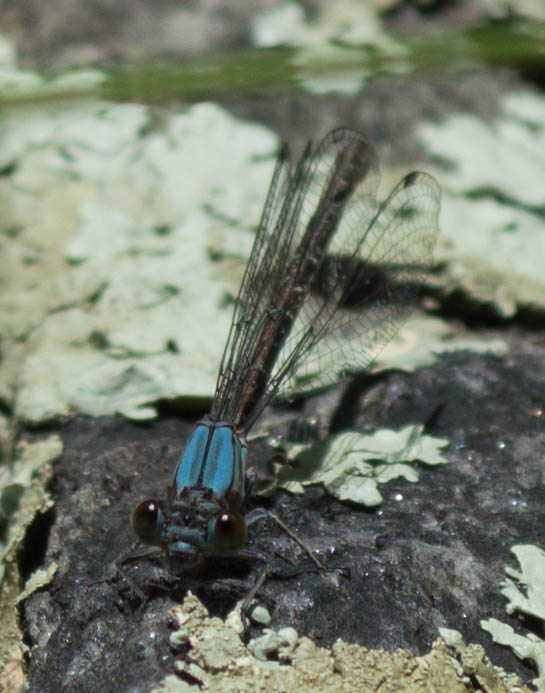

Argia apicalis. I think. I’m always saying that I’m not a botanist. I’m not an entomologist, either. But I like this picture.
Hydrangea arborescens; Hydrangeaceae (hydrangea family; older sources place it in the Saxifragaceae)

I was lucky to find this particular plant; it isn’t rare, but it is unusual to find a specimen with large clusters of the showy sterile flowers (actually bracts). More typically in the wild you’d see an inflorescence of much smaller (and less spectacular) fertile flowers, with just a few of the sterile flowers around the edges. Wild hydrangea is a small understory shrub that likes moist but well-drained soils. It is listed as endangered in Florida and New York. This one was found on the Cabin John Trail, not very far from the water.
Dioscorea villosa; Dioscoreaceae (yam family)
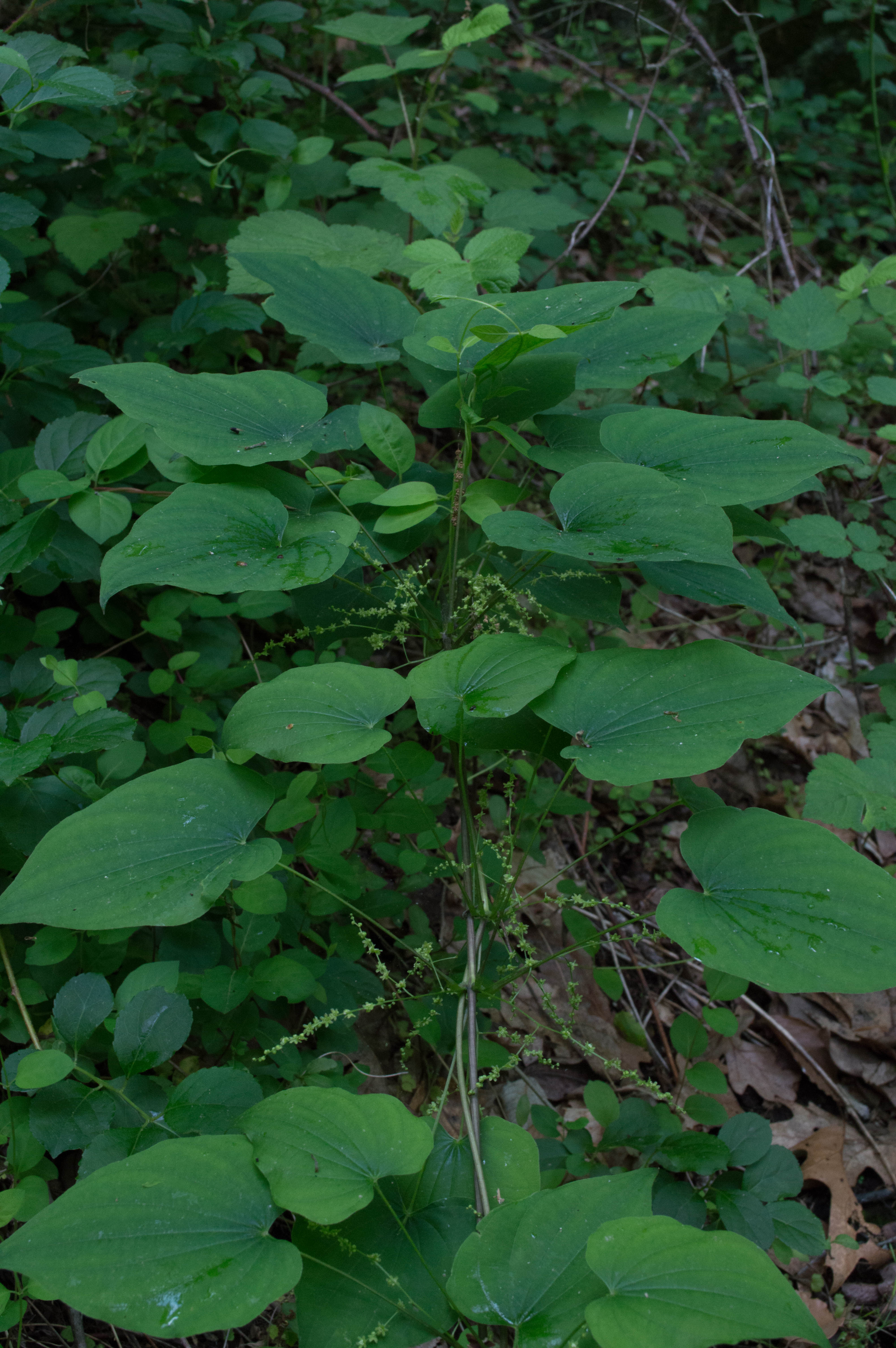
The wildflower show is slowing down now, so I’m going back a month or so to find subjects for Flower of the Day. You’ll have to click on the picture in order to see the flowers. This plant was blooming about 3 weeks ago. Wild yamroot is a dioecious plant, meaning that each plant produces either male or female flowers, but not both. The one pictured above is female; you can tell by the number of flowers on the raceme. You can also tell by looking at the individual flowers: both male and female flowers have 6 tepals and 6 stamens, but the stamens of the female are infertile. I’m no botanist, so I have no idea how to tell the difference between fertile and infertile stamens. More information at this wonderful site:
http://www.illinoiswildflowers.info/savanna/plants/wild_yam.html.
This plant is related to the edible yam (genus Dioscorea) that is grown in West Africa, but it is not even closely related to the “yam” with which most Americans are familiar, which is actually sweet potato (Ipomoea batatas).
This is why horticulturalists like to use binomial nomenclature rather than common names, by the way.
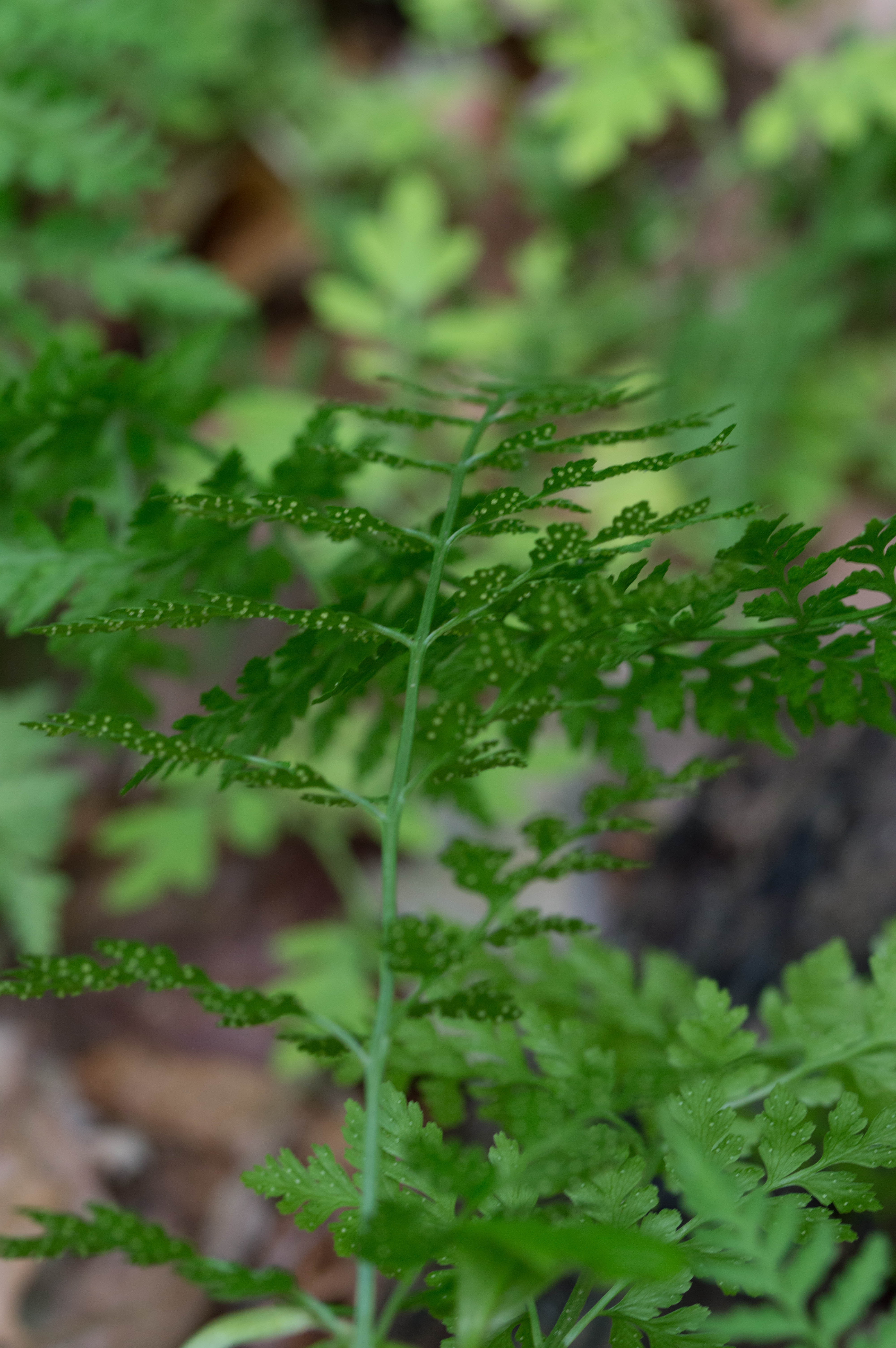
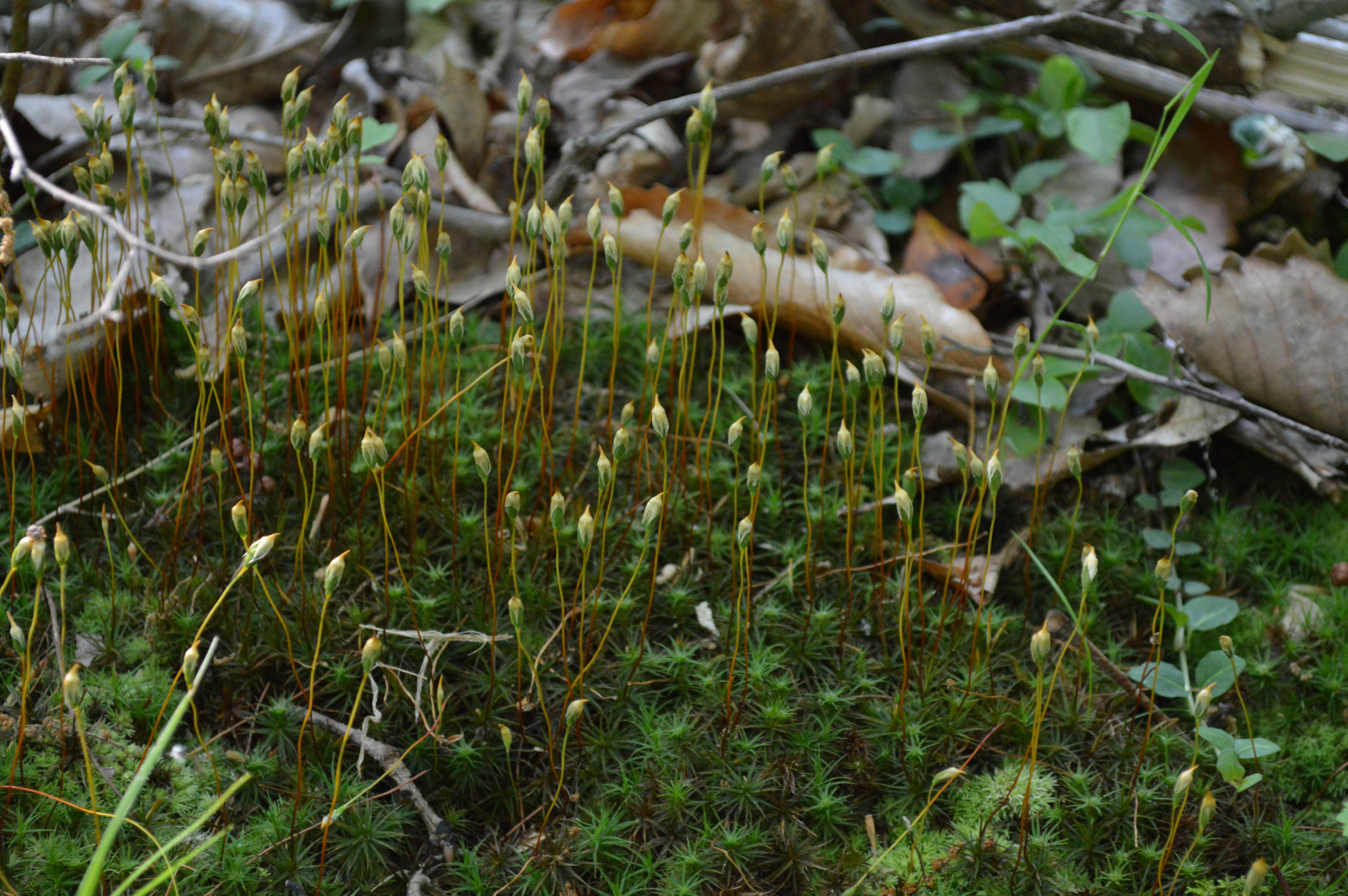
We now take a break from wildflowers to look at some neat plants. Apologies, but I cannot tell you which species these are. I just think they’re nifty.
Underside of a fern, showing sporangia:
A clump of moss, showing sporangia:
And a clubmoss commonly called “ground pine”; I believe the genus is Lycopodium; the species might be Lycopodium dendroideum:
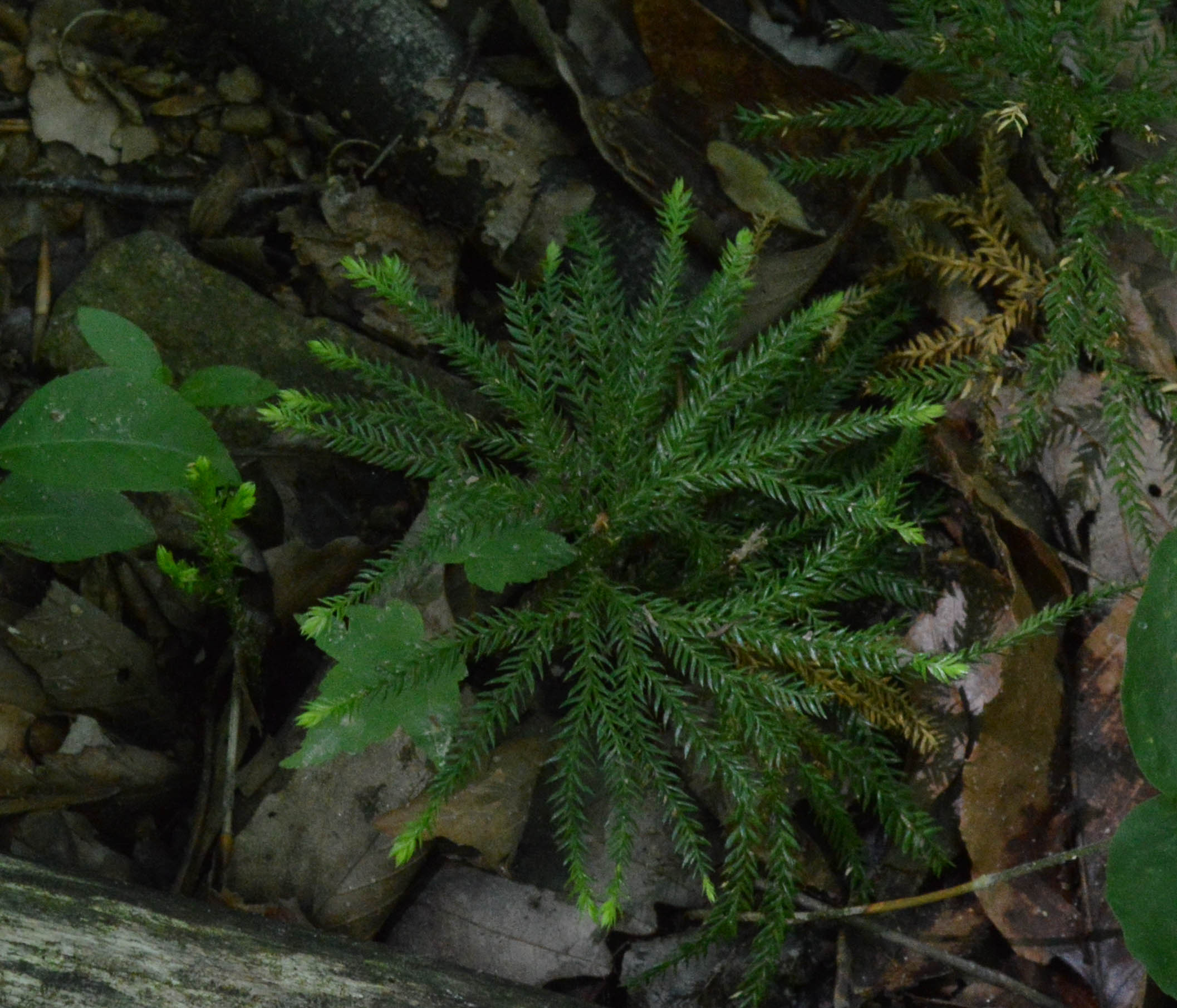 Not a moss like in the previous picture, but an entirely different kind of plant. For one thing, clubmosses are vascular, and mosses are non-vascular. But this is a wildflower blog not a botany primer, so I’m not going any further with that. I’m just starting to delve into this area…
Dichanthelium clandestinum; Poaceae (grass family)

Remember, I am not a botanist. But I’m reasonably sure I’ve identified the species correctly, and quite sure I’ve gotten the genus right. There are 22 species of Dichanthelium found just within the boundaries of Washington, DC!
This thing was a real bear to photograph. It was almost impossible to get the actual flowers in focus. I admit this photo saw a lot of touching-up in Lightroom.
 Elizabeth's Wildflower Blog