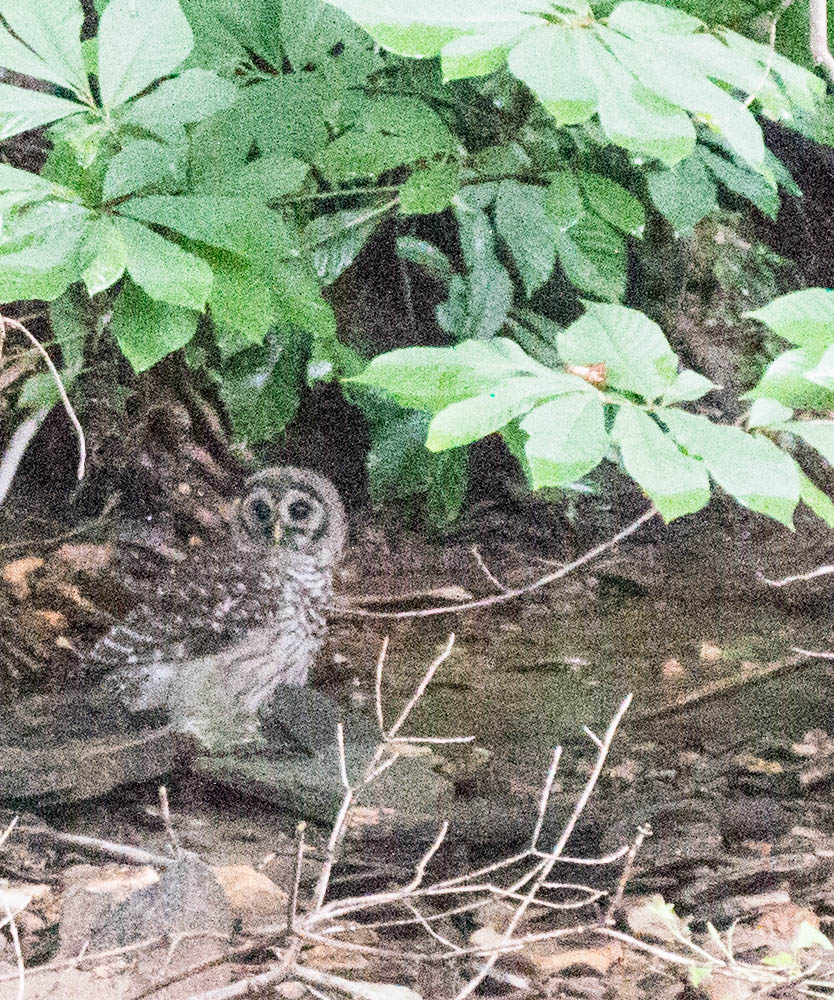
Bird of the Day: Barred Owl

aka Hoot Owl; Strix varia
20140714-DSC_0048

So I was walking along the towpath, looking down for flowers of course, when this loud FLUMPH! startled me.  I’d just been strafed by an owl!  He disappeared into trees across the canal with a loud call.  I couldn’t find him, but then I heard the sound again, in two different places.  In the deep, deep shade of a sycamore and some pawpaws were two birds.  One was clumsily flapping around, down to the ground, then to a low branch, then back up to perch near the other bird, which was stationed on the same branch the entire time.  I’m pretty sure the one bird was a fledgling.  Go to owlpages.com, scroll down to “calls”, and click on “juvenile” to hear what I heard.

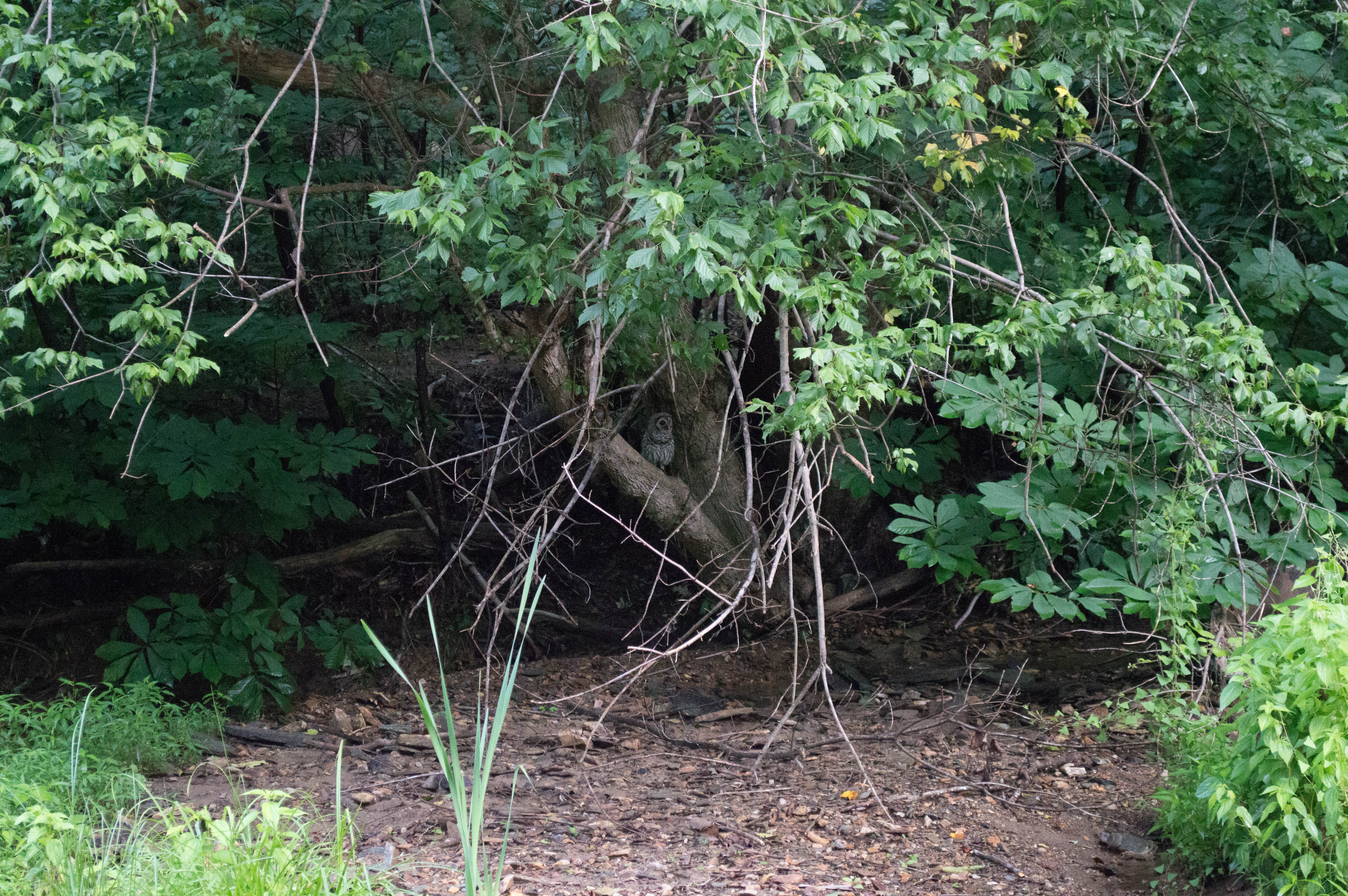
I don’t have any sort of zoom lens.  I zoomed as much as I could with the 55mm lens, used a wide open aperture and as slow a shutter speed as I dared, ISO 6400.  At home I used Lightroom to zoom in to the subject (in the untouched photos all you can see are dark blobs).  I took 70 photos in 17 minutes.  Here’s a completely untouched pic; click on it and zoom in to see the bird perched in the V of the tree.
20140714-DSC_0063

Very excited and happy.  I hear these owls at night fairly often, but the is the first time I’ve ever seen one – or three.

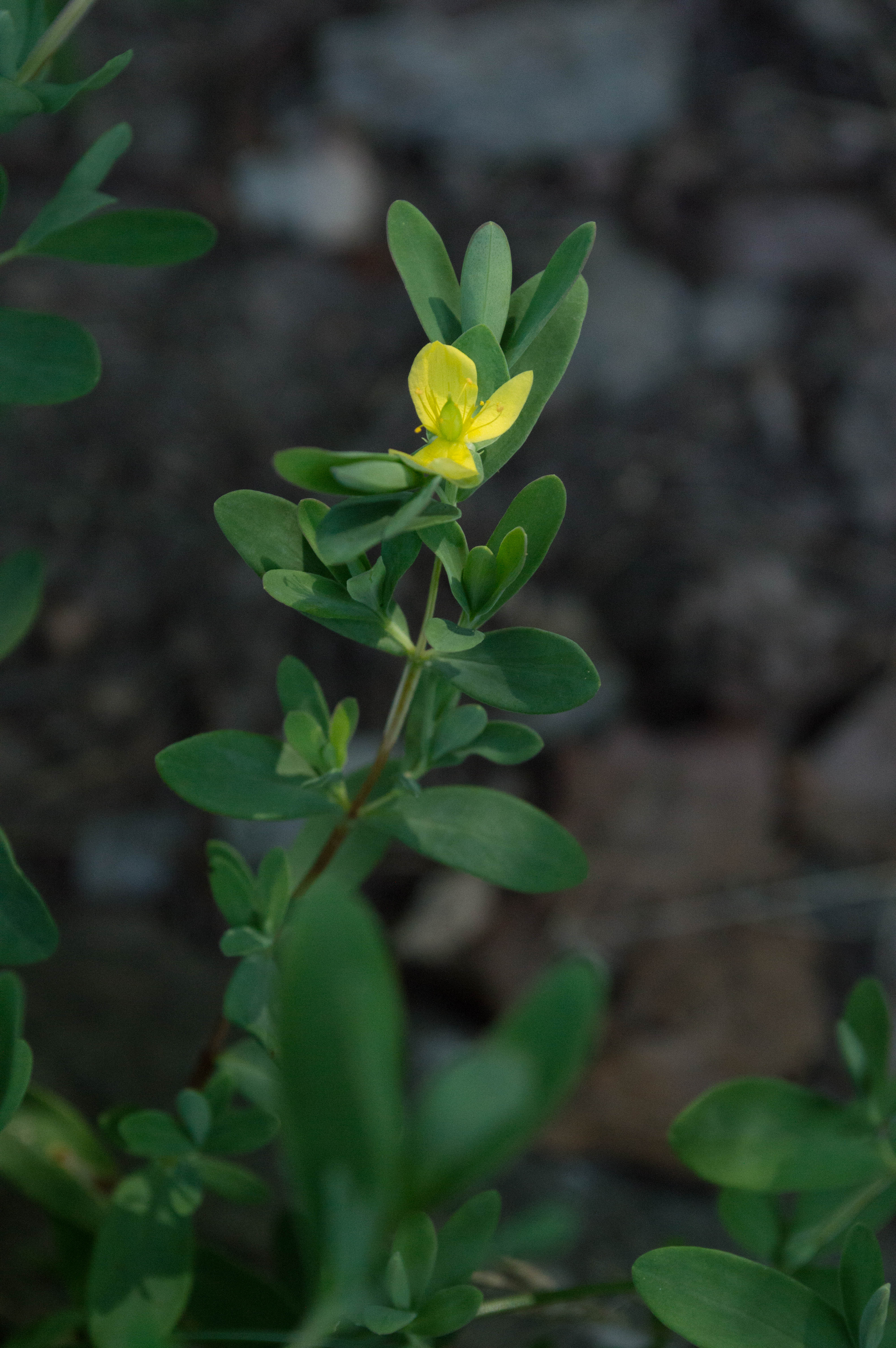
Flower of the Day: St. Andrew’s Cross

Hypericum hypericoides; Clusiaceae (garcinia family)

20140702-DSC_0046A very close relative of the St. Johnsworts, but note that the blossom has only four petals.  The plant is low-growing, with pleasantly light green foliage and dainty flowers. You might have to click on this next picture to see the flower in the lower right: 20140702-DSC_0034Apparently it can be found in many different habitats, from wet to dry, but I’ve only ever seen it in the drier, rockier soils near Carderock (never close to the river).

20140702-DSC_0049


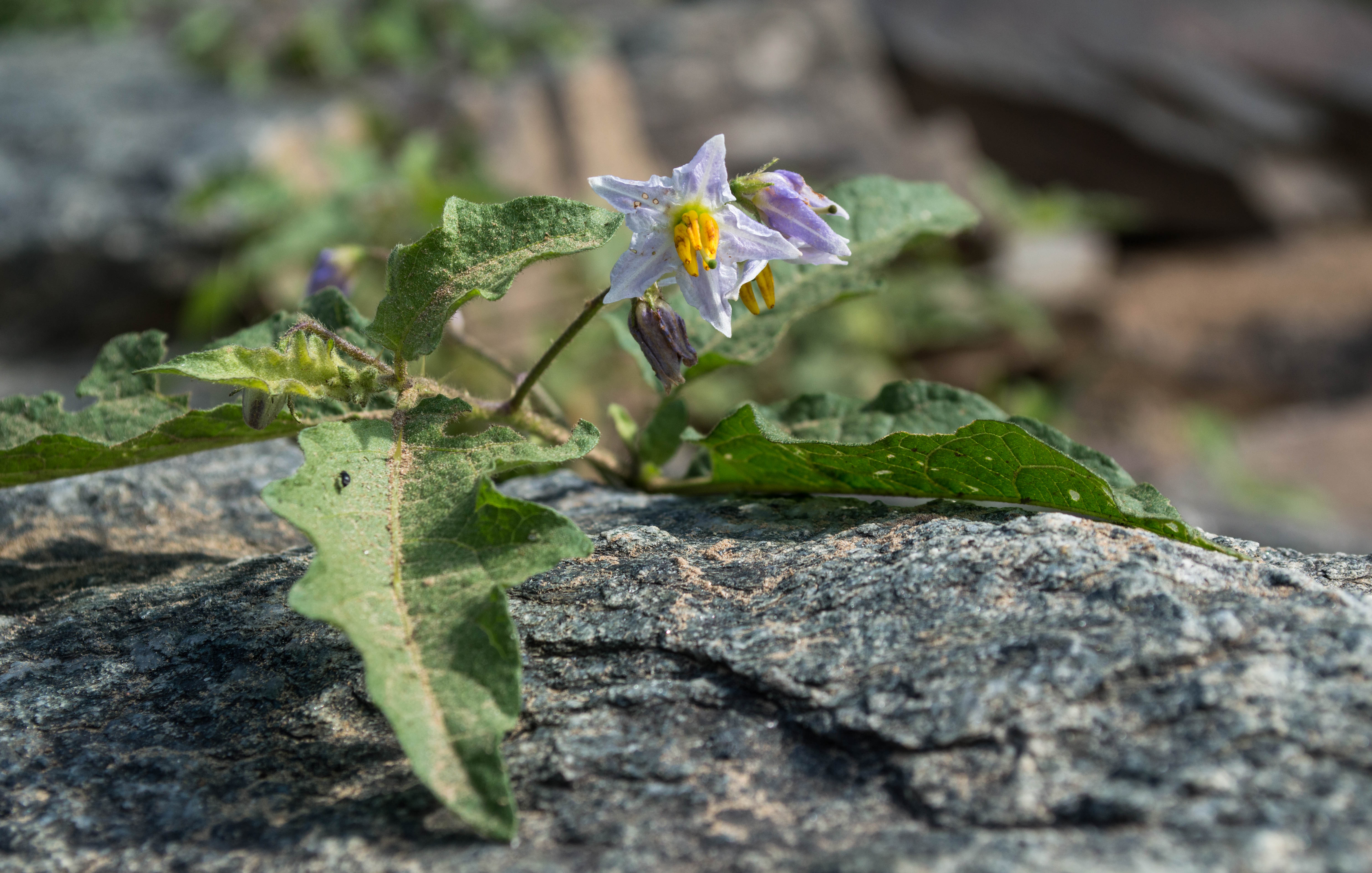
Flower of the Day: Horse Nettle

 Solanum carolinense; Solanaceae  (nightshade family)

20140710-DSC_0101-2

Not really a nettle, despite its common name, but closely related to potato (Solanum tuberosum) and eggplant (S. melogena), and less closely related to tomato (Lycopersicon species), chili pepper (Capsicum species), and tobacco (Nicotiana species).  I write this because I can find nothing particularly interesting to say about horse nettle; its inclusion in the Solanaceae is the only thing about it I find remotely interesting.  It is an ugly little flower on a weedy-looking, ugly little plant.

Gardeners define a weed as “a plant growing where it isn’t wanted”, so I can’t just call this thing a weed, but according to the USDA, seven US states consider it a “noxious weed”. In Arizona it’s a prohibited noxious weed. Apparently it’s very difficult to remove, as broad-spectrum herbicides have little effect on it, and tend to kill its competition instead.  Yay.

Oh, and it’s poisonous.

Flower of the Day: Spotted St. Johnswort

Hypericum punctatum; Clusiaceae (garcinia family)

20140628-DSC_0052

Unlike yesterday’s FOTD, this Hypericum species is a forb (herb), growing to about 3 feet tall.  It looks quite similar at first glance to the alien common St. Johnswort (H. perforatum), but can be distinguished by looking at the flower petals through a handlens.  Spotted St. Johnswort has little black dots all over the petals, while common St. Johnswort has black dots only along the petal edges.  The flowers are only about half an inch across.

20140628-DSC_0051

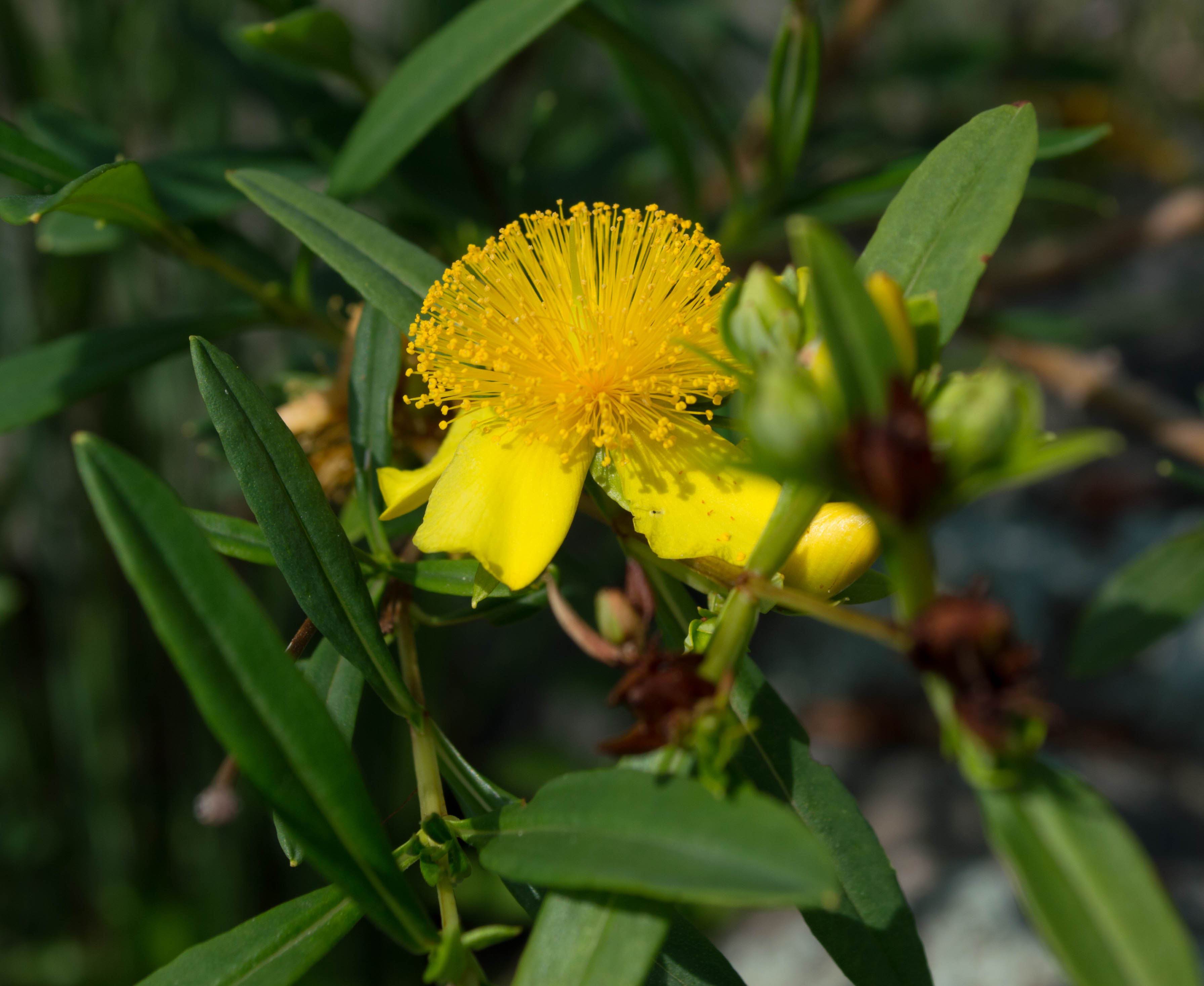
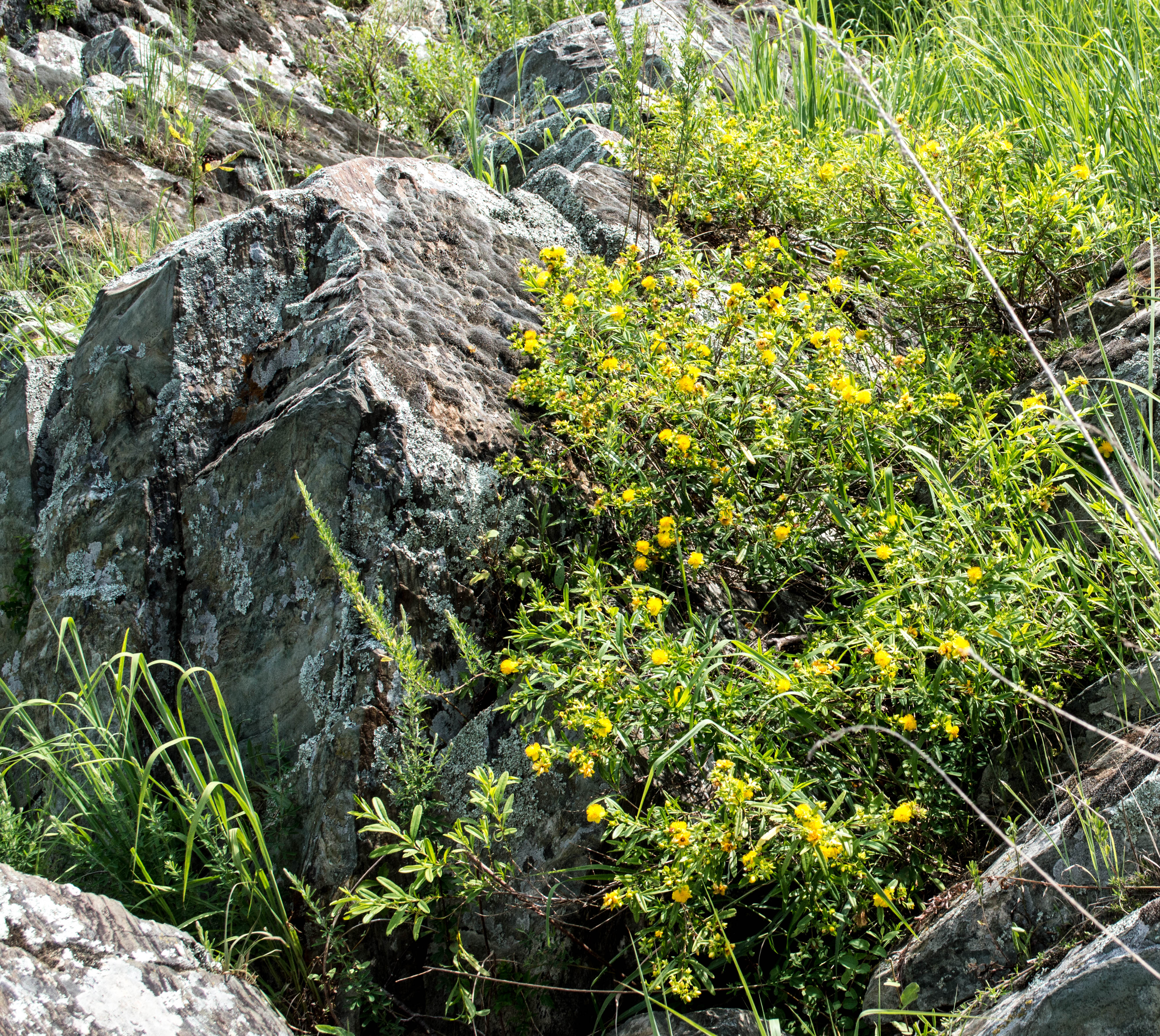
Flower of the Day: Shrubby St. Johnswort

Hypericum prolificum; Clusiaceae (garcinia family)

 20140708-DSC_0165 There are over 50 native species of Hypericum in the continental US and Canada.  This one is a small shrub (to about three feet) that likes chalky soils but readily adapts to different moisture levels.  Nice stands of it can be found on the bluffs jutting into the Potomac River downstream of Great Falls, but it’s threatened in New York and endangered in New Jersey. Older texts may refer to this plant as H. spathulatum. Tomorrow, another native Hypericum. 20140708-DSC_0176