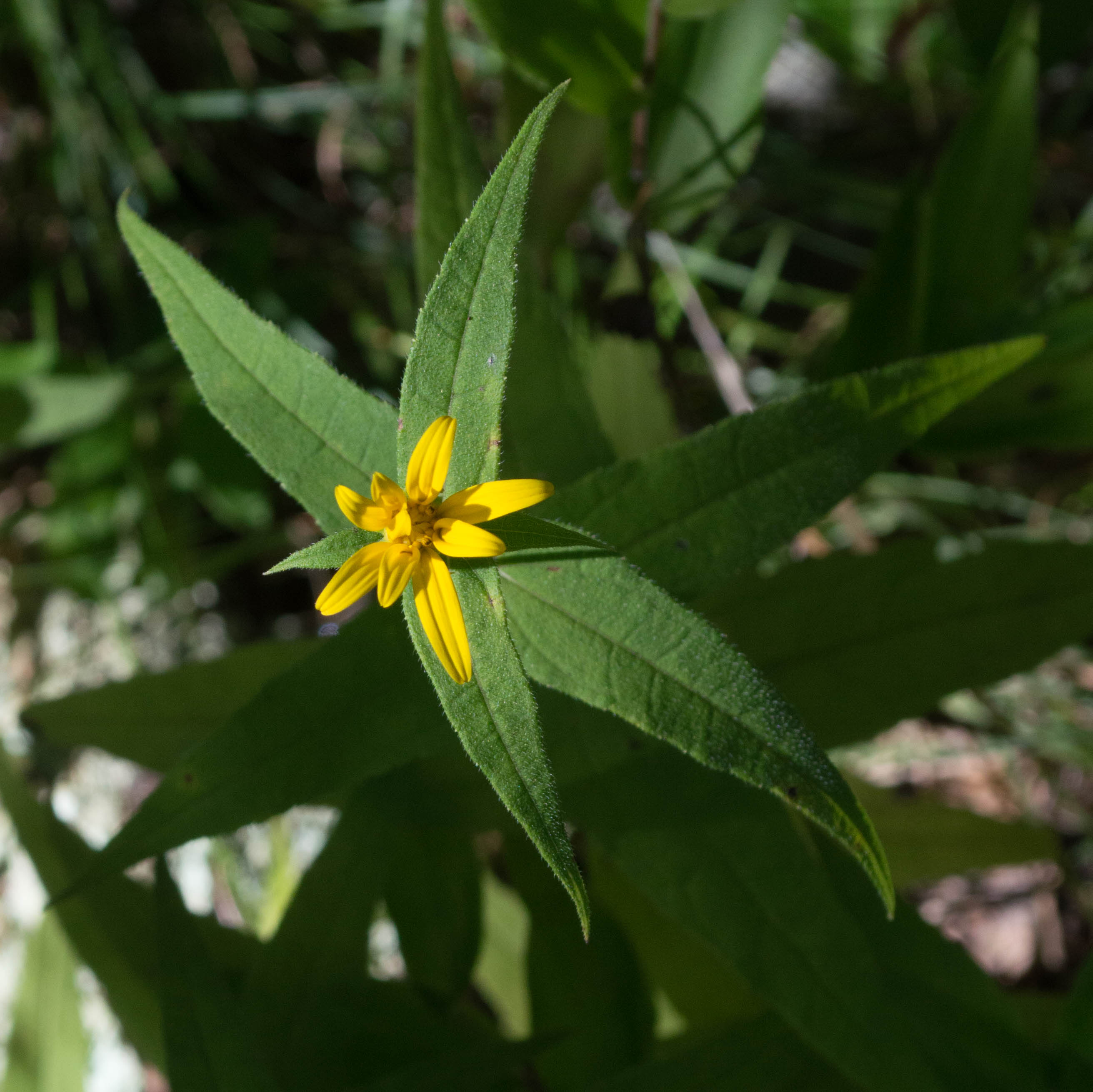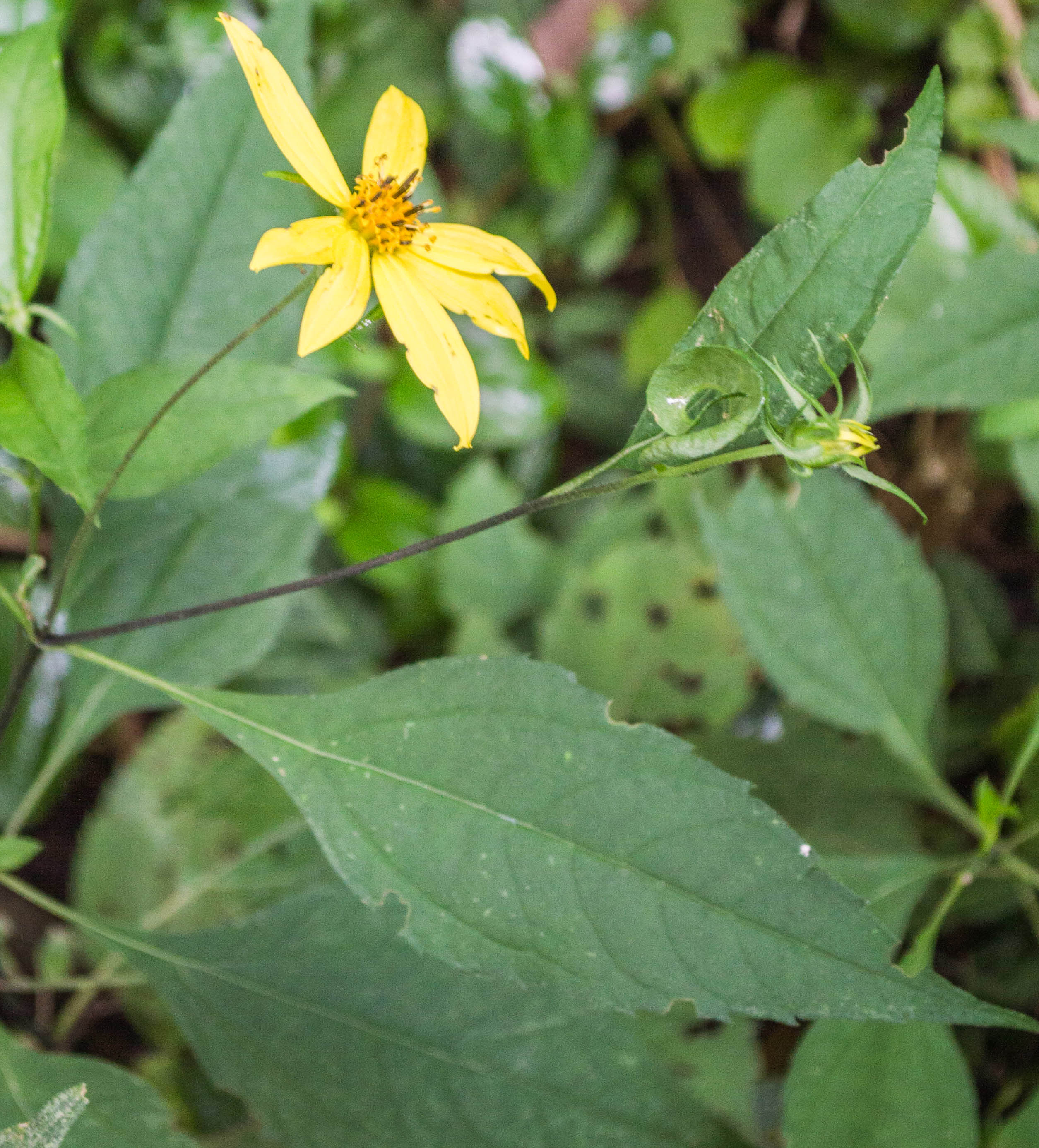
Flower of the Day: Tall Coneflower

aka cut-leaf coneflower; Rudbeckia laciniata; Asteraceae (aster family)

20140811-DSC_0237-2

In August the Potomac downstream of Carderock is lined with tall flowering plants by the thousands.  Halberd-leaved rose mallow (fotd 8/7) is still going strong, though starting to wane, while thin-leaf sunflower (fotd 8/19), tall coneflower, and large-flowered leafcup (come back tomorrow to read about that one) are dominating the view.  And I do mean dominating, as these plants can grow to eight feet in height, and tend to form large colonies through rooting.

Flowers in the aster family (formerly known as the composite family, Compositae) are fascinating.   What appear to be petals are actually individual flowers, known as rays; the central portion of the head is comprised of individual disc flowers.  In some composite family flowers, like the Eupatorium species I wrote about last week, only disc flowers are present.  In others, like rattlesnake weed (fotd 5/31) and hairy hawkweed (come back the day after tomorrow), there are only ray flowers.

The coneflowers (Rudbeckia and Echinacea species) are easily distinguished from the sunflowers (Helianthus species, and many others) by the reflexed ray flowers and the more-or-less spherical shape of the disc.

There are 22 species of Rudbeckia in the US, four of which are found in this area, including Maryland’s state flower, the black-eyed Susan (R. hirta).  Tall coneflower is threatened in Rhode Island.


Flower of the Day: Winged Monkeyflower

Mimulus alatus; Phyrmaceae (lopseed family)

DSC_0046

(The genus Mimulus is also placed in the figwort family by some authorities.)

Winged monkeyflower is found in the eastern US, and is listed as a plant of special concern in Connecticut, threatened in Iowa, endangered in Massachusetts, probably extirated in Michigan, and rare in New York.

It might not be rare in Maryland, but I consider myself lucky to have found it. I knew exactly where to look, and when, and there it was.  But I was hiking with Steve, who doesn’t like to stand around for half an hour while I photograph the same plant over and over, so I took a few very quick pictures and decided to come back a few days later for a more leisurely photo shoot.

When I say exactly, I mean exactly – I know exactly which fallen log over which seasonal stream these plants stand by.  And when I went back a few days later – nothing.  No flowers, anyway.  Top part of the plants missing, too.  Deer browse.

Always take the time to get a few good pictures, for you never know what the future holds.

Anyway, this is the sister plant to the Aug 1 FOTD (Allegheny monkeyflower). A few characteristics set them apart:

  • The leaves of M. alatus have long winged petioles, while the leaves of M. ringens are sessile.
  • The flowers of M. alatus have very short pedicels, while those of M. ringens are very long.
  • M. alatus flowers tend to be pink; M. ringens flowers tend to be light purple.

Of the 91 species of Mimulus listed in the USDA plants database, these are the only two found in Maryland.

DSC_0045M. alatus (winged monkeyflower)

M. ringens (Allegheny monkeyflower) 20140729-DSC_0002

Flowers of the Day: Sunflowers

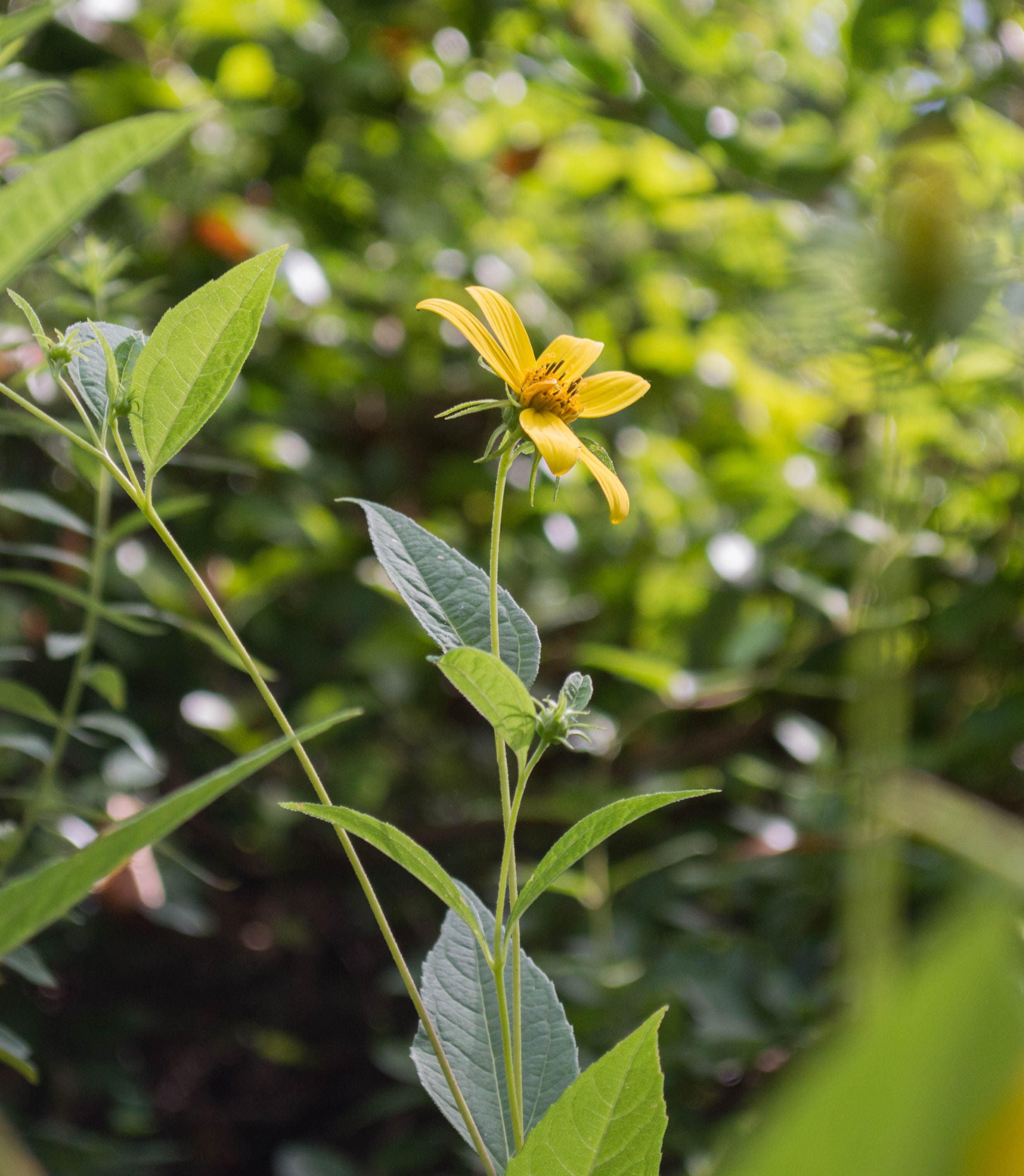
woodland sunflower, Helianthus divaricatus 

thin-leaved sunflower, Helianthus decapetalus

Asteraceae (aster family)

20140725-DSC_012120140725-DSC_0154

Both of these woodland species share a similar range across the eastern US. The woodland sunflower likes conditions a little shadier and a little drier, while thin-leaved sunflower likes a bit more sun and moisture.  Woodland sunflower will grow three to six feet tall, with flowers one and a half to three inches across.  Thin-leaved sunflower will grow to five feet tall and can have slightly larger flowers (two to three and a half inches across).

(both images above: woodland sunflower; below: thin-leaved sunflower)

The most obvious differences between the two lie in the leaves. Woodland sunflower leaves are blunt at the base, sessile (the leaf base touches the stem of the plant), and are exceptionally long-pointed at the tip.  Thin-leaved sunflower has a slightly long-tipped leaf that narrows dramatically into long, winged petioles.

20140806-DSC_0040-2

20140811-DSC_0058

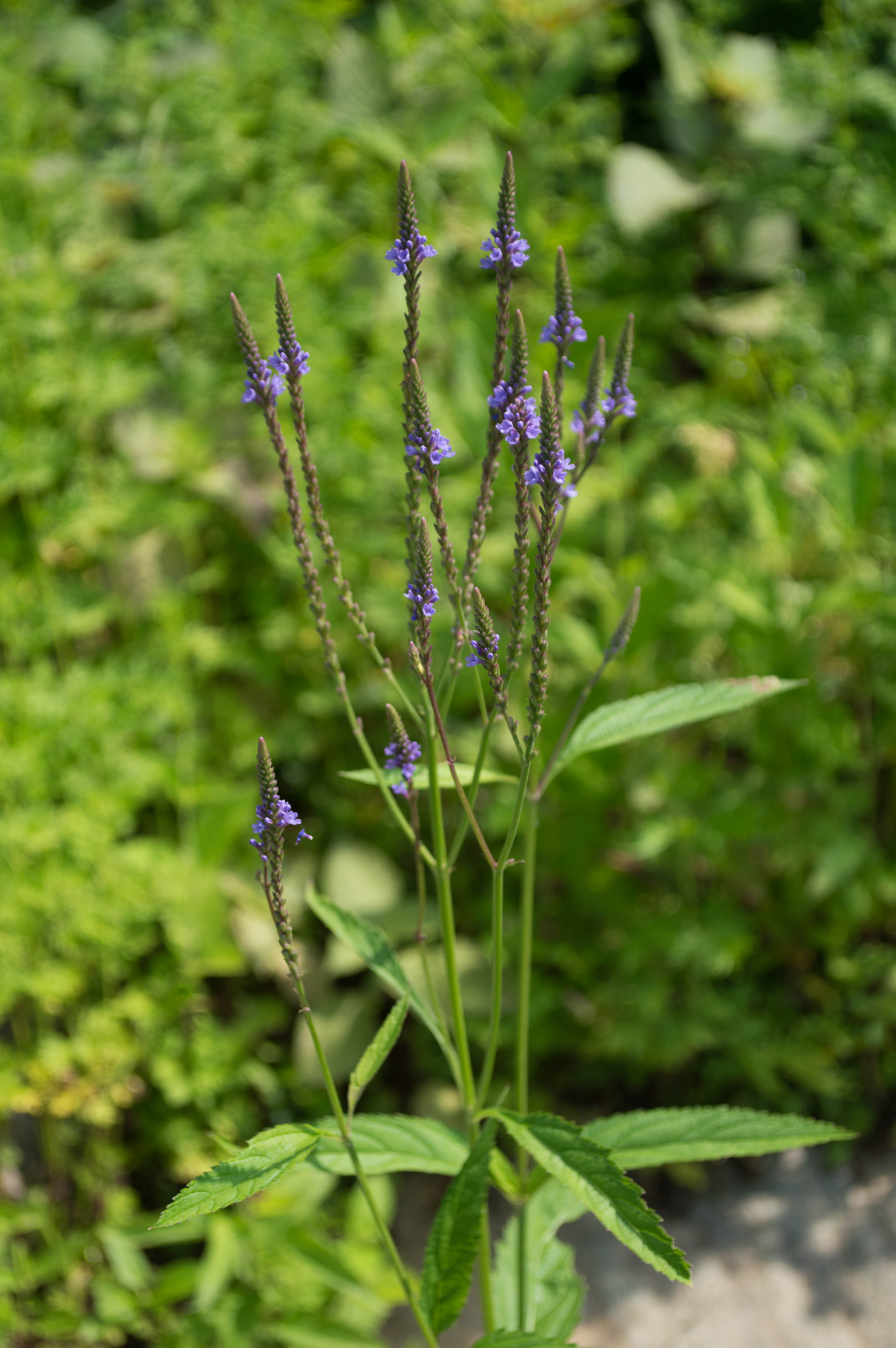
Flowers of the Day: Blue Vervain, White Vervain

Verbena hastata and Verbena urticifolia; Verbenaceae (verbena family)

20140814-DSC_0132

20140716-DSC_0073

Blue vervain, also known as swamp vervain, likes wet soils and full sun, and can be found all across the US in two varieties.  Some authorities consider it weedy in the West.  It grows up to five feet tall, with flower spikes up to half a foot long; the individual flowers are about 1/4″ across.

White vervain grows somewhat larger (up to six feet), with longer flower spikes (up to two feet), but much smaller flowers (1/8″ across).  It prefers slightly drier soils and more shade, though I have seen it growing mere feet away from blue vervain.  There are two varieties of white vervain, too, but neither is found in the West.  Some authorities consider it potentially weedy or invasive.  It is listed as possibly extirpated in Maine.

20140814-DSC_013020140716-DSC_0070

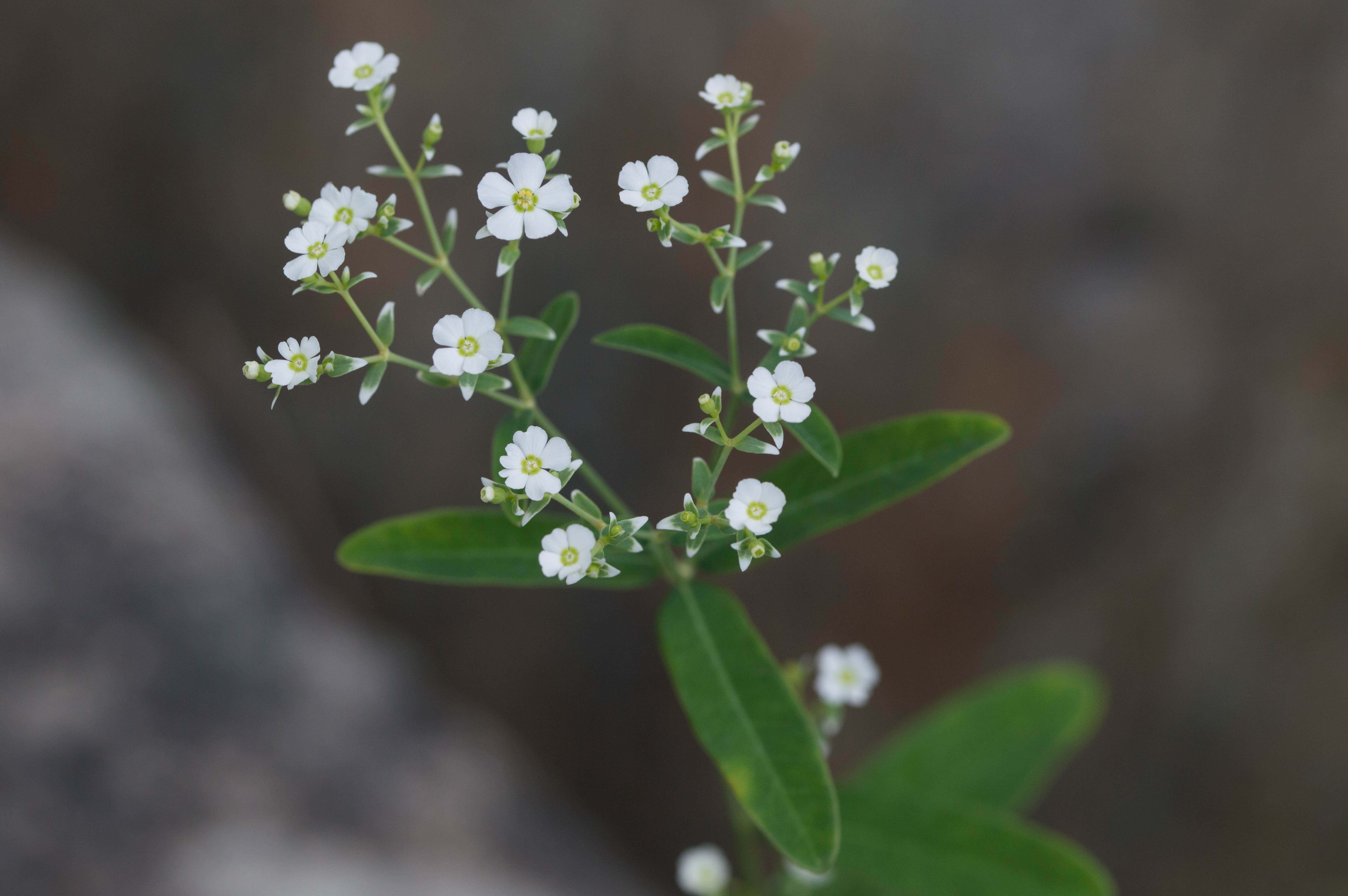
Flower of the Day: Flowering Spurge

Euphorbia corollata; Euphorbiaceae (spurge family)

20140814-DSC_0038

Coreopsis, Erigeron, Eupatorium, Helenium, Helianthus, Hieracium, Rudbeckia, Solidago, Vernonia  – this is the season of the aster family.  It was so refreshing to see something from another family growing on the rocky bluffs above the river.

20140814-DSC_0118

This three-foot tall perennial herb will grow in a variety of soil conditions, and can be found in its native range from the Atlantic west to the Great Plains, from Ontario south to Florida.  The five white petals you see are actually bracts (modified leaves, often brightly colored); the flowers are tiny little things in the center.  Two other well-known plants whose bracts are mistaken for petals: flowering dogwood, and this Euphorbia’s very popular cousin poinsettia (E. pulcherrima).

Here’s what it looks like about a week before blooming:

20140729-DSC_0109

 I love how the very tips of the upper leaves turn white.