What’s Green Now? Spotted Wintergreen

20150131-_DSC0146

Chimaphila maculata; Pyrolaceae

This evergreen subshrub is known by a variety of names, including pipsissewa (also used to refer to any flower in the genus Chimaphila); prince’s plume, prince’s pine, and either of the preceding with the prefix spotted or striped; dragon’s tongue, rheumatism root, and who knows how many others.  The name “Chimaphila” means winter-loving; the plants certainly appear happy enough peeking through that bit of snow.

Don’t confuse it with the similar Gaultheria species, which also go by the moniker “wintergreen”.  Older authorities place both genera in the family Ericaceae, but more recently Chimaphila has been placed in the Pyrolaceae.

Watch for the blossoms starting in mid-June.

20140624-DSC_0033

What’s Green Now? Eastern Redcedar

20150131-_DSC0041

Juniperus virginiana; Cupressaceae

This is a tree that doesn’t get much respect – as a matter of fact, many people dislike it because its role in cedar-apple rust threatens apple trees.

In landscape gardens, I find eastern redcedar unremarkable, though preferable to the ubiquitous arborvitae.  In other situations, though, they are gorgeous.  I see them lining the road or long driveways or fencelines on old properties, very old and presumably left to grow wild, instead of being pruned and managed. Take a drive along River Road (MD 190) from Seneca through Potomac and watch for them, especially for the craggy, shaggy bark on the lower trunks.

Eastern redcedar is highly adaptable, growing in poor soils and rich, on rocky outcrops (as shown above) and abandoned farmlands.  The US Forest Service has a great article about it here.

Winter Interest: American Beech

20150131-_DSC0128

Fagus grandifolia; Fagaceae

The winter woods of the Potomac Gorge offer few interesting sights to the casual observer.  Besides the occasional bits of green that I’ve been posting about, there’s American beech, which holds on to its leaves well past autumn.  They go from yellow to brown and then continue to get paler as spring approaches. They don’t drop until shortly before the new leaves emerge.

20150131-_DSC0064

late January


20140421-DSC_0280


late April 


Generally beeches prefer drier upland soils – you’ll find some good-sized stands around Carderock, but not in the lower elevations nearby.  There are also stands on bluffs above Cabin John Creek; look for the fantastic buttressing of the roots where trees are perched on steep slopes.  These areas get enough water to support colonies of beechdrops, a parasitic plant.

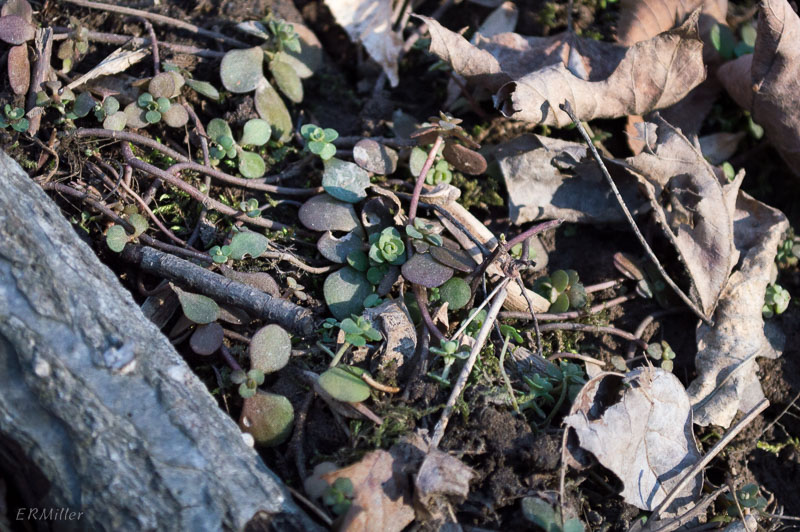
What’s Green Now? Wild Stonecrop

20150131-_DSC0145

Sedum ternatum; Crassulaceae

This very low-growing plant is actually a succulent (meaning it has fleshy leaves), a trait that’s found in plants (like cacti) growing in arid conditions. Succulent plants are not too common in the humid environment of the mid-Atlantic states.  And because the plant engages in Crassula Acid Metabolism (CAM), it’s quite drought resistant.

I’ve found two patches of wild stonecrop in the Great Falls – Carderock area; one of those patches is at the base of a tree, in deep shade, on a rocky slope that’s cleft by a seasonal streamlet.  I guess that while there’s water nearby, the area the stonecrop is growing in probably has very shallow and somewhat dry soil.  Talk about micro-habitats!

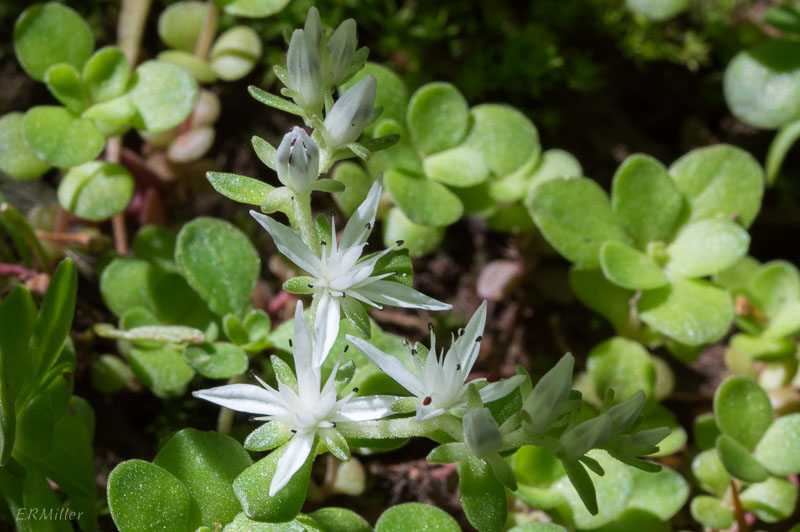
Wild stonecrop should start blooming around here in early May; here’s what it will look like:20140505-DSC_0060:


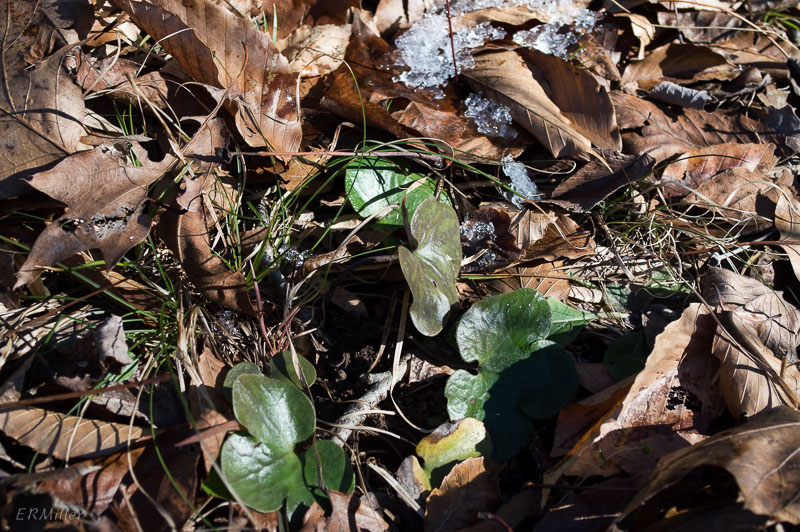
What’s Green Now? Round-Lobed Hepatica

20150131-_DSC0101

Hepatica nobilis var. obtusa; Ranunculaceae

I wouldn’t have seen this plant if I didn’t know exactly where to look, for it was mostly covered by fallen oak and beech leaves.  Hepatica is a true evergreen forb: the leaves (in a basal rosette) re-grow after the plant flowers and last all year, until the next time the plant flowers.

In early April start watching for the blossoms, on naked stems standing a few inches tall:

DSC_0210

I’m forever grateful to the kind Swedish couple who told me where to look for hepatica.