Fern of the Day: Ebony Spleenwort

Asplenium platyneuron

20150429-20150429-_DSC0035


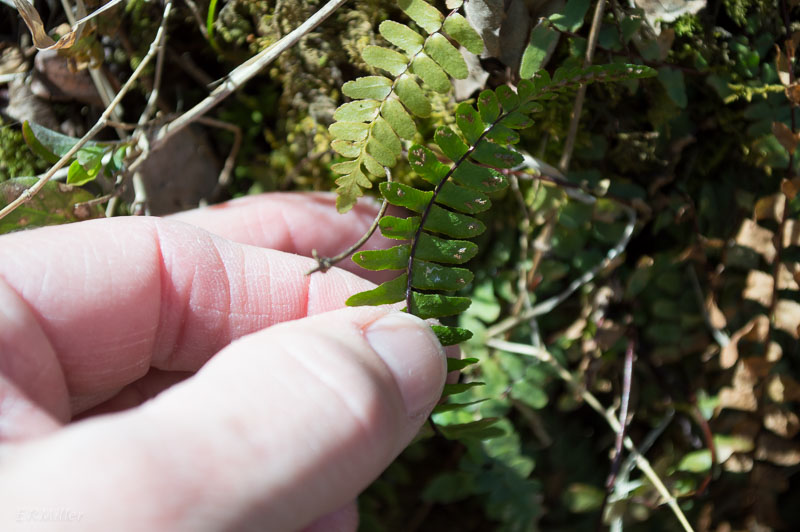
right: a not typical looking ebony spleenwort
(note the circinate vernation)


below: a fairly typical looking ebony spleenwort
20150406-20150406-_DSC0078

The spleenworts are known to hybridize freely, making field identification difficult.  In this case, the stipe and lower part of the rachis were black, suggesting ebony spleenwort

20150429-20150429-_DSC0033

but it’s impossible to know for sure.

At any rate I wanted to post this because the plant looks neat and I love the pictures.  Also to get the earworm “ebony spleenwort” out of my head.  Note that I got the phrase “circinate vernation” out, too.


Flower of the Day: Golden Alexanders

20150429-20150429-_DSC0020

Zizia aurea; Apiaceae

This perennial member of the carrot family stands about two feet tall and grows in a variety of habitats, from moist to drier open woodlands and in rocky areas, and provides nectar for a large variety of insects that don’t have many other sources in the springtime.  It ranges from Quebec to Florida and west into the Great Plains.

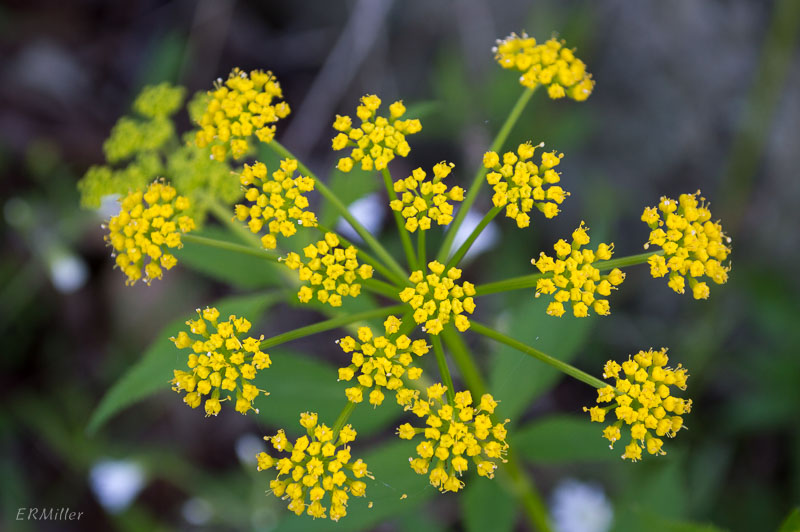
The complex inflorescence is an umbel of about a dozen umbellets:

20150429-20150429-_DSC0024

Each umbellet consists of about twenty flowers, each with five inward-curving petals.

In case you’re wondering, yes, these botanical terms share a root with the word “umbrella”.  It’s from the Latin umbra, meaning shadow.  Umbel-shaped flower heads are typical in the Apiaceae.

The genus is named for botantis J. B. Ziz.  What I can’t figure out is why this (and several other) species has the common name Alexanders.  If anyone knows, please leave a comment.

Variations on a Theme: Rockcresses

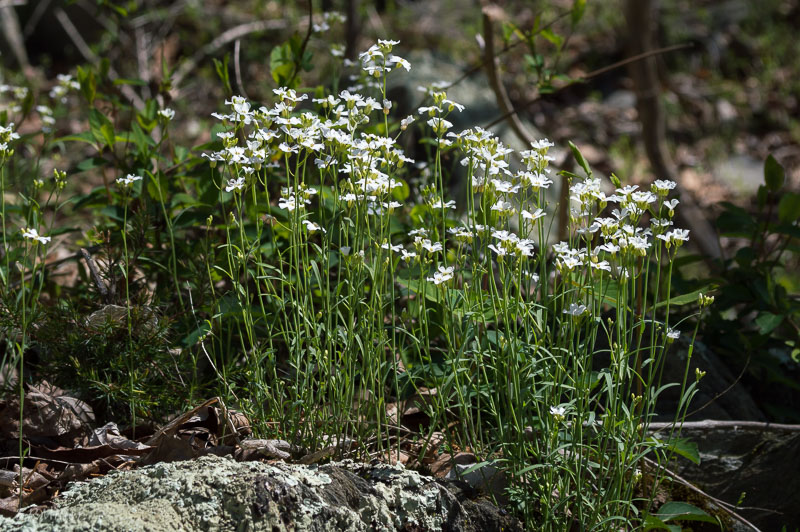
The taxonomists are at it again.  Most of the guide books still classify the rock cresses in the genus Arabis, but recently most New World species have been moved to either Boechera or Arabidopsis.

20150416-20150416-_DSC0266


lyre-leaved rockcress, aka sandcress (Arabidopsis lyrata, formerly Arabis lyrata)


Lyre-leaved rockcress is a mostly northern species, found across Canada and the northeastern US, with small, isolated populations found further to the south. It’s endangered in Massachusetts, and threatened in Ohio and Vermont

Needing very little soil, it doesn’t tolerate competition from other plants, but will grow happily by itself right out of rocks.

20150416-20150416-_DSC0268


20150416-20150416-_DSC0185


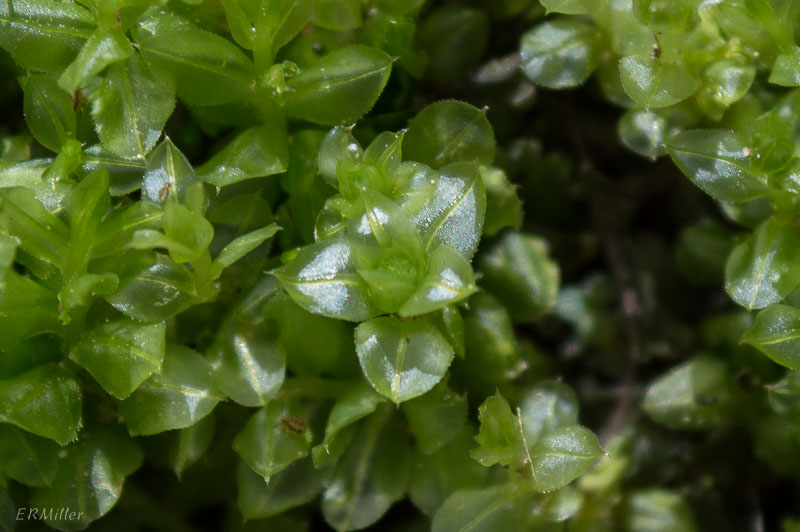
smooth rockcress (Boechera laevigata, formerly Arabis laevigata)


Smooth rockcress seems to enjoy a little more soil than lyre-leaved; it can be found in rocky woods and ledges, but seldom growing right out of the rock.  It ranges from Quebec south to Georgia, and west into some of the Great Plains states, and is threatened in Maine and Massachusetts.

20150416-20150416-_DSC0183

The rockcresses are in the Brassicaceae (mustard family).

Variations on a Theme: Phloxes

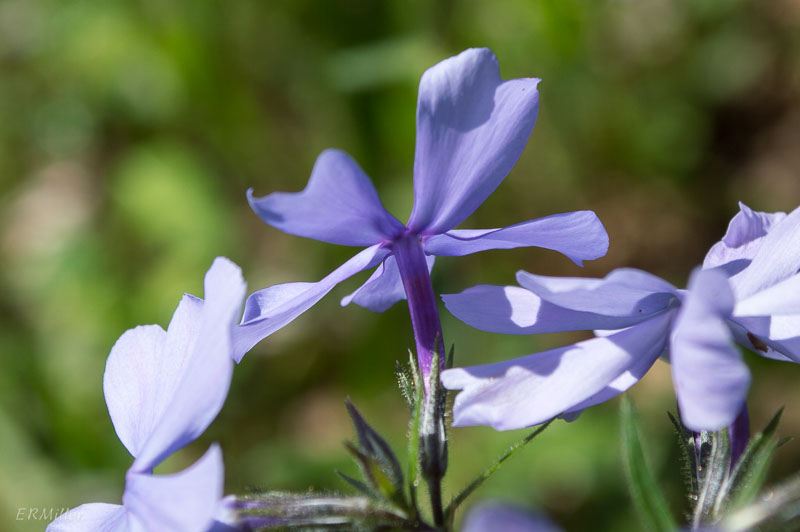
20150417-20150417-_DSC0014


wild blue phlox (Phlox divaricata)


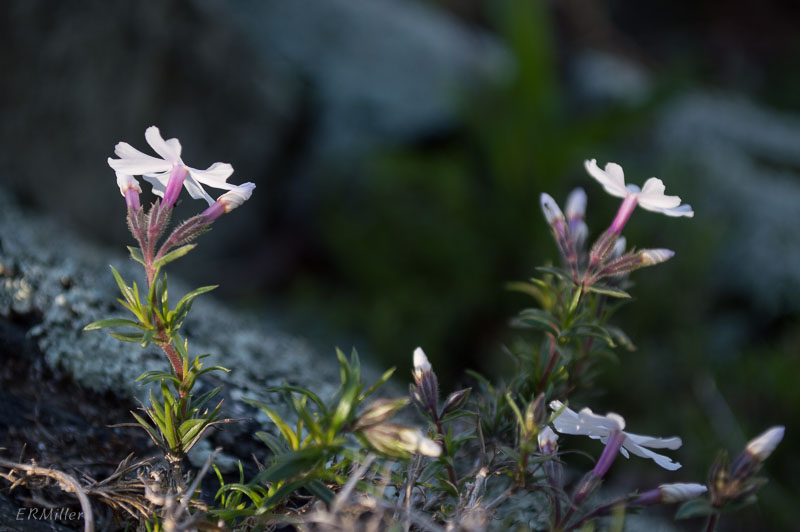
20150416-20150416-_DSC0073


moss phlox (Phlox subulata)


There are 71 native species of phlox across the US and Canada.  Ten of them can be found in Maryland.  These two are the ones I see most frequently in the Potomac Gorge, though I’m always on the lookout for others.

20150417-20150417-_DSC0012


Wild blue phlox stands one to two feet tall, and likes the moist soils near the river.  It’s often found growing near Virginia bluebells, though it seems to grow in the more uphill, drier areas as well.

20150416-20150416-_DSC0074


Moss phlox stands only a few inches tall, and can mostly be found growing out of crevices and cascading over rocks.


20150417-20150417-_DSC0015


As you can see, the flowers are almost identical in shape, but different colors.  Moss phlox is more often pink, according to the books, but almost all the specimens I’ve found in the gorge are white.


20150416-20150416-_DSC0088