
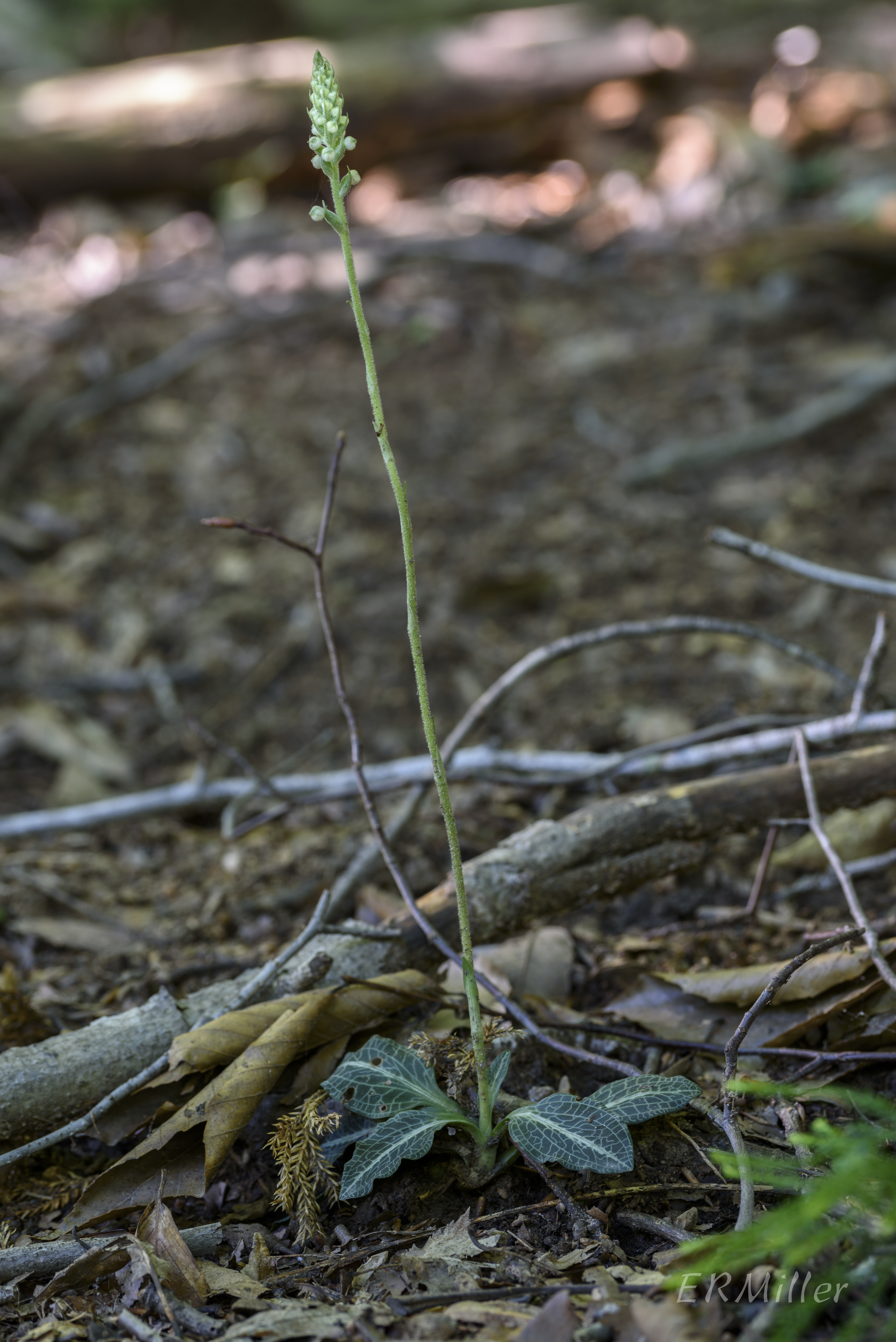
I found this a few days ago, about a 20 minute walk from my house. Went back this morning; still not blooming, so I’m waiting. Will go back every other day until I see the flowers. Will post about it then.
Do you know it? Hint: it’s an orchid.
I found this a few days ago, about a 20 minute walk from my house. Went back this morning; still not blooming, so I’m waiting. Will go back every other day until I see the flowers. Will post about it then.
Do you know it? Hint: it’s an orchid.

I spotted this charmer in a little forest park outside of Ísafjorður, in the Westfjords. I was wearing contact lenses at the time so couldn’t make out any details (I usually wear glasses when I’m shooting, since I see much better close up with them). All I saw was spotted leaves and a spike with pinkish flowers. The general form made me think monocot (correct), and the spots reminded me of trout lily, so I was thinking maybe it was in the Liliaceae (wrong).
As soon as I got the pics on the computer and zoomed in I saw my mistake. This is an orchid, Dactylorhiza maculata. The English common name is heath spotted orchid. In Icelandic it’s brönugrös.

It’s one thing to have read that orchids are found the world ’round (except Antarctica), in most habitats, but quite another to trip upon one in Iceland when you aren’t expecting it. I was so happy!
In Iceland, heath spotted orchid is rather common within its range, but its range isn’t too extensive. It’s found in some coastal areas but not the central highlands. It’s a subarctic plant that ranges through northern Europe, further south in Europe in the mountains, and even parts of North Africa.
This species does not grow in North America, but three other Dactylorhiza species do, including one that’s endangered in Maryland.

Here are two gorgeous members of the Rosaceae found in Iceland.

Dryas octopetala
mountain avens
Icelandic: holtasóley
Iceland’s national flower is the blossom of this low-growing evergreen shrub, which is found in arctic and sub-arctic regions around the world, and further south at higher elevations. It can be found almost everywhere in Iceland. In the US it can be found growing above tree line in the Cascades and Rocky Mountains (and in Alaska of course). An article by the USDA Forest Service mentions this species’ importance to paleoecologists (there are a lot of Dryas fossils lying about), and also how this plant has an interesting twist on heliotropism (plant movement in response to sunlight):
Most plants that have similar abilities do so to reduce the amount of solar radiation striking their flowers or leaves. In Dryas, the flowers do the opposite, moving to maximize the amount of sunlight reflecting off the petals and onto the mass of pistils at the center of the flower.

Geum rivale
water avens
Icelandic: fjalldalafífill
Water avens is another circumpolar species, though it ranges much farther south than mountain avens. In North America it’s found in Greenland, Canada, and in the US, in New England, the upper Midwest, and as far south as New Mexico along the Rocky Mountains. BONAP shows it growing along a spine of the Appalachians in West Virginia. USDA Plants shows it present in Maryland but without county data, and it’s listed in Maryland Biodiversity Project but has no records. I’d guess there’s a small chance it could be found in the western parts of the state, since it’s been recorded on either side of Garret County in Pennsylvania and West Virginia. In Iceland it’s found in the coastal areas and somewhat inland, but not in the south.

mountain avens growing with Alchemilla glomerulans, Ranunculus species, and Equisetum species near Akureyri

closeup:
It’s hard to describe how eye-catching these flowers are, with the red-purple sepals and salmon-pink petals and all those stamens poking out. I hope these pictures do it justice.
There are over 250 species of Geum worldwide, about 20 in the US, and about six in the state of Maryland, one of which, Geum canadense, is blooming now.
Worldwide there are almost 1,700 species of Potentilla. More than 80 can be found in North America, four of which are in the Maryland Piedmont, including dwarf cinquefoil and common cinquefoil. There are five in Iceland.

Potentilla crantzii
alpine cinquefoil
Icelandic: gullmura
those fleshy leaves–>
belong to another plant;
the potentilla leaves are
pictured below:


Potentilla anserina
formerly Argentina anserina
silverweed
Icelandic: tágamura

Providing stats for Potentillas is tricky, as there have been a lot of name changes recently. One of the older names for P. crantzii is Fragaria crantzii. The two genera are very closely related, so I’ve included this plant as well:

Fragaria vesca
strawberry
Icelandic: jarðarber
Yep, that’s good old strawberry (one of them, anyway). You can see a bit of the leaves on the lower right. The grassy looking stuff the flowers are poking through is horsetail (Equisetum species).
Back to silverweed: it can be found across the temperate regions of the northern hemisphere, and in most of North America except for the South and lower Midwest. It’s widespread in Iceland.
Alpine cinquefoil is limited in North America to northeastern Canada and Greenland. In Iceland it grows near rivers and the seashore.
The Rosaceae seems to be well represented in Iceland. Exactly how well I can’t say. There are about 470 species of flowering plants there, but my attempts at finding lists by family were frustrated by my inability to read Icelandic and by the limitations of google translate. I did actually find a list of species names, but not grouped by family, and I just can’t devote the time to looking up each genus to see what family it’s in.
Anyway, I found seven species of Rosaceae blooming, which I’ll post about over the next few days.

Alchemilla alpina
alpine lady’s mantle
Icelandic: ljónslappi

Alchemilla glomerulans
clustered lady’s mantle
Icelandic: hnoðamaríustakkur
These two species have very similar if not identical flowers, but they can be distinguished by the leaves: clustered lady’s mantle is lobed, and the lobes are toothed all along the margins, while alpine lady’s mantle is compound, with 5 to 7 distinct leaflets that are toothed only near the tips.
A. alpina is native to northern Europe (including Iceland) and North America, where it’s found only in Newfoundland and Labrador, and Greenland. In Iceland it’s found almost everywhere except at the highest elevations.
A. glomerulans is also a northern European species. It has a similar range to A. alpina in North America, except that it’s also found in Quebec. In Iceland it has a smaller range, being absent from the southern coastal areas and drier parts of the highlands.
Five or six other Alchemilla species are found in Iceland, including A. mollis, introduced to both Iceland and North America as an ornamental (it’s a southern European species). According to the Maryland Biodiversity Project, there are no Alchemillas found as wildflowers in Maryland.

alpine lady’s mantle blooming near Sólheimajökull
 Elizabeth's Wildflower Blog