After a quick happy hour dinner and art walk on Friday evening, Steve and I settled in at home, each with our laptops, him working on something for his employer, and me trying to understand the genus Thalictrum and identify some plants.
Do we know how to party or what?
I wasn’t getting very far, because my pictures were taken on a windy, overcast day, and high ISO = noise = can’t see details. So I turned to Steve and asked “hey hon, would you be willing to be my assistant on a short hike tomorrow?”
Steve has little interest in botany, but he’s a good sport. Saturday morning, with rain threatening, we hiked quickly to the mystery Thalictrum meadow and took measurements, looked at leaflets with the hand lens, and got some slightly better photos.
I’ll spare you the details of keying out the species, which turned out to be Thalictrum coriaceum, or maid-of-the-mist.
Because I know other wildflower enthusiasts who’ve had difficulty with this genus, I’ve put together a handy guide to identifying the five Thalictrum species found in the Maryland piedmont.
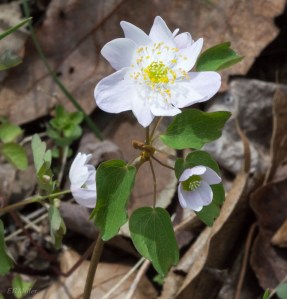
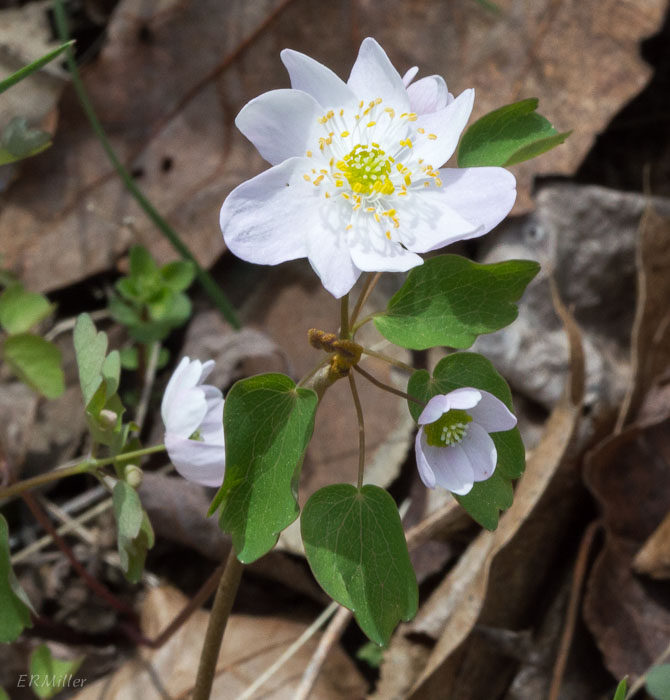
If it looks like this, it’s T. thalictroides (rue anemone). I’m not trying to be flip, but rue anemone is the only one of the five species to bear perfect (ie., bisexual) flowers, so it can’t be confused with any of the others.

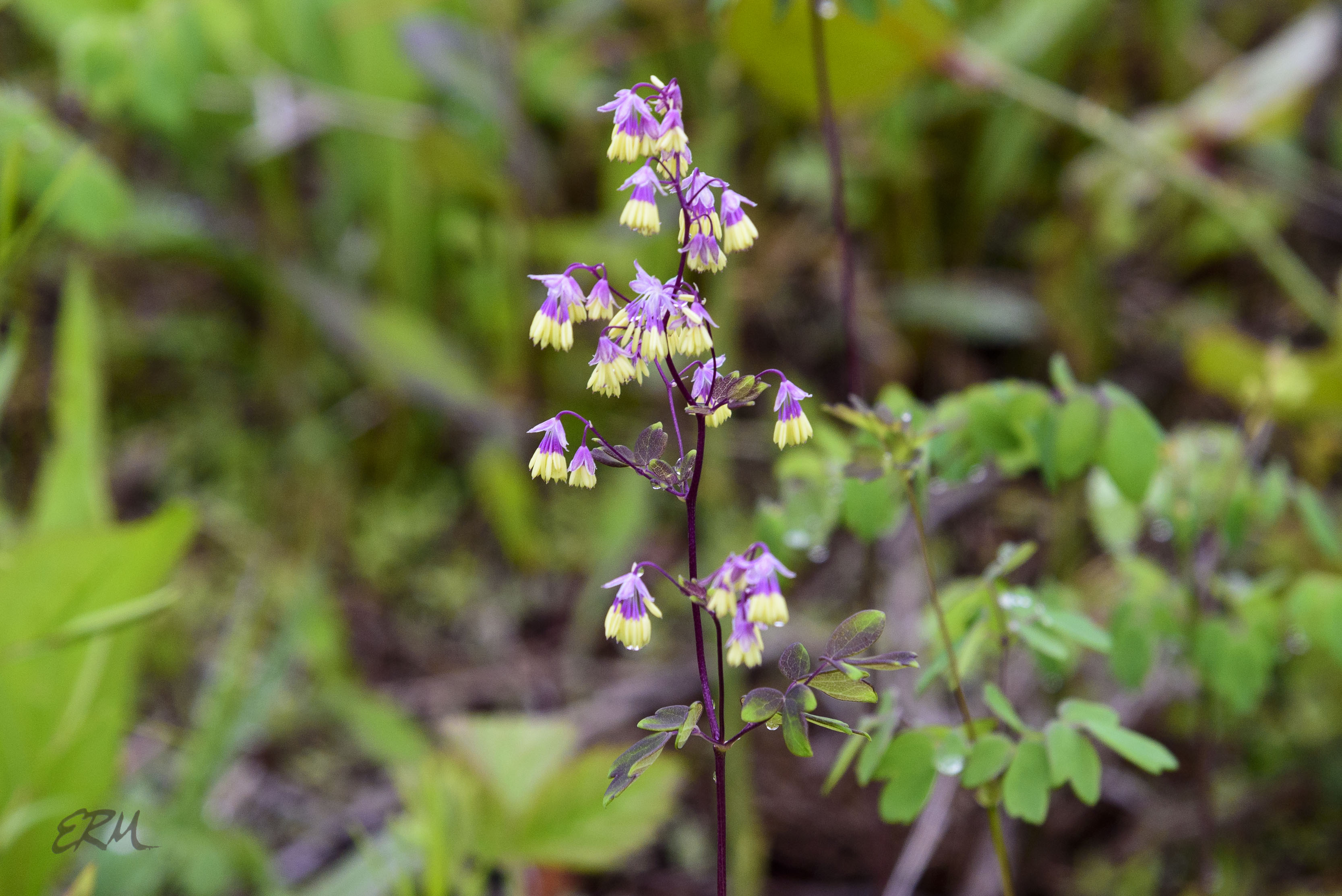
pistillate flowers of Thalictrum coriaceum
T. coriaceum and T. dioicum have nearly identical flowers. Both species are dioecious, meaning that plants bear either pistillate or staminate flowers. If you see the flowers in late March or early April, and the plants are no taller than two feet, they’re probably T. dioicum.

staminate flowers of Thalictrum coriaceum
If you see the flowers in late April or later and the plants are around three feet tall, they’re probably T. coriaceum.

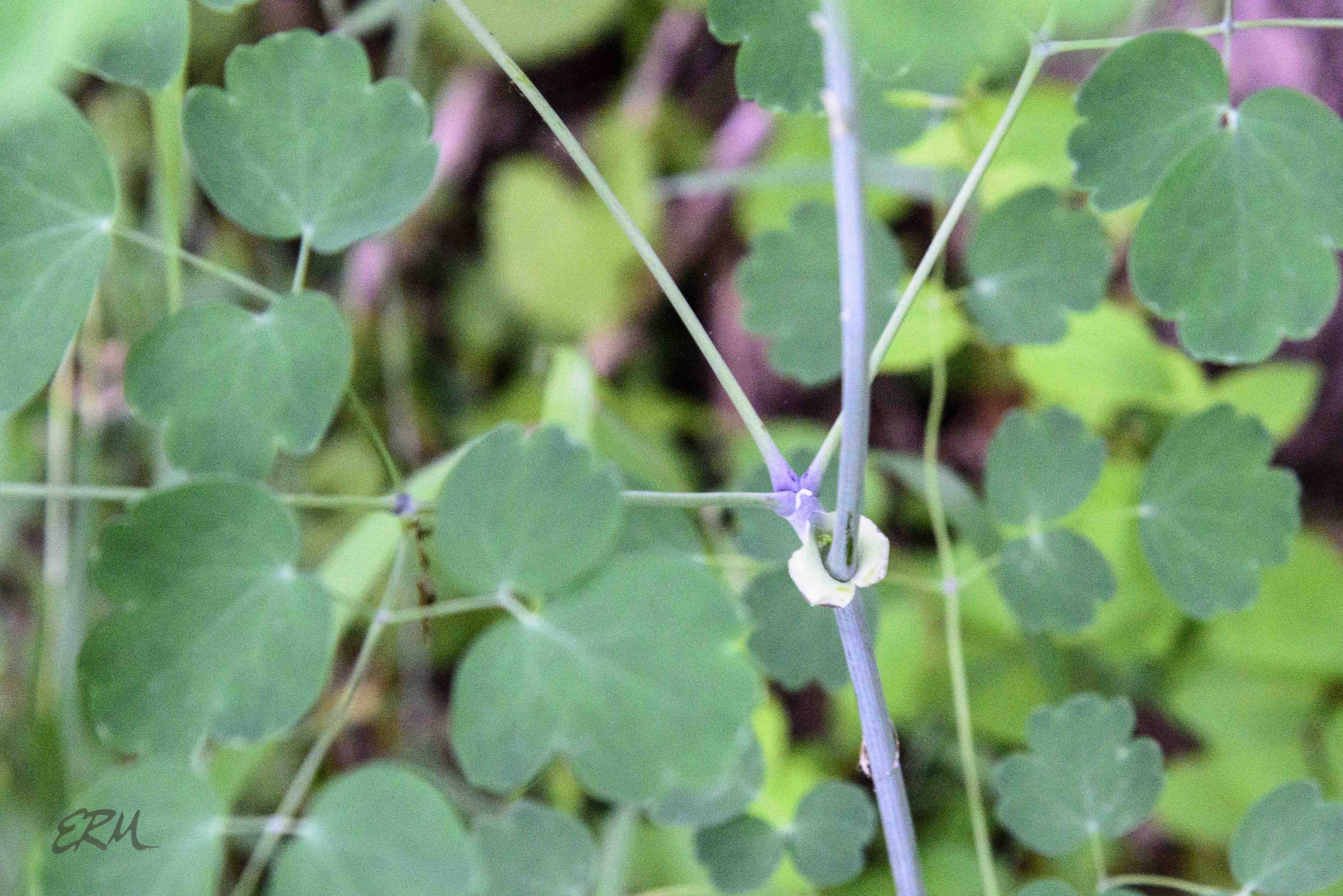
a proximal leaf of T. coriaceum clasping the stem
As a further check, examine where the leaves meet the stem. On T. coriaceum, the proximal leaves (the ones closer to the base of the stem) should be clasping, like this.

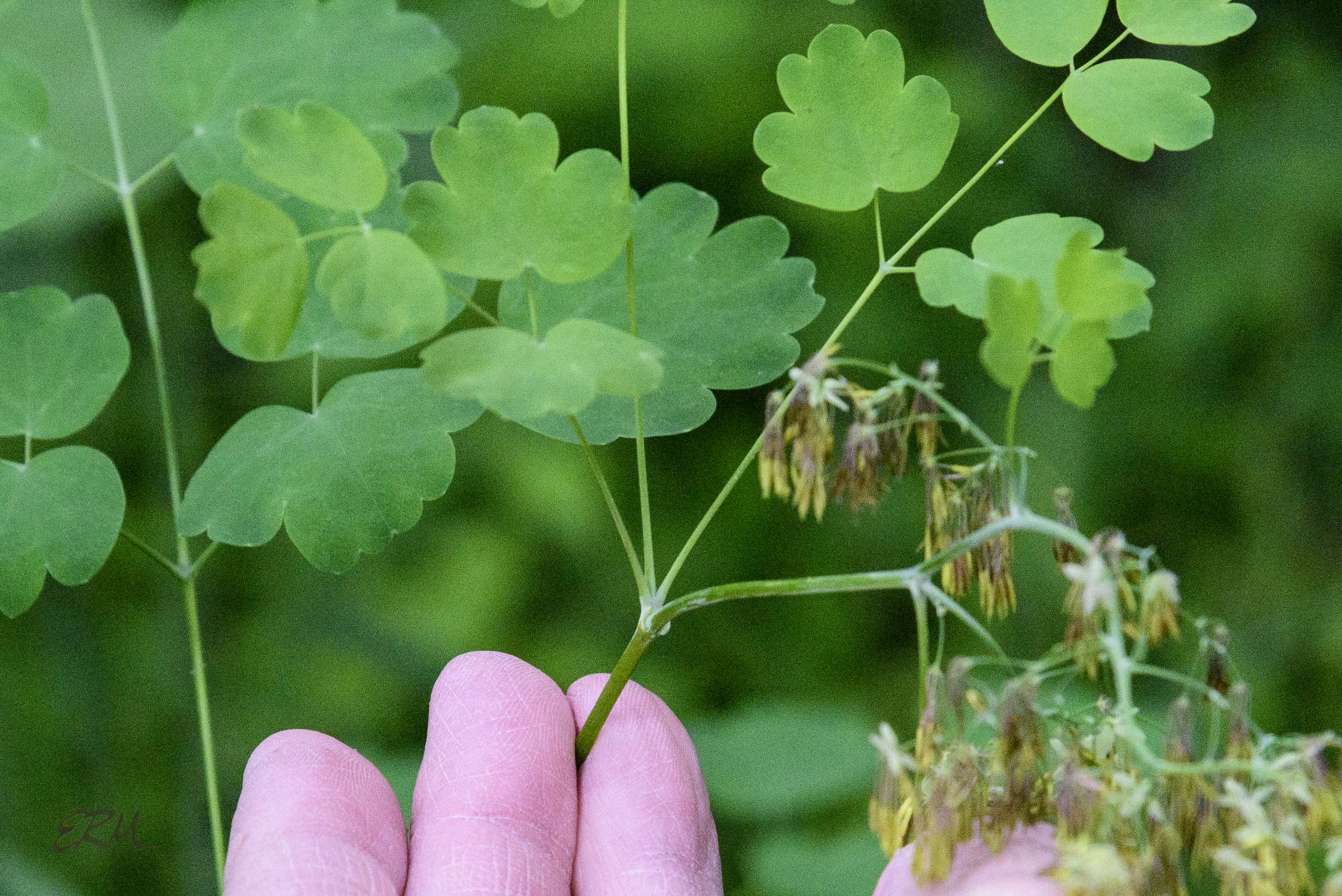
a sessile distal leaf of T. coriaceum
The distal leaves (closer to the tip of the stem) will be sessile, like this. More specifically, according to Weakley’s Flora, the leaf immediately below the lowest flowering branch will be sessile. If you’re wondering how this can be considered sessile, read on.

click on this one!
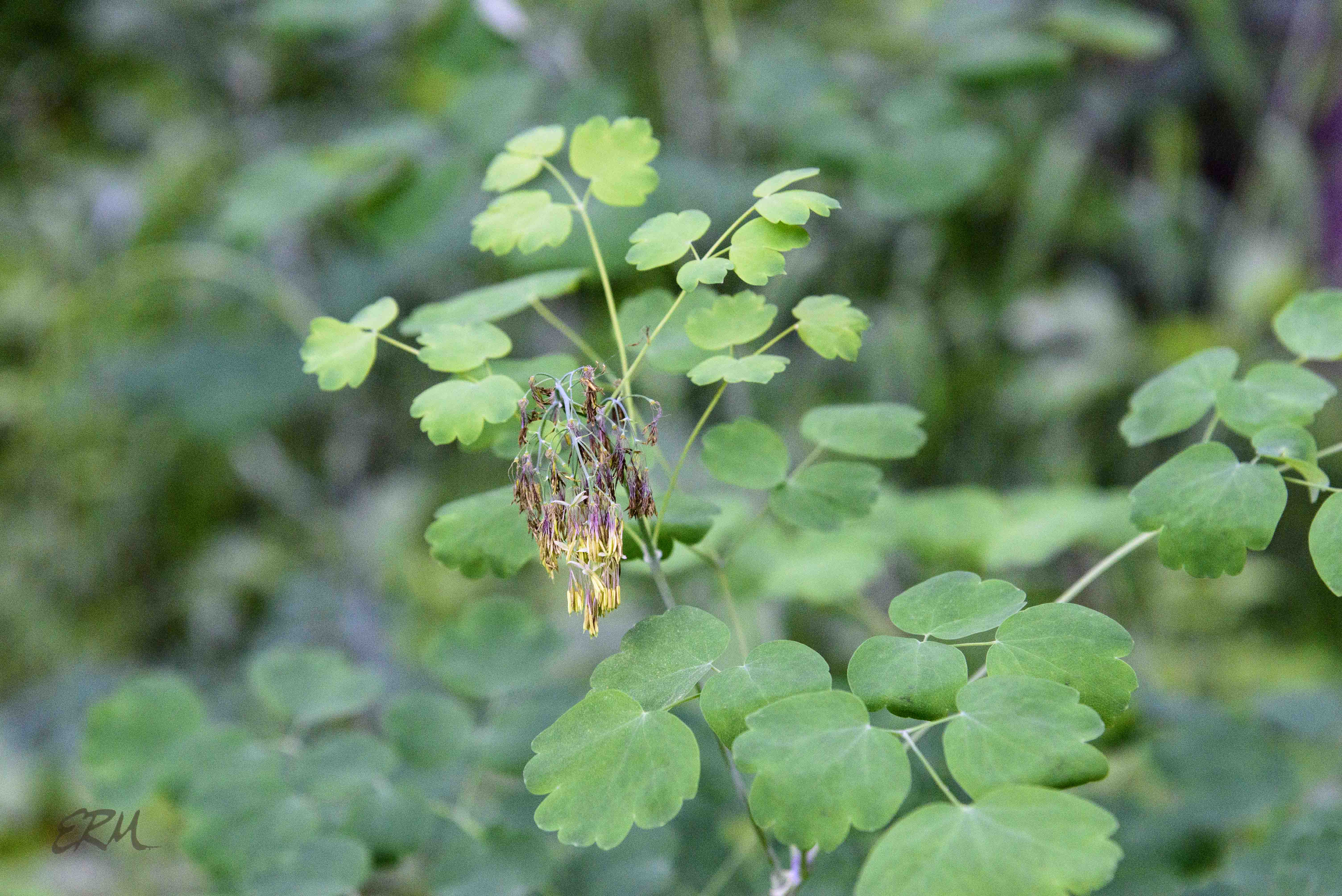
The attractive thing about these Thalictrum species, at least to me, is the intricate, airy leaves, which are described as triternate, or triply compound.

Steve stretches out a leaflet for me to photograph
Each leaf has one stem (petiole) divided into three parts (called petiolules, or sub-petioles), that end in leaflets; each leaflet is divided again into three, and each of those divisions is divided once more into sub-leaflets.
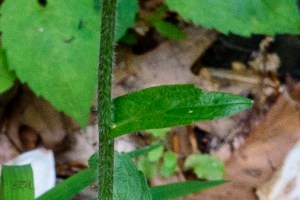
An Erigeron shows what a sessile leaf looks like
Sessile generally means that the leaf tissue is directly connected to the main plant stem, without a petiole.
With triternate leaves, the fact that all three petiolules meet at a point directly adjacent to the main stem makes the leaf sessile. Note that in the photo showing a clasping leaf, there’s a little collar of leaf-like tissue surrounding the stem at the place where the petiolules meet it. That collar is lacking from the sessile leaf in the following photo.
The last two species are T. revolutum and T. pubescens. Both usually flower even later than T. coriaceum, and both usually stand taller (up to six feet or more). Examine the undersides of the leaves. T. pubescens will usually be slightly pubescent (finely hairy), though it may be glabrous (smooth). T. revolutum will have small, round bumps or stipitate glands, which look like hairs with teardrops on them. You will probably need a hand lens to see these details. And remember to always examine multiple leaves and see what features the majority of them have.
Crush a leaflet between your fingers and smell it. T revolutum will have a skunky odor. Although the specific epithet revolutum means that the leaves turn downwards at the edges, a useful mnemonic is to remember the word revolting.
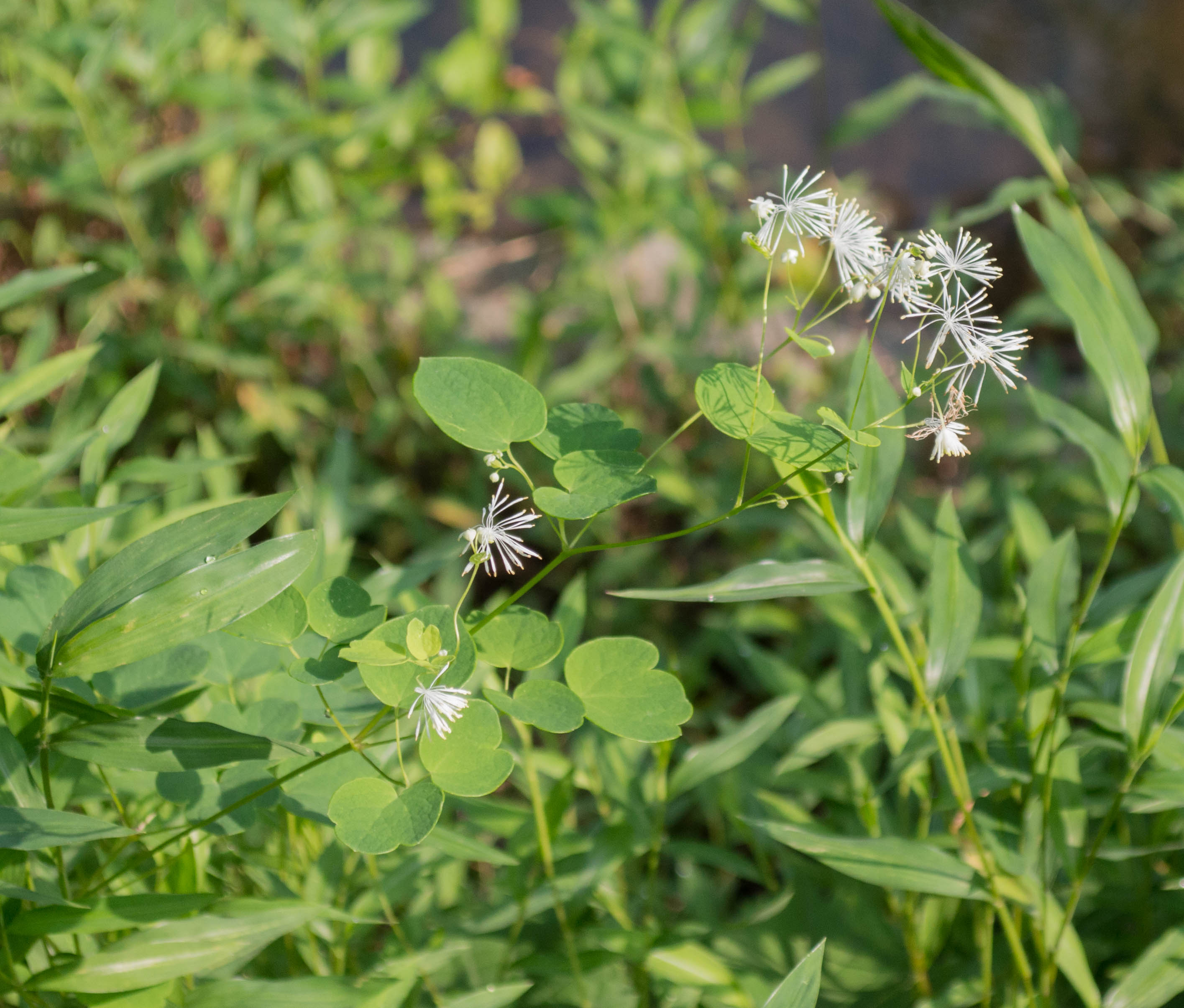
I regret that I have no pictures of this plant to show, but I’ve never seen it in the wild. From what I’ve seen on various internet sites, the flowers of this plant look much like those of T. coriaceum, except they’re white.
 T. pubescens can be dioecious or polygamo-dioecious (see this post for explanations of these terms). I believe these to be the staminate flowers, but am not sure; I took this picture last summer before delving into Thalictrums. On my to-do list for later this year is to find a stand of these and examine them more closely. And then write about it, of course.
When confronted with a large number of details I often make spreadsheets in order to make sense of it all. The information in this chart comes from Flora of the Southern and Mid-Atlantic States, Flora of North America, Illinois Wildflowers, and to a very small extent, my own observations. Any errors are mine.
| |
T. coriaceum |
T. dioicum |
T. pubescens |
T. revolutum |
|
|
|
|
|
| height |
25.5″ to 59″ |
to 30″ |
20″ to 118″ |
36″ to 84″ |
|
|
|
|
|
| stems |
glabrous |
glabrous or glandular |
coarse |
glaucous or slightly pubescent |
|
|
|
|
|
| leaves |
|
|
|
|
| proximal (toward base) |
petioles clasping |
petiolate |
petiolate; petioles often pubescent |
|
| distal (toward the tip) |
sessile or nearly so |
petiolate |
sessile |
|
| basal? |
no |
yes |
yes |
no?! |
|
|
|
|
|
| leaf at lowest flowering branch |
sessile |
petiole 3-7 cm |
|
|
|
|
|
|
|
| leaflets |
ovate, obovate, suborbicular |
ovate, obovate, suborbicular |
ovate, obovate, suborbicular |
ovate, obovate, suborbicular |
|
3 – 9 lobes |
3 – 12 lobes |
1 – 5 lobes |
1 – 5 lobes |
|
lobe margins crenate |
lobe margins often crenate |
lobe margins entire |
lobe margins entire |
|
|
|
|
|
| leaflet undersides |
glabrous or glandular |
glabrous or glandular |
finely pubescent to glabrous |
stipitate glands or papillae |
|
|
|
|
|
| flowers |
pistillate: purplish, standing |
pistillate: purplish, standing |
white to purplish |
pistillate: greenish |
|
staminate: purple with yellow anthers, drooping |
staminate: yellow, drooping |
filaments standing |
staminate: white, drooping |
|
|
|
|
|
| flowering |
May – July |
March – April |
May – July |
May – August |
A final note: Thalictrum is one of those taxonomically challenging genera; different authors recognize different characteristics and different names. This guide is probably not much use outside the Maryland piedmont, where more or different Thalictrum species may be present.

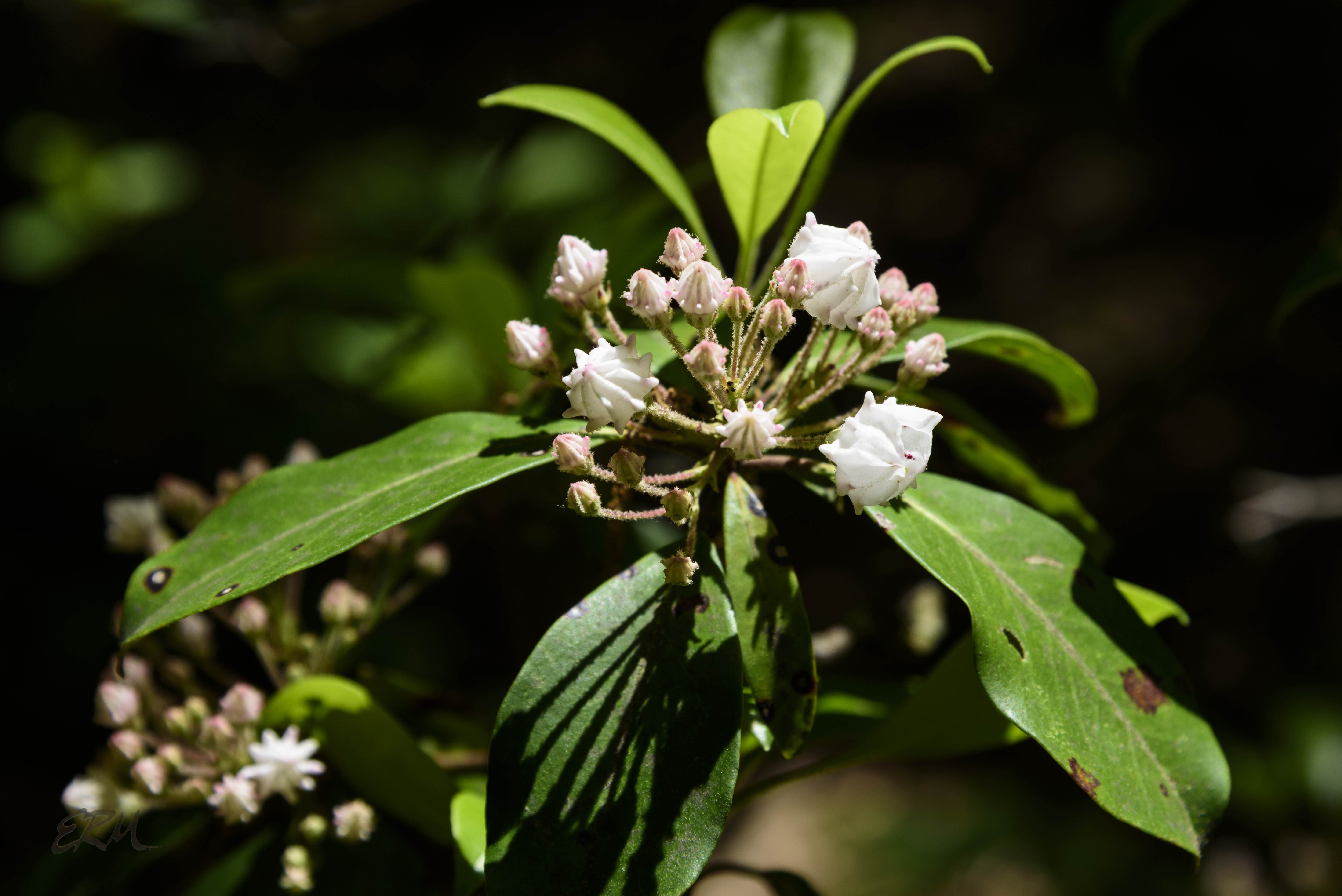 Wednesday, May 10. Headed to Sugarloaf Mountain with two goals: get good pictures of pink lady’s slipper and mountain laurel. Failed both. Too late for the former, too early for the latter.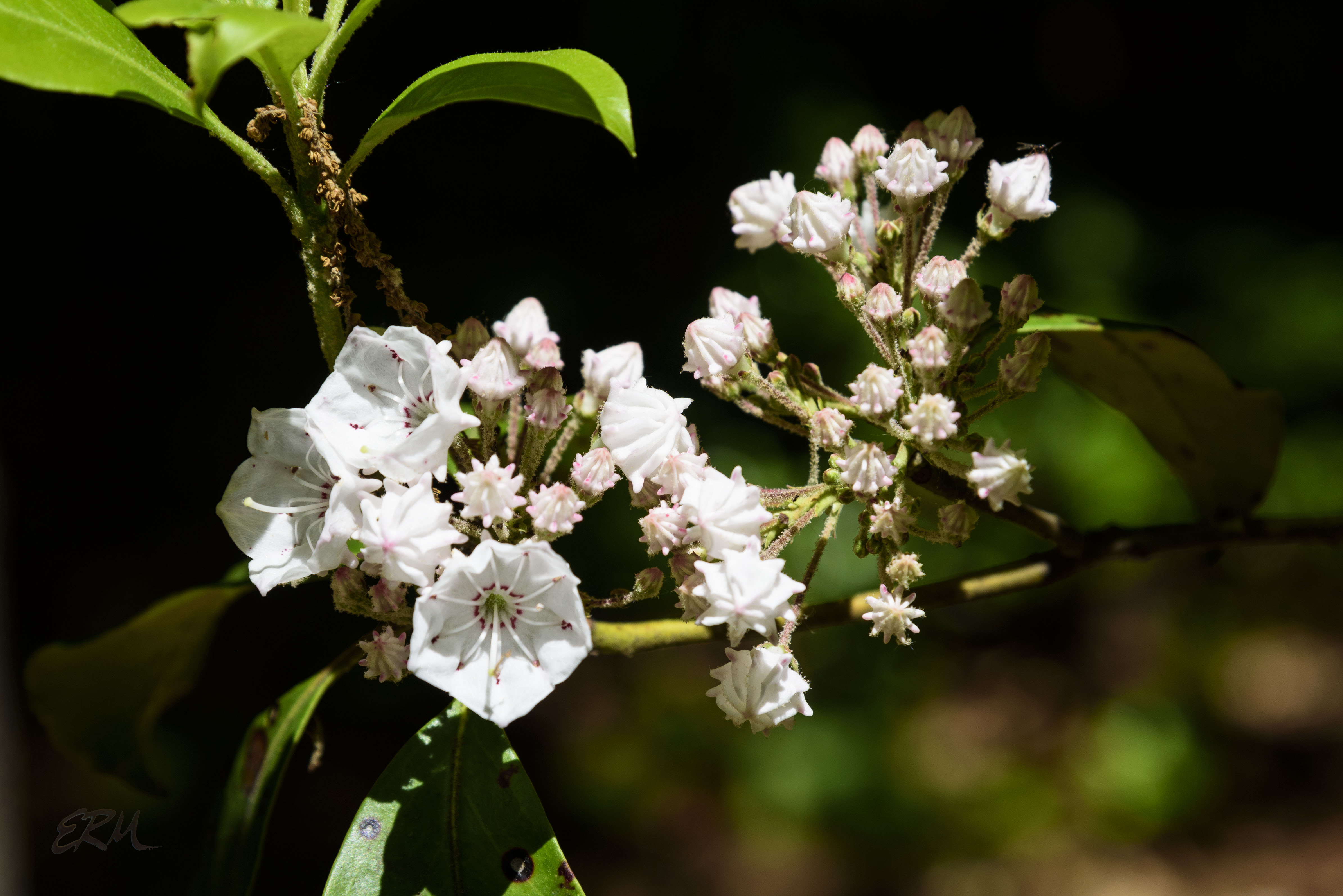
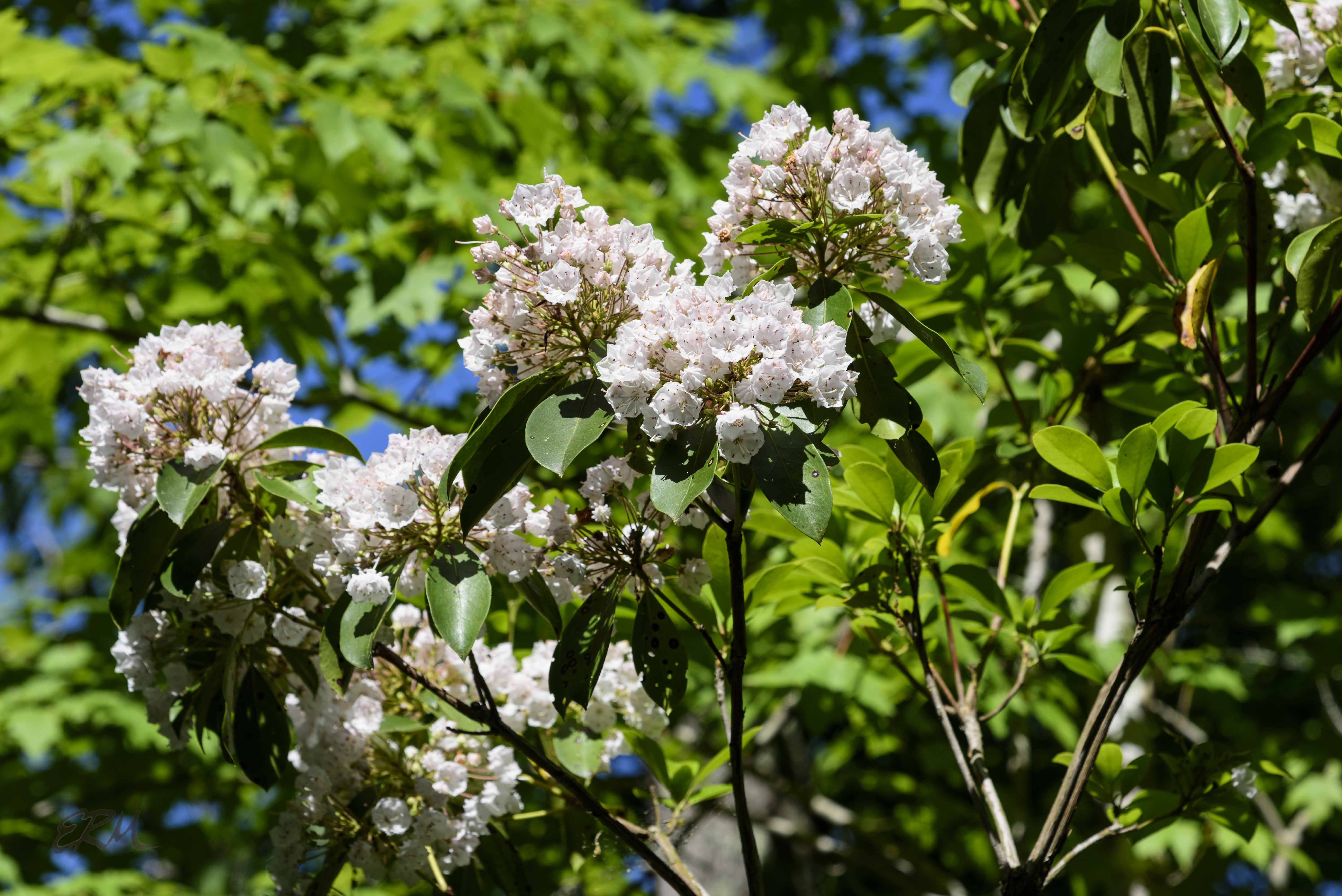
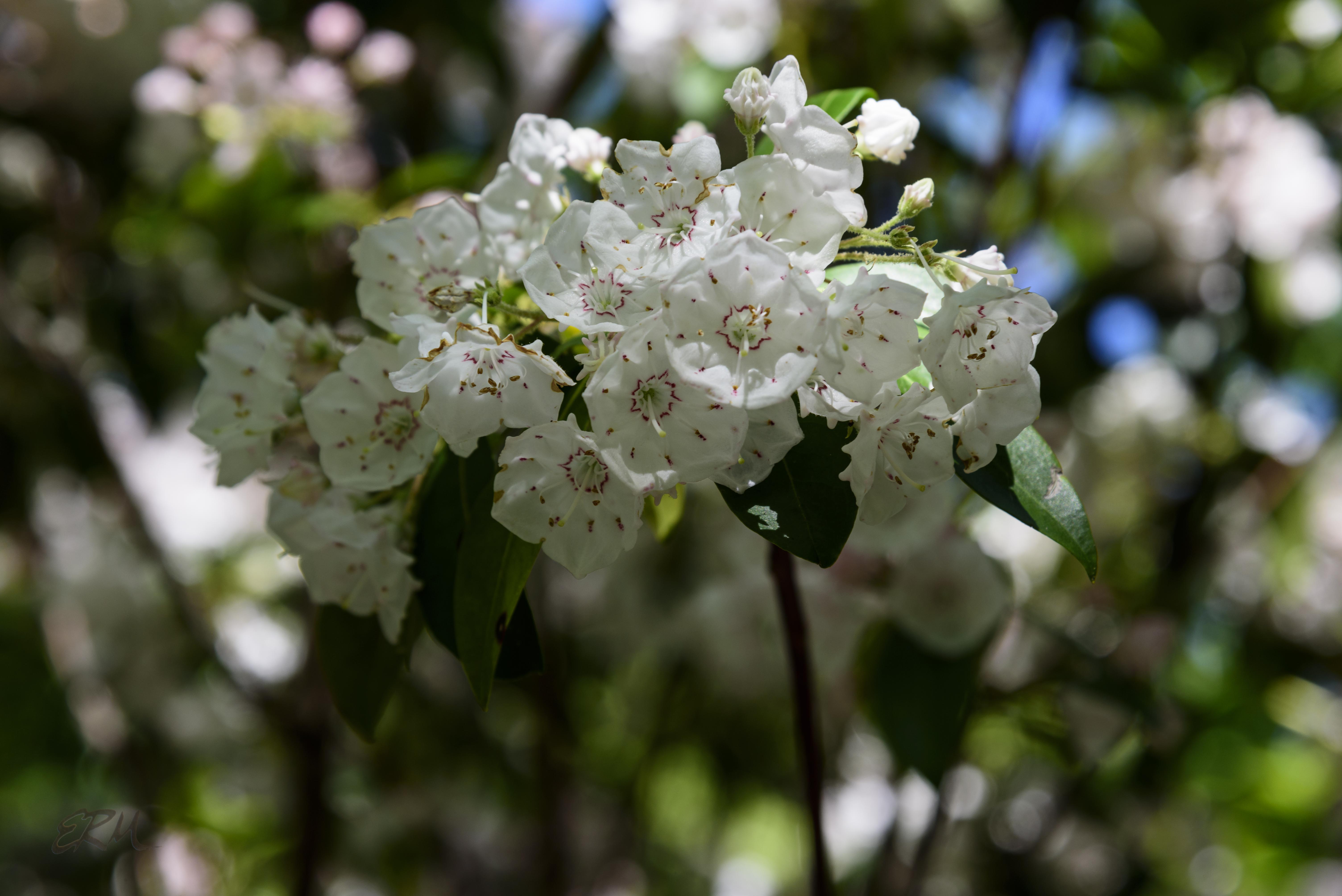
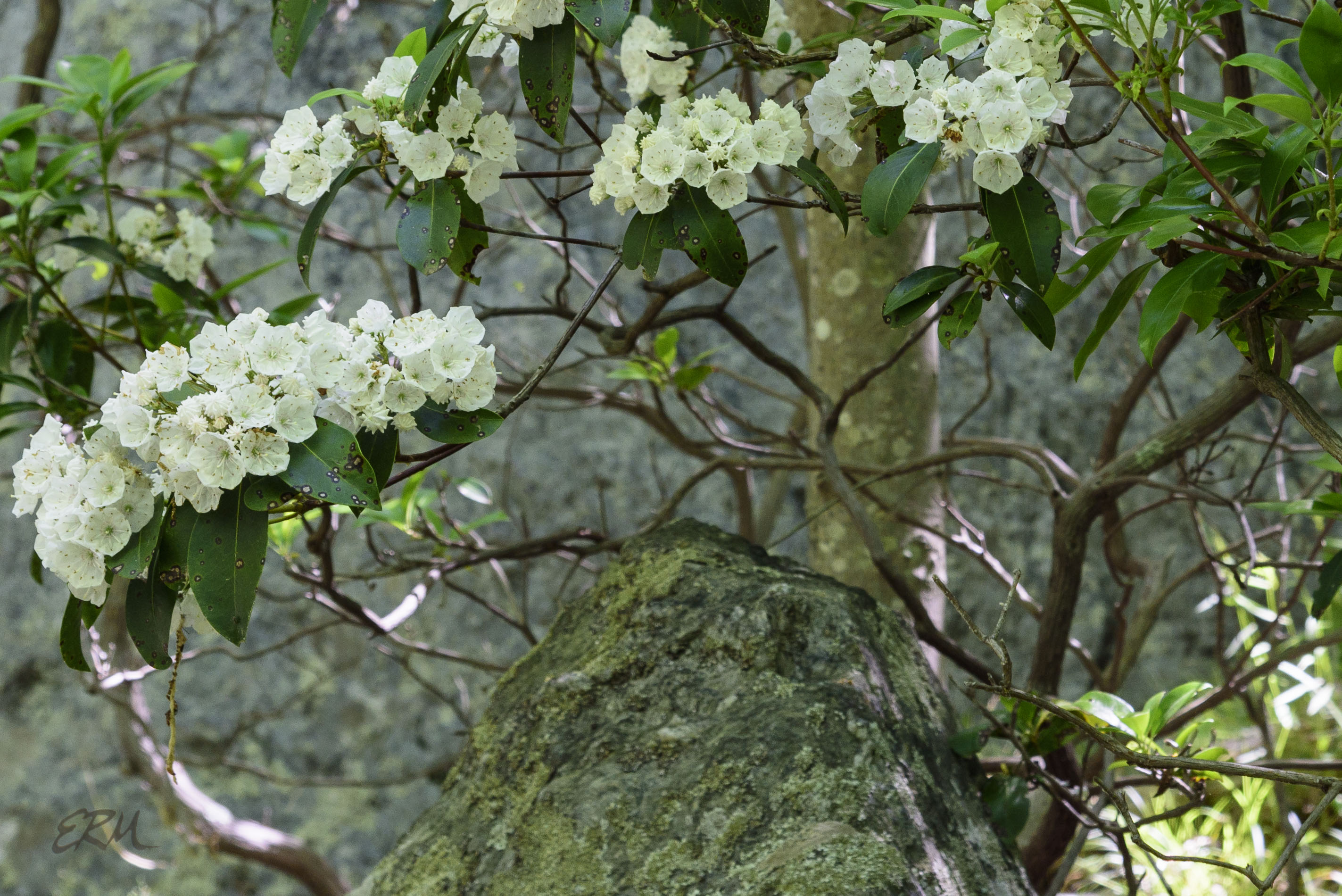
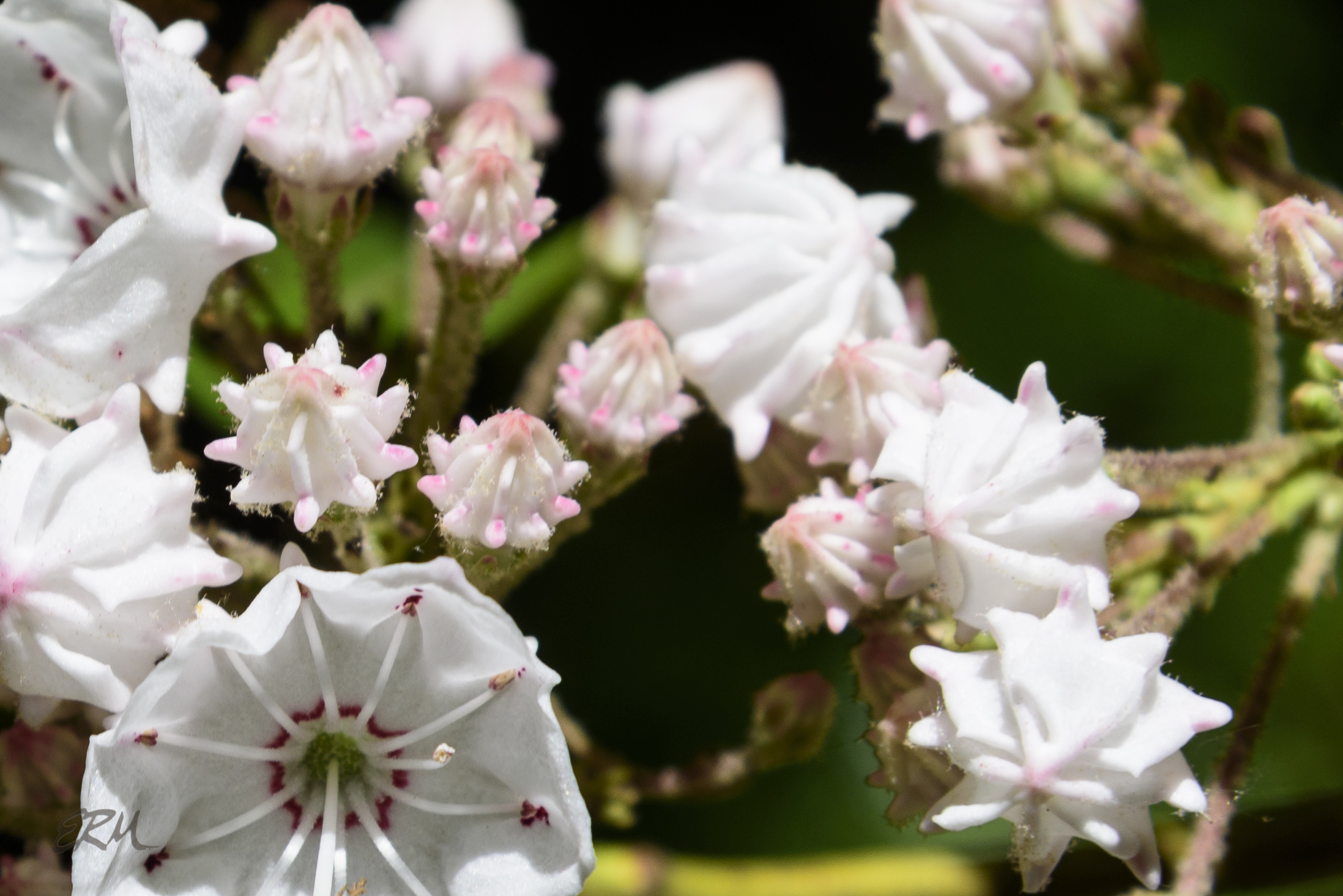
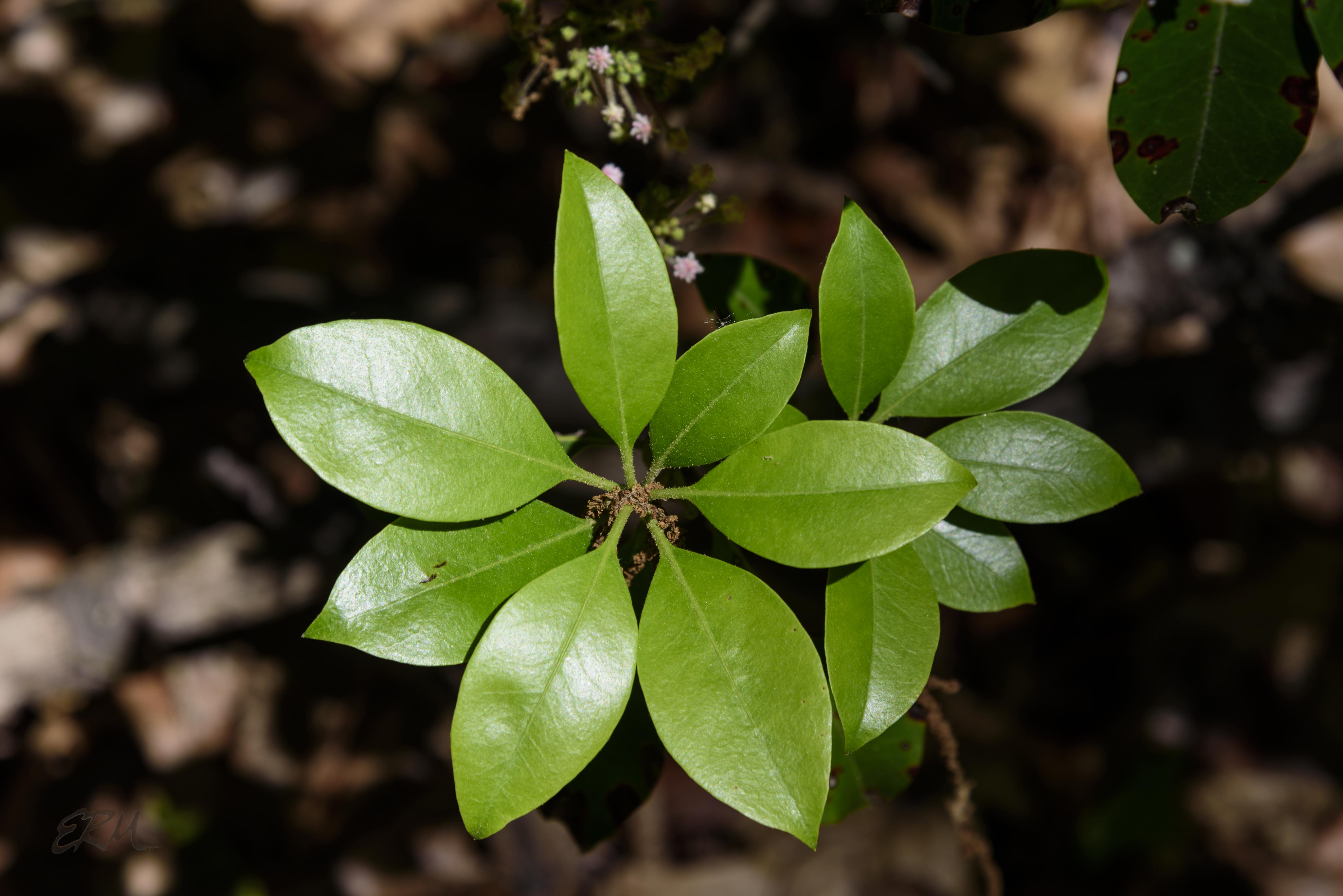 Like our garden azaleas and rhododendrons, mountain laurel flowers on old growth (which you can see in the first photo). New growth is pictured here (with spent oak catkins drooped on the petioles).
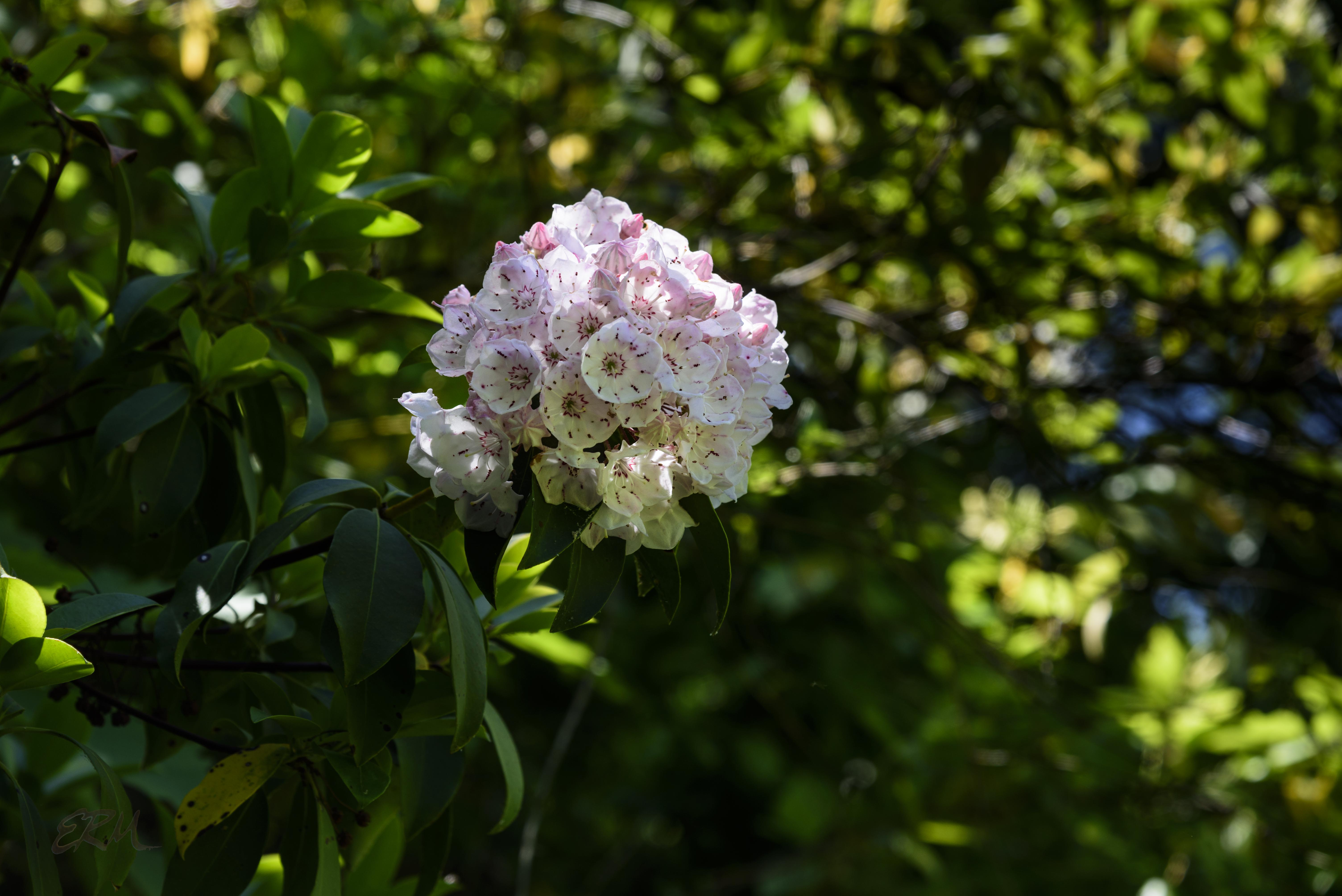 Like other ericaceous plants, mountain laurel loves moist but well-drained, acidic soils. When you see it, you’ll often see other plants in the same family nearby. In Rachel Carson Conservation Park, it grows on a bald knob with pinxter azaleas, blueberries and deerberries (Vaccinium species), and spotted wintergreen (Chimaphila maculata). It’s also abundant on Sugarloaf Mountain, and on a few of the ridges near Carderock. There’s a section of the Cabin John Trail that I call Erica Alley, a rocky area with plenty of ericaceous species (and other neat plants, like rock polypody, ground pine, and firmosses), including dozens and dozens of mountain laurels, too, but in all the years I’ve been hiking there, I’ve never seen them bloom. I’ve never even seen buds on them.
 Mountain laurel ranges from Louisiana to Maine; it’s threatened in Florida, special concern in Maine, and exploitably vulnerable in New York. In Maryland it’s found in every county except Somerset.









 Elizabeth's Wildflower Blog