As the weather warms and wildflowers and weeds start emerging, and gardeners and botanerds start talking about the coming growing season, words get tossed around and, sometimes, misused.
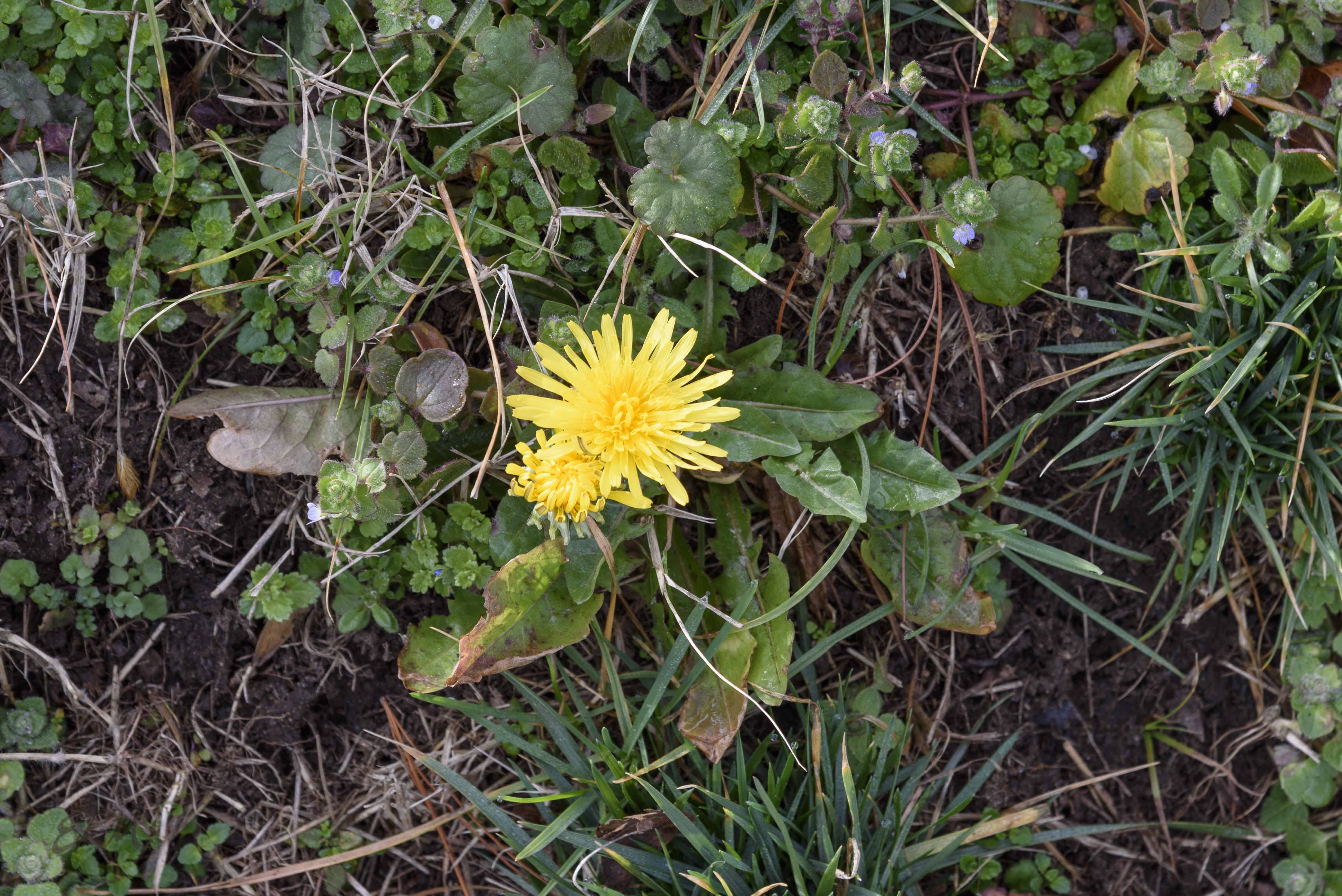
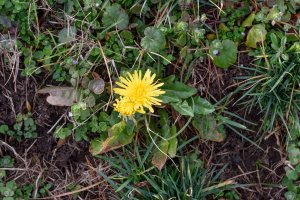 Not long after I finished writing the post about the word native, the very topic of “alien invasives” came up in a forum I moderate. The topic was dandelions. Are they alien invasives?
It’s important to understand that although those two words are often used together, “alien” and “invasive” are two different concepts. “Alien”, like “native”, refers to origin, while “invasive” refers to growth habit.
Yes, dandelions are alien in North America. But they are not necessarily invasive. Here are some legal definitions:
‘‘Alien species’’ means, with respect to a particular ecosystem, any species… that is not native to that ecosystem….‘‘Invasive species’’ means an alien species whose introduction does or is likely to cause economic or environmental harm or harm to human health
–National Environmental Policy Act, 42 USC § 4321
Note that by definition, invasive species are aliens, but it is not necessarily true that alien species are invasive.

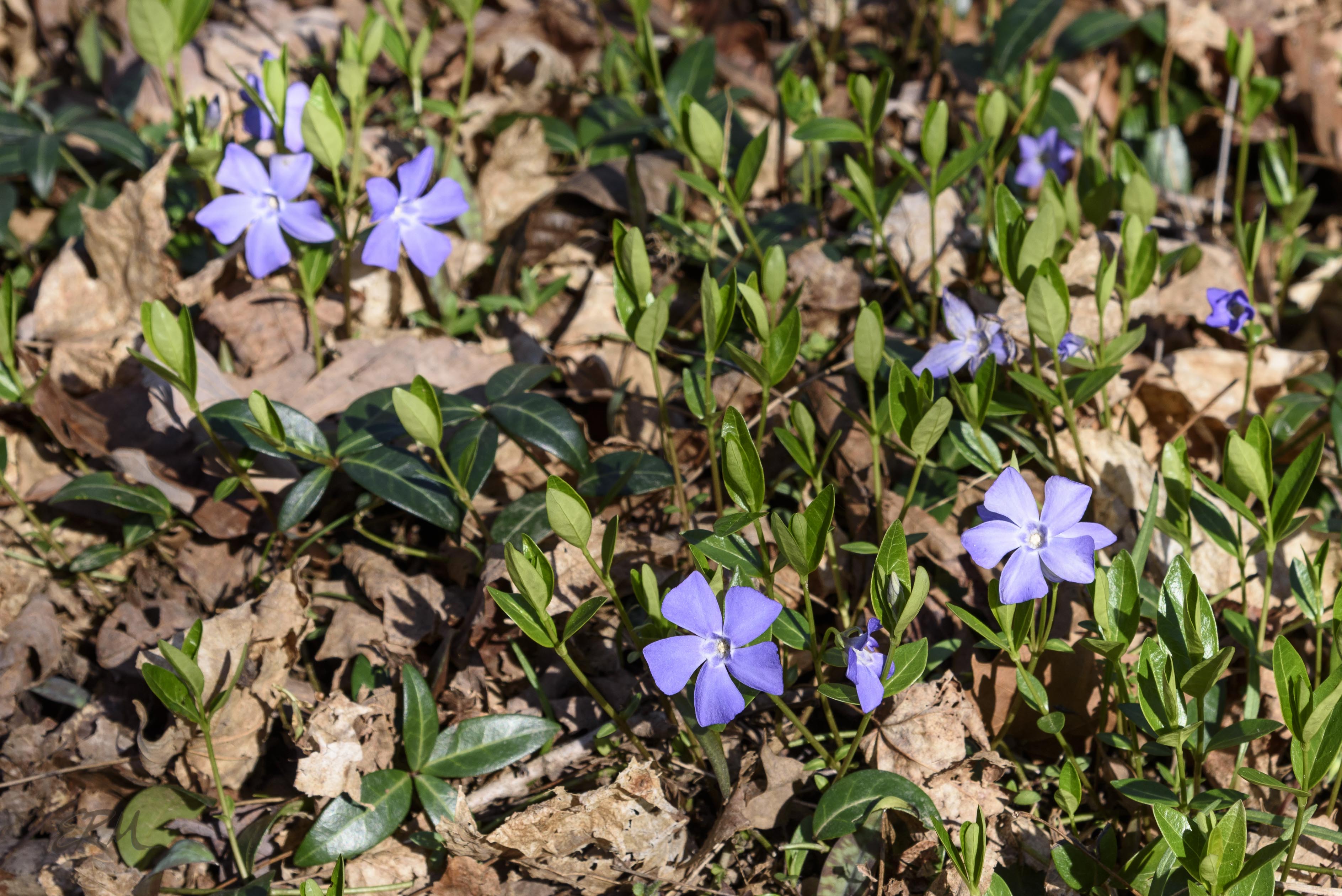
Vinca minor (periwinkle), alien and invasive; please don’t plant it
So we often ask ourselves: is it ever okay to grow aliens? I believe the answer is yes, so long as they aren’t invasive aliens. Remember: first, do no harm. If you’re considering planting an alien or naturalized species, or even a species that’s native to some place nearby, do a little research. I would have no qualms about planting Baptisia australis, but I’ve removed Stylophorum diphyllum from my garden, because I see it spreading pretty aggressively in nearby woods. (See Nativity and Granularity)
Also, consider this statement from invasive.org:
…it is nearly impossible to predict which species will become invasive and new species are being introduced every day. Some species are present for many years before they exhibit invasive characteristics. Many invasive species go through a “lag phase” in which their populations grow slowly until they reach a size large enough for the population to explode and/or become adapted to the local environment and become invasive.
The responsible gardener keeps her eyes and ears open, and promptly removes anything that’s been re-classified as invasive (as I did a few years ago with Nandina domestica).
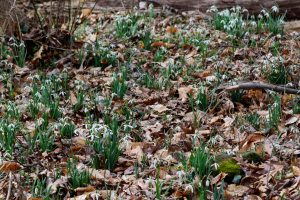
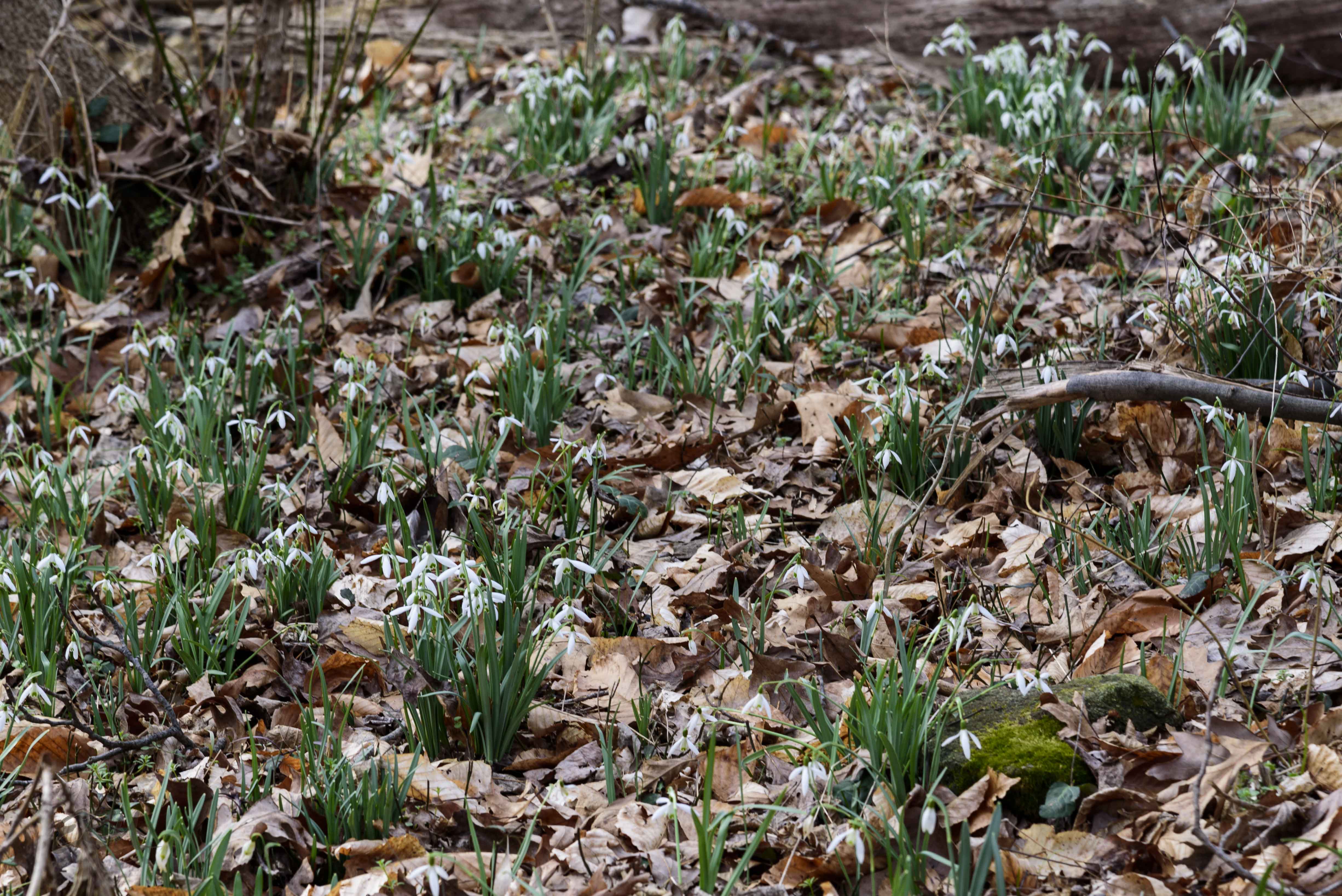
Galanthus nivalis (snowdrops); obviously naturalized but not yet dubbed invasive
This issue of invasive aliens gets complicated. Since I am definitely not an expert, I’ve complied a list for further reading. If you’re a gardener, pay special attention to your local and state laws regarding problem species, like Maryland’s new regulations about the sale of invasive plants.
Invasive Species 101 -Center for Invasive Species and Ecosystem Health
Mistaken Identity – Invasive Plants and Their Native Look-Alikes, Delaware Department of Agriculture
What Are Invasive Plants? -Virginia Department of Conservation and Recreation
The Problem with Invasive Plants -City of Portland, Oregon Environmental Services
Invasive Species: What You Can Do -The Nature Conservancy
Frequently Asked Question About Invasive Species -US Fish and Wildlife Service
Compilation of Regional Invasive Plant Species Lists -University of Maryland Cooperative Extension
-with thanks to Kerry for pointing me at several publications
 In the floodplain close to the river, Virginia bluebells (Mertensia virginica; left) are approaching peak bloom. Mixed in with them in a few places are Dutchman’s breeches (Dicentra cucullaria; below right), which you might also find on moist, rocky outcroppings.
 Trout lilies (Erythronium americanum; above left) like moist soils, too. Generally I see them in the transition areas between floodplain and slopes.
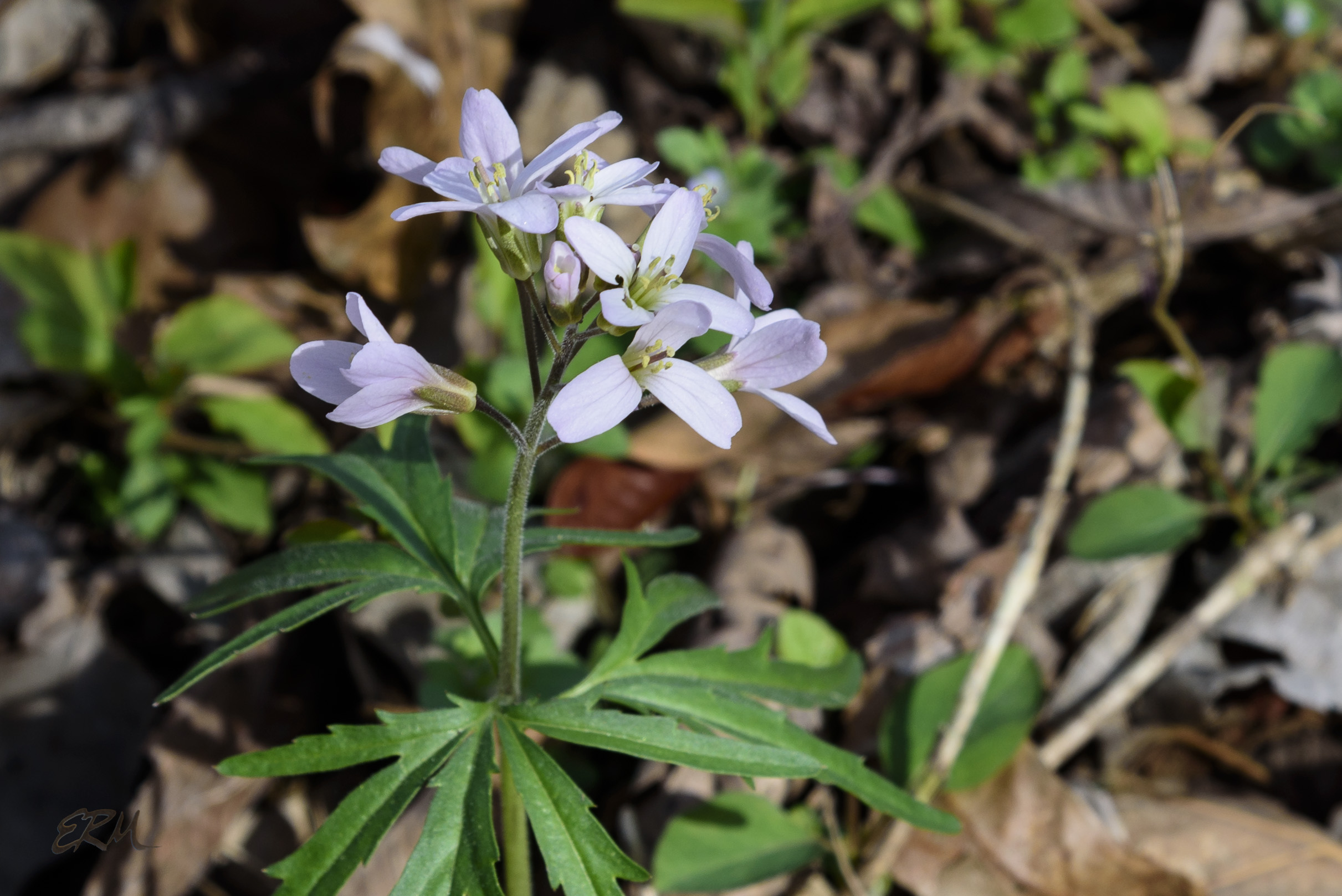 Further upslope are cut-leaf toothworts (Cardamine concatenata; left).






 Elizabeth's Wildflower Blog