The List for August

Plants first spotted blooming during the month of August.

Natives:

  • mistflower
  • flowering spurge
  • thin-leaved sunflower
  • strawberry-tomato (really, that’s what it’s called) fruit only
  • southern agrimony
  • dodder
  • horse balm
  • slender bush clover
  • winged monkey-flower
  • swamp rosemallow
  • dotted smartweed
  • hairy hawkweed
  • white wood aster
  • false daisy
  • grassleaf mudplantain
  • Virginia dayflower
  • common evening primrose
  • late goldenrod
  • horseweed
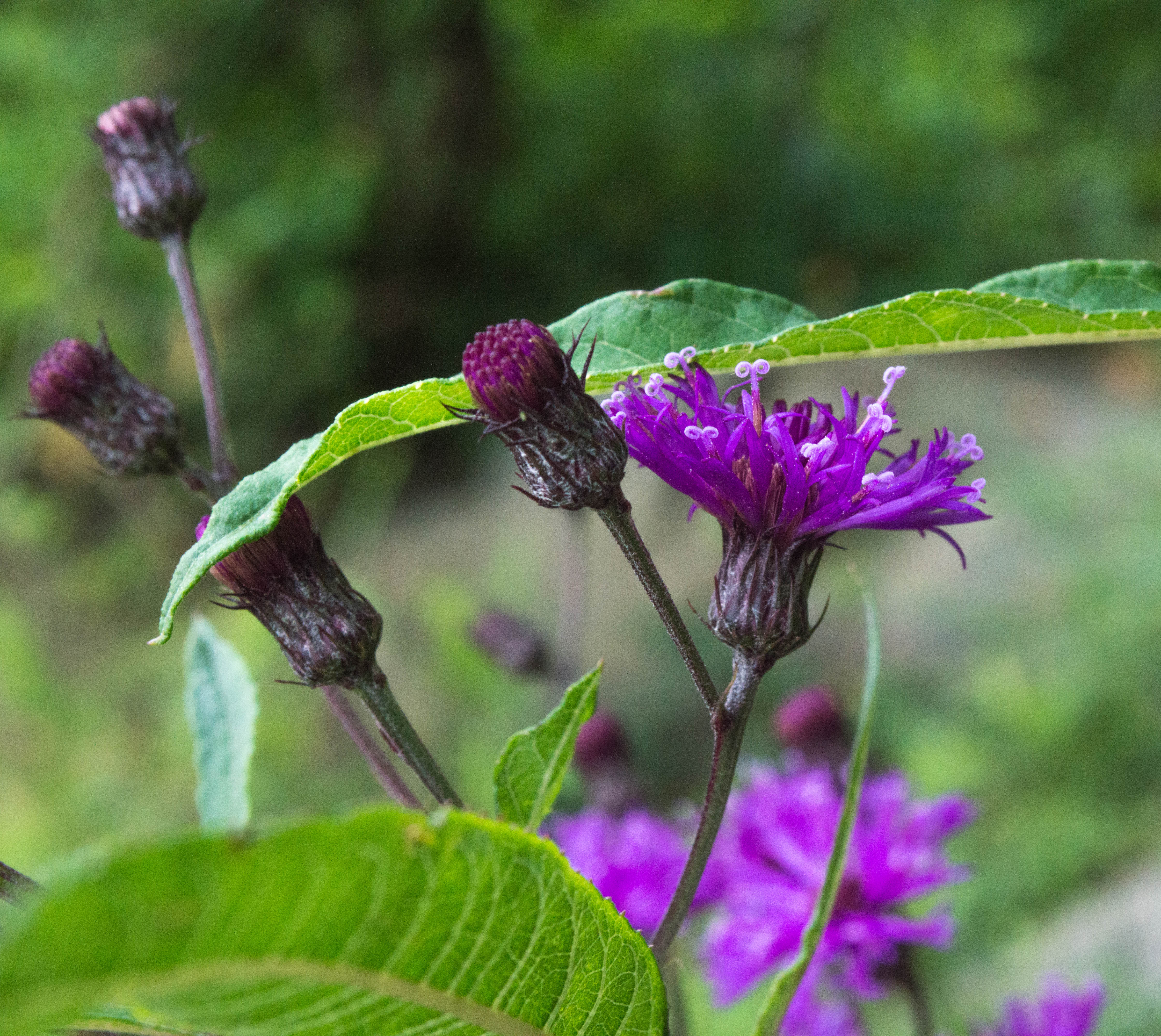
  • New York ironweed
  • large-flowered leafcup
  • hoary ticktrefoil
  • wingstem
  • purple-headed sneezeweed
  • late-flowering boneset
  • upland boneset
  • Spanish needles
  • Canada goldenrod
  • partridge-pea
  • pilewort
  • giant ragweed
  • swamp smartweed
  • white-bracted boneset
  • showy ticktrefoil
  • hog-peanut
  • wild bean
  • pearly everlasting
  • clammy ground-cherry
  • slender goldenrod
  • nodding smartweed
  • arrow-leaved tearthumb
  • beggar-ticks
  • Virginia buttonweed
  • Virginia bugleweed
  • elm-leaved goldenrod
  • wandlike goldenrod

Aliens:

  • big-flowered vetch
  • sweet autumn clematis
  • common hops
  • Japanese knotweed
  • common mugwort
  • velvetleaf
  • liriope
  • black nightshade

bringing the year’s totals to:

  • 254 natives in 76 families
  • 73 aliens in 30 families

for a grand total of 327 species in 80 families.

Twenty two percent of all species found have been alien.
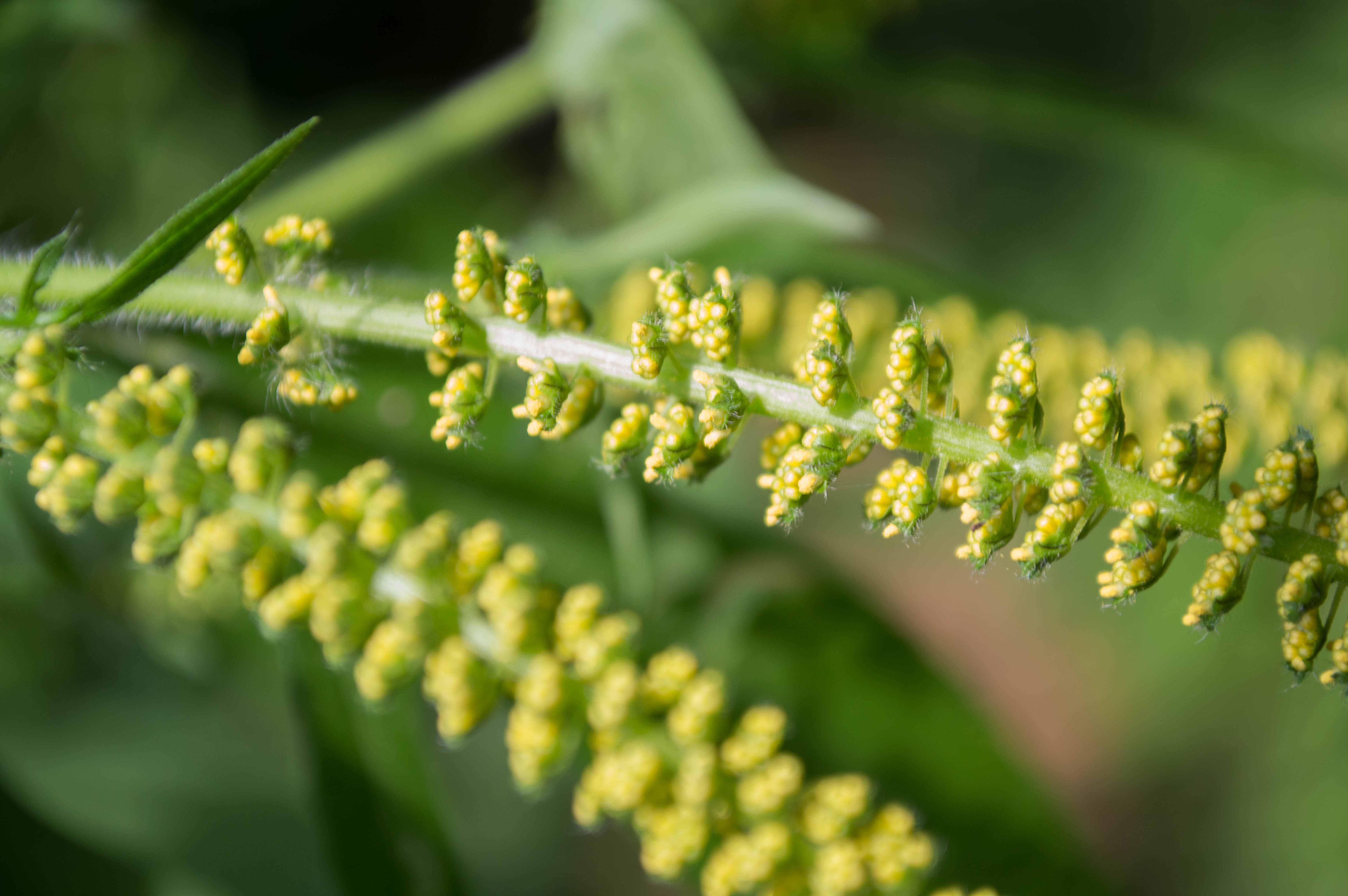
Flower of the Day: Giant Ragweed

Ambrosia trifida; Asteraceae (aster family)

20140818-DSC_0094

After posting about goldenrods over the last few days, I have to take this opportunity to dispel a common myth: goldenrod pollen is not an allergen.  The culprit at this time of year is ragweed.  Goldenrod takes the blame because it’s so showy, but ragweed, with its tiny little unassuming flowers, is doing the damage.

Actually the flowers are quite interesting.  They are completely without petals or sepals.  Each of the yellow dots in the picture above is an individual flower.

There are three species of ragweed found in this area.  The one pictured here can grow to 12 feet tall, and is found in every state of the union except Nevada. Here’s a leaf, which can get to a foot long:

20140818-DSC_0089

The other species are annual ragweed (A. artemisiifolia, with three subspecies, one alien and two native), and Cuman or perennial ragweed (A. psilostachya). The former is found everywhere; the latter everywhere except Delaware, Maryland, Virginia, West Virginia, and Kentucky.

All of these ragweeds are listed as weedy and/or invasive by multiple authorities.

Remember: don’t blame the goldenrods for your misery.

Flowers of the Day: More Goldenrods

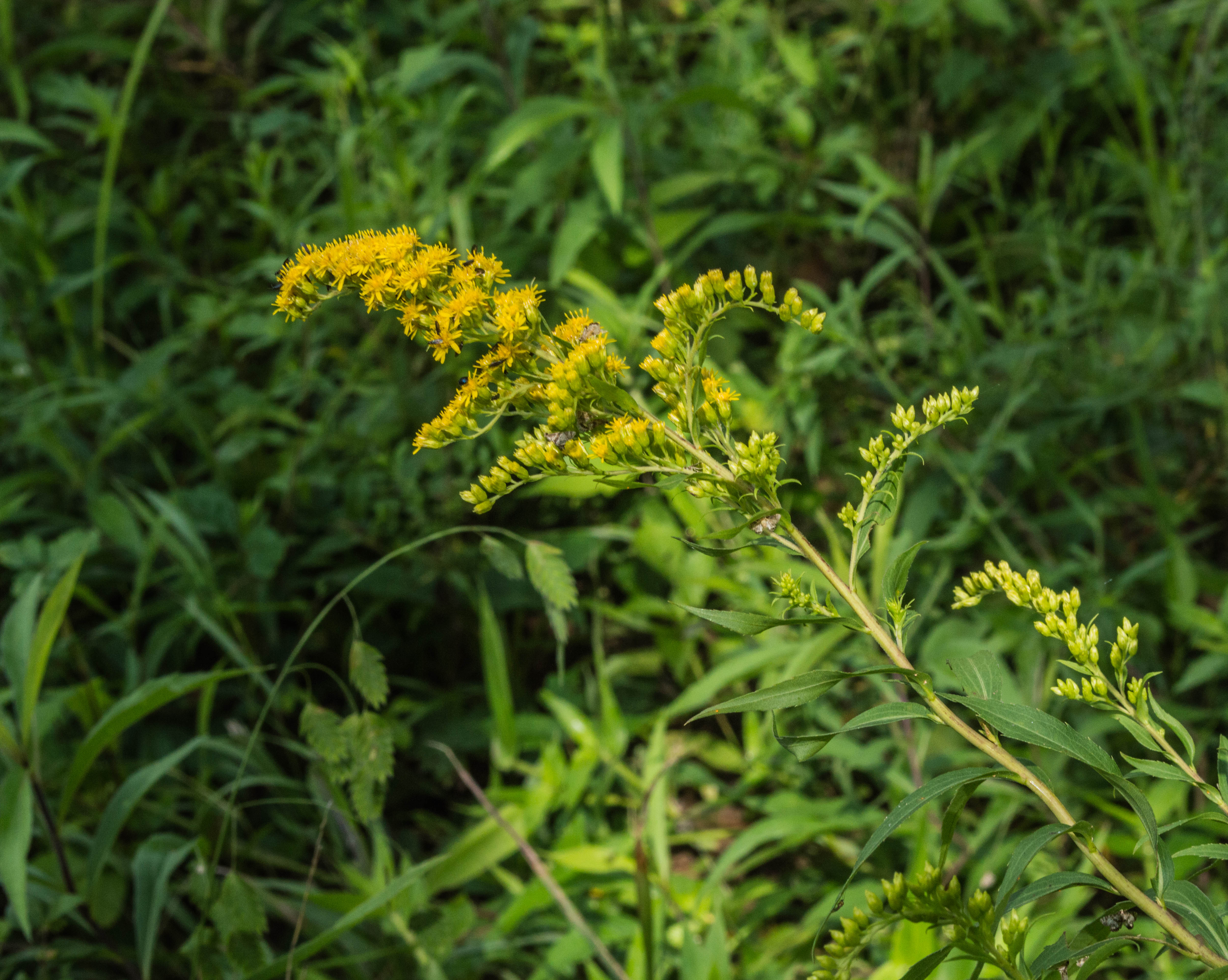
late goldenrod; Solidago gigantea

20140811-DSC_0101

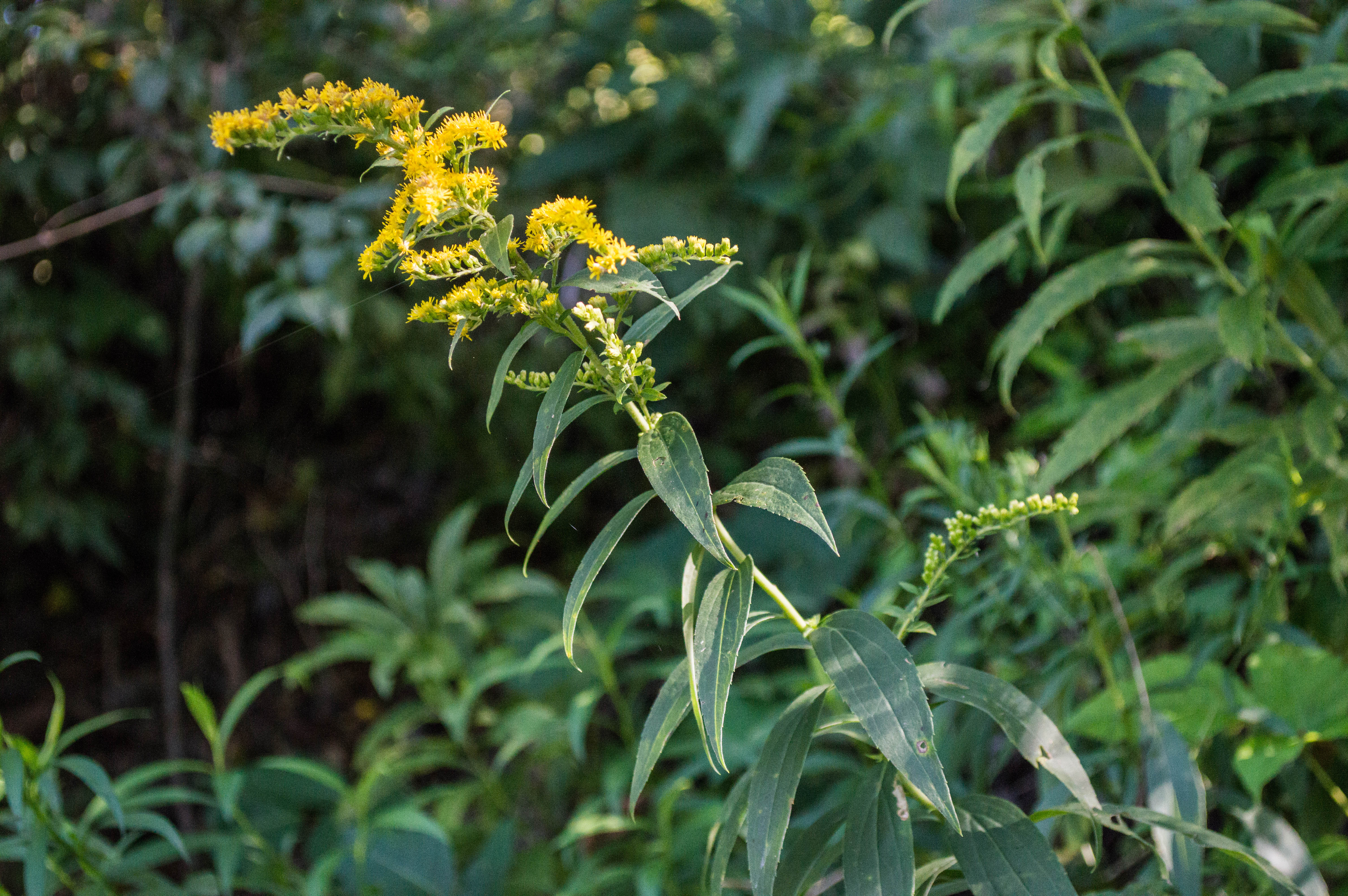
Canada goldenrod; Solidago canadensis

20140825-DSC_0063


Both in the Asteraceae, of course.

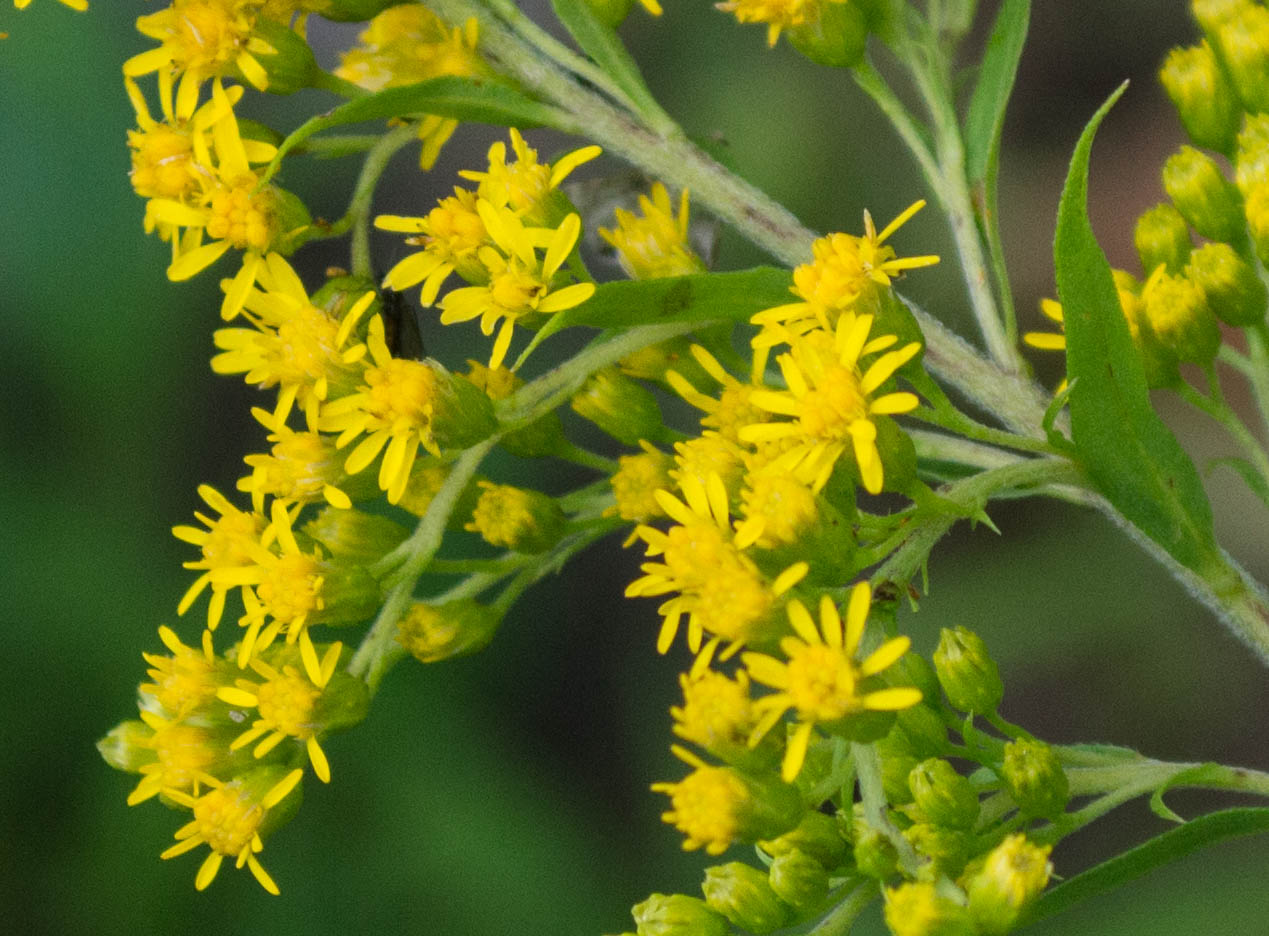
Late goldenrod and Canada goldenrod grow in similar habitats.  They’re both tall (late to 7 feet, Canada to 5 feet).  They both have plume-like inflorescences and parallel-veined leaves.  Late goldenrod has slightly larger flowers than Canada goldenrod.  The main difference that I can see is in the stems: late has a slightly purplish stem (sometimes) that is (sometimes) covered with a white bloom:

20140818-DSC_0074

20140818-DSC_0069

while Canada goldenrod has a smooth, green stem:

.

.

.

.

Here’s an overhead look at Canada goldenrod:

20140818-DSC_0067

20140811-DSC_0111-2

And here’s a closeup look at late goldenrod:

Tomorrow, the real culprit behind hayfever.

Flower of the Day: Early Goldenrod

Solidago juncea; Asteraceae (aster family)

20140725-DSC_0214

Look up goldenrod in any plant guide and you’ll be amazed at how many species there are – and how different some of them are from each other. Clemants and Gracie describe 22; Newcomb lists 30, in the back of his Wildflower Guide after “Parts Indistinguishable”; and Peterson has 29.  The USDA plants database shows 77, all native.

Of these, as many as 32 might be found along the Potomac on the Maryland side (depends which authority you consult).  So it’s with some trepidation that I start posting about them.  After three years of doing this, I still consider myself a novice, prone to errors.

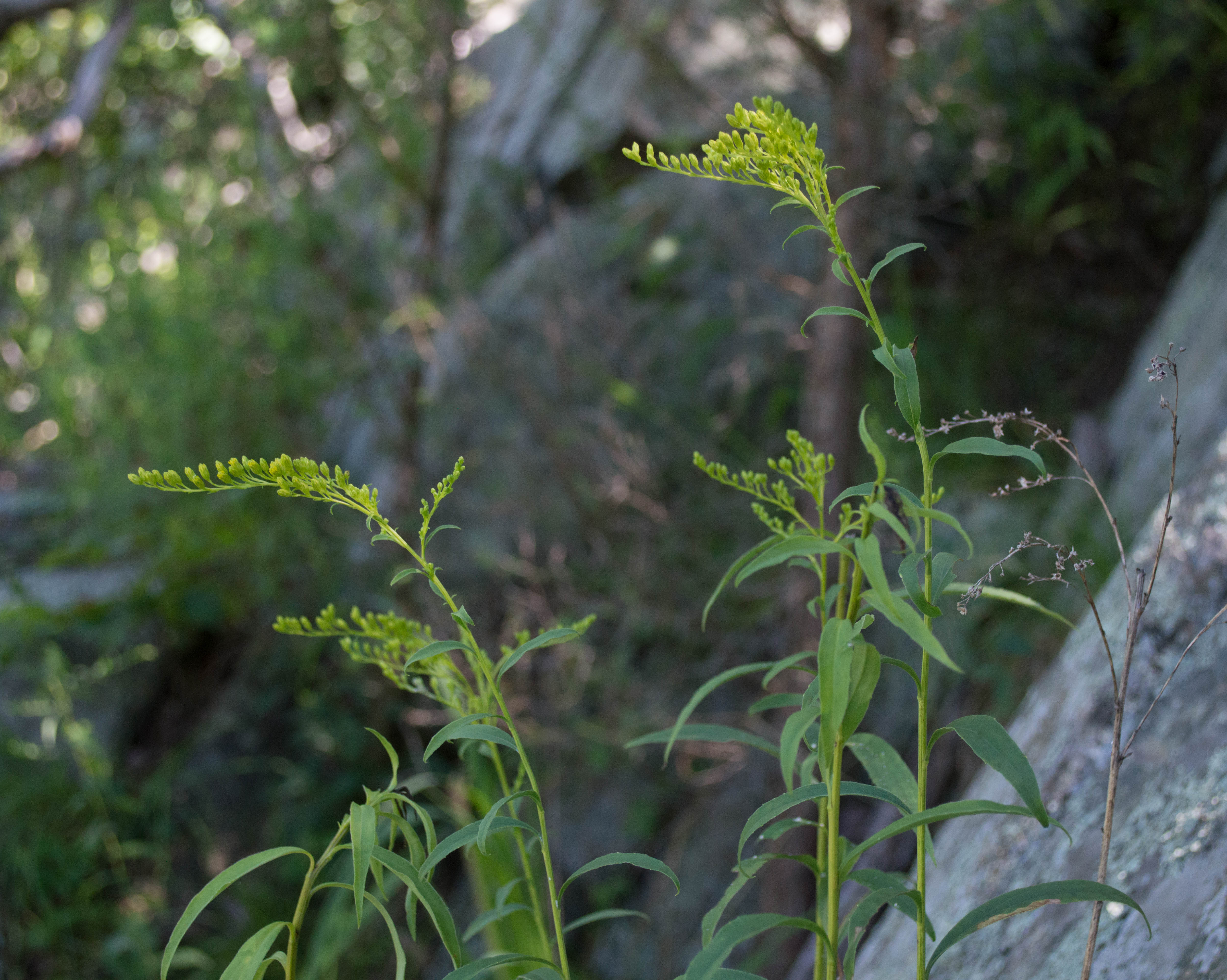
This species is the first one I saw this year, on July 14, on my favorite rock bluff upstream of Carderock.  Here it is in bud, looking a little like a bird-of-paradise.20140725-DSC_0197

And here it is a little further developed, buds not quite open. 20140725-DSC_0222

That particular area, by the way, has the highest diversity of plant life of any area I’ve found.  It’s a rock outcrop that’s about 30 feet high by maybe 100 feet long.  From base to top the soils and sun exposure are different.  I’ve found several dozen different species there this year.

Flower of the Day: New York Ironweed

Vernonia noveboracensis; Asteraceae (aster family)

20140811-DSC_0092

This coarse-textured plant is a joy to find in the wild.  Growing up to six feet, it likes full sun and wet soils, so you’ll find it not far from the river banks, facing the water from the treeline.

.20140825-DSC_0086-2

It’s one of 30 species of Vernonia native to the US, though only two others are found in this area.  Occurring primarily on the East Coast, it’s listed as a plant of special concern in Kentucky, and is presumed extirpated in Ohio.

New York ironweed is also an important source of pollen.  The Xerces Society considers it of “special value to native bees”.  It would make a great companion to joe-pye weed in the back of a perennial border, especially in a yard with drainage issues.

Remember hairy hawkweed from a few days ago?  That composite flower has only rays. This one has only disc flowers.  In the below left picture you can see the five petals of the corolla, with the reproductive parts rising out of them.

l20140825-DSC_0317I love the intensity of color.

20140811-DSC_0084