Flower of the Day: White Snakeroot

Ageratina altissima; Asteraceae (aster family)

20140729-DSC_0025

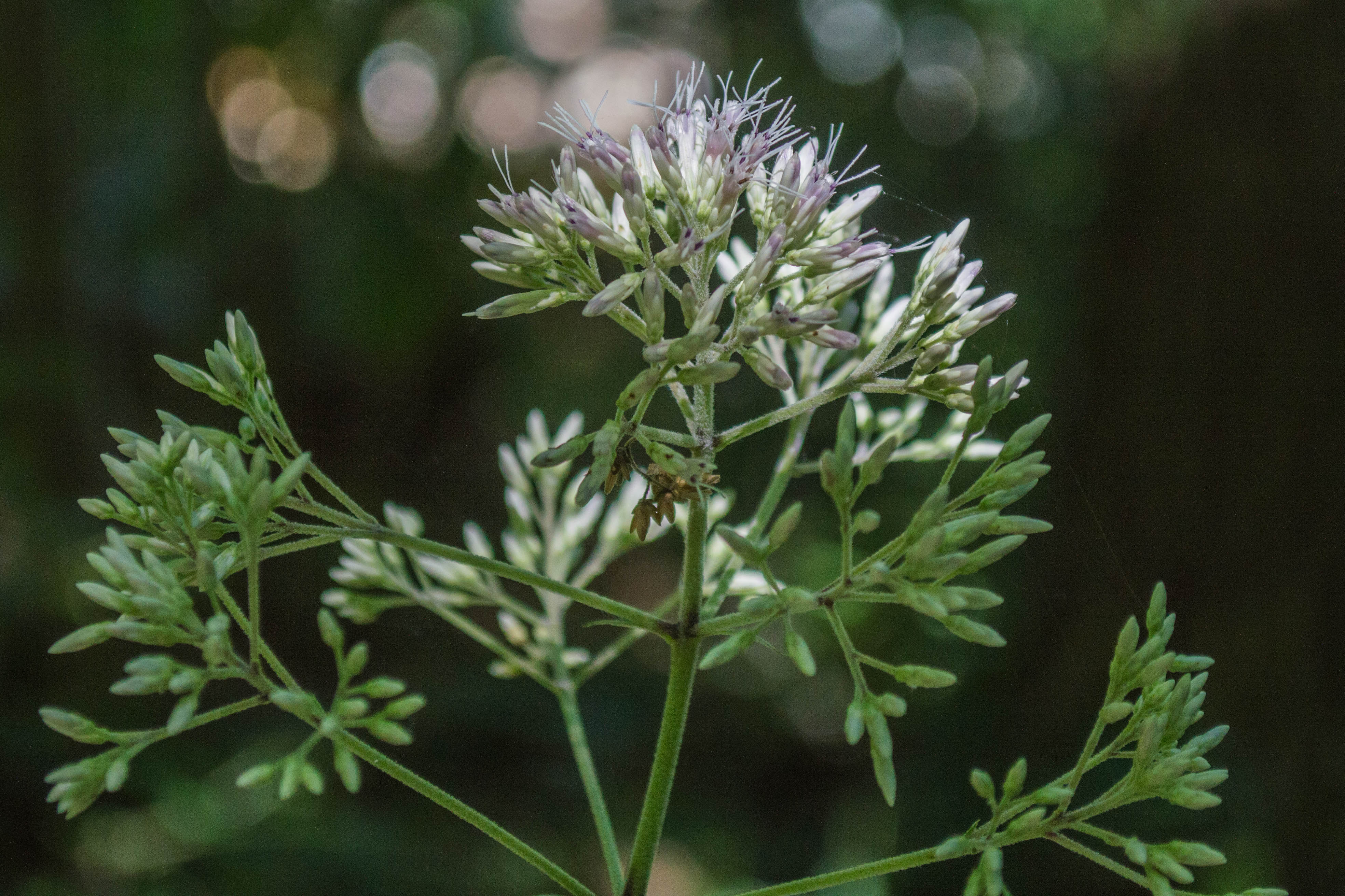
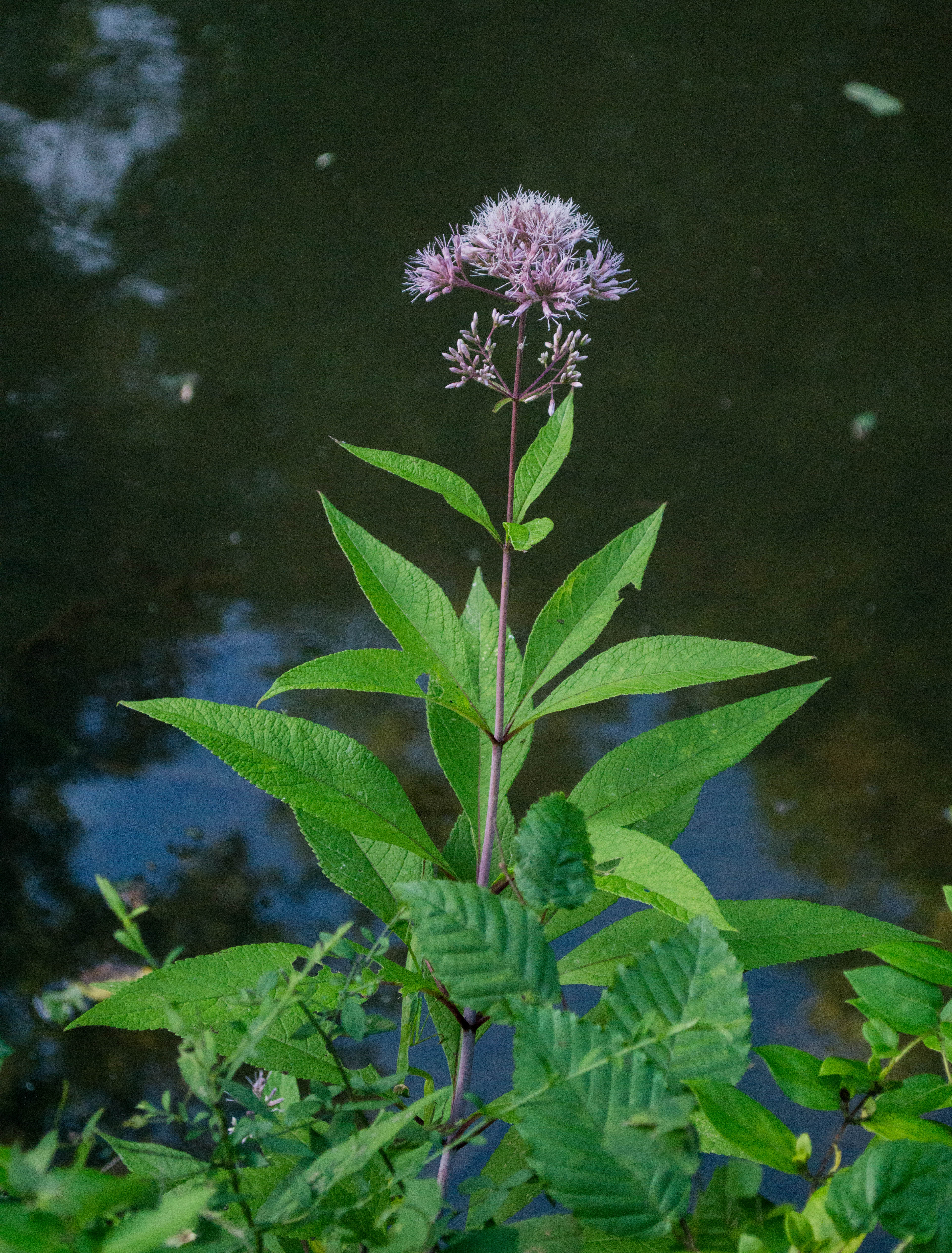
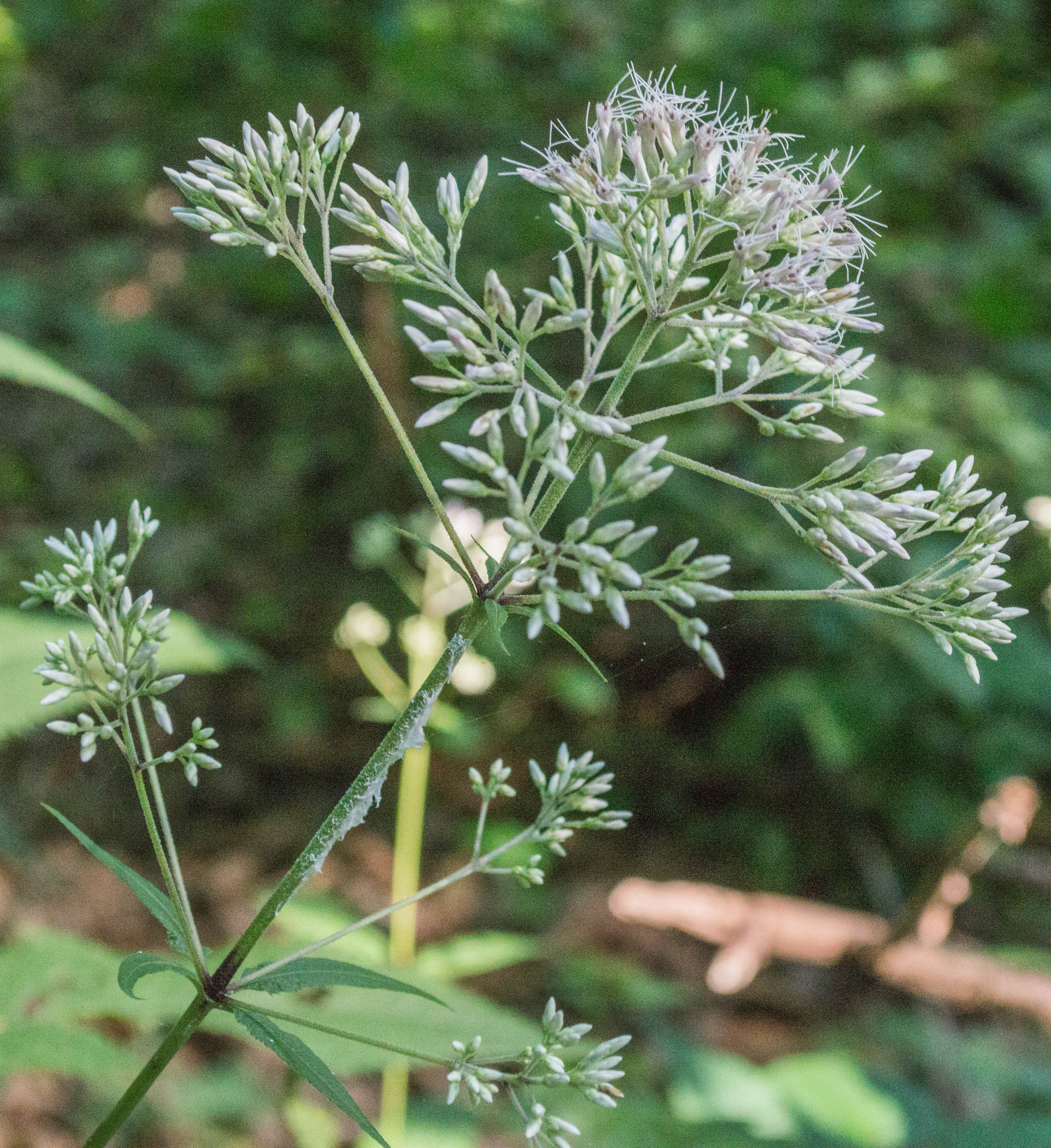
Yes, another of the Eupatorium-type plants.  In fact, this species was formerly named Eupatorium rugosum.  It can be distinguished from the bonesets by the leaves, which have long petioles (instead of being perfoliate or sessile), and are generally cordate (heart-shaped).

20140729-DSC_0028

The inflorescences are a little different in shape, but the individual flowers look similar to boneset and joe-pye weed flowers, at first glance, anyway.

DSC_0040

Other common names include tall boneset, white sanicle, and richweed.  At one time people believed that the roots could treat snakebites, hence the name.  Actually, the plant is poisonous, and the source of “milk sickness” that killed many settlers in the early 1800s. Apparently cows don’t normally graze on white snakeroot, but they can if forage is sparse; the poison is then passed through the milk to people.

White snakeroot is found in a wide variety of moist-soil, partly-sunny habitats, from Quebec to Florida and west through the Great Plains.

Flower of the Day: Hairy Boneset

UPDATE 1/11/17: I now believe these pictures to be of Godfrey’s thoroughwort, Eupatorium godfreyanum

Eupatorium pubescens; Asteraceae (aster family)

20140731-DSC_0027

This species is still in the genus Eupatorium (for now), and is also known as E. rotundifolium, and by the common name roundleaf thoroughwort.  Notice that the flowers are very similar in shape and size to yesterday’s FOTD.  The inflorescence is flatter, though, and in most other ways the plant looks completely different:20140731-DSC_0045The leaves are much smaller, rounder, and sessile (joy-pye leaves have long petioles at the center and lower portions of the stem).  And, the leaves are arranged in pairs on the stem instead of whorls of four.  Also, as you can see from the picture above, hairy boneset likes a drier habitat, preferring rocky upland soils.

Hairy boneset is endangered in New Hampshire and New York, and possibly extirpated in Maine.  Its native range is from Maine south to Florida and west to Louisiana and Arkansas.

By the way, the common name “boneset” supposedly derives from the plant’s use in treaing dengue fever (also known as breakbone fever).  “Thoroughwort” comes from the perfoliate characteristic of the leaves of several of these species.  (A perfoliate leaf is one in which the stem appears to pierce, or go through, the leaf.)  Later this week I’ll feature a thoroughwort.

Flower of the Day: Sweet Joe-Pye Weed

 Eutrochium pupureum; Asteraceae (aster family)

 DSC_0305

Those wacky taxonomists are always re-naming things.  The genus formerly known as Eupatorium contained a large number of species, a few of which I’ll be featuring over the next several days.  Colloquially they’re known as joe-pye weeds, thoroughworts, bonesets, and snakeroots.   Apparently the joe-pye weeds are now in the genus Eutrochium (for a while they were in the genus Eupatoriadelphus).

There’s a lot of folklore around the medicinal uses of this plant, named for a Native American who used it for a variety of ailments.  It’s a plant with a lot of presence, growing to seven feet tall in rich, constantly moist soils all over the eastern half of North America.

DSC_0024 Has a slightly sweet scent, too.  If you have a swale at the back of your yard where nothing wants to grow, plant some joe-pye weed in it as the backdrop for a perennial border.

DSC_0023


Flower of the Day: Southern Agrimony

aka harvestlice, aka swamp agrimony (Agrimonia parviflora); Rosaceae (rose family)

20140807-DSC_0094

I know, I know, you were expecting a picture of a flower.  This species of agrimony has small yellow flowers, about 1/4″ wide at most, that are very typical of the rose family. It’s another example of medium-sized plants with long, spiky inflorescences and itty bitty flowers (like vervain, jumpseed, lopseed).

I like this plant for the sound of the name, which comes from the Greek for “poppy”. But really, it’s about the leaf.  Is that not a fascinating leaf?  Shown above is a single, pinnately compound leaf, with 17 primary leaflets and about 30 secondary leaflets.  Nevermind about the flowers, I just love the plant:

20140807-DSC_0090  Okay, here are some flower pics:

20140806-DSC_0126This one is actually a different species: common agrimony (A. gryposepala).  Leaf is not nearly as nifty: 20140721-DSC_0484 Southern agrimony flowers are similar to common agrimony flowers:

20140807-DSC_0084


Flower of the Day: Swamp Candles

aka swamp loosestrife; Lysimachia terrestris; Primulaceae (primrose family; some authorities place it in the myrsine family)

 20140728-DSC_0136

This may be one of the few cases where the common names make more sense than the botanical name; the specific epithet “terrestris” means “of the earth”.  Its distribution across North America is a little whacky; it doesn’t occur in the Deep South (except Georgia), the southwest, the Great Plains (except Oklahoma) or the mountains, except in the Pacific Northwest.  It is endangered in Kentucky and Tennessee.

Like yesterday’s FOTD, this is a water-loving species.  It will grow to about three feet tall, wth each flower about half an inch across.  Apparently in some areas this species is known to hybridize freely with other native loosestrifes.

This picture was taken on a late July evening, along the Potomac River just upstream from Cabin John Creek.  The river level was very low.

20140728-DSC_0030-2