Flower of the Day: Halberd-Leaved Rosemallow

Hibiscus laevis; Malvaceae (mallow family)

20140728-DSC_0070

You could hike along the Billy Goat trails all day and never see this flower – but only because the trails never get close enough to the water.  Find one of the rocky outcroppings and head out into the river, though, and you’ll see dozens and dozens – or hundreds – of the plants, which can grow to over six feet tall.

20140728-DSC_0035

They could almost be considered shrubs, as the large stems will get very stiff as if lignifying, and these stems will persist through the winter.  But the plant does die back in true perennial fashion.

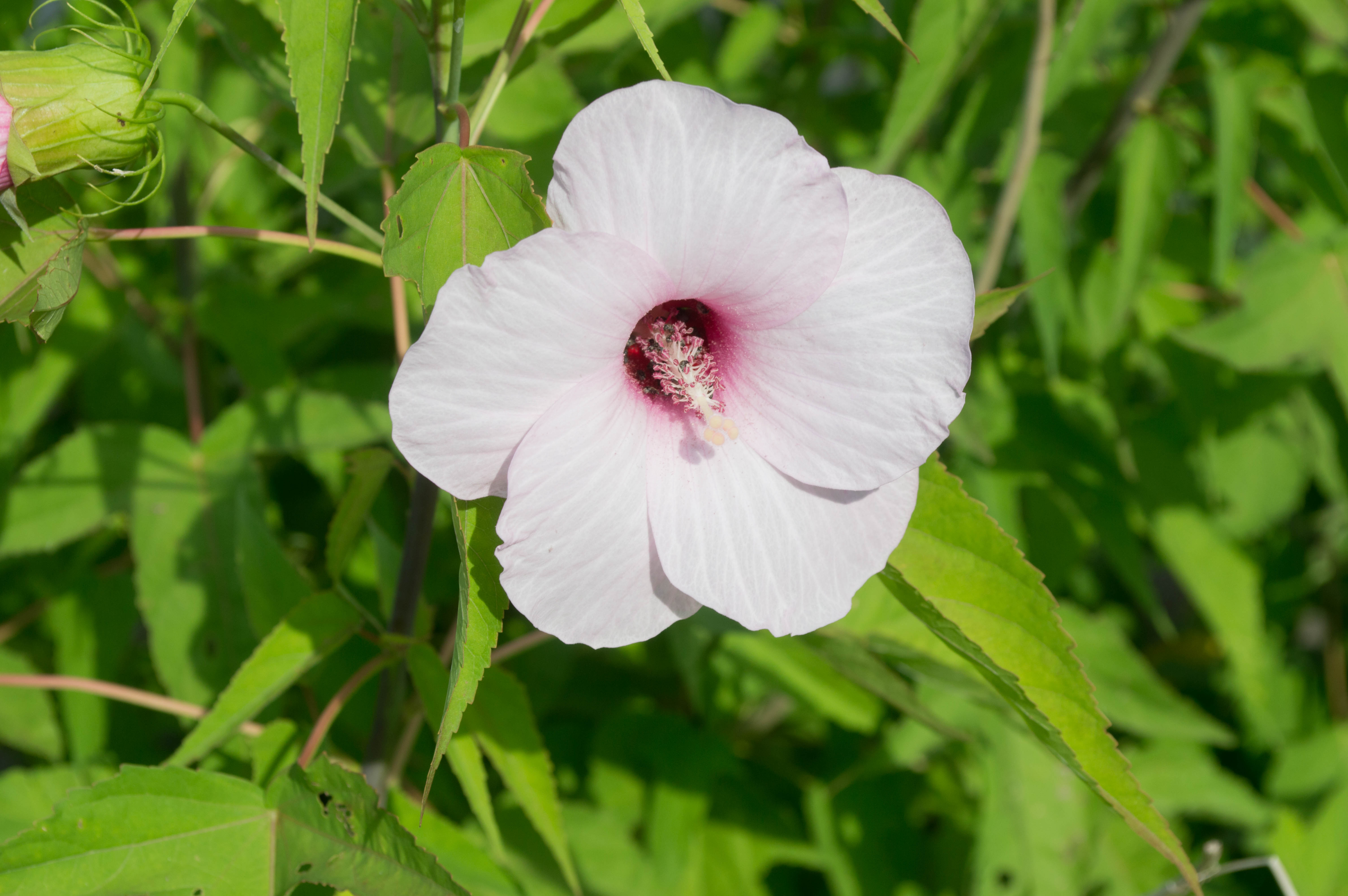
This rosemallow is a plant that loves to have its feet wet.  You’ll find it growing right along the riverbanks; whether or not it’s actually standing in water depends on the water level.  The flowers will open to a width of five inches when in full sunlight, then close at night.

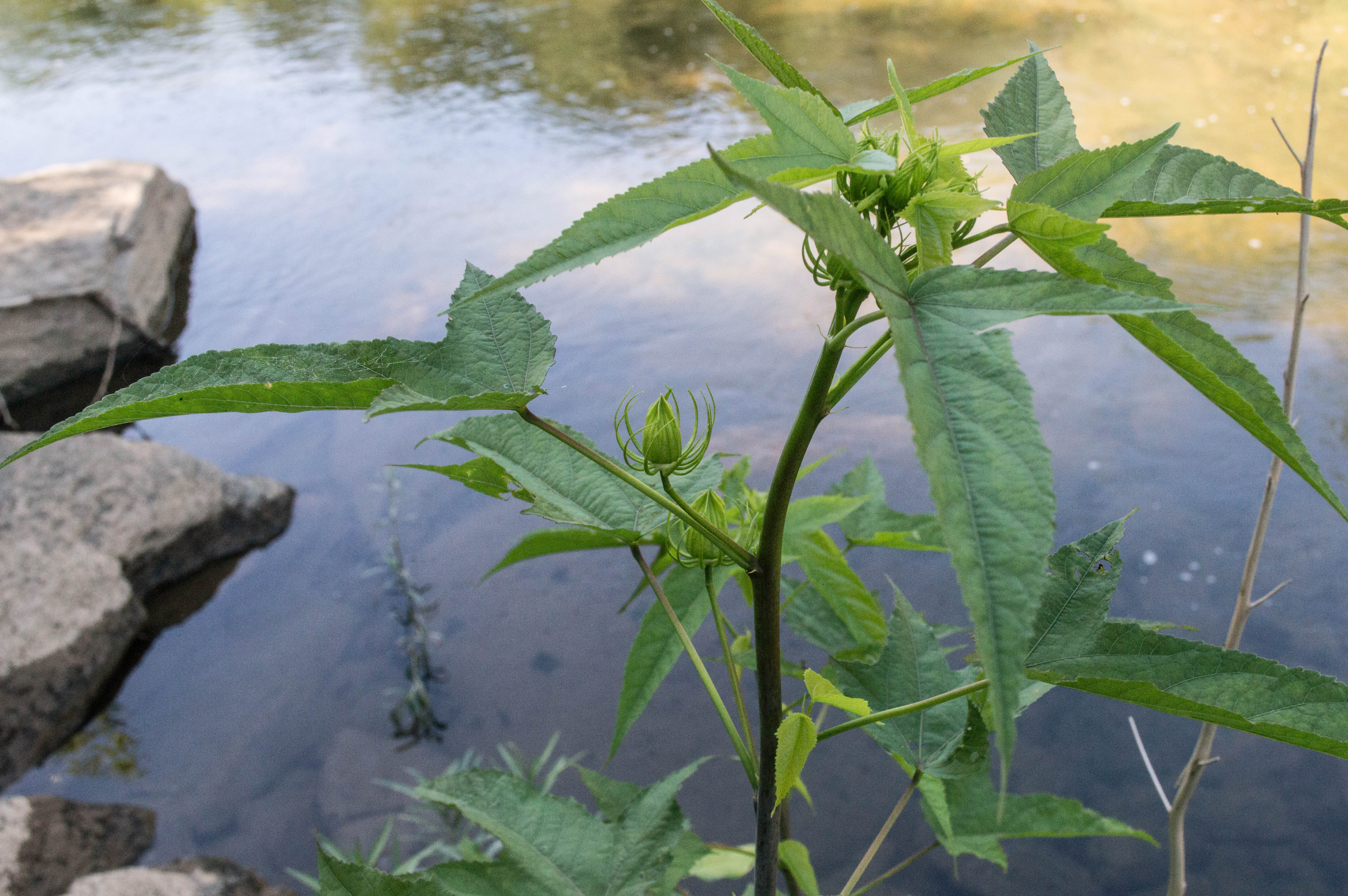
Here’s a picture of a smaller plant in bud, showing the leaf shape:
20140725-DSC_0110

And here’s one more picture, just because:
20140728-DSC_0027

Flower of the Day: Indian Tobacco

aka pukeweed; Lobelia inflata; Campanulaceae (bellflower family)

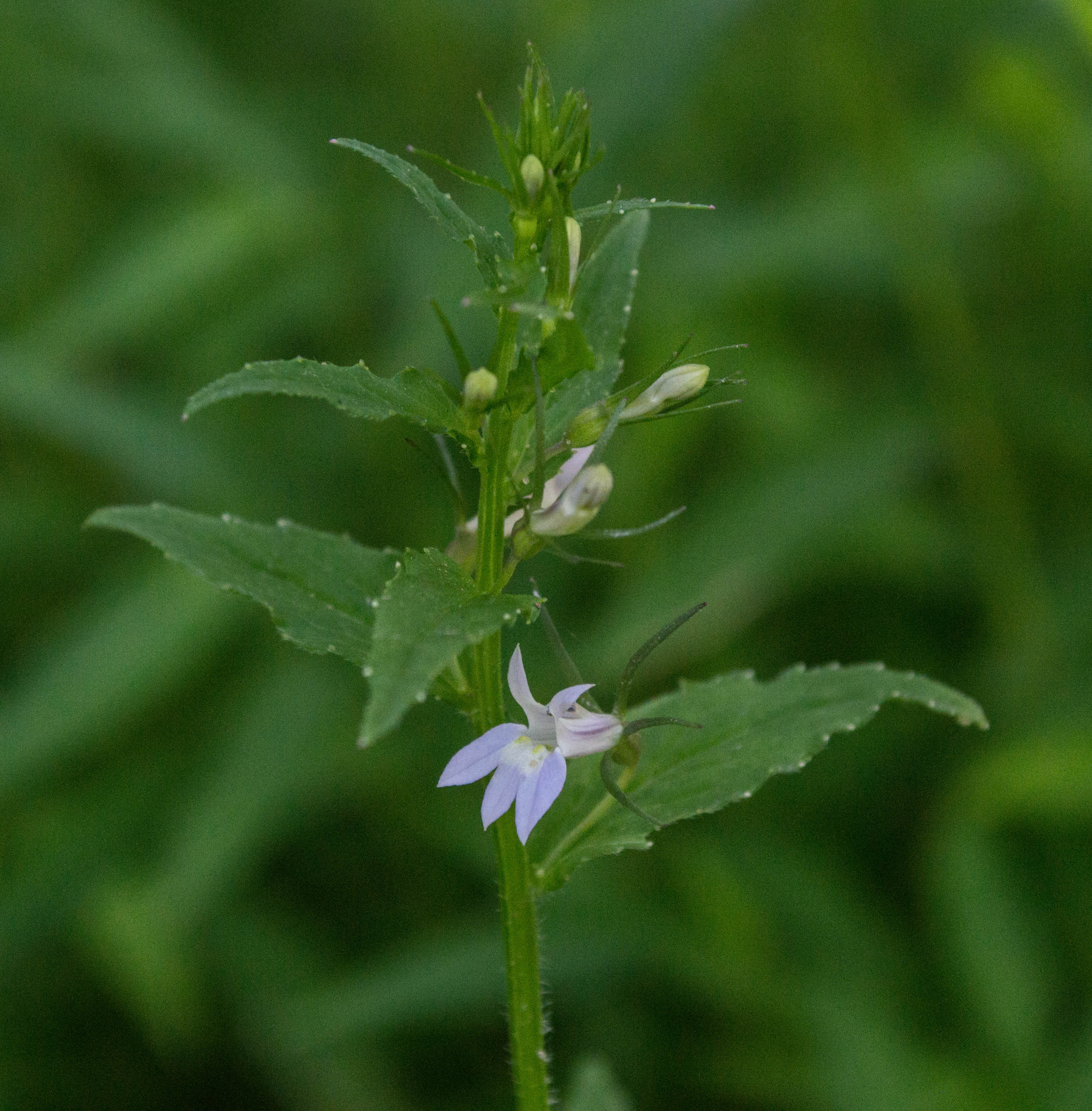
20140725-DSC_0260

This eastern North American native forb grows to about three feet tall in partly sunny areas with moist soils. The flowers are about 1/3″ wide.  The internet is full of interesting claims about the medicinal uses of this plant; some sources simply state that it’s poisonous and shouldn’t be used at all, while others note its use by Native Americans for a variety of purposes, including treatment of respiratory ailments, as an emetic, and as an entheogenic (go ahead and click, I had to look it up, too).

For more on medicinal uses, including current practices, check out the University of Maryland Medical Center page.

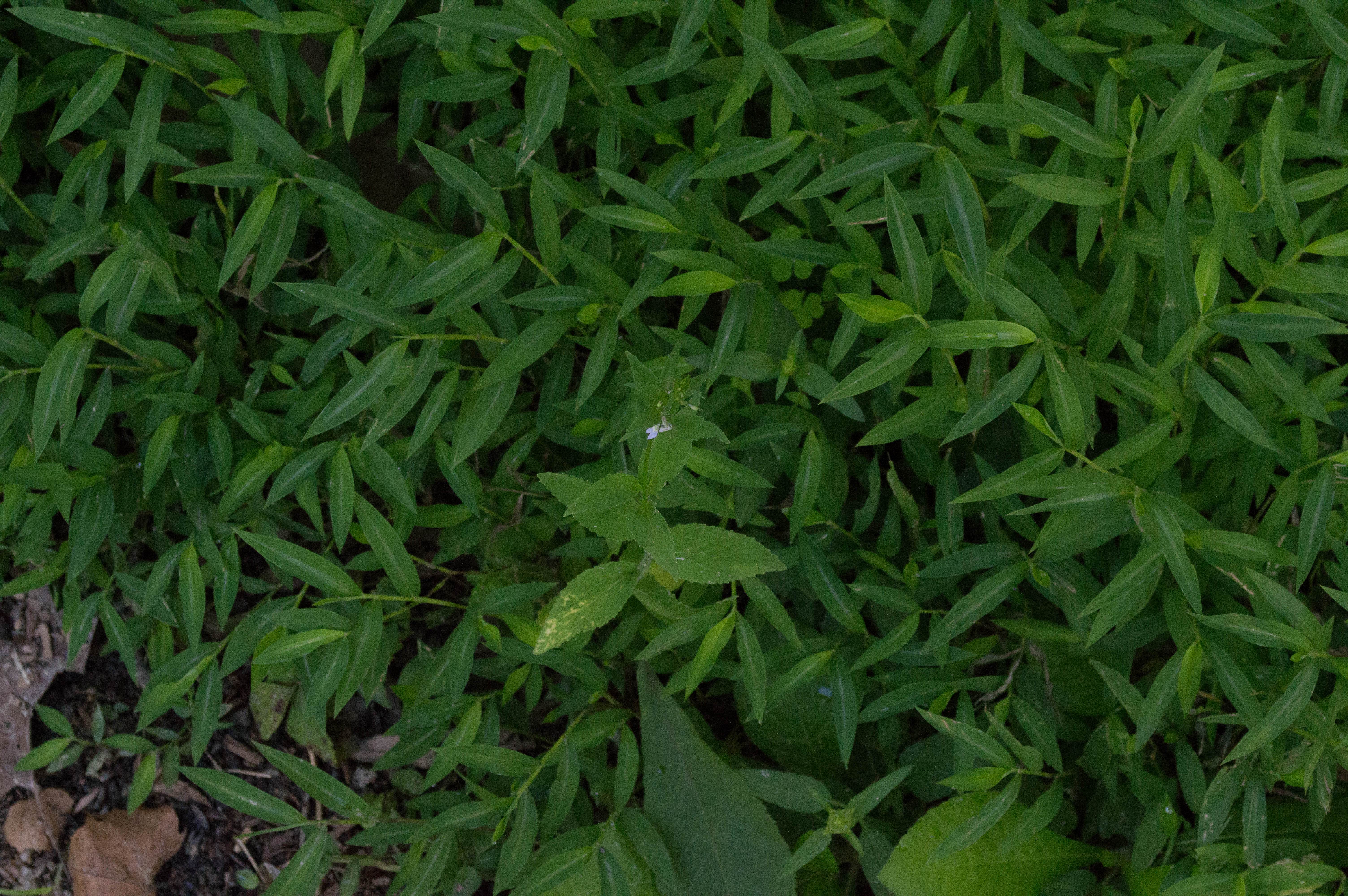
The next photo shows what I call the “five foot view”: this is what I see when walking along (my eyes being about five feet above ground level).

20140725-DSC_0274

One little spot of color and I’m down on my knees having a closer look. Shame about all the Japanese stiltgrass, though.

The List for July

Plants first seen blooming during July, 2014

Natives:

  • pokeweed
  • swamp thistle
  • northern sea oats
  • buttonbush
  • starry campion
  • basil balm
  • St. Andrew’s cross
  • nodding onion
  • bushy St. Johnswort
  • naked-flower ticktrefoil
  • white vervain
  • lizard’s tail
  • white-topped aster
  • honeyvine
  • fogfruit
  • wild potato vine
  • slender nettle
  • common milkweed
  • common arrowhead
  • spotted St. Johnswort
  • swamp milkweed
  • Allegheny monkeyflower
  • Indian tobacco
  • yellow passionflower
  • jumpseed
  • lopseed
  • common agrimony
  • American germander
  • wood nettle
  • false pimpernel
  • early goldenrod
  • culver’s root
  • shrubby St. Johnswort
  • smooth sumac
  • woodland sunflower
  • Indian hemp
  • tall coneflower
  • wild mint
  • Carolina elephantsfoot
  • halberd-leaved rosemallow
  • sweet joe-pye weed
  • seedbox
  • blue vervain
  • swamp candles
  • butterfly pea
  • white snakeroot
  • hairy boneset
  • cranefly orchid

Aliens:

  • queen Anne’s lace
  • wild parsnip
  • yellow sweet clover
  • spotted knapweed
  • common St. Johnswort
  • tumble mustard
  • carpetweed
  • common mullein
  • white sweet clover
  • burdock
  • bouncing bet
  • common plantain
  • jimson-weed
  • hedge parsley
  • Asiatic dayflower

for a year’s total of 269 species in 77 families.

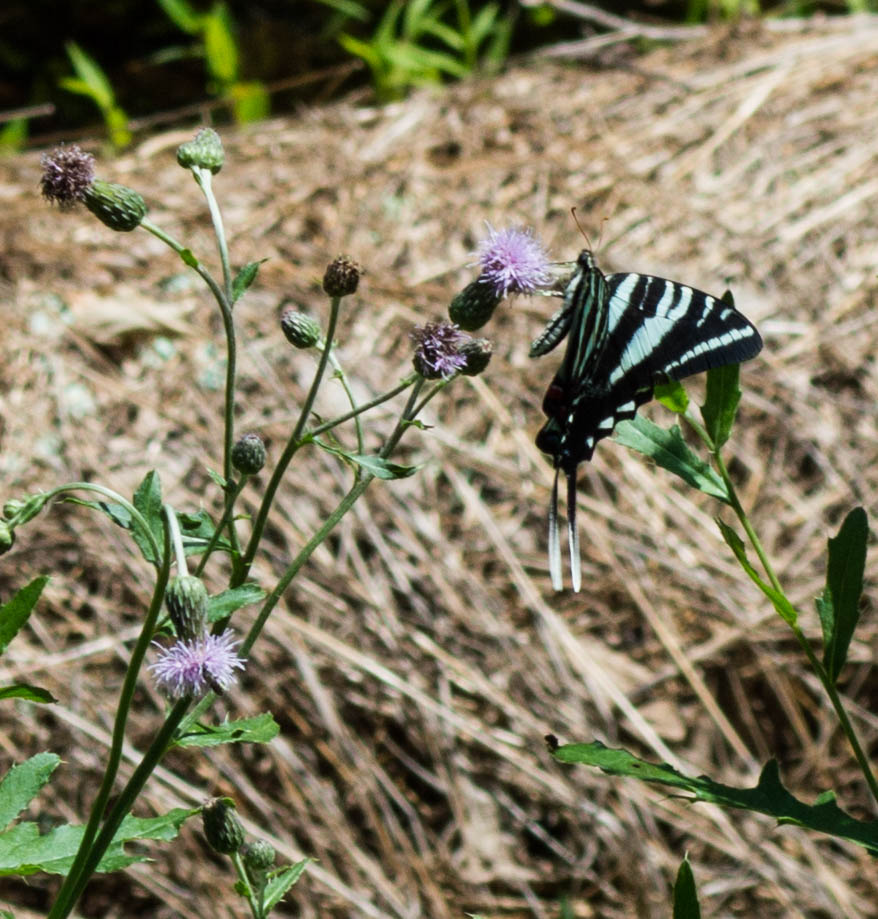
And here’s a picture of a zebra swallowtail on spotted knapweed:

20140701-DSC_0274

Flower of the Day: Jumpseed (a mid-summer LWF)

Polygonum virginianum, aka Persicaria virginiana and several others; Polygonaceae (buckwheat family)

20140716-DSC_0054

Most of the LWFs* I wrote about earlier in the season were tiny little flowers on tiny little plants.  This one is a tiny little flower on a very large inflorescence on a medium-sized plant.  The plant grows about three feet tall, and usually sports only a single foot (or more) long flower spike with dozens of buds; only a few open at a time, and each flower is less than 1/8″ across.

20140716-DSC_0025

Jumpseed is found throughout woodlands in North America, from northern Quebec south through Florida and west to Texas.

*little white flowers

Flower of the Day: Butterfly Pea

aka Atlantic pigeonwings*; Clitoria mariana; Fabaceae (pea family)

*or, possibly, “Maryland lady-parts”

20140725-DSC_0133

The same day I found culver’s root while scrambling about on rocks, I found this plant.  It, too, was climbing over rocks.  It’s a vine, liking rocky habitats and sunlight.  Though I found several plants, I only found the one flower (and two days later, still only one flower).  It grows throughout the eastern US through the Great Plains and the desert southwest, but is endangered in New Jersey and Pennsylvania.  Only one other natives species of Clitoria grows in the US, and that only in Florida.

About the genus name… I know what you’re thinking, and you’re right.  First described by a German botanist in 1678.  I thought maybe “mariana” was his girlfriend, which is dubiously romantic.  “Honey, I named a flower after you.”  But according to several different sources, the specific epithet “mariana” means “of Maryland”. So you could also call this flower “Maryland lady parts”.  As a Maryland native I’m not sure how I feel about that.

Apparently over the years botanists have been offended by the genus name and have tried to change it; Wikipedia has a nice little discussion on the topic..