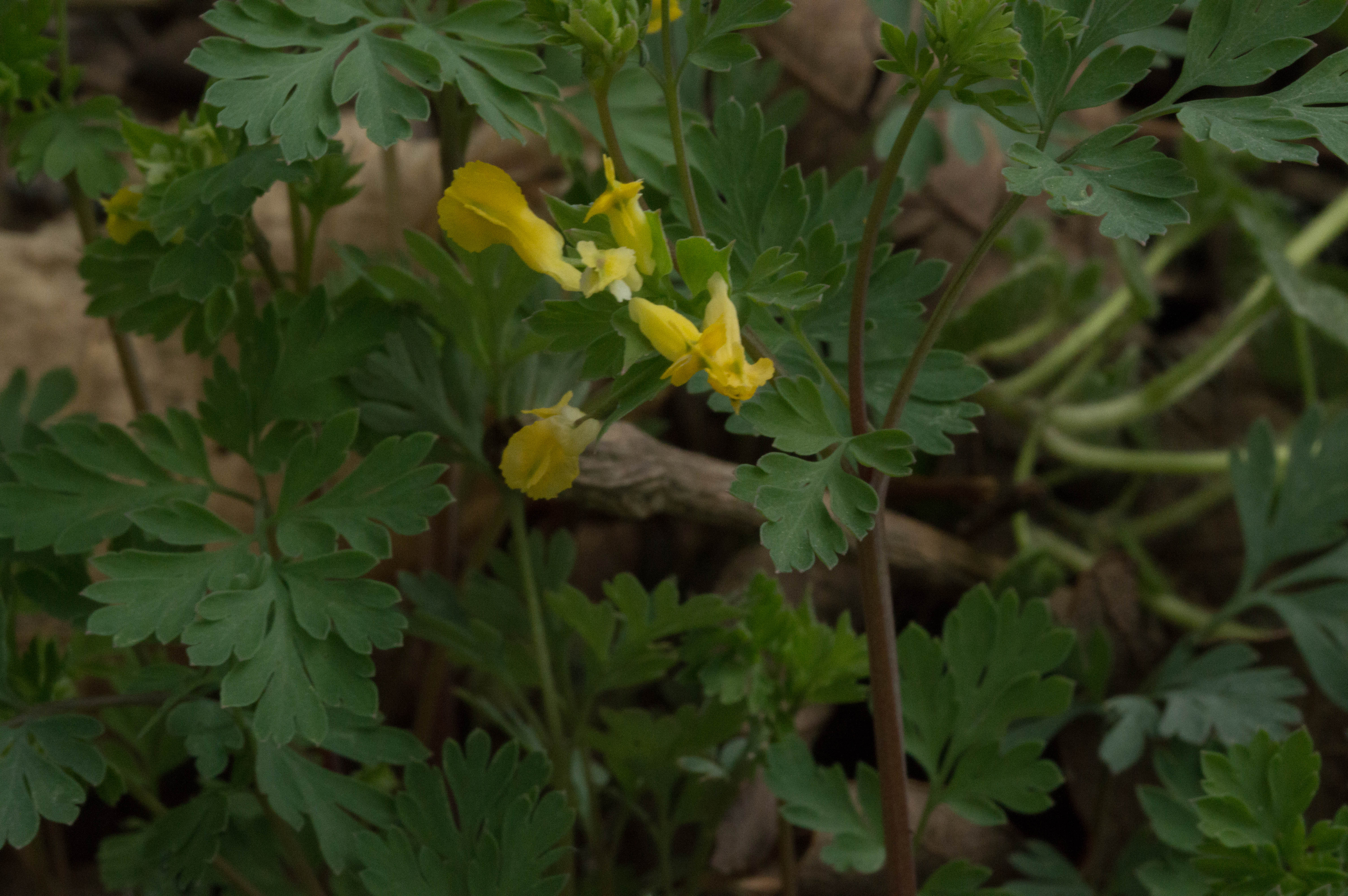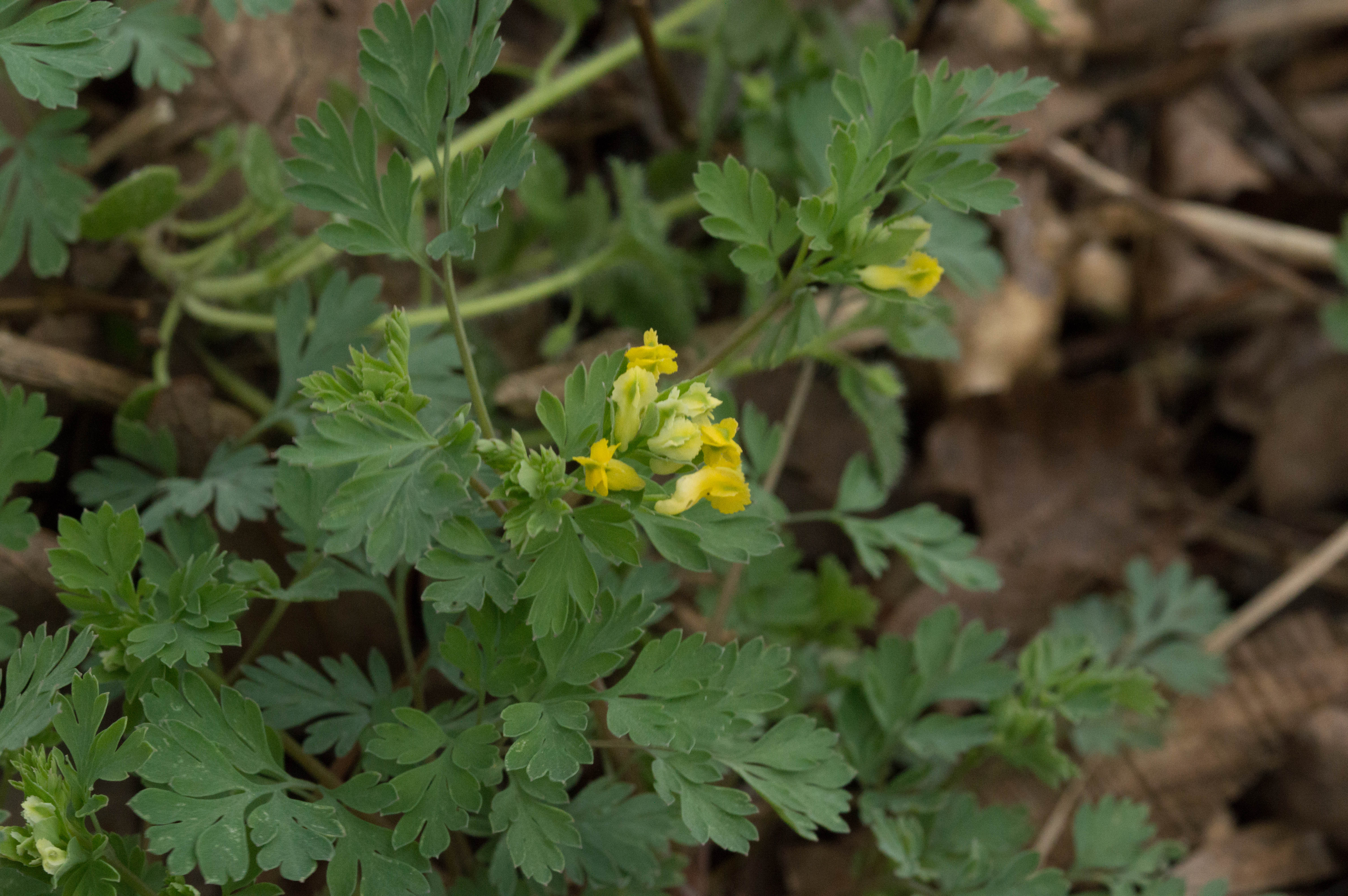
Flower of the Day: Short-Spurred Corydalis

Corydalis flavula; Papaveraceae (poppy family)

This itty-bitty thing is responsible for getting me into photography, and macro-photography in particular.  Last year, try as I might, I could not get a good clean picture of the flower with the iphone camera.  I started carrying a 10x hand lens because of this plant.  I went slightly nuts trying to confirm that it was C. flavula and not one of the other similar species.

Now I have a real camera, an awesome macro lens, a vague idea how to use them, and another two to three weeks to get better pictures.

This shot was taken with the stock Nikon D3200 lens:
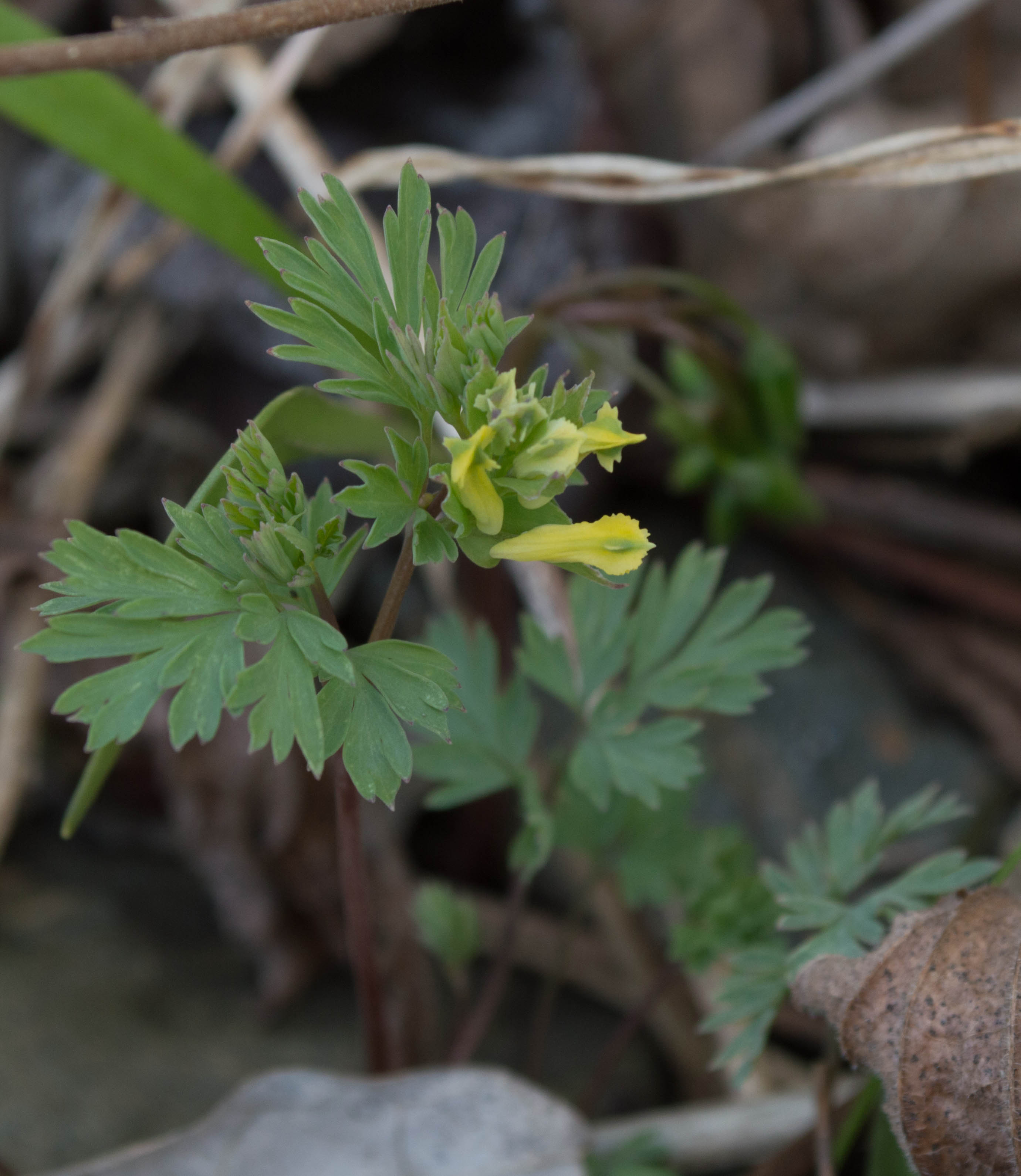
short-spurred corydalis

The rest were taken with the Sigma 105mm lens.  The next picture shows the short spur (to the left of where the flower attaches to the stem) and crest that are characteristic of this species.
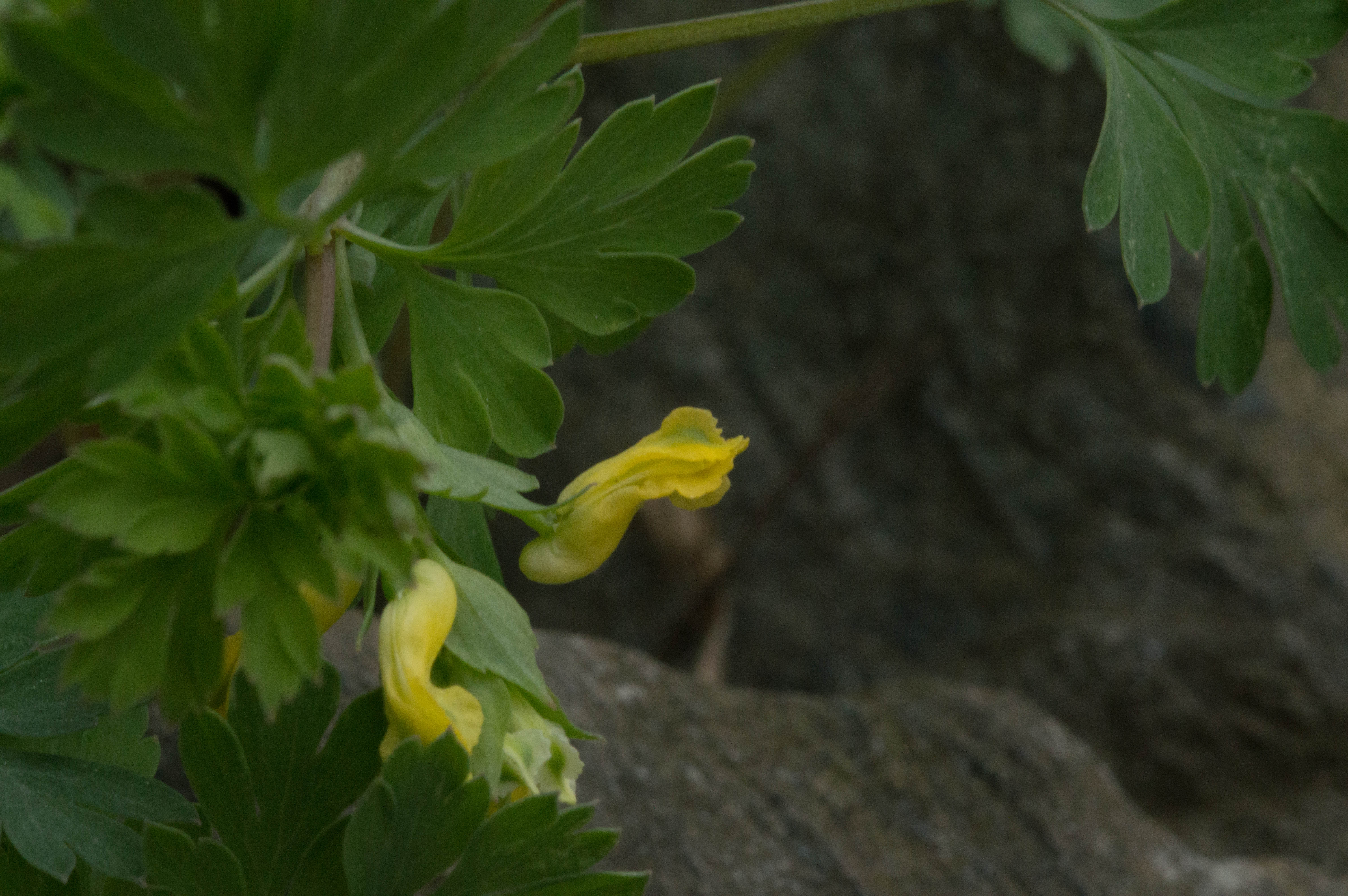
short-spurred corydalis 3  (f/29; 1/160s; ISO 1600)

And here are a few more pictures just because I love this plant.

20140414-DSC_0201 (f/29; 1/200s; ISO 1600)

20140414-DSC_0208 (f/29; 1/160s; ISO 1600)

20140414-DSC_0215 (f/16; 1/200s; ISO 1600)


A Fast Season

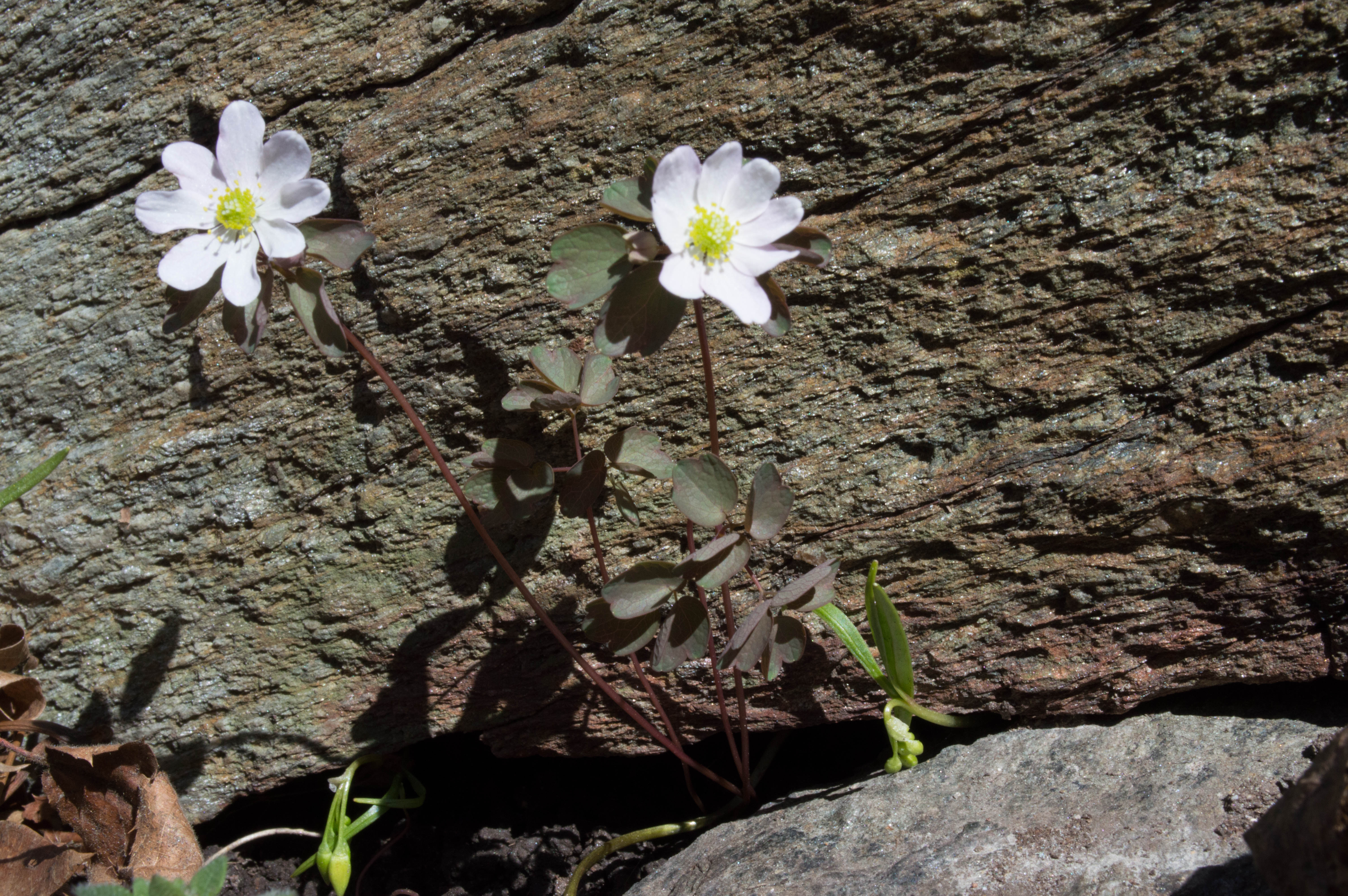
Monday morning I went hiking with my cousin the professional photographer and had a great time playing with the new macro lens.  But as I feared, the season is really compressed.  Twinleaf was completely done flowering, only four days after full bloom.  Trout lilies were waning, and so were the early toothworts.  But so many other plants were just going crazy, as if they knew they had to make up for lost time.  I found twelve more species blooming!

On Tuesday, temperatures fell all day and the rain turned to sleet Tuesday night.  Today’s high should be in the 50s.  Who knows what I’ll find out there…

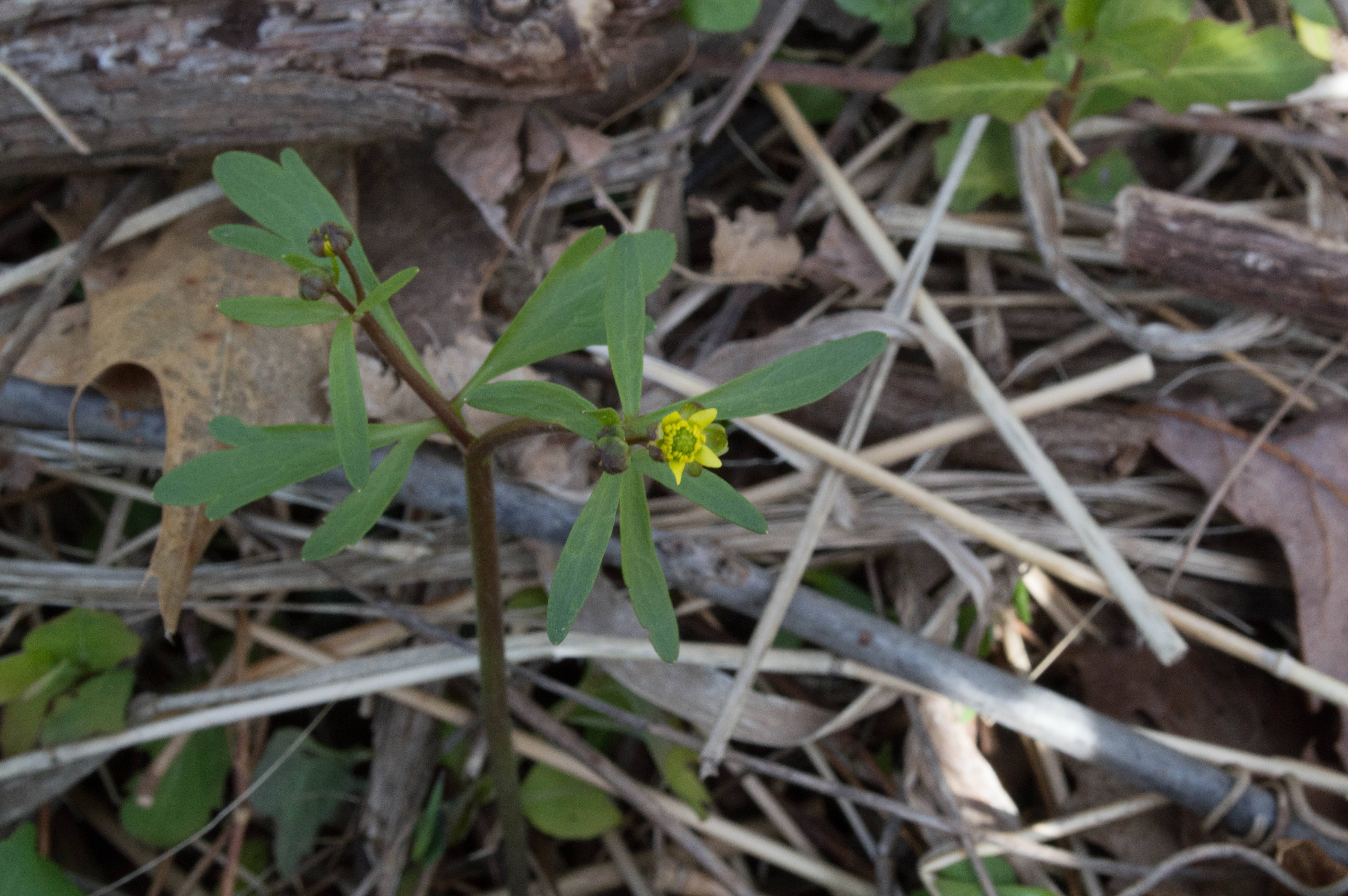
Meanwhile, here’s a picture of spring avens (Geum vernum), an unassuming little blossom, first of the rose family to bloom in this area:

spring avens

Flowers of the Day: Violets

Viola species; Violaceae (violet family)

There are at least a dozen different species of violets in this area.  I’ve found three so far.

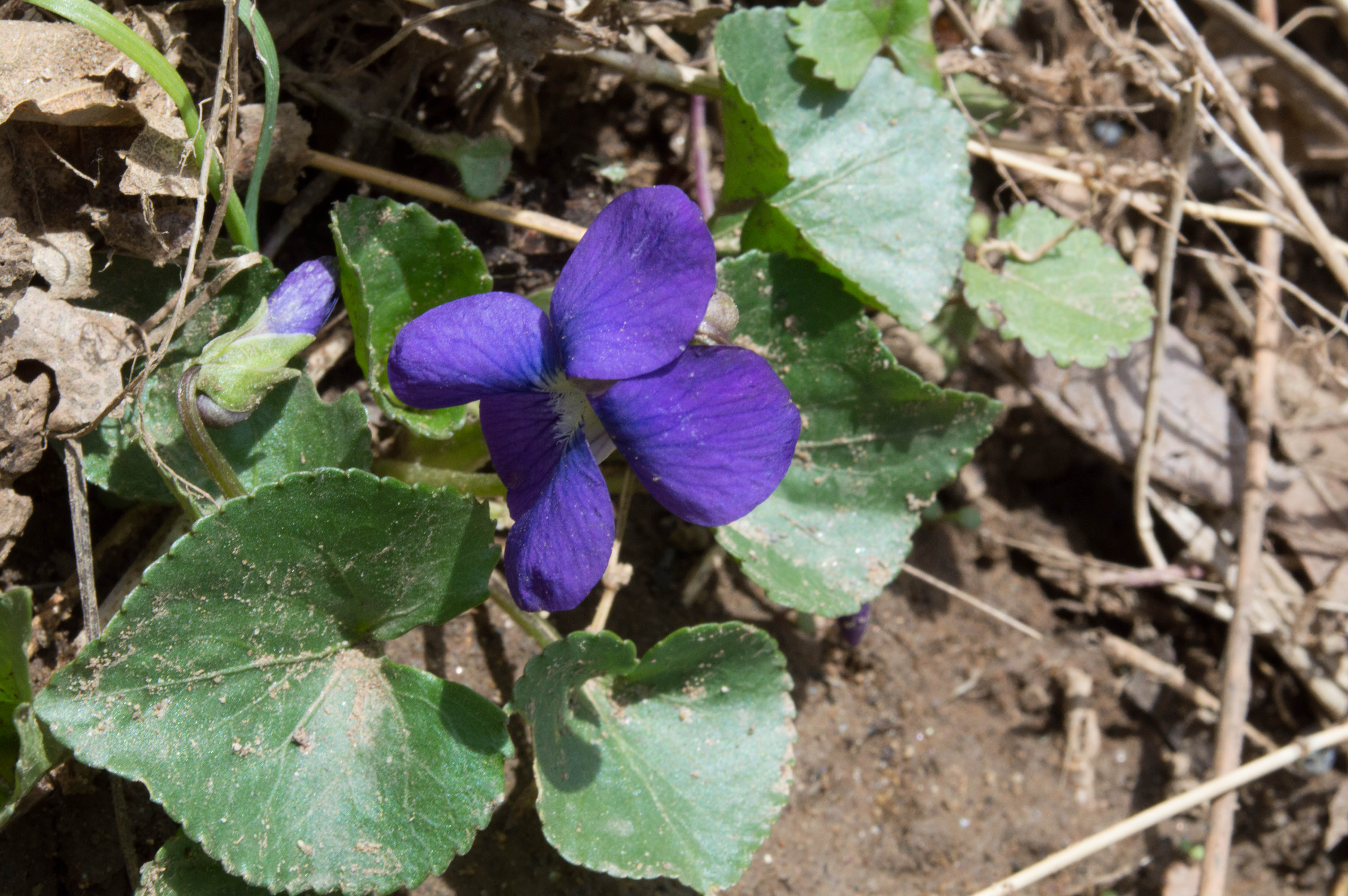
Here’s common blue violet (V. sororia):

common blue violet

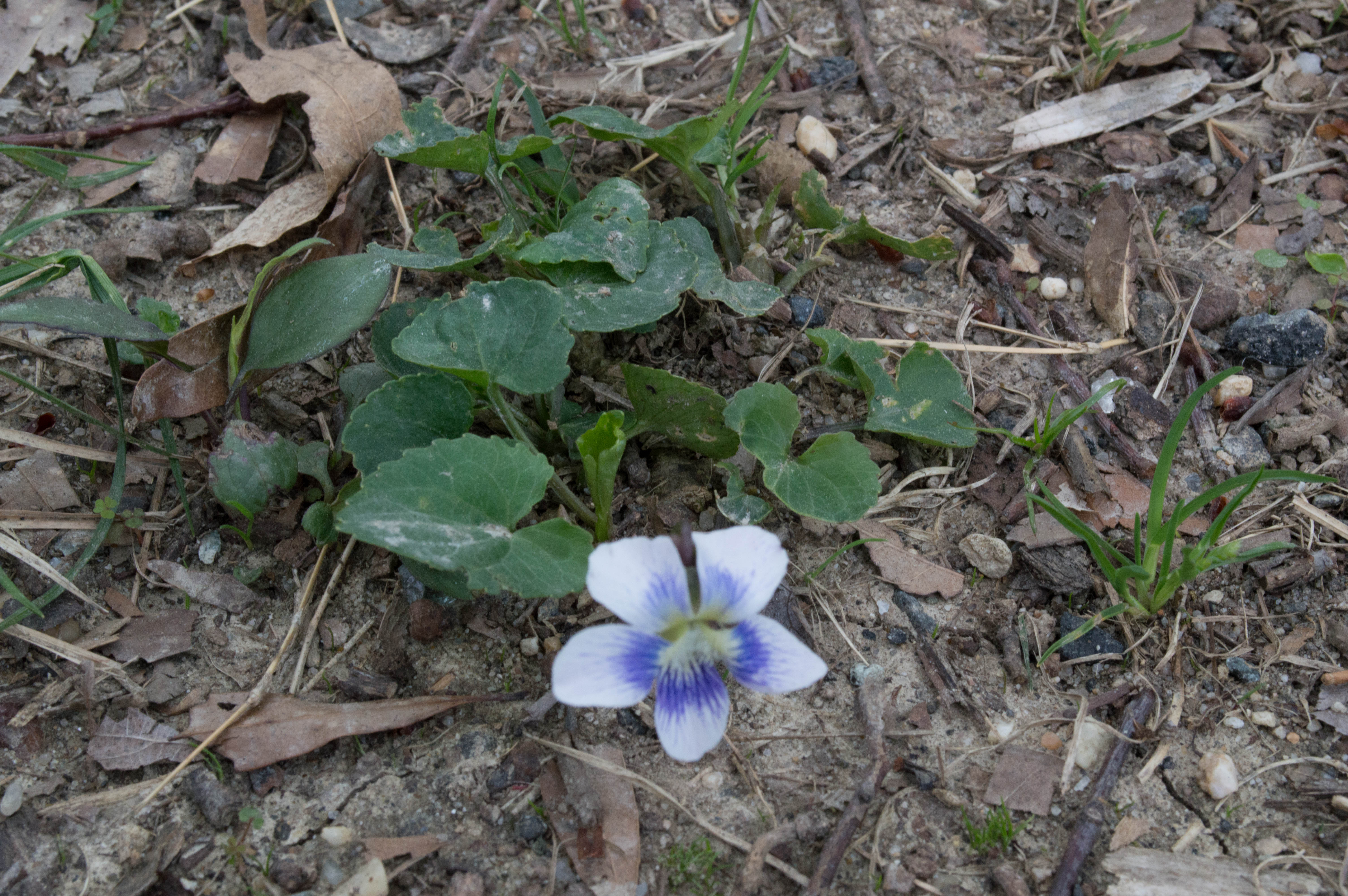
The next one is the same species; they are known to be either solid blue or white with blue markings:

white form common blue violet

And here’s round leaved violet (V. rotundifolia):

roundleaved violet

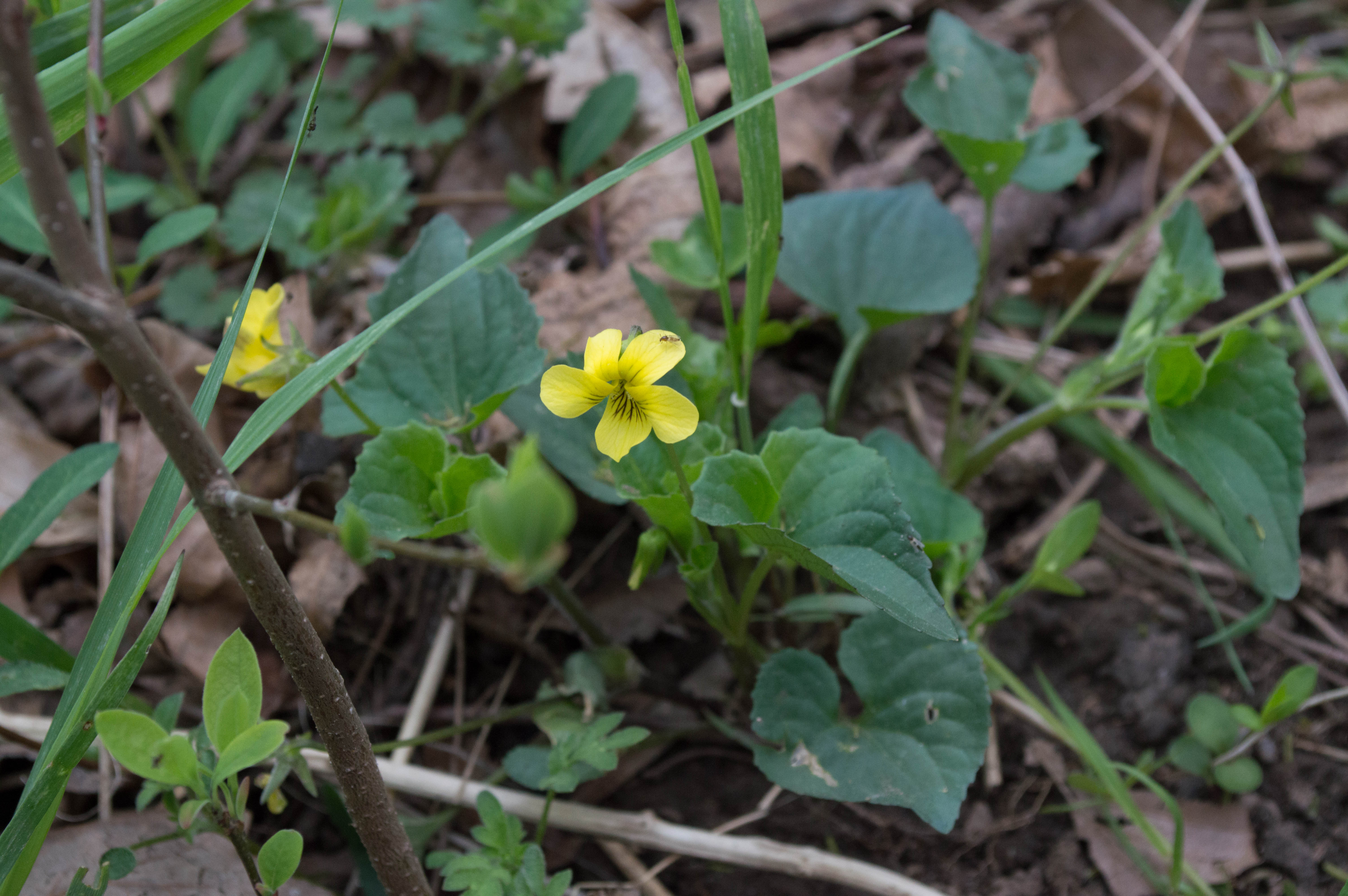
And here’s downy yellow violet (V. pubescens):

downy yellow violet

You can’t see the telltale differences without zooming in on the pictures, but round-leaved violet has only basal leaves, and downy yellow has stem leaves (and fine hairs).

Aliens Among Us

Some of the wildflowers I see are quite striking and eye-catching, some are dainty and delicate, all are interesting in their way… but not all are welcome. Since mid-March this year I’ve spotted 31 species of wildflowers in 17 different families.  Of these, 8 were exotic invasives.  Some you’ll know as common garden weeds.  Others you’ll know as common garden ornamentals.

Here are a few.

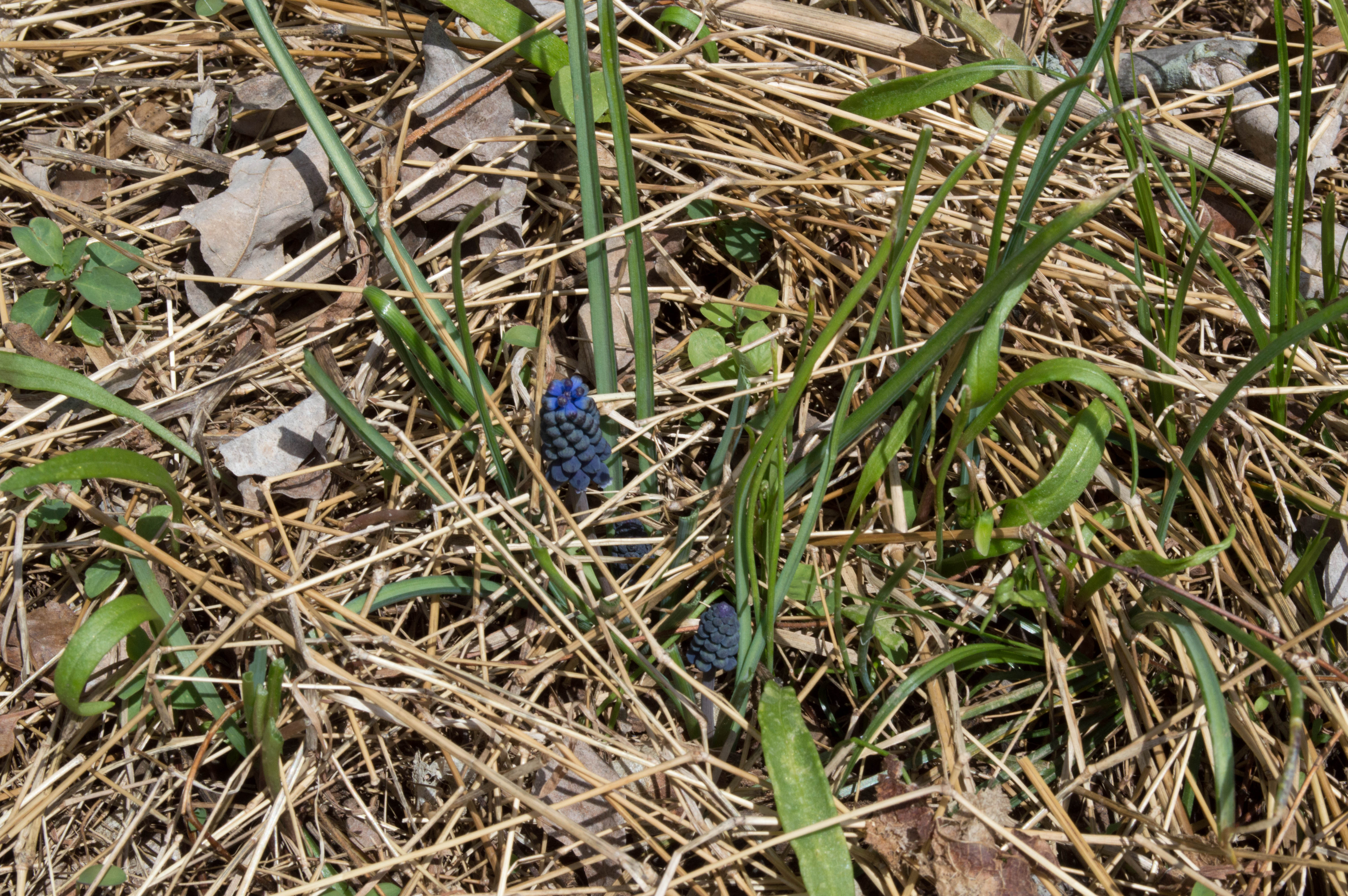
grape hyacinth (Muscari armeniacum):

grape hyacinth

red dead nettle (Lamium purpureum):

red dead nettle

gill-over-the-ground, aka ground ivy (Glechoma hederacea):

gill-over-the-ground

ivy-leaved speedwell (Veronica hederifolia):

ivy-leaved speedwell

lesser celandine (Ranunculus ficaria):

lesser celandine