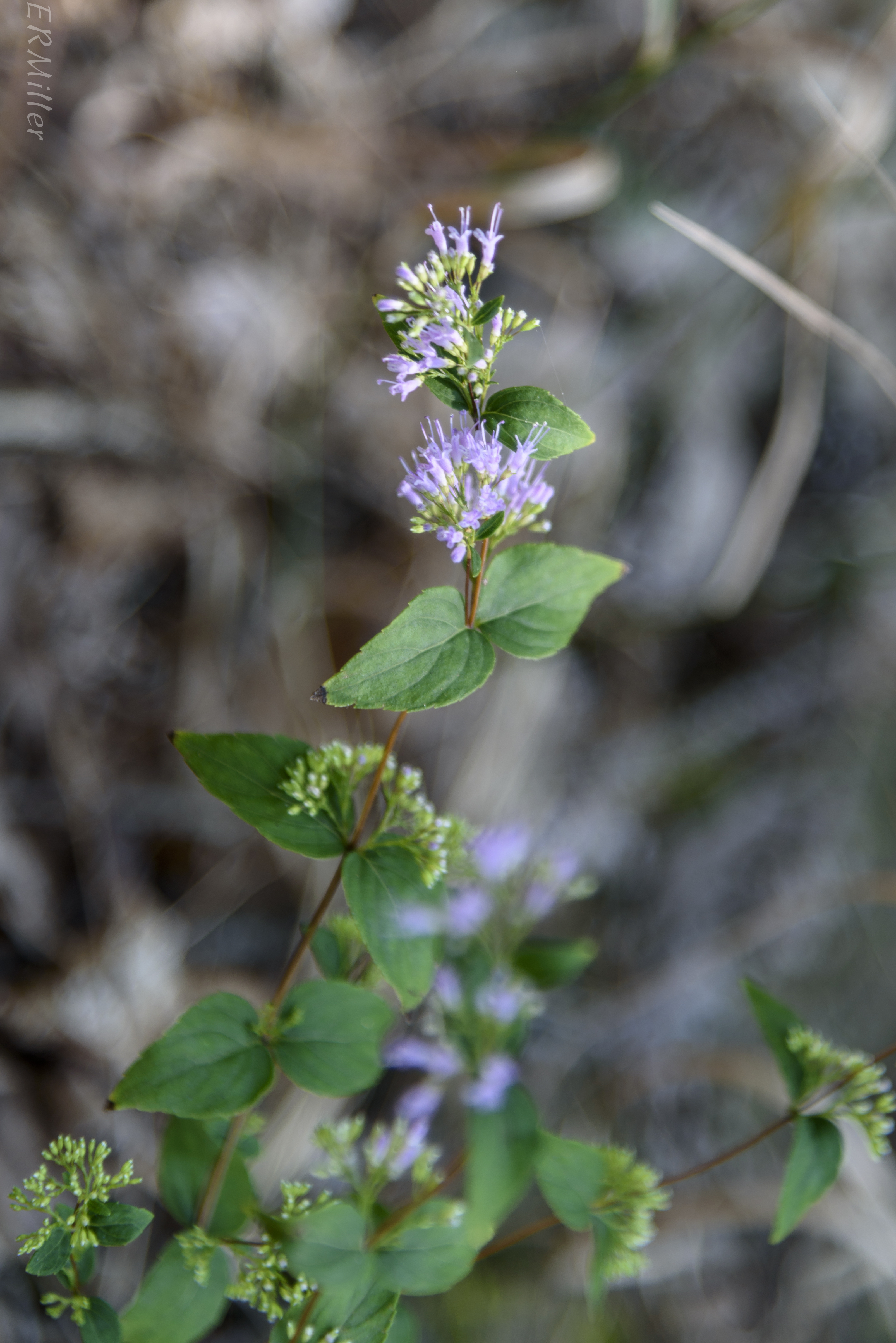
Anguilla

20170117-_dsc0133

Anguilla, northern-most of the lesser Antilles in the Caribbean, is an eel-shaped island about 16 miles long and three miles wide, consisting mostly of a two hundred foot thick layer of limestone over an igneous base. There’s not much elevation change (highest point is about 210 feet above sea level), no springs or streams, and only a little fertile soil. The resulting vegetation is what you’d expect: low-growing, scrubby stuff adapted to harsh conditions.

Maybe 120 of the almost 500 plant species found on Anguilla are thought to be alien, but reports vary. One source theorizes that aliens have had a difficult time establishing on Anguilla because there were never any large plantations offering more hospitable starting places.
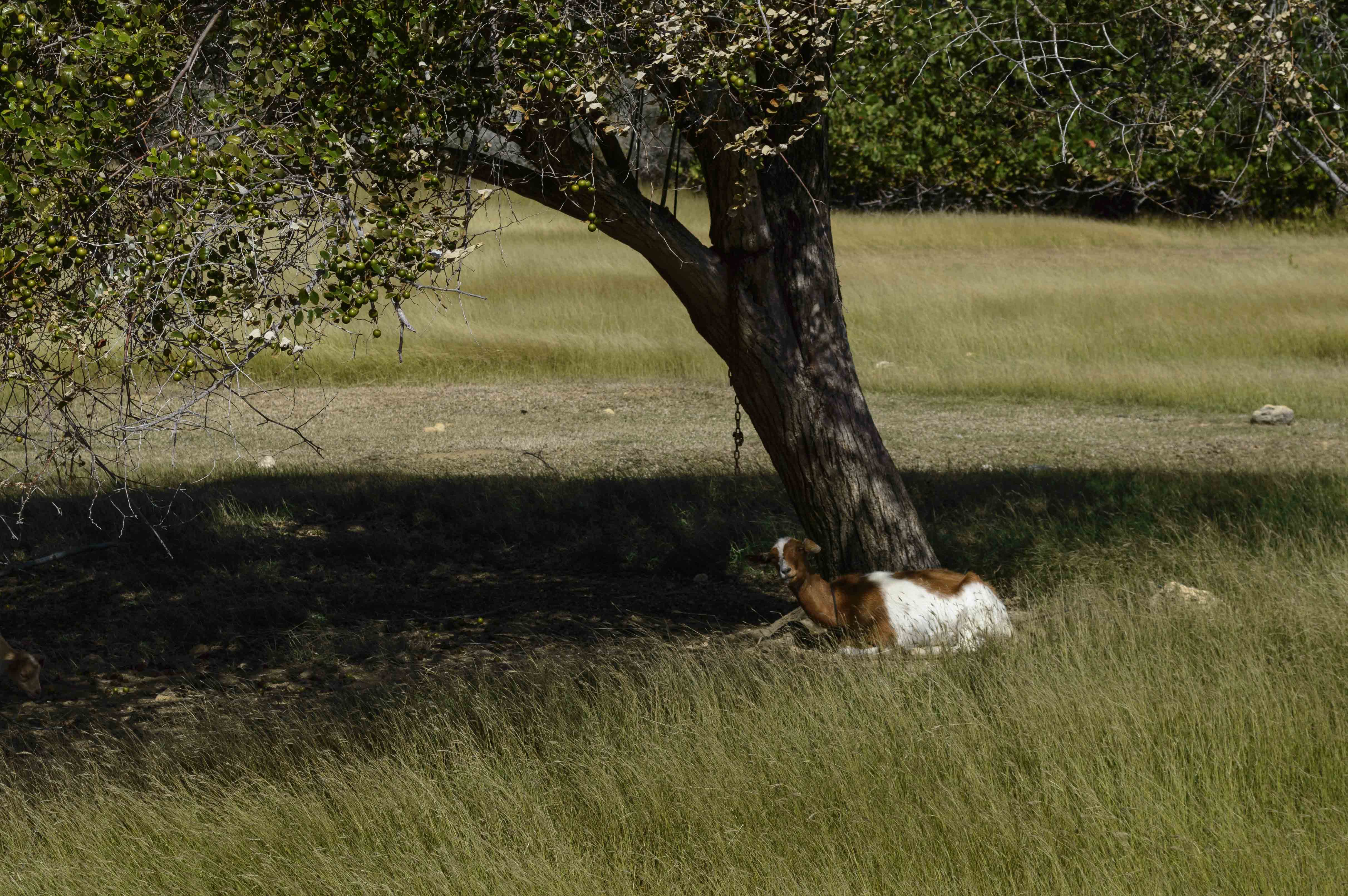
20170114-_dsc0059

Steve and I were there for four days in mid-January. There aren’t any hiking trails as such, but we walked to some uninhabited areas anyway. I brought an older camera and did a lot of point-and-shoot photography, and have identified about 24 species of flowering plants, because even though we were supposed to be relaxing, I can’t resist botanizing in a new place.

The pea and morning glory families were well represented.
20170115-_dsc0109

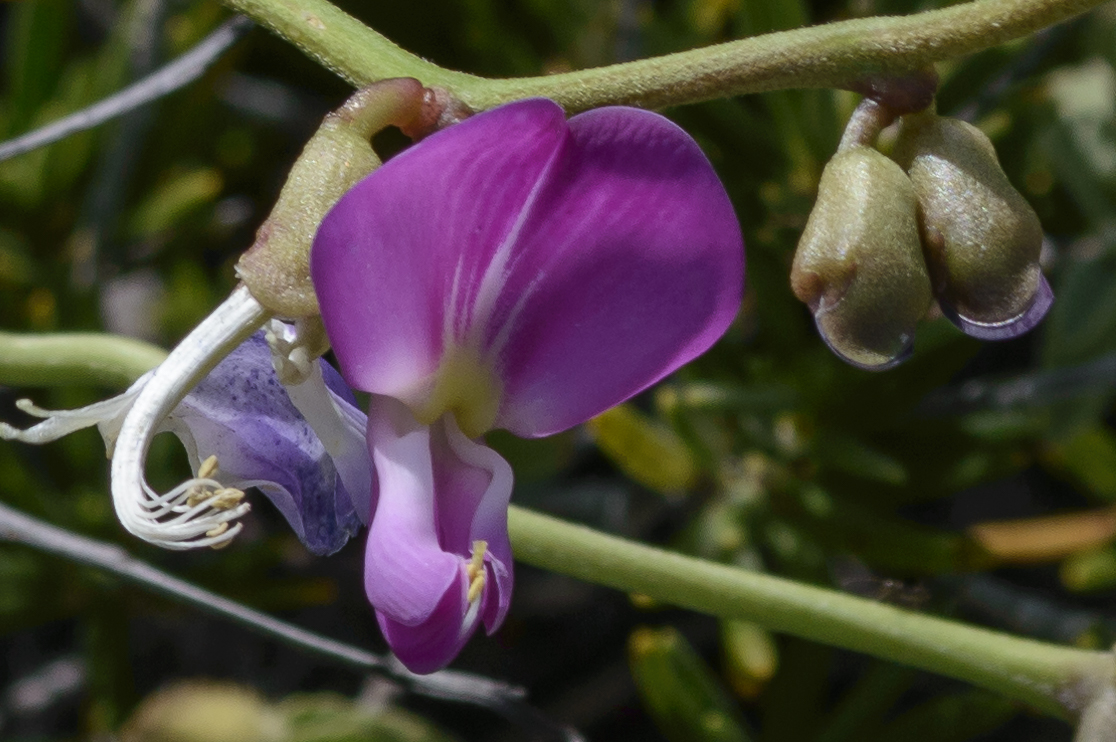
Canavalia rosea (Fabaceae)
Now that’s a papilionaceous flower if ever I saw one. This vine is found in tropical regions worldwide and goes by the names bay bean, beach bean, cow bean, sea bean, vonvon, and who knows how many others.
20170114-_dsc0046


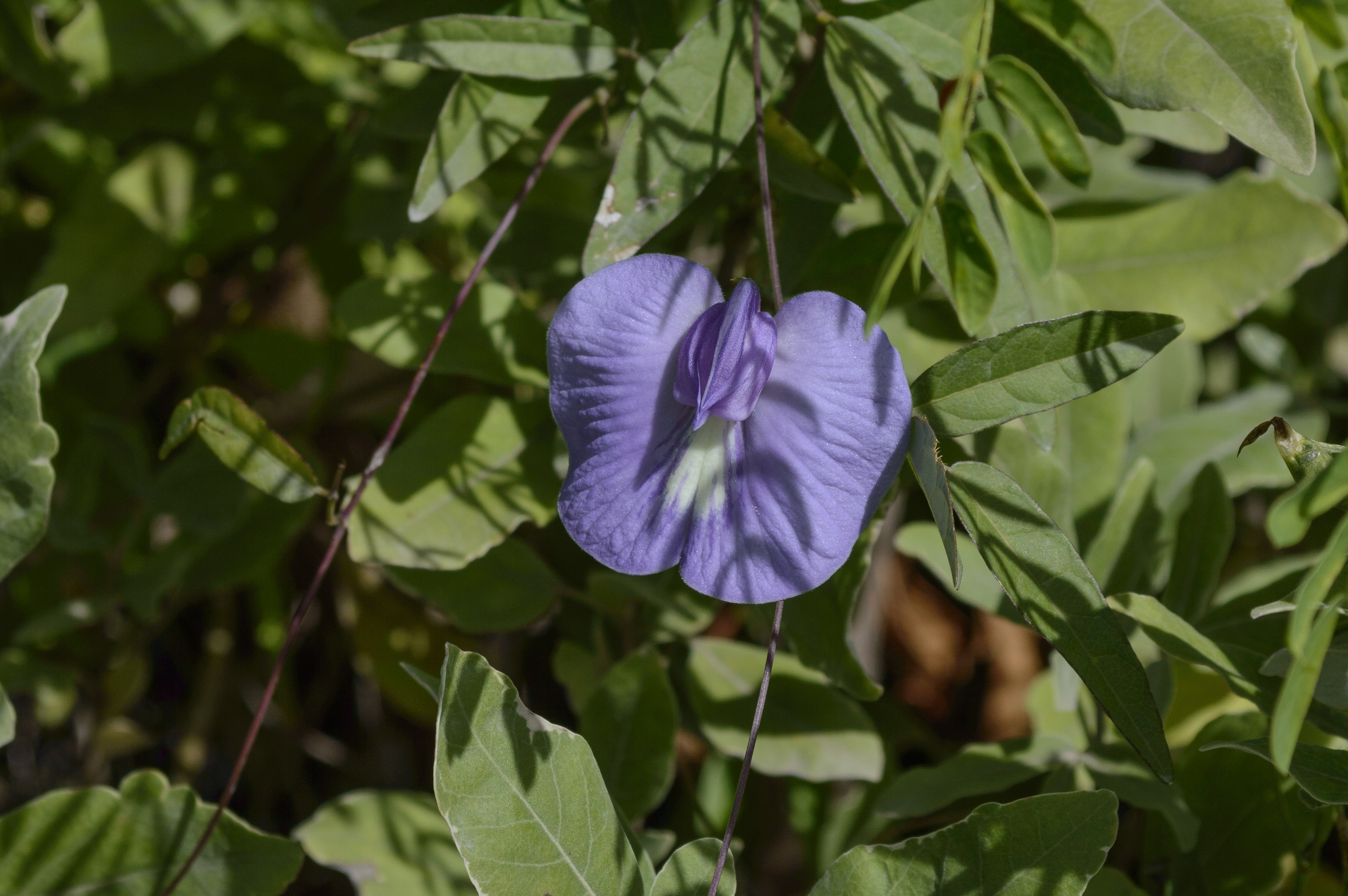
Centrosema virginianum (Fabaceae)
This one has many common names, among them blue bell also known as wild pea, pwa pwa, butterfly pea, and winer. It’s native to tropical and subtropical regions of South and North America, including Maryland (in the coastal plain). When I spotted it I was immediately reminded of Atlantic pigeonwings (Clitoria mariana.)
20170114-_dsc0037

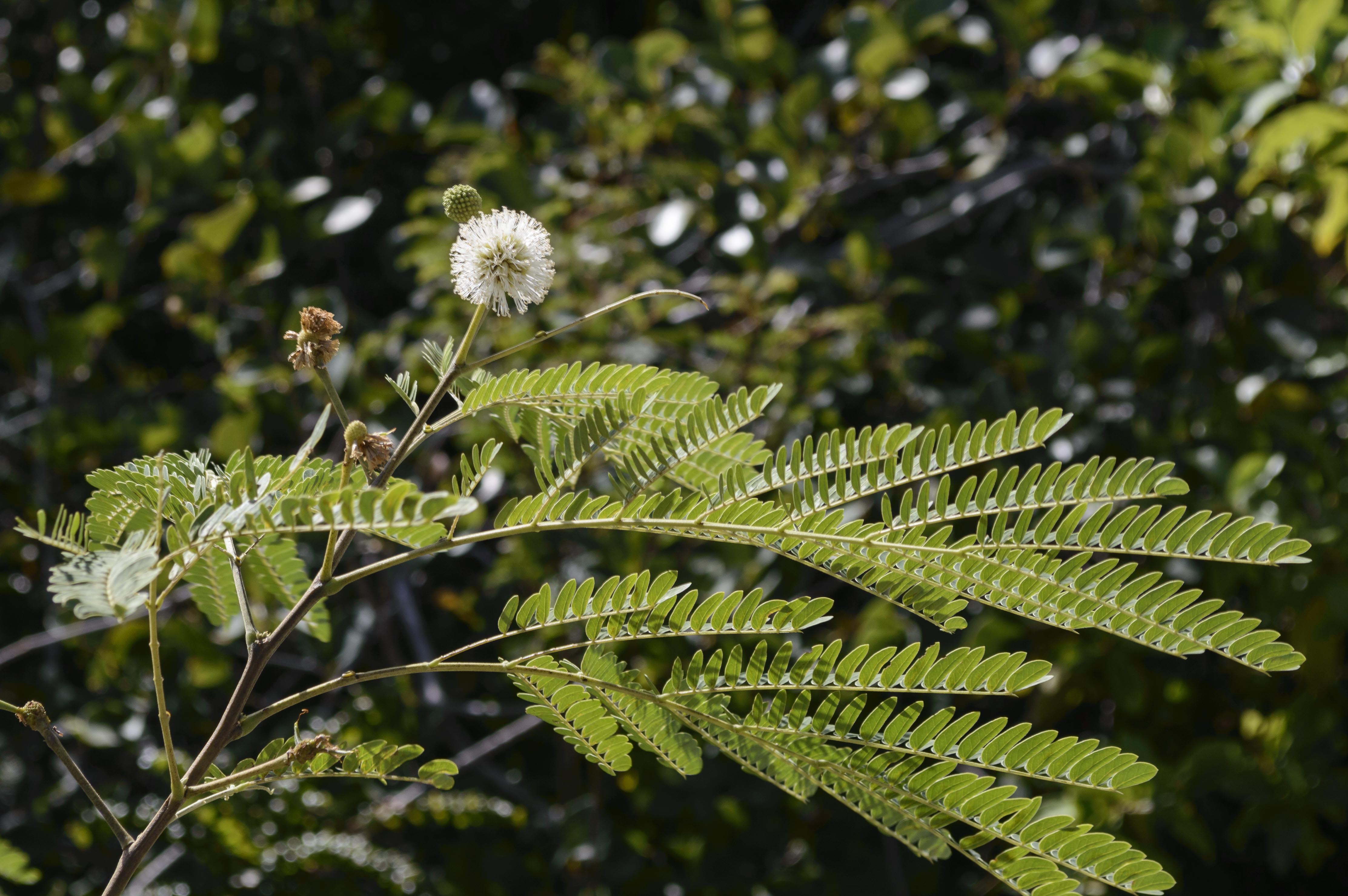
Desmanthus virgatus (Fabaceae)
A short shrub native to tropical and subtropical regions of the Americas, with a million common names, among them wild tantan and dwarf koa.


20170117-_dsc0144


Stylosanthes hamata (Fabaceae) Cheesytoes is native to tropical and subtropical North America. I found it growing as a lawn weed and as such, the plants were very compact and short, but it can get to about two feet tall, and is apparently an important forage species. There are at least two dozen other names for this species, including Caribbean stylo, lady’s fingers, sweet weed, and wild clover.
20170117-_dsc0210

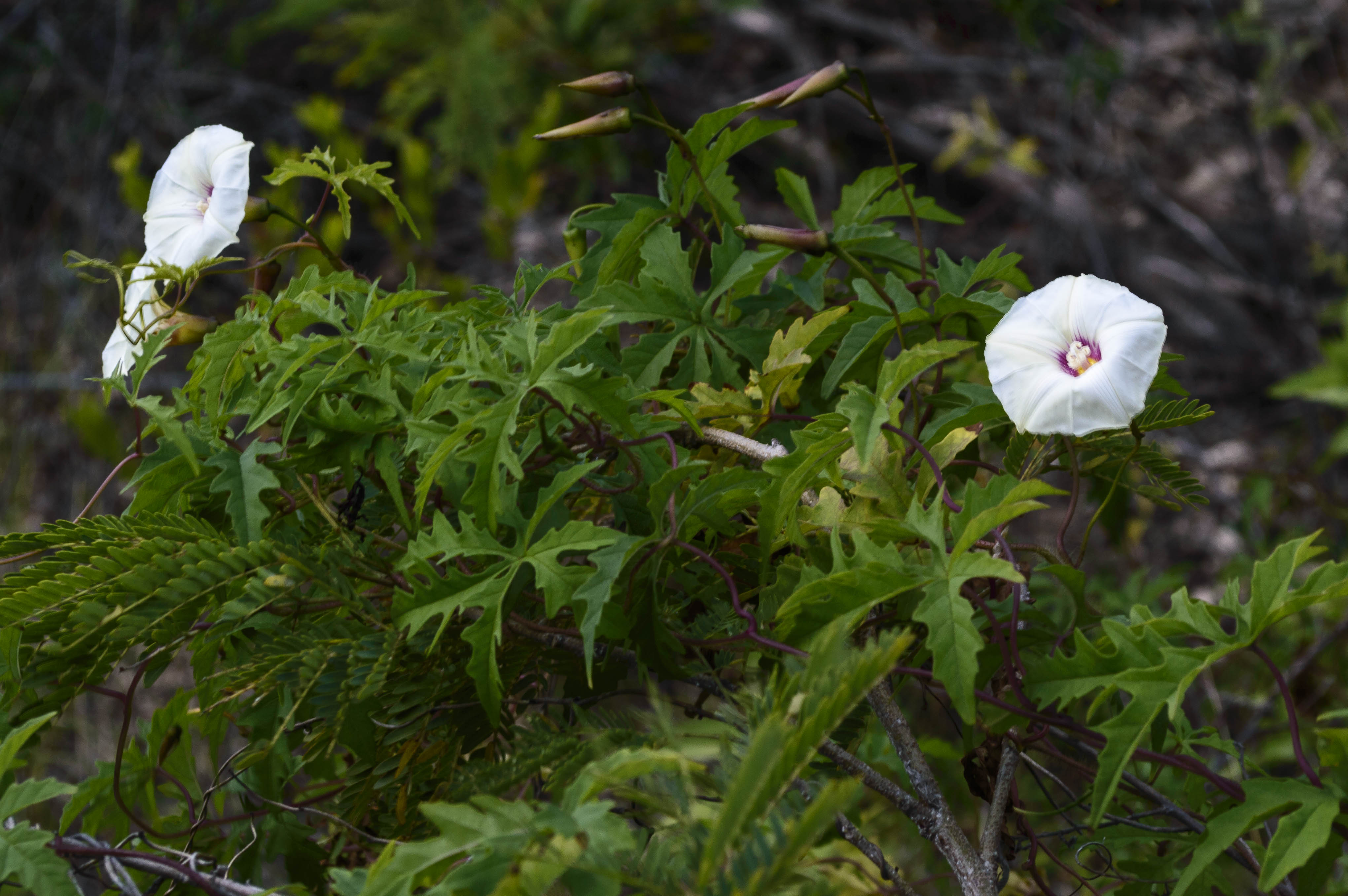
Merremia dissecta (Convolvulaceae)  Cut-leaf morning glory is a native of the Americas, now established in tropical and subtropical regions worldwide. Other common names include noyau vine, bini bini, nora vine, saba spice bush, and alamo vine. I found in growing inland, not right along the beach like so many of these plants.
20170114-_dsc0030

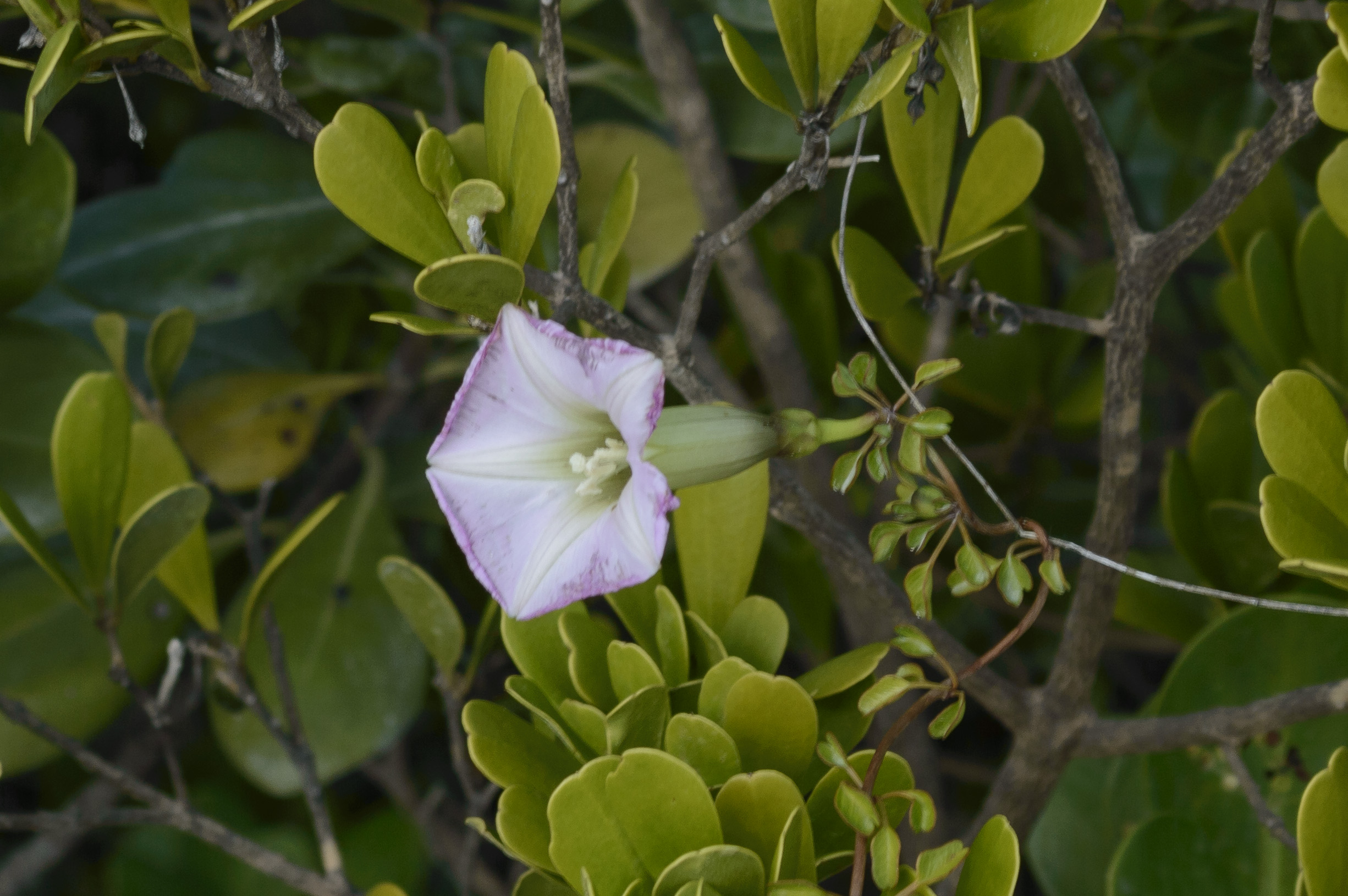
Ipomoea eggersii (Convolvulaceae) “Almost endemic” according to the Plants of the Eastern Caribbean website, jumby potato is a vine of coastal forests and scrubs, found in the Lesser Antilles, Virgin Islands, and a few other Caribbean islands.

20170117-_dsc0171


Ipomoea pes-caprae (Convolvulaceae) This fast-growing vine can reach lengths of thirty feet and can be found in tropical and subtropical beach areas worldwide. It’s considered a noxious weed in Arkansas and Arizona. Common names include beach morning glory, railroad vine, bayhops, and goat’s foot.


sources
Plants of the Eastern Caribbean
Anguilla Environmental Profile
Geology and Botany of Anguilla

next time: more Anguillan wildflowers

More Lamiaceous Wildflowers

20160718-_dsc0004Physostegia virginiana
obedient plant, false dragonhead
Although obedient plant has a large range in the eastern US and Canada, there are only a few scattered occurrences in Maryland, including Montgomery County. I found these stands among the bedrock outcroppings in the Potomac River upstream of Fletcher’s Boathouse in DC. Obedient plant is a perennial that grows to about four feet tall, with late-summer blooming flowers on tall spikes. If it has plenty of soil moisture it can become aggressive, otherwise it makes a great garden plant that attracts bees, butterflies, and hummingbirds.


20140624-DSC_0186

Pycnanthemum tenuifolium
narrow-leaf mountain mint, slender mountain mint
This perennial species grows to three feet tall in rocky areas and drier soils, like the rock outcroppings just upstream of the Marsden Tract. In Maryland it’s found throughout the piedmont and most of the coastal plain; its larger range is from eastern Texas to Quebec. Flowers are borne in terminal cymes.


20150514-20150514-_DSC0112-2

Salvia lyrata
lyre leaf sage
Like obedient plant, lyre-leaf sage is a native perennial that does well in the garden, growing to about two feet tall, with flowers borne in cymes on the upper part of the stem. It’s related to kitchen sage (same genus) but is not particularly fragrant. It grows in moist soils in full sunlight in every county in Maryland; its greater range is from Texas to New York, where it’s endangered.


20150610-20150610-_DSC0009

Scutellaria elliptica
hairy skullcap
Hairy skullcap is a perennial that grows in drier woodlands; look for stands of it near Carderock and the Marsden Tract (C&O Canal NHP) in early to mid June, when the flowers on terminal racemes start opening. The species ranges from Texas through Pennsylvania, and is found in most of Maryland.


20140522-dsc_0073

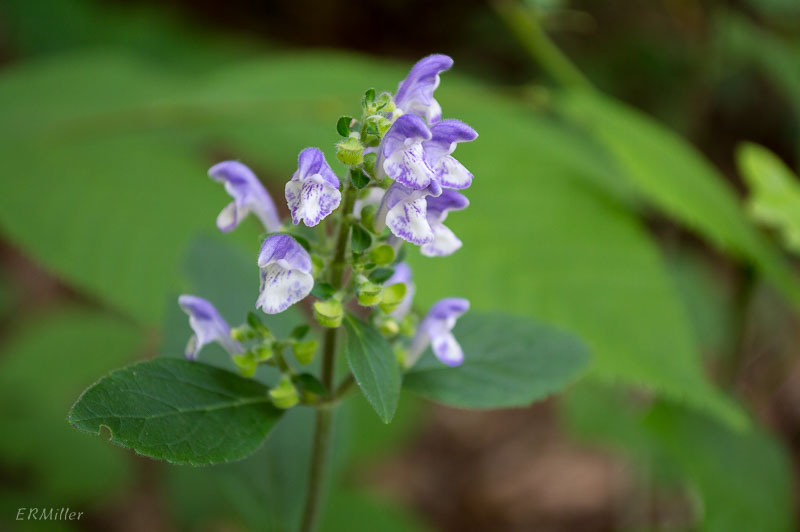
Scutellaria nervosa
veiny skullcap
When I was still fairly new to this hobby I found a few of these plants near the Marsden Tract. After a little while trying to shoot them with a macro lens, I went home to identify them. I was surprised and pleased to learn that I’d found an endangered species (S1, highly state rare), but sadly I have never seen the plants since, despite hours looking every May and June. Veiny skullcap is a low-growing perennial, presumably liking rich, moist woodlands, since that’s where I found it. Flowers are borne singly or in pairs in the axils of upper stem leaves.


20140716-dsc_0101

Teucrium canadense
American or Canadian germander
This widespread perennial is found in all of the lower 48 states and most of sub-arctic Canada, and is considered weedy by some authorities. It grows to about three feet tall, with flowers borne on terminal racemes. It’s in the same genus as the germander used in herb gardens, but has a much looser habit and likes much wetter soils. In the Potomac gorge I find it right on the floodplain, often in large colonies, particularly in late summer when the river is low.


20160830-_dsc0140

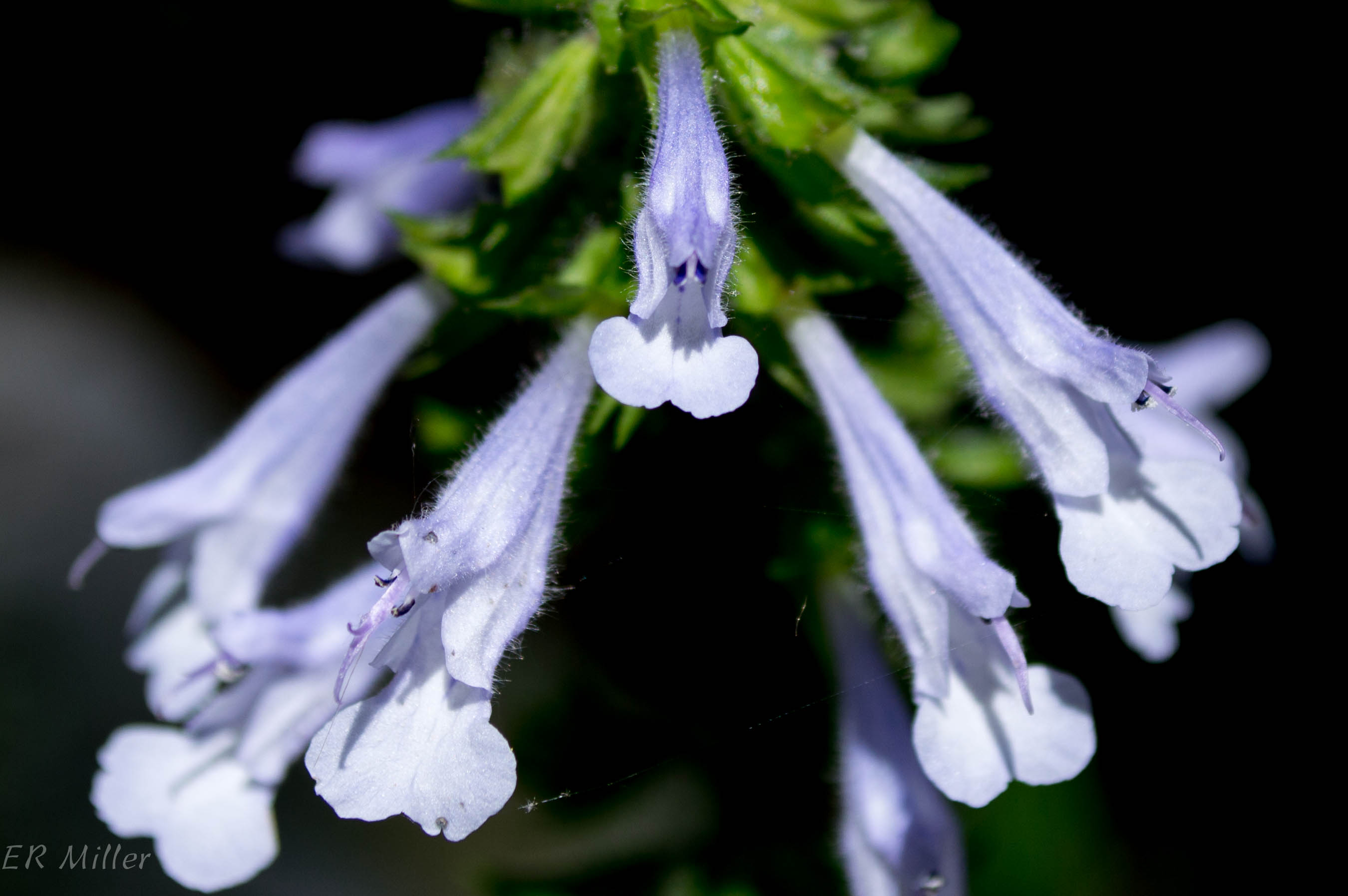
Trichostema dichotomum
blue curls, forked blue curls, bastard pennyroyal
This annual species is widespread in the eastern US and Canada; in Maryland it’s found throughout the piedmont, coastal plain, and ridge and valley physiographic provinces. Look for it growing in drier soils in sunny areas. I’ve seen it by the dozens in Serpentine Barrens Conservation Park in Montgomery County, blooming in late summer. The plant grows to about two feet tall, with flowers borne in axillary cymes.

Lamiaceous Wildflowers

In addition to the weeds (see previous post), there are quite a few species of lamiaceous wildflowers found in the Maryland piedmont. Bloom times given below are based on my observations over the past few years.

20150717-20150717-_DSC0030

Clinopodium vulgare
(formerly Satureja vulgaris) 
wild basil
Wild basil grows in much of Maryland, but I’ve never seen it here; this specimen was photographed in central New York. It’s a circumboreal species; in the US it’s found in the northeast, midwest, Four Corners, and Pacific northwest. This is not the same species as culinary basil (Ocimum basilicum). It grows to about a foot and a half tall in dry soils in sunny areas and open woodlands. Flowers are borne in cymes in the upper leaf axils.


20150824-_DSC0195

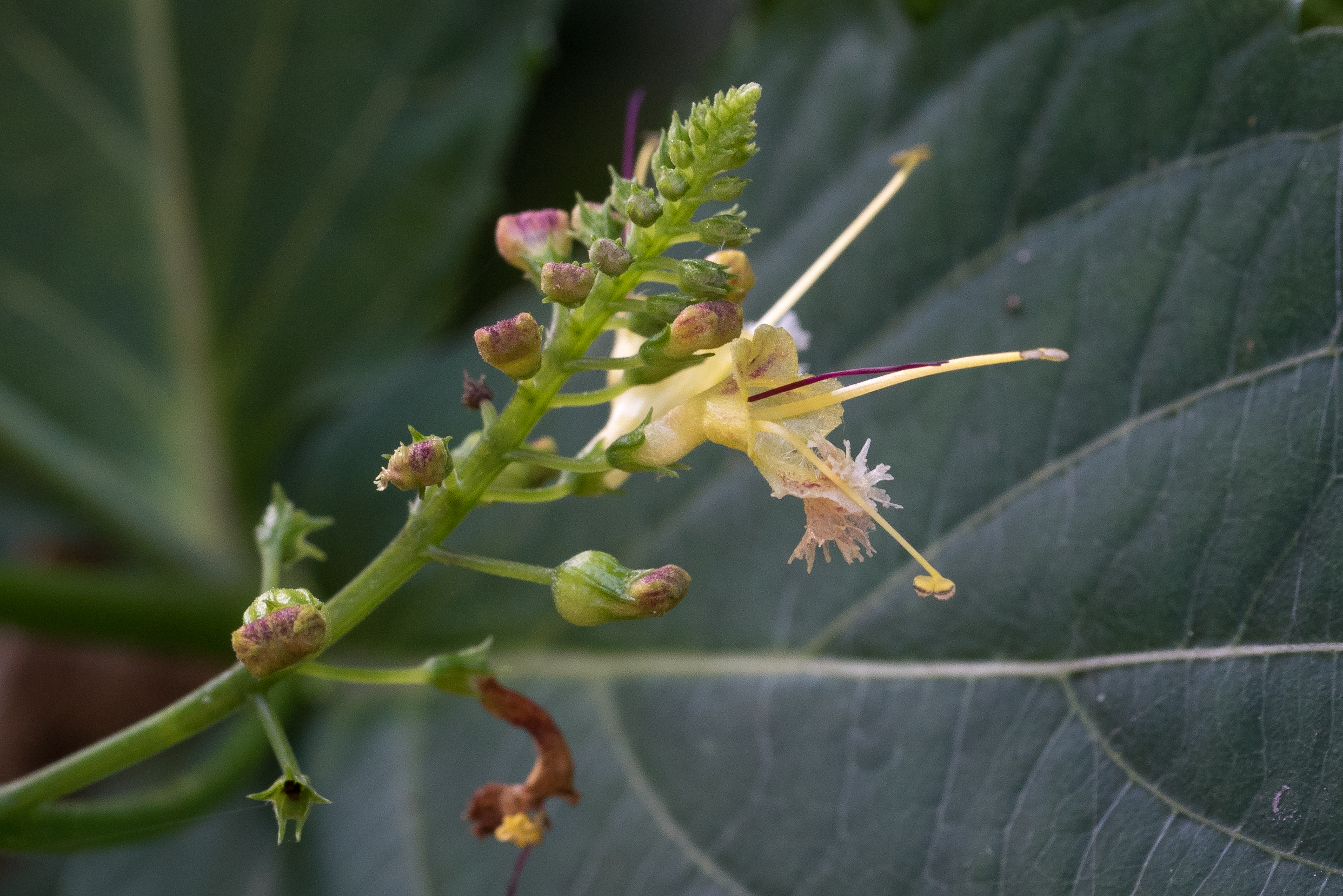
Collinsonia canadensis
horse mint, richweed, stone root
This species is found in most of Maryland (but only parts of the coastal plain). It’s native to eastern North America, and is endangered in Wisconsin. It’s a fairly large plant, growing to four feel tall with a three foot spread in sandy and/or loamy soils in woodlands.  I’ve found two stands of richweed along the Cabin John trail; both sites are moist to wet and rather shady. Small flowers are borne on large terminal panicles in mid to late summer.


20160830-_dsc0257

Cunila origanoides
common dittany, American or Maryland dittany, frost mint, stone mint, sweet horse mint, fairy skirts
Dittany is found from eastern Texas to southern New York late. There are records for it in most of Maryland, but I’ve only seen it once, in the woods at Serpentine Barrens Conservation Park in central Montgomery County. Dittany is a late-summer blooming perennial, growing to about two feet tall, with flowers borne in cymes or panicles in the upper leaf axils.


20150822-20150822-_DSC0121
20140828-dsc_0004

Lycopus uniflorus
northern bugleweed, northern water horehound
Lycopus virginicus
Virginia bugleweed, Virginia water horehound
Two very similar looking species, differentiated by leaf shapes, presence/absence of hairs on stems, shape of calyx teeth, and other little details. Both are moisture-loving perennials growing to about three feet tall, with tiny flowers in cymes in the upper leaf axils. The late-summer blooming flowers are not at all showy.


20150813-20150813-_DSC0140

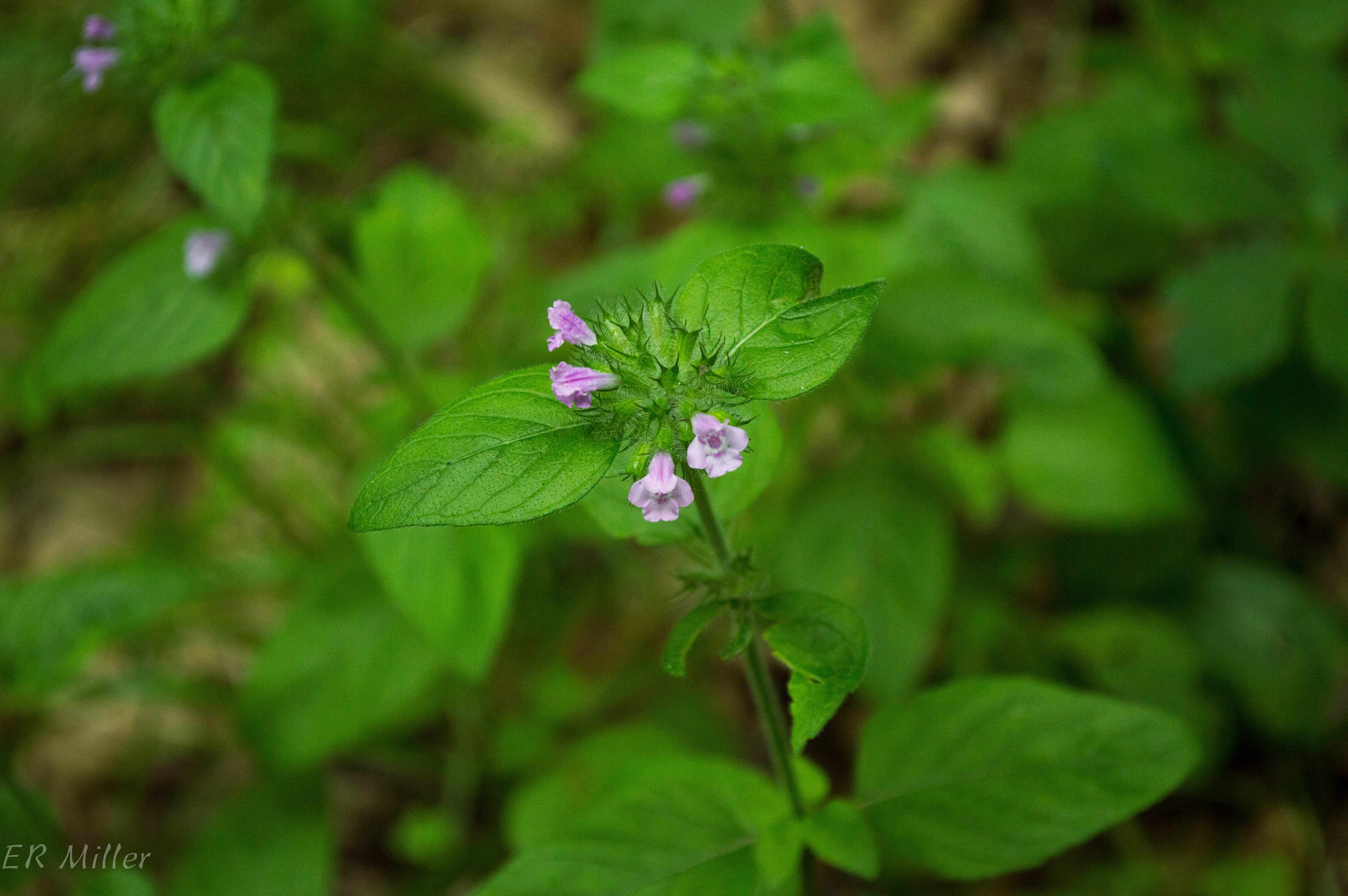
Mentha arvensis
wild mint, field mint
This species is not one of the culinary mints, but like them it can be an aggressive grower. It’s a perennial that grows to two feel tall in moist soils with some sun, blooming in mid to late summer. Flowers are borne in cymes in the upper leaf axils. A circumboreal species, it’s found in most of the US, except in some southern states, and is listed as weedy by some authorities.


20140701-DSC_0193

Monarda clinopodia
basil balm, white bergamot, basil bee balm
Basil balm is on the Maryland RTE watchlist (S3); it’s found only in the piedmont and a few areas to the west. There’s one vigorous stand along the Potomac that I visit every year to see the bees carousing in the blossoms, from about mid June to mid July; like other Monarda species it’s a great attractor of pollinators. Its greater range includes most of the Appalachian states and parts of the mid-Atlantic, with some occurrences in southern New England and the midwest. It’s endangered in New Jersey and New York. The plants stand to about three feet tall, growing in moist soils in open woodlands. The flowers are borne in terminal cymes.


20150725-20150725-_dsc0107

Monarda fistulosa
wild bergamot, bee balm
Except for California, Florida, and Alaska, and Rhode Island where it’s listed as historical, every state in the continental US has one of the seven varieties of M. fistulosa. In Maryland it’s found throughout the piedmont. Like many mint family species, this one can grow aggressively, spreading far and fast in ideal conditions. If you can keep it under control it makes a lovely garden plant that attracts several species of bees and butterflies. It can grow in sun to part shade, in many different types of soils, though it prefers drier ones. In humid conditions (eg, if overcrowded) it can develop mildew. Bee balm is a many-branched perennial growing to about 4 feet tall. The flowers are borne in terminal cymes. Despite the common name, it isn’t related to the bergamot that flavors Earl Grey tea (that’s Citrus bergamia, in the Rutaceae).

next time: more lamiaceous wildflowers

Lamiaceous Weeds

As I wrote in the previous post, about half of the mint family species found in the Maryland piedmont are alien. Some of those are seriously weedy. I regret not having pictures of all of them; perhaps this year I’ll make a point of getting good photos of aliens. Native or not, they are wildflowers…

Ajuga reptans
bugle, bugleweed, carpet bugle, carpetweed
This common ornamental groundcover is grown primarily for its ability to thrive in dry shade. It’s a handsome plant, with purple- or bronze-tinted or variegated evergreen or semi-evergreen leaves, and forms dense mats via above-ground stolons that run and form new plantlets. It’s established in much of the eastern US as well as the Pacific northwest. Whorls of blue-purple flowers appear on short spikes in late spring.
images at invasive.org

Perilla frutescens
beefsteak plant, shiso
A popular herb in Asian cuisines, shiso is an escaped kitchen garden plant. There are vast swaths along the C&O canal from Great Falls to Carderock and elsewhere. Once I spotted a few women there harvesting the leaves. I had mixed feelings about that: on the one hand, destroy the invasives! On the other, foraging in national parks is illegal, and for good reason. Anyway, this plant can get to three feet tall, and features large, wrinkled, purple-bronze leaves that are heart-shaped and coarsely toothed. The small white flowers appear on racemes in summer.
images at invasive.org

20140728-DSC_0017-2

Prunella vulgaris
common self-heal, heal-all, all-heal
There seems to be some confusion about whether this plant is native to the US. ITIS recognizes three subspecies: P. vulgaris ssp. aleutica, ssp. lanceolata, and ssp. vulgaris20140821-dsc_0109BONAP shows two species in the US, P. vulgaris (native) and P. laciniata (alien). Presumably P. laciniata and P. lanceolata are the same. But then, according to the Weakley Flora there are both P. laciniata and P. vulgaris ssp. lanceolata. Whether alien or native, self-heal is recognized by several authorities as weedy. I see it blooming along the C&O Canal towpath, leading me to believe it likes sunny areas in dry, disturbed soils. It’s common there, but not exactly weedy. The blue or sometimes white flowers are borne in short spikes in mid to late summer.

There are three commonly confused, purple-flowering weeds that seem to be everywhere: ground ivy, henbit, and deadnettle. For more information, check out the post on identifythatplant.com.

gill-over-the-ground

Glechoma hederacea
ground ivy, gill-over-the-ground, creeping charlie
This very low-growing plant has stolons up to seven feet long, forming new plants at the nodes, and thus covers large areas in mat-like growth. The small, round leaves have rather long petioles, are indented at the bases and have scalloped margins. The flowers are borne in pairs of cymes in the leaf axils, each cyme having only a few flowers. Ground ivy is established in most of the US and Canada (except the desert southwest), and is listed “potentially invasive, banned” in Connecticut. In the Potomac gorge there are areas many square feet in size covered in nothing but ground ivy.

Lamium amplexicaule
henbit, henbit deadnettle
Native to Europe, Asia, and north Africa, this low growing annual is established in almost all of the US and Canada except the Arctic regions. It’s a sprawling plant, but maybe not as mat-forming as ground-ivy, from which it’s distinguished by the leaves, which are about the same shape, but on the upper part of the stem they’re sessile so that they appear to entirely surround it. The stem is often red. The flowers are borne in sessile whorls in the leaf axils, and in terminal whorls.
images at invasive.org

red dead nettle

Lamium purpureum
purple deadnettle, red deadnettle
Purple deadnettle is not quite as widespread across North America as henbit is. The green stems stand upright (instead of sprawling), and the uppermost leaves are somewhat purple or reddish. The leaves have a somewhat more pointed shape, short petioles, and occur only on the upper half of the stem.
images at invasive.org

next time: lamiaceous wildflowers (the not-weedy kind)

The Lamiaceae

20150717-20150717-_DSC0030As familiar as weeds, as fragrant as mint, the Lamiaceae has a cosmopolitan distribution: about 7,850 species in 250 genera can be found almost worldwide (not Antarctica, and not north of the Arctic circle). Also known as the Labiatae, this family ranks 10th in size among native flowering plant families in North America, with about 408 species. In Maryland there are almost 100 species (more if you count sub-species and varieties), about half of which are in the piedmont. Sadly, only a little more than half of the species are natives, and of those, twenty-two are on the current Rare, Threatened and Endangered list. Two of those are extirpated.

Mint family plants are well known as garden ornamentals and herbs (culinary and otherwise). In the former category are agastache, bee balm (Monarda species), bugleweed (Ajuga species), catmints (Nepeta species), coleus, germander, hyssop, several sages (Salvia species), and stachys. Familiar kitchen species include basil, horehound, lavender, marjoram, the various mints, oregano, perilla, rosemary, savory, sage, and thyme.

The mint family shows up in another way in many of our homes: as furniture. The three species of teak trees (genus Tectona) are in the Lamiaceae.

The mint family species are generally herbs, shrubs, or subshrubs, frequently with hairy stems that are more often than not square in cross-section. The leaves are usually arranged in opposing pairs or in whorls on the stem, and are generally simple, though they may be lobed or pinnately or palmately compound, and they lack stipules. They often have oil glands (many species are fragrant).

20150813-20150813-_DSC0136

The flowers are often found in whorls in the leaf axils, and are often scented. They generally have five fused sepals and five petals that are often fused or partly fused, giving the appearance of a two-lobed petal above and a three-lobed petal below.

In some Lamiaceae species flowers are borne in cymes, a type of inflorescence that has several branching pedicels originating from the same point on the peduncle, along with a terminal flower that is always the first to open. In the mint family these cymose flowers are often small and densely packed, with two opposing clusters; the effect is that of a whorl of individual flowers. Flowers can also be borne in racemes or panicles. 20150823-_dsc0007


terminal panicle of horse balm (Collinsonia canadensis) —>


next time: lamiaceous weeds