Spikes and Spheres

Small flowers in small inflorescences on two small plants, both very common in Iceland.
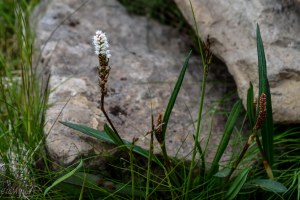
 

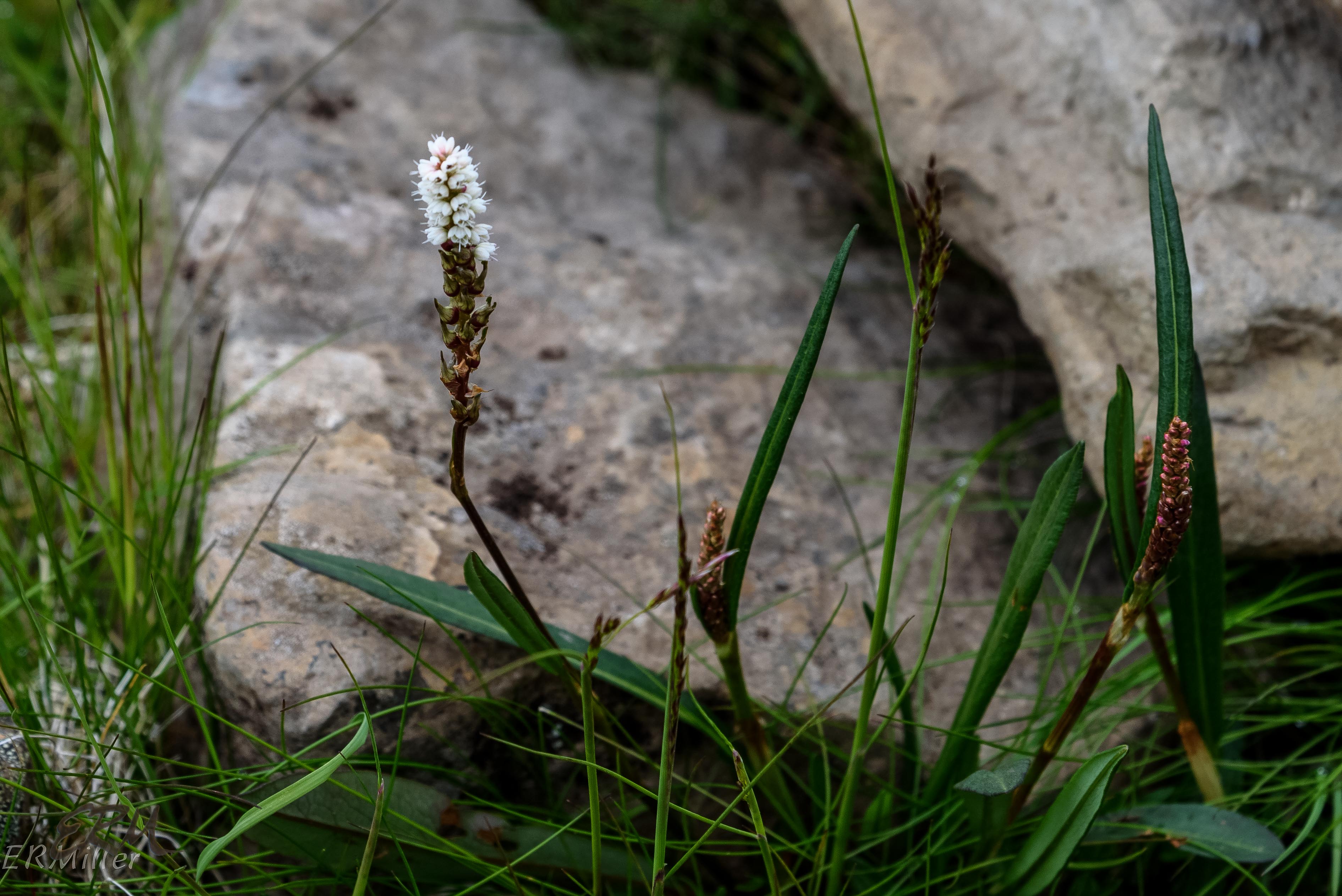
Bistorta vivipara
aka Persicaria bistorta
aka Polygonum viviparum
alpine bistort
Icelandic: kornsúra
Polygonaceae


Arctic bistort is found in subarctic regions around the northern hemisphere; in the US, there are a few scattered occurrences in northern New England and the upper Midwest, as well as in the Rocky Mountains south to New Mexico. In Iceland it grows in a variety of habitats at elevations from sea level to over 3,000 feet.

Considering how many different binomial names this plant has, it may be a stretch to say that there are relatives in Maryland, but jumpseed (Persicaria virginiana, which should be blooming about now), is very common here, and another dozen plus species of Persicaria can be found here.

There isn’t much interesting about this plant except that it mostly reproduces vegetatively (instead of sexually) by means of bulbils. If you zoom in on the picture you can see bulbils at the bottom end of the inflorescence. The bulbils will drop off and form new plants that are clones of the parent. The specific epithet vivipara refers to this floral analog of giving birth to live young.
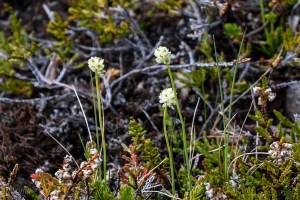
 

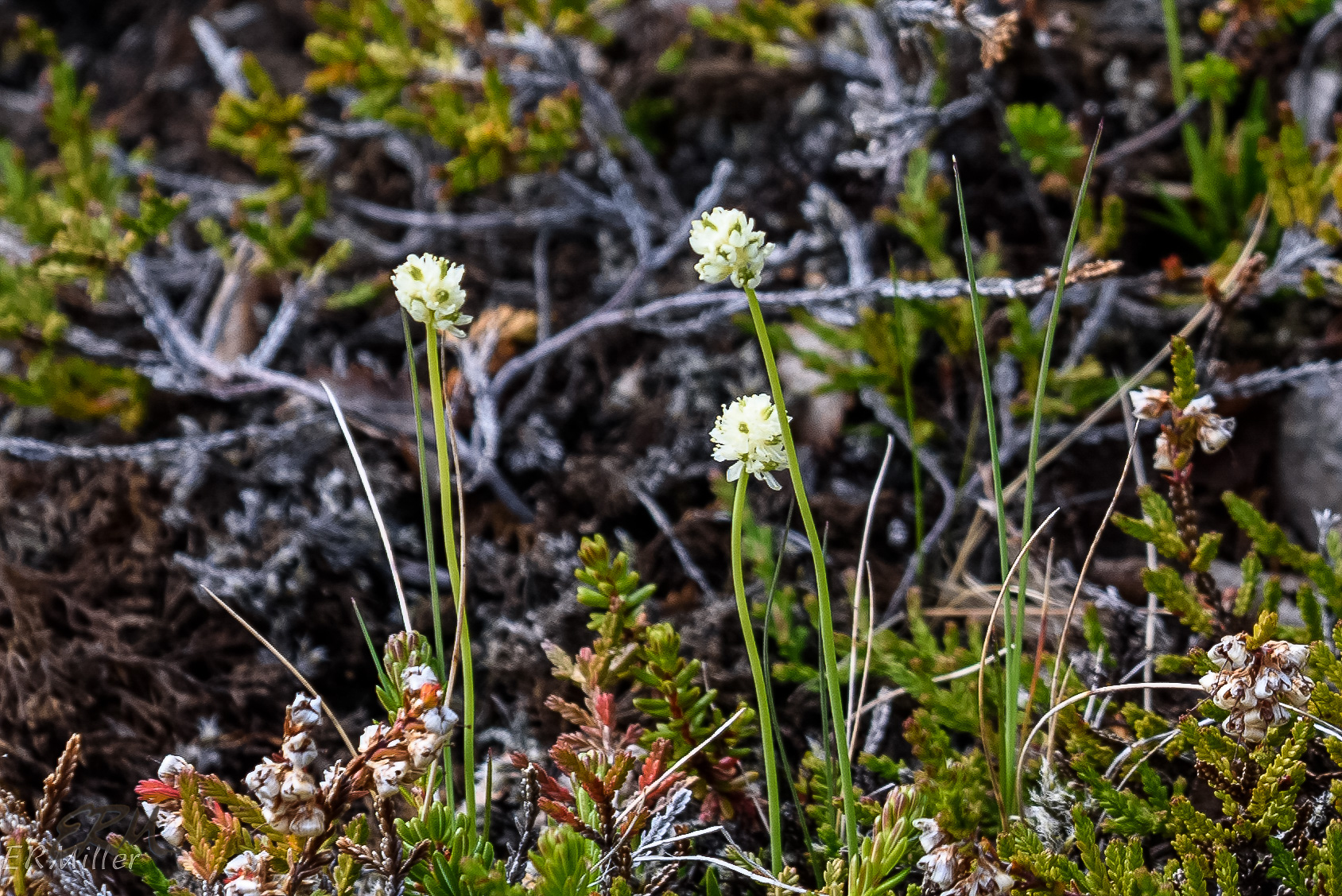
Tofieldia pusilla
Scottish asphodel,
Scotch false asphodel
Icelandic: sýkigras
Tofieldiaceae


Despite the descriptor “Scottish” in the common name, this plant is native to subarctic zones around the globe. In the US it’s limited to four counties, in Montana, Minnesota, and Michigan. It’s not quite as widespread in Iceland as the bistort is, but is still pretty common. Only one member of the family Tofieldia is known to have grown in Maryland, but sadly it’s been extirpated.

By the way the leaves are not visible in this picture, which is a shame, but this was one of several plants I saw by mistake while photographing something else. If I’d realized what I’d seen… oh well.
Beautiful Little Things

These three plants have nothing in common other than I found them to be delightful.

20160620-_DSC0599

Veronica fruticans
rock speedwell
Icelandic: steindepla
Plantaginaceae

Despite being common and distributed through much of Iceland, I only saw these two flowers, on a mountainside south of Akureyri. The species is also found in Greenland and Fennoscandia. The flower is small (about half an inch across), but the blue is so intense that it really stands out.

20160620-_DSC0585


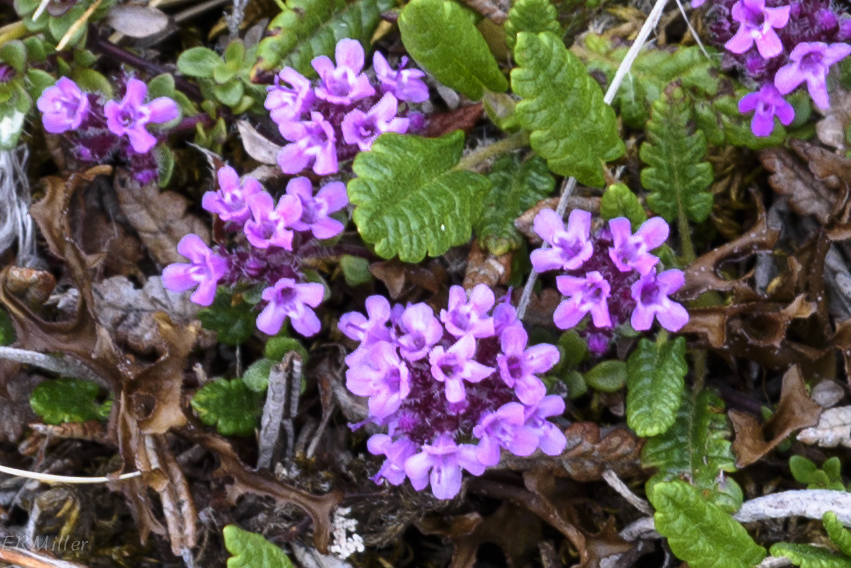
Thymus praecox ssp. arcticus
creeping thyme
Icelandic: blóðberg
Lamiaceae

This ground-hugging plant was almost everywhere, as delightful to smell as it is to see. It’s another Fennoscandia native, but its introduced ranged includes Greenland, much of Canada, various parts of the US as far south as Mississippi, and even Venezuela.

belly flower!
–>

20160618-_DSC0442-2


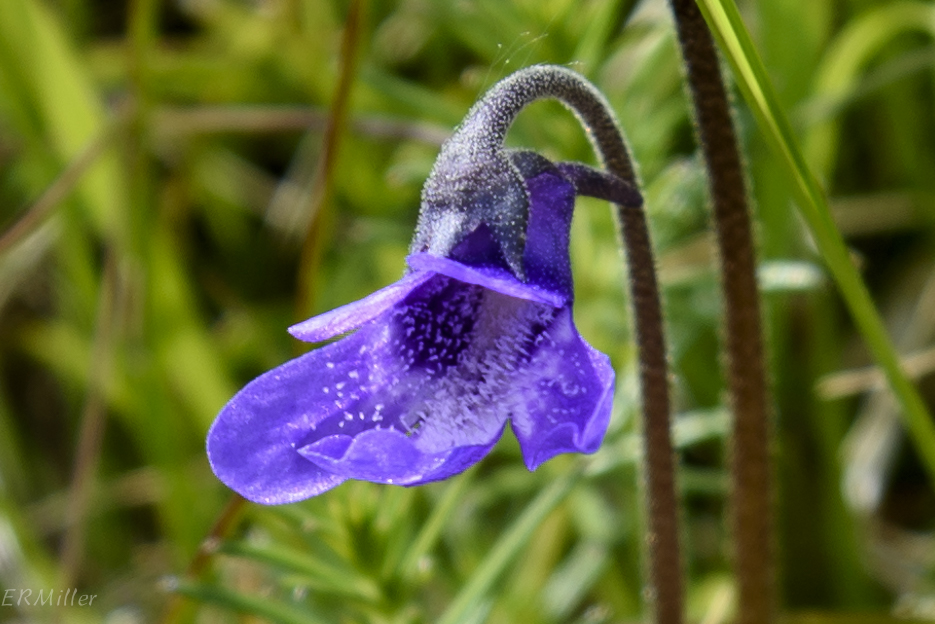
Pinguicula vulgaris
common butterwort
Icelandic: lyfjagras
Lentibulariaceae

Another very common plant, growing almost everywhere in Iceland, and indeed almost everywhere in the higher latitudes of the northern hemisphere. In the US it’s found in the upper Great Lakes areas and New England. Butterworts are insectivorous: sticky hairs on the leaves trap insects, which are then digested by enzymes the leaves excrete. There’s more information at Luonto Portti (Nature Gate) website, a resource I’ve been using quite a bit, since so many Icelandic plants are also found in Finland. None of the 80 or so Pinguicula species are found in Maryland, but there are a dozen of their close relatives, Utriculariaaka bladderworts, here.

Thrift or Sea or Pink, Take Your Pick

20160620-_DSC0607

Armeria maritima
several common names combining the words “thrift”, “pink”, and “sea”, eg sea thrift, sea pink,
and thrift seapink (really!)
Icelandic: geldingahnappur
Plumbaginaceae

Worldwide there are about 17 species of Armeria, more if you count subspecies. Most are native to the Mediterranean, but this one can be found in coastal areas around Europe (above 50 degrees latitude) and North America. In Iceland it can be found just about everywhere. I saw it on Mt. Esja, in Akureyri, growing out of a stone wall in the town of Borgarnes, growing on gravel at Húsafell, and even perched on a cliff on the Snæfellsnes peninsula:

It’s a low-growing evergreen, but otherwise unremarkable as a plant, looking rather like a clump of grass. In bloom the flowers are clustered atop stems that rise well above the foliage.


Annoyingly the common name “thrift” is applied to several similar looking plants that are quite different species – in different families, even. Wondering why a plant would be called “thrift”, I spent some time researching, but came up with nothing, other than the English word comes from the Old Norse “thrīfask”, meaning “to thrive”. Gardeners use the word “thrifty” to describe a plant that’s growing the way it’s supposed to. Is this plant always thrifty? Or maybe this plant thrives wherever it grows? If you know the answer, please post a comment!

More Icelandic Pinks

In addition to the Silene species I posted about two days ago, I found three other members of the Caryophyllaceae… I think. There are two Cerastium species in Iceland that are difficult to distinguish from each other, and my photos don’t show quite enough detail. I’m fairly certain that what I found are not any of the other Icelandic Cerastiums.


Cerastium alpinum
alpine mouse-ear
Icelandic: músareyra
(literally translated: mouse ear)

seen at Húsafell


Cerastium nigrescens or C. arcticum…maybe
arctic mouse-ear
Icelandic: fjallafræhyma

seen at Sólheimajökull


With this species I’m in a taxonomic rabbit hole. If it’s fjallafræhyma and not another músareyra, then what is the correct binomial name? It’s either the one above, or C. nigrescens var. laxum, or C. arcticum. The Integrated Taxonomic Information System does not accept C. nigrescens var. laxum, yet that name shows up in a lot of sources. Other sources seem to conflate C. nigrescens and C. arcticum. The Flora of Svalbard website has a good discussion about the names and ID of Cerastium species.

Whatever it’s called, It looks like this species is found in sub-arctic Europe and North America. C. alpinum has a similar range.

field chickweed 2


For comparison, here’s a Cerastium species found in the Maryland Piedmont, C. arvense (field chickweed). —>


Arenaria norvegica
arctic sandwort
Icelandic: skeggsandi

seen at Sólheimajökull


Closely related to the mouse-ears are the sandworts. There are 60 some species worldwide, about 20 of which (but not this one) occur in North America. There is only one Arenaria species found in Maryland, and it’s an alien. This species appears to be restricted to Fennoscandia and Iceland. I love how this single plant was growing out of the rocks just beyond the end of the snout of a glacier.