Sugarloaf Mountain

20160417-_DSC0063

view from White Rocks, looking a little north of west past
Cactoctin Mountain towards South Mountain

I could probably spend the rest of my life exploring the Potomac Gorge and still never learn everything about it. But there are other interesting natural areas nearby, and I’ve sworn to spend more time exploring them, and less time in the gorge.

So I decided to start with an old favorite: Sugarloaf Mountain. “Mountain” is relative, since the peak is only 1,282 feet above sea level, but it is about 800 feet above the surrounding land, and the only place of elevation of any sort east of the Blue Ridge, so “mountain” it is. It’s located in southeastern Frederick County, a few miles northeast of where the Monocacy River meets the Potomac. It’s near the western edge of the Piedmont physiographic province.

The really unusual thing about Sugarloaf is that it’s a privately owned park that’s open to the public year round, sunrise to sunset. Development has been minimal: there’s a one-way road up to near the top and back down, three parking areas (and one at the base), some picnic tables and portable toilets, and a nice network of heavily used, very worn trails.

Sugarloaf was my playground back in the ’80s and ’90s. It was one of the places I went when playing hooky from high school (when I had a car available). I went hiking on it with my best friend the night of our senior prom. After college I had a job nearby and often hiked there after work. But as time went on and I moved further away I spent less and less time there.

Last weekend Steve and I went back, for the first time in many years, and of course I kept my eyes open for wildflowers. I went back two days later without him to do more detailed exploring. Everything that was blooming was about two weeks later than in the Gorge. Here’s a list of finds; only the ones marked with an asterisk were actually blooming.

aster, white wood
bellwort, perfoliate
blueberry*
cinquefoil, dwarf*
corydalis, short-spurred*
cucumber root, Indain
dogwood, flowering*
fleabane, unsure which species*
jack-in-the-pulpit*
mayapple
meadow rue, unknown species
partridgeberry
pussytoes, plantain-leaved*
puttyroot
rattlesnake plantain, downy
rue anemone*
saxifrage, early*
serviceberry, either downy or common*
skunk cabbage
Solomon’s seal, smooth
toothwort, cut-leaf*
toothwort, slender*
violet, common blue*
violet, marsh blue*
wintergreen, spotted

20160419-_DSC0190

Short-spurred corydalis (Corydalis flavula, left, with dime for scale) was by far the most abundant of the flowering plants, which is interesting because it’s described as “uncommon” on Sugarloaf by Choukas-Bradley and Brown in their excellent book Eastern Woodland Wildflowers and Trees; however, the book was published in 2004. A lot can change in twelve years.

There were plenty of ground pines and ferns, too, including ebony spleenwort and Christmas fern, and several others that I’ll have to go back to identify once they’ve grown a bit more.

20160419-_DSC0158

Most exciting, for me, is the downy rattlesnake plantain (right), a native orchid that I had never seen before. The distinctive leaves make it easy to identify.

About the lead-in photo… White Rocks is actually an outcrop on a hill (800′ above sea level) that’s part of the Sugarloaf Mountain natural area, but not part of the mountain proper. The tree In the foreground is a table mountain pine; more about that next time.

Fiddleheads

It’s a good time of year to be watching for emerging fiddleheads, also called croziers. Here’s a random assortment of some I’ve found, including several that I haven’t identified; that will probably have to wait for fertile fronds to emerge later in the year.

20160419-_DSC0143

I just love this one; it looks like a dragon or alien monster or something.  This fern is all over the place at Sugarloaf Mountain and Rachel Carson Conservation Park; I expect it’s one of the Dryopteras. It is not one of the evergreen ferns.

20160412-_DSC0057

Christmas fern (Polystichum acrostichoides), below, is easily identified because it’s so hairy.


20160419-_DSC0154

Another unknown (right and below); I’ve been seeing it in wet areas in parts of Montgomery County other than the Potomac Gorge.

20160419-_DSC0152

20160405-_DSC0162

Right, one of my favorites: ebony spleenwort (Asplenium platyneuron). Below, a forefinger held up to the same plant.20160405-_DSC0163

20160421-_DSC0102

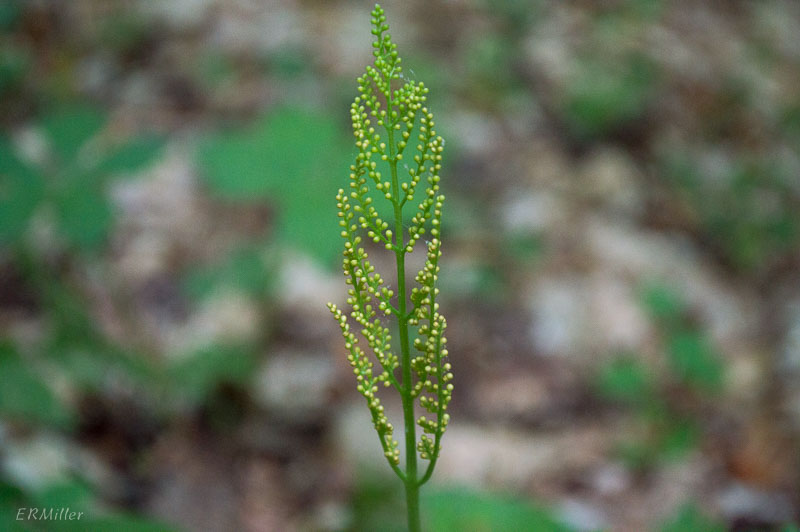
And this one (right) was a good find. It’s the fertile frond of a rattlesnake fern (Botrypus virginianus), which I’ve only seen once before. You can see the spherical sori contained within. This plant was in Rachel Carson Conservation Park, where I went to see the pinxter azaleas in bloom. (More on that in a few days.) Below is a picture from last year, showing the fully developed fertile frond.

20150527-20150527-_DSC0004

Desert Velvet

20160309-_DSC0720

also known as turtleback
or velvet turtleback
Psathyrotes ramosissima
Asteraceae


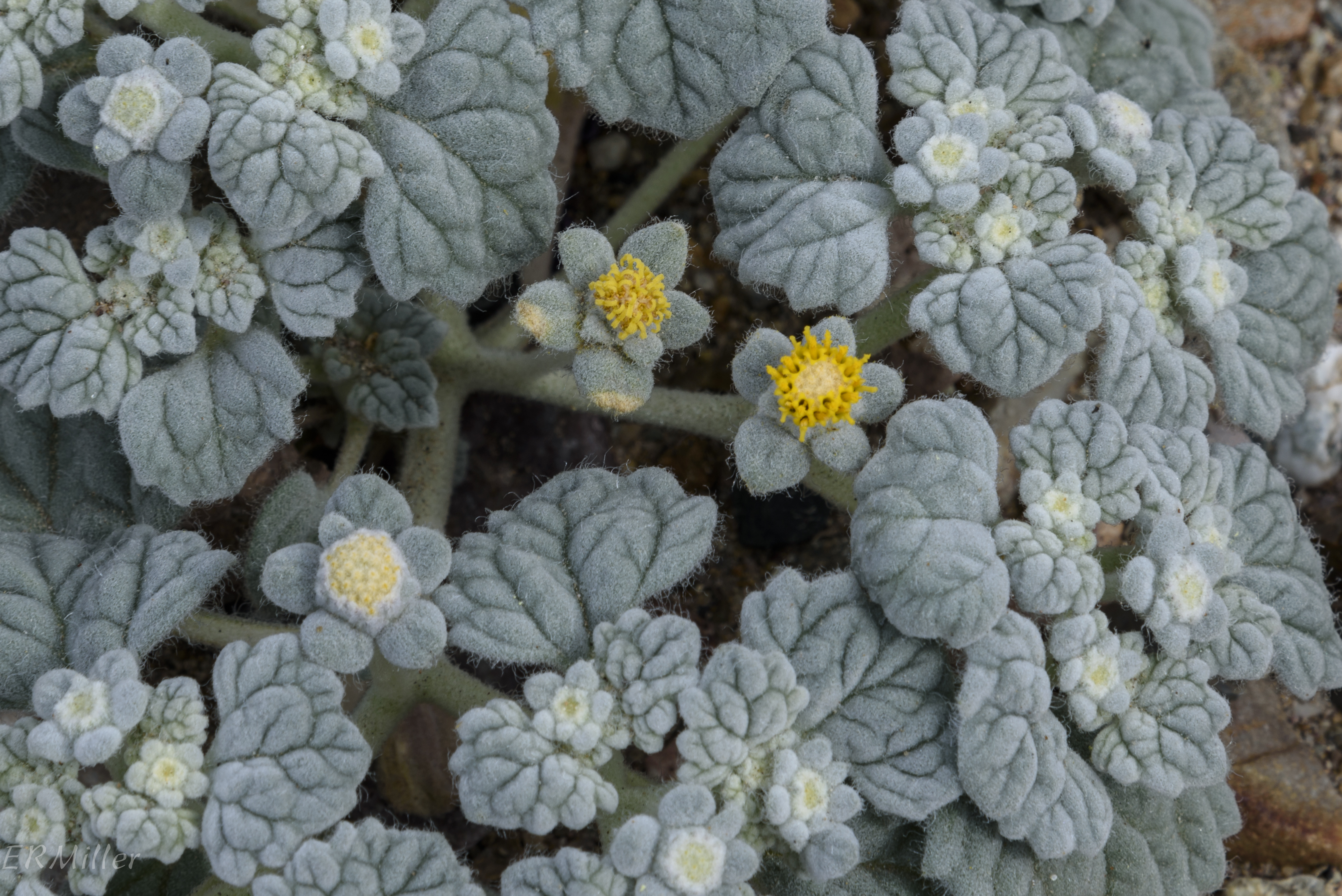
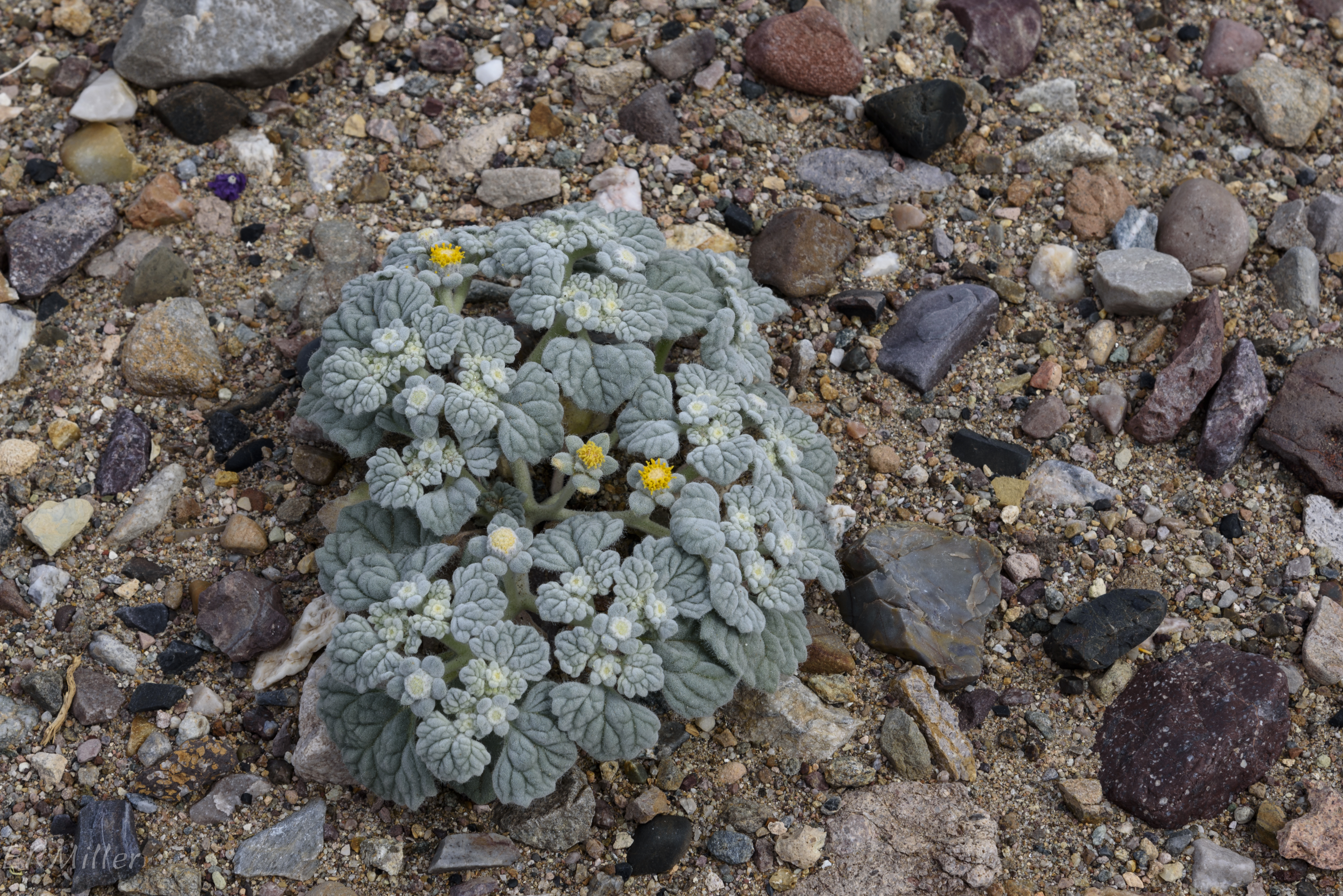
This neat little plant is not quite a belly flower: it is very low growing (five inches tall at most), but it can spread pretty wide. It’s variously described as a small shrub, annual forb, or short-lived perennial. On many desert plants, the foliage is as attractive as the flowers, and so it is here: thick, fuzzy, silvery sage-green leaves are mounded so as to resemble the back of a turtle. The inflorescence consists only of disk flowers (no rays).

Apparently it’s pretty common in the Mojave desert at low elevations, but for some reason I saw only this one plant, in a wash near Beatty Road.

20160309-_DSC0719

And that’s it for the Death Valley report. There are a few more plants that I haven’t positively identified yet (five of them probably Cryptanthas), and I don’t have great pictures of them. There are still about 200 landscape photos to go through; eventually I’ll be posting a dozen or two of them on my other website (ermiller.smugmug.com).

20160309-_DSC0690

Odds and Ends

Two more plants I found blooming in Death Valley. At first I found neither of them interesting, but the more I read – or the more closely I looked – the more I liked them.

20160308-_DSC0268

sticky ringstem, valley ringstem
Anulocaulis annulatus
Nyctaginaceae

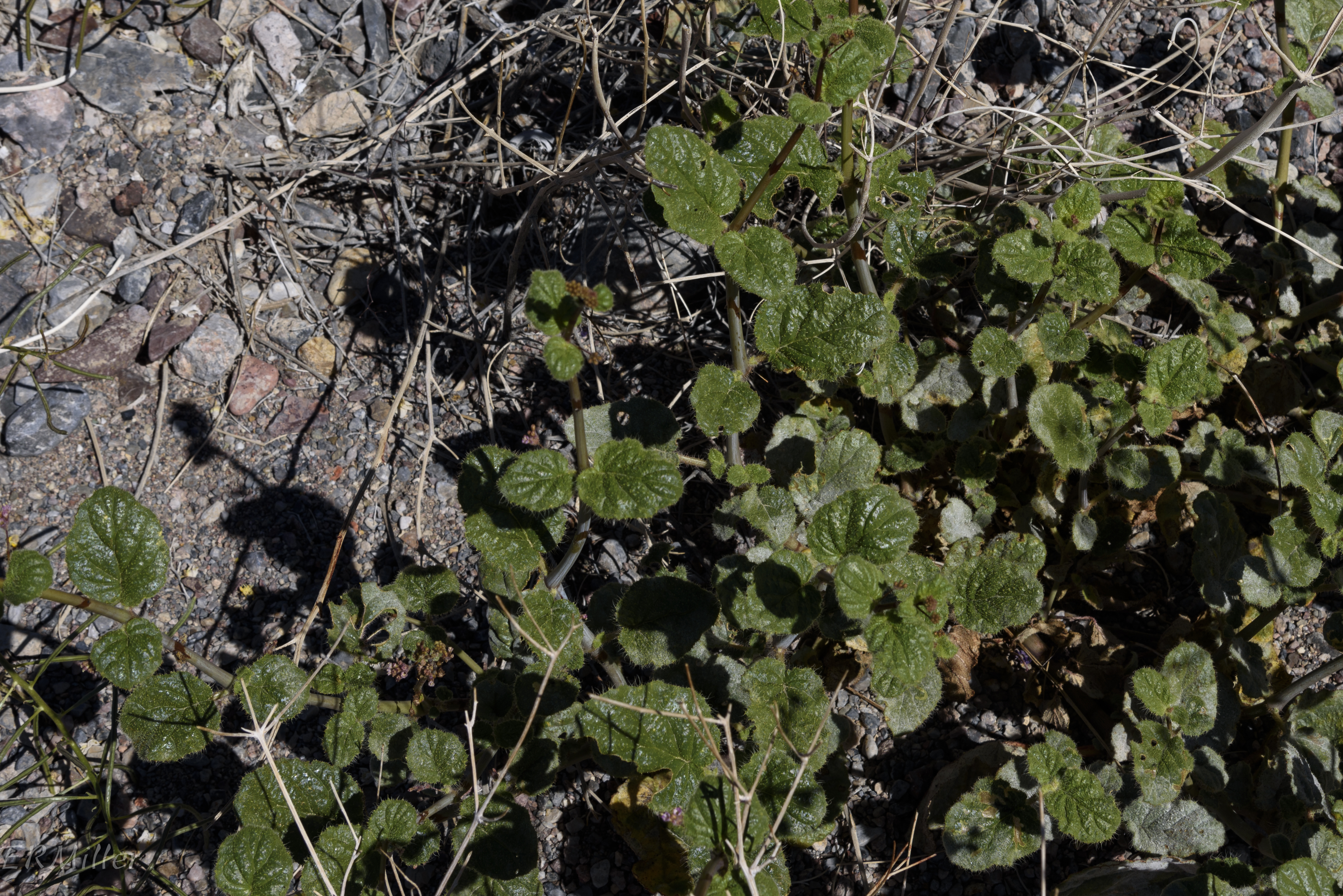
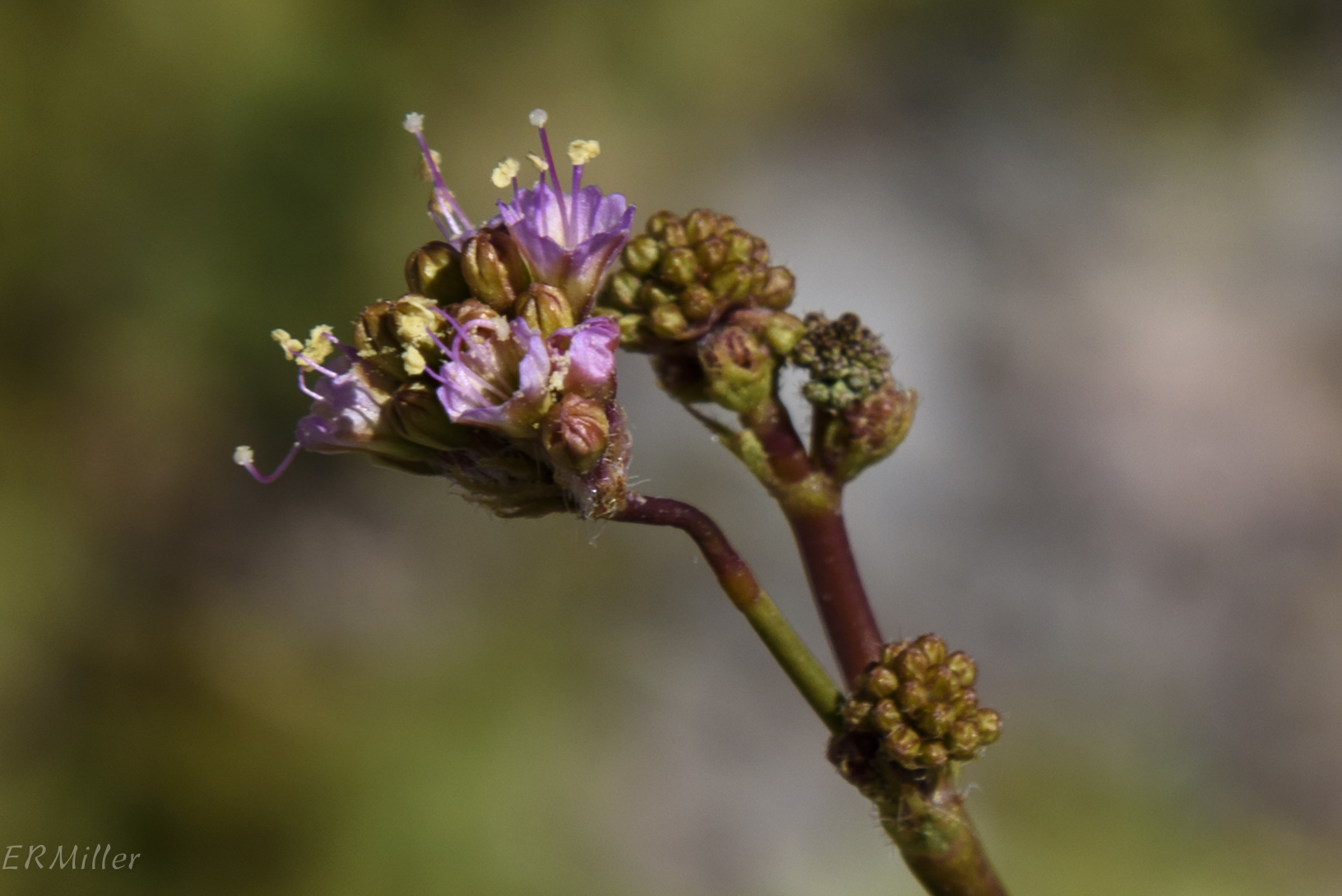
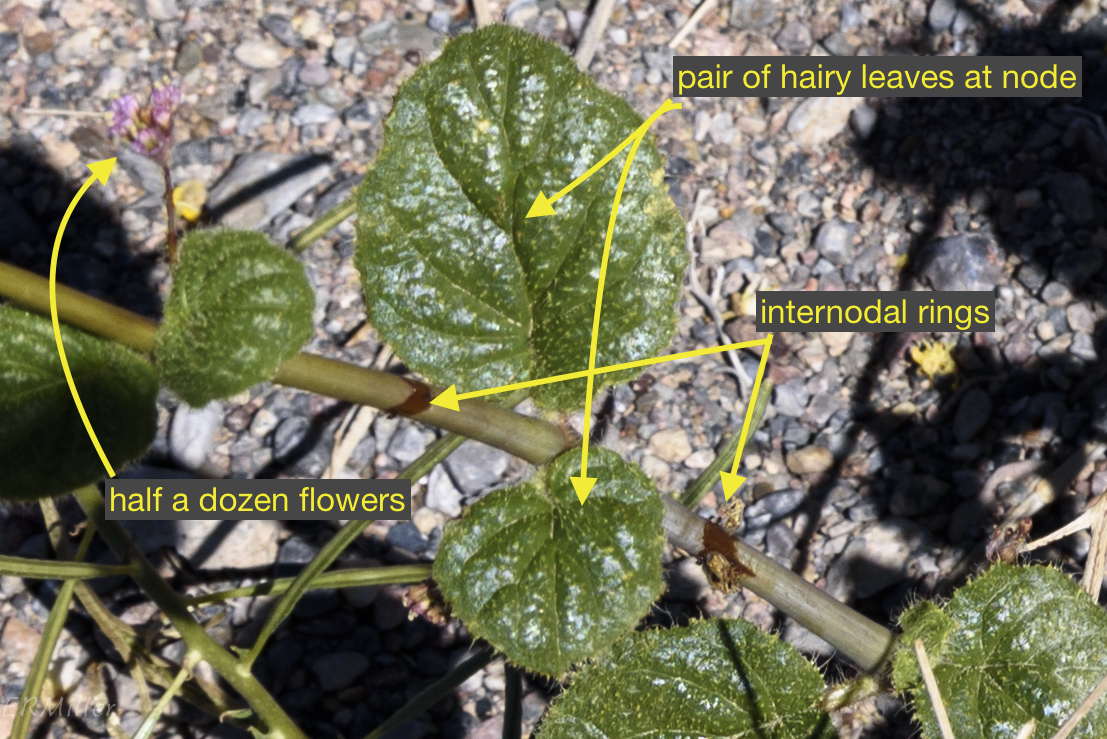
This plant is endemic to the Mojave desert. It’s a perennial with a shrub-like growth habit. The flowers are quite small; you really have to zoom in to see them.

20160308-_DSC0271


20160308-_DSC0268

20160308-_DSC0248


yellow nightshade groundcherry
Physalis crassifolia
Solanaceae

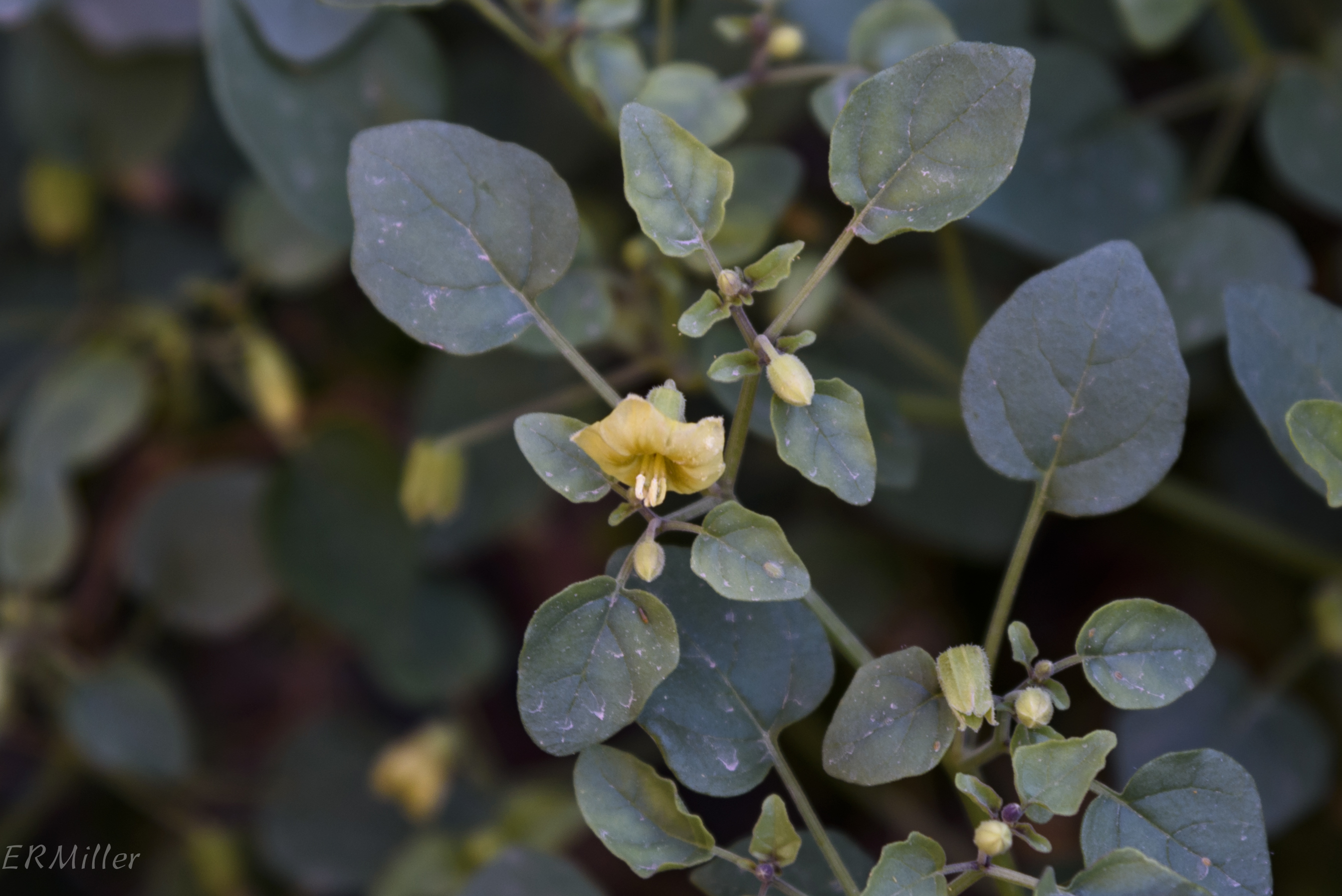
There are several plants producing edible fruits in the genus Physalis: tomatillo and Cape gooseberry. Also “groundcherry”, which I’ve seen on menus (and my plate) in trendy restaurants, but I’d hesitate to say that this particular groundcherry is one of the edible ones. As with the Apiaceae, the Solanaceae (deadly nightshade family) has some tasty, culinarily important species as well as poisonous ones.

This range of P. crassifolia is limited to the desert southwest. Like sticky ringstem, it’s a perennial with a shrub-like growth habit.

Have a look at this abstract from the Journal of Natural Products; it seems that P. crassifolia can produce compounds showing “potent antiproliferative activity” that may some day be used for treating certain cancers.


Two More from the Asteraceae

Into the final few days of Death Valley reports…20160308-_DSC0135

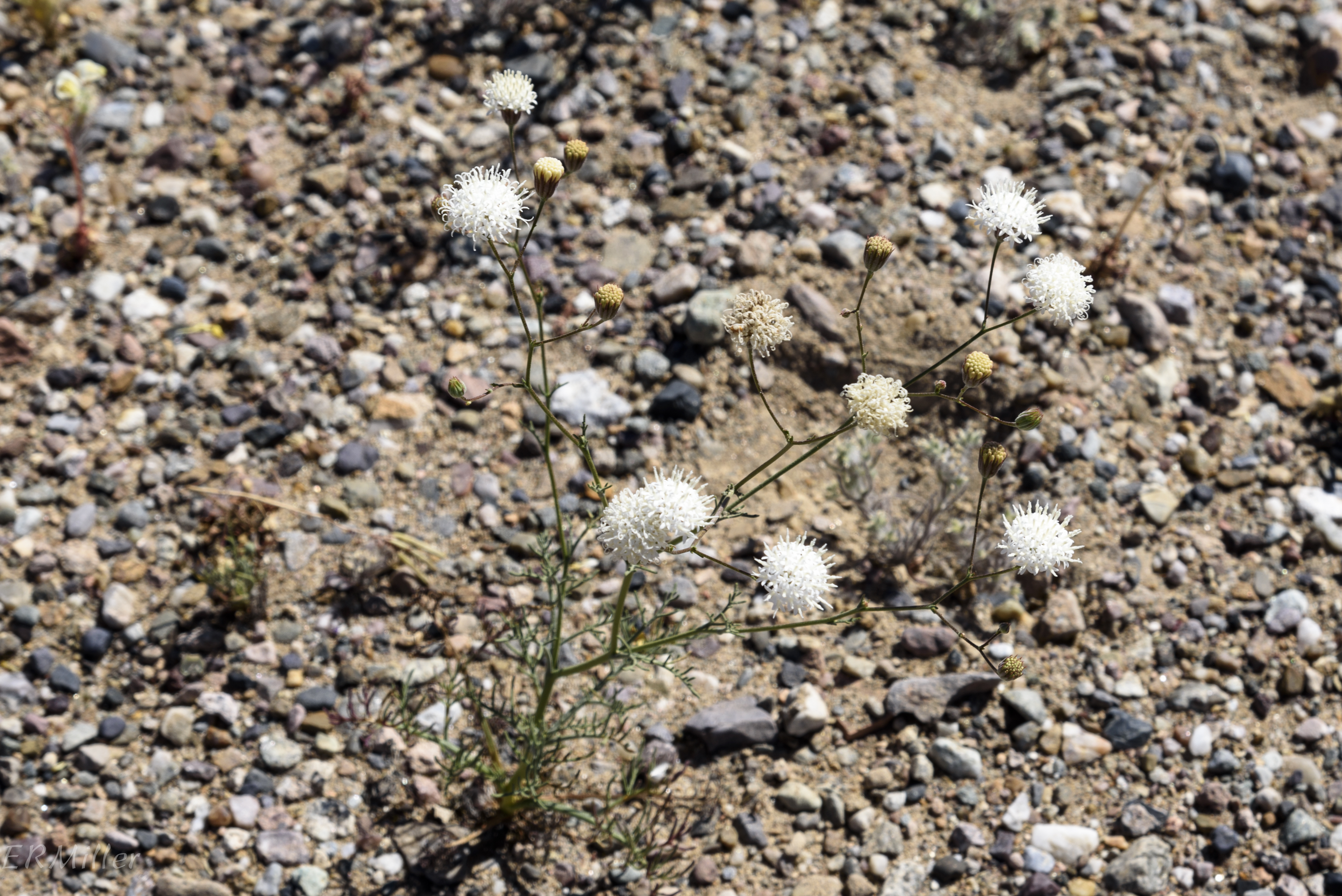
pebble pincushion
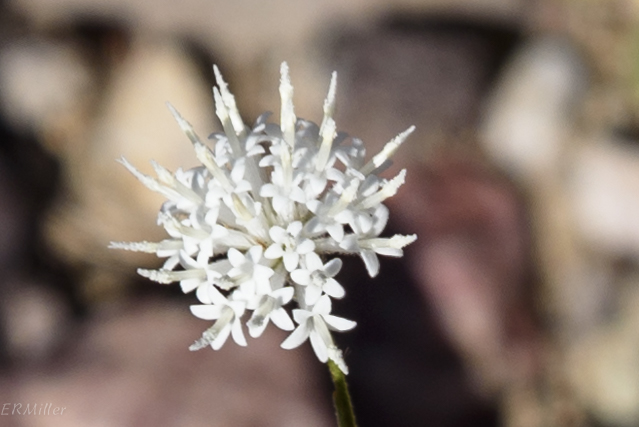
Chaenactis carphoclinia

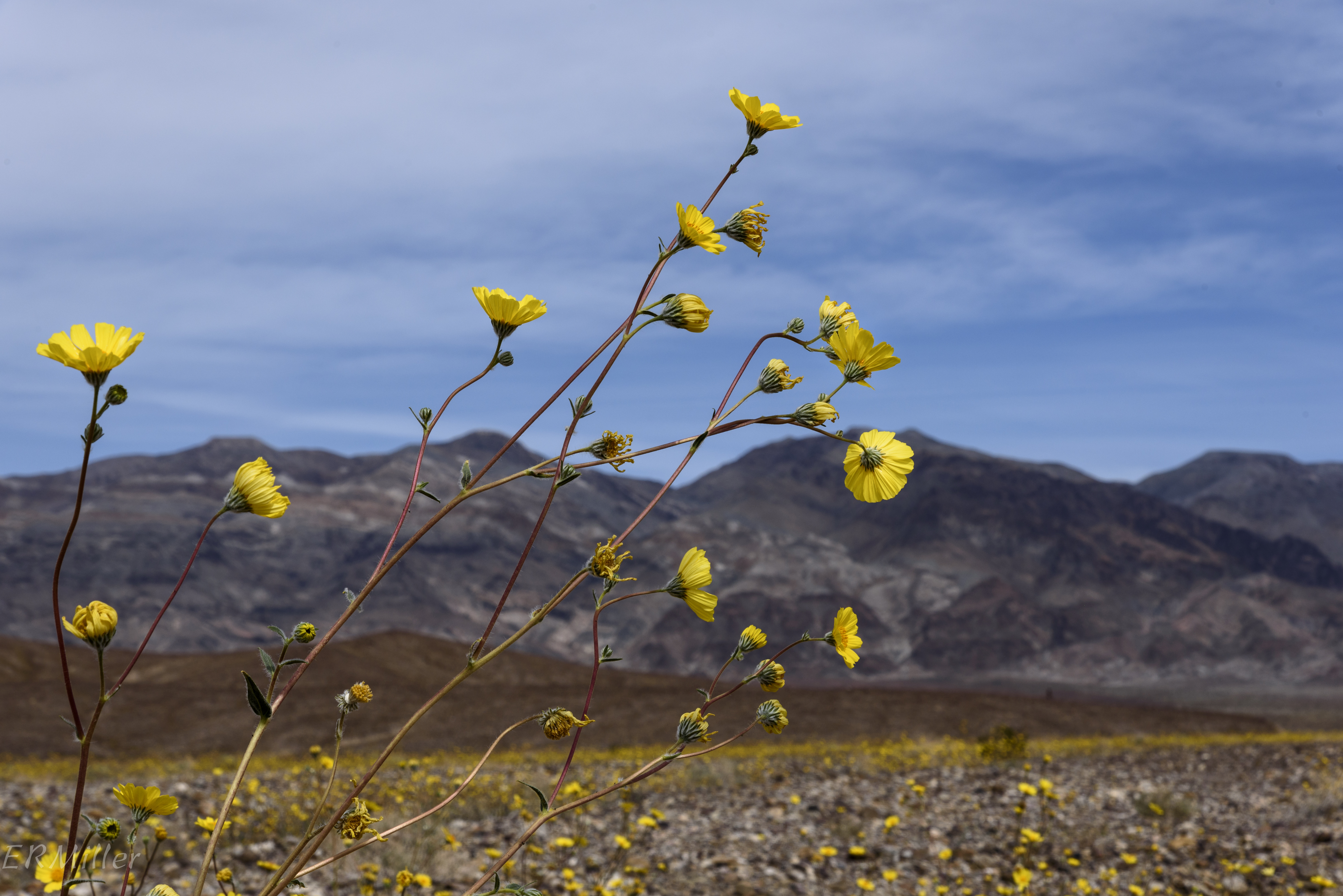
This pretty flower is an annual growing to two feet tall (at best), and is found in the Great Basin, Mojave, and Sonora deserts of Utah, California, Nevada, Arizona, and New Mexico. All species in the genus Chaenactis are found only in the western US.

20160310-_DSC0880

20160308-_DSC0246-2


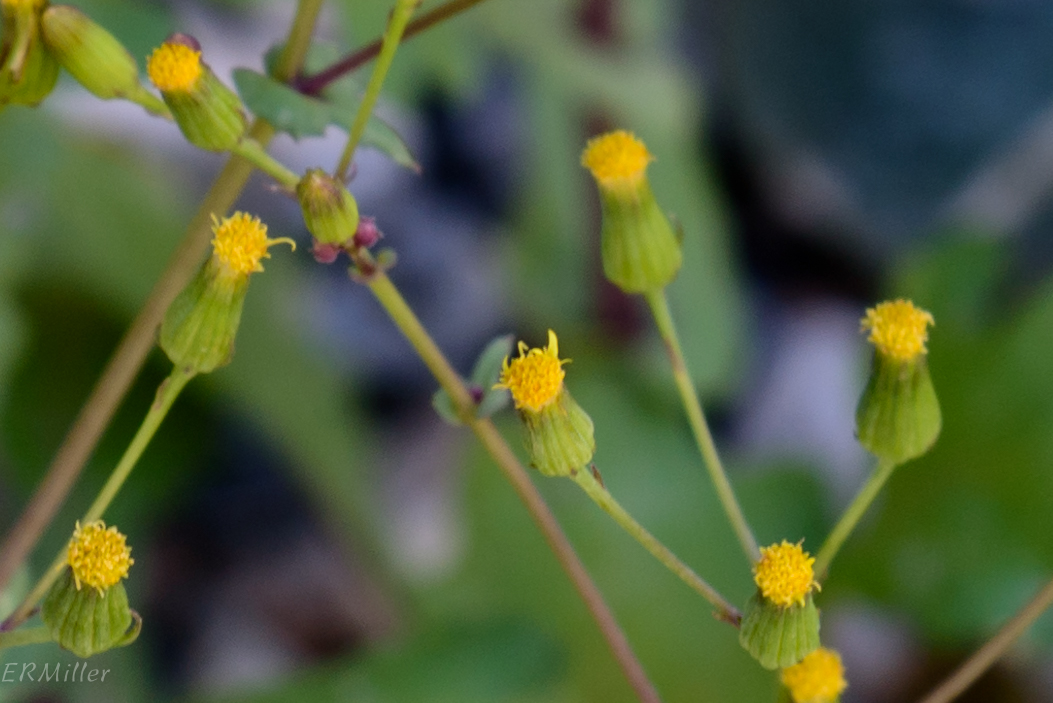
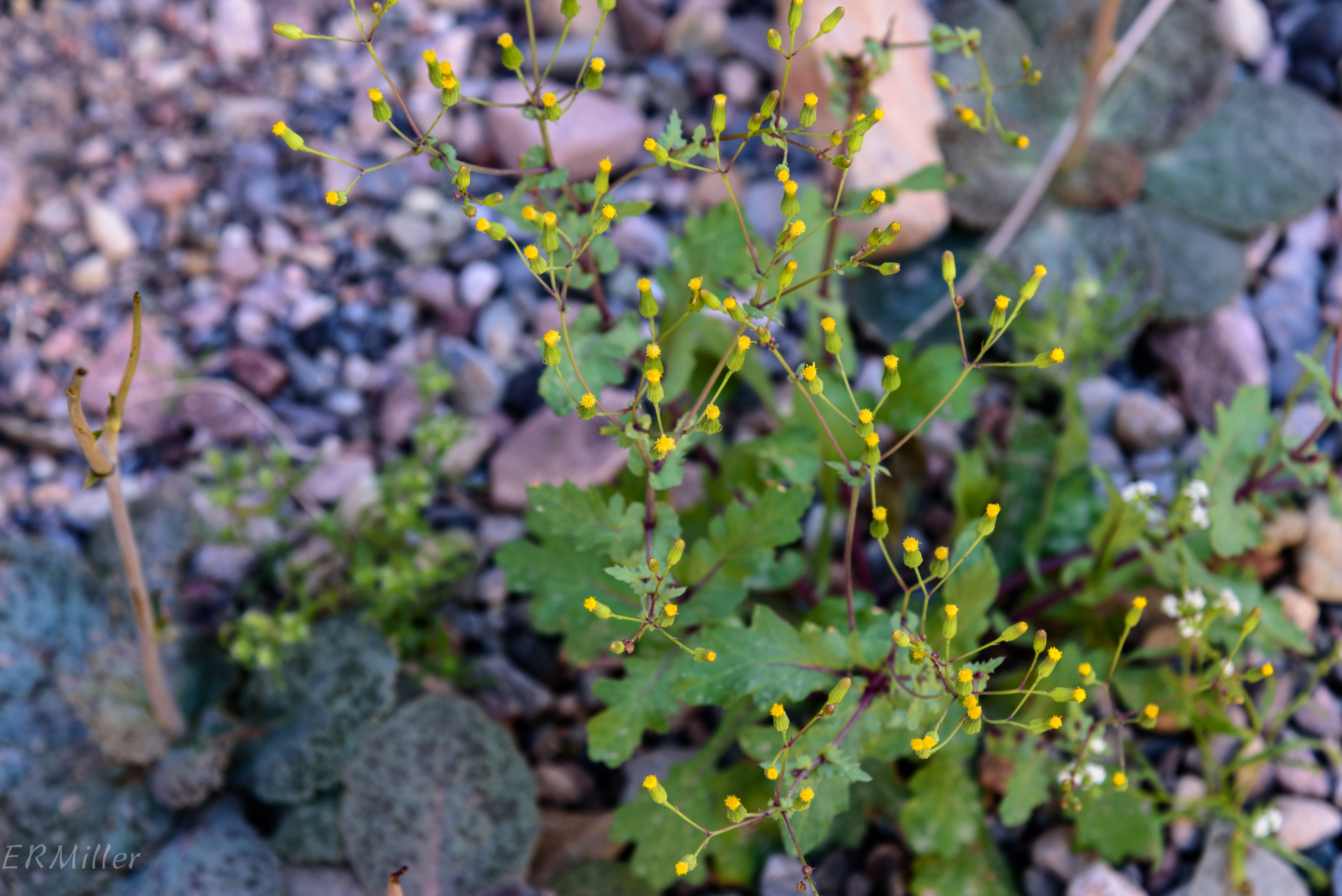
Mojave ragwort, Mojave groundsel
Senecio mohavensis

And this not so pretty flower is also an annual, also growing to about two feet tall.  It’s found in the Mojave and Sonora deserts of California, Nevada, and Arizona. Senecio is mostly a western genus but two species appear in the east, including pilewort, which, confusingly, is no longer considered to be in the genus Senecio. Those darn splitters have been at it again.

20160308-_DSC0246