What’s Green in Winter?

20150131-_DSC0056

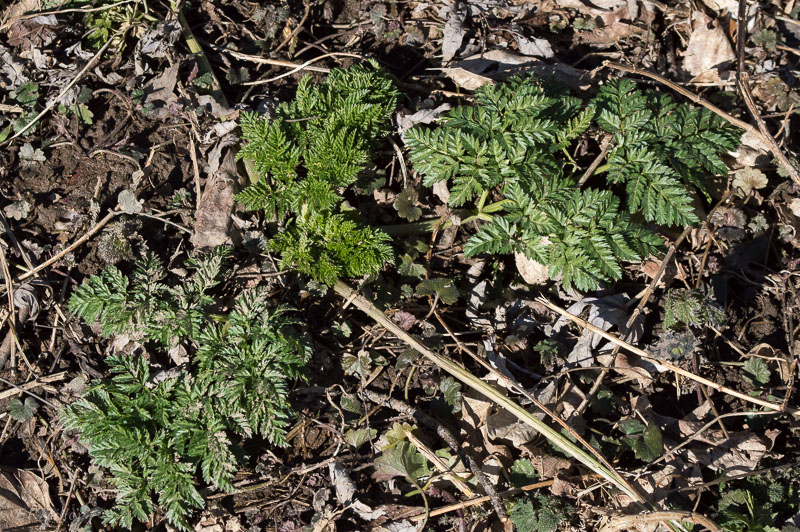
poison hemlock (Conium maculatum) is just a ground cover now, but will grow fast once the weather warms up; there’s some ground ivy in there, too


As a rule, if it’s green in winter it’s alien.  In this area.  Other than needled and broadleaf evergreens, of course.  Walking along the towpath and the Billy Goat trails, I see assorted grasses, garlic mustard, henbit, ground ivy, English ivy, lesser celandine, poison hemlock, perwinkle… but there are native forbs hiding somewhere (I mentioned some in an earlier post).

I’ve been searching for them on recent walks.  Since Flower of the Day is currently dormant, I’ll be posting about these quasi-evergreen plants during the month of February.

IMG_2937


poison hemlock gets big, at least 7 feet; this one isn’t full-grown yet…


IMG_2936


…but the flowers sure are pretty


(iPhone pictures from May, 2013)
The List for October

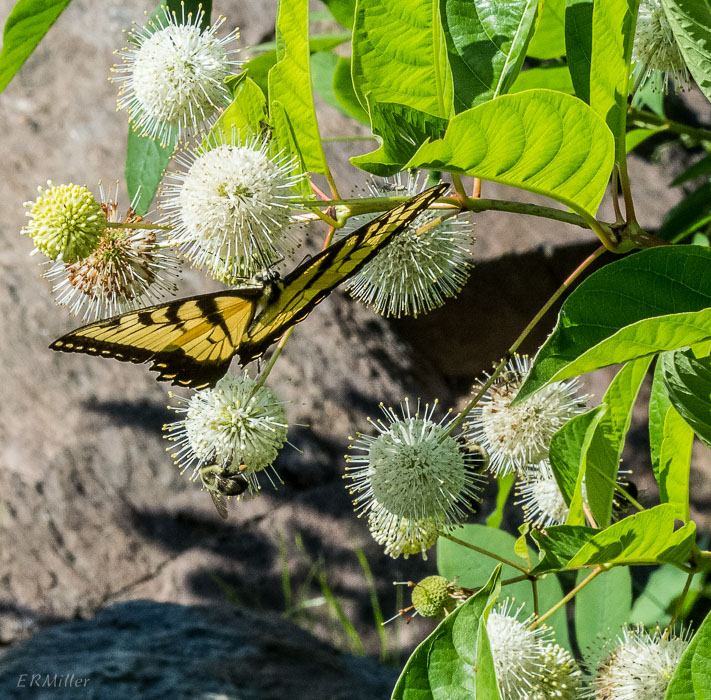
20140728-DSC_0256eastern tiger swallowtail (male) and bumblebee on buttonbush (Cephalanthus occidentalis) in late July, banks of the Potomac River in view of the American Legion Bridge

Plants first seen blooming in the month of Octboer:

  • panicled aster
  • black-eyed Susan
  • Jerusalem artichoke
  • small wood sunflower
  • wild marjoram (alien)

And since I don’t expect to find anything new in November (unless I find witch hazel; I know it’s out there), the 2014 totals are:

  • 276 native species in 77 families
  • 75 alien species in 30 families

for a grand total of 351 species in 81 families, along the Potomac River and C&O Canal from Violette’s Lock south to the American Legion Bridge, and the last mile of Cabin John Creek.  Oh, and that’s not including the 5 asters, 5 violets, 7 grasses, and a few others that I was never able to narrow down to the species level.

Not too shabby.

ps – found witch hazel (fotd yesterday), but not in the Potomac gorge area.

20140923-DSC_0066

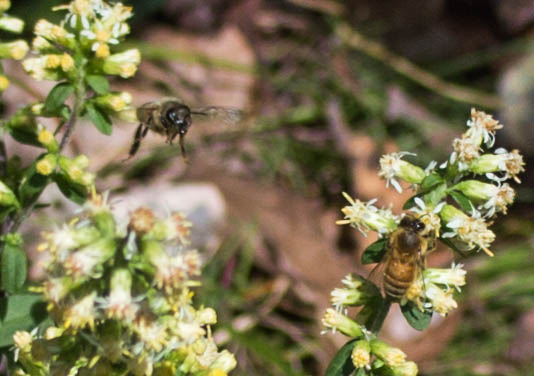
bumblebee crashing honeybee’s party on silver-rod

The List for August

Plants first spotted blooming during the month of August.

Natives:

  • mistflower
  • flowering spurge
  • thin-leaved sunflower
  • strawberry-tomato (really, that’s what it’s called) fruit only
  • southern agrimony
  • dodder
  • horse balm
  • slender bush clover
  • winged monkey-flower
  • swamp rosemallow
  • dotted smartweed
  • hairy hawkweed
  • white wood aster
  • false daisy
  • grassleaf mudplantain
  • Virginia dayflower
  • common evening primrose
  • late goldenrod
  • horseweed
  • New York ironweed
  • large-flowered leafcup
  • hoary ticktrefoil
  • wingstem
  • purple-headed sneezeweed
  • late-flowering boneset
  • upland boneset
  • Spanish needles
  • Canada goldenrod
  • partridge-pea
  • pilewort
  • giant ragweed
  • swamp smartweed
  • white-bracted boneset
  • showy ticktrefoil
  • hog-peanut
  • wild bean
  • pearly everlasting
  • clammy ground-cherry
  • slender goldenrod
  • nodding smartweed
  • arrow-leaved tearthumb
  • beggar-ticks
  • Virginia buttonweed
  • Virginia bugleweed
  • elm-leaved goldenrod
  • wandlike goldenrod

Aliens:

  • big-flowered vetch
  • sweet autumn clematis
  • common hops
  • Japanese knotweed
  • common mugwort
  • velvetleaf
  • liriope
  • black nightshade

bringing the year’s totals to:

  • 254 natives in 76 families
  • 73 aliens in 30 families

for a grand total of 327 species in 80 families.

Twenty two percent of all species found have been alien.