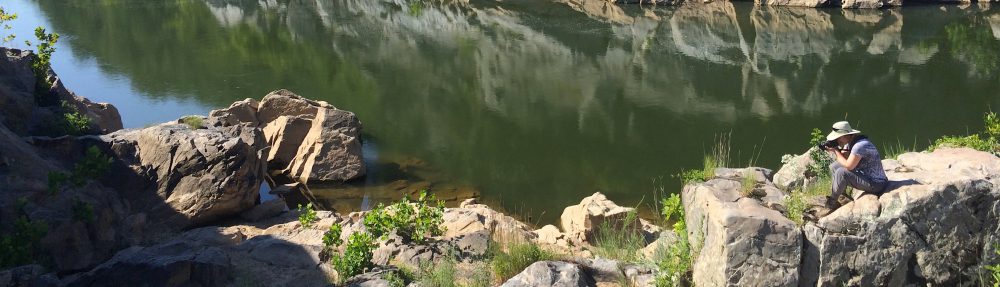
Not Quite Yet

A quick stroll around the Carderock area and Billy Goat B up to the Marsden Tract on March 9 showed that the flowers are only just starting. I saw a fair number of spring beauties (Claytonia virginica), a few cut-leaved toothworts (Cardamine concatenata), and one clump of Virginia bluebells (Mertensia virginica) in bloom.
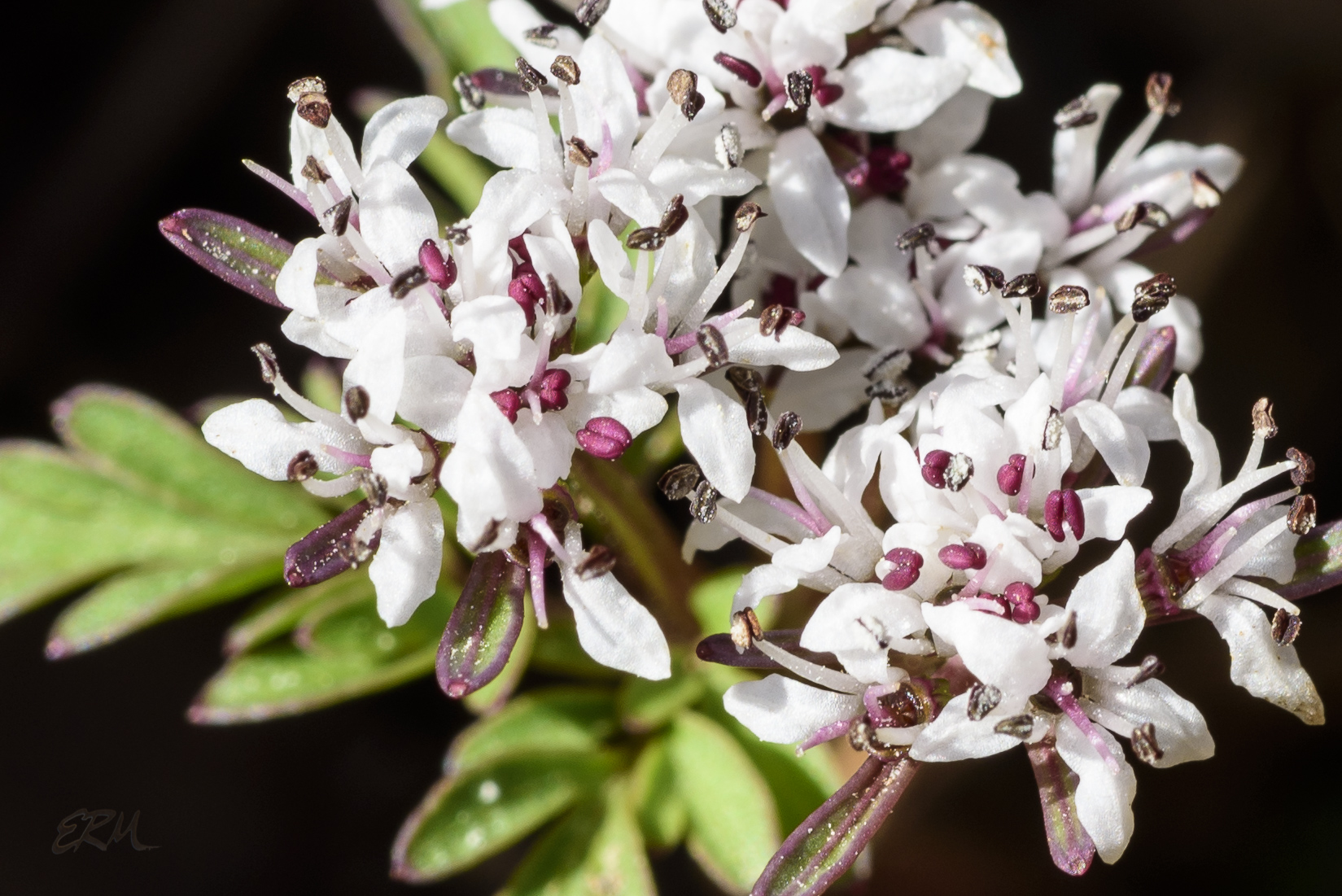
Harbinger-of-spring (Erigenia bulbosa) looks like it’s at its peak, though. There are a few really solid stands of it near the river, but they are hard to find if you aren’t looking closely, since an entire plant is about the width of a nickel.
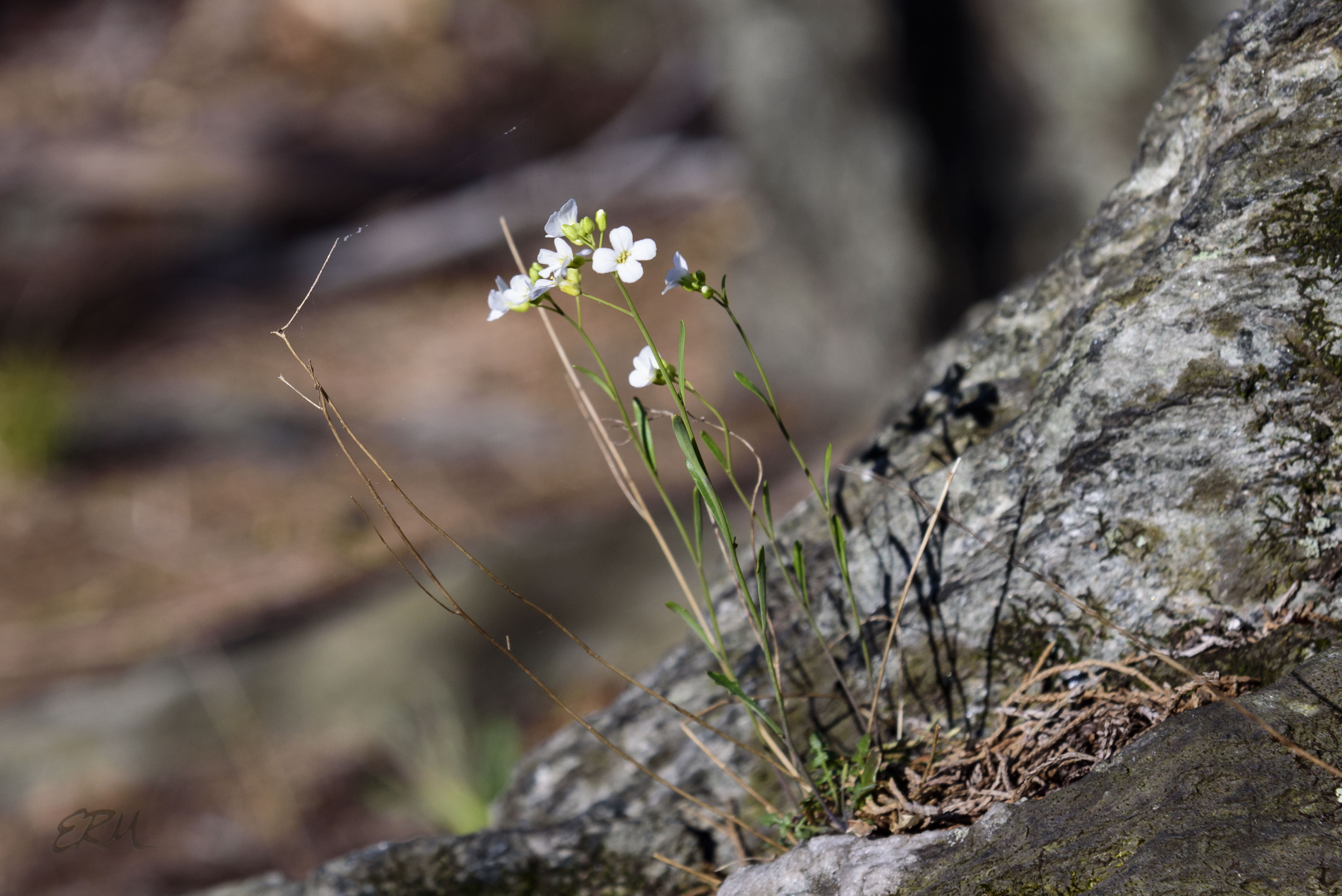
 

I was a bit surprised to find lyre-leaved rock cress (Arabidopsis lyrata) open already, though most plants had more buds than blossoms. Look for it growing right out of rocks near Carderock.

Variations on a Theme: Rockcresses

The taxonomists are at it again.  Most of the guide books still classify the rock cresses in the genus Arabis, but recently most New World species have been moved to either Boechera or Arabidopsis.

20150416-20150416-_DSC0266


lyre-leaved rockcress, aka sandcress (Arabidopsis lyrata, formerly Arabis lyrata)


Lyre-leaved rockcress is a mostly northern species, found across Canada and the northeastern US, with small, isolated populations found further to the south. It’s endangered in Massachusetts, and threatened in Ohio and Vermont

Needing very little soil, it doesn’t tolerate competition from other plants, but will grow happily by itself right out of rocks.

20150416-20150416-_DSC0268


20150416-20150416-_DSC0185


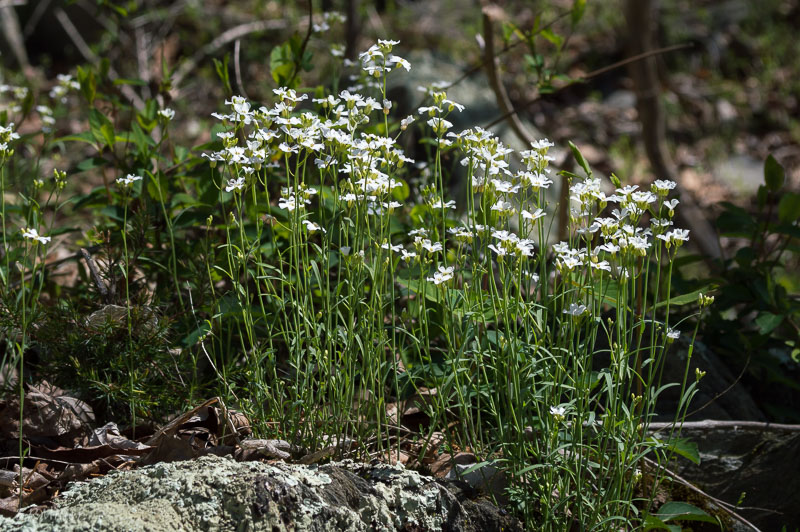
smooth rockcress (Boechera laevigata, formerly Arabis laevigata)


Smooth rockcress seems to enjoy a little more soil than lyre-leaved; it can be found in rocky woods and ledges, but seldom growing right out of the rock.  It ranges from Quebec south to Georgia, and west into some of the Great Plains states, and is threatened in Maine and Massachusetts.

20150416-20150416-_DSC0183

The rockcresses are in the Brassicaceae (mustard family).