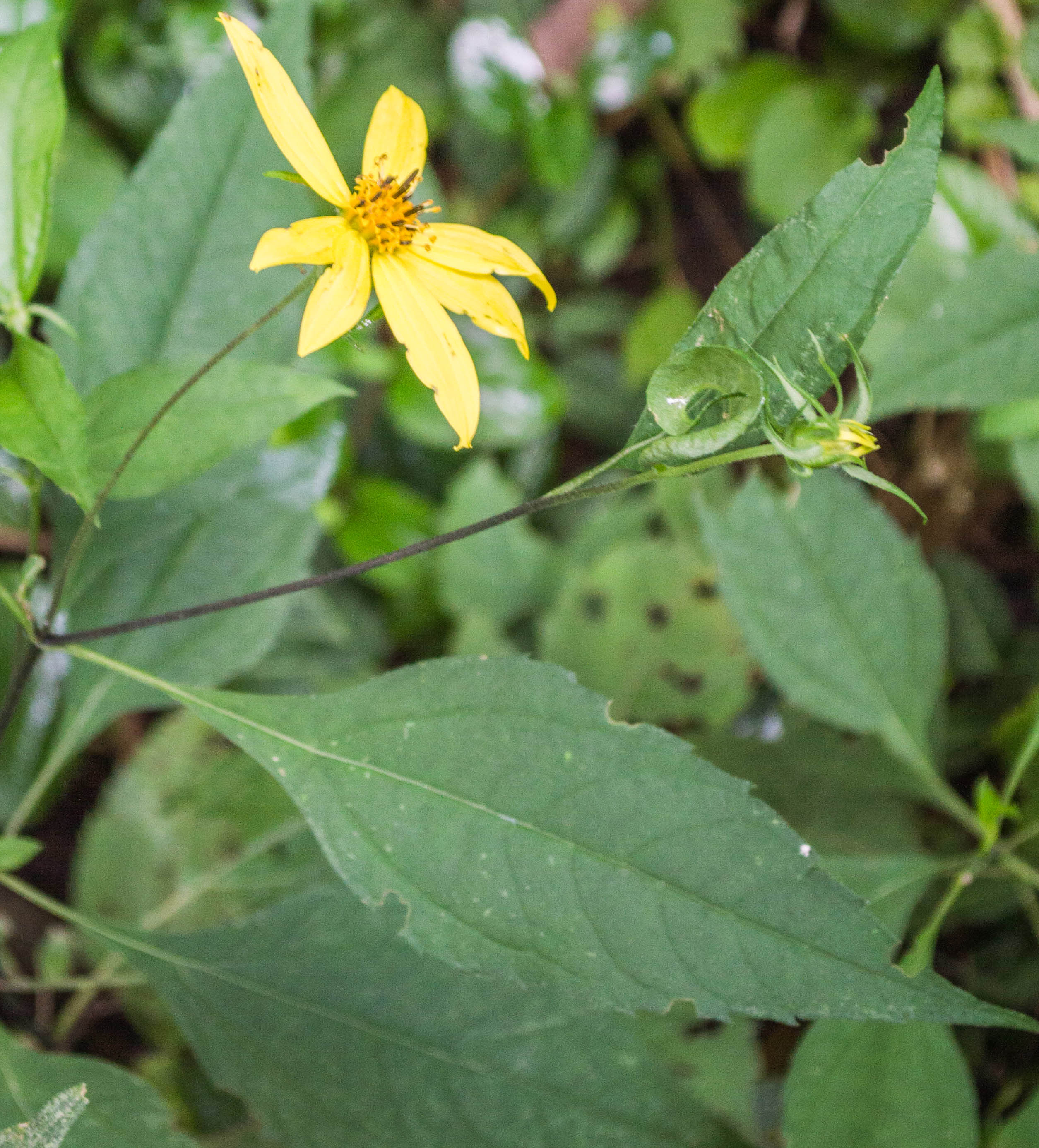
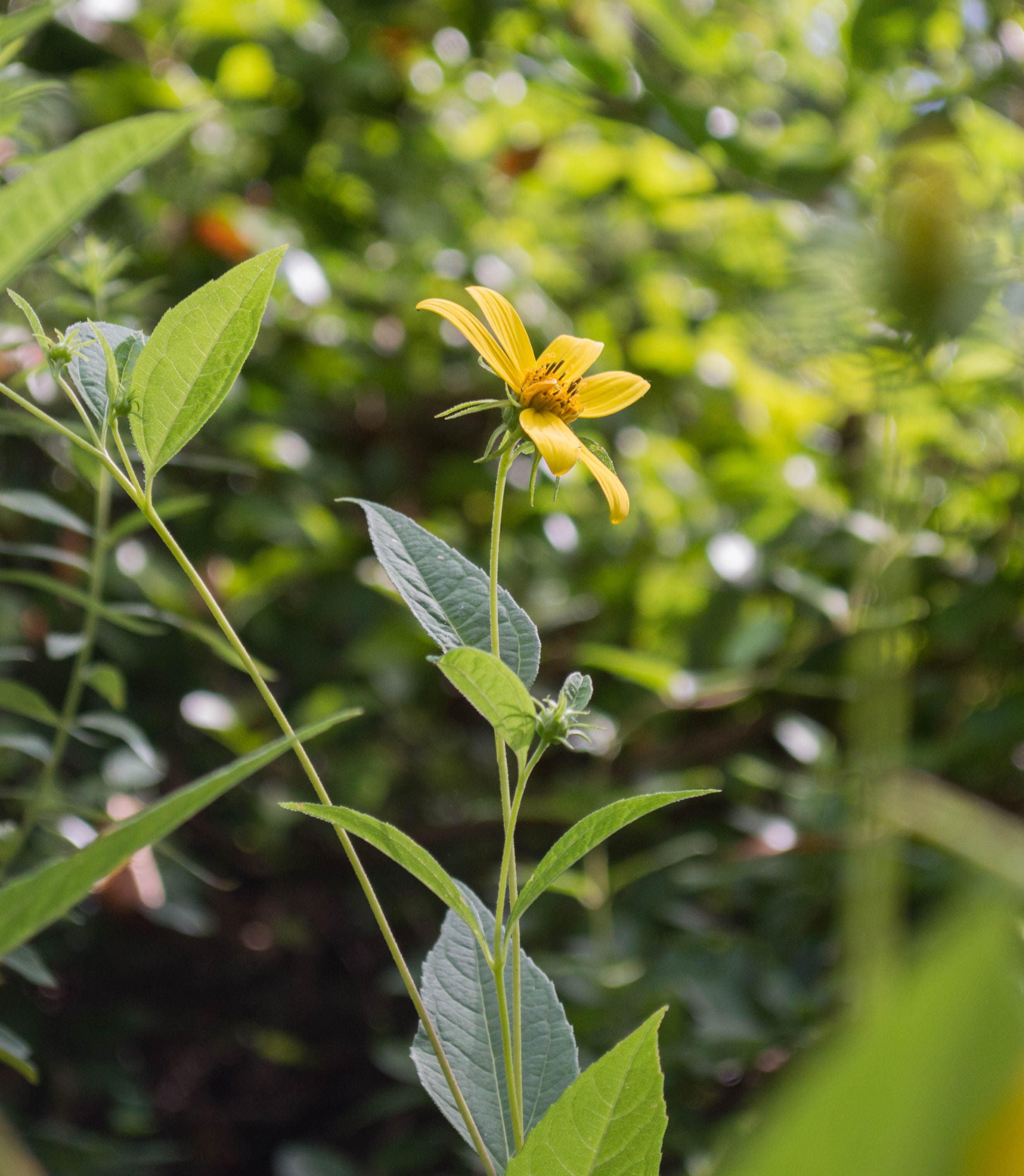
Flower of the Day: Large-Flowered Leafcup

Polymnia uvedalia (also known as Smallanthus uvedalius); Asteraceae (aster family)

20140811-DSC_0133

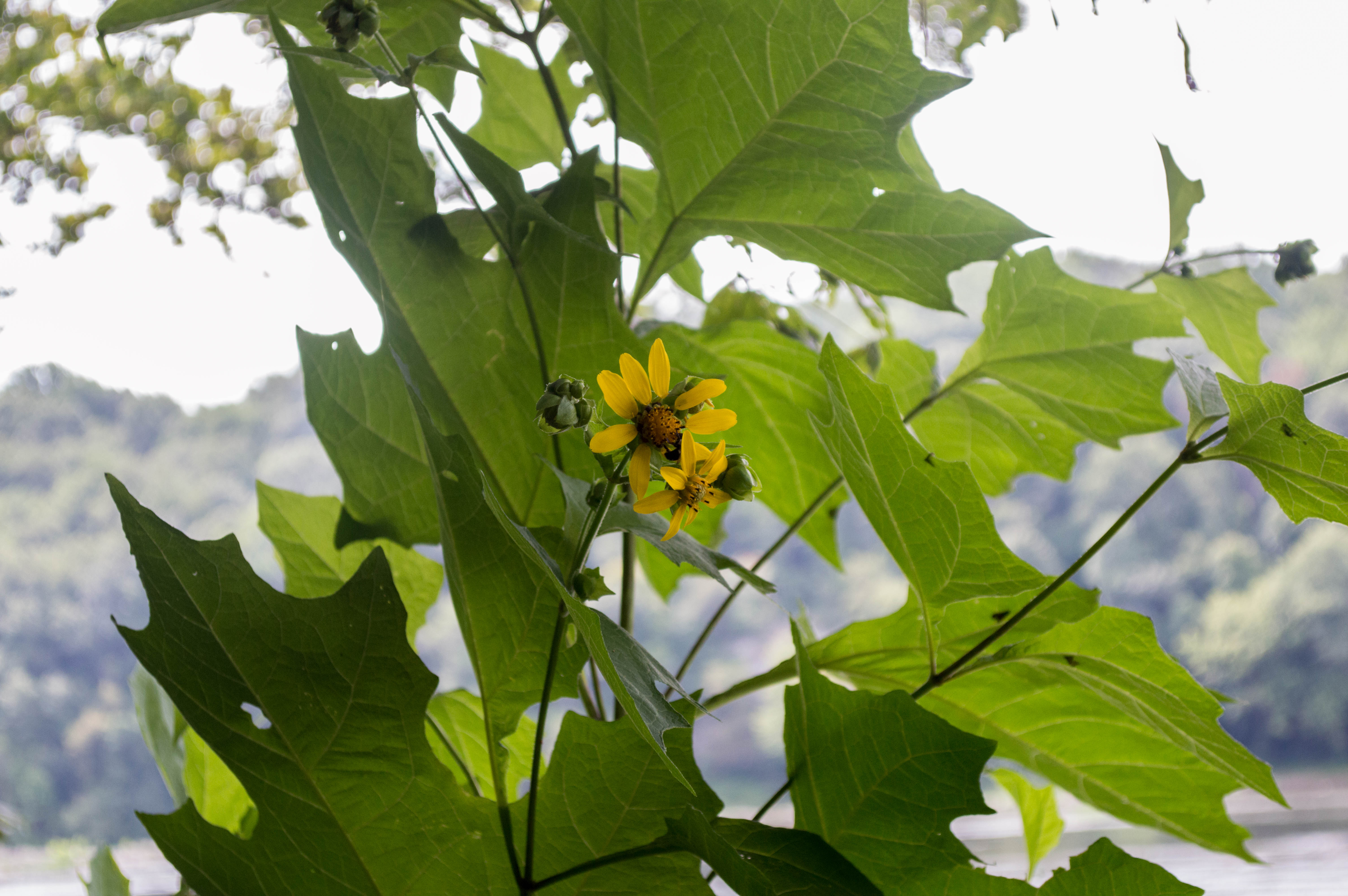
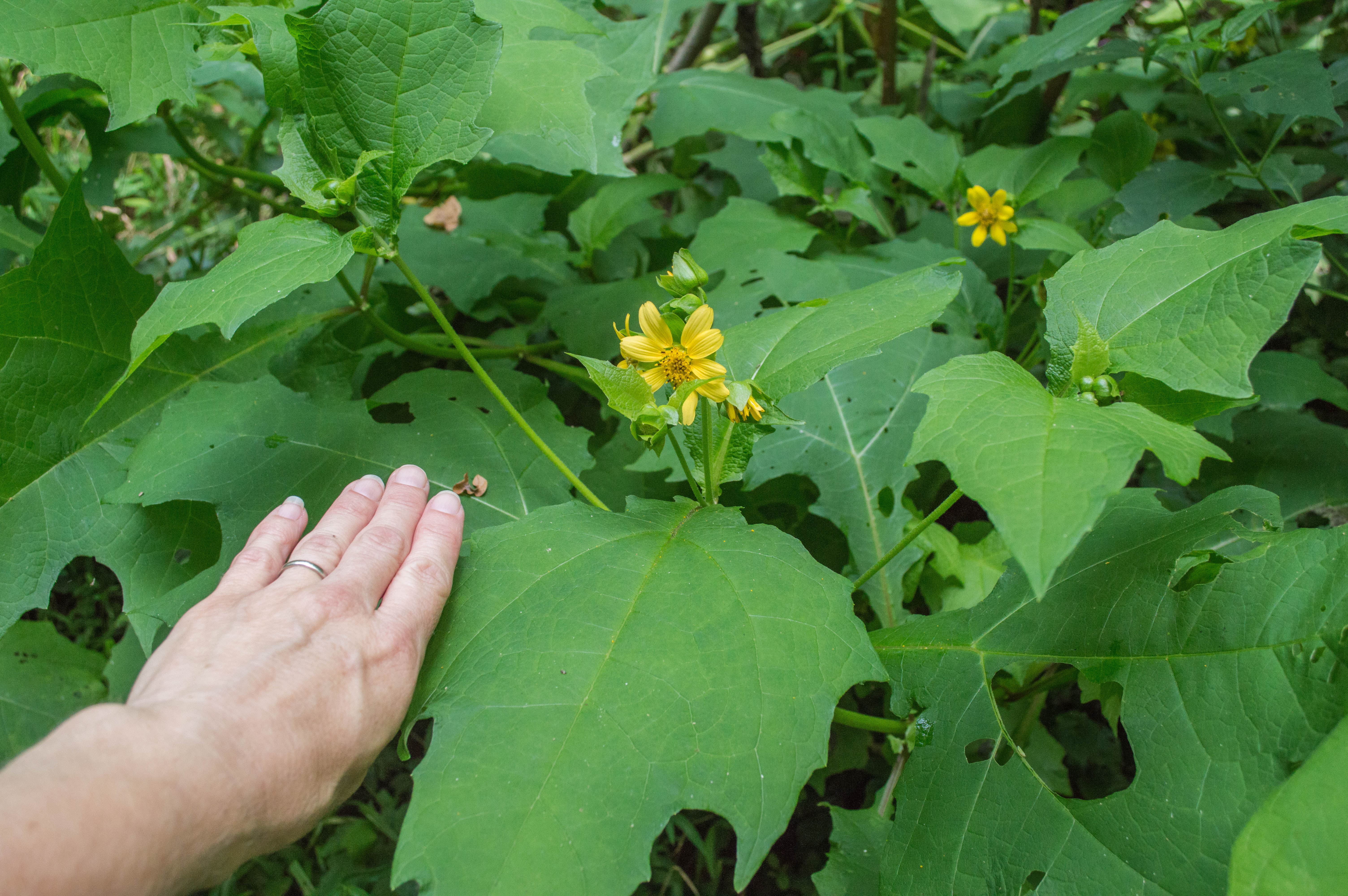
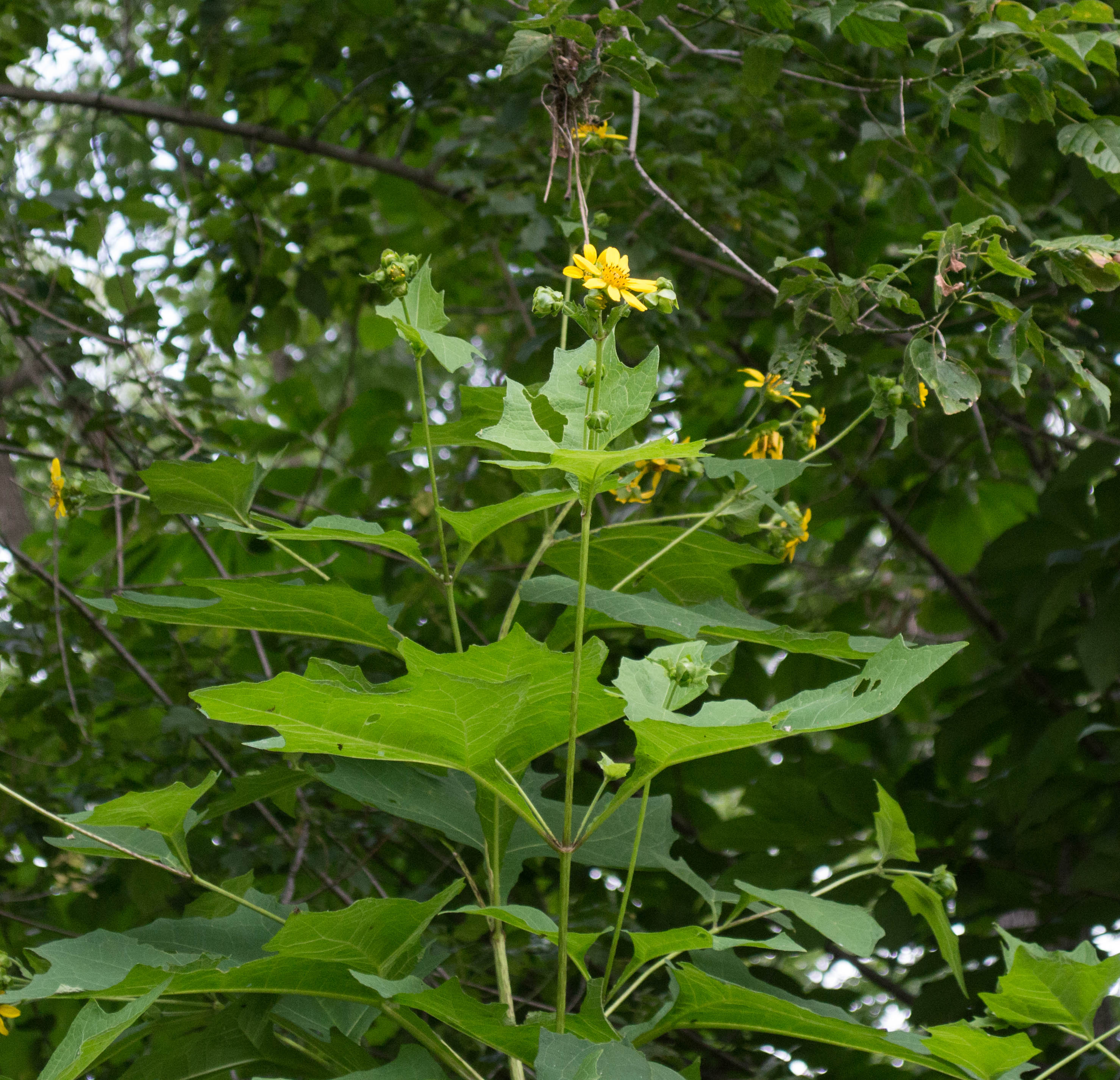
Yet another sunflower-type tall plant blooming along the river.  I find it interesting for the size and shape of the leaf, which can get to 12 inches long.  The plant itself can grow to ten feet, but the flower doesn’t exceed three inches.

20140811-DSC_0267


Large-flowered leafcup is found from New York (where it’s endangered) and Michigan (where it’s threatened) south through Florida and Texas.20140811-DSC_0152


Flower of the Day: Tall Coneflower

aka cut-leaf coneflower; Rudbeckia laciniata; Asteraceae (aster family)
20140811-DSC_0237-2

In August the Potomac downstream of Carderock is lined with tall flowering plants by the thousands.  Halberd-leaved rose mallow (fotd 8/7) is still going strong, though starting to wane, while thin-leaf sunflower (fotd 8/19), tall coneflower, and large-flowered leafcup (come back tomorrow to read about that one) are dominating the view.  And I do mean dominating, as these plants can grow to eight feet in height, and tend to form large colonies through rooting.

Flowers in the aster family (formerly known as the composite family, Compositae) are fascinating.   What appear to be petals are actually individual flowers, known as rays; the central portion of the head is comprised of individual disc flowers.  In some composite family flowers, like the Eupatorium species I wrote about last week, only disc flowers are present.  In others, like rattlesnake weed (fotd 5/31) and hairy hawkweed (come back the day after tomorrow), there are only ray flowers.

The coneflowers (Rudbeckia and Echinacea species) are easily distinguished from the sunflowers (Helianthus species, and many others) by the reflexed ray flowers and the more-or-less spherical shape of the disc.

There are 22 species of Rudbeckia in the US, four of which are found in this area, including Maryland’s state flower, the black-eyed Susan (R. hirta).  Tall coneflower is threatened in Rhode Island.



Flowers of the Day: Sunflowers

woodland sunflower, Helianthus divaricatus 

thin-leaved sunflower, Helianthus decapetalus

Asteraceae (aster family)

20140725-DSC_012120140725-DSC_0154

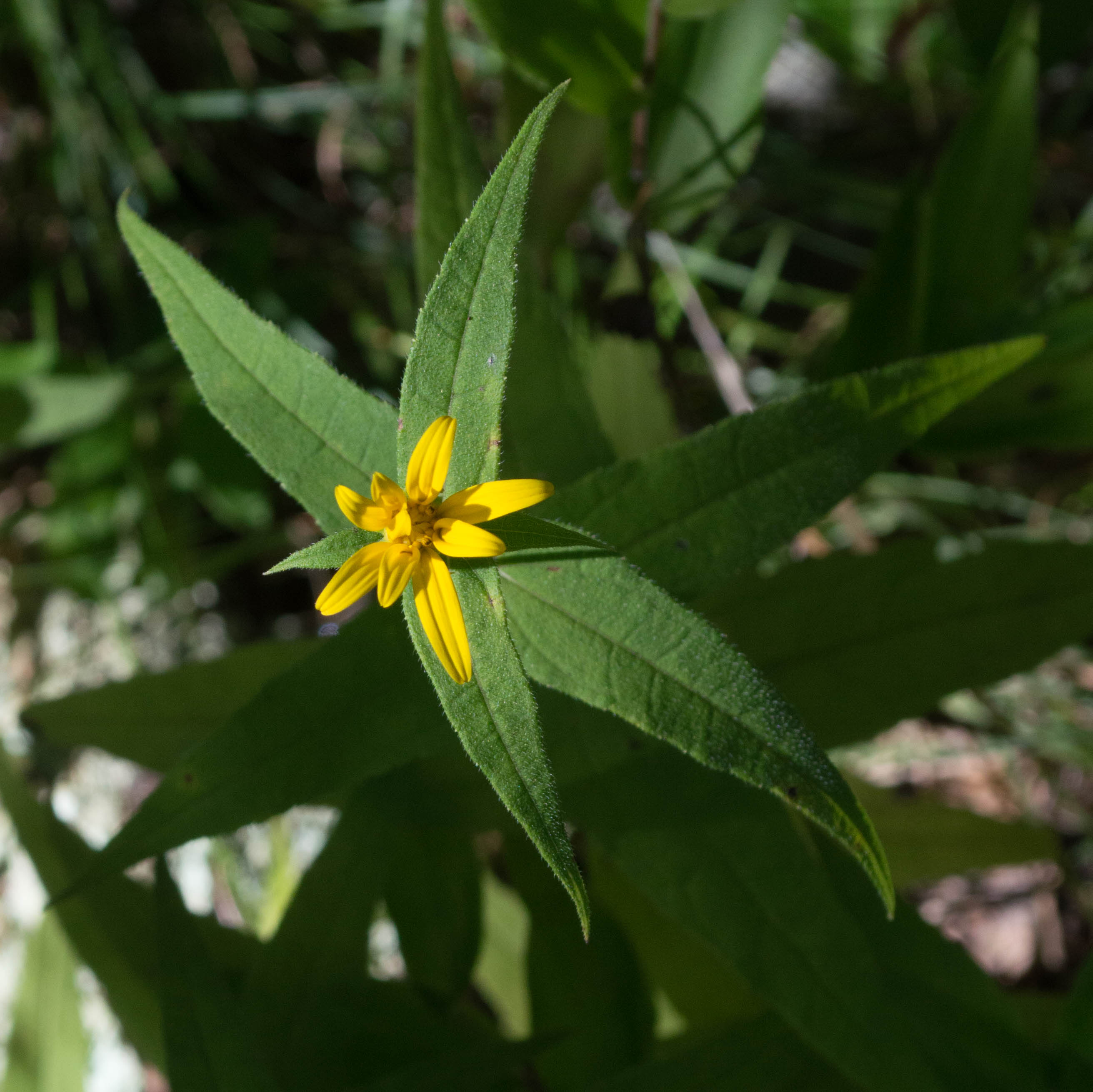
Both of these woodland species share a similar range across the eastern US. The woodland sunflower likes conditions a little shadier and a little drier, while thin-leaved sunflower likes a bit more sun and moisture.  Woodland sunflower will grow three to six feet tall, with flowers one and a half to three inches across.  Thin-leaved sunflower will grow to five feet tall and can have slightly larger flowers (two to three and a half inches across).

(both images above: woodland sunflower; below: thin-leaved sunflower)

The most obvious differences between the two lie in the leaves. Woodland sunflower leaves are blunt at the base, sessile (the leaf base touches the stem of the plant), and are exceptionally long-pointed at the tip.  Thin-leaved sunflower has a slightly long-tipped leaf that narrows dramatically into long, winged petioles.

20140806-DSC_0040-2

20140811-DSC_0058

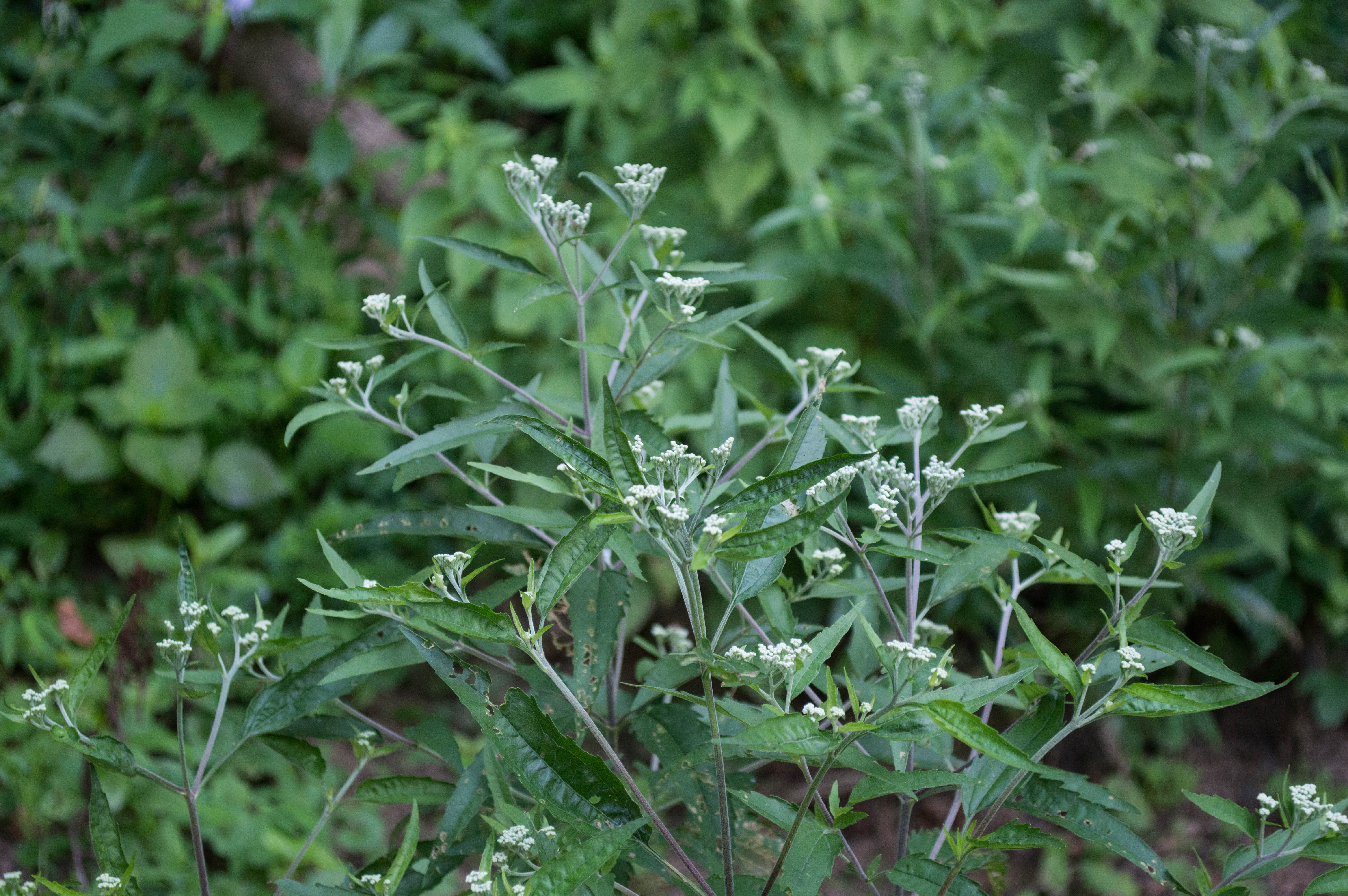
Flower of the Day: Late-Flowering Thoroughwort

Eupatorium serotinum; Asteraceae (aster family)

 DSC_0020

This FOTD is a little premature, as it’s still in bud, but I’m on a roll here with the Eupatoriums.  This one can grow up to five feet tall, and has longer, narrow leaves than the other species I’ve written about the past few days. The inflorescence is rather flat.

DSC_0024

This plant, also known as late boneset, is endangered in New York.  Like most of its relatives, it can be found across the eastern US and into Canada.

Tomorrow, I’ll take a break from plants in the aster family – but not for long, because this is the time of year when they really dominate.  As of August 13, 13% of the plants I’ve catalogued this year have been in the Asteraceae.  By October that figure might be as high as 25%.  Of all the plants families on this earth, only the Orchidaceae has as many species.

Flower of the Day: Mistflower

Conoclinium coelestinum; Asteraceae (aster family)

 20140811-DSC_0275

Yet another in the series of Eupatorium-type flowers, formerly named Eupatorium coelestinum.  Note once again how similar the flowers are to the others I’ve posted about in the last few days.  This plant grows up to three feet tall, and has triangular leaves with short petioles. It’s closely related to the common garden plant ageratum. Its native range is from Ontario and New York south to Florida and west to the central and southern Great Plains.

Here’s a picture showing flowers, buds, and the characteristic leaves:

20140806-DSC_0102 and one more picture for fun20140811-DSC_0274.