Tiny Flowers in Big Masses

20160815-_DSC0100

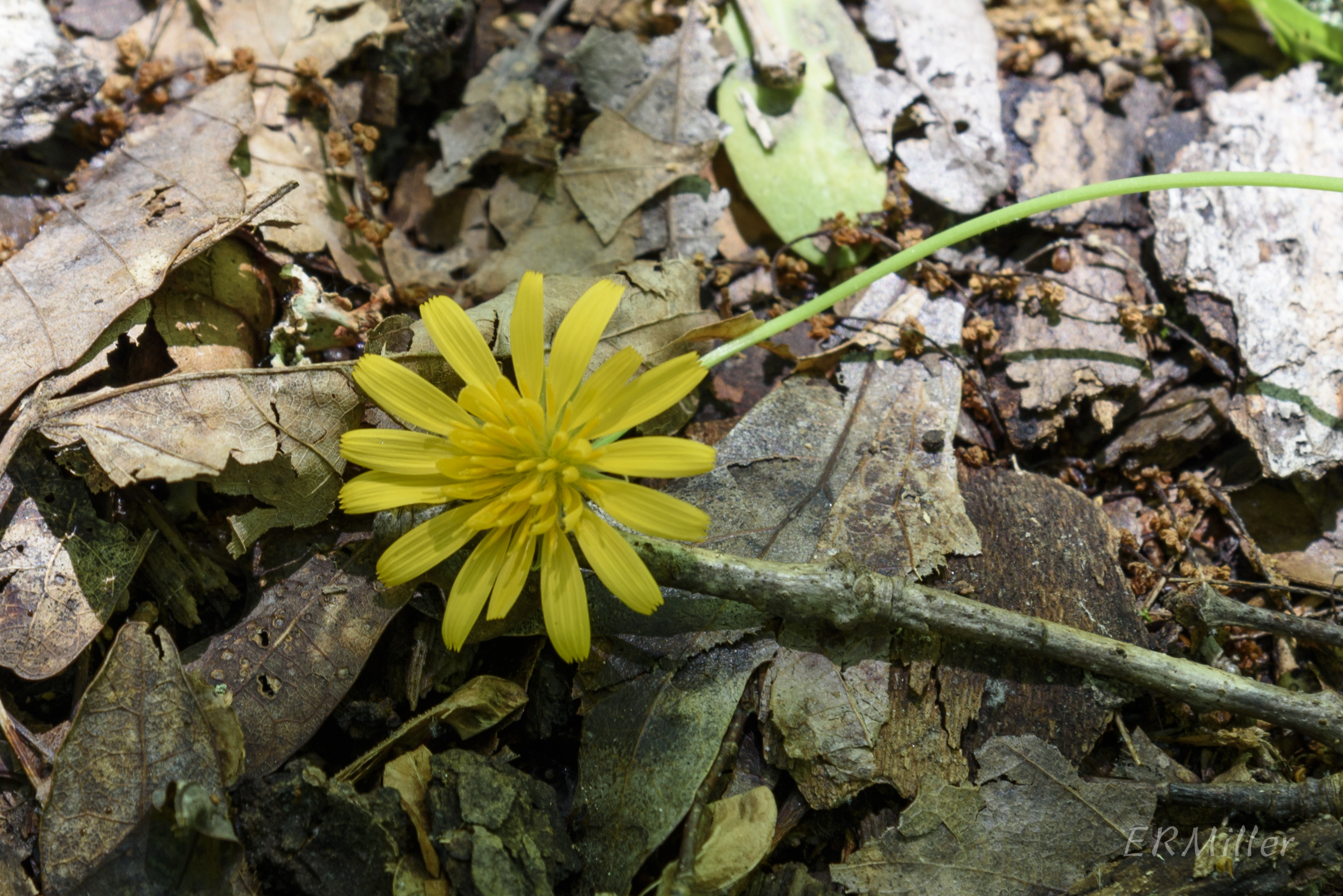
Somewhere along the downstream third of the Billy Goat A trail there’s a 40-foot traverse along a cliff face – really one of the best parts of the trail. I was working my way down those rocks when a bright spot of yellow at the bottom caught my eye.

Helenium flexuosum (Asteraceae) is by no means an unusual plant: it can be found throughout the Maryland Piedmont and much of the eastern US, ranging from southern Maine south to Florida, west to Wisconsin and Minnesota and eastern Texas. It’s not on any state’s conservation list. But for some reason, I’ve only seen it once, along Billy Goat C, and that was two years ago. So I was delighted to see such a nice stand of plants along a very well-used trail.

This plant, along with its close relative common sneezeweed (H. autumnale), likes sun and wet soils, so look for both species along riverbanks. There are huge stands of H. autumnale along the rocks on the northern shore of the Potomac in D.C., upstream of Fletcher’s Boathouse.

20160815-_DSC0104

What I really love about this flower is how well it demonstrates what composites are all about. The three-lobed yellow “petals” are the ray flowers, of which there are typically 8 to 13, while the spherical purplish-brown head can consist of 250 to 500 disk flowers.

20160815-_DSC0097


The photo on the right shows two inflorescences. The bottom several ranks of disk flowers are open on the left one, with the double-lobed stigmas protruding. All of the disk flowers are open on the inflorescence on the right. Click on the picture to see a larger image. Isn’t that neat?

20160815-_DSC0107

Identifying Wildflowers, Part Four: Getting Technical

20160524-_DSC0217

the flower, flopped over, which they seem to do a lot

Krigia species
Asteraceae

Say you’ve narrowed an ID down to the genus, but just can’t figure out which species you have. To be absolutely sure, you probably need to consult a flora, but if you’re like me, you’ll be spending most of your time looking up the jargon, only to realize you don’t have the info you need anyway.

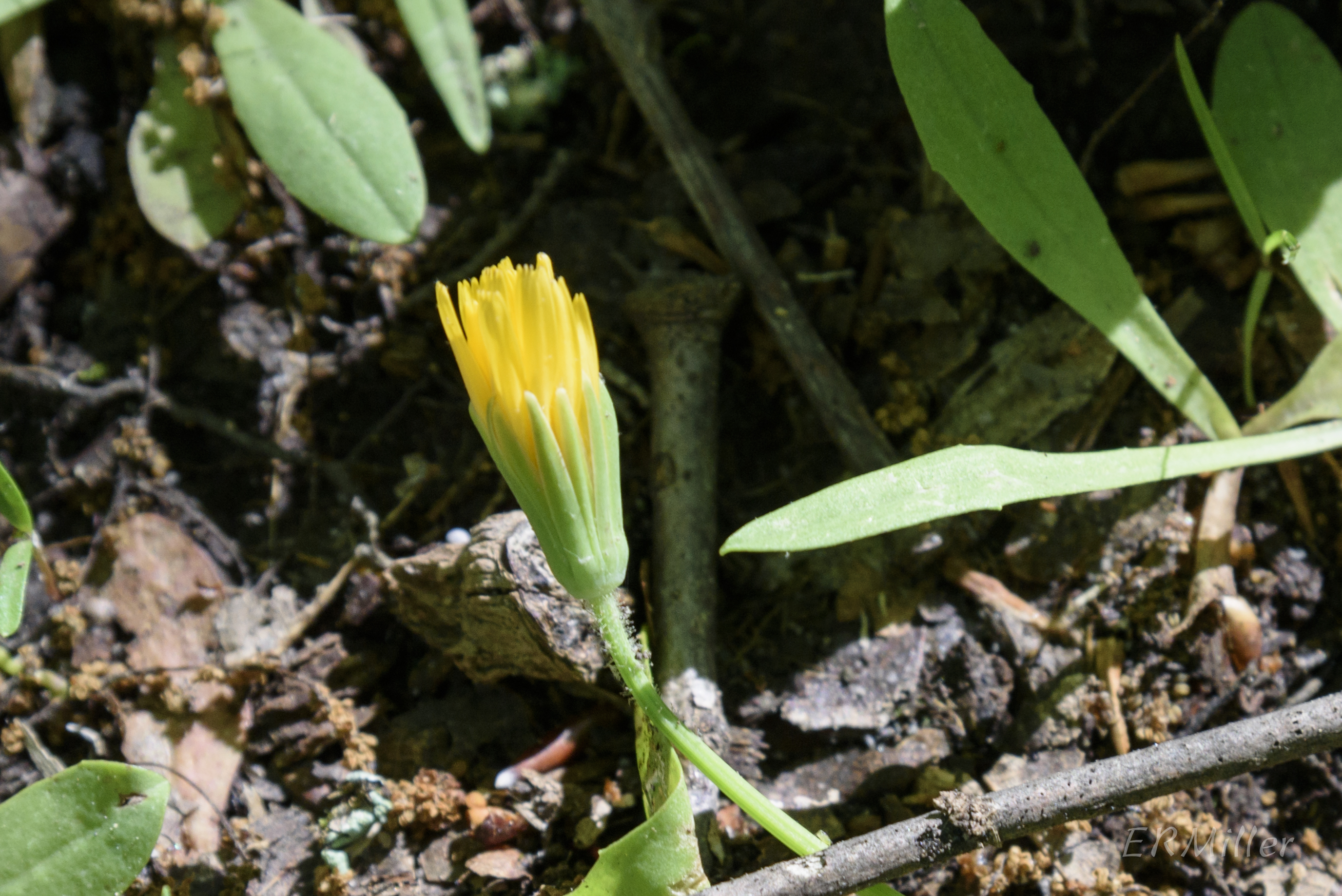
Take this plant, for example. For three years now I’ve been keeping an eye on a small patch near the C&O Canal towpath. I’m absolutely positive that it’s a Krigia species. But which one, Krigia virginica or Krigia dandelion?

After going through the process described in the past three posts, I still couldn’t figure it out. So I posted a few pictures and asked the question on the MNPS discussion page on facebook. One member helpfully pointed me to Weakley’s Flora of the Southern and Mid-Atlantic States.  In the Asteraceae key (page 1,145) was this:

“Pappus of 5 scales and 5 bristles; plant a winter annual; stem leafless or leafy at the base only…..K. virginica

…Pappus of 15-40 scales and 15-40 bristles; plant a perennial; stem leafless, leafy at the base only, or with many leaves extending up the stem. [go to 4]

…4 Stems leafless, the peduncles terminal; perennial from ovoid tubers, with long slender stolons which form new plants or tubers; pappus bristles (5.0-) 5.3-7.7 (-10.0) mm long…..K. dandelion”

OK, then. First, what is a “pappus”? It’s the tuft of hairs on seeds of plants in the aster family.

And right away I’m stumped again. I’ve never seen the seeds. It’s not like I visit this patch every day! If this ridiculous rainy weather ever clears up I’ll try going out there again, and hopefully the plants will have developed seeds, and hopefully those seeds won’t have blown away yet. [update: the day after writing this, I went back; 3 flowers, one fading, but none gone to seed yet]
20160514-_DSC0088

the bud

But there are other clues in this flora. Are the plants perennials or winter annuals? I don’t know. I’m going to have to observe them closely over the season to determine that. I have reason to believe they’re perennial, but I’m not sure. If they are, they’re K. dandelion.

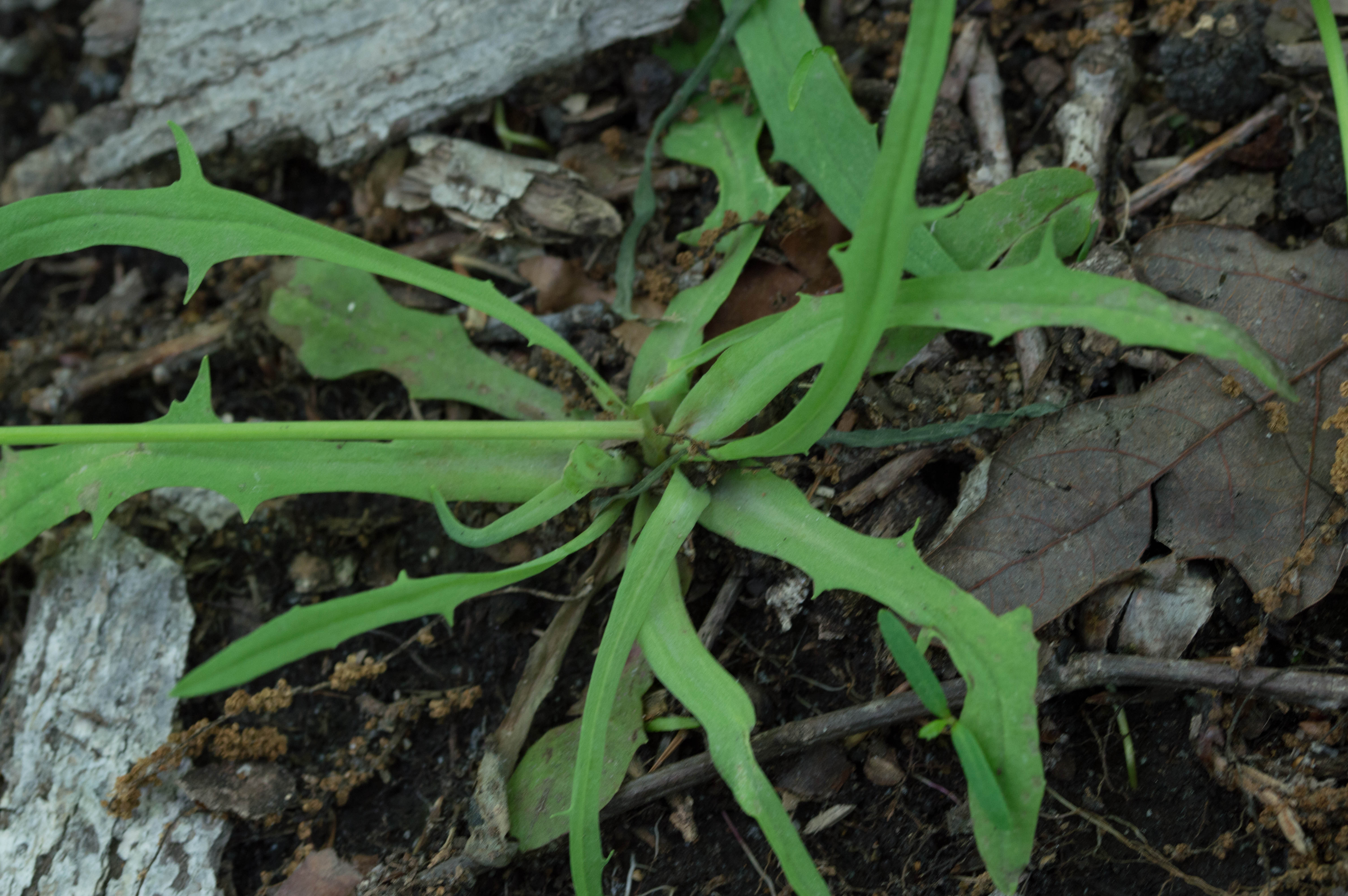
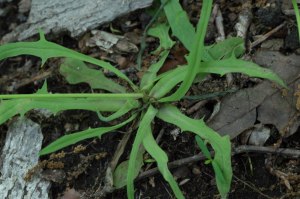
Next clue: the description of the stem. Not useful, since the stems of both species can be leafless. What I’ve seen in all the patch is a basal rosette of leaves and a single leafless flowering stem per plant. I’ve never seen leaves on the stem.
20150514-20150514-_DSC0234

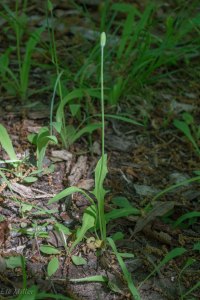
the flowering stem

Next clue: “…with long slender stolons which form new plants…” Well, it’s a patch of plants. Is it a patch from annuals that re-seed every year? From my gardening experience, I doubt it. These seeds will be wind-dispersed; if the plants were reseeding annuals, I’d see them scattered over a large area. What I’m seeing is a very tight cluster of plants growing close together, which suggests (but does not prove) stolons.

Next clue: “ovoid tubers”. Here’s a bit of info that I just can’t get. First, these plants are on National Parks land, where digging is forbidden (and rightly so). And second, K. dandelion is an endangered species in Maryland, ranked S1 (“typically 5 or fewer estimated occurrences or very few remaining individuals or acres in the State”). Even if it were legal, there’s no way I would dig up an S1/endangered plant! But seeing the roots would certainly solve the mystery.
20140520-DSC_0193

the basal rosette

So still no answer. But, there’s nothing like the word of an expert. Fellow MNPS member Joe Metzger, who’s been doing this for forty some years, wrote:

“Notice the fact that there is a single large flower. Dwarf Dandelion (Krigia virginica) would have a cluster of flowering stems, each with a flower. This is an adaptation common in many annuals to insure seed is produced. Yours has only one flower and no indication of any others. The basal leaves in your photo are strap shaped and either entire or shortly dentate which is another good indication that is Potato Dandelion (Krigia dandelion). On Dwarf Dandelion they would rarely ever be entire and they are deeply dentate or serrate and not usually strap shaped, usually tapering at each end.”

So there it is. Not definitive proof, but the available information strongly suggests that this is Krigia dandelion (potato dwarf dandelion), a Maryland endangered species.

Whoo-hoo!
Desert Velvet

20160309-_DSC0720

also known as turtleback
or velvet turtleback
Psathyrotes ramosissima
Asteraceae


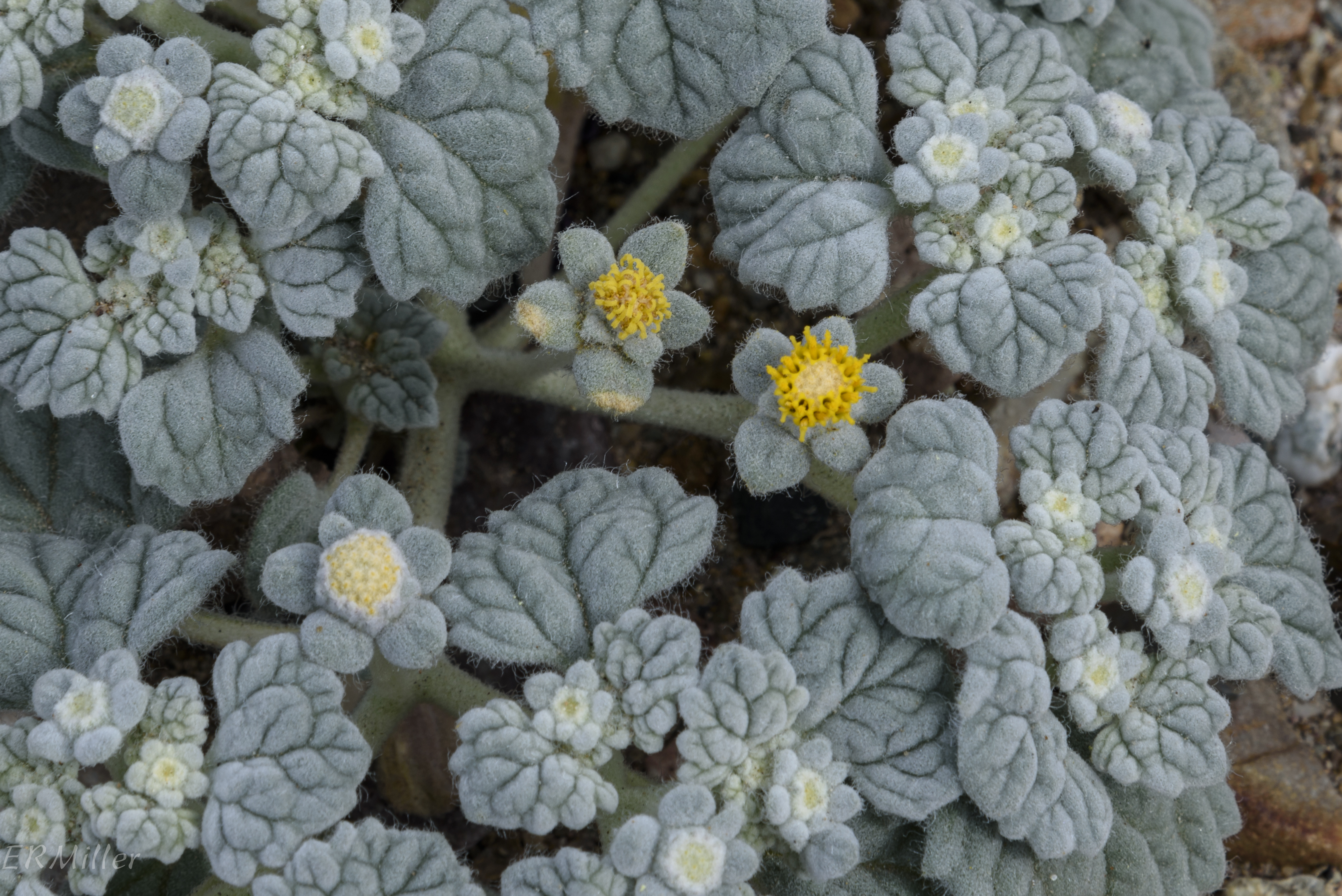
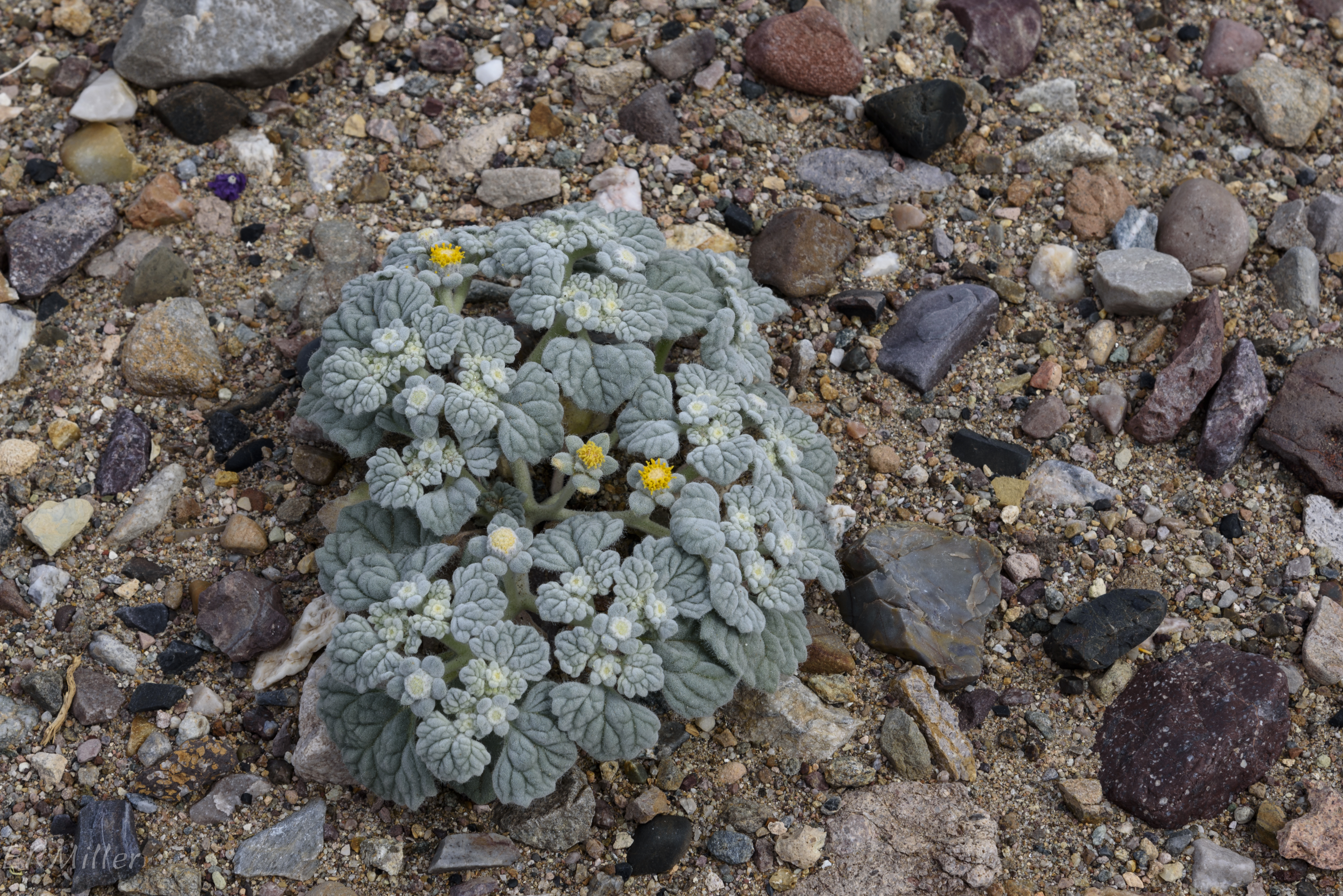
This neat little plant is not quite a belly flower: it is very low growing (five inches tall at most), but it can spread pretty wide. It’s variously described as a small shrub, annual forb, or short-lived perennial. On many desert plants, the foliage is as attractive as the flowers, and so it is here: thick, fuzzy, silvery sage-green leaves are mounded so as to resemble the back of a turtle. The inflorescence consists only of disk flowers (no rays).

Apparently it’s pretty common in the Mojave desert at low elevations, but for some reason I saw only this one plant, in a wash near Beatty Road.

20160309-_DSC0719

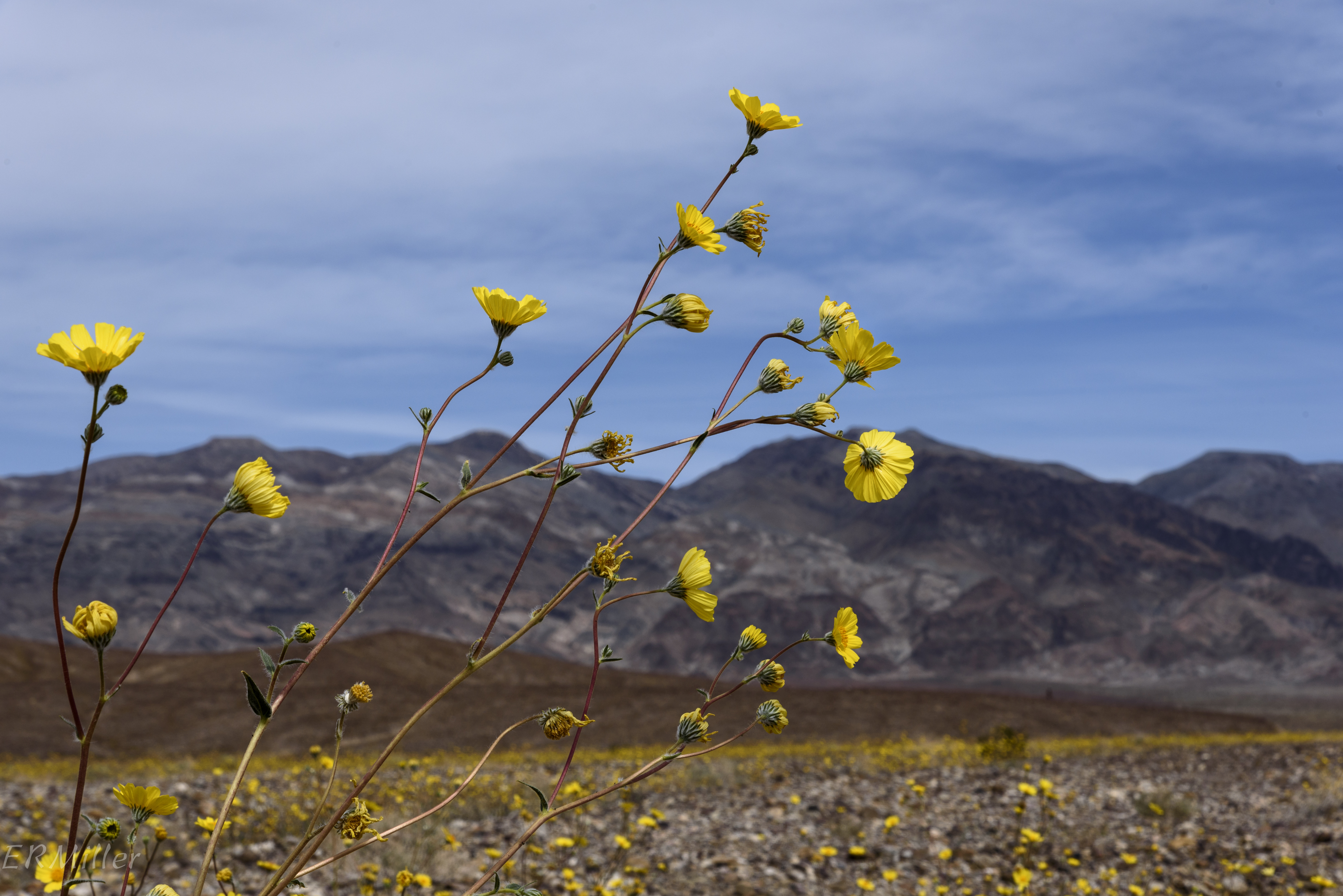
And that’s it for the Death Valley report. There are a few more plants that I haven’t positively identified yet (five of them probably Cryptanthas), and I don’t have great pictures of them. There are still about 200 landscape photos to go through; eventually I’ll be posting a dozen or two of them on my other website (ermiller.smugmug.com).

20160309-_DSC0690

Two More from the Asteraceae

Into the final few days of Death Valley reports…20160308-_DSC0135

pebble pincushion
Chaenactis carphoclinia

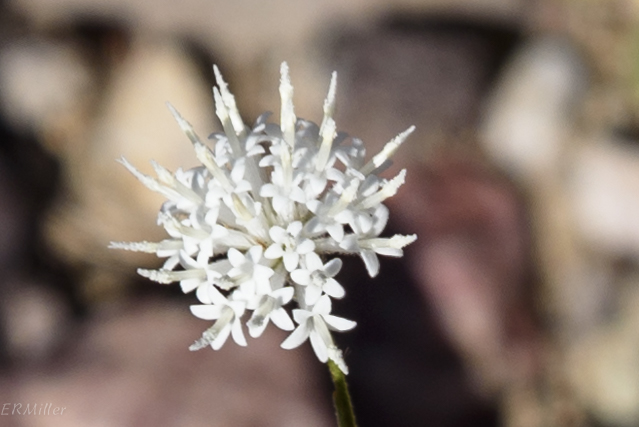
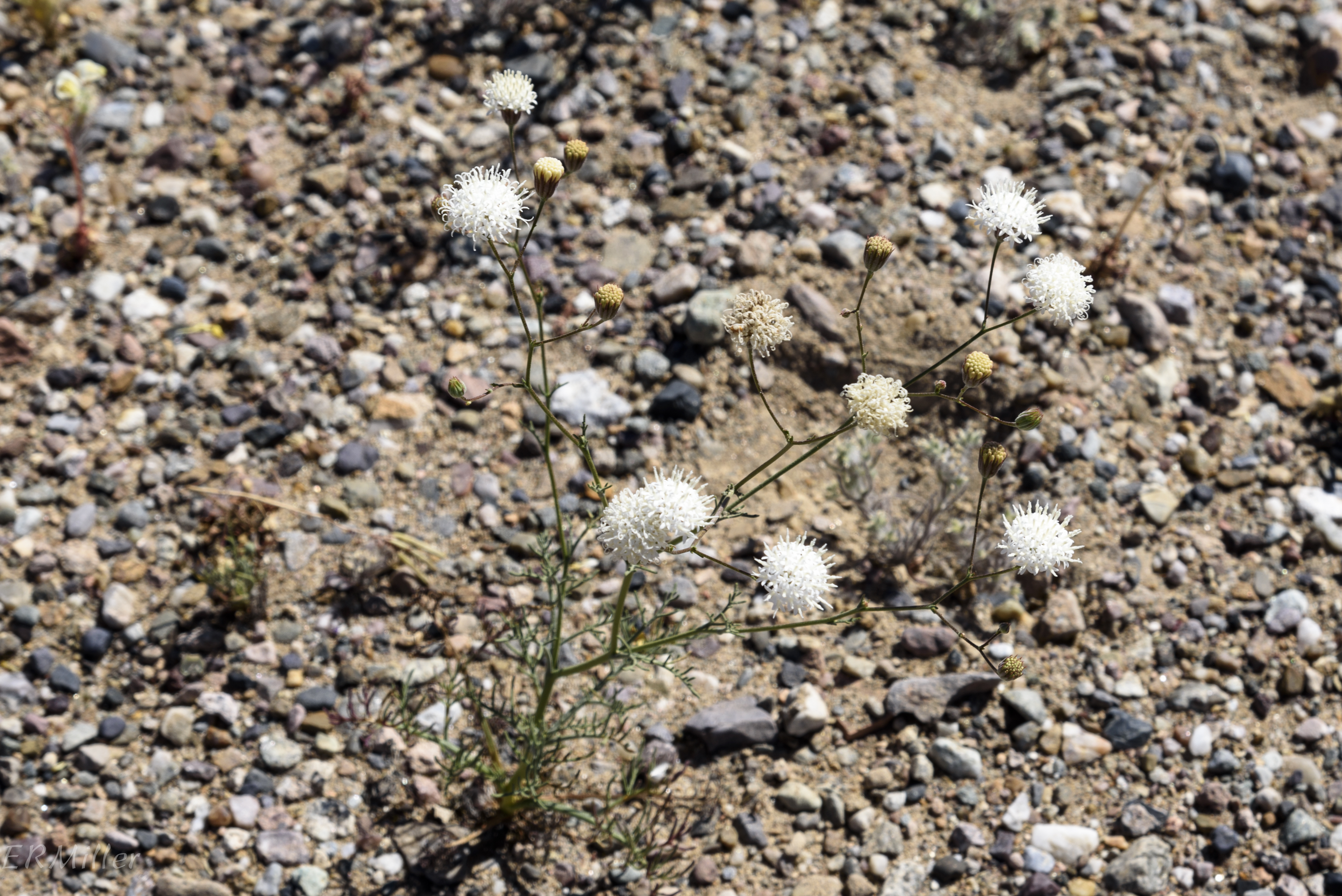
This pretty flower is an annual growing to two feet tall (at best), and is found in the Great Basin, Mojave, and Sonora deserts of Utah, California, Nevada, Arizona, and New Mexico. All species in the genus Chaenactis are found only in the western US.

20160310-_DSC0880

20160308-_DSC0246-2


Mojave ragwort, Mojave groundsel
Senecio mohavensis

And this not so pretty flower is also an annual, also growing to about two feet tall.  It’s found in the Mojave and Sonora deserts of California, Nevada, and Arizona. Senecio is mostly a western genus but two species appear in the east, including pilewort, which, confusingly, is no longer considered to be in the genus Senecio. Those darn splitters have been at it again.

20160308-_DSC0246

Two More Death Valley Shrubs

20160308-_DSC0197

desert holly, Yuma desert holly,
silver holly
Atriplex hymenelytra
Amaranthaceae
(formerly Chenopodiaceae)

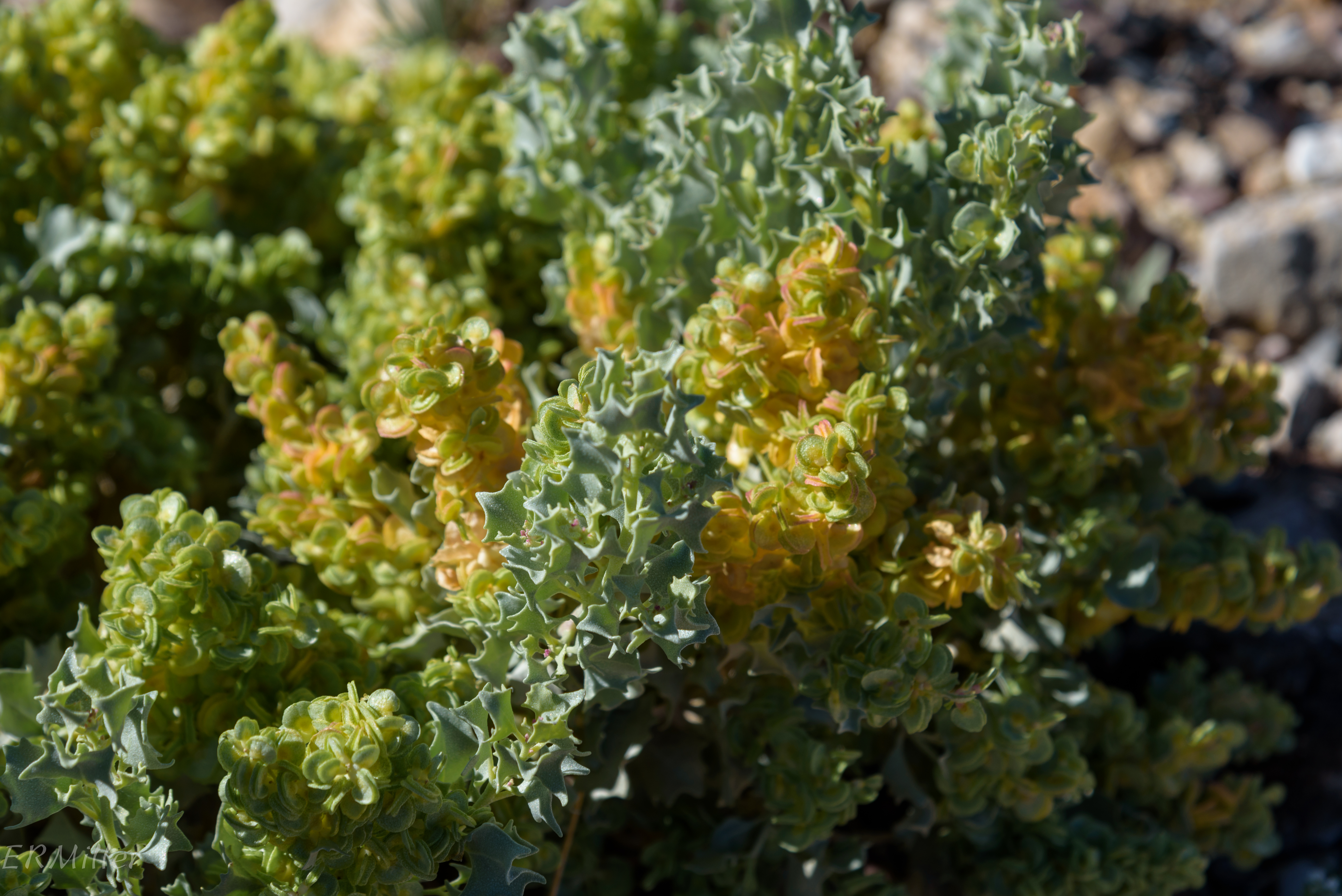
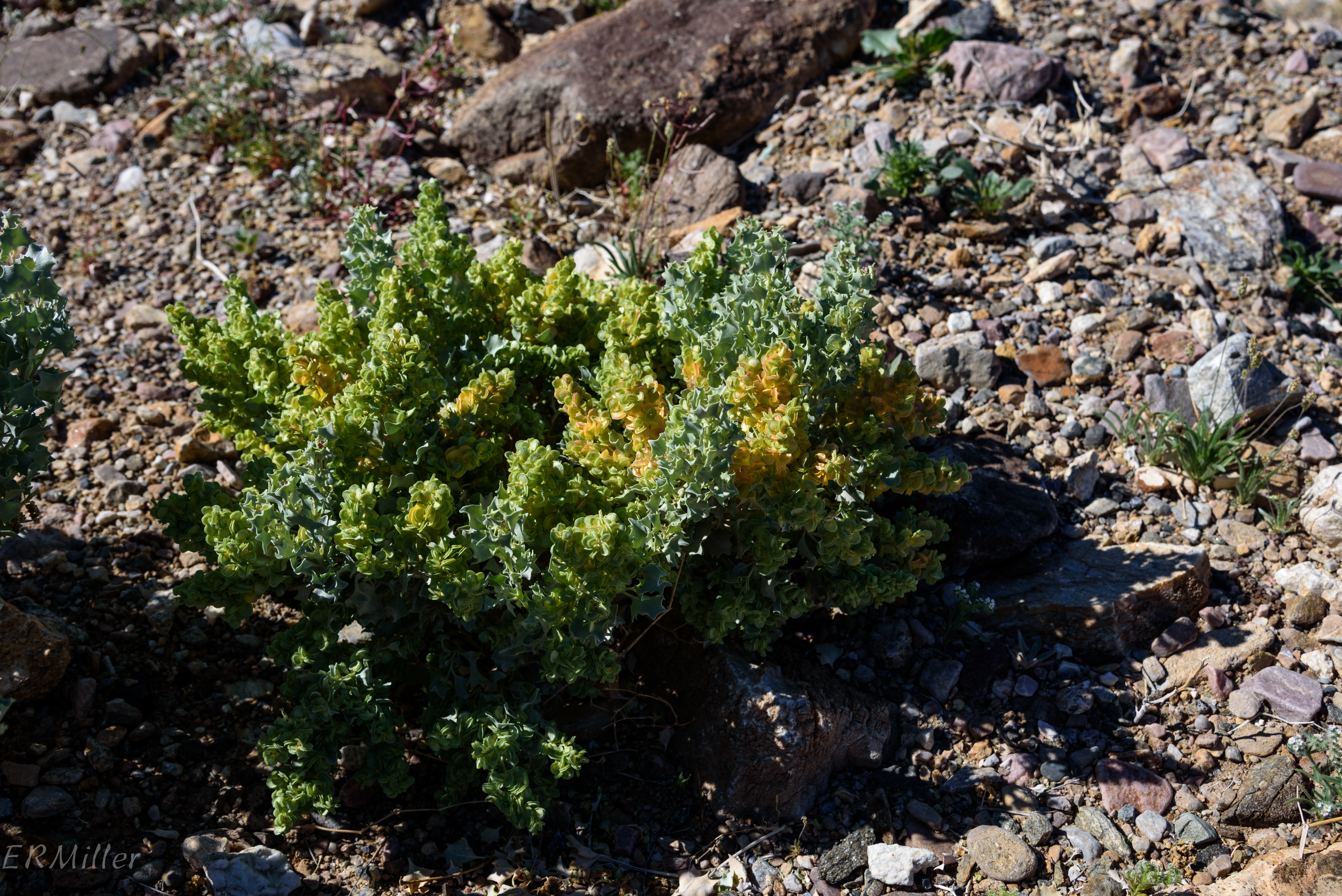
Desert holly, a shrub that can grow to three feet tall, has leaves that bear a slight resemblance to the familiar Old World hollies (Ilex species), but they aren’t closely related at all. It can be found in the Mojave desert in California, Nevada, Utah, and Arizona, where it’s listed as Salvage Restricted.  It’s highly tolerant of alkaline soils and is highly drought resistant.

20160308-_DSC0196

Going on a tangent… Arizona has different conservation nomenclature from the Eastern states. According to the Arizona Cooperative Extension, there are four levels of protected native plants. “Salvage Restricted” is the second level: “This large group of plants are subject to damage and vandalism. This is a large list of species with 32 plant families represented, the largest being numerous species of cacti.”


20160309-_DSC0508

sprucebush, pygmycedar,
desert fir, desert pine
Peucephyllum schotii
Asteraceae

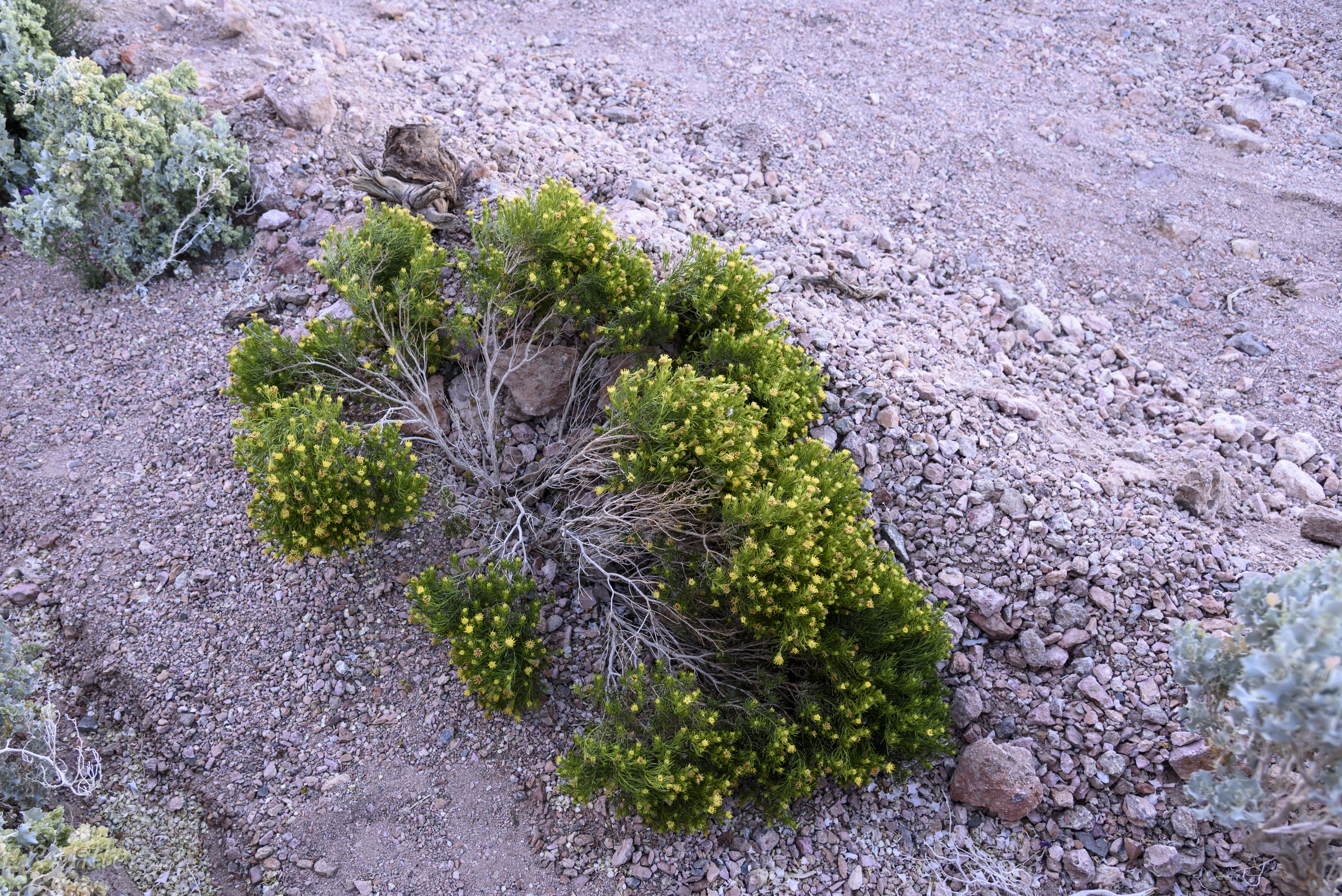
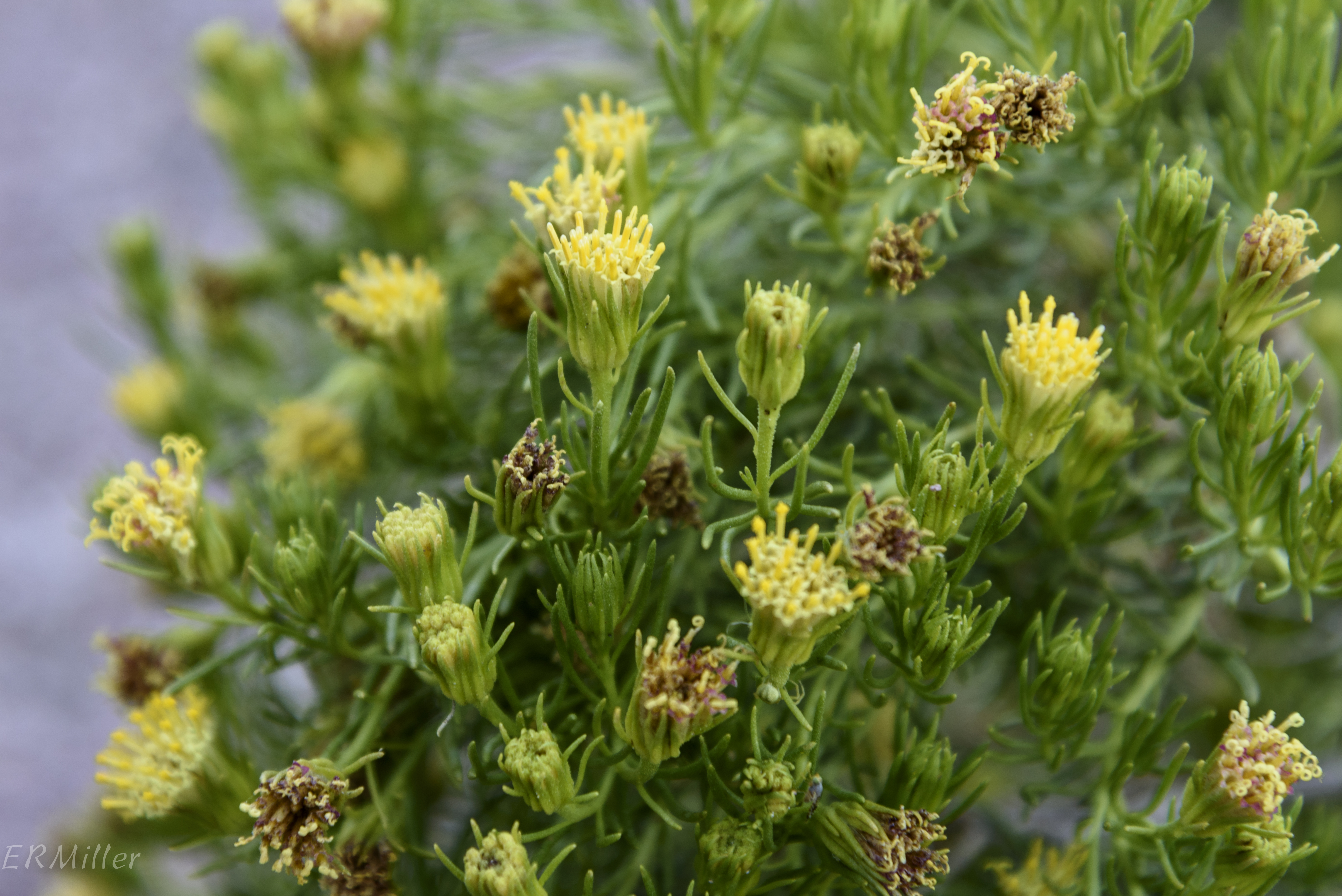
At a first, distant glance this plant looks similat to creosote bush, but up close you can see that the leaves and flowers are clearly very different. Despite the common names, it isn’t a spruce, cedar, fir, or pine.  It’s in the aster family, but has only disk flowers (no rays). It grows in the Mojave and Sonora deserts and can reach heights of 10 feet.

20160309-_DSC0512