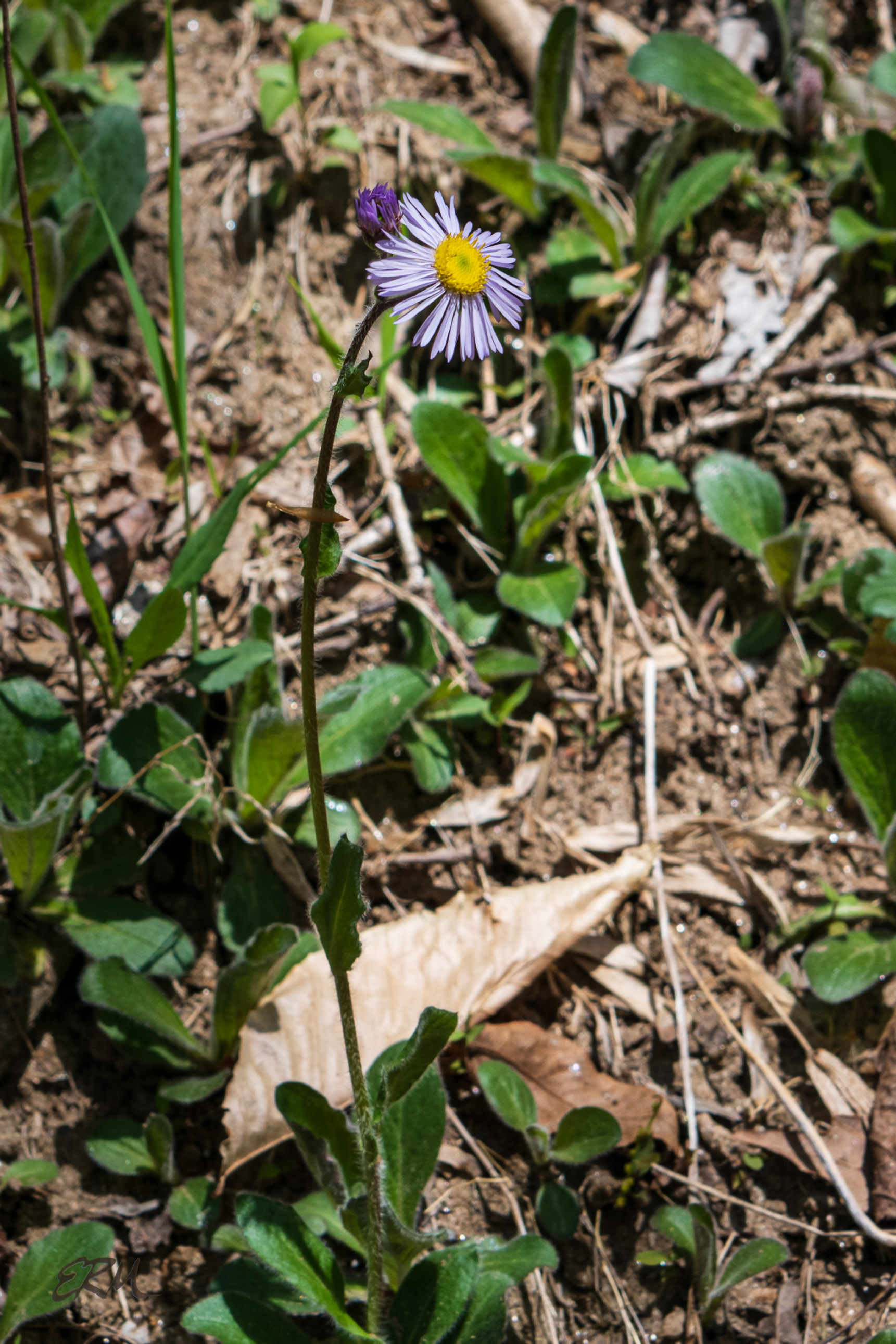
 As a follow-up to the last post, here are a few more pictures of Robin’s plantain.
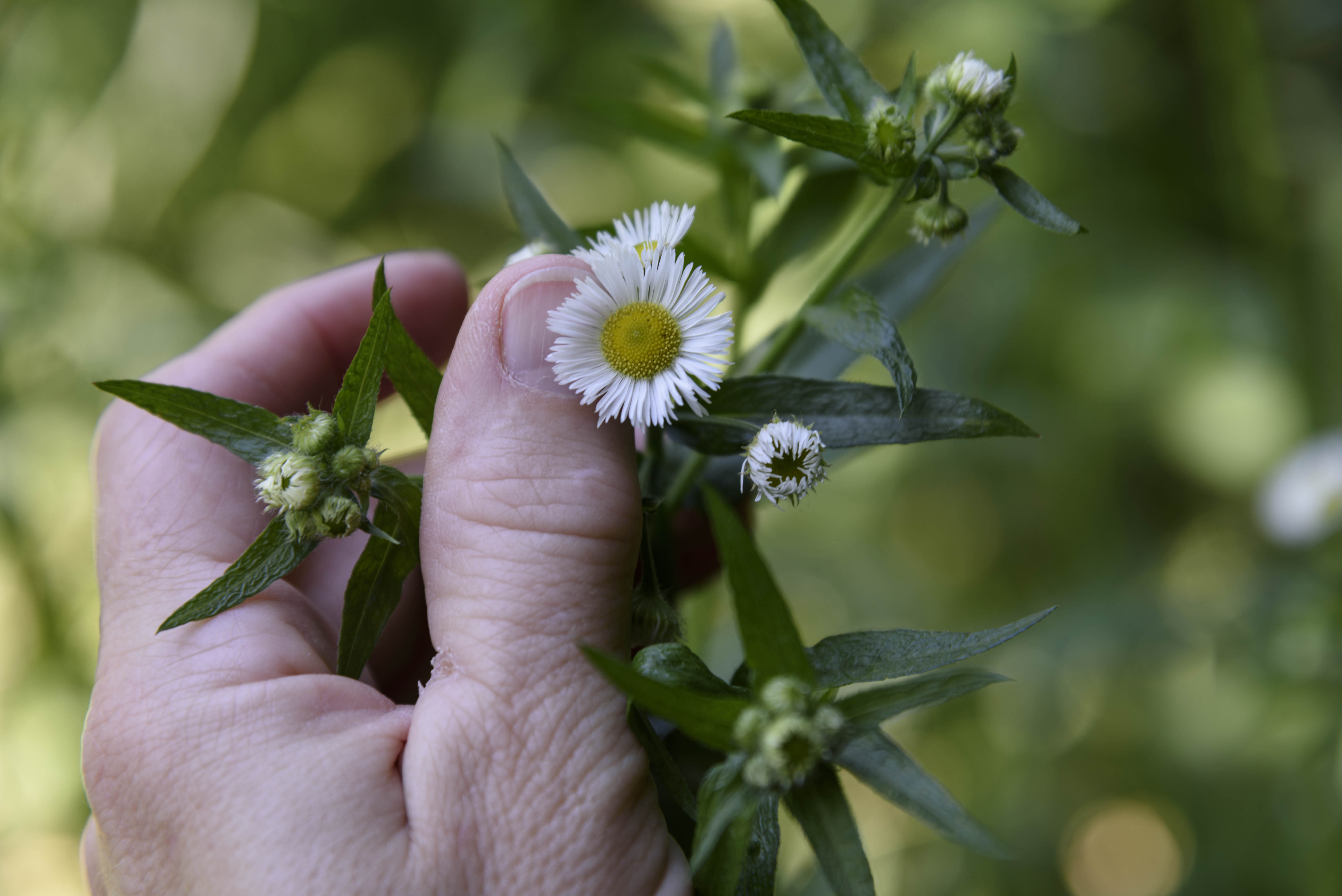
Inflorescence with two flower heads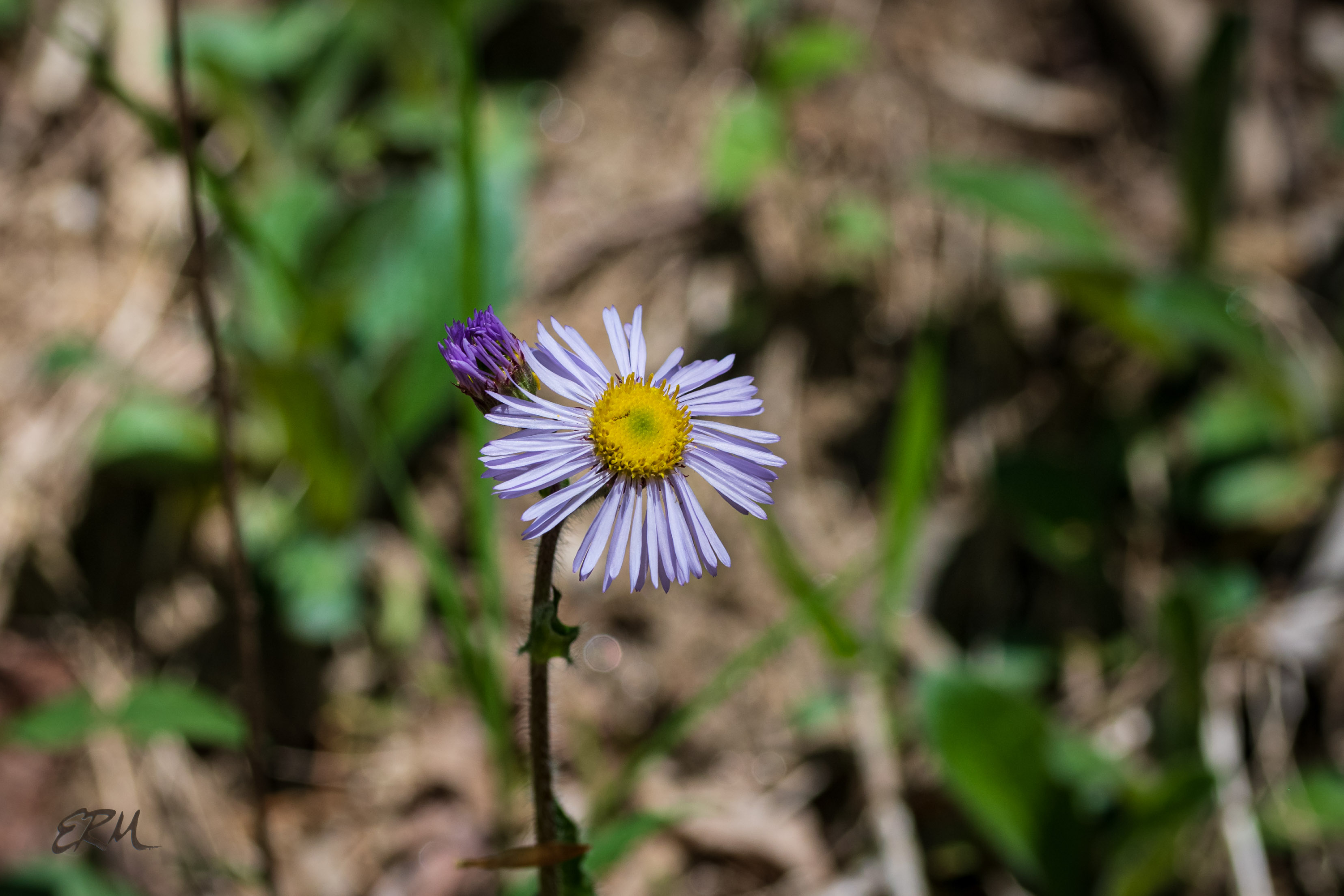

inflorescence seen from behind

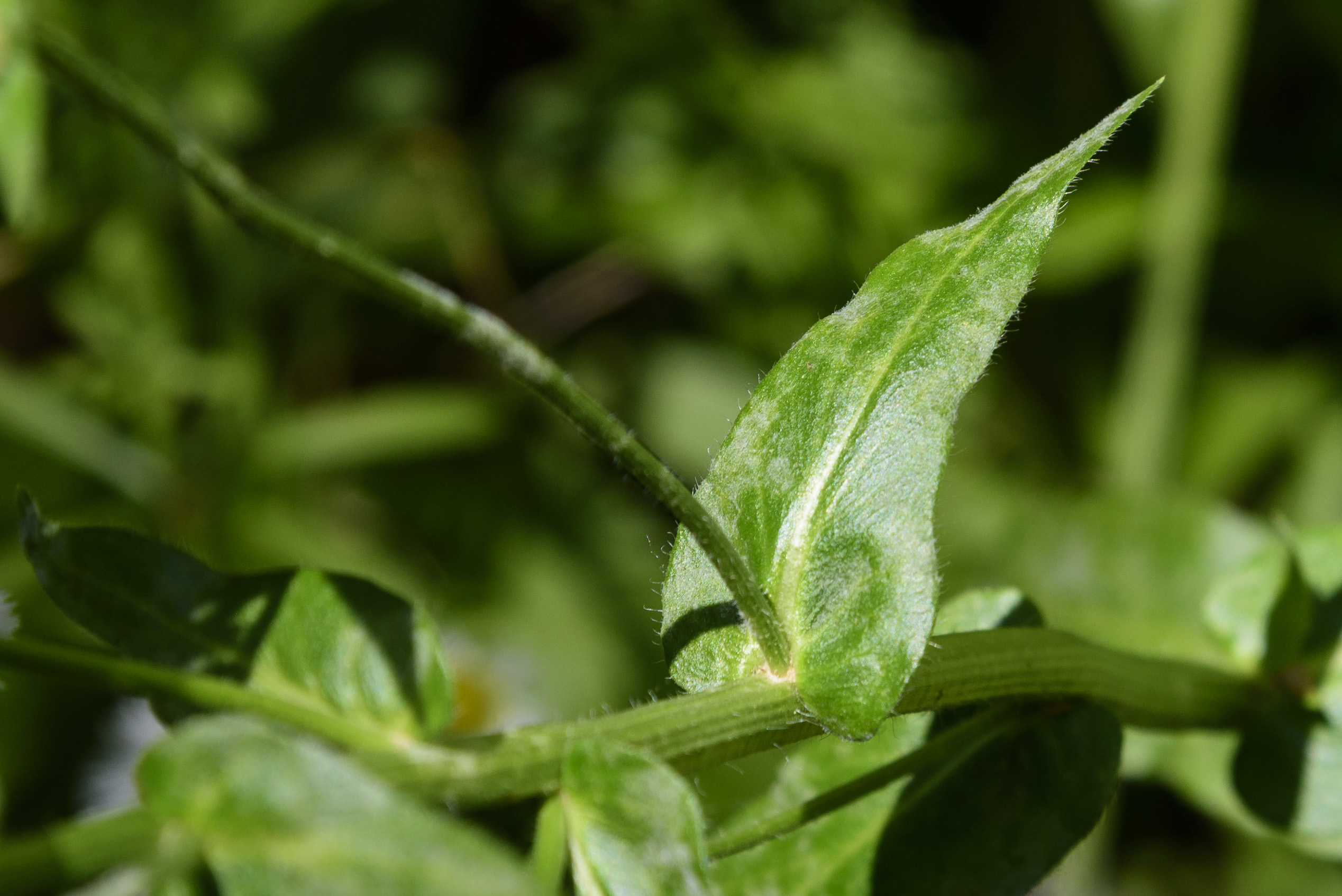
pubescent leaves of the basal rosette; conspicuously hairy stem

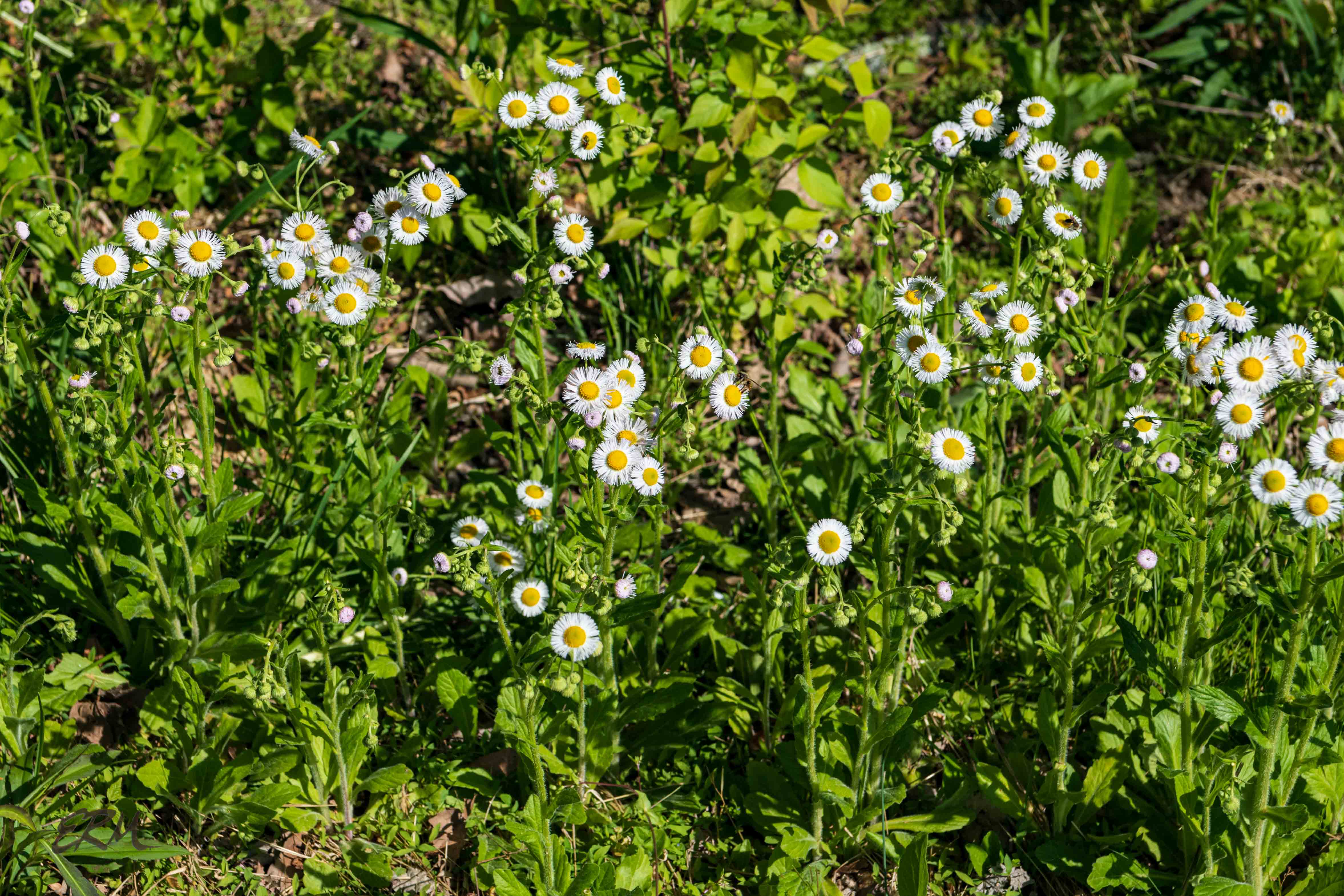
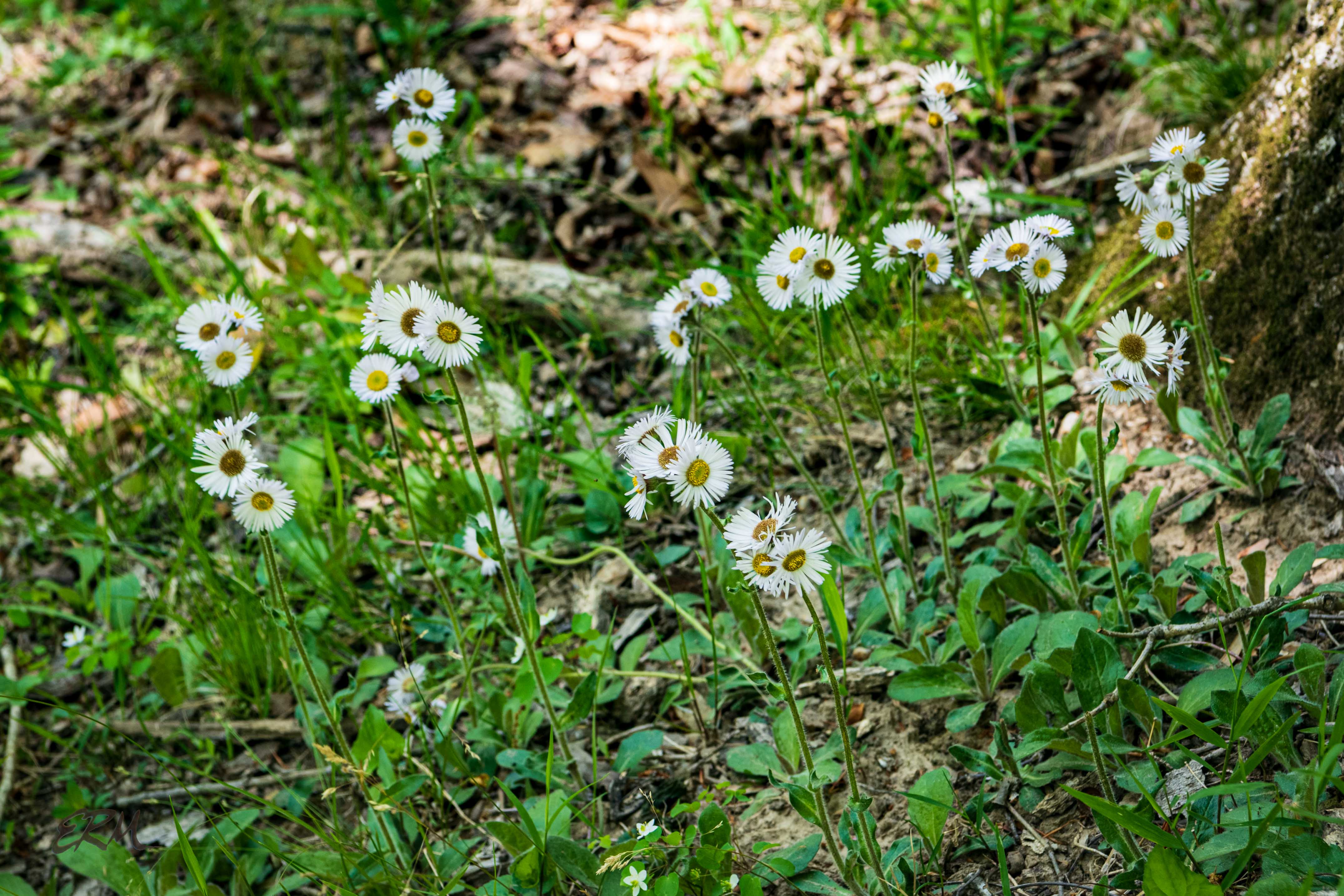
a small colony

As a follow-up to the last post, here are a few more pictures of Robin’s plantain.
Inflorescence with two flower heads
inflorescence seen from behind
pubescent leaves of the basal rosette; conspicuously hairy stem
a small colony
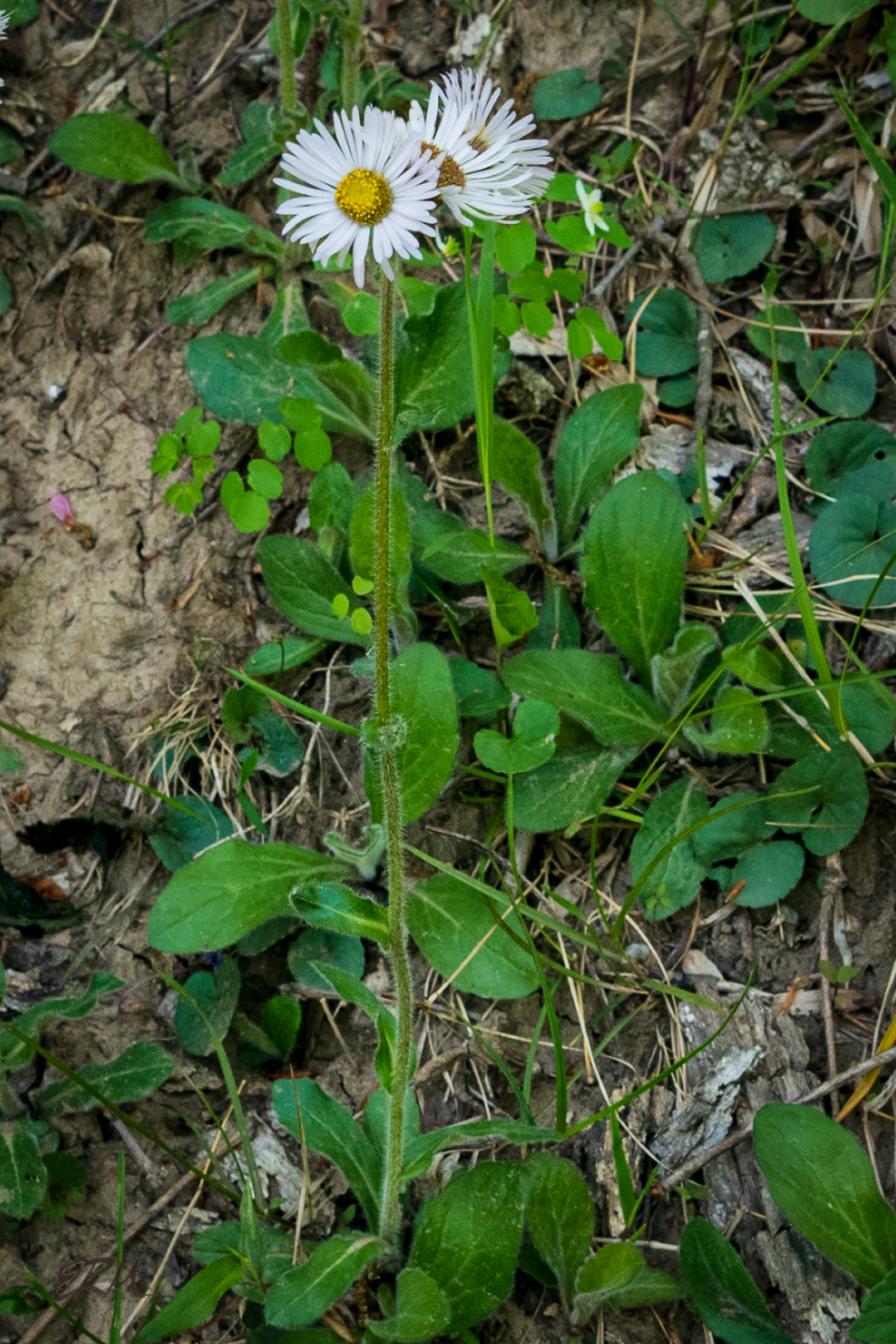
Robin’s plantain, Erigeron pulchellus
Over the years I’ve seen many fleabanes in many different locations. Mostly they were Erigeron annuus (annual fleabane) or E. philadelphicus (common fleabane). Sometimes they were E. strigosus (daisy fleabane).
Always I looked closely to see if maybe I’d found E. pulchellus (Robin’s plantain). Sometimes I thought I had; I’d pore over the pictures I’d taken and read yet again the descriptions in various books, and always I came to the conclusion: nope, not this time, not Robin’s plantain.
Then one spring day in 2022 I was walking in the Gold Mine Tract near Great Falls when a stand of aster-y looking flowers caught my eye. “What are those?” I wondered. “They look like fleabanes, but… oh wow, that’s Robin’s plantain!”
When it comes to identifying Robin’s plantain, my best advice is, you’ll know it when you see it: it looks like the more common Erigeron species, but is different enough to make you think twice. Here’s a grossly oversimplified rundown of how to differentiate the four fleabane species found in Maryland*.
Start by looking at the stem leaves. If most of them are sessile (maybe slightly petiolate), then the plant is either E. annuus or E. strigosus.

many toothed sessile leaves
If the stem is crowded with leaves, and most of them are distinctly toothed, then it’s E. annuus. Look for basal leaves; if there aren’t any, that’s another indicator for E. annuus.
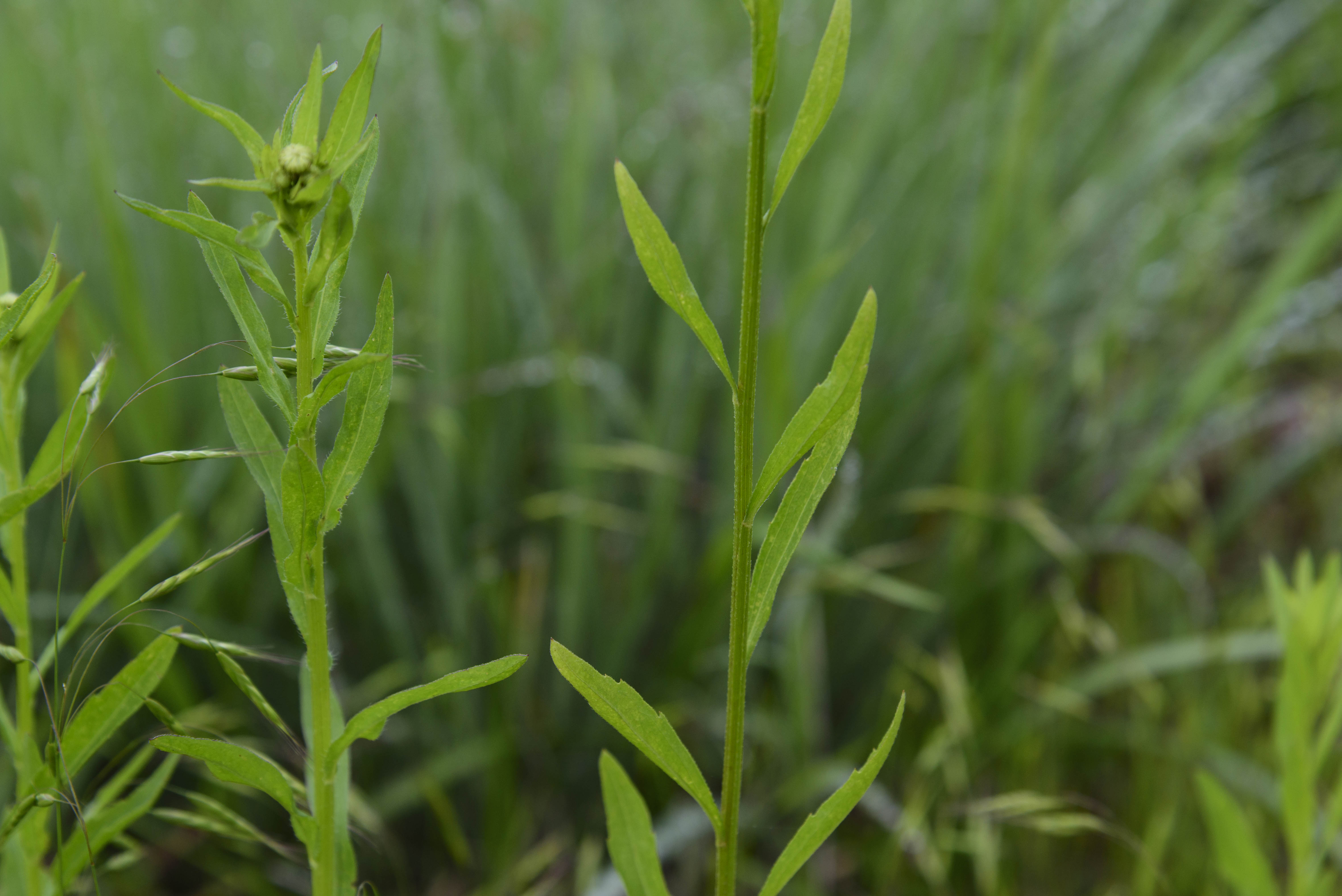
fewer leaves on stem; leaves mostly entire
If there are only a few stem leaves, and they’re mostly entire, then it’s E. strigosus.
If most of the stem leaves are clasping, then the plant is either E. philadelphicus or E. pulchellus.
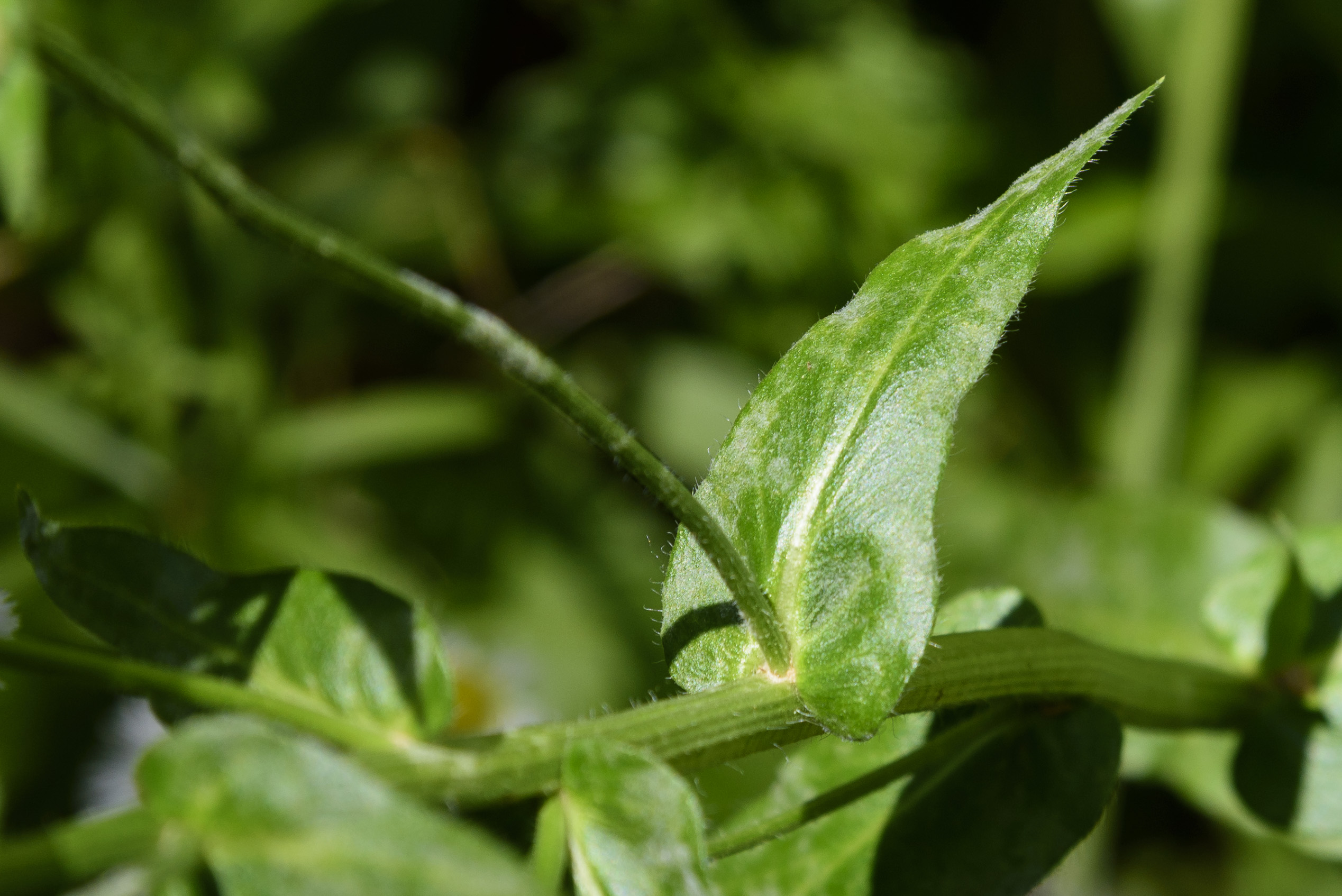
clasping leaf, margin entire
If the stem leaves are only slightly toothed at the bottom of the plant, and entire further up the flowering stem, then it’s probably E. philadelphicus.

wavy leaf margin, clasping; also note the conspicuously hairy stem
If they’re wavy or more obviously toothed, then it’s likely E. pulchellus.

There are other, maybe better ways differentiate these two species. Look at the inflorescence. If it’s obviously branched and bearing many flower heads, then it’s E. philadelphicus.
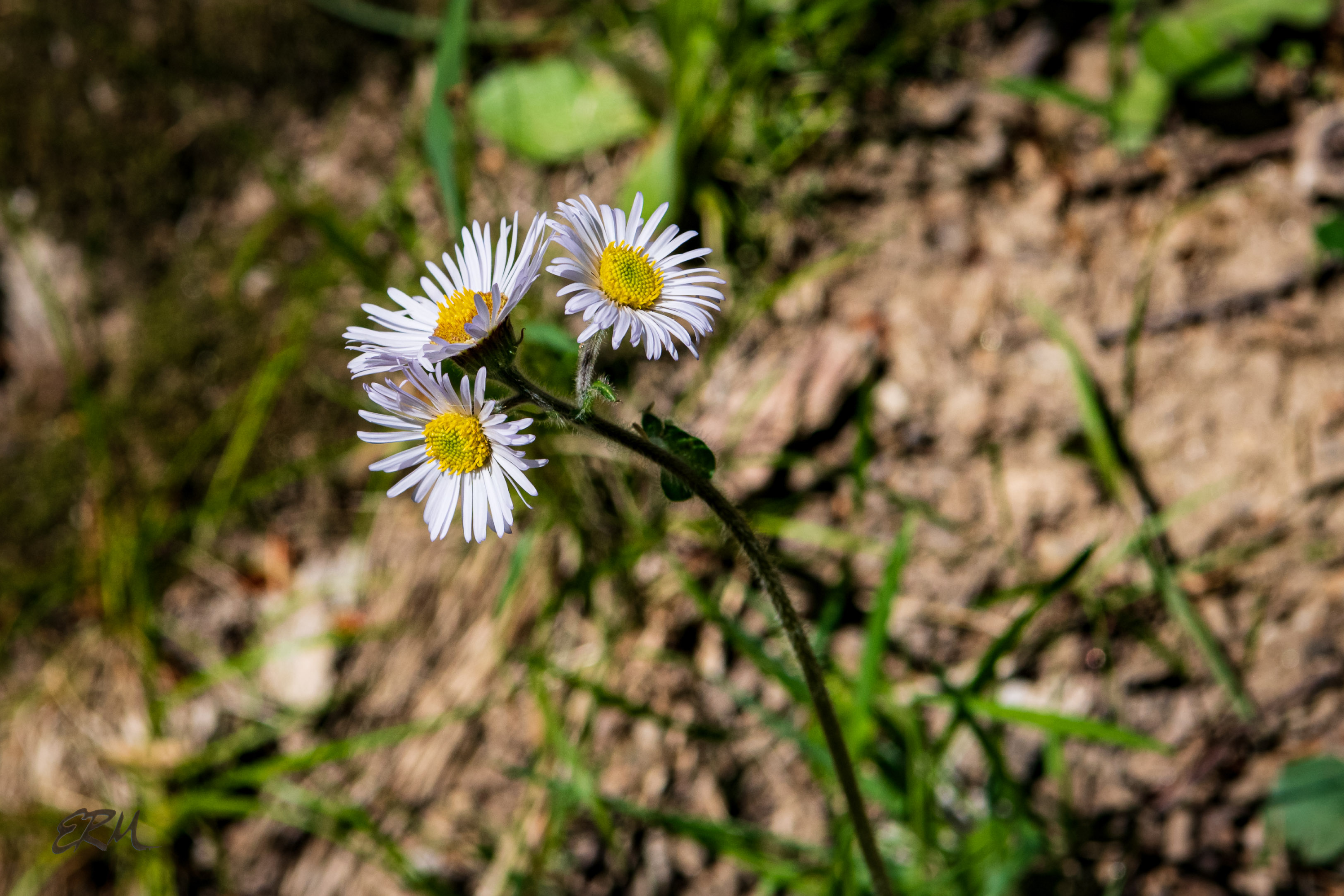
If it’s unbranched and bearing only a few flower heads, then it’s E. pulchellus. (Also, E. pulchellus heads tend to be larger with many fewer ray flowers than E. philadelphicus.)
Also consider the habitat. E. philadelphicus is found in moist soils in disturbed areas (fields, roadsides) and is much more common. E. pulchellus is a plant of dry woodlands and prefers rocky areas, like the bluffs in the Gold Mine Tract.
above left, common fleabane; above right, Robin’s plantain
———–
*information gleaned mostly from Flora of Virginia, Alan S. Weakley; any errors are mine
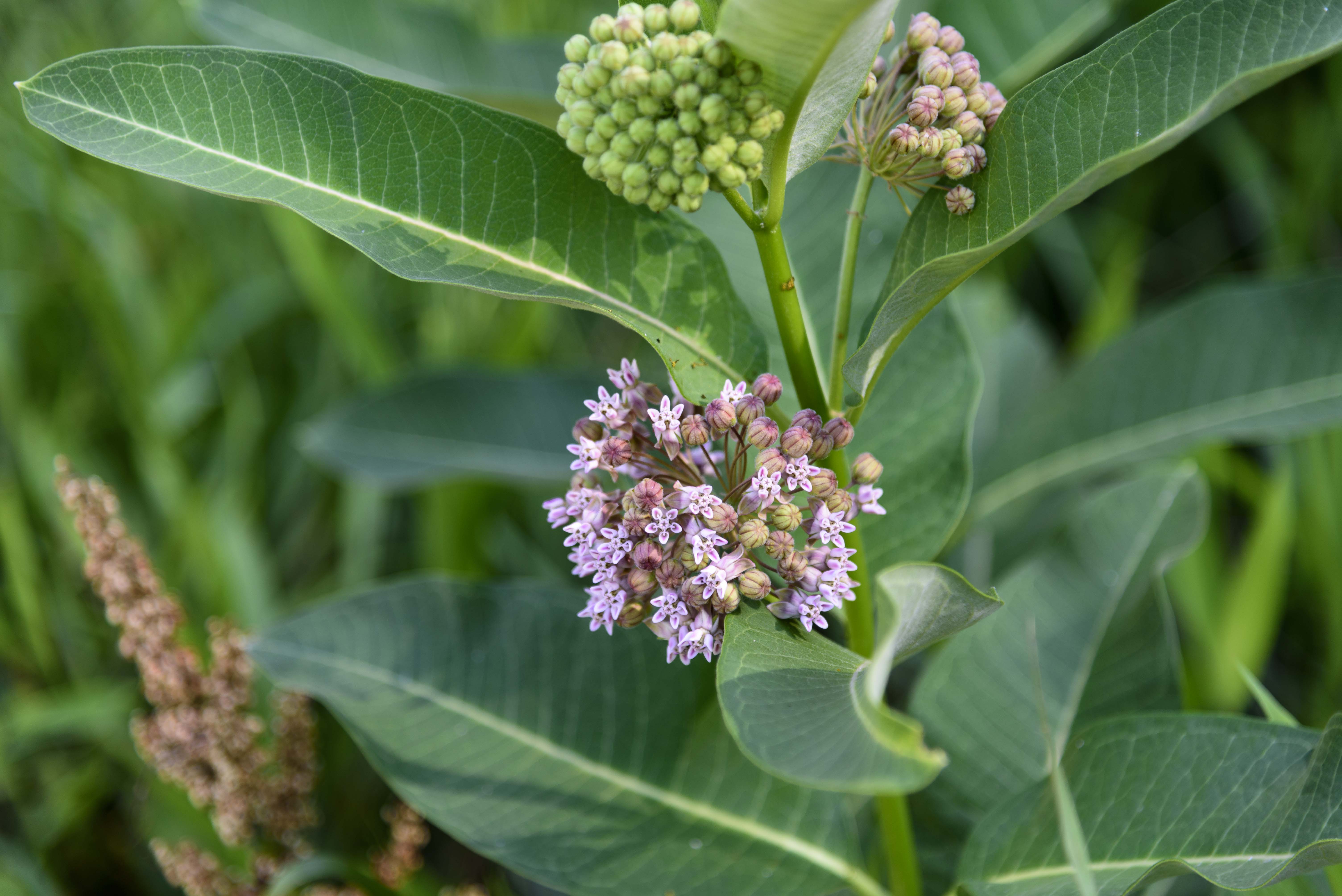
Asclepias syriaca (common milkweed) is just starting to bloom along the river
It’s ten o’clock Monday morning, and although the temperature is only about 82 °F on the Billy Goat B trail, I’m pouring sweat from the high humidity.

Verbena urticifolia (white vervain) deigned to hold still for a split second
Fortunately, there’s a nice breeze blowing to keep me cool.

Pycnanthemum tenuifolium (narrow-leaved mountain mint) starting to open
Hiker Elizabeth with her sixteen pound daypack loves it.

Ruellia caroliniensis (hairy wild petunia) peeking through some Chasmanthium latifolium (woodoats)
Photographer Elizabeth, trying to get nice flower pics, is deeply annoyed.

Circaea lutetiana (enchanter’s nightshade)
Seemed like I couldn’t get good pictures of anything. I had gone to shoot enchanter’s nightshade, a medium-sized, shade-loving forb with a wispy stem and tiny flowers, easily moved by the breeze.

The flower has an unusual structure, with only two petals, so deeply cleft that they appear to be four, two sepals, two stamens, one style, and an inferior ovary.

an unusually colorful fleabane (probably Erigeron annuus)
Other plants currently blooming include:

Monotropa uniflora (ghost pipes) turn fully upward towards the end of blooming
This spring I’ve spent hours and hours and hours taking pictures of fleabanes and reading about fleabanes and studying fleabanes, all with the intent of writing a detailed post with tips for field identification. It didn’t seem like I was making any progress… until I started writing this post anyway. The act of attempting to explain something forces me to think about it clearly and organize the details, and with that comes deeper understanding. Also with that came the realization that I have no pictures of Robin’s plantain, and it’s done blooming for the year probably, so gah! Maybe next year.
Erigeron flowers look like daisies, but with many more rays. Four species of them are found in the Maryland Piedmont. Here’s a brief summary of their characteristics.
Erigeron annuus (annual fleabane, daisy fleabane)

Usually the tallest of the fleabanes, though height is variable. The literature says this one grows to three and a half feet tall, but I’ve seen them much taller than that. The stem is generally sparsely hairy, and the hairs are generally spreading (but descriptions vary a lot). The stem may branch near the top; overall the plant may produce as many as 50 flower heads. The basal rosette of leaves usually withers by the time the plant flowers. The stem bears many leaves along its entire length. The lower ones are large, toothed, and have petioles, while the upper ones are a little if at all smaller, slightly toothed or maybe entire, and sessile. The leaves are lanceolate to oblong. The flowers have anywhere from 50 to 120 rays; flower buds are conspicuously hairy. They bloom from summer into fall, on and off, and like disturbed, weedy areas.

E. annuus: sparsely hairy stem, hairs spreading
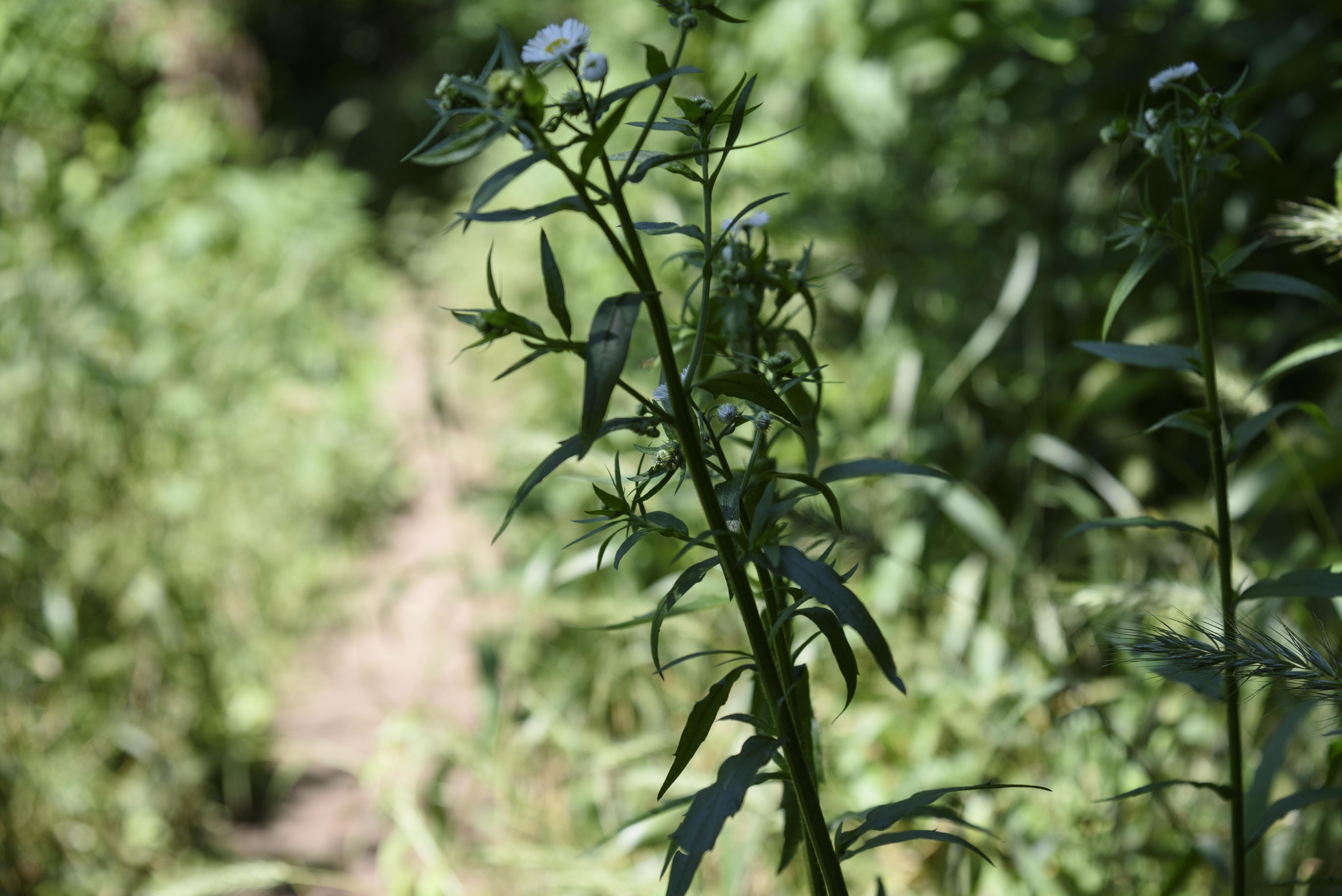
E. annuus: leafy throughout

E. annuus: coarse-toothed lower stem leaf with winged petiole
E. annuus: flowerhead next to H. sapiens thumb for size
Erigeron philadelphicus (common fleabane)

This one can reach two and a half feet in height, with sparsely hairy stems that may branch near the top. The oblanceolate-to-obovate basal leaves may be present during flowering, or may have withered. The stem leaves are variously shaped, from ovate to narrowly elliptic, but they get smaller in size and fewer in number as they ascend the stem. Lower stem leaves may have a few teeth, while upper ones are entire; all leaves may be pubescent to some extent. There are single leafy bracts near the inflorescences. The plants bear from one to 35 flower heads, each with anywhere from 150 to 400 rays, from late spring to mid summer. The plants like moist, disturbed areas (think roadside depressions).

E. philadelphicus: basal leaves and clasping lower stem leaves
E. philadelphicus: upper stem leaf, clasping, entire, with a secondary flowering stem branching off

E. philadelphicus: a small colony
Erigeron pulchellus (Robin’s plantain)
Usually the shortest of the fleabanes, to two feet tall, unbranched and bearing one to nine flower heads, and often described as having a “stout” appearance. The stem is conspicuously hairy along its entire length. The basal rosette of spatulate (spoon-shaped) leaves is present during flowering. The few stems leaves are dentate, somewhat hairy, oblong, and clasping. The flowers are generally the largest of these four fleabanes, up to an inch and a half across, and have 50 to 100 rays. They bloom from mid-spring to early summer, and prefer rocky, less disturbed areas.
I deeply regret that I have no photos of this plant. Having learned how to identify the fleabanes, I went back through all my photos; every one that I had thought might be Robin’s plantain has ended up being common fleabane. There are some very nice, clear pictures on this blog.
Erigeron strigosus (daisy fleabane, prairie fleabane)

This not-commonly-seen fleabane can reach three feet in height, with a stem that may branch near the top. The stem hairiness is described differently by various authorities, but the specific epithet strigosus is taken from the word strigose, which refers to hairs which are short and lie close to the stem, pointing upwards. This is one identifying characteristic of the species. Another is the stem leaves, which are much closer to linear than any of the other species’ leaves. There aren’t many of them. The larger/lower ones may have a few coarse teeth or be crenate, and have long, sometimes winged petioles, while the upper leaves are more likely to be entire and sessile or with short petioles. The basal leaves are usually present during flowering. Each plant can bear 10 to 200 flower heads, each flower with 40 to 100 rays. This species blooms at about the same time as E. philadelphicus (late spring to mid summer), but prefers higher quality habitats.

E. strigosus: mid-stem showing strigose hairs and sessile, elliptic leaf

E. strigosus: more of the mid-stem
Individual plants vary, and each of these species except the annual has 3 or 4 varieties, each with differing characteristics. Identification is not always straightforward. About color: all these species have white flowers, but some can have a pinkish or bluish tint to them. In many species color is an unreliable characteristic, and in these species it should not be considered diagnostic.
There are close to two hundred species of Erigeron in North America, almost all of which are native. E. annuus, E. philadelphicus, and E. strigosus are found in almost every state and province, while E. pulchellus is found on the eastern half of the continent.

Just for fun, here’s E. uniflorus, oneflower fleabane, spotted in Iceland last summer. It’s also found in Alaska, Canada, and Greenland.

an fleabane [with thanks to Kate]

Erigeron strigosus
Asteraceae
Four species* of fleabane can be found along the Potomac River in the Piedmont. They’re all pretty similar looking – terminal clusters of many-rayed (50-100) composite flowers, with yellow discs; the rays can be white, pinkish, or purplish. The plants can be distinguished by leaves – how they’re shaped, whether or not they’re toothed – and by a few other characteristics. They range from a foot tall (Robin’s plantain) to five feet tall (lesser daisy fleabane).
Sadly, I don’t have photos to illustrate all this. Maybe next year I’ll get some. Mostly I just wanted an excuse to publish the above photo, because I really like it.

*Erigeron annuus, E. philadelphicus, E. pulchellus, E. strigosus
 Elizabeth's Wildflower Blog