Another One Found

This weekend Steve are I are in central New York State.  Yesterday morning, about the time “Another One Missed” auto-posted, we set out for the Hi Tor Wildlife Management Area on the south end of Canandaigua Lake.  A few hundred yards into the hike, we found this:

20150717-20150717-_DSC0020

…a huge stand of pointed-leaf tick trefoil.  Missed at home, found 300 miles north.  Not a one had an open blossom, but nonetheless they were lovely en masse.

Another One Missed

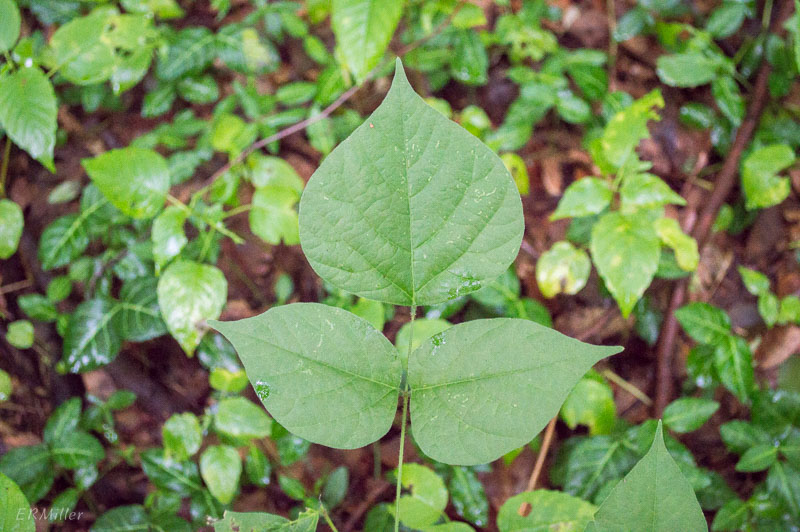
Last year I noticed a small stand of pointed-leaf tick trefoil (Desmodium glutinosum) among the lopseed stand along lower Cabin John Creek (a tributary of the Potomac).  The leaf is distinctive:

20150707-20150707-_DSC0005

What I didn’t see was the flowers.  When I went back a week or so later, there weren’t any flowers, but there were a few loments* dangling, tormenting me.

20140725-20140725-DSC_0279-2

This year when I went to photograph the lopseed, I saw the pointed-leaf tick trefoil again, and a single flower, damaged by rain and barely recognizable.  So I gave it a few days and went back.  Nothing.  No buds, no flowers, no loments.

I was amused, though, to read that both lopseed and pointed-leaf tick trefoil often grow and bloom together.

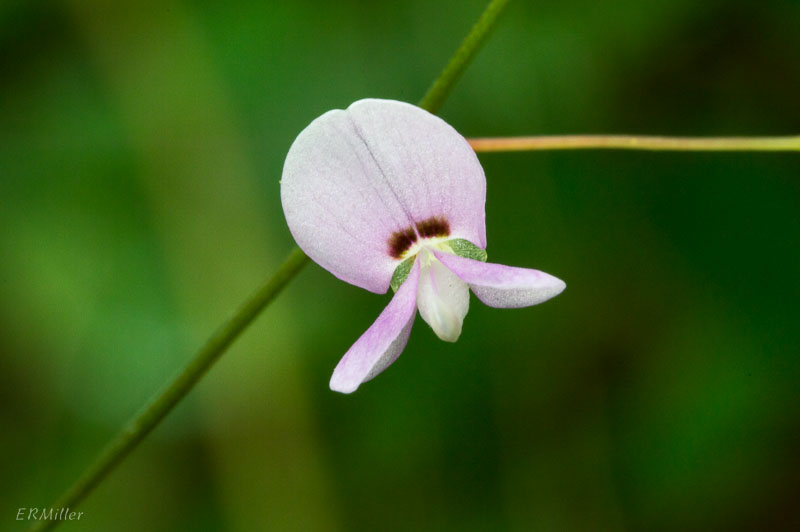
At any rate, here’s a picture of a single blossom of naked-flowered tick trefoil, a different species (Desmodium nudiflorum), but the flowers are almost identical.

20150709-20150709-_DSC0043


* a characteristic fruit of some plants in the Fabaceae


Sonofa…!

I was quite excited to find this on June 6, 2014:

20140606-DSC_0045

It was on one of those rock formations that juts into the river. These formations are often covered in poison ivy, but almost always worth the effort. Anyway, these were the only buds in a large stand of the plants.  I made a note to go back a week later and photograph the flowers.

And then, there was a flood.  When I returned, the waters were completely covering the rocks.  A week after that, I went again, and… nothing.  The flood waters were gone, but so were the plants.

I know this plant, because I grew it at my old house.  It’s Baptisia australis (blue false indigo, blue wild indigo), a member of the Fabaceae.  I was excited because it’s threatened in Maryland.

This year, I’ve kept an eye on that rock formation.  Nothing.  Then nothing.  Then nothing… then, on June 10, I decided enough of this game, I’m going out there anyway, poison ivy or no (and boy was there a lot of it).

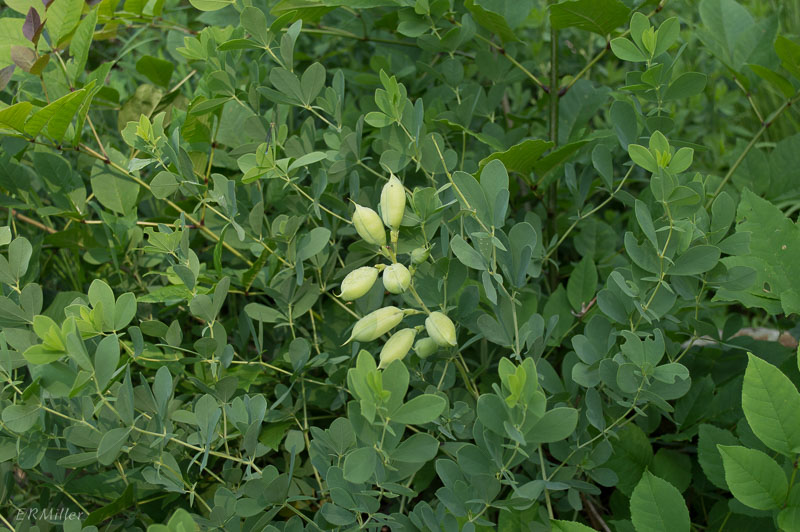
And I saw this:

20150610-20150610-_DSC0049

Yep.  Seedpods.  No doubt that this is B. australis, but darn it, two years in a row I’ve missed seeing the flowers!

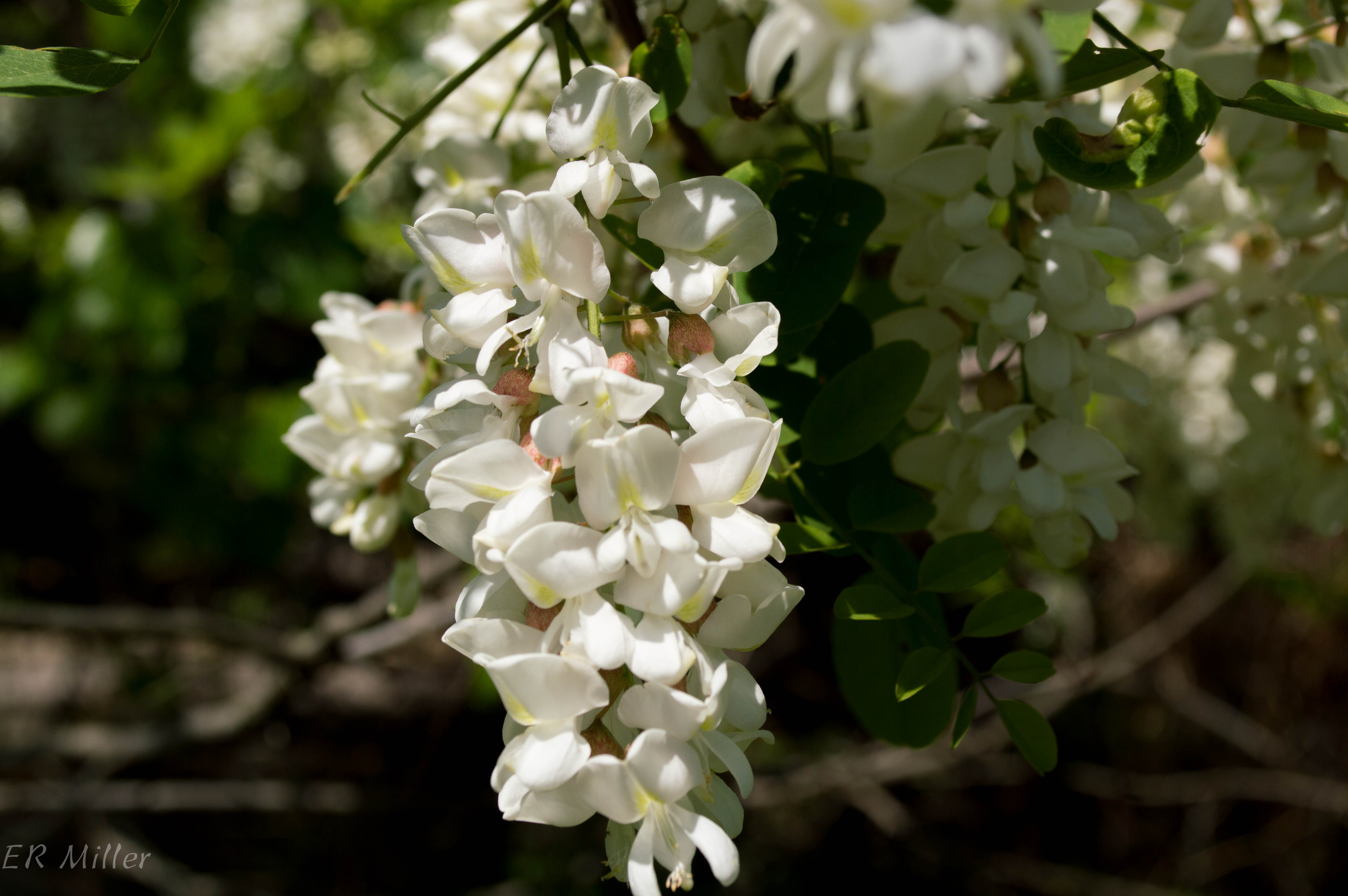
Tree of the Day: Black Locust

20150514-20150514-_DSC0071

Robinia pseudoacaia
Fabaceae

Originally a tree of the central Appalachians*, black locust has become naturalized through most of the US**.  It isn’t grown commercially here, but is useful.  The wood burns hot, and the flowers provide wonderful nectar for bees. Indeed, this is the “acacia” of Europe, from which we get acacia honey.

The tree also provides good wildlife cover, as well as cavities for nesting birds. There were several in the yard of my old house; when storm-damaged (they are susceptible), I left the snags standing so I could watch pileated woodpeckers feed on them.

20150227-20150227-_DSC0078

Oddly, it’s considered “invasive, not banned” in Connecticut, and is prohibited in Massachusetts.

20150514-20150514-_DSC0075

As you can see, it flowers profusely, with long, crowded racemes of fragrant blossoms.

Considering that it grows quickly up to 80 feet tall, suckers, and is prone to storm damage, it probably isn’t worth seeking out for your landscape.  But if you have one already, enjoy it.  And if you’ve never had acacia honey, make an effort to get some – it’s light golden, delicately flavored, and with a high fructose content, it’s slow to crystallize.  It never lasts long enough in my house to crystallize, anyway.

20150514-20150514-20150514-_DSC0076

*USDA Forest Service

**USDA Plants