
aka cut-leaf coneflower; Rudbeckia laciniata; Asteraceae (aster family)

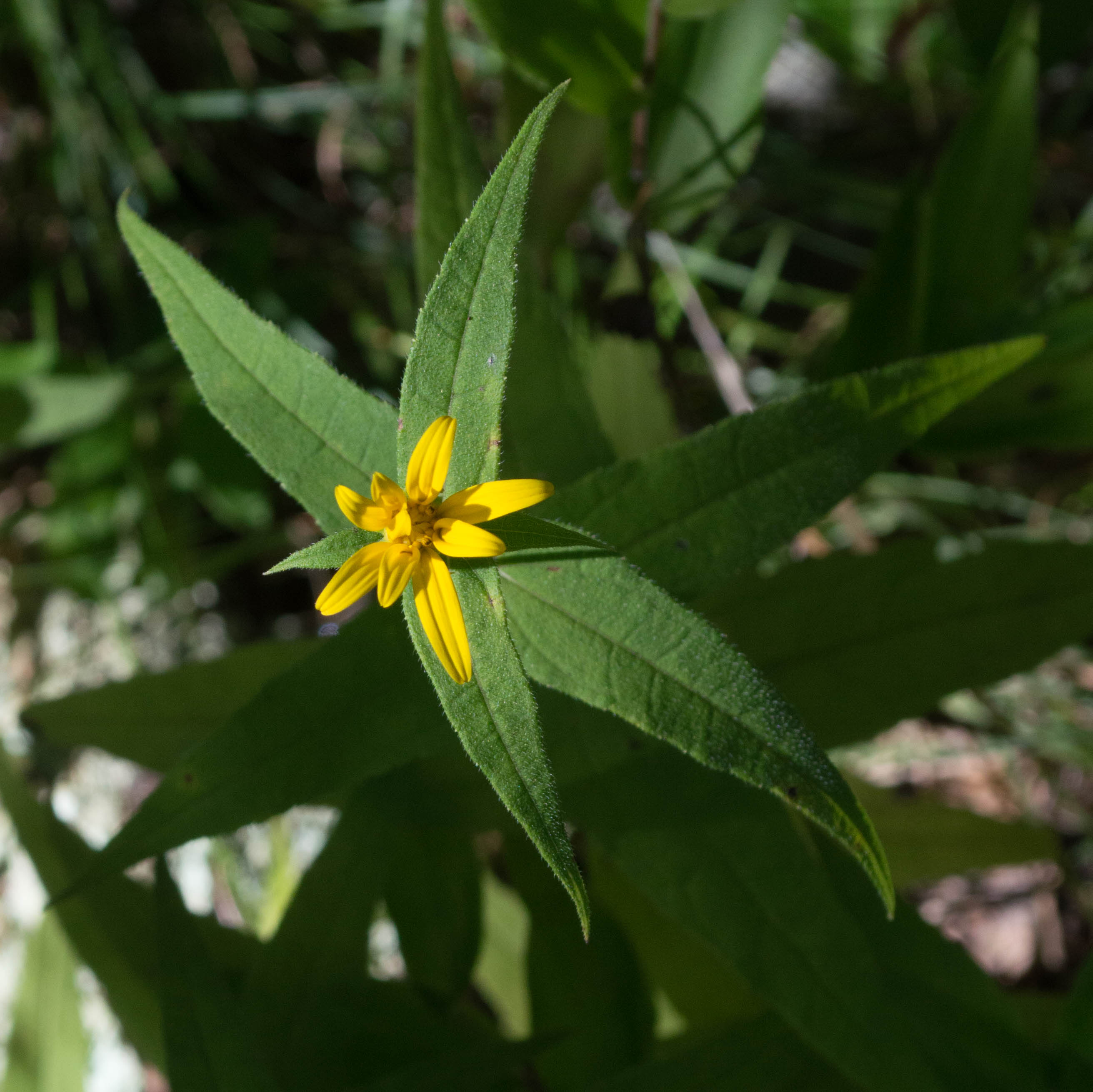
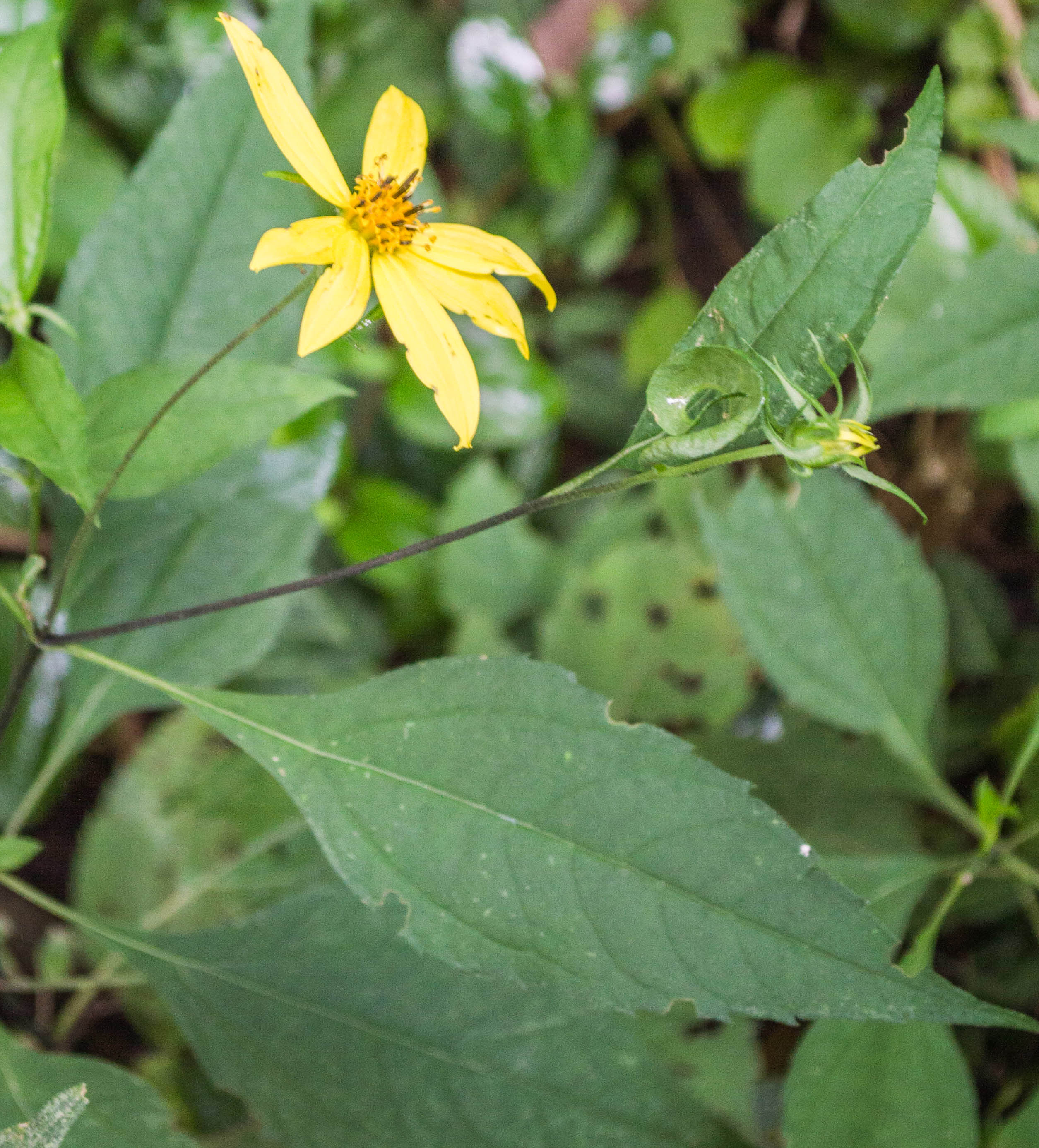
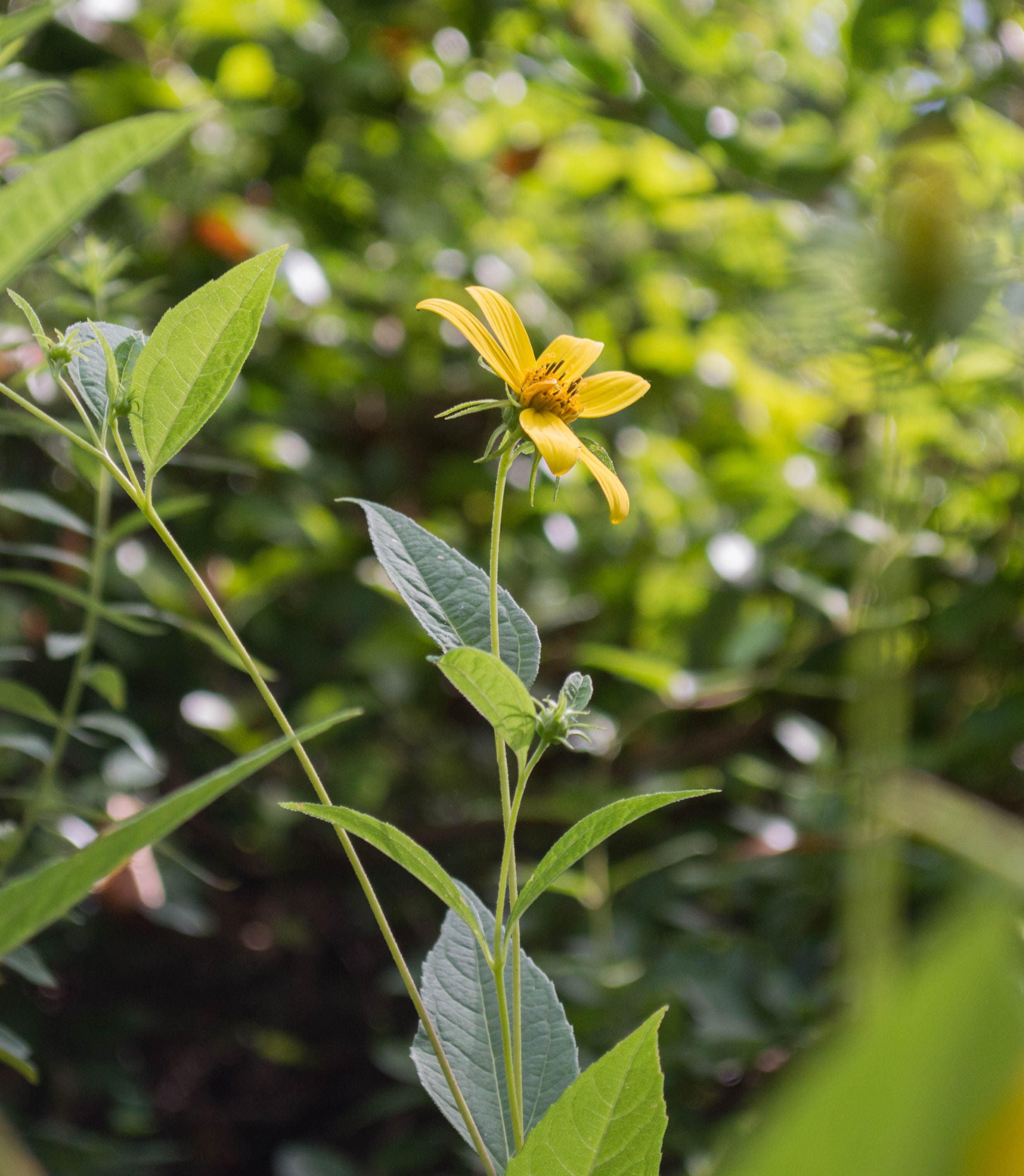
In August the Potomac downstream of Carderock is lined with tall flowering plants by the thousands. Halberd-leaved rose mallow (fotd 8/7) is still going strong, though starting to wane, while thin-leaf sunflower (fotd 8/19), tall coneflower, and large-flowered leafcup (come back tomorrow to read about that one) are dominating the view. And I do mean dominating, as these plants can grow to eight feet in height, and tend to form large colonies through rooting.
Flowers in the aster family (formerly known as the composite family, Compositae) are fascinating. What appear to be petals are actually individual flowers, known as rays; the central portion of the head is comprised of individual disc flowers. In some composite family flowers, like the Eupatorium species I wrote about last week, only disc flowers are present. In others, like rattlesnake weed (fotd 5/31) and hairy hawkweed (come back the day after tomorrow), there are only ray flowers.
The coneflowers (Rudbeckia and Echinacea species) are easily distinguished from the sunflowers (Helianthus species, and many others) by the reflexed ray flowers and the more-or-less spherical shape of the disc.
There are 22 species of Rudbeckia in the US, four of which are found in this area, including Maryland’s state flower, the black-eyed Susan (R. hirta). Tall coneflower is threatened in Rhode Island.

 Elizabeth's Wildflower Blog