Flower of the Day: Wingstem

Verbesina alternifolia (formerly Actinomeris alternifolia); Asteraceae (aster family)

20140825-DSC_0193

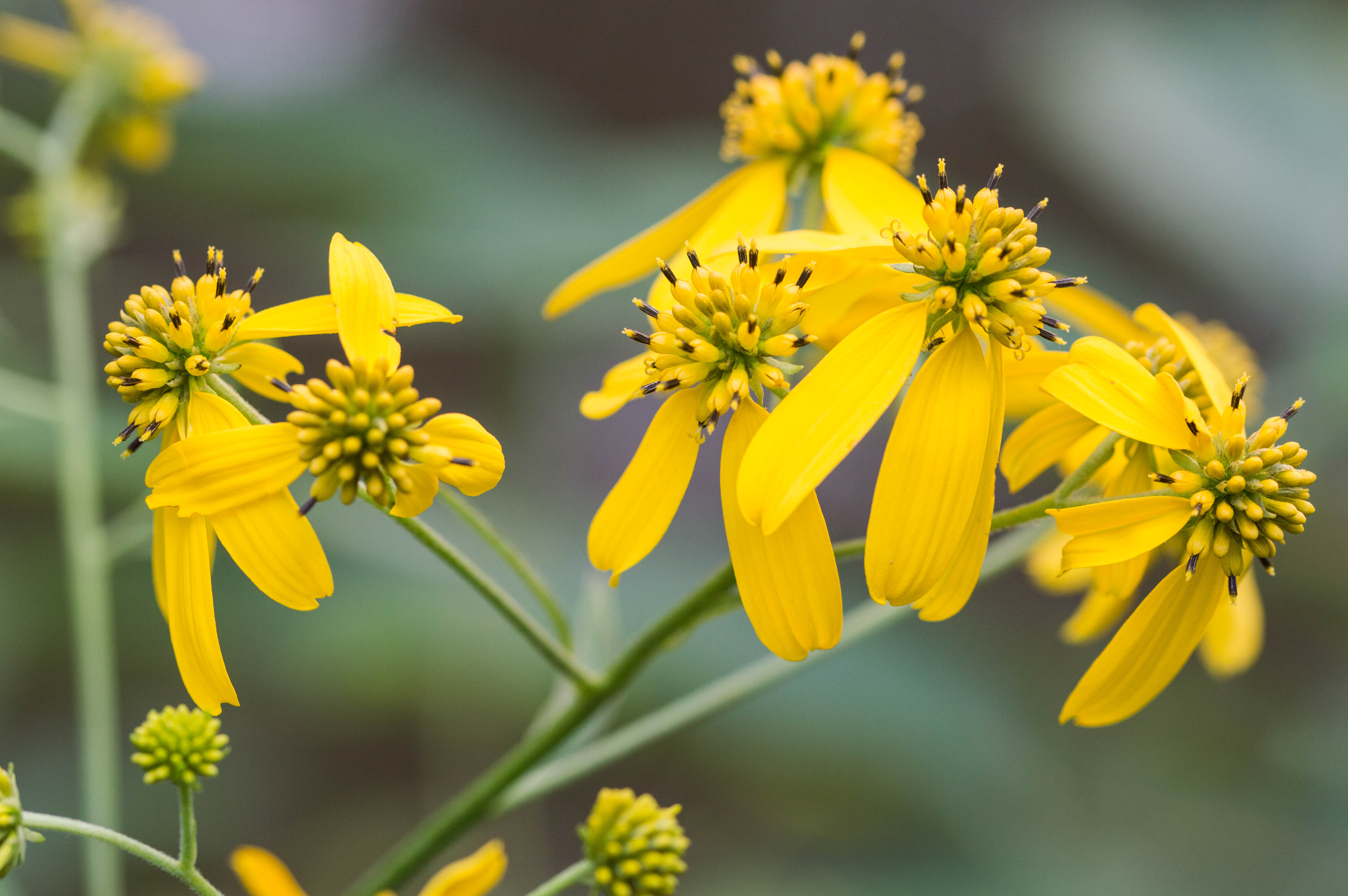
Like its close relative tall coneflower (fotd 8/21), wingstem has a central cone of disc flowers surrounded by reflexed ray flowers (petals).  The cone looks quite different, though.

20140818-DSC_0127-2Another difference between the two species is the one that gives this plant its common name.  Look closely at a stem and you’ll see that it’s lined with leaf tissue.  This is a not uncommon occurrence with petioles (the leaf stem), but much less common with a plant’s main stem.
20140825-DSC_0245

Wingstem grows very tall and loves riverbanks and moist places, just like tall coneflower, but blooms a bit later.  It can be found through much of the eastern and midwestern US.

Here’s a closeup of the disc flowers:

20140825-DSC_0275

Flower of the Day: Pilewort

aka fireweed, burnweed; Erechtites hieraciifolius; Asteraceae (aster family)

20140828-DSC_0011

In case you were wondering, the word “wort” comes from the Old English wyrt, meaning “plant” (usually herbaceous).  Used as a suffix on a plant name it often signified something medicinal – so, spleenwort for spleen disorders, motherwort for uterine disorders, lungwort for lung disorders, lousewort caused lice infestations, and so on.

So, yes, pilewort was once used to treat piles, aka hemorrhoids.  According to the Doctrine of Signatures, a plant’s use was found in its form.  I don’t know what aspect of E. hieracifolia made the ancients think it resembles hemorrhoids, but there it is.

This is a weedy looking plant that grows up to eight feet tall in weedy places (eg, the mown edges of roadways), but it is indeed a native, and the only native in its genus found in the US (everywhere except the arid West).

20140828-DSC_0014

The picture above shows what appears to be a bud, but that is actually considered a full flower.  When the seeds are developed, those green bracts pop open and the seeds are dispersed on the wind.

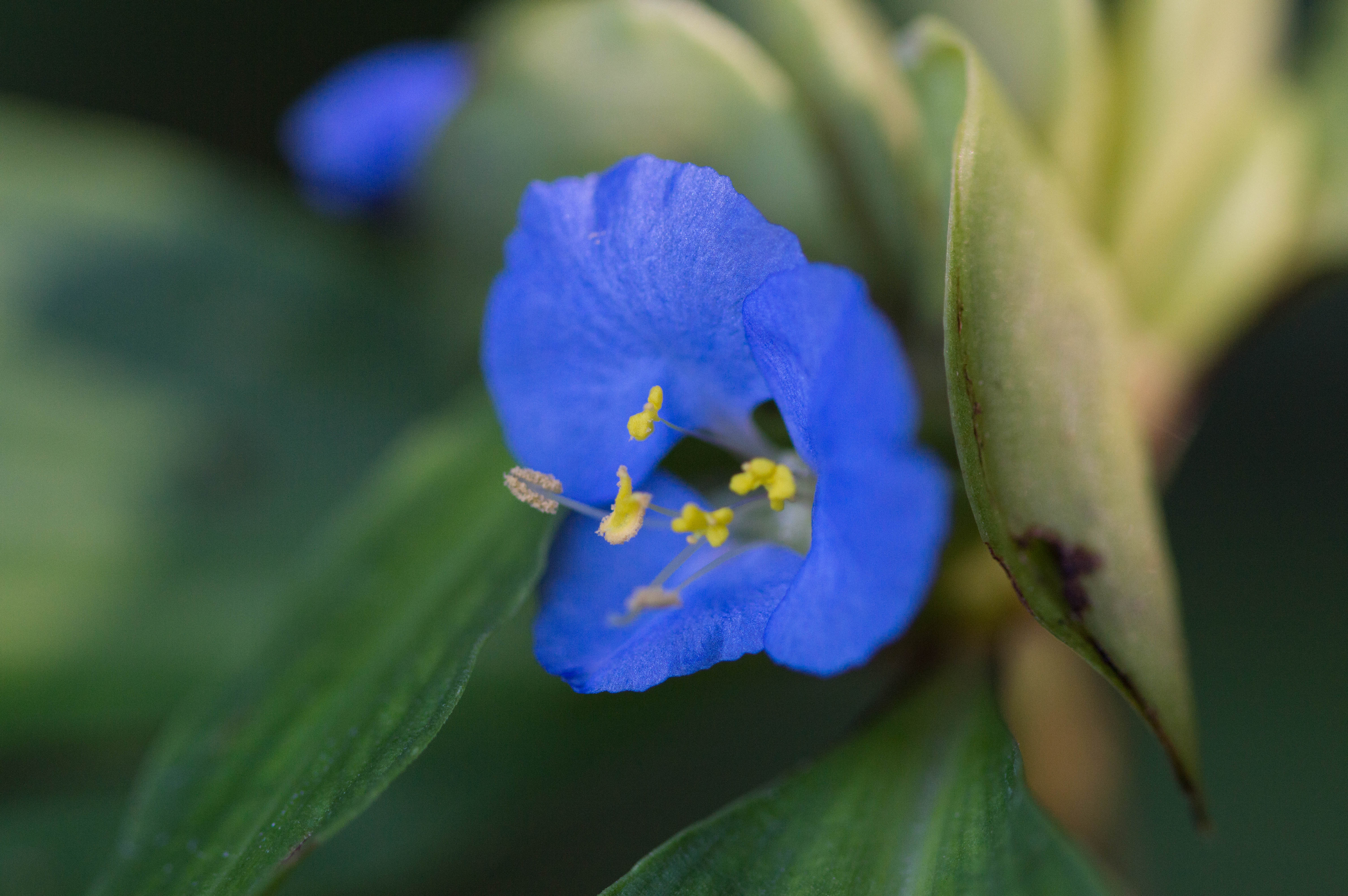
Flower of the Day: Virginia Dayflower

Commelina virginica; Commelinaceae (spiderwort family)

20140826-DSC_0054

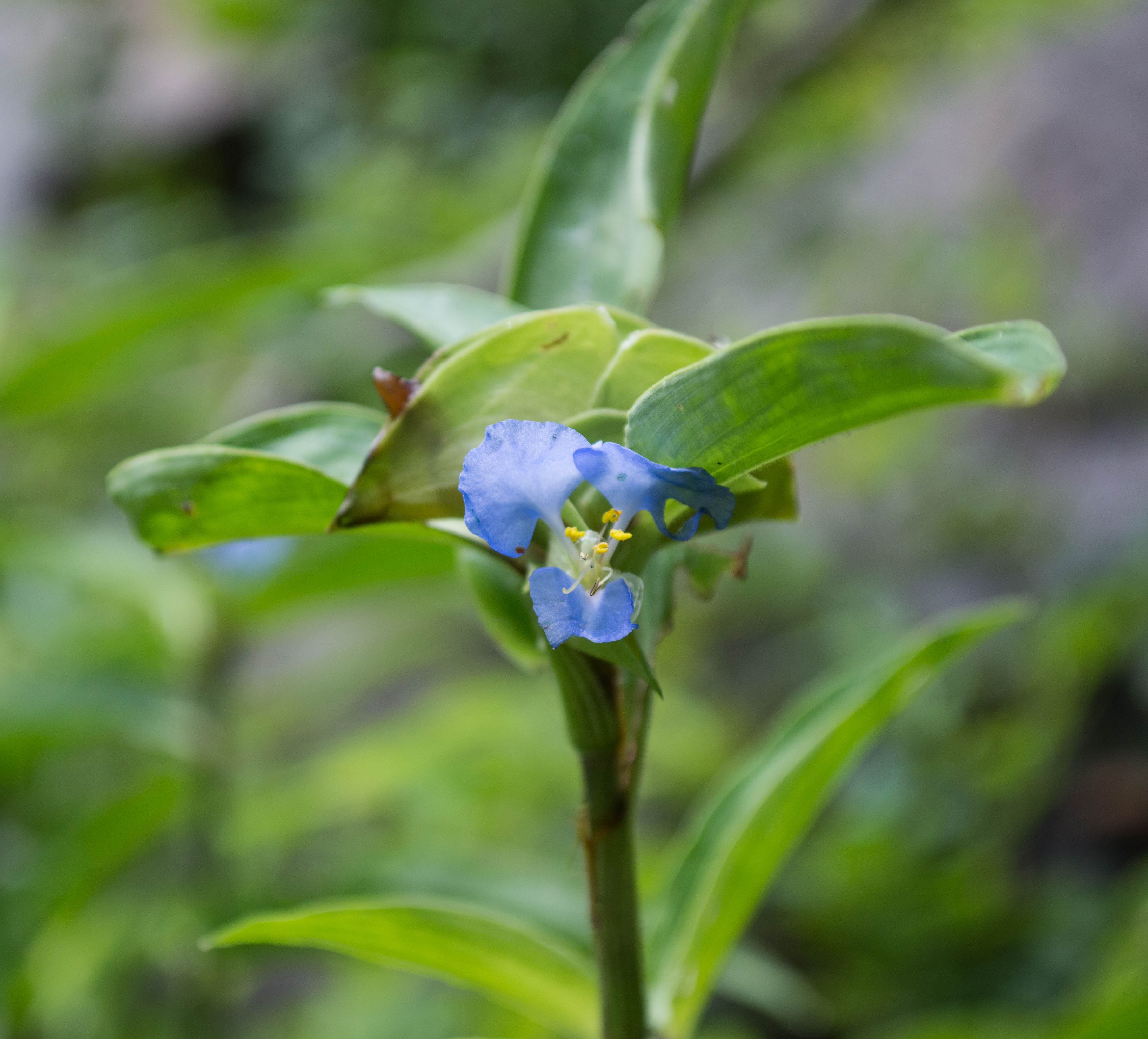
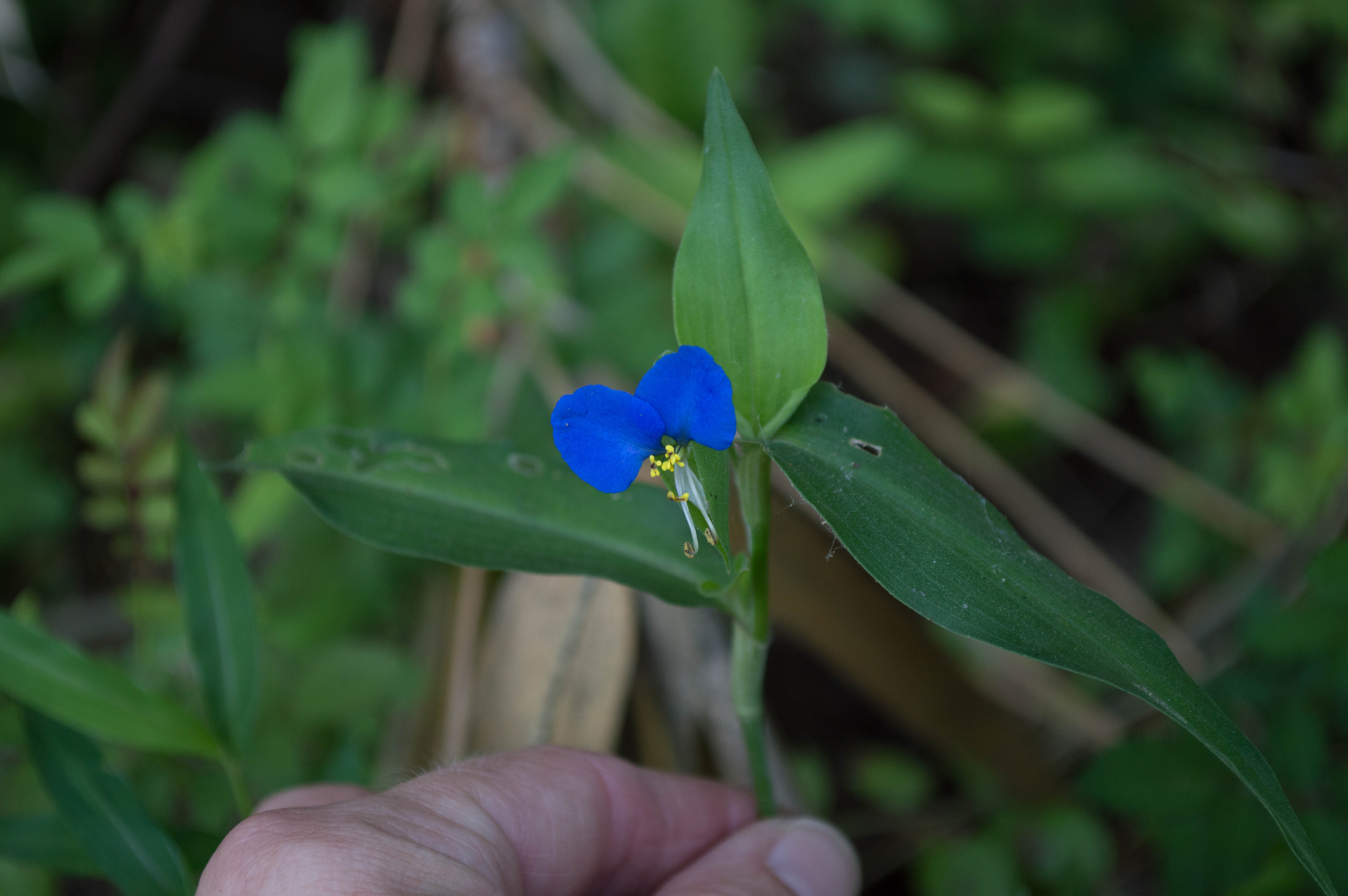
The dayflowers are somewhat weedy looking plants, growing maybe 2-3 feet tall, more often sprawling among other plants near river banks and other moist places.  They would be easily overlooked but for the spectacular blue color – a rarity among plants. Fewer than ten percent of known species have truly blue blossoms.  The individual flowers of Commelina last a single day, but a plant may have a blooming period of a month or more.

20140811-DSC_0254

20140708-DSC_0111

There are about a dozen species of Commelina in the US, about half of them native. Much more frequently seen in this area is the exotic C. communis (Asiatic dayflower). It’s easily distinguished from Virginia dayflower by the white lower petal.

Virginia dayflower is found from New York south through Texas and west through Kansas, but it’s extirpated in Pennsylvania.  Asiatic dayflower ranges a little further north and northwest.

Flowers of the Day: Two More Goldenrods

elm-leaved goldenrod; Solidago ulmifolia; Asteraceae (aster family)

20140829-DSC_0056

20140829-DSC_000320140829-DSC_0084


wandlike goldenrod; Solidago stricta

 20140829-DSC_0021  20140829-DSC_0049

Annoyed with myself for not always getting the information I need to properly identify species – especially Solidago species –  I hiked one morning with my books tucked into my pack, with a little notebook, too.  When I got to the cliffs upstream of Carderock, I set everything out on a boulder and started taking notes.  In order to identify goldenrods, you need to consider the following:

  • stem: green, brown, purplish? smooth or rough? densely hairy, minutely hairy, covered with white bloom? hairy on one end but not the other? angled?
  • leaves: uniform size along the stem or getting smaller as they ascend? entire, serrate, doubly serrate?  lower ones serrate, upper ones entire?  sessile or with petioles?  tapering or blunt at the base and/or tip?  hairy on top?  hairy underneath? hairy only along the veins underneath?  feather veined or nerved? if nerved, one or three? thin or coarse? lanceolate, linear, elliptical, ovate?
  • inflorescence: plumelike, wandlike, elm-branched, clublike, flat-topped? terminal or axillary?
  • flowers: how many rays? size? bracts spreading?
  • habitat: swamp or bog? dry woods? field or roadside? thickets? dry sandy soils?

After all this, I’m still not sure the first one pictured above is correctly identified. And I’m still not sure which one this is:

20140829-DSC_0063

At least I had fun taking pictures.

Flower of the Day: Giant Ragweed

Ambrosia trifida; Asteraceae (aster family)

20140818-DSC_0094

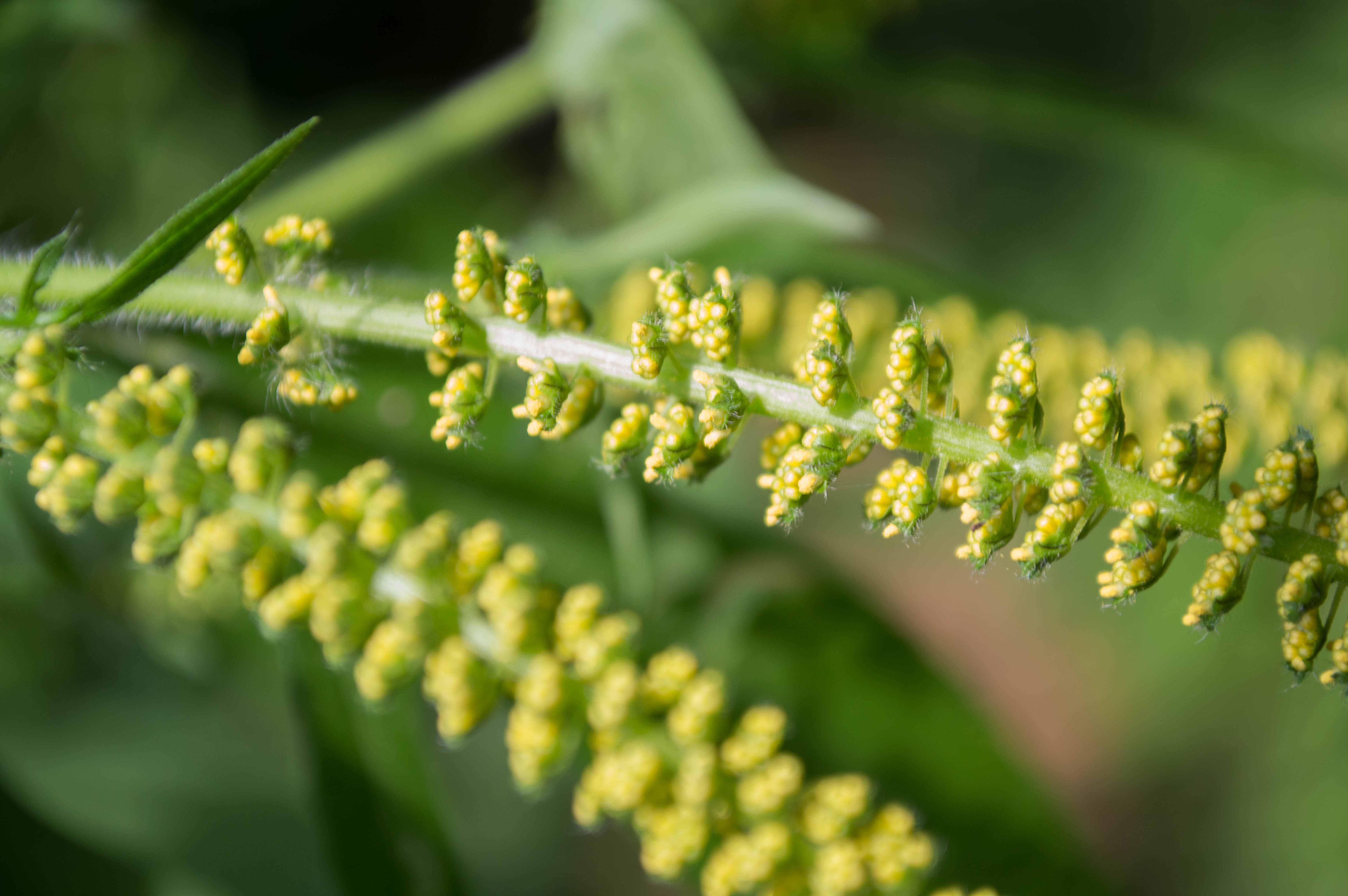
After posting about goldenrods over the last few days, I have to take this opportunity to dispel a common myth: goldenrod pollen is not an allergen.  The culprit at this time of year is ragweed.  Goldenrod takes the blame because it’s so showy, but ragweed, with its tiny little unassuming flowers, is doing the damage.

Actually the flowers are quite interesting.  They are completely without petals or sepals.  Each of the yellow dots in the picture above is an individual flower.

There are three species of ragweed found in this area.  The one pictured here can grow to 12 feet tall, and is found in every state of the union except Nevada. Here’s a leaf, which can get to a foot long:

20140818-DSC_0089

The other species are annual ragweed (A. artemisiifolia, with three subspecies, one alien and two native), and Cuman or perennial ragweed (A. psilostachya). The former is found everywhere; the latter everywhere except Delaware, Maryland, Virginia, West Virginia, and Kentucky.

All of these ragweeds are listed as weedy and/or invasive by multiple authorities.

Remember: don’t blame the goldenrods for your misery.