
 Last Friday evening I went on a wild goose chase in the Potomac Gorge. I didn’t find what I was looking for, but I did find lots and lots of white flowering trees.
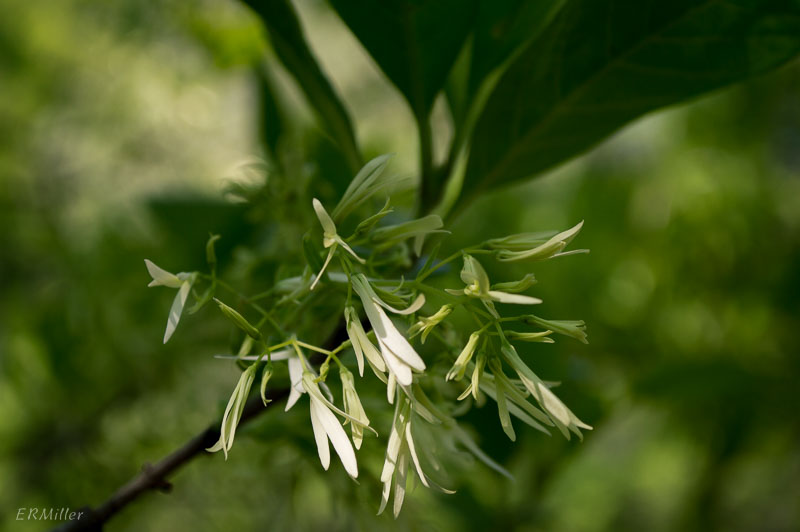
 Chionanthus virginicus, a beautiful small tree in the olive family (Oleaceae), is now in full, glorious bloom in the Potomac Gorge. You can see them in the woods along either side of the C&O Canal as you walk downstream from the Visitor Center near lock 19. There are several lovely specimens that can be seen from above, too, as you walk over the bridges to Olmstead island.
 Commonly known as white fringetree and American fringetree, these plants can grow as either shrubs or small trees, reaching heights of about 15 feet, or sometimes more in the right conditions. They can grow in full light or in the understory, in wooded uplands and rocky areas including riverside rock outcroppings, and seem to tolerate a wide range of moisture and pH in the soil.

Fringetree is dioecious but is known to have perfect flowers on occasion. (To learn more about these terms visit my blog post about maples.)
 The species ranges from eastern Texas east and north up into southern New England, and is one of only two Chionanthus species native to the US (the other is found only in central Florida). They are available in the nursery trade and are stunning in the home landscape.

 Elizabeth's Wildflower Blog