
Tipularia discolor; Orchidaceae

Aplectrum hyemale; Orchidaceae
Yes, orchids. I know, I keep writing about them. I can’t help it. I’m in love. Look for puttyroot blooming in mid May, and cranefly in late July.
Tipularia discolor; Orchidaceae
Aplectrum hyemale; Orchidaceae
Yes, orchids. I know, I keep writing about them. I can’t help it. I’m in love. Look for puttyroot blooming in mid May, and cranefly in late July.
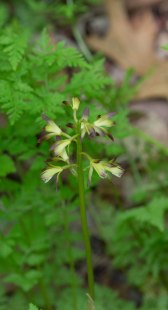
Earlier this year I was over the moon to find two native orchids in the area, puttyroot (Aplectrum hyemale; fotd 5/20) and cranefly (Tipularia discolor, fotd 7/31). These two plants have a similar, unusual life cycle: the new leaf (one per plant) emerges from the ground in autumn, persists through the winter, then dies back in spring (puttyroot) or early summer (cranefly); some time after that a single flower spike emerges, develops multiple buds, and blooms.

Last week while hiking I saw the new leaves of cranefly orchids; note the characteristic purple underside. (Be assured no plants were harmed, nor soils disturbed, in the taking of these photos!)

Of course I then had to go hunting for puttyroot, too, and found a few of those leaves, and seedpods still on one spike.

cranefly in flower:
puttyroot in flower:

This really has been a wonderful year.
Tipularia discolor; Orchideaceae (orchid family)

What, again? Yes, again. I have a thing for orchids. They can be the most beautiful flowers, or the most ugly, or the most boring or inconsequential or showy and stunning… I love them all.
Depending on which taxonomist you consult, the Orchidaceae is either the largest plant family or second only to the Asteraceae, with more than 20,000 species in over 800 genera. They occupy almost every habitat on earth (there are none on glaciers), on every continent except Antarctica.
Orchid biology is fascinating. I studied it extensively when I grew orchids more than a decade ago but won’t bore you with details. Finding this plant is lighting the fire in me again…
About the cranefly orchid: it’s a terrestrial, meaning it grows in the ground, as opposed to epiphytic (growing on other plants) or lithophytic (growing on rocks). It puts out a single, small, leathery leaf, green on top and purple on the bottom, in the autumn. This leaf will persist throughout the winter and into late spring,
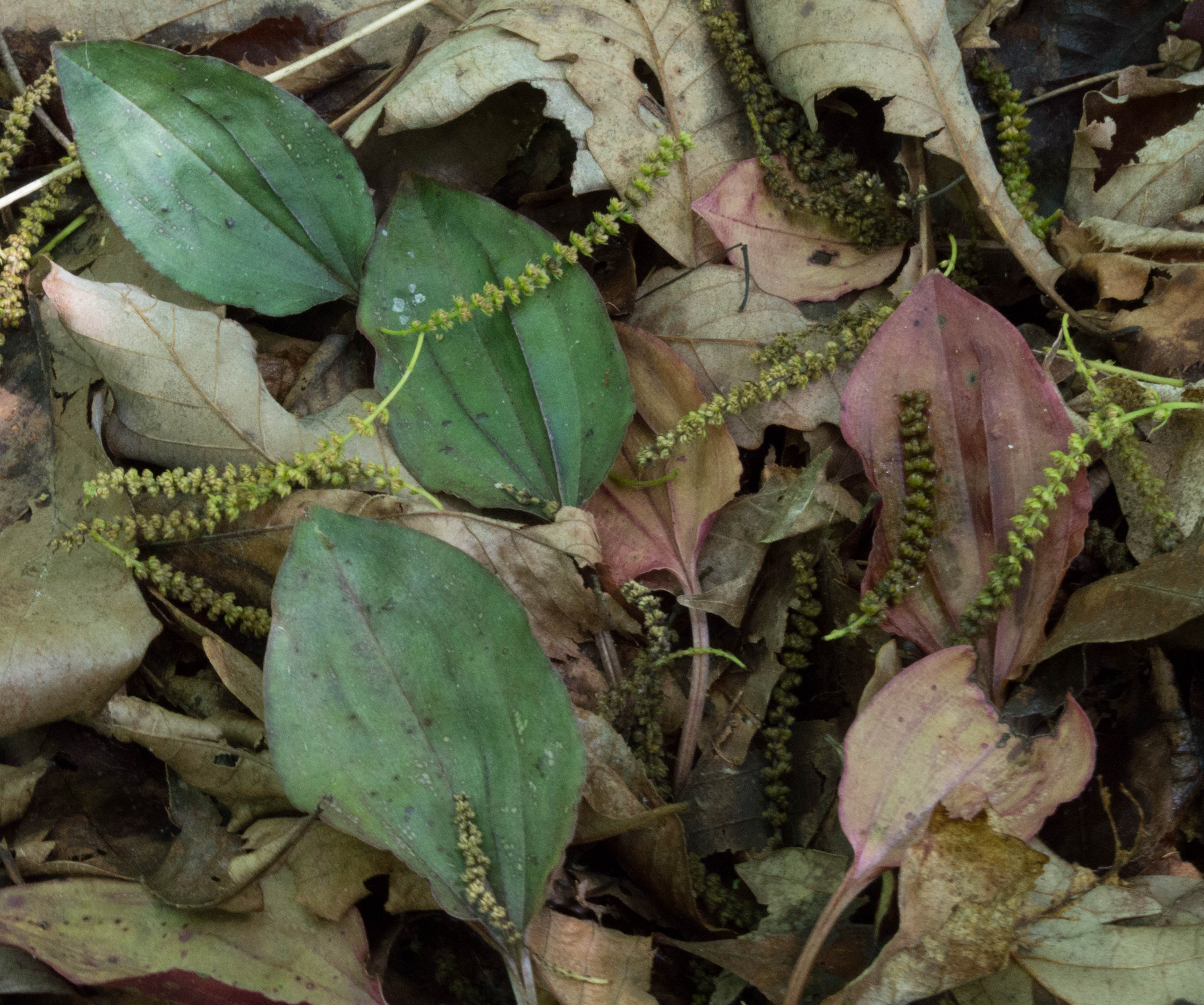
dying back about late May or early June. In early or mid July a naked shoot will arise:

and start budding up a week later.

The first flowers will open about two weeks after that.

Cranefly orchid is native to the Eastern US, ranging form New York and Michigan south and west through Texas. It’s listed as threatened in Florida and Michigan, endangered in Massachusetts and New York, and rare in Pennsylvania.
I’ll be going back to check on its progress later today.
Tipularia discolor; Orchidaceae (orchid family)

Am very pressed for time; will make another, detailed post later. But this is the mystery plant I’ve been posting about. Finally just a few buds on a single plant opened yesterday morning. I am ecstatic.
 Elizabeth's Wildflower Blog