Persistence Pays Off, Part Two

20160514-_DSC0065

20160514-_DSC0008

Mud, rock, and poison ivy.
——>

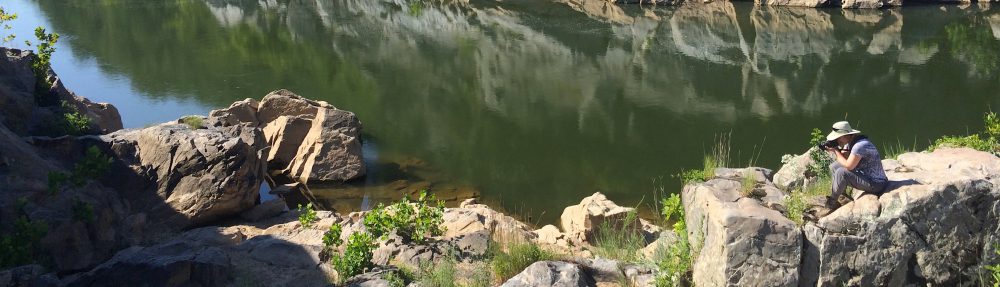
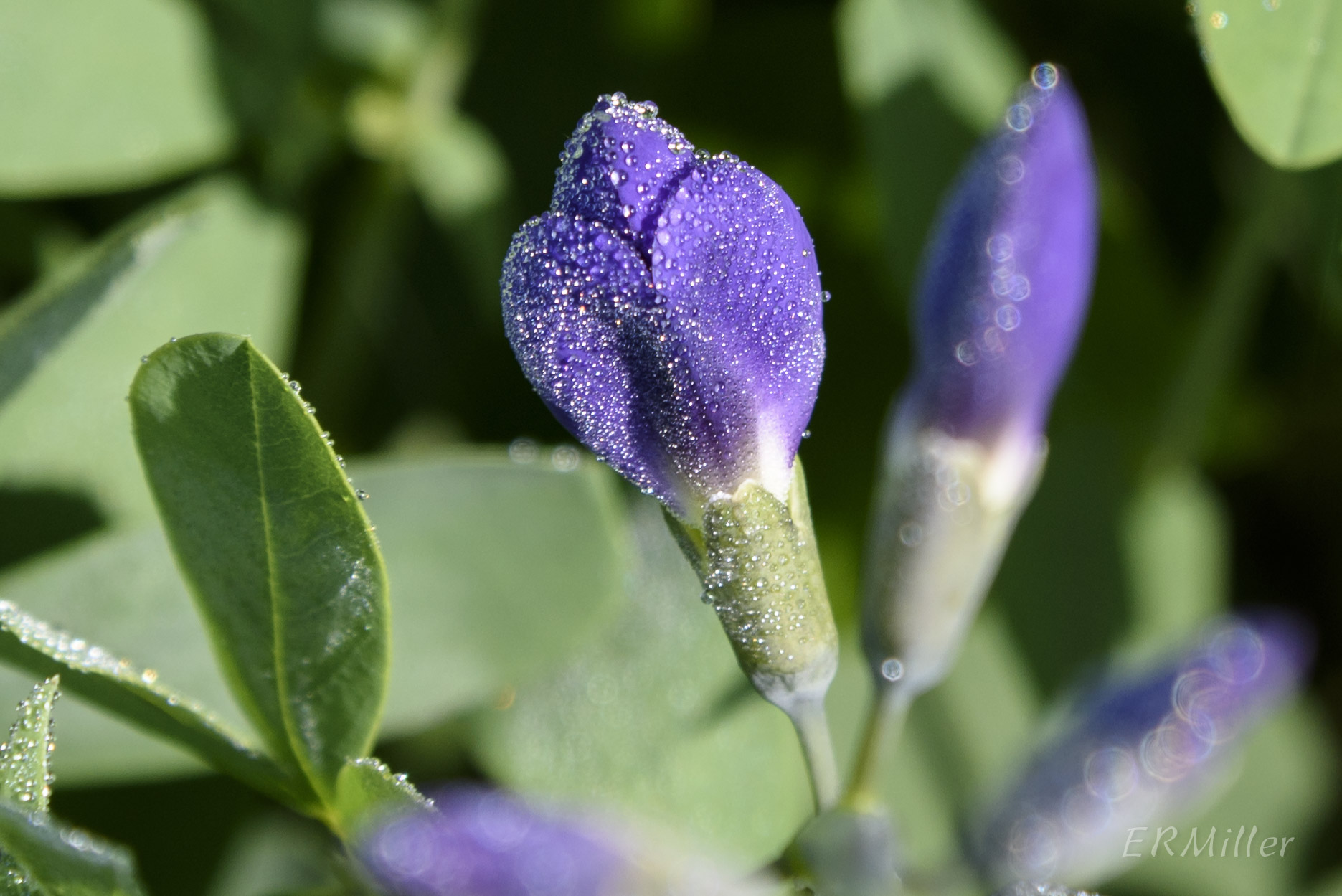
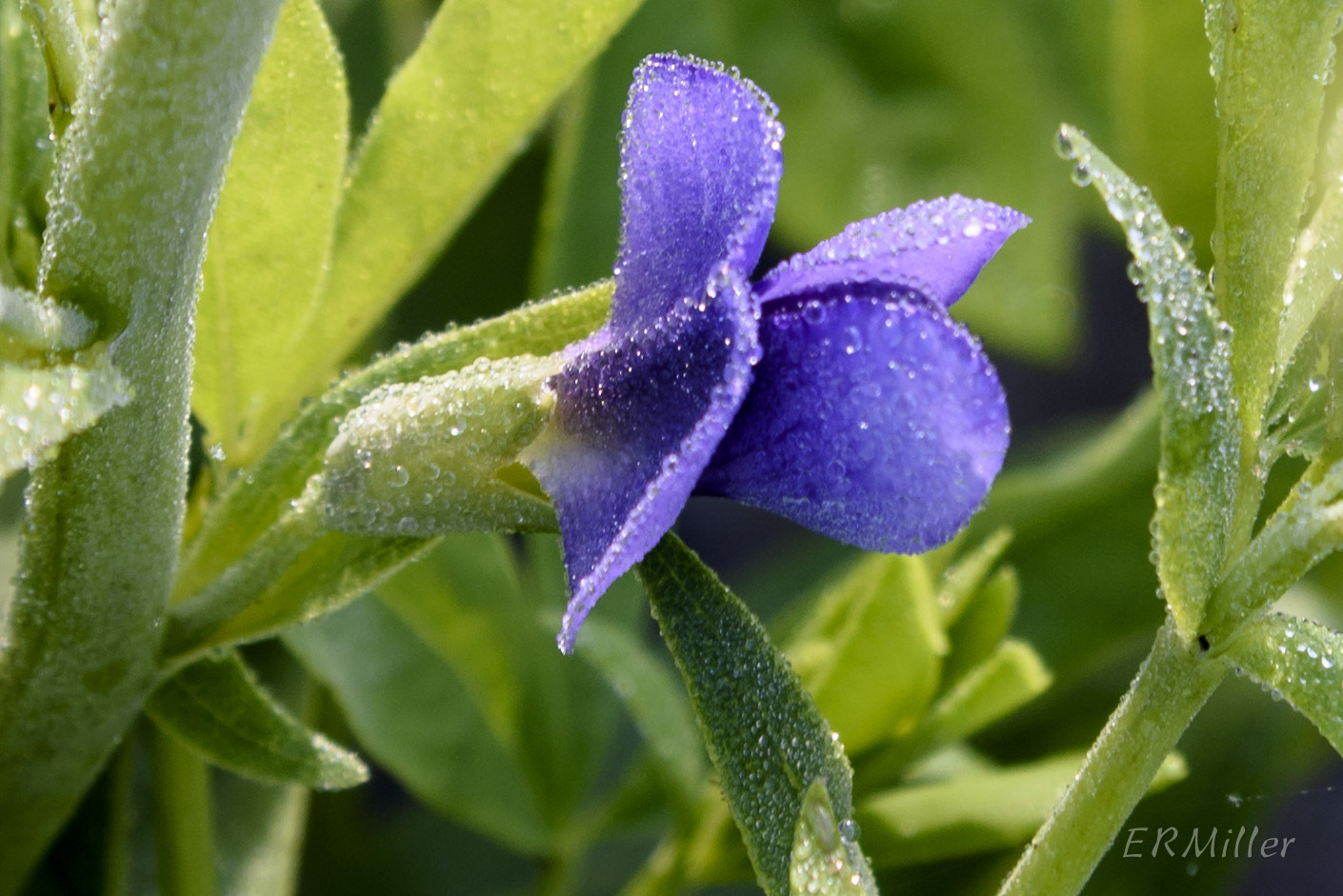
That’s what I stepped into and on and over and around one recent morning, down by the Potomac, while trying to photograph wild blue indigo (Baptisia australis, Fabaceae).

20160514-_DSC0005

As I wrote around this time last year, I saw flower buds in this stand of plants in 2014, but then there was a bit of a flood and the plants were wiped out. Then, in 2015, I totally missed seeing the flowers, though I did see the seedpods.

20160514-_DSC0009

I wasn’t going to miss it three years in a row. Despite an extraordinarily rainy May I’ve trudged out to this area about once a week, then every day or two as I saw the buds developing. The river is running really high, lapping at the rocks where the plants are growing, but it hasn’t covered them yet, though as it turns out the bedrock terraces of the Potomac gorge are exactly the habitat this species loves, so the occasional flood doesn’t bother it at all.
20160514-_DSC0019

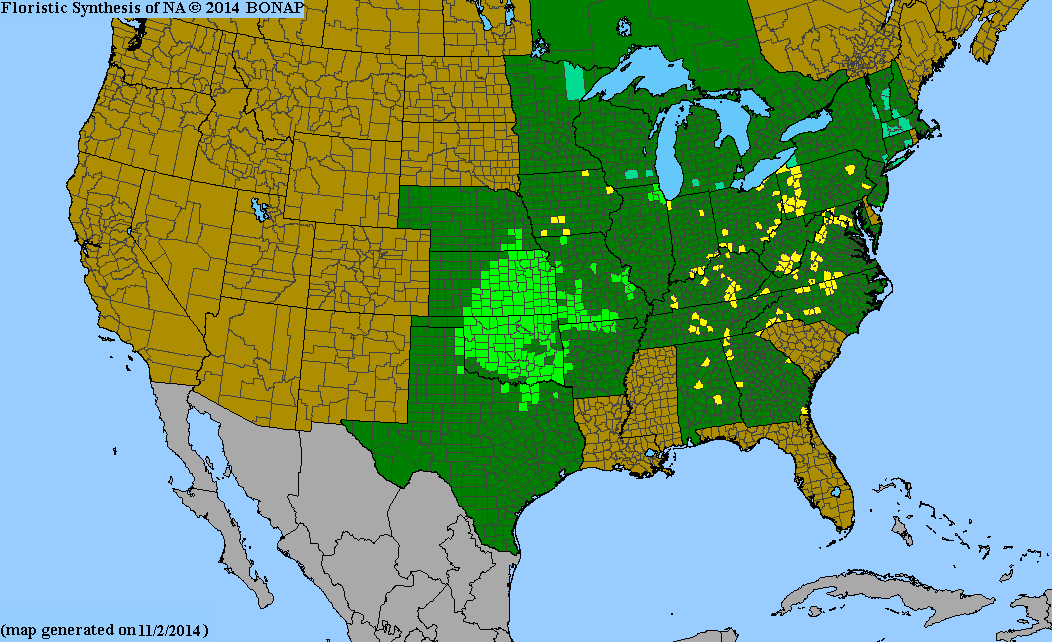
Wild blue indigo is listed as S2/threatened in Maryland, so finding a big, healthy stand is kinda special. (It’s also threatened in Indiana and endangered in Ohio.) Mostly wild blue indigo grows in Oklahoma and Kansas, with a few occurrences in nearby parts of Texas, Arkansas, and Missouri. According to BONAP’s North American Plant Atlas, it is present but rare in about a dozen states east of the Mississippi River.

20160514-_DSC0049


Persistence Pays Off, Part One

20160514-_DSC0101

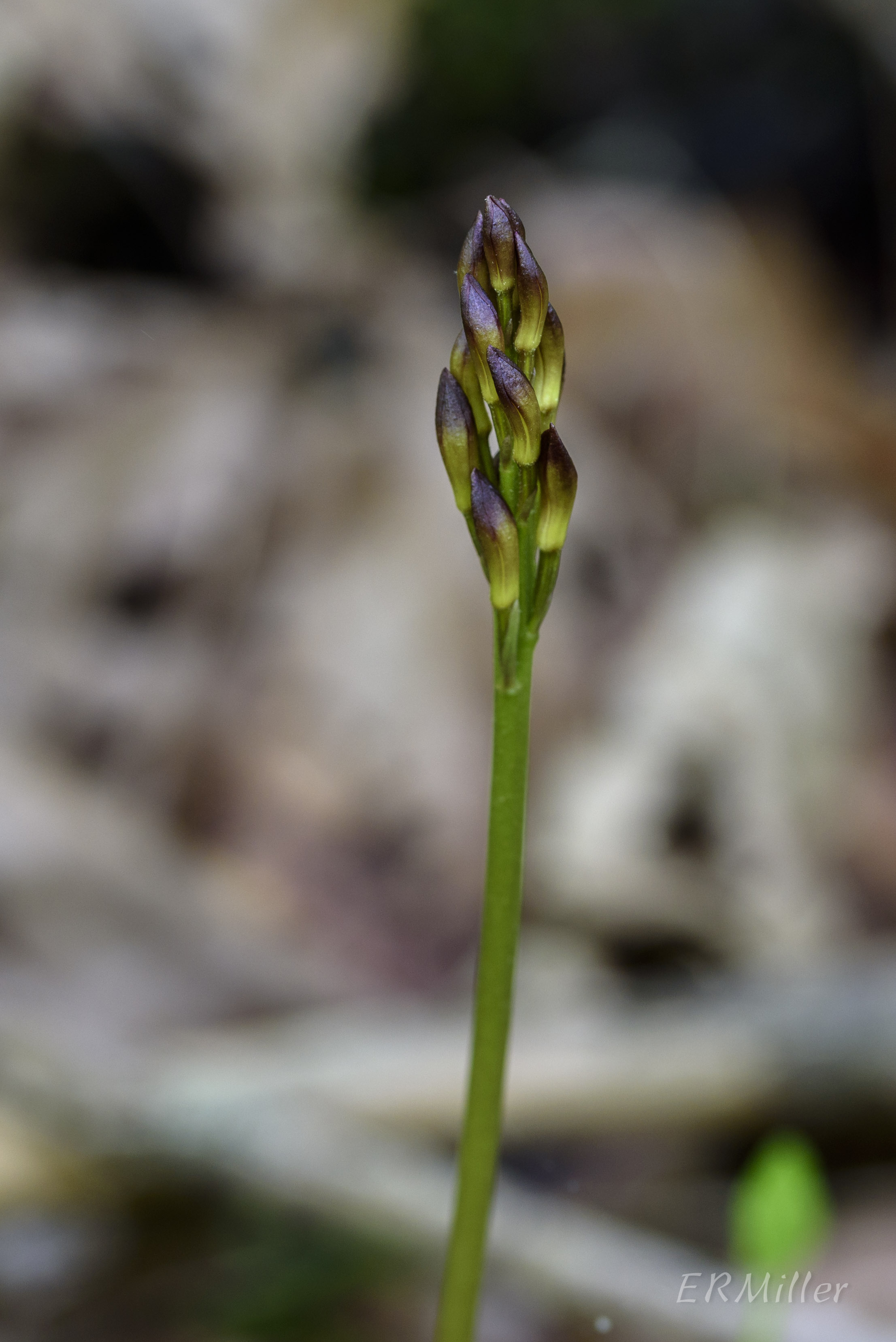
puttyroot; Adam and Eve
Aplectrum hyemale
Orchidaceae

In May of 2014 I saw puttyroot for the first time, two plants and one spike of flowers. After that I saw the seedheads on the spike. Every time I was in the area I’d go by the patch, and (except in summer) I’d see the plants. But in 2015 for some reason they didn’t bloom. I learned later that this is often the case with some species of orchid: if conditions aren’t just right, they won’t bloom.

A puttyroot plant has a single ground-level leaf that comes up in autumn, persists through the winter, and dies back before the plant sends up the flower spike in late spring.

20160514-_DSC0117

A few weeks ago I saw a new spike coming up. I went back again and again, despite the miserable rainy weather we’ve been having, until finally I saw the flowers.

20160514-_DSC0112

Puttyroot ranges from Quebec south to North Carolina, with scattered occurrences a little further south than that, and west as far as Oklahoma, Kansas, and Minnesota. It’s endangered in Massachusetts, New Jersey, and New York, threatened in Vermont, rare in Pennsylvania, and special concern in Connecticut. In the Maryland Piedmont I’ve seen the plants in the Potomac gorge, Patapsco Valley State Park, and on Sugarloaf Mountain.

Two Wood-Sorrels

20150507-20150507-_DSC0067

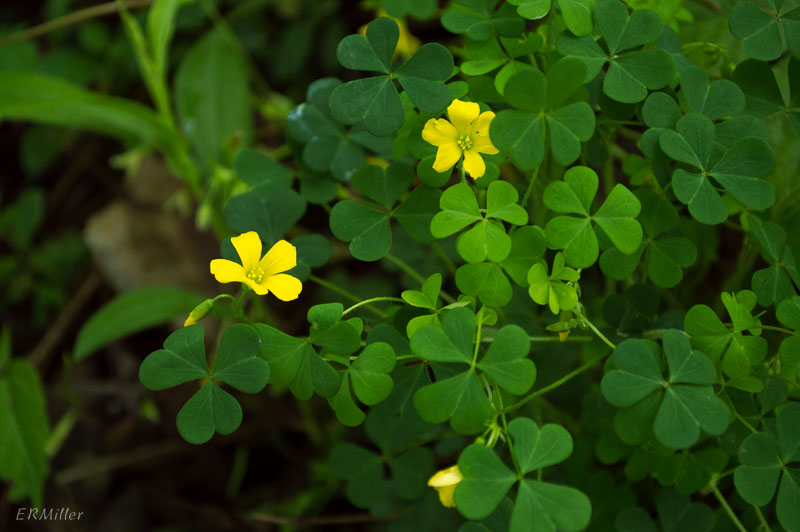
common or yellow wood sorrel
Oxalis stricta
Oxalidaceae

20160425-_DSC0179


violet wood sorrel
Oxalis violacea
Oxalidaceae


The yellow-flowering species is derided by some [hi, Linda!] as a real nuisance plant. It is pretty, though. Is it a weed? Not when I find it in a natural setting like the Potomac gorge, where it doesn’t seem to grow in large swaths like it does in the garden. Yellow wood-sorrel is found all over the US except Oregon, California, Nevada, and Utah, and is listed as a weed by some authorities. It seems to have a long bloom period in the wild.

Violet wood-sorrel is found in all US states except Montana, Idaho, Washington, California, Nevada, and Utah. The plants hug the ground, but the flowers stand a few inches taller than the yellow species, and it doesn’t bloom as long. I’ve seen it in the gorge forming carpets as large as half a square meter. Before blooming, the leaves often have a violet tinge, especially on the edges, but it always seems to be gone by bloom time. A large patch never seems to produce more than a few flowers, but then this is only the third year I’ve observed it.

Scan

I feel it’s time to re-post this.
<————


Carderock, May 2

20160502-_DSC0050

The morning of May 2 I set out for a quick survey of the greater Carderock area, with the goal of shooting some long-tube valerian, a highly state rare/endangered species that grows in several different locations in the Potomac gorge.

20160502-_DSC0013

Along the way, on the towpath between the Billy Goat C and Billy Goat B trailheads, I noticed that a lot of trees along the stone retaining wall were missing.

What the heck? Wondering why, I decided to call the park and inquire when I got home.

I didn’t need to. A few hours later, on the way back, I saw a ranger taking photos, so I asked him about it. In summary, the retaining wall is historic, and it’s been in danger of being damaged by the trees, some of them were quite large. If one had gone down in a storm, the root mass lifting out of the ground could have caused a breach in the wall. Not only would that severely damage the canal and make that part of the towpath unusable, but an 8′ diameter sewer main, part of the Potomac Interceptor sanitary system, runs along there. It, too, would be severely damaged by a breach in the wall.

20160502-_DSC0012

The flags marked a line 20 feet from the base of the wall; all the activity is being kept within that zone. They will be installing some monitoring equipment in order to track changes to the wall in coming years.

My main concern, of course, was damage to plant communities. Good news: the park always has an expert come in for a plant survey before they do any work.

20160502-_DSC0110

Annoyingly the narrow strip of land between the towpath and the wall gets moved every few weeks, but if you go now, you’ll see some lyre-leaf sage blooming in there. The plants are quite short, but year after year they survive the mowers.


The spring ephemerals are almost entirely gone, just a few spring beauties left. Observed blooming on May 2:


  • wild blue phlox (waning)
  • star chickweed
  • Virginia waterleaf (just starting)
  • Coville’s phacelia (past its peak)
  • long-tube valerian
  • clustered snakeroot (just starting)
  • golden Alexanders (S3 – rare to uncommon)
  • rattlesnake weed
  • hairy beardtongue
  • moss phlox (waning)
  • field chickweed
  • wild geranium
  • rue anemone
  • lyre-leaved sage
  • Rubus species (probably a dewberry)
  • azure bluets
  • dwarf cinquefoil
  • plantian-leaved pussytoes (waning)
  • bastard toadflax
  • fringetree
  • deerberry
  • alumroot
  • violet wood sorrel
  • wild pink (a day or two away from being done)
  • spring forget-me-not
  • Virginia spiderwort
  • common wood sorrel
  • Philadelphia fleabane

Mid-April Update, Potomac Gorge

20160410-_DSC0018

miterwort, aka bishop’s cap
Mitella diphylla
Saxifragaceae


The wildflowers continue to start blooming about two weeks earlier than last year. I’m told that twinflower is done and gone to seed already. Bloodroot is done, too, and so is cutleaf toothwort, though slender toothwort is just starting. Trout lilies are done in some locations, but still going strong in others. Virginia bluebells are waning.

20160410-_DSC0036


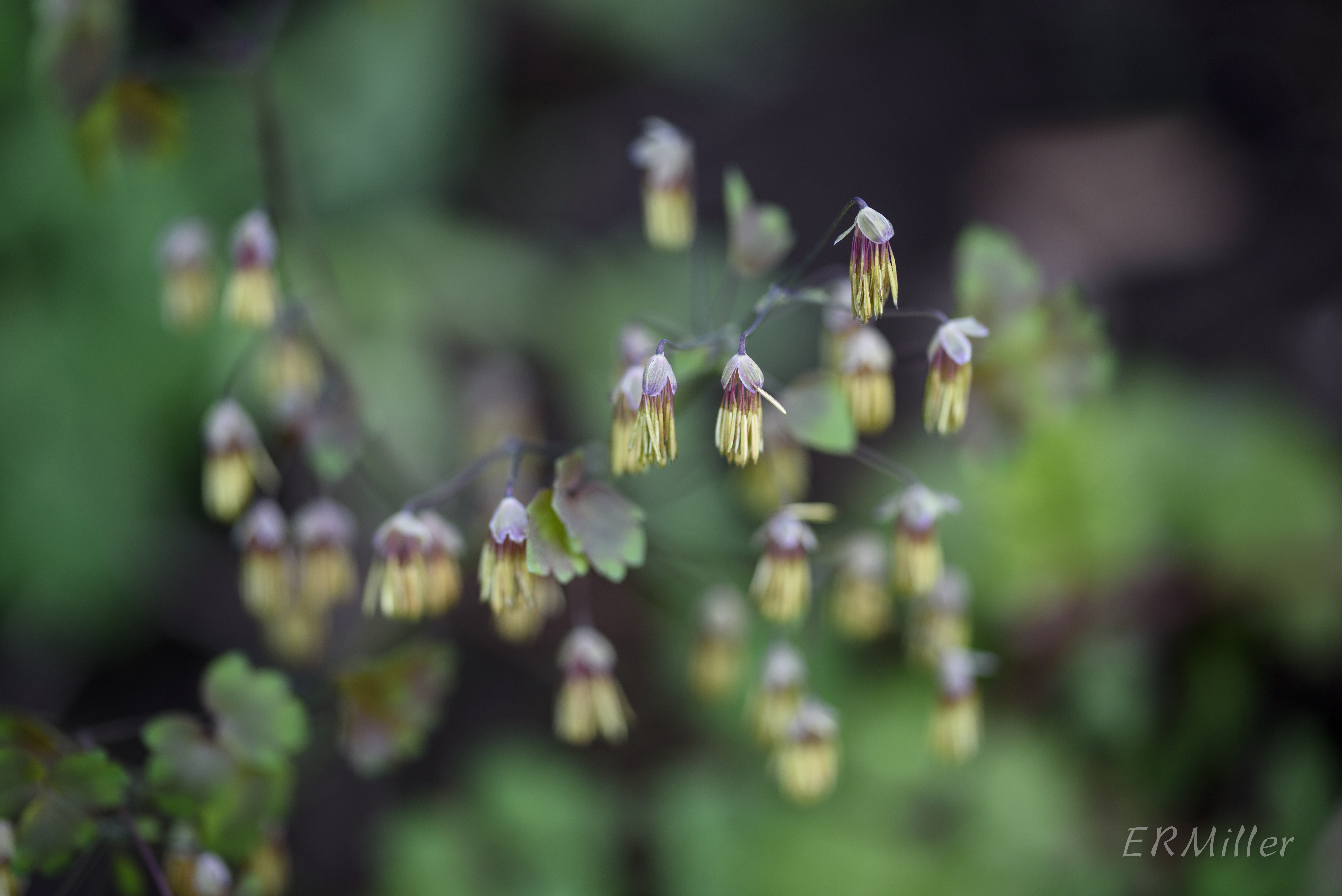
early meadow rue (male flowers)
Thalictrum dioicum
Ranunculaceae


Everything else I’ve posted about in the last few updates is still going strong. To that list, add:

20160410-_DSC0045


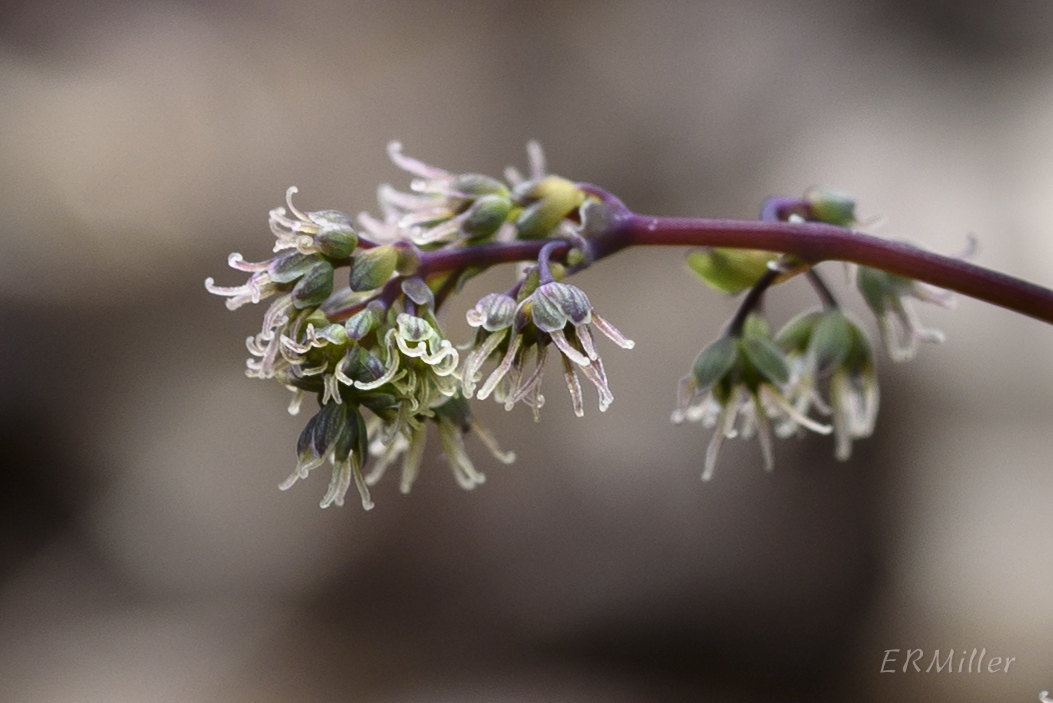
early meadow rue (female flowers)